Friday, January 16th 2026

NVIDIA Reportedly Ends GeForce RTX 5070 Ti Production, RTX 5060 Ti 16 GB Next
NVIDIA has reportedly stopped production of its mid-range GeForce RTX 5070 Ti graphics card, according to ASUS, one of the largest PC manufacturers. ASUS shared exclusive information with Hardware Unboxed, revealing that NVIDIA has created a supply shortage for the GeForce RTX 5070 Ti, effectively ending its production. As one of NVIDIA's largest AIB partners, ASUS has learned that the model is essentially in end-of-life status. The company noted the supply shortage and offered no further comments on availability or potential improvements in supply. Since retailers and manufacturers can't source enough stock of the GeForce RTX 5070 Ti GPUs, the shortage has led to significant price increases for these models and suggests that the future availability of this GPU SKU might be nonexistent.
Update 2, January 16, 08:30 UTC: ASUS issued an official public statement regarding the "incomplete" information about the RTX 5070 Ti and RTX 5060 Ti EOL.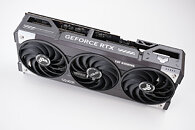 Below is an older update and the remaining of the original text.
Update 1, 19:45 UTC: NVIDIA issued a statement to HardwareLuxx confirming that the series remains in production, but elevated demand is drying up the inventory.
Additionally, ASUS provided information about the previously rumored CES launch of the RTX 50 "SUPER" refresh, which was expected to have higher memory capacity. According to the AIB, this launch did not occur, although the original plan was indeed for a CES launch, which was postponed. Currently, there are no plans to release a series refresh, and some AIBs have reportedly expressed frustration over the sudden change. It seems the rumor about the SUPER launch being postponed was true, with the primary reason being the shortage of high-capacity GDDR7 memory.
Source:
Hardware Unboxed
Update 2, January 16, 08:30 UTC: ASUS issued an official public statement regarding the "incomplete" information about the RTX 5070 Ti and RTX 5060 Ti EOL.
ASUSWe would like to clarify recent reports regarding the ASUS GeForce RTX 5070 Ti and RTX 5060 Ti 16 GB. Certain media may have received incomplete information from an ASUS PR representative regarding these products. The GeForce RTX 5070 Ti and GeForce RTX 5060 Ti 16 GB have not been discontinued or designated as end-of-life (EOL). ASUS has no plans to stop selling these models. Current fluctuations in supply for both products are primarily due to memory supply constraints, which have temporarily affected production output and restocking cycles. As a result, availability may appear limited in certain markets, but this should not be interpreted as a production halt or product retirement. ASUS will continue to support the GeForce RTX 5070 Ti and RTX 5060 Ti 16 GB and is working closely with partners to stabilize supply as conditions improve.

Update 1, 19:45 UTC: NVIDIA issued a statement to HardwareLuxx confirming that the series remains in production, but elevated demand is drying up the inventory.
NVIDIA to HardwareLuxxWhat changes are occurring in the GeForce ecosystem given the current memory market?The next phase of the silent production end is approaching for the GeForce RTX 5060 Ti 16 GB version, with resources reportedly being redirected to the lower-capacity GeForce RTX 5060 Ti 8 GB version. Stocks of the RTX 5060 Ti 16 GB SKU have been dwindling across retailers and distributors, and prices are beginning to reflect this scarcity. The massive industry DRAM shortage has affected even graphics GDDR7 memory. As a result, the lower-capacity 8 GB version will remain available until the supply chain and memory production improve. Yesterday's rumors also confirm that the regular RTX 5060 will be the priority card for NVIDIA going forward, for that segment.
Demand for GeForce RTX GPUs is strong, and memory supply is constrained. We continue to ship all GeForce SKUs and are working closely with our suppliers to maximize memory availability.
Additionally, ASUS provided information about the previously rumored CES launch of the RTX 50 "SUPER" refresh, which was expected to have higher memory capacity. According to the AIB, this launch did not occur, although the original plan was indeed for a CES launch, which was postponed. Currently, there are no plans to release a series refresh, and some AIBs have reportedly expressed frustration over the sudden change. It seems the rumor about the SUPER launch being postponed was true, with the primary reason being the shortage of high-capacity GDDR7 memory.
210 Comments on NVIDIA Reportedly Ends GeForce RTX 5070 Ti Production, RTX 5060 Ti 16 GB Next
**********************
Meanwhile, in the real world:
wccftech.com/the-current-state-of-nvidia-rtx-50-gpus-our-exclusive-report-on-geforce-production-aic-supply-memory-shortages-prices-eol-rumors/
tl;dr:...but don't let it get in the way of this fun pile on....
Some will be bought by whoever has the big cash and drive for better PR snd we will start to see why all that happens is not that bad, it’s the next chapter in PC, that buying computational power for gaming by monthly subscription is now the thing and it’s also cheaper (after the intonational inflation of all pc parts be whoever they are) and so on.
The other will be the avangard, GN/HUB-Steve style of people who fight the Don-Quixote war with how they are corrupted kink of videos.
More interesting is what will happen to forum like tpu when HW reviews will be non relevant..
Also, a new golden era of retro pixeleized games will have good demand as ‘f#@! You AAA developers’ kind of protest.
Most AIB's use coolers interchangeably on AMD and Nvidia cards with minimal differences to accommodate the die and PCB design.
AMD and and Nvidia both provide kits with GPU+VRAM to AIB's.
The only R&D is for the actual PCB and if they follow the reference design it's an easy thing to do.
We're not talking about a high end cards here with overengineered coolers and complex PCB's.
AMD holds roughly 18-19% of the GPU market according to Steam HW survey (even these numbers are likely under representation).
Clearly both ASUS and Gigabyte find it worth enough to produce AMD cards despite the R&D cost and supposed low AMD market share.
Sapphire is an exclusive AMD partner. If they didn't make a profit then they would have not existed for 25 years.Gaming cards are "charity"?
Not with these MSRP's and markups. Far from it. That's just lazy excuse to justify corporate actions to say that they dont do "charity". Selling 70 class dies for 1300+ is by no means barely getting by.
No one knows how long the current AI demand will stick around. It's a bubble. It may burst this year or in five years. Or just level off. Like what happened with crypto mining. Sooner or later everyone will come crawling back.
Gaming will be here in 5, 10 and 50 years. It's a steady baseline income that's guaranteed no matter what. Assuming the products are good and reasonably priced of course. And that the company itself doesn't squander their advantage like Intel did.
The cards will remain "in production" to maintain appearances I'm sure but as for actual stock, I doubt it will be bountiful. Heck I doubt this announcement carries any actual material changes. Nvidia just wants to save face. Much like they tried when they made LHR cards to "help" gamers only to conveniently leak a BIOS that got rid of that restriction (and then they want to make Crypto only GPUs, directly reducing the number of gaming GPUs on the market).
And you're counting integrated graphics into this mix. Remember that Nvidia has an effective 0% iGPU market share, the last time they did iGPUs was in early AM3/late 775 days, almost 20 years ago now. I am specifically talking about dGPUs, and the 94/6/0 split report is from JPR, not Steam.Yes. Why sell an RTX 5090 at $2,000 if they can use the same core to make a Pro 6000 and sell it for $8,800? And they will.
Your rage, however impotent, is justified, I will acknowledge as much. But it just remains they could almost completely snuff out their gaming business, and neither AMD nor Intel have the production capacity or the mojo to fill up the void.
And before you say Ryzen has much higher market share - yes it does now, but MSI has made AM4 boards back when Ryzen's market share was abysmal.
XFX has the most SKU's of any AMD card. At least with RDNA4. Clearly the margins must be good enough.No im not. AMD's market share on steam vs Nvidia actually rises if i discard AMD iGPU's and Nvidia mobile chips. That's because Nvidia mobile chips hold a proportionally higher share in Steam stats. Just look at the top10 and how high the laptop versions are. Take those away and as a consequence AMD share actually increases. Granted it does only so by 1-2% from ~18% that accounts for all GPU's.
JPR's numbers are meaningless to quote for a gamer market. JPR publishes quarterly shipments. They dont account for historical backlog.
Naturally Nvidia dwarfs AMD in quarterly shipments due to server cards. JPR mixes all into one. Realistic Nvidia share in gamer dGPU's is roughly 80%. Not 94%.But they cant. 5090 is a cut down GB202 that cannot be sold for 9k. Hence the 5090. Gamers get scraps and pay trough the nose for it.
At least with AMD you get the full unlocked chip. Their workstation cards using the same die only double the VRAM and enable ECC.
This could change with RDNA5/UDNA if they decide to go the Nvidia route and have one architecture for both.It's better to keep the gaming business going. No matter how small. Starting up from scratch later is very difficult and requires big expenditure.
That is why i doubt Micron will return to direct to consumer sales any time soon even if the demand dies down.
Nvidia also said they weren't providing GPU+VRAM as a bundle anymore, AMD promised they would try to keep prices down on 9000 series, GDDR6 may be less affected, and maybe AMD are doing retailer rebates again.
I'm not sure about PCB R&D, but they all have to design coolers, pay for marketing, and that costs extra when Nvidia can write off the cost or just keep supply limited while AIBs have to panic to try to compete with FE cards undercutting them on price.
Asus and Gigabyte still make decent Radeon cards, MSI's Radeon cards were often reusing Geforce coolers in the worst possible ways with poor die contact and thermal pads that didn't do anything.
AMD has more of the market than most people want to give credit for, or simply want to maliciously downplay any other competition in the market because marketshare is everything for some reason, Sapphire, XFX, and Powercolor are AMD only AIBs, if there wasn't any profit to be had with AMD cards then those brands wouldn't exist either.Gaming cards aren't a charity, although Nvidia could dump the gaming market, which is only 8% of their overall sales compared to AI datacenter, and still make money.
Or just dump the lower end SKU's and tell the poor gamers to pay up for Geforce Now. As long as Jensen can convince his investors and everyone in the AI circle that AI isn't a bubble, the money will keep getting passed around.
I don't think PC gaming will die off, but it will be very different as people are priced out of dedicated GPU's, and a whole gaming PC as AI is destroying the market more than we've ever seen from shortages or crypto. I'd rather find a different hobby than subscribe to a gaming service or a mini PC with everything soldered onto the motherboard with no potential for upgrades.
There's no use attempting to skew the statistics to make AMD look better. They lost that battle a long time ago. Outside of iGPUs, their market share is very small right now and they are having major trouble clawing it back, thanks to the series of self-owns they've been inflicting on themselves lately. Mobile dGPUs are another can of worms I haven't even approached, but I can't even remember the last time I saw a laptop with an AMD dGPU, even at the higher volume segments. I'll just mention, XFX and SKU spam, name a more iconic duo?
Agree on Micron - and on keeping the gaming business going - though.
Then lets put it this way - gamers are getting a shorter and shorter stick each gen while the cost keeps rising.
Say what you will about AMD , but they have kept their cards below 999. Party trough necessity yes, but in the end the consumer doesn't care why prices are the way the are. They care what the prices are. If i have to choose between two evils then im choosing the lesser of two evils.
Nvidia meanwhile keeps increasing prices far in excess of manufacturing cost. Now 1999 is normalized. If the next gen card in 2027 will be 2099 then people will be cheering that it's only 100 bucks more. Forgetting that before even 1000 was unheard of. Like they cheered 4090 being 1600 instead of 1500.
Note this AI boom does not help but still...