Friday, July 3rd 2026

Intel Readies Two 22-Core "Nova Lake-S" SKUs with 108 MB bLLC Cache for Gaming

According to well-known Intel leaker Jaykihn, Intel is preparing two "Nova Lake-S" CPU models with a 22-core configuration, enhanced by the big Last Level Cache (bLLC). These processors are part of the Core Ultra 5 400S family, and Intel is developing two mid-range configurations, each with 22 cores. Both models will feature 6 "Coyote Cove" P-Cores, 12 "Arctic Wolf" E-Cores, and 4 LPE-Cores. This design includes a single compute die aimed at mid-range gaming rigs. Alongside the 22 cores, Intel plans to add an extra 108 MB of bLLC cache to boost gaming performance, similar to AMD's approach with its Ryzen X3D gaming CPUs, which currently lead in gaming performance. Intel aims to match raw CPU compute power with newer CPU cores and use bLLC to improve latency-sensitive tasks like gaming. The only difference between the two new models is that one is an unlocked 125 W TDP version, part of the "K" overclockable family, while the other is a 65 W base TDP model.

Recently, it has been observed that Intel's upcoming Z9x0 platform for "Nova Lake-S" will support up to 52 cores in a single LGA-1954 socket. Some early rumors suggest a PL2 power draw of 474 W, which is a significant increase over previous designs. This is understandable, considering that the design brings workstation-like core counts into the consumer sector for the first time. Regarding the socket, Intel's LGA-1954 has been pictured with a 2-lever independent loading mechanism (ILM), similar to what Intel's HEDT sector uses. This is typically reserved for larger CPU packages, and with the pin count now nearing 2,000 socket pins, it is a necessary choice for Intel. Importantly, the first "Nova Lake-S" CPU SKUs are scheduled for release in just a few months, likely leading to more rumors as we approach the final launch.
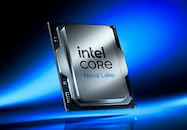
Source: Jaykihn on X
Add your own comment

279 Comments on Intel Readies Two 22-Core "Nova Lake-S" SKUs with 108 MB bLLC Cache for Gaming

#226
Hecate91
BoggledBeaglePeople can get excited even for things they are not planning to buy, because the things that come after these things should be even better and also people using AMD religiously who do not even think about getting Intel anytime can get excited, because the better Intel stuff is compared to AMD stuff, the cheaper AMD stuff needs to be and consumers want to get as much for their money as they can*.

EVERYBODY thus should be excited about Nova lake and also about Zen 6.

* I must admit I still do not fully understand the astonishing willingnes of consumers to buy weak 8 core CPUs from AMD for extreme prices.
I used to get excited for stuff I had no plans on buying, but after crypto jacked up prices, and now AI hiking prices but even worse since it's affecting everything, I've lost any hope for getting excited for the latest things I had no plans on buying because those parts will probably never go on sale or return to normal pricing.
However I do want to get as much for my money as I can which is why I value platform longevity, I'd get more excited for Intel CPU's if they'd keep a socket around longer as a pro-consumer move instead of changing sockets to satisfy OEM's and the motherboard makers. Due to the cost of RAM I would much rather keep my kit of RAM and motherboard to have the option for a drop in CPU upgrade.
What I don't understand is why people are calling 8 cores weak, those "weak" 8 cores are outperforming CPU's with double the cores in games. Prices aren't extreme either unless you're buying the 9850X3D or one of the higher core count high end CPU's though I consider those to be more of a workstation CPU. I don't quite understand the desire for a CPU with a bunch of weaker e-cores either, especially for a high end enthusiast system.
Posted on Reply
#227
JustBenching
Hecate91What I don't understand is why people are calling 8 cores weak
For the same reason we were calling 4 cores weak 10 years ago. They outperformed everything else in games but some people don't just game on their PCs.
Posted on Reply
#228
tsurugi
Hecate91I used to get excited for stuff I had no plans on buying, but after crypto jacked up prices, and now AI hiking prices but even worse since it's affecting everything, I've lost any hope for getting excited for the latest things I had no plans on buying because those parts will probably never go on sale or return to normal pricing.
However I do want to get as much for my money as I can which is why I value platform longevity, I'd get more excited for Intel CPU's if they'd keep a socket around longer as a pro-consumer move instead of changing sockets to satisfy OEM's and the motherboard makers. Due to the cost of RAM I would much rather keep my kit of RAM and motherboard to have the option to have a drop in CPU upgrade.
What I don't understand is why people are calling 8 cores weak, those "weak" 8 cores are outperforming CPU's with double the cores in games. Prices aren't extreme either unless you're buying the 9850X3D or one of the higher core count high end CPU's though I consider those to be more of a workstation CPU. I don't quite understand the desire for a CPU with a bunch of weaker e-cores either, especially for an high end enthusiast system.
People have a misunderstanding about how e cores work. Compared to 8p cores, 8p16e has higher gaming performance. In contrast, compared to 8c16t, 8c8t amd has higher gaming performance. This means that compared to smt, e cores have a positive impact on gaming rather than a negative one.
Furthermore, the e core IPC in novalake is similar to zen6, with the highest ppa, so intel can provide more MT than amd, making the overall design very high-end.
Posted on Reply
#229
AusWolf
tsurugiPeople have a misunderstanding about how e cores work. Compared to 8p cores, 8p16e has higher gaming performance. In contrast, compared to 8c16t, 8c8t amd has higher gaming performance. This means that compared to smt, e cores have a positive impact on gaming rather than a negative one.
Your games run on p-cores or e-cores, but not both, afaik.
tsurugiFurthermore, the e core IPC in novalake is similar to zen6
How do you know?
JustBenchingFor the same reason we were calling 4 cores weak 10 years ago. They outperformed everything else in games but some people don't just game on their PCs.
Let's not make this a gaming vs non-gaming argument. Everybody should buy the product that suits their needs. If I only game with some occasional web browsing, and 8 cores are totally fine for my needs, then who are you to tell me that I'm wrong? Why shouldn't I buy an 8 core CPU? Vice versa, no one is telling you that you should only game.

If it's a price argument (which you didn't specify, I just assume), then you have a point. There's no reason to overspend on the likes of the 9800X3D. The 7700 non-X or 9700X are just fine as far as 8 cores go.
Posted on Reply
#230
Hecate91
tsurugiThis is your strategy, you mean "I don't care about money", but your money only bought 8 core
I care more about the performance in games than the vanity of boasting about core count.
The money spent is irrelevant since these are all relatively expensive high end cpu's.
tsurugiIt is the same for you, you also need to sell x3d.
And you need to convince people to choose zen5 before the new zen6 12 core, which is very difficult.
The used market is always there for those wanting a price/performance deal.
I used to always sell my old hardware to buy the latest cpu's, it used to be worth it but it's been increasingly not worth the hassle.
tsurugiIt is precisely because it is cheap that you cannot lose too much. The cpu specs are right there, the 270k plus MT performance is better than zen6 12 core, and some people can use it very well.
So because the CPU is cheap, somehow it's a better value to buy a new CPU and board every 2 years?
I can understand that some may need more MT performance, but I don't get the logic of buying a whole new system every 2 years because the CPU is slightly cheaper.
tsurugiFew people change their cpu every generation, you cannot represent the majority.
Enthusiasts here are not the majority, the majority don't care about how many cores they have or saving a few seconds on an Excel sheet.
tsurugiYou need to replace your cpu frequently, you cannot represent the majority. You spend much more money on the cpu and motherboard than most people, you need to understand that.
I don't need to replace the CPU frequently, and no I don't understand what you're getting at.
With AM5 you could've bought a motherboard several years ago without the need to buy another one until Zen 7. Imagine if Intel kept LGA1700 around that long, however Intel users seem to decry having platform longevity is a bad thing because having the "latest features" is better even though the usefulness of a majority of those features is debatable.
tsurugiBecause 8 core is too weak, the situation for zen6 will be much better, but 12 core is still slightly worse than 6+12.
Motherboards are cheap compared to the cpu and can be sold together with the cpu, which is not a key feature that should be prioritized for purchase at all.
Because the performance of the cpu itself is the most important. I can understand that 9800x3d has very good gaming performance and people value this a lot, so it can sustain its premium.
But compared to the oced 270k plus, gaming performance is not significantly better, and a 5-10% gaming performance difference is not enough to justify the MT disadvantage and price.
Those 8 cores aren't weak, it baffles me why people are saying this. www.techpowerup.com/review/amd-ryzen-7-9850x3d/19.html
Motherboards aren't cheap anymore, not sure where the logic is on this, any decent motherboard capable of overclocking is usually as expensive as a 270K+.
But we're moving the goalposts to OC performance? I though efficiency mattered, OCing throws the whole efficiency claims out the window, to each their own though. Not everyone only cares about MT though, for a gaming system a majority of people don't which is why X3D CPU's have been the best selling from several retailers.
tsurugiIn 2022 am5 was expensive, and cpu performance was worse than intel. Overall, the price you paid for one amd motherboard and two cpus exceeded two intel cpus and two motherboards.
And you need to ensure that your motherboard vrm is sufficient to supply zen6 and that there is no loss of features compared to new motherboards, which was very difficult to determine in 2022.
You care about motherboards, no need to hide that. An am5 used motherboard you hold has little value, that is what you keep, while what is truly expensive is the cpu, you change frequently, buying high and selling low, paying a lot.
In 2022 LGA1700 was expensive too for a CPU that could compete with AM5, along with the added cost of getting a high end cooler and board that could OC a 13th gen CPU. Also buying a new CPU and board seems wasteful to me, rather than having the option to install a new CPU if I wanted to, not a requirement but a nice option to have.
Zen 6 may require more power, though the X3D variants have been efficient since AM4. Rumors of Nova Lake are saying it may consume more power also, which will drive up motherboard cost.
The loss of new features like PCI-e 6.0 or the latest thunderbolt revision won't matter to most people with a gaming PC. Not having PCI-e 5.0 isn't a significant loss either unless you need tons of fast storage, and the cost of filling every M.2 slot with a gen 5 SSD is too expensive now.
So it seems Intel users care about about buying and selling hardware more than any kind of hardware longevity, rather than apparently keeping the same CPU for 3-5 years. Motherboard resale value isn't of much importance to me, a used CPU is easier to sell than a motherboard, also used motherboards don't have a lot of resale value unless you're buying a limited edition high end board anyway.
JustBenchingFor the same reason we were calling 4 cores weak 10 years ago. They outperformed everything else in games but some people don't just game on their PCs.
4 cores were weak when Intel stagnated with near a monopoly on the market, any high performance CPU isn't weak today. most things are a few seconds compared to something with nearly double the cores.
I'm not a youtube influencer or counting on loading an office program a few milliseconds quicker, so the tradeoff for faster more efficient gaming load for slightly less productivity performance is a worthy tradeoff IMO.
www.techpowerup.com/review/amd-ryzen-7-9850x3d/12.html
tsurugiPeople have a misunderstanding about how e cores work. Compared to 8p cores, 8p16e has higher gaming performance. In contrast, compared to 8c16t, 8c8t amd has higher gaming performance. This means that compared to smt, e cores have a positive impact on gaming rather than a negative one.
Furthermore, the e core IPC in novalake is similar to zen6, with the highest ppa, so intel can provide more MT than amd, making the overall design very high-end.
Outside of a few outlying games, games are going to prioritize P cores. I prefer a CPU with all full fat cores, no chance of a game or application trying to use slower e-cores.
Do you know Nova Lake e-cores will perform the same as Zen 6? So far all we have are rumors, and that seems like a very optimistic rumor. If true then I doubt Intel is going to sell CPU's at a loss like Arrow Lake and ARL refresh.
Posted on Reply
#231
tsurugi
Hecate91I care more about the performance in games than the vanity of boasting about core count.
The money spent is irrelevant since these are all relatively expensive high end cpu's.

The used market is always there for those wanting a price/performance deal.
I used to always sell my old hardware to buy the latest cpu's, it used to be worth it but it's been increasingly not worth the hassle.

So because the CPU is cheap, somehow it's a better value to buy a new CPU and board every 2 years?
I can understand that some may need more MT performance, but I don't get the logic of buying a whole new system every 2 years because the CPU is slightly cheaper.

Enthusiasts here are not the majority, the majority don't care about how many cores they have or saving a few seconds on an Excel sheet.

I don't need to replace the CPU frequently, and no I don't understand what you're getting at.
With AM5 you could've bought a motherboard several years ago without the need to buy another one until Zen 7. Imagine if Intel kept LGA1700 around that long, however Intel users seem to decry having platform longevity is a bad thing because having the "latest features" is better even though the usefulness of a majority of those features is debatable.
The x3d is only 1-2ms faster in games, which of course matters to some people. However, mt performance can significantly reduce waiting time, and st performance is also helpful. This gen of zen5 and arrowlake are similar in st. If st were better, I wouldn't mind choosing one with worse mt, as I don't think I can feel a 1ms difference.
It is just a motherboard. The reason people sell motherboards and cpus to upgrade to the next gen is the same as the reason you sell a cpu alone. and less money is lost when selling. If you look at the prices of intel cpus, intel's motherboard sockets make the cpus hold their value better.
And you can always use a cpu for a longer time instead of replacing it every 2 years. Since this is the case, we seem to agree with each other on this point. Then the vrm of zen4 am5 motherboards is barely enough to support zen6 unless you buy a high-end one. But when zen6 is released, mid-to-low-end motherboards will support zen6 very well. If you are thinking about upgrading at that time, you must spend a lot on the motherboard from the very beginning, which seems very uneconomical.
Hecate91Those 8 cores aren't weak, it baffles me why people are saying this. www.techpowerup.com/review/amd-ryzen-7-9850x3d/19.html
Motherboards aren't cheap anymore, not sure where the logic is on this, any decent motherboard capable of overclocking is usually as expensive as a 270K+.
But we're moving the goalposts to OC performance? I though efficiency mattered, OCing throws the whole efficiency claims out the window, to each their own though. Not everyone only cares about MT though, for a gaming system a majority of people don't which is why X3D CPU's have been the best selling from several retailers.
For arrowlake, the main improvement comes from the uncore part. You can also undervolt and overclock, which is a common oc method for ryzen as well.
However ddr5 is expensive now, so using high-end Hynix memory for a new build and oc is not very realistic.
Hecate91In 2022 LGA1700 was expensive too for a CPU that could compete with AM5, along with the added cost of getting a high end cooler and board that could OC a 13th gen CPU. Also buying a new CPU and board seems wasteful to me, rather than having the option to install a new CPU if I wanted to, not a requirement but a nice option to have.
Zen 6 may require more power, though the X3D variants have been efficient since AM4. Rumors of Nova Lake are saying it may consume more power also, which will drive up motherboard cost.
The loss of new features like PCI-e 6.0 or the latest thunderbolt revision won't matter to most people with a gaming PC. Not having PCI-e 5.0 isn't a significant loss either unless you need tons of fast storage, and the cost of filling every M.2 slot with a gen 5 SSD is too expensive now.
So it seems Intel users care about about buying and selling hardware more than any kind of hardware longevity, rather than apparently keeping the same CPU for 3-5 years. Motherboard resale value isn't of much importance to me, a used CPU is easier to sell than a motherboard, also used motherboards don't have a lot of resale value unless you're buying a limited edition high end board anyway.
You can actually calculate the vrm required for zen6. It will be higher than the 9900x and roughly requires a vrm that can satisfy the 9950x. This means most b650 cannot do it. For a mid-tier motherboard at the time of b650, you could only buy a low-end zen6 8 core, if that even counts as an upgrade.
The x3d actually requires a better vrm, even though the cpu itself is more efficient.
If you check the prices of old cpus like the 10900k and 11700k, you will know that intel cpus can still be sold for quite a bit after being used for a long time.
The motherboard doesn't matter at all. I saw many people throw away their old am4 motherboards to buy new am4 ones when zen3 was released because the old am4 motherboards were too poor. This situation still applies to b650.
Hecate91Outside of a few outlying games, games are going to prioritize P cores. I prefer a CPU with all full fat cores, no chance of a game or application trying to use slower e-cores.
Do you know Nova Lake e-cores will perform the same as Zen 6? So far all we have are rumors, and that seems like a very optimistic rumor. If true then I doubt Intel is going to sell CPU's at a loss like Arrow Lake and ARL refresh.
That is your personal opinion, but actual tests show that the hybrid approach can improve gaming performance by adding threads outside the 8 p cores. The zen6 12 core gaming performance will be better than the 8 core, which is the same way like intel hybrid works. Only a few games do not work well on hybrid, and intel has basically solved this problem through apo. As you can see, the apo list is very small, which shows that there are actually very few games with problems.
Posted on Reply
#232
JustBenching
AusWolfLet's not make this a gaming vs non-gaming argument. Everybody should buy the product that suits their needs. If I only game with some occasional web browsing, and 8 cores are totally fine for my needs, then who are you to tell me that I'm wrong? Why shouldn't I buy an 8 core CPU? Vice versa, no one is telling you that you should only game.

If it's a price argument (which you didn't specify, I just assume), then you have a point. There's no reason to overspend on the likes of the 9800X3D. The 7700 non-X or 9700X are just fine as far as 8 cores go.
I didn't ask you why you buy 8 cores or told you that you are wrong. You can buy a dual core for all i care, more power to you. But someone asked why do people need more than 8. I mean it's very obvious why some people need more than 8.
Posted on Reply
#233
BoggledBeagle
JustBenchingFor the same reason we were calling 4 cores weak 10 years ago. They outperformed everything else in games but some people don't just game on their PCs.
I do not agree with this - 10 years ago 4 cores was all you could get in consumer desktops (at least from Intel).

Today you can get 16 or 24 core CPUs for normal consumer PCs. 8 core CPU today is so weak as 1 or 2 core CPUs used to be years ago. I cannot imagine anybody being excited about 1 core CPU 10 years ago, even if it could run games well.
Posted on Reply
#234
JustBenching
Hecate914 cores were weak when Intel stagnated with near a monopoly on the market, any high performance CPU isn't weak today. most things are a few seconds compared to something with nearly double the cores.
I'm not a youtube influencer or counting on loading an office program a few milliseconds quicker, so the tradeoff for faster more efficient gaming load for slightly less productivity performance is a worthy tradeoff IMO.
www.techpowerup.com/review/amd-ryzen-7-9850x3d/12.html
4 cores were as weak a decade ago as 8 cores are today with AMD stagnating with the same core count since 2017. It's the same argument people were making back then with the 7700k. Im not a youtube influencer so the tradeoff for faster more efficient gaming load for slightly less productivity performance is a worthy tradeoff etc. You sound exactly like Intel fans sounded back then.
BoggledBeagleI do not agree with this - 10 years ago 4 cores was all you could get in consumer desktops (at least from Intel).

Today you can get 16 or 24 core CPUs for normal consumer PCs. 8 core CPU today is so weak as 1 or 2 core CPUs used to be years ago. I cannot imagine anybody being excited about 1 core CPU 10 years ago, even if it could run games well.
16 cores from amd launch at 699+ euros though. If price isn't an issue then you could have 6 cores (for 380$) back in 2014 with Intel. A 5820k was a consumer chip even though it's classified as HEDT.
Posted on Reply
#235
Hecate91
8 cores aren't weak, the charts from TPU speak volumes against the Intel fans who suddenly say cores matter with silly kneejerk reactions saying 8 cores are slow. And the interesting thing is it took Ryzen for core count to start mattering outside of the HEDT space. Intel can only pile so many weak e-cores into their CPU's before bandwidth, thread allocation, or power consumption becomes an issue, they'll need to go back to a more conventional core layout at some point, a rumor is Intel will go a unified core replacing the hybrid core structure.
These are high performance CPU's being sold mostly to the gaming market, so unsurprisingly gaming performance comes first, a majority of enthusiasts aren't measuring Excel or the Adobe suite as a benchmark.
Posted on Reply
#236
JustBenching
Sounds exactly like the excuses intel fans were making back in the day :D
Posted on Reply
#237
BoggledBeagle
Hecate918 cores aren't weak
They are weak even in AMD lineup alone. They are literally a half of what is available from AMD on consumer PC platform. They are "a budget offering" in terms of performance sold for very high prices.

AMD is milking gamers VERY HARD - they have their udders all bloody and shrunken, yet they seem happy anyways.
Posted on Reply
#238
tsurugi
Hecate918 cores aren't weak, the charts from TPU speak volumes against the Intel fans who suddenly say cores matter with silly kneejerk reactions saying 8 cores are slow. And the interesting thing is it took Ryzen for core count to start mattering outside of the HEDT space. Intel can only pile so many weak e-cores into their CPU's before bandwidth, thread allocation, or power consumption becomes an issue, they'll need to go back to a more conventional core layout at some point, a rumor is Intel will go a unified core replacing the hybrid core structure.
These are high performance CPU's being sold mostly to the gaming market, so unsurprisingly gaming performance comes first, a majority of enthusiasts aren't measuring Excel or the Adobe suite as a benchmark.
Weak e core IPC is the same as zen6. Unified Core is based on e core,
in fact it is the next generation of arctic wolf/golden eagle.
, and is still divided into p/e core hybrid.
Hybrid is a common approach for all Silicon Valley hardware manufacturers, apple, amd, intel, qualcomm, which shows that hybrid has great advantages.
In fact intel provides 2x MT. after amd introduces 12 core, even amd fans will go 12 core, 8 core era will be finished
Posted on Reply
#239
maximumterror
BoggledBeagleWow, that is an extremely bad study. If they were comparing efficiency and actual energy consumption, they should have intensivelly concentrate on frequencies and voltages the CPUs run at, they should have performed the tests at least at the same frequencies, they even used two CPUs that do not allow setting the frequencies. When they compared performance, they should have normalised the results to the same frequencies, what can you learn, when both type of cores run at different frequencies??? That study is even worse than the simple comparison I made.
Maybe, but there are studies published by IEEE that say that the best way to classify workloads is IPC, not frequency.
One study says:
Intel E-cores are simply reduced P-cores.
Schedulers almost always choose P-cores,
Intel Thread Director often makes wrong decisions, often makes mistakes(rarely classifies workloads as "vector heavy", rarely detects spin loops, inaccurately predicts IPC)
The result: E-cores are almost never the optimal choice.
tsurugi... e core IPC is the same as zen6...
E-core is not the same as Zen 6, because Zen 6 physically has more internal resources, a wider pipeline, and a larger cache and SMT, which E core does not have. E core is a scaled down version of P core without SMT, while Zen-c is the same full Zen core with just reduced cache and frequency.
Posted on Reply
#240
AleXXX666
AusWolfBut I would still choose the 7800 because it is more efficient out of the box. Believe it or not, some people do find that attractive in a CPU
Back then I got i7-7700, and thing was insanely hot. I was skimpy. Instead of purchasing aftermarket cooler, I sold this hot mess and got i7-6700T. A little slower, but FREAKING COLD, lol
And "back then" this "a little slower" wasn't so noticeable, too;):D
tsurugiAfter the new 12 core cpu comes out, the previous 8 core old cpu is clearly very outdated.
not "very", just a little slower.
Posted on Reply
#241
Thunderslat
tsurugiWeak e core IPC is the same as zen6. Unified Core is based on e core,
in fact it is the next generation of arctic wolf/golden eagle.
, and is still divided into p/e core hybrid.
Hybrid is a common approach for all Silicon Valley hardware manufacturers, apple, amd, intel, qualcomm, which shows that hybrid has great advantages.
In fact intel provides 2x MT. after amd introduces 12 core, even amd fans will go 12 core, 8 core era will be finished
So you happen to have Arctic Wolf and Zen 6 core performance numbers? Would you be so nice as to provide those? You can't, because you are full of shit and sound desperate to push... whatever it is you are trying to push. Something something Intel good I guess?
Posted on Reply
#242
MufasaV
maximumterrorE-cores are useless, they are designed for text file reading. The performance equivalent of E-cores is 3-8 E-cores for 1 P-core. Let's say we take an average of ~5 P-cores for 1 P-core, and the power consumption is the same. Surfing the Internet with P-cores saves 2-3 times more time, because they are much faster than E-cores. And gamers with monstrous graphics cards and economical power consumption sound a bit funny.
Factually incorrect for anything except 12th gen CPUs in single thread or AVX512. We already have published IPC tests. We already have videos showing various cores shutdown and how they perform in apps, we have all the information you need to know better than this
Posted on Reply
#243
tsurugi
ThunderslatSo you happen to have Arctic Wolf and Zen 6 core performance numbers? Would you be so nice as to provide those? You can't, because you are full of shit and sound desperate to push... whatever it is you are trying to push. Something something Intel good I guess?
The current data shows Skymont IPC is 90% of Zen5 INT and 78% of Zen5 FP. Some current information leads me to believe that Arctic wolf increases IPC by 20% from Skymont, while Zen6 increases IPC by 8% from Zen5.

I think Arcticwolf and Zen6 IPC are about the same. I believe I have reduced the IPC for E-core as much as possible, while increasing the IPC for Zen6 as much as possible.

This is because Raichu believes the 20% IPC growth for Arcticwolf is based on Darkmont, and Darkmont has 5% higher IPC than Skymont. Meanwhile, MLID believes Zen6 increases 6% IPC in SPEC FP, and now estimates it at 10% but not for any specific SPEC, which might be an AMD-style random IPC, and what I calculated is strict SPEC,so I increased it to 8% for it, which is an overestimation.

And I took the maximum value for the Zen5 and the average value for the Darkmont across 2 data sets.

This of course is not any serious data, just some simple calculations that can be done under the existing information.
AleXXX666Back then I got i7-7700, and thing was insanely hot. I was skimpy. Instead of purchasing aftermarket cooler, I sold this hot mess and got i7-6700T. A little slower, but FREAKING COLD, lol
And "back then" this "a little slower" wasn't so noticeable, too;):D


not "very", just a little slower.
And according to Amdahl's law, with a parallel portion of 0.9, an ST performance increase of 25%, and core counts of 8 and 12, the calculated speedup ratio is 1.52, which is a very large gap.
maximumterrorE-core is not the same as Zen 6, because Zen 6 physically has more internal resources, a wider pipeline, and a larger cache and SMT, which E core does not have. E core is a scaled down version of P core without SMT, while Zen-c is the same full Zen core with just reduced cache and frequency.
Zen5c occupies more area, has lower clocks, and has lower performance. SMT makes ST inefficient and MT efficient, there is a trade-off here. Zen6 performs better in the end due to clocks and more resources, but I am talking about SPEC IPC, which is not contradictory.

---
I need to add one more point for people who support the following two points:
1 I do not want e core to disrupt core scheduling.
2 I do not need mt, or even st, I only need gaming performance

Because amd features smt, and smt undoubtedly disrupt core scheduling, and its poor performance reduces gaming performance, as tpu has relevant tests,
unlike e core which increases gaming performance
(even 13gen e core can increase gaming performance, let alone the latest e core architecture now which has made significant progress and is therefore better).

Therefore, the only way for you to be logically self-consistent is to turn off amd's smt, keep only physical threads, as this smt low-quality thread is disrupting your scheduling and reducing your gaming.

So did you do it, absolutely recommend you do it.
Posted on Reply
#245
tsurugi
ContraWrite correctly or don't write.

And later, skymont and all other ecores is not configured for 1-IPC workloads such as games


The IPC of e core is significantly higher than zen4x3d, according to the picture, zen4 only has an advantage in 3 sub-items, while skymont leads in 18 sub-items.

Do you know what IPC is.

Write correctly or don't write.

There is no test sub-item called games in SPEC.
And e core can increase gaming performance by increasing the number of threads. Compared with 8 p core, 8p16e gaming performance is improved.
Some people keep claiming that e core affects gaming performance, are they just unwilling to face the real test results.
Posted on Reply
#246
Thunderslat
tsurugi

The IPC of e core is significantly higher than zen4x3d, according to the picture, zen4 only has an advantage in 3 sub-items, while skymont leads in 18 sub-items.

Do you know what IPC is.

Write correctly or don't write.

There is no test sub-item called games in SPEC.
And e core can increase gaming performance by increasing the number of threads. Compared with 8 p core, 8p16e gaming performance is improved.
Some people keep claiming that e core affects gaming performance, are they just unwilling to face the real test results.
IPC is only one part of the equation. E cores clock 1GHz lower than Zen 5. E cores are high IPC, low frequency. They literally can't clock as high.
Posted on Reply
#247
tsurugi
ThunderslatIPC is only one part of the equation. E cores clock 1GHz lower than Zen 5.
This is not my argument, if you mean clock speed, then zen4/zen5 is indeed higher.
Posted on Reply
#248
Thunderslat
tsurugiThis is not my argument, if you mean clock speed, then zen4/zen5 is indeed higher.
Well what's the point of cherry picking what it's best at instead of using actual performance numbers?

E cores are not ready for a "Unified Core" which is why NVL will still have P Cores.
The overall performance picture though, is that Skymont is still not at the same level as a high performance core. It’s behind in SPEC CPU2017’s integer suite, which represents a favorable set of workloads for a wide core with relatively weak vector execution. In vector-heavy workloads, it’s still hit or miss against Zen 2. Thus Skymont lacks the performance to replace Lion Cove or take on AMD’s best.
chipsandcheese.com/p/skymont-in-desktop-form-atom-unleashed
Posted on Reply
#249
BoggledBeagle
Just a quick remark: E cores are AREA efficient, they maximise MT computing power you can get from a certain area of the chip. They are not more energy efficient, they are not more powerful, they cannot be clocked similarly to P cores (they would cause local overheating, as there is more computing concentrated on a silicon area).

E cores are a way to get more MT performance out of a piece of silicon, that is all they are for.

For example 14600K (6P+8E) thank to E-cores has noticeably higher MT performance than 8 core AMD chips and thus are better universal PC processors.

This hybrid P + E cores architecture is not a nonsense, as some people try to portrait it, but it simply works well in what it tries to achieve - improving MT performance.
Posted on Reply
#250
maximumterror
tsurugiThe current data shows Skymont IPC is 90% of Zen5 INT and 78% of Zen5 FP. Some current information leads me to believe that Arctic wolf increases IPC by 20% from Skymont, while Zen6 increases IPC by 8% from Zen5.

I think Arcticwolf and Zen6 IPC are about the same. I believe I have reduced the IPC for E-core as much as possible, while increasing the IPC for Zen6 as much as possible.

This is because Raichu believes the 20% IPC growth for Arcticwolf is based on Darkmont, and Darkmont has 5% higher IPC than Skymont. Meanwhile, MLID believes Zen6 increases 6% IPC in SPEC FP, and now estimates it at 10% but not for any specific SPEC, which might be an AMD-style random IPC, and what I calculated is strict SPEC,so I increased it to 8% for it, which is an overestimation.

And I took the maximum value for the Zen5 and the average value for the Darkmont across 2 data sets.

This of course is not any serious data, just some simple calculations that can be done under the existing information.


And according to Amdahl's law, with a parallel portion of 0.9, an ST performance increase of 25%, and core counts of 8 and 12, the calculated speedup ratio is 1.52, which is a very large gap.

Zen5c occupies more area, has lower clocks, and has lower performance. SMT makes ST inefficient and MT efficient, there is a trade-off here. Zen6 performs better in the end due to clocks and more resources, but I am talking about SPEC IPC, which is not contradictory.

---
I need to add one more point for people who support the following two points:
1 I do not want e core to disrupt core scheduling.
2 I do not need mt, or even st, I only need gaming performance

Because amd features smt, and smt undoubtedly disrupt core scheduling, and its poor performance reduces gaming performance, as tpu has relevant tests,
unlike e core which increases gaming performance
(even 13gen e core can increase gaming performance, let alone the latest e core architecture now which has made significant progress and is therefore better).

Therefore, the only way for you to be logically self-consistent is to turn off amd's smt, keep only physical threads, as this smt low-quality thread is disrupting your scheduling and reducing your gaming.

So did you do it, absolutely recommend you do it.
E-core IPC is still ~30-40% lower in SPEC (SPEC IPC) tests and ~35-50% lower in real-world workloads (Real IPC), because the Zen6 architecture is much broader and more powerful. So, claims that E-core IPC (now you corrected yourself to SPEC IPC) is the same as Zen 6 is incorrect.
Zen6 (theoretical, because it is not yet released) is faster not only due to larger resources and higher frequencies, but also due to a better front-end, better branch prediction, better prefetching and a wider µop pipeline. This gives Zen6 both higher IPC and better real-world ST/MT performance. So, to claim that only Intel makes architectural quality improvements and AMD does not is again incorrect.
Disabling SMT does not make sense in the gaming context, because as I understand it you are relying on features of the Zen-c architecture, which AMD gaming processors do not have at all. Because Zen-c is not used in games, but only in EPYC servers: Bergamo (Zen4c), Siena (Zen4c mix) and Turin-Dense (Zen5c) and in some laptops.
Posted on Reply
Add your own comment
Nov 12th, 2026 07:35 PST change timezone

New Forum Posts

Popular Reviews

TPU on YouTube

Controversial News Posts