Friday, July 3rd 2026

Intel Readies Two 22-Core "Nova Lake-S" SKUs with 108 MB bLLC Cache for Gaming

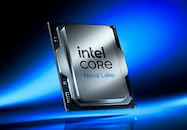
According to well-known Intel leaker Jaykihn, Intel is preparing two "Nova Lake-S" CPU models with a 22-core configuration, enhanced by the big Last Level Cache (bLLC). These processors are part of the Core Ultra 5 400S family, and Intel is developing two mid-range configurations, each with 22 cores. Both models will feature 6 "Coyote Cove" P-Cores, 12 "Arctic Wolf" E-Cores, and 4 LPE-Cores. This design includes a single compute die aimed at mid-range gaming rigs. Alongside the 22 cores, Intel plans to add an extra 108 MB of bLLC cache to boost gaming performance, similar to AMD's approach with its Ryzen X3D gaming CPUs, which currently lead in gaming performance. Intel aims to match raw CPU compute power with newer CPU cores and use bLLC to improve latency-sensitive tasks like gaming. The only difference between the two new models is that one is an unlocked 125 W TDP version, part of the "K" overclockable family, while the other is a 65 W base TDP model.

Recently, it has been observed that Intel's upcoming Z9x0 platform for "Nova Lake-S" will support up to 52 cores in a single LGA-1954 socket. Some early rumors suggest a PL2 power draw of 474 W, which is a significant increase over previous designs. This is understandable, considering that the design brings workstation-like core counts into the consumer sector for the first time. Regarding the socket, Intel's LGA-1954 has been pictured with a 2-lever independent loading mechanism (ILM), similar to what Intel's HEDT sector uses. This is typically reserved for larger CPU packages, and with the pin count now nearing 2,000 socket pins, it is a necessary choice for Intel. Importantly, the first "Nova Lake-S" CPU SKUs are scheduled for release in just a few months, likely leading to more rumors as we approach the final launch.
Source: Jaykihn on X
Add your own comment

279 Comments on Intel Readies Two 22-Core "Nova Lake-S" SKUs with 108 MB bLLC Cache for Gaming

#251
tsurugi
ThunderslatWell what's the point of cherry picking what it's best at instead of using actual performance numbers?

E cores are not ready for a "Unified Core" which is why NVL will still have P Cores.
I did not say e core performance is higher than p core.

I just saw some people say:
1 e core affects gaming performance, which is actually not the case.

2 e core ipc is very low, a few people here hold this view, which is actually not the case.

3 attack the intel hybrid method, but provided no evidence.
Given that all major silicon valley hardware companies use the hybrid method, it is no surprise that intel uses this method, and intel has done it very well.
e core improves MT performance well, and also improves gaming performance.
And chip area utilization is improved, which reduces intel's cost and gives you a better price, what more do you want.

4 claim that e core performance is weaker than p core, so it is not needed, but that is how hybrid works,
what do you expect, especially when the thread director ensures your foreground work runs on p core, heavy workloads run on all cores, background work runs on e core, and the main game thread prioritizes p core, how else do you want to schedule it?
Posted on Reply
#252
maximumterror
MufasaVFactually incorrect for anything except 12th gen CPUs in single thread or AVX512. We already have published IPC tests. We already have videos showing various cores shutdown and how they perform in apps, we have all the information you need to know better than this
The problem is that people keep telling me that I don't understand sarcasm and that it's foreign to me, but based on how you're triggered, I think I'm fine with sarcasm.
Posted on Reply
#253
tsurugi
maximumterrorE-core IPC is still ~30-40% lower in SPEC (SPEC IPC) tests
WrongWrongWrongWrongWrong
Skymont IPC is 90% of Zen5 INT and 78% of Zen5 FP
maximumterrorand ~35-50% lower in real-world workloads (Real IPC),
What IPC is real lol,
You are fabricating terms to defend AMD, which leads to linguistic corruption. If you want to call something else IPC as well, instead of claiming it is "real IPC," there is actually no need to use the term IPC at all.
What I have been talking about all along is SPEC2017 IPC, nothing else.
If the way you prove me wrong is not by proving that there is a problem with my data"Skymont IPC is 90% of Zen5 INT and 78% of Zen5 FP", but by saying that my IPC is not real, and yours are, this is very ridiculous and makes no sense.

Anyway, SPEC is still a benchmark widely recognized by the industry, which is not decided by you and me.
maximumterrorbecause the Zen6 architecture is much broader and more powerful. So, claims that E-core IPC (now you corrected yourself to SPEC IPC) is the same as Zen 6 is incorrect.
Zen6 (theoretical, because it is not yet released) is faster not only due to larger resources and higher frequencies, but also due to a better front-end, better branch prediction, better prefetching and a wider µop pipeline. This gives Zen6 both higher IPC and better real-world ST/MT performance. So, to claim that only Intel makes architectural quality improvements and AMD does not is again incorrect.
I didn't say Zen 6 has no improvements. I said it's an 8% IPC gain for Zen 6 and a 20% IPC gain for the arcticwolf E-cores, based on leaks from MLID and Raichu respectively. Until Zen 6 and Nova Lake actually drop, this is all the info I've got. I'm not claiming it's absolute fact, it's just how I'm connecting the dots given the limited data. Whether you buy into this approach or not is none of my business. You're more than welcome to think I'm wrong I'm perfectly fine with that.
maximumterrorDisabling SMT does not make sense in the gaming context, because as I understand it you are relying on features of the Zen-c architecture, which AMD gaming processors do not have at all. Because Zen-c is not used in games, but only in EPYC servers: Bergamo (Zen4c), Siena (Zen4c mix) and Turin-Dense (Zen5c) and in some laptops.
Here I don't quite understand you. Zen5 DT cpu of course supports SMT, which is an important feature, especially since it only has 8 cores and needs to rely on SMT to expand MT performance. But at the same time, some people say MT is not important and gaming performance is more important, occupying an absolute position, so the 30% performance improvement of SMT is optional, and you only need to turn off SMT to get a 2% gaming performance improvement, testing based on TPU
Posted on Reply
#254
maximumterror
tsurugiWrongWrongWrongWrongWrong
Skymont IPC is 90% of Zen5 INT and 78% of Zen5 FP


What IPC is real lol,
You are fabricating terms to defend AMD, which leads to linguistic corruption. If you want to call something else IPC as well, instead of claiming it is "real IPC," there is actually no need to use the term IPC at all.
What I have been talking about all along is SPEC2017 IPC, nothing else.
If the way you prove me wrong is not by proving that there is a problem with my data"Skymont IPC is 90% of Zen5 INT and 78% of Zen5 FP", but by saying that my IPC is not real, and yours are, this is very ridiculous and makes no sense.

Anyway, SPEC is still a benchmark widely recognized by the industry, which is not decided by you and me.

I didn't say Zen 6 has no improvements. I said it's an 8% IPC gain for Zen 6 and a 20% IPC gain for the arcticwolf E-cores, based on leaks from MLID and Raichu respectively. Until Zen 6 and Nova Lake actually drop, this is all the info I've got. I'm not claiming it's absolute fact, it's just how I'm connecting the dots given the limited data. Whether you buy into this approach or not is none of my business. You're more than welcome to think I'm wrong I'm perfectly fine with that.

Here I don't quite understand you. Zen5 DT cpu of course supports SMT, which is an important feature, especially since it only has 8 cores and needs to rely on SMT to expand MT performance. But at the same time, some people say MT is not important and gaming performance is more important, occupying an absolute position, so the 30% performance improvement of SMT is optional, and you only need to turn off SMT to get a 2% gaming performance improvement, testing based on TPU
None of the SPEC tests measure true IPC.
SPEC measures overall performance, not IPC. I doubt if you have access to such equipment to measure IPC or whatever you call SPEC IPC. As for defending AMD, I have nothing to say, because it seems to me that it is the other way around because in the comment you yourself suggested disabling SMT on AMD processors, because they are bad for games, because as you know, games are single-thread limited.. Although the statements that SMT on AMD processors spoils gaming performance are completely false.
Posted on Reply
#255
igormp
maximumterrorNone of the SPEC tests measure true IPC.
SPEC measures overall performance, not IPC. I doubt if you have access to such equipment to measure IPC or whatever you call SPEC IPC. As for defending AMD, I have nothing to say, because it seems to me that it is the other way around because in the comment you yourself suggested disabling SMT on AMD processors, because they are bad for games, because as you know, games are single-thread limited.. Although the statements that SMT on AMD processors spoils gaming performance are completely false.
What even is the so called "true IPC" that you keep throwing around?
"IPC" isn't just a single static number. You can try to calculate the theoretical maximum IPC of a CPU for a given instruction and access patterns, and you can have the measured IPC which varies per application/workload pattern.

And most CPUs have performance counters that indicate IPC values and lots of other related metrics, such as:
sudo perf stat -Ba stress -c 1 -t 5
stress: info: [3224938] dispatching hogs: 1 cpu, 0 io, 0 vm, 0 hdd
stress: info: [3224938] successful run completed in 5s

Performance counter stats for 'system wide':

29.612 context-switches # 185,0 cs/sec cs_per_second
160.040,58 msec cpu-clock # 32,0 CPUs CPUs_utilized
444 cpu-migrations # 2,8 migrations/sec migrations_per_second
28.774 page-faults # 179,8 faults/sec page_faults_per_second
59.878.757 branch-misses # 0,2 % branch_miss_rate (49,98%)
26.894.184.830 branches # 168,0 M/sec branch_frequency (50,00%)
40.052.641.677 cpu-cycles # 0,3 GHz cycles_frequency (66,67%)
95.034.555.618 instructions # 2,4 instructions insn_per_cycle (50,02%)
14.460.087.428 stalled-cycles-frontend # 0,36 frontend_cycles_idle (50,00%)

5,001317127 seconds time elapsed

sudo perf stat -Ba python -c "print(sum(i for i in range(1, 10000000)))"
49999995000000

Performance counter stats for 'system wide':

1.263 context-switches # 189,7 cs/sec cs_per_second
6.657,22 msec cpu-clock # 31,6 CPUs CPUs_utilized
87 cpu-migrations # 13,1 migrations/sec migrations_per_second
8.912 page-faults # 1338,7 faults/sec page_faults_per_second
1.457.101 branch-misses # 0,2 % branch_miss_rate (49,53%)
902.188.322 branches # 135,5 M/sec branch_frequency (49,80%)
1.570.515.018 cpu-cycles # 0,2 GHz cycles_frequency (66,62%)
5.169.237.326 instructions # 3,2 instructions insn_per_cycle (50,47%)
424.862.036 stalled-cycles-frontend # 0,26 frontend_cycles_idle (50,21%)

0,207911219 seconds time elapsed

IPC of 2.4 and 3.2 for the above silly examples.
Posted on Reply
#256
Thunderslat
tsurugiI did not say e core performance is higher than p core.

I just saw some people say:
1 e core affects gaming performance, which is actually not the case.

2 e core ipc is very low, a few people here hold this view, which is actually not the case.

3 attack the intel hybrid method, but provided no evidence.
Given that all major silicon valley hardware companies use the hybrid method, it is no surprise that intel uses this method, and intel has done it very well.
e core improves MT performance well, and also improves gaming performance.
And chip area utilization is improved, which reduces intel's cost and gives you a better price, what more do you want.

4 claim that e core performance is weaker than p core, so it is not needed, but that is how hybrid works,
what do you expect, especially when the thread director ensures your foreground work runs on p core, heavy workloads run on all cores, background work runs on e core, and the main game thread prioritizes p core, how else do you want to schedule it?
I don't agree with any of those. Still it seems you went out of your way to make Zen 6 sound bad just because people said incorrect things about Intel. For one, I find 20% IPC over Darkmont to be optimistic. Intel already made massive gains with Skymont. Darkmont was not much better since a lot of the low hanging fruit had been picked. Also you say 8% IPC for Zen 6 then claim MLID, I searched and AI said MLID said 10-15% IPC in the video (which I am not going to watch) which sounds more realistic. Also Zen 6 will be jumping from N4 to N2 so it may gain some frequency as well. I think the 7GHz rumors are absurd, but 6.2-6.5GHz sounds possible.

There's just too many unknowns to be confident in which will be better overall, other than 52C NVL having the MT lead.
Posted on Reply
#257
tsurugi
maximumterrorNone of the SPEC tests measure true IPC.
SPEC measures overall performance, not IPC. I doubt if you have access to such equipment to measure IPC or whatever you call SPEC IPC. As for defending AMD, I have nothing to say, because it seems to me that it is the other way around because in the comment you yourself suggested disabling SMT on AMD processors, because they are bad for games, because as you know, games are single-thread limited.. Although the statements that SMT on AMD processors spoils gaming performance are completely false.
That is one way to put it, SPEC is just a synthetic test.
My comment about smt gaming is backed by TPU actual test results, do you have any.
ThunderslatI don't agree with any of those. Still it seems you went out of your way to make Zen 6 sound bad just because people said incorrect things about Intel. For one, I find 20% IPC over Darkmont to be optimistic. Intel already made massive gains with Skymont. Darkmont was not much better since a lot of the low hanging fruit had been picked. Also you say 8% IPC for Zen 6 then claim MLID, I searched and AI said MLID said 10-15% IPC in the video (which I am not going to watch) which sounds more realistic. Also Zen 6 will be jumping from N4 to N2 so it may gain some frequency as well. I think the 7GHz rumors are absurd, but 6.2-6.5GHz sounds possible.

There's just too many unknowns to be confident in which will be better overall, other than 52C NVL having the MT lead.
AMD is using a strategy similar to intel tick-tock in zen4/zen5/zen6. Zen4 and zen6 are minor IPC improvements + major clock increases. While zen5 is a major IPC improvement with almost no clock increase. With zen3 as 100%, zen4 is int 106.7% fp 110.7%, zen5 is int 118% fp 139%.

Zen6 just needs to lift some IPC like zen4 did, an increase of less than 10% is basically in line with expectations. I mean SPEC int/fp IPC, I don't care about other various IPC.

Zen6 reaching 6.5ghz looks very good, I think this is a bit optimistic computationally, but it is also highly possible, given that information from leakers has already been obtained, who knows.

For darkmont, I didn't originally think it would have an IPC increase, it is just what it is, an architecture that ports skymont from n3b to 18a. When intel makes such a process modification, or a simple cache change, they will also give it a new architecture name. Similar to cypress cove and sunny cove, golden cove and redwood cove, sunny cove and willow cove.
And darkmont still has 5%, which exceeds expectations. Because the e core team has stronger execution than the p core team, and the architecture itself also has more potential.

Arctic wolf is a 2-year IPC improvement cycle, and such changes have happened many times for e cores. the evolutionary history of this architecture is also why people have confidence in it. silvermont 50%, tremont is 30%, gracemont 25%? skymont is int 22% fp 48% with ring (intel claim 38% and 68% for lp-e core without ring)

And I have already lowered expectations, estimating that the arctic wolf 20% IPC is for over skymont rather than darkmont.
Posted on Reply
#258
Six_Times
Finally soon. I've been waiting nearly a decade for Nova lake. :laugh:
Posted on Reply
#259
efikkan
tsurugiWeak e core IPC is the same as zen6. Unified Core is based on e core,
in fact it is the next generation of arctic wolf/golden eagle.
, and is still divided into p/e core hybrid.
Hybrid is a common approach for all Silicon Valley hardware manufacturers, apple, amd, intel, qualcomm, which shows that hybrid has great advantages.
In fact intel provides 2x MT. after amd introduces 12 core, even amd fans will go 12 core, 8 core era will be finished
Now at 11 pages in, people are still harping on this nonsense?
As stated, E-cores have weak front-ends and share cache, and only work well with async workloads. Most "IPC" estimates are based of batch loads, and synchronization isn't even a part of it. Most of what a game engine does is highly synchronized. The only way E-cores will help gaming is by offloading other work to E-cores so the P-cores are less "interrupted" by background tasks.
Posted on Reply
#260
BoggledBeagle
efikkanNow at 11 pages in, people are still harping on this nonsense?
As stated, E-cores have weak front-ends and share cache, and only work well with async workloads. Most "IPC" estimates are based of batch loads, and synchronization isn't even a part of it. Most of what a game engine does is highly synchronized. The only way E-cores will help gaming is by offloading other work to E-cores so the P-cores are less "interrupted" by background tasks.
I just ran Shadow of the Tomb raider benchmark at following settings:

1) 8P cores at 4700 MHz

2) 1P core at 800 MHz (impossible to eliminate P cores more than this) and 16 E cores at 4700 MHz

3) Default (8P at 5400 MHz and 16E at 4700 MHz).

The results:

8P cores at 4700 MHz:


1P core at 800 MHz and 16 E cores at 4700 MHz:


Default (8P at 5400 MHz and 16 cores at 4700 MHz:


Are the E cores really that unusable for gaming, as you are trying to claim? What did you base your claim on?
Posted on Reply
#261
MufasaV
efikkanNow at 11 pages in, people are still harping on this nonsense?
As stated, E-cores have weak front-ends and share cache, and only work well with async workloads. Most "IPC" estimates are based of batch loads, and synchronization isn't even a part of it. Most of what a game engine does is highly synchronized. The only way E-cores will help gaming is by offloading other work to E-cores so the P-cores are less "interrupted" by background tasks.
Why does that offend you when AMD P cores have always used less resources than Intel, so do you argue that benchmarks showing otherwise must be wrong and Intel should actually be 20% ahead in ST? How is it different from the E core situation? We are not guessing here. We have E core benchmarks. We have P core benchmarks. We have AMD benchmarks. We know where Darkmont, Lion Cove and Zen 5 and Zen 5c stand relative to each other IPC wise and by roughly how much.
I don't agree with any of those. Still it seems you went out of your way to make Zen 6 sound bad just because people said incorrect things about Intel. For one, I find 20% IPC over Darkmont to be optimistic. Intel already made massive gains with Skymont. Darkmont was not much better since a lot of the low hanging fruit had been picked. Also you say 8% IPC for Zen 6 then claim MLID, I searched and AI said MLID said 10-15% IPC in the video (which I am not going to watch) which sounds more realistic. Also Zen 6 will be jumping from N4 to N2 so it may gain some frequency as well. I think the 7GHz rumors are absurd, but 6.2-6.5GHz sounds possible.
Now how that compares to zen 6, I don't get how E core IPC potential (at the low clocks they operate in) gain make AMD look bad. Zen 6 already is supposed to clock like a liquid nitrogen cooled CPU with a whole ghz added, in the same die size and an IPC gain on top of that. If that overall gain looks poor to you, then somehow we are supposed to treat AMD as GODS or Intel engineers in 2 different core tams as completely useless the comapany needs to shut down. Whereas Novalake in the exacts same node as Zen6, is supposed to have up to 50% larger tile/chiplet, only achieve parity in clockspeeds vs trash N3B when even Apple managed a clock boost just moving to N3E vs N3B, so how can they fail to slightly edge out AMD in IPC gain on desktop after 2 gens of IPC improvement from Arrowlake to Pantherlake to Novalake? Pantherlake gave 5% IPC gains for both P core and E core compared to Arrowlake and Arctic wolf has far higher comprehensive changes and expansions than Darkmont did. Some of which are why AVX512 is making a return.
Posted on Reply
#262
Contra
BoggledBeagleAre the E cores really that unusable for gaming, as you are trying to claim? What did you base your claim on
Why are you testing if you can't do it correctly? Why this resolution and not 4K or 720p? What if you try it on all of them? Or 4K but with performance scaling? All the tests have already been done correctly:

www.techpowerup.com/review/intel-core-i9-12900k-e-cores-only-performance/

No need to post your fantasies about e-cores replacing p-cores in 1-IPC workloads. Even the developers of these cores would never say that.
Posted on Reply
#263
BoggledBeagle
ContraWhy are you testing if you can't do it correctly? Why this resolution and not 4K or 720p? What if you try it on all of them? Or 4K but with performance scaling? All the tests have already been done correctly:

www.techpowerup.com/review/intel-core-i9-12900k-e-cores-only-performance/

No need to post your fantasies about e-cores replacing p-cores in 1-IPC workloads. Even the developers of these cores would never say that.
I am very sorry that I did not and will not meet your testing quality requirements.

I believe that the rendering resolution of the benchmark I ran was 1080p, and the P cores running at the same frequency as E cores were just 5% better. The game ran perfectly smoothly with E cores, you see no significant dip in min FPS.

TPU review with an older generation CPU showed much larger difference at this resolution, something like 30%.

BTW the extra slow P core may have just worsened the performance and the E cores alone could have performed even better without it. In each case, I removed 98% of the computing power of the P cores in the E core test.
Posted on Reply
#264
tsurugi
efikkanNow at 11 pages in, people are still harping on this nonsense?
As stated, E-cores have weak front-ends and share cache, and only work well with async workloads. Most "IPC" estimates are based of batch loads, and synchronization isn't even a part of it. Most of what a game engine does is highly synchronized. The only way E-cores will help gaming is by offloading other work to E-cores so the P-cores are less "interrupted" by background tasks.
In terms of decode, the e core has a 3*3 decode, so the zen5 4 wide decode does not look as strong as the e core.
Regarding cache bandwidth and latency, you are right. intel uses a hybrid design, and it is enough for the e core to do its part. I did not discuss the e core performing better than the p core, tasks not suitable for the e core are handed over to the p core.
What I was talking about was the IPC of the e core in SPEC 2017, which looks very suitable for the tasks you mentioned that the e core is good at. Then we are in agreement.
ContraWhy are you testing if you can't do it correctly? Why this resolution and not 4K or 720p? What if you try it on all of them? Or 4K but with performance scaling? All the tests have already been done correctly:

www.techpowerup.com/review/intel-core-i9-12900k-e-cores-only-performance/

No need to post your fantasies about e-cores replacing p-cores in 1-IPC workloads. Even the developers of these cores would never say that.
This test is outdated, as 1314gen e core has been enhanced and windows has improved scheduling. In the 1314gen or newer tests, e core can improve gaming performance.


If your mindset is still stuck in 2021, you might want to update it.
ContraNo need to post your fantasies about e-cores replacing p-cores in 1-IPC workloads. Even the developers of these cores would never say that.

Stephen Robinson: Yes, I didn't say
Posted on Reply
#265
BoggledBeagle
He is talking about the exact E cores I just tested:


It seems they improved them a lot.
Posted on Reply
#266
Contra
BoggledBeagleBTW the extra slow P core may have just worsened the performance and the E cores alone could have performed even better without it.
There's no need to convince anyone. When one architecture outperforms another across a wide range of applications, including low-IPC ones, its developers will make such a claim. Just like what happened with the P6 core replacement in Netburst. Inflated expectations won't help here .
Posted on Reply
#267
igormp
tsurugiso the zen5 4 wide decode does not look as strong as the e core.
Zen 5 has 2*4-wide decode.
Posted on Reply
#268
tsurugi
igormpZen 5 has 2*4-wide decode.
Yes, you are right. the other 4-wide of zen5 needs to work under smt
Posted on Reply
#270
tsurugi
ContraDude, are you seriously smoking weed? Why did you show a 40-game P-core test here? What for? Try to work harder at Intel's marketing vomit. Read after:
the other 4-wide of zen5 needs to work under smt
This other 4-wide is useless when we discuss the situation where cpu cores do not handle high-parallel tasks
You cannot simply post the article without doing any analysis, in my view, the article actually does not contradict my comment.

But you really exposed a lot, calling e core a real physical core intel's marketing, while amd 4-wide decode only works in smt logical threads. The quality of smt is much lower than the e core threads provided by intel, and the quantity is 1/2 of intel e core.

Using your logic: is smt amd's marketing vomit? Why do people need smt, it is completely useless, I only need to play games, this kind of low-quality thread will be scheduled on my tasks, only disrupting my applications.

---
Even the smt performance provided by amd's most advanced zen5 core does not exceed what intel's first-generation e core can offer, let alone the latest skymont which provides performance very close to a p core.
You cannot provide any evidence other than the game benchmarks from when intel just released hybrid. I brought up 3 newer game tests based on 13gen and arrowlake, yet you say it is irrelevant? Then why did you post the TPU test from 2021, it makes absolutely no sense.
Posted on Reply
#271
BoggledBeagle
tsurugithe latest skymont which provides performance very close to a p core.
If Arrow lake E cores, which I demonstrated are just 5% weaker than Arrow lake P cores at the same frequency, I begin to believe that the Nova lake E cores, depending on how much are they improved and frequency they will run at, MAY actually perform better than Arrow lake P cores.

What I wrote in the third post here:
What if those new e cores are more powerful than Arrow or Raptor lake P cores? You would be getting 12 P and 6 superP cores then.
could be correct and this midrange 18 core CPU (not counting LPE cores) may actually crush the best what is now available both from Intel and AMD.
Posted on Reply
#272
tsurugi
BoggledBeagleIf Arrow lake E cores, which I demonstrated are just 5% weaker than Arrow lake P cores at the same frequency, I begin to believe that the Nova lake E cores, depending on how much are they improved and frequency they will run at, MAY actually perform better than Arrow lake P cores.

What I wrote in the third post here:

could be correct and this midrange 18 core CPU (not counting LPE cores) may actually crush the best what is now available both from Intel and AMD.
Lion cove itself has serious issues, which is also the reason why e core and p core performance is close. It shouldn't be difficult for the next generation e core to surpass arrowlake's p core.
Posted on Reply
#273
BoggledBeagle
tsurugiLion cove itself has serious issues
What issues? I must admit that I do not follow details about the architecture too closely.
Posted on Reply
#274
tsurugi
BoggledBeagleWhat issues? I must admit that I do not follow details about the architecture too closely.
First, Lion Cove failed to make it to DC, and its IPC increase was only 9%, which already hinted at the problem. Lion Cove has serious issues with branch prediction, and its L3 latency regressed compared to Raptor Cove. Problem still exists in Cougar Cove and needs to be resolved in Coyote Cove. intel focused Lion Cove on consumer products and canceled p core SMT, a decision that affects the product competitiveness of the next generation of DC DMR.
Posted on Reply
#275
Contra
BoggledBeagleIf Arrow lake E cores
In these tests, the entire load was on the P cores. The first test compares SMT on/off, while the second simply compares the effect of enabling and disabling the e-cores - just gaming mode. TPUs have this test:

www.techpowerup.com/review/rtx-4090-53-games-core-i9-13900k-e-cores-enabled-vs-disabled/

This guy @tsurugi is just trying to fool everyone with Intel's marketing vomit and doesn't see a problem with it. I suggest we stop this pointless discussion of rumors and things that don't exist - when e-cores cores become the new P-cores, we'll see them as such. For now, it's just more junk with a different architecture, instruction set, etc., and limited use in desktop applications.
Posted on Reply
Add your own comment
Nov 12th, 2026 07:35 PST change timezone

New Forum Posts

Popular Reviews

TPU on YouTube

Controversial News Posts