Friday, July 3rd 2026

Intel Readies Two 22-Core "Nova Lake-S" SKUs with 108 MB bLLC Cache for Gaming

According to well-known Intel leaker Jaykihn, Intel is preparing two "Nova Lake-S" CPU models with a 22-core configuration, enhanced by the big Last Level Cache (bLLC). These processors are part of the Core Ultra 5 400S family, and Intel is developing two mid-range configurations, each with 22 cores. Both models will feature 6 "Coyote Cove" P-Cores, 12 "Arctic Wolf" E-Cores, and 4 LPE-Cores. This design includes a single compute die aimed at mid-range gaming rigs. Alongside the 22 cores, Intel plans to add an extra 108 MB of bLLC cache to boost gaming performance, similar to AMD's approach with its Ryzen X3D gaming CPUs, which currently lead in gaming performance. Intel aims to match raw CPU compute power with newer CPU cores and use bLLC to improve latency-sensitive tasks like gaming. The only difference between the two new models is that one is an unlocked 125 W TDP version, part of the "K" overclockable family, while the other is a 65 W base TDP model.

Recently, it has been observed that Intel's upcoming Z9x0 platform for "Nova Lake-S" will support up to 52 cores in a single LGA-1954 socket. Some early rumors suggest a PL2 power draw of 474 W, which is a significant increase over previous designs. This is understandable, considering that the design brings workstation-like core counts into the consumer sector for the first time. Regarding the socket, Intel's LGA-1954 has been pictured with a 2-lever independent loading mechanism (ILM), similar to what Intel's HEDT sector uses. This is typically reserved for larger CPU packages, and with the pin count now nearing 2,000 socket pins, it is a necessary choice for Intel. Importantly, the first "Nova Lake-S" CPU SKUs are scheduled for release in just a few months, likely leading to more rumors as we approach the final launch.
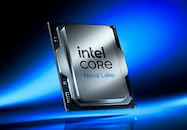
Source: Jaykihn on X
Add your own comment

279 Comments on Intel Readies Two 22-Core "Nova Lake-S" SKUs with 108 MB bLLC Cache for Gaming

#176
AusWolf
JustBenchingWhy shouldn't I be using my main pc for excel browsing and working? Lol what?
Nobody said that. The point is that if you're worried about the costs of a couple of Watts at idle, then a £500+ CPU is probably not what you're looking at to begin with.
JustBenchingOf course you can buy a t sku for a DIY build. Give me the go ahead I'll get a 14900t for you, delivered next day locally. Maybe in the US you can't, I have no idea, but in EU you canm
In the UK you can't, either. But you can buy a non-suffix 14900 or 285, which are equally reasonable options, imo. I'd be looking at one of them if I wanted another Intel build.
JustBenchingWell after reading comments here and in other threads I was expecting my 9800x3d to smash your 270k in efficiency. Turns out people are lying I guess
The 9800X3D is a bad example for efficiency, as well as value. I'd rather talk about the 7800X3D, 9700X or 7700 (non-X) in this regard. Those are the real efficiency kings.
Posted on Reply
#177
JustBenching
AusWolfNobody said that. The point is that if you're worried about the costs of a couple of Watts at idle, then a £500+ CPU is probably not what you're looking at to begin with.
Why not? I don't understand this argument at all.

Also it's not a couple of watts. Again, another screenshot from today


This is after a couple of hours of playing assassins creed (streamed to my tablet), 3 hours of browsing looking for furniture for my new house and a bit of youtubing. Average power draw is at 8.5w. An equivalent AMD chip would be at or above 50. To me that's a pretty big difference. If we don't care about these differences then we might as well go back to incandescent light bulbs. And it's fine if you don't care but pretending that im off my mind for caring is really weird to me
Posted on Reply
#178
iameatingjam
Vayra86Not once in a PC's lifetime ever in the history of PCs was idle wattage an issue for anyone. It really is the last hill to die on wrt a comparative discussion between two brands :) Let's appreciate that 30W is HALF an old fashioned light bulb.
Geeze man ( wish I still had the unedited version) when I said these things aren't worth fighting over, it wasn't because there was no merit to them, for example I leave my computer on all the time because 1) it is the house's media server and 2) to seed torrents. I think its advantageous to have a low idle power usage for those tasks. Other people have other examples, but there's a lot of near idle things that can be lumped into that category.

I said it because there is an actual threat to x86 that either the fall ( or exit from the x86 market in a possible buy-out situation ) from either player would essentially be a death blow. So whether you prefer amd or intel, I say, root for both, and not because you think that will make your favourite product cheaper, but because it will make your favorite product (and potentially diy computing as we know it) continue existing period.
Posted on Reply
#179
Wasteland
I keep my machines on basically 24/7, because I like to remote into them. They also run fairly frequent automated tasks. One of them is a file server.

My habits may not be super common, but they aren't exactly unknown either. I believe the goofballs at Linus Tech Tips noted that they do the same in a semi-recent video. This leave-on-for-remote-access custom is perhaps more relevant nowadays for so-called "gaming rigs" than it is for the generic home computer, because you can use Moonlight/Sunshine or even Steam Remote Play to stream games from your gaming rig to just about any other device, phone/tablet/television/handheld.

And of course, "idle" doesn't actually mean "unattended." There's a solid chance that your CPU is effectively idle for a majority of the time that you're sitting at your machine.

Do I actually care about an extra ~20 Watts at idle? No, not really. It's a very minor point in the grand scheme. I care more about e.g. whether a CPU has an IGP. But if we're in the middle of a discussion about how X CPU consumes 50 or even 100 fewer watts in gaming, then a 20 watt disadvantage at all other times is obviously worth mentioning. And in non-gaming MT workloads? Well, usually I'm happy to spend more power if it saves time.
Posted on Reply
#180
Rulumi
I mean, why is there so much discussion about idle and low load power consumption? Current chiplet IO die and Infinity Fabric in desktop designs from AMD consume quite a bit just to exist, that's just a fact, wether it matters to oneself or not it's a different matter of course.

Core i7 14700 with a YouTube video in 1440p 60 FPS (AV01) playing for around 20 minutes:

iameatingjamWell tbh, I already am satisfied with my 14700kfs performance. I just... well, its hard to shake the feeling that intel's microcode fixes were more like bandaid fixes. And I've taken every possible precaution. But it still gives me anxiety that I never know when the thing could fail. I guess thats true of any component but these just don't have the best reputation for longevity. My first one died within a month. This one... has been much better but I've also used it with baby gloves on. It would be nice to not have to worry about that so much.

I know 14700kf > 270K PLUS isn't a huge upgrade. But I also game at 4k60, so on the gaming side, at this point in time, pretty much any modern half decent cpu will do. But I also do encoding and on that front, well, the 14700kf is also pretty impressive. So performance wise I'm already satisfied. Its just like with ram and ssds though. SSDs, I sure got my fill when they were cheap, ram.... not so much. Will I be asking myself the same question if its cpus up next?

So yeah, I guess its mostly fear based in these uncertain times.
It should be fine if you have your firmware updated with the updated microcode, ideally right now at least 0x12F. But if you are worried you could try manually setting a lower IA VR Voltage Limit that you feel more comfortably with, also probably keep CEP enabled unless you really need to disable it?
Posted on Reply
#181
Thunderslat
RulumiI mean, why is there so much discussion about idle and low load power consumption? Current chiplet IO die and Infinity Fabric in desktop designs from AMD consume quite a bit just to exist, that's just a fact, wether it matters to oneself or not it's a different matter of course.
That's a great question. Something to complain about before it gets fixed (rumor) in Zen 6?
Posted on Reply
#182
AusWolf
JustBenchingWhy not? I don't understand this argument at all.
Have you heard the term "penny wise, pound stupid"? You don't buy expensive stuff just to save a few pennies on some other aspect of it.

If money is so critical that you absolutely cannot afford an extra £2.5 a month for electricity, then how can you afford a £500+ CPU? It's like buying a brand new $30k car just to save 5 bucks on your monthly fuel. It doesn't make any monetary sense.
JustBenchingAlso it's not a couple of watts. Again, another screenshot from today


This is after a couple of hours of playing assassins creed (streamed to my tablet), 3 hours of browsing looking for furniture for my new house and a bit of youtubing. Average power draw is at 8.5w. An equivalent AMD chip would be at or above 50. To me that's a pretty big difference. If we don't care about these differences then we might as well go back to incandescent light bulbs. And it's fine if you don't care but pretending that im off my mind for caring is really weird to me
It would not be 50 W. My 9700X eats about 25 W at idle, and maybe 50-55 in gaming. So that average value would be closer to 30-35 W. Sure, it's not 8.5, but we're arguing about a 20-25 W difference, which is about the range that we discussed above: 2-3 quid a month with 8 hours of activity per day. You can say that you don't like the idea of throwing any money away, which is cool, but don't tell me that this difference is a critical deciding factor that makes or breaks buying a new high end CPU.
RulumiI mean, why is there so much discussion about idle and low load power consumption? Current chiplet IO die and Infinity Fabric in desktop designs from AMD consume quite a bit just to exist, that's just a fact,
Yes.
Rulumiwether it matters to oneself or not it's a different matter of course.
That's exactly what the discussion is about. :)

Personally, I find it hard to believe that idle power consumption is such an important factor for someone owning a high end CPU.
Posted on Reply
#183
igormp
AusWolfPersonally, I find it hard to believe that idle power consumption is such an important factor for someone owning a high end CPU.
For me it's an important factor, but far from being the top most important one. Each of my 3090 is currently idling at 40W, so the CPU's idle power consumption becomes insignificant compared to that.
Posted on Reply
#184
Contra
As long as these are different core architectures, it's crap. The same instruction set means nothing when your compiler can't optimize the code for the execution units of a specific core, and instead, at best, you'll get optimizations for electronic garbage. Look at the latency parameters (in cycles) on the main operations, queue failures, etc compared to P-cores - this is complete crap, and a different design paradigm - smaller reordering structures, more cycles in waits/fails, more execution cycles. They can have as large a set of execution units as they want, but if the execution latencies are huge. Games are a typical 1-IPC workload on any modern P-core. This same game will have at best 0.5-0.8 IPC on ecores. After all this, we'll look at the core frequency, and that will only worsen the relative performance of ecores. For example: chipsandcheese.com/p/meteor-lakes-e-cores-crestmont-makes-incremental-progress
and
chipsandcheese.com/p/skymont-in-gaming-workloads

chipsandcheese.com/p/skymont-in-desktop-form-atom-unleashed
Posted on Reply
#185
BoggledBeagle
Contra... it's complete crap. ... electronic garbage. .... electronic garbage. ... complete crap ... garbage ... scoundrels .... blatant lie ... electronic garbage ... electronic garbage ... Completely useless crap.
WOW. You may try using a thesaurus to use different expressions, you are repeating yourself a lot.
Posted on Reply
#186
MufasaV
ContraAs long as these are different core architectures, it's complete crap. They should completely eliminate electronic garbage. The same instruction set means nothing when your compiler can't optimize the code for the execution units of a specific core, and instead, at best, you'll get optimizations for electronic garbage. Look at the latency parameters (in cycles) on the main operations, queue failures, etc compared to P-cores - this is complete crap, and a different design paradigm - namely, high-latency cores are garbage - smaller reordering structures, more cycles in waits/fails, more execution cycles. And after this, some scoundrels write that the IPC of the processor is the same as that of P-cores, which is a blatant lie. They can have as large a set of execution units as they want, but if the execution latencies are huge, it's simply not a real-time core. Games are a typical 1 IPC workload on any modern P-core. This same game will have at best 0.5 IPC on electronic garbage. After all this, we'll look at the core frequency, and that will only worsen the relative performance of electronic garbage. Completely useless crap. For example: chipsandcheese.com/p/meteor-lakes-e-cores-crestmont-makes-incremental-progress
and
chipsandcheese.com/p/skymont-in-gaming-workloads
Crestmont is not P core level, Skymont is, and skymont is well over 30% IPC lift over crestmont so it's very important to distinguish the two. Based on what benchmarks or micro-benchmarks do you assert the claim horrible latency among other uncharitable claims against this line of architectures.
Posted on Reply
#187
Vayra86
iameatingjamGeeze man ( wish I still had the unedited version) when I said these things aren't worth fighting over, it wasn't because there was no merit to them, for example I leave my computer on all the time because 1) it is the house's media server and 2) to seed torrents. I think its advantageous to have a low idle power usage for those tasks. Other people have other examples, but there's a lot of near idle things that can be lumped into that category.

I said it because there is an actual threat to x86 that either the fall ( or exit from the x86 market in a possible buy-out situation ) from either player would essentially be a death blow. So whether you prefer amd or intel, I say, root for both, and not because you think that will make your favourite product cheaper, but because it will make your favorite product (and potentially diy computing as we know it) continue existing period.
Agreed, I'm not really on anyone's camp or color either way, never have been, and I agree, low idle power is an advantage. The real question to me though is, 'what's a dealbreaker' and high full load wattages are more likely a dealbreaker than some 15-20W gap in idle usage.

And if a low idle usage is a 'this is my go-to CPU' situation when you're really looking for a workstation-class CPU in terms of core count, I think those are two very wildly different use cases combined. How many do that in practice? For those that do, sure thing.

I think the real question these CPUs will answer for us is 'Can we have it all at the same time'? Low idle wattage, X3D responsiveness in realtime tasks like gaming WITH low power envelope, and high MT performance where it counts.
BoggledBeagleWOW. You may try using a thesaurus to use different expressions, you are repeating yourself a lot.
At least he didn't contra himself :)
AusWolfHave you heard the term "penny wise, pound stupid"? You don't buy expensive stuff just to save a few pennies on some other aspect of it.

If money is so critical that you absolutely cannot afford an extra £2.5 a month for electricity, then how can you afford a £500+ CPU? It's like buying a brand new $30k car just to save 5 bucks on your monthly fuel. It doesn't make any monetary sense.
There is another expression though, which generally makes the rich, richer: 'Every little bit helps'.

By similar rationale we indeed do buy better cars that have higher mileage, electric cars for example are by definition more expensive to get into, but pay back over time. Placing solar is spending half a dozen K to save a hundred a month. Its the exact same picture of cost/benefits too, in a relative sense.

And 2,5 per month over 70-80 months is serious money.
Posted on Reply
#188
tsurugi
Hecate91Every PC with DDR5 takes longer to boot than DDR4, though memory context restore fixes long boot times for the most part. I turn my PC on once or twice a day, I'm not at it all day though.
Idle power is very important for PC. Because most people, just like you, only turn on the computer once or twice a day but do not sit in front of it all the time, depending on usage, which varies from person to person.
High-performance PCs can achieve high performance, but it does not mean they must do so, high-performance PCs can also watch youtube and use office, the value of multi-purpose is more important than performance itself, your claim that high-performance PCs cannot do these is completely wrong.
The test results from TPU are already clear, the CPU power consumption of 9800x3d during gaming is lower than 270k plus, but about the same as 250k plus. However, the amd overall system has higher outlet power at idle, which shows that although the 9800x3d CPU saves more power during gaming, the total system power consumption is about the same as 270k plus, and inferior to 250k plus, if considering energy saving and lowering indoor temperature, 250k plus is more suitable.
And because people do not just game, it also needs to be weighted based on the proportion of idle/youtube/gaming time. This makes the overall system power of the 270k plus more energy efficient than the 9800x3d as well.
Vayra86Agreed, I'm not really on anyone's camp or color either way, never have been, and I agree, low idle power is an advantage. The real question to me though is, 'what's a dealbreaker' and high full load wattages are more likely a dealbreaker than some 15-20W gap in idle usage.

And if a low idle usage is a 'this is my go-to CPU' situation when you're really looking for a workstation-class CPU in terms of core count, I think those are two very wildly different use cases combined. How many do that in practice? For those that do, sure thing.

I think the real question these CPUs will answer for us is 'Can we have it all at the same time'? Low idle wattage, X3D responsiveness in realtime tasks like gaming WITH low power envelope, and high MT performance where it counts.


At least he didn't contra himself :)


There is another expression though, which generally makes the rich, richer: 'Every little bit helps'.

By similar rationale we indeed do buy better cars that have higher mileage, electric cars for example are by definition more expensive to get into, but pay back over time. Placing solar is spending half a dozen K to save a hundred a month. Its the exact same picture of cost/benefits too, in a relative sense.

And 2,5 per month over 70-80 months is serious money.
In the end, what humans get is the noise index, indoor temperature, and duration. High MT performance brings faster work, thereby reducing indoor temperature rise and noise duration. People who truly use it as a workstation need MT performance even more, which makes any 8-core low-end cpu non-selectable, but anyone can need higher MT performance to complete tasks faster and make waiting easier.
Posted on Reply
#189
maximumterror
Great, people are talking about performance product and the main discussion is about idle power consumption....funny 😁
Posted on Reply
#190
Thunderslat
Some people are acting as if standby hasn't been a thing for well over 20 years. You don't have to shut down your computer every time. And to wake it up takes mere seconds.
maximumterrorGreat, people are talking about performance product and the main discussion is about idle power consumption....funny 😁
It's all they got left until NVL or Zen 6 comes out. That and performance per dollar.
Posted on Reply
#191
JustBenching
It's unreal to me that people pretend to care about full load power draw to make an argument against intel (even though intel chips don't really have higher full load power draw anyways, lol) even though that's something you can fix in about 3 to 5 seconds, yet go 180 and pretend idle and low load power draw isn't important and we shouldn't care about it. Absolutely unreal.
AusWolfThe 9800X3D is a bad example for efficiency, as well as value. I'd rather talk about the 7800X3D, 9700X or 7700 (non-X) in this regard. Those are the real efficiency kings.
But it isn't a bad example. The 9800x3d is both faster and more efficient than the 7800X3D. It would take 5 milliseconds in the bios to achieve that. It's only a value argument that can be made for the 7800x3d,not an efficiency one. If they cost the same money everyone that wanted an efficient cpu would pick the 9800x3d over the 7800x 3d every day of the week. The 7x3d is slow, not efficient.
Posted on Reply
#192
tsurugi
maximumterrorGreat, people are talking about performance product and the main discussion is about idle power consumption....funny 😁
This is not very important, but it is part of the economic calculation. Electricity costs vary by country; if in the eu, the price will be higher. Choosing amd might increase the electricity bill by $15-20 per year. In various countries, calculating based on an extra $20-50 over 4 years of use, this is a small amount of money compared to the price of the 9800x3d. But this actually makes the 270k plus/250k plus cheaper. Even with the 250k plus, mt performance leads the 9800x3d by a lot. The disadvantage in idle power will further increase the purchase cost of choosing amd.
ThunderslatSome people are acting as if standby hasn't been a thing for well over 20 years. You don't have to shut down your computer every time. And to wake it up takes mere seconds.

It's all they got left until NVL or Zen 6 comes out. That and performance per dollar.
Is Windows sleep something you use often? I learned that sleep mode might be a cause of damage to the 9800x3d. And for people who do not like sleep mode, this issue is still valid.
The 9800x3d is not performing better than the 270k plus. Even the 250k plus performs better than the 9800x3d, so this is not a matter of price-to-performance, but a matter of absolute performance. The 270k plus MT performance is comparable to the 9950x3d/9950x.
This makes 270k plus a better value for money compared to 9950x3d2/9950x. It has absolutely nothing to do with the 9800x3d, it is just too bad MT.
This aligns with amd product trends, when amd doesn't have it, it doesn't matter, but when amd has it, it becomes highly valuable, like 12 core compared to 8 core.
AMD cannot do like fsr4. It cannot add to 12 core for 9800x3d, so it cannot be changed, you can only spend money to upgrade. "I don't care about money, as long as the motherboard supports upgrading" is a good argument.
Posted on Reply
#193
AusWolf
Vayra86There is another expression though, which generally makes the rich, richer: 'Every little bit helps'.
Except that it doesn't. How many people do you know who put that 2 quid saved on electricity with an Intel CPU into savings, or invest, or do anything useful with it?
Vayra86By similar rationale we indeed do buy better cars that have higher mileage, electric cars for example are by definition more expensive to get into, but pay back over time. Placing solar is spending half a dozen K to save a hundred a month. Its the exact same picture of cost/benefits too, in a relative sense.

And 2,5 per month over 70-80 months is serious money.
EV batteries and solar panels degrade and need to be replaced. You also replace your CPU with another high end one way before you earn its price back on idle power savings, I guarantee that.
tsurugiIdle power is very important for PC. Because most people, just like you, only turn on the computer once or twice a day but do not sit in front of it all the time, depending on usage, which varies from person to person.
High-performance PCs can achieve high performance, but it does not mean they must do so, high-performance PCs can also watch youtube and use office, the value of multi-purpose is more important than performance itself, your claim that high-performance PCs cannot do these is completely wrong.
The test results from TPU are already clear, the CPU power consumption of 9800x3d during gaming is lower than 270k plus, but about the same as 250k plus. However, the amd overall system has higher outlet power at idle, which shows that although the 9800x3d CPU saves more power during gaming, the total system power consumption is about the same as 270k plus, and inferior to 250k plus, if considering energy saving and lowering indoor temperature, 250k plus is more suitable.
And because people do not just game, it also needs to be weighted based on the proportion of idle/youtube/gaming time. This makes the overall system power of the 270k plus more energy efficient than the 9800x3d as well.
How many hours do you spend at your PC watching Youtube and using Office for any of this to matter?

My point stands: you don't buy a high end CPU to save power on Office. There are far cheaper options out there to do that. No, you buy it because you need high performance. And as such, idle power is secondary.
JustBenchingBut it isn't a bad example. The 9800x3d is both faster and more efficient than the 7800X3D. It would take 5 milliseconds in the bios to achieve that. It's only a value argument that can be made for the 7800x3d,not an efficiency one. If they cost the same money everyone that wanted an efficient cpu would pick the 9800x3d over the 7800x 3d every day of the week. The 7x3d is slow, not efficient.
Show me a single chart in this very review where the 7800X3D isn't miles ahead of the 9800X3D in efficiency. It applies to single-thread and gaming, too, so it's not about power limits.
Posted on Reply
#194
Vayra86
AusWolfEV batteries and solar panels degrade and need to be replaced. You also replace your CPU with another high end one way before you earn its price back on idle power savings, I guarantee that.
Ehhh... yeah. All stuff degrades and needs replacement? Maintenance cost however is FAR lower, you might replace brakes and tires and fluids and thats it. Not so with an ICE... all mechanical bits can break down, and they do in fact break down way before you even started thinking about your EVs battery life. Its a perfectly fine analogy with the more energy efficient part in a PC. Running cost vs initial cost.

As for your first comment about savings, lol. Just lol. Once again you're taking a very weird, pessimistic stance that might apply to YOU but is disproved by the world around you, and not just a little bit either. Literally everyone will put money saved into somethingnelse which means the bottom line has improved; its irrelevant whats being done with it, money saved is simply not spent.
Posted on Reply
#195
AusWolf
Vayra86Ehhh... yeah. All stuff degrades and needs replacement? Maintenance cost however is FAR lower, you might replace brakes and tires and fluids and thats it. Not so with an ICE... all mechanical bits can break down, and they do in fact break down way before you even started thinking about your EVs battery life. Its a perfectly fine analogy with the more energy efficient part in a PC. Running cost vs initial cost.
What does an ICE car have that an EV doesn't besides pistons and cylinders? You don't replace those, do you? The only area where an EV is cheaper to maintain is engine oil. Oh, and belts, but replacing them every 80-100k miles is nothing compared to a battery swap. Anyway, let's stay on topic. :)
Vayra86As for your first comment about savings, lol. Just lol. Once again you're taking a very weird, pessimistic stance that might apply to YOU but is disproved by the world around you, and not just a little bit either.
It's not pessimistic. It's realistic. I've never met a single person in my life who saved more as he/she earned more. We all live to our means. It's human nature. (I'm not saying there aren't exceptions)
Posted on Reply
#196
Vayra86
AusWolfWhat does an ICE car have that an EV doesn't besides pistons and cylinders? You don't replace those, do you? The only area where an EV is cheaper to maintain is engine oil. Oh, and belts, but replacing them every 80-100k miles is nothing compared to a battery swap. Anyway, let's stay on topic. :)


It's not pessimistic. It's realistic. I've never met a single person in my life who saved more as he/she earned more. We all live to our means. It's human nature.
More savings = more means; and yes, some of that does go into savings accounts or shares or something else long term. Again; thats how people grow capital everywhere on the planet. Perhaps not at the bottom of the social ladder no; but thats both cause and effect right there. You will indeed own nothing at the end of the day if you spend everything.

As for maintenance on cars;

www.driveelectrictn.org/maintenance-costs-for-evs-vs-ice-vehicles/
EVs require less maintenance than ICE vehicles.

The U.S. Department of Energy states that, “EVs typically require less maintenance than conventional vehicles because:
  • The battery, motor and associated electronics require little to no regular maintenance
  • There are fewer fluids, such as engine oil, that require regular maintenance
  • Brake wear is significantly reduced due to regenerative braking
  • There are far fewer moving parts relative to a conventional gasoline engine.”
Because EVs run on battery power and have fewer internal fluids, they will not be subject to oil changes and do not undergo the amount of maintenance required for ICE vehicles. The Argonne National Laboratory conducted a study in which they found maintenance and repair of an EV transit bus is 40% less than the cost to maintain an ICE vehicle of the same size.
Posted on Reply
#197
AusWolf
Vayra86More savings = more means; and yes, some of that does go into savings or shares or something else long term. Again; thats how people grow capital everywhere on the planet. Perhaps not at the bottom of the social ladder no; but thats both cause and effect right there.
Bottom of the social ladder is just reality for an increasing number of people these days.
If everybody saved or invested every unused penny, the world would be a totally different place. Economy is based on scarcity for a reason. That's how it works.
Besides, we like nice things. We like them more than we like money.

But yeah, we're straying far from the topic (again). :)
Posted on Reply
#198
Vayra86
AusWolfBottom of the social ladder is just reality for an increasing number of people these days.
If everybody saved or invested every unused penny, the world would be a totally different place. Economy is based on scarcity for a reason. That's how it works.
Besides, we like nice things. We like them more than we like money.

But yeah, we're straying far from the topic (again). :)
No I dont think so. It highlights perfectly why there is so much misperception about costs to run 'a thing' versus another thing and how perception != reality.

Similar things apply to large (wide) GPUs. They tend to run loads more efficiently bc they can simply clock down more readily and therefore save power. More work units, etc. And yes the initial cost is high; but so is its resale value; you can recoup most of the difference in initial cost later down the line.

Net result? Faster part, less power in low load scenario AND more power on tap if you need it, at similar overall cost.
Posted on Reply
#199
AusWolf
Vayra86No I dont think so. It highlights perfectly why there is so much misperception about costs to run 'a thing' versus another thing and how perception != reality.

Similar things apply to large (wide) GPUs. They tend to run loads more efficiently bc they can simply clock down more readily and therefore save power. More work units, etc. And yes the initial cost is high; but so is its resale value; you can recoup most of the difference in initial cost later down the line.

Net result? Faster part, less power in low load scenario AND more power on tap if you need it, at similar overall cost.
High initial cost is for people who can afford it / need peak performance. And if you can afford it, chances are, an extra 2 bucks a month won't break the bank, either. And again, that's with an 8 hour daily idle time. If you don't have 2 bucks a month, then chances are, you can't afford a high end CPU to begin with. Or maybe, just maybe, don't let your PC run idle for 8 hours every day. So it is a pointless argument.
Posted on Reply
#200
maximumterror
tsurugiThis is not very important, but it is part of the economic calculation. Electricity costs vary by country; if in the eu, the price will be higher. Choosing amd might increase the electricity bill by $15-20 per year. In various countries, calculating based on an extra $20-50 over 4 years of use, this is a small amount of money compared to the price of the 9800x3d. But this actually makes the 270k plus/250k plus cheaper. Even with the 250k plus, mt performance leads the 9800x3d by a lot. The disadvantage in idle power will further increase the purchase cost of choosing amd.
E-cores are useless, they are designed for text file reading. The performance equivalent of E-cores is 3-8 E-cores for 1 P-core. Let's say we take an average of ~5 P-cores for 1 P-core, and the power consumption is the same. Surfing the Internet with P-cores saves 2-3 times more time, because they are much faster than E-cores. And gamers with monstrous graphics cards and economical power consumption sound a bit funny.
Posted on Reply
Add your own comment
Nov 12th, 2026 06:33 PST change timezone

New Forum Posts

Popular Reviews

TPU on YouTube

Controversial News Posts