Sunday, September 6th 2026

DLSS 5 Testing Ends in a Melted RTX 5090 Connector, Power Shoots Past 600 W
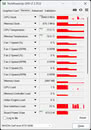
DLSS 5 seems to be contributing to increased power draw, and we have our first victim here. Videocardz reports a new melted-connector case on an MSI GeForce RTX 5090 Gaming Trio OC, which surfaced during DLSS 5 Neural Rendering testing in NBA 2K27, currently the only officially supported game. A reader nicknamed erek documented the incident, noting DLSS 5 pushed the card's power draw from around 450 W to over 600 W, which is above MSI's 575 W rating. A GPU-Z screenshot showed a peak board power reading of 613.5 W, which erek says held steady rather than spiking briefly.
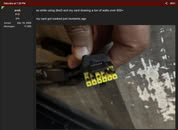
Erek reported the card stopped working shortly after, and a burning smell led him to find that the connector's plastic had melted and fused to the socket. We already reported last week that DLSS 5 can push the RTX 5090's power draw unusually high, so this seems to be the first reported case where that added power draw has burned the notorious RTX 5090 power connectors. However, it should be remembered that GPU-Z tracks total board power rather than just the auxiliary connectors, since the PCIe slot also supplies power, so the reading doesn't necessarily mean the connector carried the full load.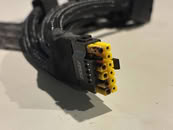
 Melted RTX 5090 connectors have shown up under plenty of other workloads too, so DLSS 5 may have contributed without being the sole cause. Given how flimsy the 12V-2x6 connector has already proven, it's not unreasonable to wonder whether a feature that keeps cards pinned at high sustained power could make these failures more common, though one case isn't enough to confirm that. NVIDIA hasn't commented on this incident or the increased power draw of DLSS 5 in general.
Source:
Videocardz
Erek reported the card stopped working shortly after, and a burning smell led him to find that the connector's plastic had melted and fused to the socket. We already reported last week that DLSS 5 can push the RTX 5090's power draw unusually high, so this seems to be the first reported case where that added power draw has burned the notorious RTX 5090 power connectors. However, it should be remembered that GPU-Z tracks total board power rather than just the auxiliary connectors, since the PCIe slot also supplies power, so the reading doesn't necessarily mean the connector carried the full load.


342 Comments on DLSS 5 Testing Ends in a Melted RTX 5090 Connector, Power Shoots Past 600 W
Those apus are also efficient, e.g 8000 ones
My shelved ryzen 7600x had 1 vs 1 the same compile times with 6 cores than the ryzen 5800x 8 core. I higly doubt 5800x needs less energy for the same compile job than the ryzen 7600x. I always check when changing motherboards, dram or cpus, how the compile times are in my gnu gentoo linux. i only buy cpus which are backwards compatible. intel can not be bought as intel only supports cpu instructions from year ~2015. Maybe the next intel motherboard generation supports also AVX512
7700 non x is also a smart choice.
My 5070Ti is drawing 4W from the slot at full load. There's a thread somewhere around here with people posting their idle power on 50-series and it has enough screenshots of GPU-Z like this to show that the 50 series pulls almost nothing from the slot and the older 40-series doesn't draw much - 15-25W depending on model.
EDIT: According to the look-up tables that "plasticized PVC" most cable jackets are made of start becoming "soft" at 55-65C, very soft at 65-75C and at 75C plus alpha, can easily deform with light pressure. At 400W I was seeing 68C and 69C on the inner-most 4 wires very near the plastic shell. At 320W that drops to 46C to 47C which according to one manufacturer is already too hot: "That range [46-47C] is acceptable for short periods, but it’s already higher than ideal for a power cable running for hours. You really want these cables staying under 45°C during normal gaming for long-term safety."
Other DLSS 5 reviews with different 5090s show card drawing up to their maximum TDP, not exceeding them. If I had to bet i'd say he used another vbios to increase the max TDP of his card.
Even if he didn't, it would still mean he pushed the TDP slider to the maximum, as the default is 575W. For a card which is known for having melting connector issues, increasing the TDP slider isn't a very smart thing to do, especially when you use a PCIE to 12V-2x6 adapter like he did.
But yeah, 3090 ti had load balancing - it's not surprising that the 4090, which dropped the load balancing, got melting issues when the 3090 ti didn't, despite being the same tdp.
5080 is a much lower tdp card, so i would suspect failure rates are considerably below 5090.
Every time a purchase is ever made, that person voted with their wallet, phrasing it as such tries to make it seem altruistic. Pretty empty statement imo.
but in nba 2k27 with dlss5 enabled it was solid streaming pegging 610+ watts without peaks and valleys or otherwise short spikes
No way should the cable get hot enough to soften the cable jacket, I see why the Wireview has a built in fan, these cables really need active cooling.I did a quick google, A high temp plastic like PA66 nylon can handle 150C, the cable jacket itself I assume is safe to 90-100C.
Wires shouldn't get too hot to touch unless wires have extremely high internal resistance, heat cycles is also what might be weakening plastics over time, maybe causing the pin contracts to go out of safe specs also since I've seen some melted cables get hot enough to blue or char metal pins.The short happened from the VRM's, and it would be less likely to happen if these 50 series cards had the same protection against load imbalance and current spikes as the 30 series had.Only 2 AMD cards use the 12vhpwr cable,Sapphire and Asrock, the rest use standard 8 pin molex conectors. At least AMD isn't forcing buyers on a defective connector.
However it's been entertaining to watch the usual people shield the $5.9T AI megacorporation, those posters must be relived they can turn this into another us vs. them argument by spinning it back onto the company they hate.
Glass-filled nylon PA66 connectors, like PA66-GF30, become deformable around 140 to 160C. The key number is the Heat Deflection Temperature (HDT) typically 150C for many grades it looked like, though some high-performance ones were listed to 240C or more (same PA66 but just with a higher glass fiber content). Common ones like we mostly see with PSUs stay pretty rigid well at 120C (while the cable is now gooey and smudgy and close to drooping/dripping), but once you hit that 140–160C range, they begin to soften and lose stiffness - he explained it as "like jello", and how that acts if there's any mechanical stress on the connector. The actual melting point (liquification) is way higher, around 260C - that's pour it in a cup or spray it onto a surface kinda liquidy. :p
On the cable-jacketing descriptions, I was on discord with a guy I know who designs FA (factory automation) equipment for SEG and knows power supply systems including cable specs well. He had the specs and we went over them as he explained what "soft" actually meant or "deform". He explained for example that the early stages of "deform" for "jacket compound" PVC means something like your fingerprints will leave a relatively deep impression in the surface and so on (that's enough for two wires under even a little pressure to push through and touch each other - not to be too kinky about it). A bit of an eye-opener when talking about power cables on a $700 ~ $5,000 card. :o
I do of course realize I'm going on and on about cable jacketing when most of the actual faults we see online appear to be from shorted, unbalanced or arcing pins in the connector. :PYeah, I think it's the case that it's getting hit from multiple sides. Unbalanced overloaded pins, partial insertion, just too much power over that cable spec and/or connector spec, and materials that do not behave well at temperature!Hehe, yep, I'm on the 9070XT ASRock Taichi OC and there have been multiple instances of melts which I could find just looking casually. That's when I began thinking to point the IR thermometer at mine under various conditions and touching the cable a lot - even in the middle of gameplay. :P
EDIT:
BTW, it was also said that safety engineering for consumer electronics and electrical goods is usually required to be double - so like if the label says 600W then the fault tolerance should actually be 1200W. Which is what I'm seeing with my card. It behaves thermally appropriate at 300W with a 600W cable. Trouble there is that the cable has 600W printed on it - not 300W. Maybe they expect DIY builders to be aware of all that or something - but even if so then we should see 1200W cables available for our 600W cards... Something is fishy here. :P
We can clearly see there are 3 separated channels behind the connector.
So the 6 pairs of wires get 2x2x2 load balancing.
The 4090 looked like a 3x2
But we can clearly see that only one 'Grey square' presented.
It is like a fork with 2 heads
They've reduced it down to 6x1 , actually there is no active load balancing anymore.
And for the 5090.
We can see there are virtually NOTHING behind the connector.
12V goes in, just one way, almost no buffer whatsoever.
Looking from an angle , behind the connector we can see that it was just one block of metal joining all the 6 +ve wires to 1 , and 6 -ve wires to another.
Even Nvidia themselves treats the 12pin connector like a joke.
It is totally useless.