Saturday, October 3rd 2026

NVIDIA Raises Shield TV Pro Price to $299, Discontinues Standard Shield TV

NVIDIA has raised the price of the Shield TV Pro from $199.99 to $299.99, effective October 2. The streaming box launched in October 2019 at $199.99 and held that price for almost seven years. Earlier this year, NVIDIA promised to keep updating the Shield TV, with hardware engineering SVP Andrew Bell saying the company had no plans to abandon it anytime soon. NVIDIA has also stopped making the standard, tube-shaped Shield TV, which had reportedly been out of stock for months. That leaves the Pro as the only Shield model in production. NVIDIA confirmed both changes in a statement. Here's what the company said:
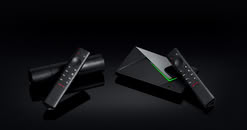
Starting October 2, SHIELD Pro will be priced at $299. The cost of components, including memory, has increased substantially across the industry. We've also stopped producing the standard SHIELD TV model as we focus on production for SHIELD TV Pro.
The hardware itself is unchanged. The Shield TV Pro still uses the Tegra X1+ chip with 3 GB of RAM and 16 GB of storage, and it supports 4K HDR with Dolby Vision. The increase doesn't seem limited to the US either, as the price reportedly went up by €100 to €299 in the Netherlands and Belgium. The new price is already showing at Amazon and Best Buy. As for NVIDIA's reasoning, it's what we have come to expect in 2026. Supply of older memory types such as DDR4 and LPDDR4 has been tight since late 2025, and the memory industry itself seems to be going through a crisis with no near-term solution in sight. NVIDIA hasn't announced a successor to the NVIDIA Shield TV.
Source: NVIDIA
Add your own comment

68 Comments on NVIDIA Raises Shield TV Pro Price to $299, Discontinues Standard Shield TV

#51
enb141
lexluthermiesterYes, but not everyone wants the very limiting Apple walled garden, so for many, your suggestion is a non-option.
I'm one of those, but running an old OS, without news of a new Nvidia Shield in the horizon. I wouldn't pick, that device as my main.
lexluthermiesterBut they are still providing security updates and it's new enough to support all current Android apps.
Still, should either update the hardware or OS, but they aren't. At least Apple TV is doing it (locked has hell) but at least you get latest up to date OS, old Apple TVs just get security updates (as Nvidia Shield)
lexluthermiesterAnd again, it's Apple, so no thanks.
I know, but Apple TV is less annoying than other apple products.
Posted on Reply
#52
jdrch
enb141live transcribe
YouTube, basically the only dedicated landscape crowdsourced video app, has this built-in server side.
enb141subtitle generation
Every streaming service and TV broadcast has CC.
lexluthermiesterBut it's not just for streaming apps. It's for gaming as well, and just because it's 8 years old does NOT mean
Referring to the new Apple TV 4K, not the Shield. The RockTek G2 and devices that use the same SoC can do everything the Shield can and more for less money and a later version of Android. More information here.
Posted on Reply
#53
lexluthermiester
enb141I know, but Apple TV is less annoying than other apple products.
That's a fair point.
jdrchThe RockTek G2 and devices that use the same SoC can do everything the Shield can and more for less money and a later version of Android.
Mali G31-MP2 is better than the TegraX1+?!? :slap:
Um, no.
Posted on Reply
#54
NorthByte
Mali-G31 MP2 definitely gets crushed by Tegra X1+ in raw 3D polygon fill and shader benchmarks for retro gaming/emulation, no doubt about that.
Where the newer Amlogic chips (like S905X4 on the RockTek/Homatics) pull ahead isn't gaming, it's modern media decoding: native hardware AV1 decode, full profile Dolby Vision FEL without red push issues, and much cooler thermals under 12nm vs the old 20nm/16nm Tegra.
So it really comes down to use-case: if you want local emulation and retro games, Tegra wins hands down. If it's strictly a dedicated media streamer for modern codecs and AV1 web feeds, the newer silicon handles the video pipeline with way less power and modern codec support.
Posted on Reply
#55
lexluthermiester
NorthByteWhere the newer Amlogic chips (like S905X4 on the RockTek/Homatics) pull ahead isn't gaming, it's modern media decoding: native hardware AV1 decode, full profile Dolby Vision FEL without red push issues
As of the 9.2.4 update in Feb of this year, those simply are not a problem.
NorthByteand much cooler thermals under 12nm vs the old 20nm/16nm Tegra.
The newest Shield models use the TegraX1+ 16nm SOC which doesn't run hot enough to ever be a problem.
NorthByteSo it really comes down to use-case: if you want local emulation and retro games
Not just retro, it'll run all current games on Google Play.
NorthByteIf it's strictly a dedicated media streamer for modern codecs and AV1 web feeds, the newer silicon handles the video pipeline with way less power and modern codec support.
That point argues 35w of power usage vs 15w or 20w. Even if you leave it on 24/7, that is less than $1 of power per month. Not a point worth debating.
Posted on Reply
#56
chrcoluk
jdrchThis pricing only makes sense to people who don't know about RockTek, Homatics, Dune, etc. All of those are certified Android boxes that are much more capable and cost less. Plus you can dual boot CoreELEC on them for some really advanced functionality.
I never heard of any of those and I am in to tech, so my guess is the majority wont have heard of them as well.
Posted on Reply
#57
NorthByte
lexluthermiesterAs of the 9.2.4 update in Feb of this year, those simply are not a problem.

The newest Shield models use the TegraX1+ 16nm SOC which doesn't run hot enough to ever be a problem.

Not just retro, it'll run all current games on Google Play.

That point argues 35w of power usage vs 15w or 20w. Even if you leave it on 24/7, that is less than $1 of power per month. Not a point worth debating.
Fair point on the electricity bill itself, nobody is sweating a dollar a month on power draw. What I meant by the lower thermal footprint on the 12nm Amlogic boxes is that they run completely fanless on a passive heatsink without needing a tiny internal blower fan that eventually collects dust inside an enclosed media cabinet. And while 9.2.4 definitely cleaned up the Dolby Vision red push, Tegra X1+ still lacks a hardware AV1 decoder block in silicon, which matters more each year as YouTube and streaming feeds shift over to AV1.
@chrcoluk Yeah, Homatics, RockTek, and Dune HD are mostly well known in the home theater and CoreELEC/Kodi niche rather than mainstream big-box retail, though SEI Robotics actually manufactures the reference Google TV boards for most of them under the hood.
Posted on Reply
#58
jdrch
lexluthermiesterMali G31-MP2 is better than the TegraX1+?!? :slap:
It has Native DVP7 FEL support, which the Tegra doesn't.
chrcolukI never heard of any of those and I am in to tech, so my guess is the majority wont have heard of them as well.
Correct. But people not having heard of something doesn't mean it doesn't exist or work. I didn't know any of this stuff existed either until this spring. Thanks to AVSforum (THE place to be if you're an AV fanatic) I know now. Check out the link I dropped earlier.
Posted on Reply
#59
lexluthermiester
jdrchIt has Native DVP7 FEL support, which the Tegra doesn't.
Ok, that is splitting hairs. What it doesn't have in hardware will be emulated in software at not serious overhead. Not at all a serious problem.
Posted on Reply
#60
jdrch
lexluthermiesterOk, that is splitting hairs
It absolutely is not. DV7 FEL has unique HDR metadata unavailable in any other format. Dolby decoder licensing for DV7 is officially restricted to 4K Blu-ray players specifically to make that medium unique and therefore valuable. Of course now that CE and other projects can decode it, it's no longer exclusive to those devices and discs, but the source of the data (physical 4K Blu-rays) is still unique and thus there is no other way to get the same metadata DV7 FEL has. Here's a whole Google Drive folder of comparison videos. The Kodi wiki breaks out DV7 FEL samples (see #21) specifically for that reason. If it didn't matter, they wouldn't. If your player can't decode DV7 FEL you're missing HDR metadata on content that has 4K Blu-ray release(s) containing it. You may be OK with that, but that doesn't change the fact that it's missing. Period.

I reiterate that you really should head over to AVSforum to learn more about all of this. It's a whole new world most people consider themselves tech experts have no clue about. I myself only learned about all of this earlier in the year.
Posted on Reply
#61
lexluthermiester
jdrchYou may be OK with that, but that doesn't change the fact that it's missing. Period.
Are you kidding?
jdrchDolby decoder licensing for DV7 is officially restricted to 4K Blu-ray players
Ok, then this is literal nothing-sauce for ANYTHING that is not a bluray player, which includes systems that can be considered alternates to the Shield.

Are you done with your off topic, ego-flex nay-sayer trolling? We get it, you don't like the Shield. Move the heck along.
Posted on Reply
#62
NorthByte
Actually, the technical issue with Dolby Vision Profile 7 FEL (Full Enhancement Layer) isn't something that can just be emulated in CPU software without serious penalties. FEL carries a secondary 1080p 10-bit video track containing the 12-bit dynamic reconstruction delta. Devices lacking a dual-decoder pipeline and dedicated DV compositing in hardware simply discard the Enhancement Layer entirely and fall back to the Base Layer (MEL fallback), discarding the additional peak brightness and color gradations encoded in the master.
The Shield is still an absolute workhorse for Plex server duties, lossless audio passthrough, and snappy navigation, but for purists chasing 1:1 UHD disc playback fidelity, the lack of modern dual-layer processing and hardware AV1 decode is why many home theater enthusiasts have shifted local playback to newer dedicated boxes.
Posted on Reply
#63
lexluthermiester
NorthByteActually, the technical issue with Dolby Vision Profile 7 FEL (Full Enhancement Layer) isn't something that can just be emulated in CPU software without serious penalties. FEL carries a secondary 1080p 10-bit video track containing the 12-bit dynamic reconstruction delta. Devices lacking a dual-decoder pipeline and dedicated DV compositing in hardware simply discard the Enhancement Layer entirely and fall back to the Base Layer (MEL fallback), discarding the additional peak brightness and color gradations encoded in the master.
Again, this feature only applies to BluRay players.
NorthByteThe Shield is still an absolute workhorse for Plex server duties, lossless audio passthrough, and snappy navigation, but for purists chasing 1:1 UHD disc playback fidelity, the lack of modern dual-layer processing and hardware AV1 decode is why many home theater enthusiasts have shifted local playback to newer dedicated boxes.
Enthusiasts are not the core audience of the Shield. The other user bringing it up was a conversational red-herring and a poor attempt to justify their displeasure.
Posted on Reply
#64
jdrch
lexluthermiesterAgain, this feature only applies to BluRay players.
As @NorthByte explained, if your playback device can't decode DV7 FEL you're literally missing part of the picture that you can't get anywhere else. There's no equivalent for it and so a Shield cannot deliver equivalent viewing experience to a 4K Blu-ray player or an Android box like the Ugoos AM6B+, AM9 Pro, RockTek G2, etc. running CoreELEC + DoVi kernel module.

There's literally an entire community of developers and users dedicated to this topic.
lexluthermiesterego-flex nay-sayer trolling?
The only other person on the thread discussing DV7 FEL agrees 🤷‍♂️ You're choosing to be ignorant of the years of research and FLOSS development into moving DV7 FEL playback beyond just 4K Blu-ray players, as well as the fact that there are players that currently support it and the Shield simply doesn't.
Posted on Reply
#65
lexluthermiester
jdrchAs @NorthByte explained, if your playback device can't decode DV7 FEL you're literally missing part of the picture that you can't get anywhere else. There's no equivalent for it and so a Shield cannot deliver equivalent viewing experience to a 4K Blu-ray player or an Android box like the Ugoos AM6B+, AM9 Pro, RockTek G2, etc. running CoreELEC + DoVi kernel module.

There's literally an entire community of developers and users dedicated to this topic.


The only other person on the thread discussing DV7 FEL agrees 🤷‍♂️ You're choosing to be ignorant of the years of research and FLOSS development into moving DV7 FEL playback beyond just 4K Blu-ray players, as well as the fact that there are players that currently support it and the Shield simply doesn't.
You're trying to take the high ground in an effort to make yourself look right or superior in your assertion that the Shield is not still a good value by focusing on one feature that does NOT matter to the vast majority of users, or potential users. That is a textbox example of ego-flexing. Are you done?
Posted on Reply
#66
jdrch
lexluthermiesterfocusing on one feature that does NOT matter
The people who don't care about DV7 FEL and aren't trying to act hard on a forum also don't care about the Shield's other high end features and should probably buy something less expensive anyway.
Posted on Reply
#67
NorthByte
Both of you actually make fair points, but it really boils down to separating the enthusiast niche from everyday consumer reality:
1. The 1% Dedicated Home Theater Enthusiast: If you have a dedicated AVR/processor setup, high-end calibrated OLED or projector, and a NAS loaded with 60-90GB UHD Remuxes, lossless TrueHD/Atmos bitstream passthrough is non-negotiable. For that specific user, the debate between the Shield and something like an S922X-J box running CoreELEC with full dual-VPU FEL reconstruction is a legitimate talking point because they want 1:1 bit-accurate parity with a physical Panasonic UB820.
2. The 99% Commercial Streaming Reality: For mainstream OTT streaming (Netflix, Prime, Disney+, Apple TV+), the Shield's hardware is severely showing its age. Commercial streaming services exclusively deliver Dolby Vision Profile 5 or 8 with lossy E-AC-3 Atmos, and increasingly encode in AV1. The 2015-era Tegra architecture lacks hardware AV1 decoding, doesn't support HDMI 2.1 QMS (Quick Media Switching for zero-blackout frame rate matching), and has a sluggish Android TV 11 UI compared to modern alternatives.
Raising the MSRP to $299 for a decade-old SoC without updating the silicon is what stings. The Shield earned legendary status because Nvidia supported it for 8+ years, but paying $300 in 2026 for a streaming box that can't hardware-decode AV1 YouTube or modern streaming codecs makes it a very tough sell outside of dedicated Plex/local media setups.
Posted on Reply
#68
enb141
NorthByteBoth of you actually make fair points, but it really boils down to separating the enthusiast niche from everyday consumer reality:
1. The 1% Dedicated Home Theater Enthusiast: If you have a dedicated AVR/processor setup, high-end calibrated OLED or projector, and a NAS loaded with 60-90GB UHD Remuxes, lossless TrueHD/Atmos bitstream passthrough is non-negotiable. For that specific user, the debate between the Shield and something like an S922X-J box running CoreELEC with full dual-VPU FEL reconstruction is a legitimate talking point because they want 1:1 bit-accurate parity with a physical Panasonic UB820.
2. The 99% Commercial Streaming Reality: For mainstream OTT streaming (Netflix, Prime, Disney+, Apple TV+), the Shield's hardware is severely showing its age. Commercial streaming services exclusively deliver Dolby Vision Profile 5 or 8 with lossy E-AC-3 Atmos, and increasingly encode in AV1. The 2015-era Tegra architecture lacks hardware AV1 decoding, doesn't support HDMI 2.1 QMS (Quick Media Switching for zero-blackout frame rate matching), and has a sluggish Android TV 11 UI compared to modern alternatives.
Raising the MSRP to $299 for a decade-old SoC without updating the silicon is what stings. The Shield earned legendary status because Nvidia supported it for 8+ years, but paying $300 in 2026 for a streaming box that can't hardware-decode AV1 YouTube or modern streaming codecs makes it a very tough sell outside of dedicated Plex/local media setups.
You've nailed it, I got a PC with Kodi for watching lossless Dolby TrueHD and DTS-HD Master Audio but my PC can't play Disney+, Amazon Prime, Peacock, HBO in 4k HDR (Bureaucracy) so I have to use a device that can, so for that I use an AppleTV.

I wouldn't buy an Nvidia Shield because doesn't solve in any of my needs.
Posted on Reply
Add your own comment
Nov 12th, 2026 15:25 PST change timezone

New Forum Posts

Popular Reviews

TPU on YouTube

Controversial News Posts