Tuesday, September 22nd 2026

Micron's 2 GB GDDR7 Memory Chips Reportedly Reach End of Life
Micron has reportedly discontinued its 2 GB GDDR7 memory chips, the same modules used on several GeForce RTX 50 series cards. Spotted by UNIKO's Hardware, Micron's 28 Gbps D8FHL chip (MT68A512M32DF-28:A) is now listed as end of life on the company's own website. Every 2 GB GDDR7 chip in Micron's catalog, both the 28 Gbps and 32 Gbps variants, now carries the same EOL status, leaving 3 GB modules as the only option going forward.
Micron only started supplying GDDR7 to NVIDIA in a meaningful way earlier this year, and its chips were never the primary source for RTX 50 cards. Samsung and SK Hynix still cover the bulk of the supply, so this shouldn't cause an immediate shortage. Still, losing even a partial supplier during an already tight memory market isn't reassuring, and it says something about where these companies would rather put their manufacturing capacity these days.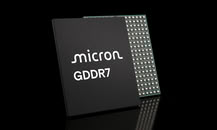
 The other angle is that Micron's 3 GB GDDR7 chips aren't really a viable alternative. They're largely seen as impractical for most of the current RTX 50 lineup, since the odd capacity doesn't map cleanly onto existing memory bus configurations, and they're expensive. NVIDIA's RTX 50 Super series is reportedly on hold due to pricey 3 GB modules. Meanwhile, manufacturers are also reportedly planning both 4 GB and 6 GB GDDR7 chips for 2027 to 2028, timed closer to NVIDIA's next-generation Rubin GPUs.
Sources:
Micron, UNIKO's Hardware
Micron only started supplying GDDR7 to NVIDIA in a meaningful way earlier this year, and its chips were never the primary source for RTX 50 cards. Samsung and SK Hynix still cover the bulk of the supply, so this shouldn't cause an immediate shortage. Still, losing even a partial supplier during an already tight memory market isn't reassuring, and it says something about where these companies would rather put their manufacturing capacity these days.


16 Comments on Micron's 2 GB GDDR7 Memory Chips Reportedly Reach End of Life
Well, there's still GeForce Now...
2027 H2 - 2028: Oh they actually did it
It's 2026, consumers are irrelevant in this greed driven AI RAMpocalypse, this is the same company that dumped their consumer memory brand.
Saying capacity is universally more important than bandwidth is a fundamentally flawed premise. You are conflating an architectural hard ceiling with an architectural throughput constraint. They dictate completely different stages of the execution pipeline.
Of course the consequences are only a salty repetitive rebutall that will be showered in validation from the same few.
Choose wisely.
Slightly low bandwidth doesnt cause games to crash, missing shaders, textures, games failing to launch, and a slide show after system RAM starts swapping in.