News Posts matching #ASRock

Return to Keyword Browsing

Overclocker Tries to Revive SkyOC BCLK Overclocking via BIOS Mod

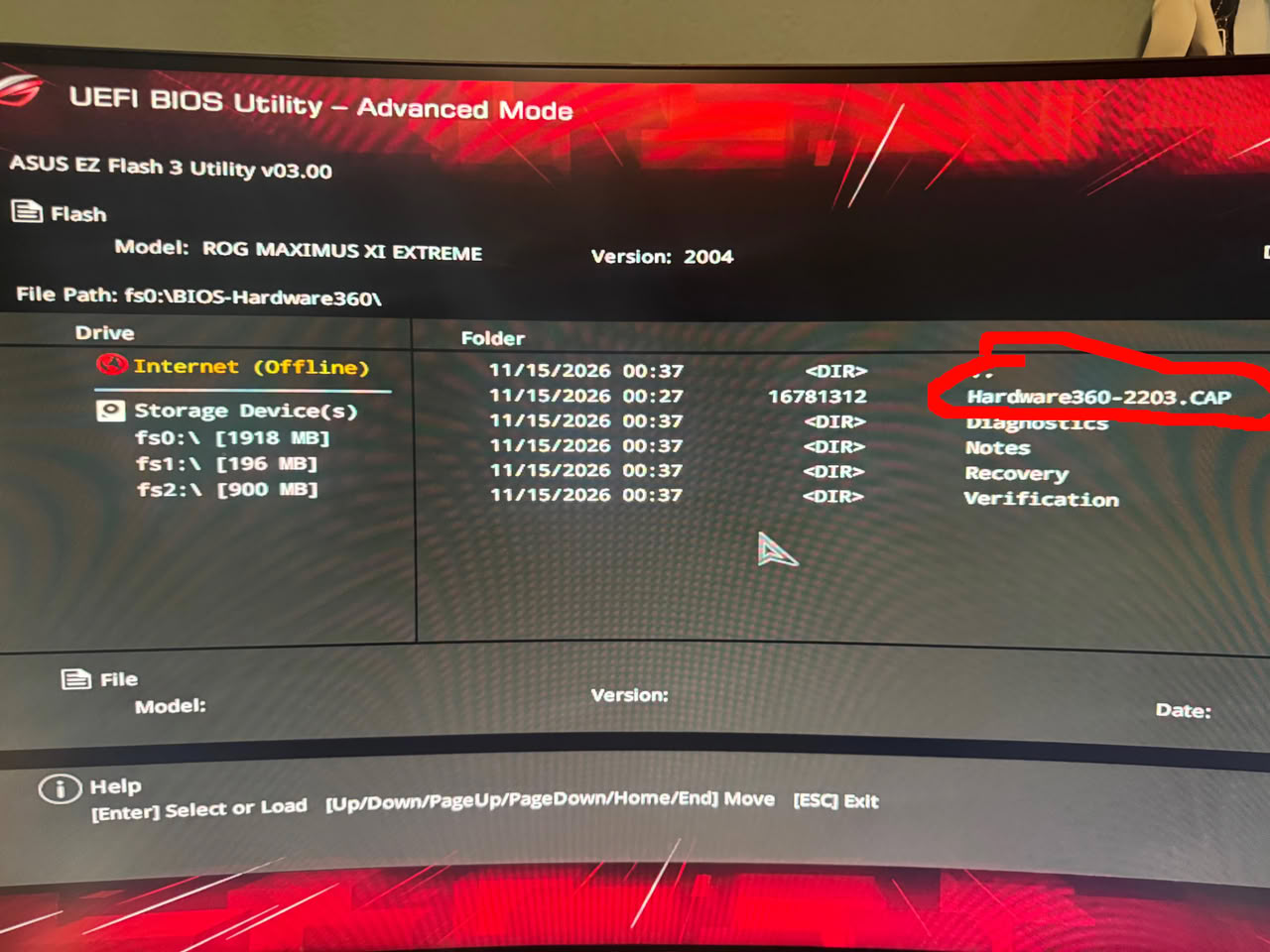
Back in 2015, ASRock introduced SkyOC, a feature that let users overclock locked non-K series Intel CPUs via BCLK overclocking. That BIOS trick might be making an unofficial comeback, thanks to a decompilation attempt by Spanish creator Hardware 360°. He posted on X about a modified BIOS that he had built for his ASUS ROG Maximus XI Extreme Z390 motherboard with the help of AI tools. That modified BIOS ports the SkyOC feature from ASRock motherboards of the time, using firmware from before and after ASRock pulled the plug on it. Apparently, Intel was not happy about BCLK overclocking on Skylake CPUs using SkyOC.

The idea behind this modified BIOS is to let non-K Intel CPUs be overclocked using BCLK without destabilizing the entire system. Typically, BCLK overclocking raises the clocks for the entire motherboard, including RAM, PCIe buses, etc. Therefore, Intel implemented a limit on BCLK, so that the CPUs shut down if they detected a BCLK higher than 103 MHz (up from 100 MHz). SkyOC got around this limit by feeding the CPU a false BCLK reading, which is why Intel directed ASRock to remove this feature in early 2016 with a microcode update. Hardware 360° says that he has modified his motherboard's BIOS to implement SkyOC; however, there have been no results posted yet.


ASRock Updates VBIOS Flashing Utility Following Radeon RX 7900 XT/XTX Bricking Reports

ASRock has released an updated version of the ASRVBFlash utility, version 1.0.6, which is intended to fix issues caused by the previous version, 1.0.5, for Radeon RX 7900 XT/XTX users. The earlier version led to reports of ASRock GPUs becoming bricked after users attempted to update the firmware with ASRVBFlash. ASRock has quietly released the 1.0.6 update without providing details on what changes have been made. We only know that this version aims to prevent the bricking of cards and instead properly update the GPU firmware to enhance security, which was the original intent.

The initial issue arose when users ran the ASRVBFlash 1.0.5 utility. During the process, Windows would start a reboot sequence, but the system would then fail to boot. At the time, a workaround involved reinstalling an older VBIOS, which some users downloaded from TechPowerUp's VBIOS hosting. Meanwhile, ASRock reportedly removed VBIOS version 1.0.5 from its download pages, although it remained accessible via FTP connections.

ASRock Rack Shows Early Xeon 7 "Diamond Rapids" Motherboard for Up to 4 TB of DDR5

ASRock Rack is promising up to 4 TB of DDR5 on a single socket with its DMRD16-2L+, one of the first motherboards built for Intel's upcoming Xeon 7 "Diamond Rapids" processors. The board was shown at the OCP Global Summit 2026 and has since been detailed by ServeTheHome. It has 16 DIMM slots in a one-DIMM-per-channel layout, matching the 16-channel memory setup Intel detailed at HOT CHIPS. Regular RDIMMs top out at 128 GB per module and 8000 MT/s, while MRDIMMs run at up to 12,800 MT/s, with taller 2U MRDIMMs reaching 256 GB each. Populate all 16 slots with those, and you hit 4 TB, along with a theoretical bandwidth of roughly 1.6 TB/s.

Expansion is unusual, with no standard PCIe slots and no OCP NIC 3.0 connector. All I/O goes through up to 16 MCIO x8 connectors, each rated for PCIe 6.0 or CXL 3.0, for 128 lanes in total. The rest is fairly basic: one PCIe 5.0 x4 M.2 slot, two Intel I350 Gigabit Ethernet ports, an ASPEED AST2700 BMC with a dedicated management port, and VGA output. ASRock Rack fits it all on a 12 x 13-inch EEB PCB, about the size of a large E-ATX board, so it could squeeze into some bigger workstation cases. Pricing and availability have not been shared yet, but that is hardly surprising, since Intel has the Xeon 7 family slated for a 2027 debut on the new LGA9324 socket. The board is aimed at servers, though anyone planning a high-memory workstation for local AI will probably keep an eye on it.

ASRock Radeon RX 7900 XT/XTX VBIOS Update Bricks Some Cards

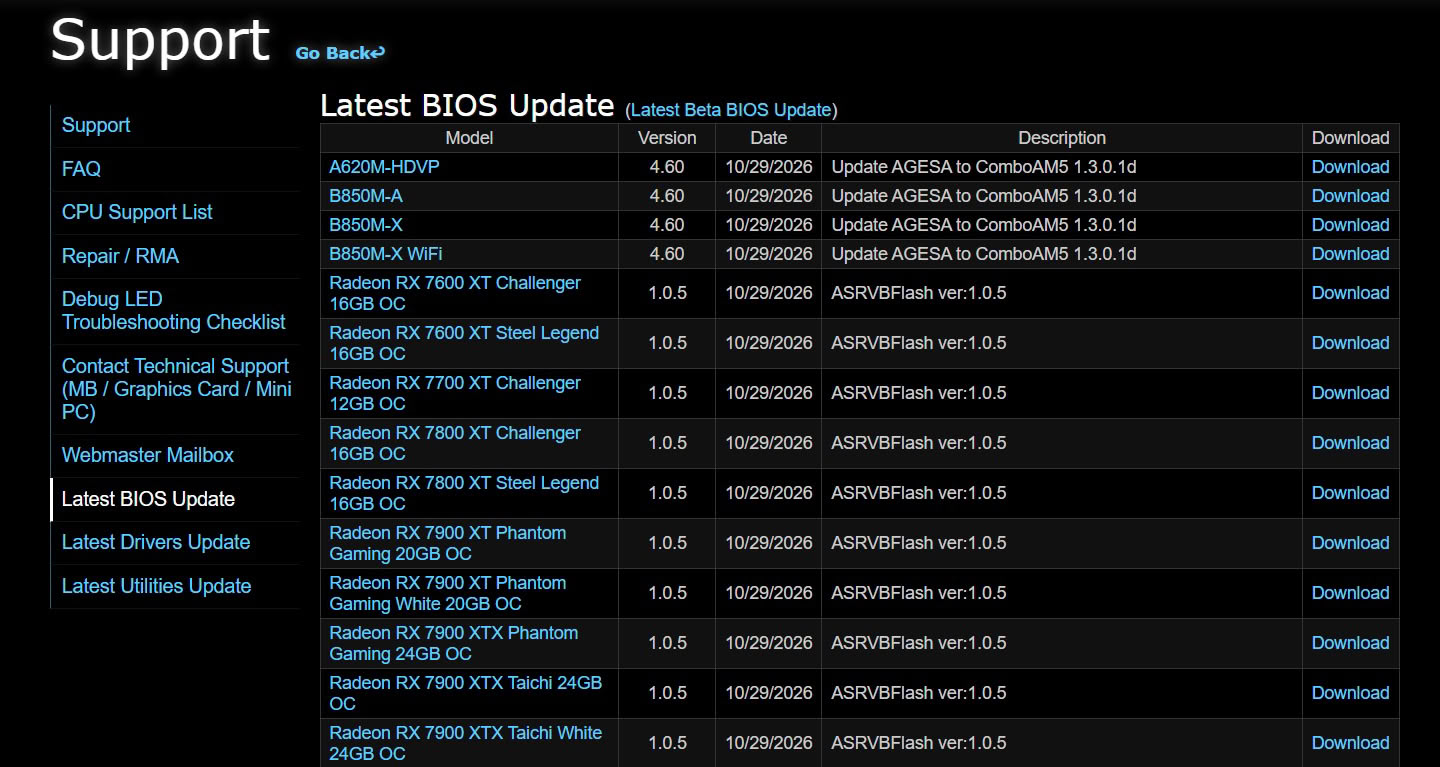
When ASRock joined the group of AIBs patching Radeon RX 7900 XT/XTX GPUs late last month, everything seemed fine for a few days. However, multiple users are now reporting that their ASRock GPUs have been bricked after updating the firmware with the latest VBIOS. ASRock has released VBIOS updates for ten of its Radeon RX 7000 series graphics cards, joining Sapphire and GIGABYTE. The new firmware, version 1.0.5, was made available on ASRock's support pages on October 29 and includes updates for the RX 7600 XT Challenger and Steel Legend, RX 7700 XT Challenger, RX 7800 XT Challenger and Steel Legend, RX 7900 XT Phantom Gaming (including the White version), and the RX 7900 XTX Phantom Gaming and Taichi, along with the Taichi White.

However, several users have reported that VBIOS version 1.0.5 bricked their cards. The issue occurs when users start the ASRVBFlash 1.0.5 utility; Windows begins its reboot sequence, and the system then fails to boot. A solution to this problem appears to be reinstalling an older VBIOS, which some users have downloaded from TechPowerUp's VBIOS hosting. This can help if your PC is bricked by any VBIOS update, and you need to find an older version to flash.

Intel Z970 Motherboards From ASRock Spotted in Shipping Records Ahead of Nova Lake

As spotted by Club386, two motherboards based on Intel's Z970 chipset have shown up in the NBD shipping database, which logs Vietnamese customs records. Going by the names, both appear to be from ASRock: the Z970 LiveMixer WiFi and the Z970 Pro-A WiFi. The entries refer to PCBs shipping at the end of September 2026. The Z970 chipset is rumored to support CPU multiplier overclocking, but not the base clock tweaking that Z990 is expected to offer. Leaker Jaykihn has also previously reported that it will replace most of the market the B860 covers today. If that ends up being the case, it would be a big change, since Intel has kept CPU overclocking on its most expensive chipset for years, while AMD allows it on most of its B-series boards.

Intel's Robert Hallock has previously said the goal is more unlocked SKUs over time, and that overclocking shouldn't be reserved for the people paying the most. It looks like that approach could extend to motherboards too. Of course, Intel hasn't announced Z970 or Z990 yet, so this is all unofficial, and we don't know what the prices of either would look like. Moreover, shipments this early don't necessarily mean retail boards are close. Intel has reportedly promised more details at CES in January 2027, which fits the rumored CES 2027 launch window. If Z970 does arrive at B860 prices, it could be the most interesting platform for most builders.

ASRock Joins Sapphire and GIGABYTE With New Radeon RX 7000 Firmware

ASRock has posted vBIOS updates for ten of its Radeon RX 7000 series graphics cards, joining Sapphire and GIGABYTE. The new firmware, version 1.0.5, went up on ASRock's support pages on October 29 and covers the RX 7600 XT Challenger and Steel Legend, RX 7700 XT Challenger, RX 7800 XT Challenger and Steel Legend, RX 7900 XT Phantom Gaming (including the White version), and the RX 7900 XTX Phantom Gaming and Taichi, along with the Taichi White. The files are flashed through ASRock's ASRVBFlash tool on Windows. Owners of these ASRock cards are advised to check the vBIOS section of their specific model's support page before flashing.

ASRock doesn't say what the update actually changes, as the description field only lists the flash utility version. However, the timing points to the same RDNA 3 security fix that Sapphire began offering in early October. GIGABYTE later tied its own files to the AMD-SN-6023 identifier, and AMD confirmed the updates address potential security vulnerabilities, adding that it has no reports of them being exploited. AMD still hasn't published the bulletin itself, so the details remain unknown. Interestingly, ASRock's own download page still carries its standard warning that it does not recommend updating the vBIOS if the card is already running normally, which reads a little odd next to AMD's advice to update as soon as firmware is available.

Modder Solders Dual 8-Pin Board to RTX 5090's 16-Pin Header, Wires Stay Below 40°C

Melting 16-pin connectors keep making headlines, and some RTX 5090 owners have started taking the protection of their expensive cards into their own hands. Reddit user DallasGrave has modified an MSI GeForce RTX 5090 with two extra 8-pin PCIe power inputs that work alongside the card's original 16-pin connector. According to their post on r/pcmasterrace, a small pickup PCB is soldered to the contacts of the 16-pin header, and that board feeds a second PCB carrying the two 8-pin sockets. The card then runs on three cables in total. DallasGrave says each conductor now carries roughly 3 A, and that the wires never crossed 40°C during a 48-hour run at 550 W, even at the joint. More test data is apparently on the way, so for now these are the modder's own numbers.

The 12V-2x6 revision was supposed to fix the melting power connector issues. In early 2025, NVIDIA said the 16-pin melting issues were over, pointing to the updated connector on the RTX 50-series. However, the first melted RTX 5090 Founders Edition was reported shortly after, in that case with a third-party cable. Since then, several RTX 5090 power connectors have reportedly melted, including one with an undervolt and a -100 W power limit. Moreover, last month Hardware Unboxed watched its RTX 5090 power cable reach 175°C with a single wire pulling around 22 A.

Unreleased AMD Ryzen 9 5900X3D Engineering Sample Appears With 128 MB L3 Cache

An engineering sample of AMD's never-released Ryzen 9 5900X3D has surfaced on the Chinese forum Chiphell, and it looks quite different from the prototype AMD has shown before. The 12-core, 24-thread Zen 3 chip carries the code 100-000000652 and reports 128 MB of L3 cache, split as 96 MB on one CCD and 32 MB on the other. That means only one of its two six-core chiplets has the 64 MB 3D V-Cache stack. The Ryzen 9 5900X3D and 5950X3D prototypes that AMD showed to Gamers Nexus in 2023 had cache stacked on both CCDs, for 192 MB in total. The single-stack layout apparently lets the chip clock higher. CPU-Z screenshots from the owner show it running at around 4.7 GHz with a 105 W TDP, while the dual-stack 5900X3D topped out at a 4.4 GHz boost.

Getting it to boot took some effort, though. The sample reportedly refuses to work on current BIOS versions and only started with an older one carrying SMU firmware 56.70.0. The owner has apparently asked ASRock to add support in a newer BIOS. At retail, the Zen 3 X3D lineup started with the eight-core Ryzen 7 5800X3D in 2022 and never included a dual-CCD chip. Interestingly, the one-CCD approach seen here is the same one AMD later used for its Ryzen 9 X3D chips on AM5, before the Ryzen 9 9950X3D2 Dual Edition put cache on both chiplets this year. AMD hasn't confirmed anything about this sample, of course, but it's interesting to see from an archival standpoint.

ASRock DeskSlim Series Delivers RTX PRO Blackwell Performance in a Compact 5L Workstation

ASRock, the global leading manufacturer of motherboards, graphics cards, mini PCs, gaming monitors, power supply units, and AIO liquid coolers, today announced that the DeskSlim X600 and DeskSlim B760 compact desktop platforms support NVIDIA RTX PRO 4000 Blackwell SFF Edition and NVIDIA RTX PRO 2000 Blackwell professional graphics cards.

Designed for professional users who require desktop-class expandability in a space-saving form factor, the DeskSlim series features a PCIe 5.0 x16 expansion slot that supports a low-profile, dual-slot graphics card up to 200 mm in length. In a compact 5L chassis, the systems can be configured for AI-assisted workflows, content creation, 3D visualization, engineering applications, and data analysis.

ASRock Industrial Expands Mainstream Edge Computing With Intel Core Series 3 Platforms

ASRock Industrial proudly presents its latest lineup of industrial edge computing platform powered by Intel Core Series 3 processors (Wildcat Lake-U), designed to bring power-efficient computing and integrated AI acceleration to mainstream industrial and embedded edge applications. Featuring integrated CPU, GPU, and NPU compute engines with up to 40 platform TOPS, the new platforms support up to 64 GB DDR5 6400 MHz memory, high-speed expansion and storage, rich I/O connectivity, and multi-display capabilities. Spanning industrial motherboards, NUC motherboards, and compact NUC BOX systems, ASRock Industrial's Intel Core Series 3 portfolio provides right-sized computing options for industrial control, HMI, intelligent gateways, smart retail, digital signage, and other mainstream edge applications.

NUC Core 300 BOX Series: Compact, Power-Efficient Edge Computing
The NUC BOX-320 and NUC BOX-304 integrate Intel Core Series 3 processors into compact fanned embedded BOX PCs, powered by the Intel Core 5 processor 320 and Intel Core 3 processor 304, respectively. The systems support up to 64 GB of single-channel DDR5 6400 MHz memory with In-Band ECC. For expansion, the systems provide one M.2 Key E (2230) slot with Wi-Fi 6E and Bluetooth 5.3 for wireless connectivity. Networking includes one Intel 2.5 Gigabit LAN and one Realtek 2.5 Gigabit LAN. Storage configuration includes one M.2 Key M (2242) slot with PCIe Gen 4 x1 and one M.2 Key M (2242/2280) slot with PCIe Gen 4 x2 for SSDs. I/O connectivity includes two USB 3.2 Gen2x2 Type-C and three USB 3.2 Gen 1 Type-A ports. The series supports triple-display output up to 4K through two HDMI 2.1 and DisplayPort 1.4a outputs from Type-C. Intel PTT and a 19 V/90 W power adapter further support secure, ready-to-deploy system integration. Built in a compact 117.5 x 110 x 49 mm fanned chassis with VESA mounting support, the NUC Core 300 BOX Series provides a space-efficient computing platform for smart retail, digital signage, kiosks, HMI, and other mainstream edge applications.

PNY Reportedly Denies Melted RTX 5090 Warranty Claim, Says Native PSU Cables Not Covered

PNY has allegedly denied a warranty claim on a burned-out GeForce RTX 5090 and closed the customer's ticket after he asked which part of the warranty it was citing. Redditor u/Melodic_Initial_1767 says his card died last month after both ends of its 12V-2x6 cable melted, on the GPU side and the power supply side. He says the card ran at stock clocks with no overclock, a power limit set below default, and was idle when it failed. The cable he was using was not a cheap third-party adapter; it came bundled with his ASRock PG-1600G power supply.

According to the Redditor, PNY's denial stated that only a PNY-approved cable or adapter is covered, and that damage from a third-party cable, adapter, or PSU cable falls on that maker instead. He says he checked PNY's warranty document and installation guide and found no mention of approved cables, connectors, or the 12V-2x6 standard in either. When he asked twice which clause backed the denial, a "Senior Technician" reportedly said the decision was final and closed the ticket without answering.

Thermaltake Unveils New SWAFAN UNIFY Series Fans with Single-Frame Design and Swappable Fan Blades

Thermaltake, a leading PC DIY brand for premium hardware solutions, expands its cooling lineup with the SWAFAN 240 UNIFY ARGB Sync and SWAFAN 360 UNIFY ARGB Sync PC Cooling Fans, available in black and snow editions. Featuring a single-frame design and swappable fan blades, the SWAFAN UNIFY simplifies installation and offers different airflow directions. Dual Infinity Mirror Lighting creates layered lighting effects and adds visual depth to the fans.

The SWAFAN UNIFY series integrates multiple fans into a single frame, reducing the number of cables and mounting points required. With a set of cables and four corner screws, the design makes installation easier while keeping the build neat. Featuring Thermaltake's signature swappable fan blade design, the SWAFAN UNIFY comes with standard fan blades pre-installed and reverse fan blades included in the package. This allows the fans to be configured for either exhaust or intake airflow while keeping the fan face forward for a consistent and refined appearance.

AMD Radeon RX 9050 4 GB Benchmarks Surface, 8 GB Model 37% Faster

Hardware Unboxed and Toasty Bros have both tested the mysterious Radeon RX 9050 4 GB, and the results look rough. AMD only sells this version in OEM systems, so both channels had to buy CyberPowerPC prebuilts to get one. In Hardware Unboxed's 18-game test at 1080p Low, the 4 GB card averaged 78 FPS with 55 FPS 1% lows, against 107 FPS and 78 FPS for the RX 9050 8 GB. That makes the 8 GB model about 37% faster. At the lowest settings tested, it was still around 32% ahead, at 147 FPS versus 111 FPS. Both cards share 1,024 Stream Processors and up to a 2.6 GHz boost clock, so the difference comes from memory. As AMD confirmed, the 4 GB model has a 64-bit bus, 144 GB/s of bandwidth, and 16 MB of Infinity Cache, exactly half of what the 8 GB model has.

Toasty Bros opened their prebuilt and found an XFX dual-fan card with a single 8-pin connector, so it looks like ASRock is not the only partner making one. AMD has said it developed the Radeon RX 9050 4 GB version for a specific partner system aimed at entry-level gaming customers, and that it has no plans to sell it outside that OEM PC. The card was first spotted in a CyberPowerPC Gamer Master prebuilt at Best Buy, which was listed at $889.99. Keep in mind that this is still a small sample, with only two outlets testing the card so far, so it's important to wait for more independent results before drawing firm conclusions. Still, AMD launching a card with only 4 GB of VRAM in 2026 is not looking like a great decision so far.

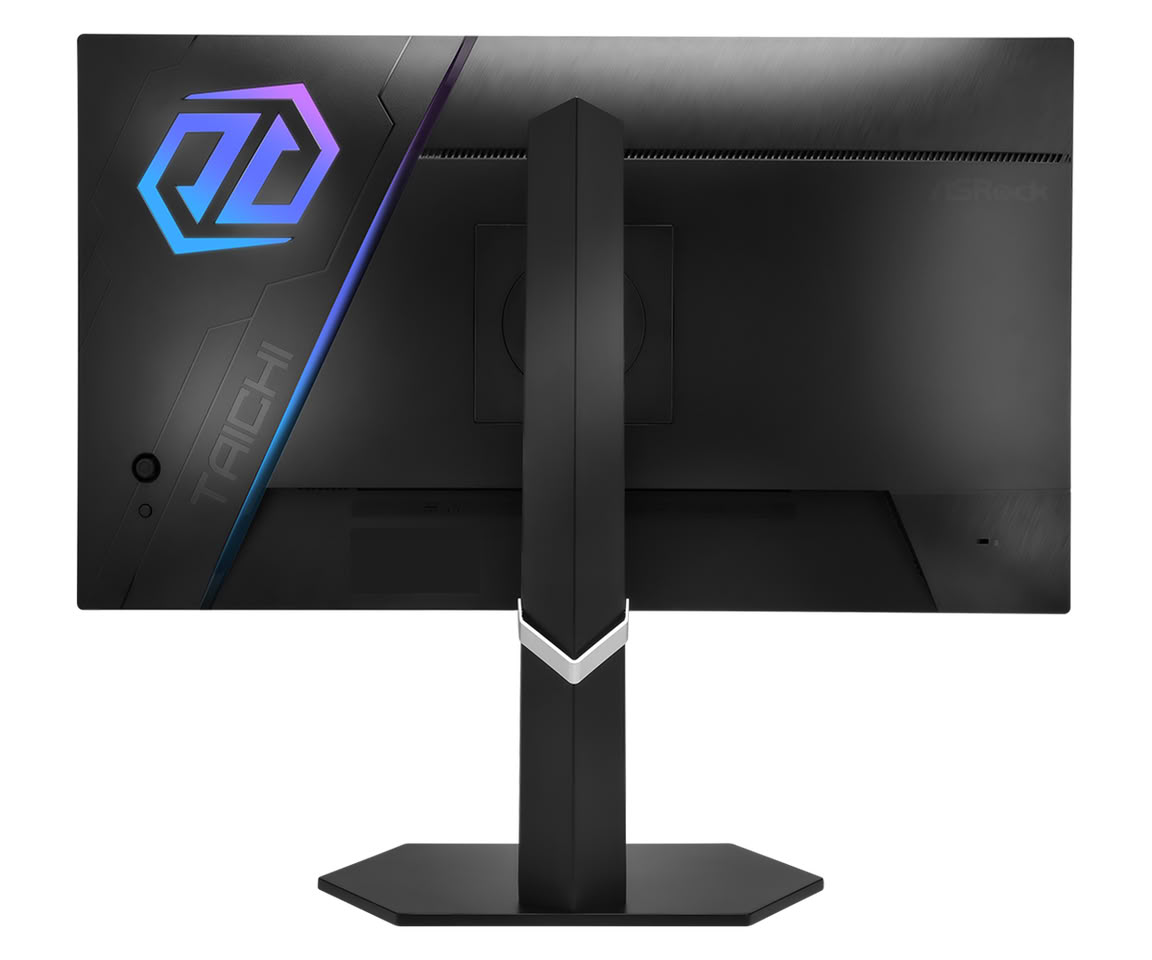
ASRock Brings Taichi Brand to Monitor Sector With Up to 720 Hz Panels

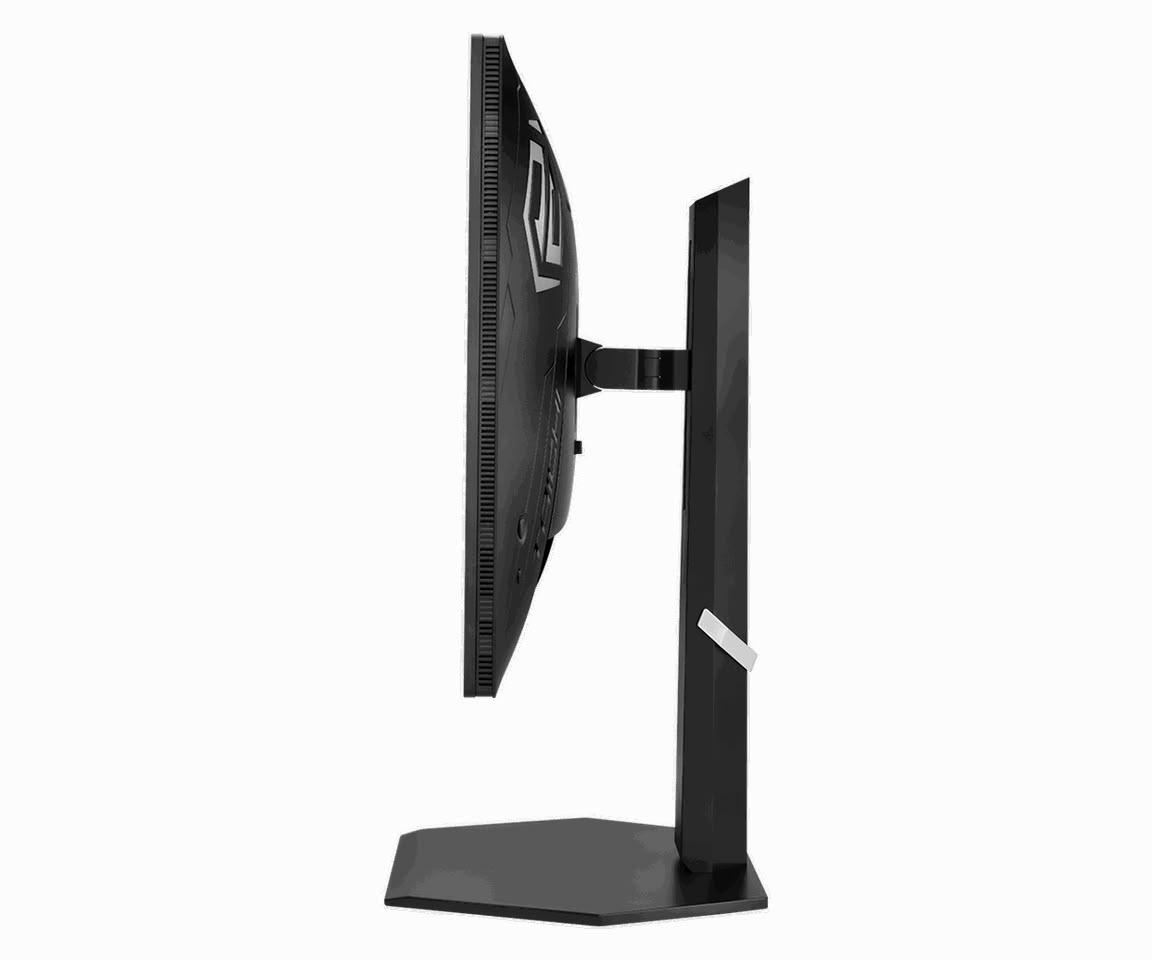
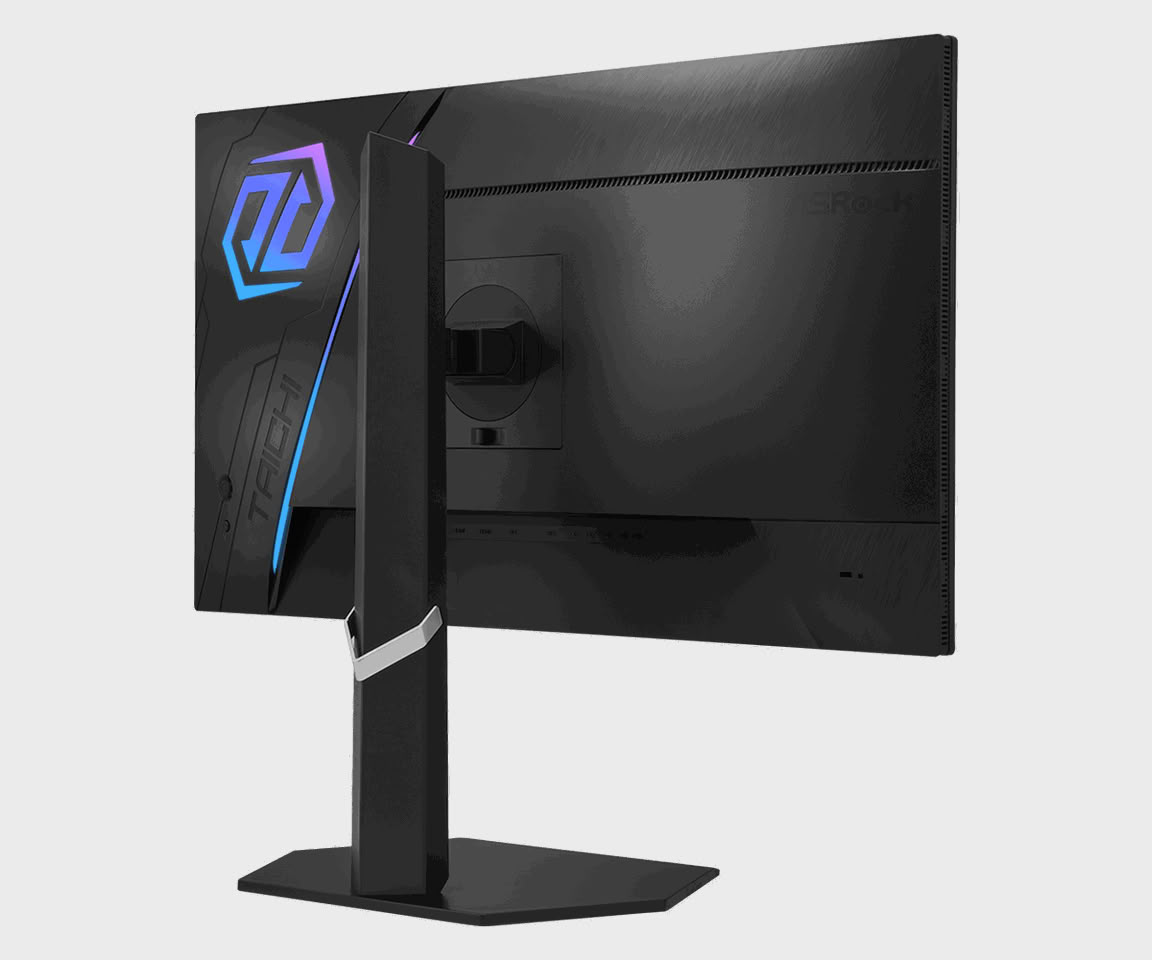
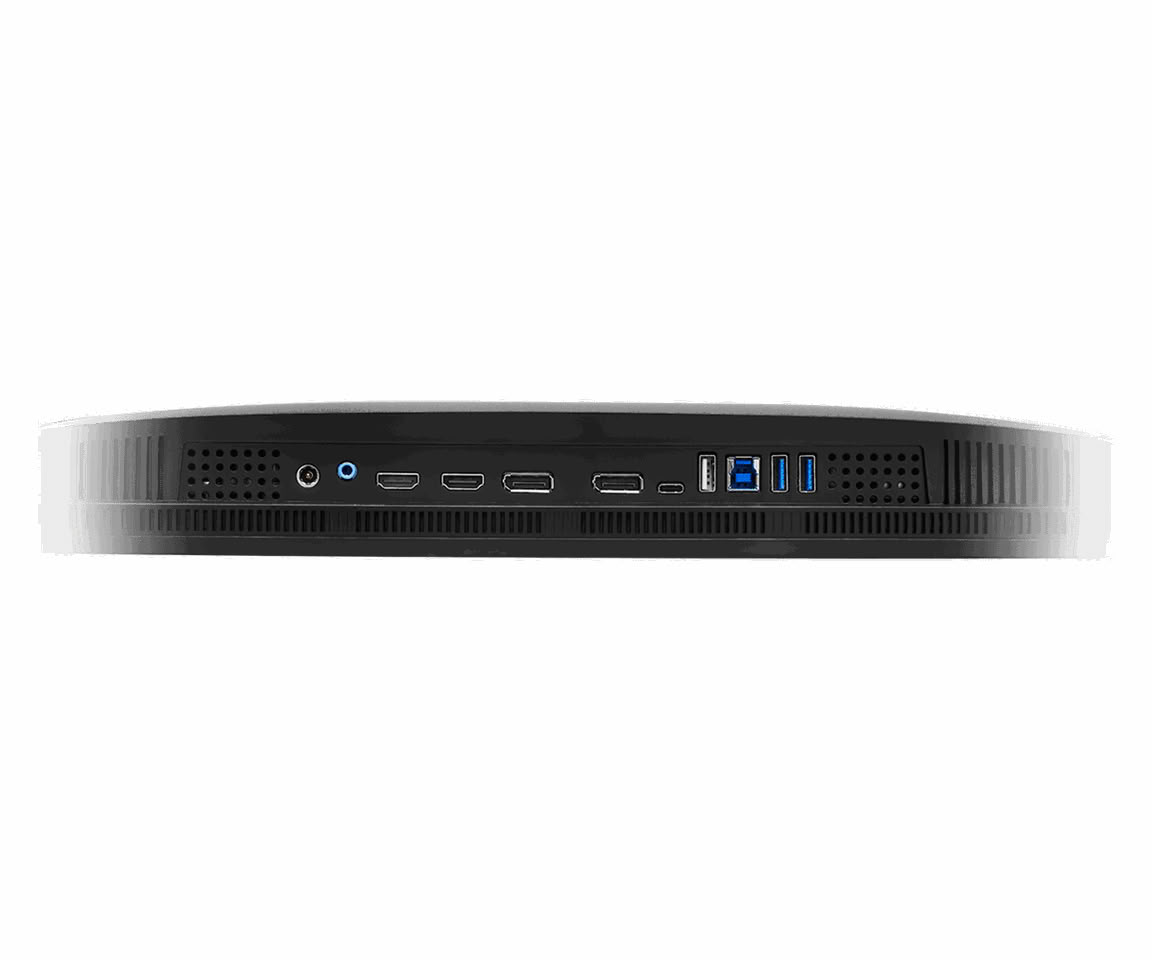
ASRock announced today that it is updating its monitor lineup with its flagship Taichi brand, introducing three new 27-inch models to the company's offerings. First in line is the new TCO27USA, designed as a flagship model with a 27-inch 4K UHD Penta Tandem QD-OLED display and a 240 Hz refresh rate. ASRock has equipped this panel with a 0.03 ms gray-to-gray response time, 99% DCI-P3 color accuracy, and other technologies such as AMD FreeSync, VESA's DisplayHDR True Black 400, and proprietary low blue light technology to reduce eye strain. For those with multiple setups, there is a built-in KVM switch. Regarding port selection, the ASRock Taichi TCO27USA features two HDMI 2.1 ports, two DisplayPort 2.1 with UHBR20, and a single USB 3.2 Gen 1 Type-C serving as a DisplayPort alternative or a 65 W power delivery line.

ASRock Industrial Unveils Its Edge AI Platforms With Intel Core Ultra Series 3

ASRock Industrial proudly presents its latest lineup of industrial edge AI platforms powered by Intel Core Ultra Series 3 processors (Panther Lake-H), designed to accelerate next-generation edge AI, industrial automation, and intelligent computing applications. Featuring integrated CPU, GPU, and NPU compute engines with up to 180 platform TOPS, the new platforms support up to 128 GB DDR5 memory at speeds up to 7200 MHz, high-speed expansion, rich I/O connectivity, and advanced display capabilities. ASRock Industrial's comprehensive lineup spans industrial motherboards, NUC(S) BOX, fanless iBOX systems, and iEP-7050E industrial IoT Controller, providing scalable computing options for demanding AI inference, machine vision, robotics, smart manufacturing, and industrial edge applications.

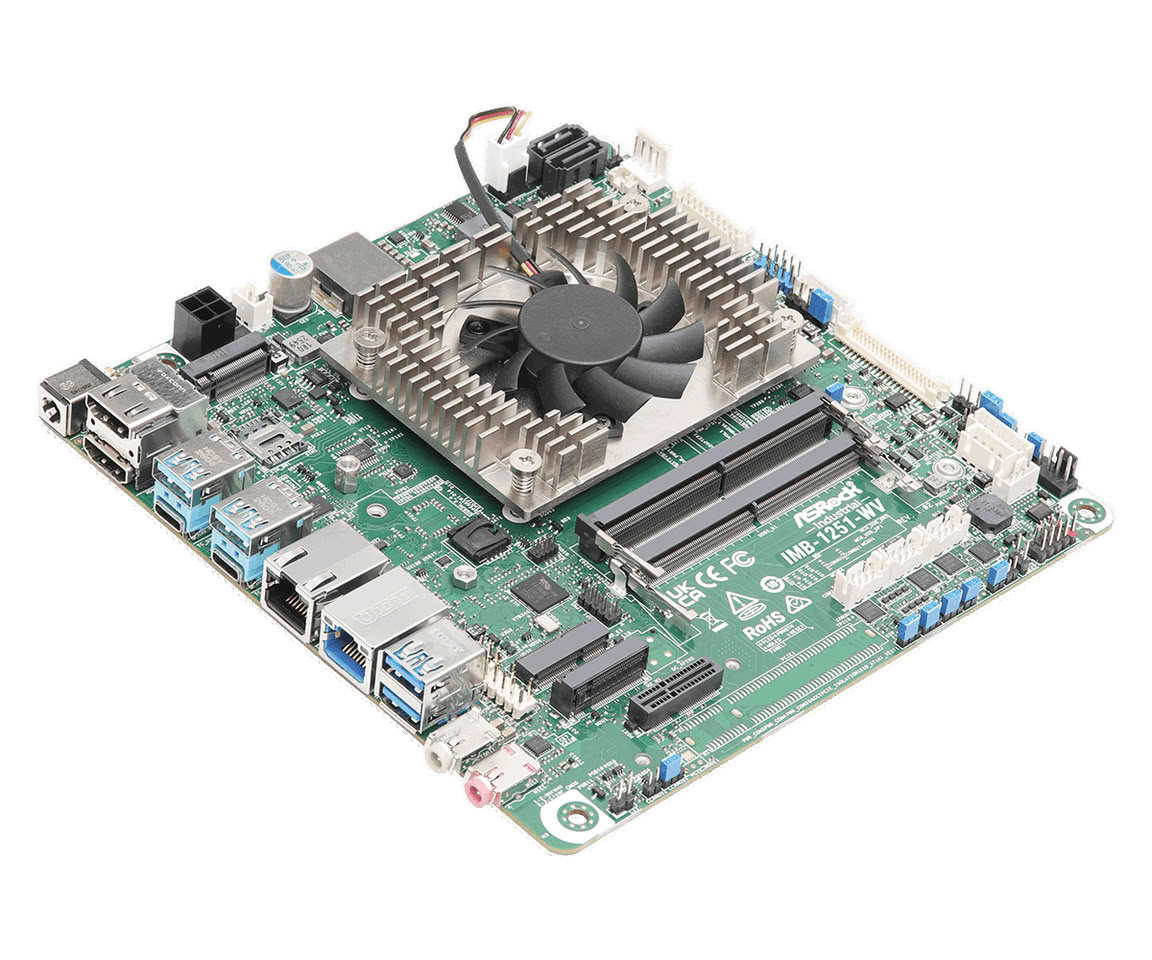
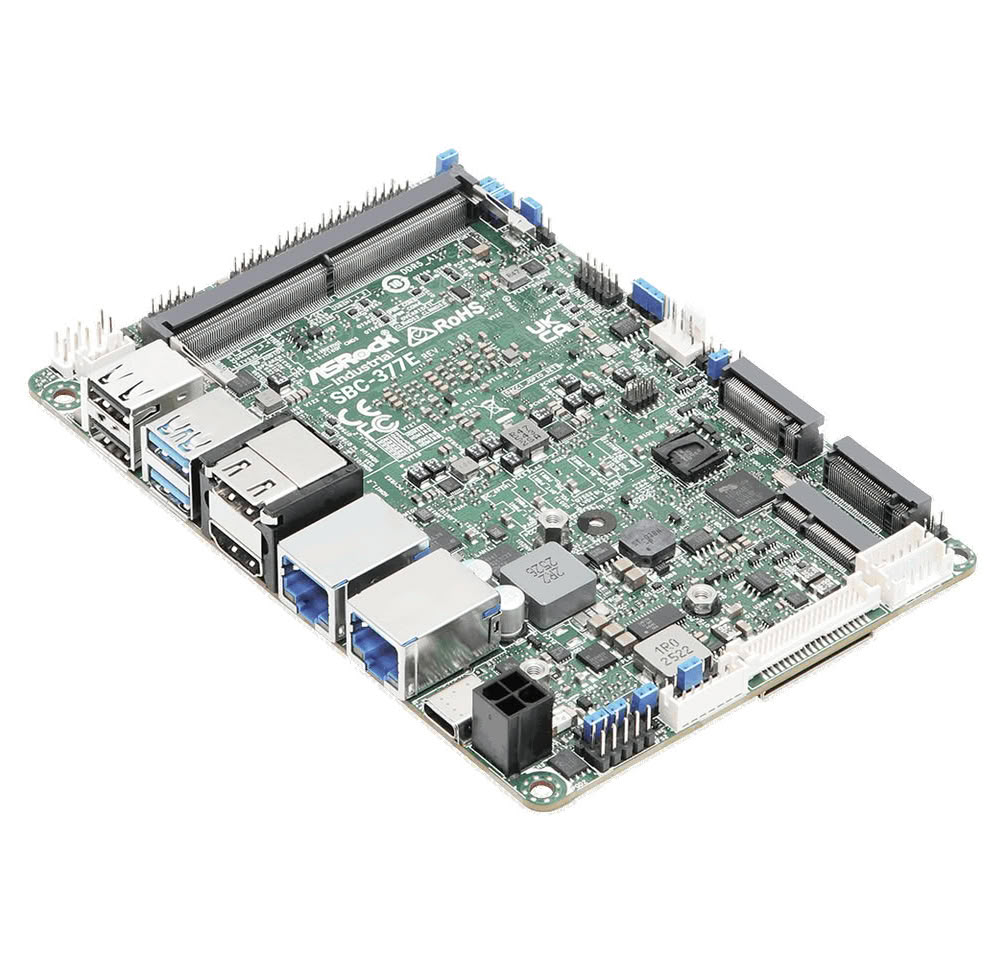
Flexible Industrial Motherboards for Intelligent Edge Applications
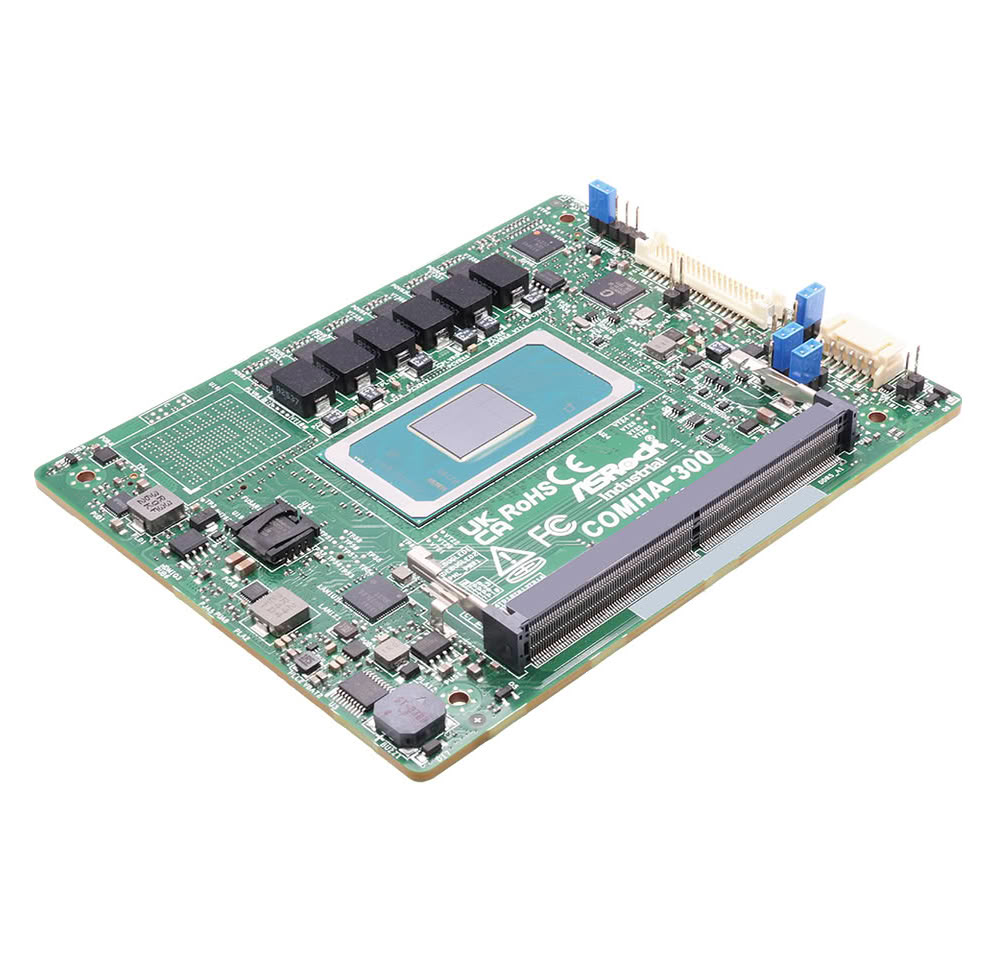
ASRock Industrial expands its industrial motherboard portfolio with the IMB-1251-WV Series, SBC-377 Series, and COMHA-300, delivering flexible, high-performance platforms powered by Intel Core Ultra Series 3 processors for next-generation edge AI and industrial applications. The IMB-1251-WV Series combines Mini-ITX flexibility with up to 128 GB DDR5 7200/6400 memory with In-Band ECC, extensive I/O, dual LAN, quad-display support, flexible storage, and optional out-of-band (OOB) functionality, making it ideal for machine vision, robotics, and industrial automation.

ASRock's TempGuard Failed to Stop a PSU-Side Connector Meltdown on a $15,000 RTX PRO 6000 Rig

A repair shop technician has reported another melted 16-pin power connector on an ASRock Taichi TC-1650T PSU, paired with a $15,000 NVIDIA RTX PRO 6000 Blackwell Workstation Edition GPU. The former ships with native 12V-2x6 cables carrying ASRock's own NTC temperature sensor. According to the technician's Reddit post, the connector failed catastrophically on the PSU side and melted into the socket itself, even though both ends of the cable were fully seated. The GPU reportedly survived, and the damage was confined to the power supply side. The technician also says the sensor is mounted on the wrong side of the cable, on the ground line rather than the 12 V side it's supposed to watch, which would explain why it apparently never caught the rising heat in time.

ASRock added the NTC sensor and TempGuard system to its 12V-2x6 cables specifically to shut a system down before a connector melts. This time the system failed to catch the rising temperatures, but it has worked in the past. TempGuard reportedly caught a shunt-modded RTX 5090 pulling over 1,300 W, saving its power connectors from melting. On the flip side, this isn't the first time this exact GPU and PSU pairing has run into trouble either, as a similar melting incident on the same combo surfaced back in March. If the sensor placement is really off on at least some cables, that's a bigger concern than one bad unit, especially when paired with a card that costs as much as a used car.

Redditor's AMD Ryzen 9 9950X3D Reportedly Dies Shortly After Changing Motherboards

A Ryzen 9 9950X3D has reportedly died just an hour after being moved into an ASUS ROG Crosshair X670E Hero motherboard. According to Reddit user SpecialistConcept423, posting in r/GamersNexus, the chip had been running fine for about a year and a half in an ASRock X670E Taichi Carrara before the swap. After switching to the new board, no manual overclocking or voltage tweaks were applied; only one of the board's built-in memory presets was enabled for a set of SK hynix 6200 MHz modules. After saving that setting and rebooting, the board threw a "00" Q-Code and refused to post. Pulling the CPU and inspecting it revealed two brown marks on its contacts, which all but confirmed the catastrophic failure.

Things got stranger when the user resorted to an older Ryzen 5 8500G that had previously worked fine on the same board. That chip apparently now throws a "4D" code too, pointing at the motherboard itself as the culprit, not just the CPU. There's no confirmation yet on whether a faulty BIOS, a bad batch of boards, or something else is to blame, and ASUS hasn't commented on this specific case. It is worth noting that the ASUS board was not new, and it had undergone USB-related repairs and a BIOS rewrite. The user has since contacted AMD in Brazil for an RMA, but has shared no updates yet.

ASRock Extends Pro-A Motherboard Lineup With B550M Pro-A WiFi 6E Variant

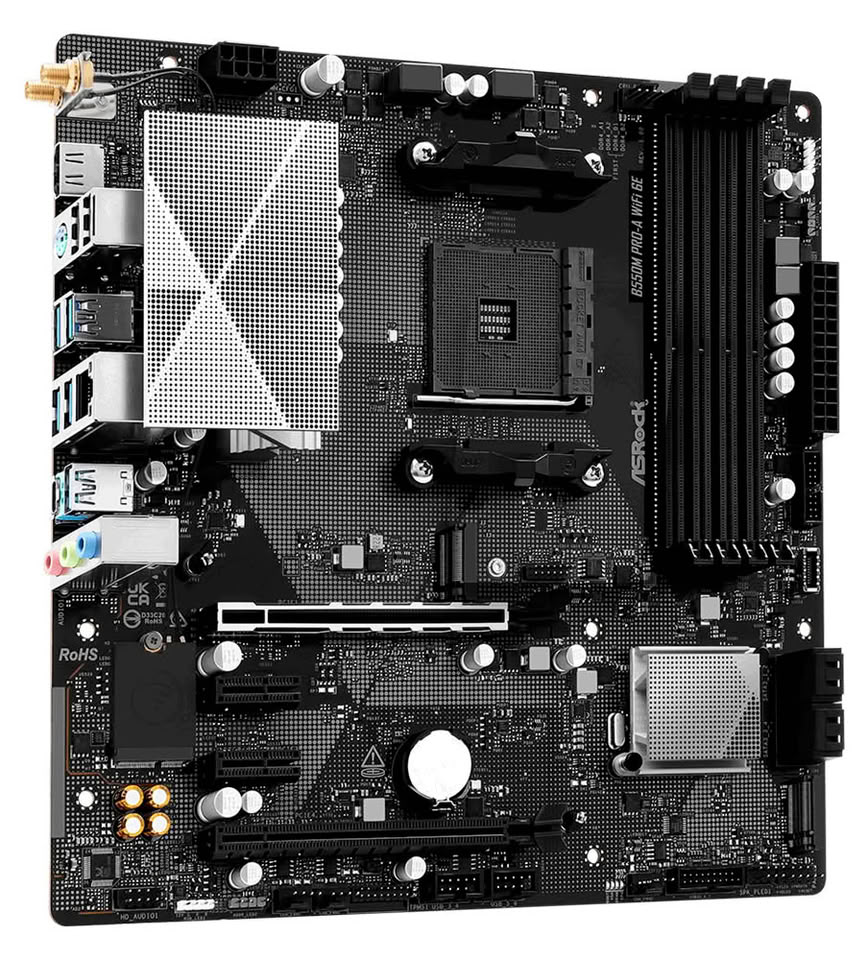
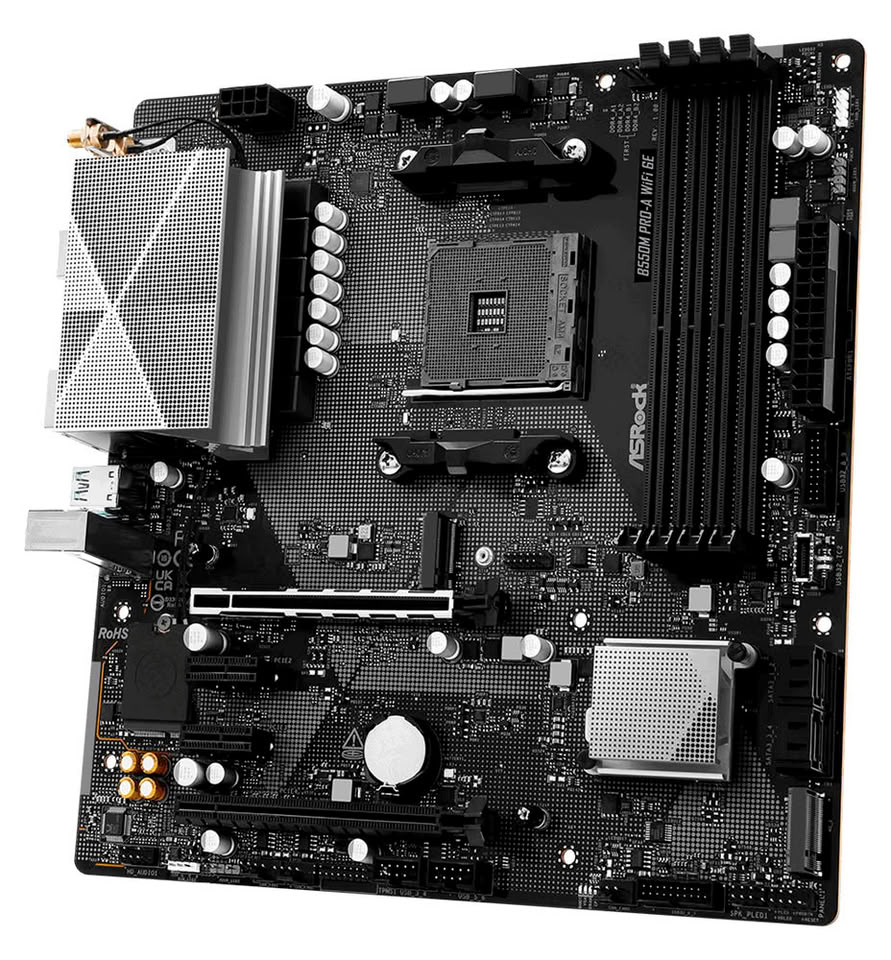
ASRock has silently expanded its Pro-A motherboard lineup with the B550M Pro-A WiFi 6E, a microATX board for the AMD AM4 platform. The new model is essentially the existing B550M Pro-A with the addition of a Wi-Fi 6E module. The launch comes as the AM4 platform is seeing something of a second life, with other major motherboard manufacturers recently adding new models, or increasing production, for the socket first introduced nearly a decade ago. Needless to say that this trend is mostly driven by the current memory pricing situation. The motherboard supports Ryzen 3000, 4000G, 5000 and 5000G series processors, or, if you like the "resurrection" idea, AMD CPUs (Vermeer, Matisse) and APUs (Cezanne, Renoir, Picasso) series.

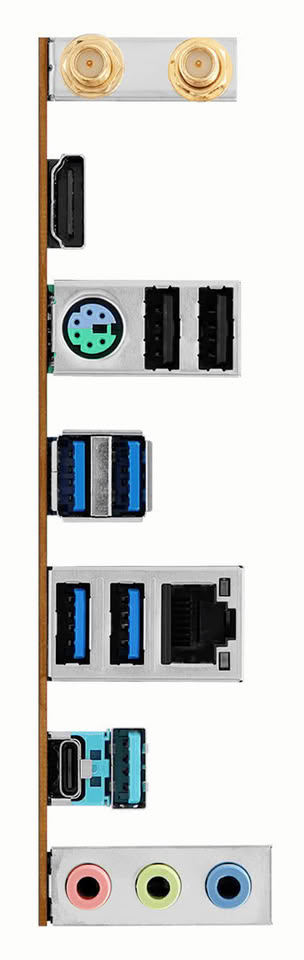
The ASRock B550M Pro-A WiFi 6E features an 8-phase power design and four DDR4 DIMM slots that can support up to DDR4-4733+ memory modules via overclocking. The motherboard has one PCIe 4.0 x16 slot, one PCIe 3.0 x16 and two PCIe 3.0 x1 slots. It also has two M.2 slots, the primary offering PCIe 4.0 x4 support, and four SATA 6 Gb/s ports. The features are completed by Gigabit Ethernet, Wi-Fi 6E, HDMI, two USB 3.2 Gen 1 Type-C ports and nine USB 3.2 Gen 1 ports. Two RGB and two ARGB headers are also included for those who want a bit of color. The board is expected to be priced around $90, however ASRock has not yet announced an MSRP.

ASRock Introduces the All-New Rock Series AIO Liquid Coolers

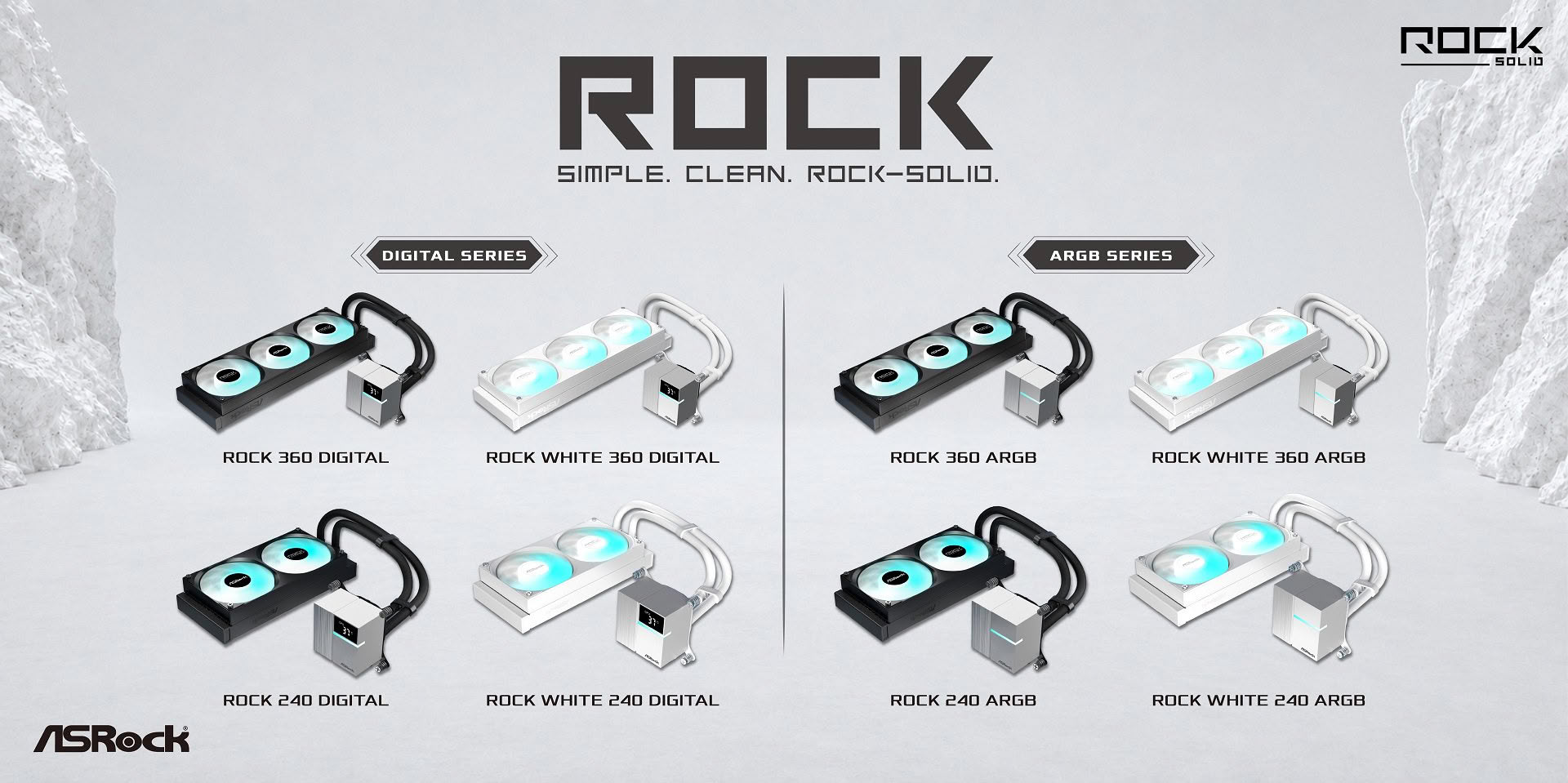
ASRock, a global leader in motherboards, graphics cards, gaming monitors, mini PCs, power supply units, and AIO liquid coolers, today introduces the new Rock Series AIO liquid coolers, designed for practical users seeking a clean, no-nonsense setup with rock-solid stability. Combining dependable cooling, simplified installation, and exceptional value, the Rock Series delivers a perfectly balanced solution for everyday PC builds.

The Rock Series lineup includes eight models, available in 360 mm and 240 mm radiator sizes and classic Black and White color options. Users can also choose between Digital and minimalist ARGB editions to best suit their preferences. The Digital models feature a 1.05-inch display for real-time CPU temperature monitoring, while the ARGB models deliver subtle, refined lighting for a sleek system aesthetic.

AMD Radeon RX 9050 4 GB Will Be OEM-Exclusive

AMD quietly announced its latest entry-level RDNA 4 GPU, the Radeon RX 9050. The GPU is available in 4 GB and 8 GB editions; however, only the 8 GB edition will be sold as a standalone, discrete graphics card, while the 4 GB edition is exclusive to OEMs. According to Wccftech's Hassan Mujtaba, AMD confirmed that the 4 GB version exists, but it is intended solely for OEMs and system integrators to include in their low-end PC configurations. For gamers, the 8 GB edition will be marketed as the entry-level RDNA 4 GPU and is expected to be priced at $279, making it the most affordable card AMD currently offers. There appear to be no Made by AMD (MBA) designs, as add-in board partners are handling the launch.

We previously reported that the 4 GB model is a scaled-down version of the Radeon RX 9050 8 GB, with differences only in memory configuration. Both cards feature 1,024 Streaming Processors across 16 Compute Units and can boost up to a 2.6 GHz clock speed. However, the lower-end GPU includes only 4 GB of GDDR6 memory on a 64-bit bus, resulting in a memory bandwidth of 144 GB/s, which is significantly lower than the 8 GB version. The 8 GB version of the Radeon RX 9050 uses 8 GB of GDDR6 on a 128-bit bus, providing a memory bandwidth of 288 GB/s, double the throughput.

AMD Launches Radeon RX 9050 4/8 GB SKUs with First Design from ASRock

AMD has shipped its lowest-tier RDNA 4 graphics cards to OEMs and board partners, introducing the Radeon RX 9050 4 GB and 8 GB variants. The 4 GB model is a reduced version of the Radeon RX 9050 8 GB, with changes only in the memory configuration. Both cards feature 1,024 Streaming Processors divided across 16 Compute Units and can boost up to a 2.6 GHz clock speed. However, in terms of memory, the lower-end GPU includes only 4 GB of GDDR6 memory on a 64-bit bus, resulting in a memory bandwidth of 144 GB/s, which is significantly lower than the 8 GB version. The 8 GB version of the Radeon RX 9050 uses 8 GB of GDDR6 on a 128-bit bus, providing a memory bandwidth of 288 GB/s, double the throughput.

AMD's first launch partner appears to be ASRock, which has developed the Radeon RX 9050 Challenger 4 GB to complement its Radeon RX 9050 Challenger 8 GB. For both of these models, ASRock recommends a 450 W power supply and requires a single 8-pin PCIe power connector. Measuring 249 x 132 x 41 mm, it is designed to fit into many PCs with its standard size. The all-black aesthetics are shown below. Pricing, availability, and the specific card TDP have not been announced yet, so we will have to wait a few more days to learn these final details.

ASRock Launches Phantom Gaming PGO27QSA Series QD-OLED Gaming Monitors in Black and White

ASRock, the global leading manufacturer of motherboards, graphics cards, mini PCs, gaming monitors, power supply units, and AIO liquid coolers, today announced the launch of the new Phantom Gaming PGO27QSA and PGO27QSA-W OLED gaming monitors. Featuring a 27-inch QHD QD-OLED panel, the new series is available in both classic black and Minimal White, combining high-performance gaming capabilities with refined aesthetics to deliver an exceptional visual experience while further expanding ASRock's Phantom Gaming OLED monitor lineup.

The PGO27QSA series features a 27-inch QHD (2560 × 1440) flat QD-OLED display with a 240 Hz refresh rate and an ultra-fast 0.03 ms (GTG) response time, minimizing motion blur and ghosting during fast-paced gameplay. Whether playing FPS, MOBA, or other competitive titles, gamers can enjoy smooth, responsive visuals that help them react with confidence in every critical moment.

ASRock Rack Unveils Next-Generation Server Portfolio Powered by 6th Gen AMD EPYC Processors

ASRock Rack Inc., a leading innovative server company, today announced support for the newly-launched 6th Gen AMD EPYC 9006 Series processors, unveiled this week at AMD Advancing AI 2026 in San Francisco. ASRock Rack will showcase its upcoming server platforms optimized for the new processor generation at the event, demonstrating its commitment to delivering advanced infrastructure for enterprise AI, cloud, and HPC workloads.

Delivering Leadership Performance for the Agentic AI Era
As agentic AI enters enterprise-scale deployment, the 6th Gen AMD EPYC 9006 Series processors deliver the performance, efficiency, and scalability required to support increasingly complex AI services and applications. Featuring up to 256 cores, industry-leading 5 GHz frequencies, and PCIe Gen 6 connectivity, 6th Gen EPYC Server CPUs enable organizations to scale AI agents, maximize AI host-node throughput and GPU utilization, and power the general-purpose workloads essential to modern data centers.

ASRock Industrial Integrates Axelera Metis AIPU Cards Into Its Edge AI Platforms

ASRock Industrial today announced a strategic collaboration with Axelera AI to deliver high-performance, power-efficient, and cost-effective AI inference solutions for edge computing. The collaboration integrates Axelera Metis AIPU cards into ASRock Industrial's edge AI platforms, delivering a compact, scalable AI inference solution optimized for real-world edge environments. The solution enables parallel AI processing by extending the system's native AI computing capabilities with up to 214 TOPS of additional inference through the Metis M.2 or PCIe AI acceleration cards. Powered by Metis AIPU, it delivers superior performance while significantly lowering power consumption and total cost of ownership (TCO) compared with conventional GPU-based architectures. Designed for edge AI applications including LLM, machine vision inspection, robotics, smart retail and city environments, the solution enables organizations to deploy advanced AI workloads where data is generated while minimizing the system footprint, power requirements, and infrastructure costs.

Validated Edge AI Platforms Accelerate Deployment
These validated configurations provide customers with a scalable path to deploying advanced AI capabilities on compact edge systems. On ASRock Industrial's expandable Edge AIoT platforms, including the iEPF-11000S, iEPF-10000S, iEPF-9500S, iEPF-9040S, and iEPF-9040VS series, the Axelera Metis PCIe card enables scalable, industrial-grade AI processing for demanding edge applications. For compact edge systems such as the AI BOX-A395, NUC BOX-358H, NUC BOX-255H, and NUC BOX-155H, the Axelera Metis M.2 card delivers high-performance AI inference in a compact, power-efficient form factor. Supporting multiple AI workloads running in parallel, these solutions enable real-time analysis for machine vision, robotics, retail and hospitality, warehouse automation, smart surveillance, and intelligent transportation.

ASRock Announces Claw Quickset Agentic AI Platform

ASRock, a global leader in motherboards, graphics cards, gaming monitors, mini PCs, power supply units, and AIO liquid coolers, today announced the official availability of ASRock Claw Quickset, a Windows desktop utility designed to simplify the deployment of local AI environments, following its debut at COMPUTEX 2026. By automating the installation and configuration of OpenClaw, AI models, and all required software components, Claw Quickset enables users to start using AI in just a few clicks.

As generative AI becomes increasingly accessible, more users are exploring the benefits of running AI locally, including enhanced privacy, lower operating costs, and greater control over their data. However, building a local AI environment often requires installing multiple software components, configuring dependencies, and selecting compatible AI models, creating a barrier for many users.
Return to Keyword Browsing
Nov 17th, 2026 13:53 CST change timezone

New Forum Posts

Popular Reviews

TPU on YouTube

Controversial News Posts