News Posts matching #price

Return to Keyword Browsing

Acer Expects PC Prices to Rise by Up to 20% in Q4, Peak Around Mid-2027

Acer Chairman and CEO Jason Chen says PC prices could rise by another 5% to 20% in the fourth quarter of 2026, according to Taiwan's Economic Daily News. Chen reportedly said that DDR4 and DDR5 memory are no longer in short supply and that CPU supply is mostly fine, with only some low-end and mid-range chips still tight. Prices haven't followed this change, though. Memory and SSD costs are still high, so systems with more RAM or storage will probably see bigger increases. Chen expects the average selling price of PCs to peak around mid-2027, with a possible drop in the second half of that year.

Even if component costs fall earlier, it takes several months for cheaper parts to reach finished PCs. Chen also reportedly said suppliers keep pushing through price increases, some of which he considers hard to justify. He also pointed to expanding Chinese memory production, and by the sound of it, he doesn't think the shortage can run until 2030, as many in the industry have claimed. That capacity is still ramping up, though. Chinese giant CXMT is reportedly preparing to enter the NAND flash market with an R&D line, and YMTC is expanding with new fabs.

Scalpers List Steam Frame Reservations at $1,700+ on eBay, Community Fights Back

Scalpers have apparently started listing Steam Frame reservations on eBay within hours of Valve sending its first reservation emails. Per IGN, listings for the 256 GB kit start around $1,700 versus Valve's $1,059, while 1 TB kits are listed at roughly $2,000 versus $1,299. IGN says at least some have already sold, but Mixed points out these are asking prices, and we haven't seen a confirmed sale. Valve's terms seem to work against these listings. The Limited Drop Program terms tie the purchase link to the qualifying Steam account, and they bar transferring the right to buy. No Steam Frame has shipped to a buyer in the US, Canada, the UK, the EU, or Australia, so you would be paying for a place in the queue, not a headset. eBay's policy also requires listings to offer a physical, tangible item.

Perhaps more interestingly, the community is pushing back against these scalpers. Users on r/Steam shared how to report the listings, and one said eBay sent a flood of emails confirming removals. Others found scalpers' Steam usernames in listings and reported them to Valve. We don't know if Valve has acted on any of it, and it also hasn't publicly commented on scalping since the September 14 launch. Valve used the same randomized lottery system for the Steam Machine, which still ended up on eBay regardless. It would be naive to assume that Valve can fully stop this while supply stays tight, but it is nice to see the community mobilize against scalpers.

Chinese DRAM Maker CXMT Is Reportedly Preparing to Enter the NAND Flash Market

CXMT, China's largest DRAM maker, is reportedly getting ready to enter the NAND flash market. According to a Reuters report citing people familiar with the matter, the company plans to set up a NAND R&D production line at its new plant in Beijing. CXMT has also set up a research institute in the capital, and NAND development is apparently among its projects there. That would put it up against Samsung and other global players, and against domestic rival YMTC, which already ranks third in NAND shipments. One of the sources says CXMT has already discussed its plans with customers, including a newly established startup that wants to buy the chips for AI and supercomputer storage products.

We also don't know when the R&D line will start running, or whether CXMT intends to go past R&D and trial production into large-scale manufacturing. CXMT and YMTC are often called the "twin stars" of China's memory industry, and they have mostly stayed in separate lanes. That seems to be changing, since Reuters reported in April that YMTC had sent low-power DRAM samples to customers. Both still trail the bigger foreign rivals, but the shortage has given them some pricing power, and CXMT was reportedly charging more than Samsung for 64 GB DDR5 server modules in July. TrendForce expects NAND supply tightness to ease only in the second half of next year, and I doubt one R&D line would change that.

Intel Reportedly Preparing 8P+8E ''Raptor Lake Next" Chip to Replace Core i5-14600K

Intel is reportedly preparing to retire the Core i5-14600K in favor of a new "Raptor Lake Next" chip with eight P-cores and eight E-cores. According to leaker Jaykihn on X (spotted by VideoCardz), the successor will have two more Performance cores than the current 14600K, putting it on par with the Core i7-14700K in P-core count, though not necessarily in cache or clocks. Raptor Lake Next is the codename for Intel's plan to extend the LGA 1700 platform with fresh silicon based on the original Raptor Lake design rather than the newer Raptor Lake Refresh. The chips are expected to launch alongside new LGA 1700 motherboards from Intel's partners in early 2027.

Intel seems to be using the lineup to fill gaps in the 14th Gen stack instead of replacing it outright, and it's reportedly also working on more 125W and 65W desktop SKUs alongside mobile variants. DDR4 support is apparently part of the pitch, which would help buyers sidestep today's DDR5 pricing crisis. More P-cores should help in games that lean on core count, and it looks like this could put the chip ahead of the Core Ultra 5 250K Plus, since the current 14600K already trades blows with Arrow Lake Refresh in several titles. That said, this is a single-source claim for now, so treat the exact configuration and timing as rumor until Intel or its partners confirm anything.

NVIDIA Reportedly Rejected RTX 5090 RMA Over Faded Serial Number

An RTX 5090 Founders Edition owner says NVIDIA turned down a warranty claim because the serial number on the card's metal bracket had faded past the point of being readable. According to a Reddit post on r/NVIDIA from user Willing-Avocado-4830, the card began throwing black screen crashes under heavy load, so the owner returned it to NVIDIA for an RMA. After roughly a month of waiting, NVIDIA reportedly rejected the claim with little explanation, and a follow-up email revealed the reason. The printed serial number was apparently too faded to confirm.

The owner claims to have never removed the bracket, and still has the original box and matching invoice. That raises an obvious question, since the same serial number is printed on the card's modular PCIe connector too, and can reportedly be pulled from Windows using NVIDIA's SMI tool, at least while the GPU still boots. NVIDIA rejecting an RMA simply due to a faded serial number is questionable, to say the least, especially with RTX 5090 stock already scarce and prices well above MSRP. Here's what the faded serial number looks like, according to another Redditor who shared this image.

Steam Deck 2 Plans Haven't Changed Despite RAM Crisis, Claims Valve

Valve has confirmed that the ongoing DRAM shortage hasn't changed anything about its plans for a Steam Deck 2, even though the crisis has driven up prices on the company's other hardware. Speaking with IGN's Jacqueline Thomas, Valve developer Pierre-Loup Griffais was asked directly whether the memory shortage had affected the next handheld's development. Here's what he told IGN:
"We've talked before about how we want to make sure there's a very delineated performance improvement for something like a future Steam Deck, and I think we're still looking at it in the same way. It's just a matter of looking at the current conditions and seeing how and when we can deliver something like that. But from what we're working on, as far as the user experience goes and what the product that we're trying to build goes, it's very similar goals."

AMD Ryzen 5 5500F Beats Ryzen 5 5500 by Up to 16% in Early Gaming Benchmarks

AMD's new Ryzen 5 5500F is turning out to be more than just a rebadge of the standard Ryzen 5 5500 in gaming. New benchmarks from YouTuber RandomGaminginHD show the $99 chip pulling ahead of its non-F sibling by up to 16% in CPU-bound titles, even though both processors share the same core count and land at roughly the same price. Do note that the testing is done by a mostly unknown third-party reviewer, and we don't have solid data track to back the claim, but for now it remains as a reference for future independent reviews from traditional sources.

The testing paired both chips with an RX 9060 XT 16 GB graphics card and ran through seven games at 1080p. Battlefield 6 showed the biggest gap at 16% in favor of the new 5500F, followed by Cyberpunk 2077 at 11%, GTA V: Enhanced at 9%, and Counter-Strike 2 at 8%. Titles that leaned more on the GPU, like Crimson Desert and Red Dead Redemption 2, saw that gap shrink to single digits or vanish once the RX 9060 XT became the bottleneck instead of the CPU. Of course, these are early numbers from one single test system. The reviewer also does not have a perfect track record when it comes to quality of testing, so it's important to wait for further testing to form a concrete verdict either way.

Steam Frame Pricing Reflects Rising Component Costs, Confirm Valve Engineers

Valve has opened reservations for the Steam Frame, its standalone VR headset, with pricing starting at $1,059 for the 256 GB model and going up to $1,299 for the 1 TB version. We had already reported back in July that Qualcomm's own chip price hikes were pushing Steam Frame costs upward well before today's reveal. In an interview with Tom's Hardware, Valve engineer Pierre-Loup Griffais walked through why the final price landed where it did. Here's what he said:
"I think as far as memory prices and those kinds of conditions, we're really in it like everyone else. It's an unfortunate situation all around. We wish that gaming hardware was cheaper, but we're definitely trying to be on the cheapest side that we can get despite all those conditions. Even just things like motherboards, copper, anything, even shipping anything worldwide right now is way more expensive than it was last year and two years ago. So every part of the sticker price is affected there."

Valve's Steam Frame Starts at $1,059, Pre-Orders Now Open

Valve finally revealed pricing for the much-anticipated Steam Frame today. The standalone VR headset starts at $1,059 for the 256 GB model, while the 1 TB version costs $1,299. Pre-orders are open now through a randomized reservation lottery, similar to how Valve handled the Steam Machine launch. Sign-ups close on September 17, and Valve says it expects to send the first batch of purchase invites out on September 18. Valve also confirmed pricing for launch accessories, including a $29 power supply unit that surprisingly does not come included. Other add-ons include a $59 Ergonomic Accessories Kit, and a $49 Accessory Replacement Kit for the face gasket and cushions.

The pricing follows the same pattern Valve set with the Steam Machine, which launched in June at a steep $1,049, much higher than expected. The company blamed DRAM and storage shortages for pushing costs well past initial targets, and the same seems to have happened to the Steam Frame now. Industry reports say Valve had originally aimed to price the Frame below the $999 Index, but that goal looks to have gotten buried under the same memory crisis. It seems like the entire VR and handheld gaming space is now paying the DRAM tax, and I doubt the Frame will be the last device to see its price creep upward before launch.

AI Firms Are Reportedly Buying NVIDIA RTX 5090 GPUs in Bulk for Server Use

New photos shared by HKEPC allegedly show pallets of brand-new, boxed GeForce RTX 5090 cards being unpacked at AI server assembly sites. Notably, these firms are not using the RTX PRO 6000 or dedicated data center accelerators NVIDIA actually markets for that work. The cards in question are standard retail RTX 5090s, the same cards gamers have struggled to find at anywhere close to MSRP, being pulled straight from their packaging and slotted into multi-GPU AI rigs. It must be mentioned that some elements of these photos appear to be altered, or at least edited with AI, so take these with a bit of caution.

Despite that, the current situation is not entirely new. During the crypto boom, miners bought up GeForce cards in bulk while gamers got squeezed out, and NVIDIA eventually responded with Lite Hash Rate models that throttled mining performance without touching gaming specs. That restriction got fully bypassed within about a year. This time, the workload is AI instead of mining, but the outcome for gamers looks familiar. As a result, retail RTX 5090 pricing has reportedly climbed past $5,000 on some listings, more than double its $1,999 launch price. Industry analysts even warned about this possibility months ago, and we now have a good idea why the RTX 5090 is at the price it's at.

Scalpers List Nintendo's $520 Zelda Switch 2 for Up to $1,700 Before It Even Ships

Nintendo's Legend of Zelda 40th Anniversary Switch 2 sold out within minutes of preorders going live, and scalpers wasted no time flipping it for two to three times retail on eBay. The console launched at $519.99 through Best Buy, Walmart, Target, and Amazon, $20 above the recently hiked $499.99 base Switch 2 price. All four retailers ran out almost immediately, and Nintendo's own store now shows it sold out too. eBay listings currently stretch from $700 up to $1,700 for the console alone, with some sellers bundling in the matching Pro Controller, carrying case, and even the upcoming Ocarina of Time remake, despite Nintendo never offering that combo at retail.

Buying all four items from Nintendo directly costs about $720, so most bundles are charging well over double that. A few have gone further, asking $2,000 for the full set. Nintendo tried to keep scalpers off the original Switch 2 by requiring 50 hours of logged Switch playtime before allowing a preorder. There's no word yet on whether similar rules apply to the next restock, but given how fast this batch vanished, some kind of gating system looks likely. Anyone who missed out is stuck waiting for another round of orders to open if they don't want to pay ridiculous scalping prices. The console ships October 29, a week ahead of the remake on November 5.

Steam Frame First Look Video Accidentally Leaked by Linus Tech Tips

YouTube juggernaut Linus Media Group's secondary channel, ShortCircuit, accidentally published its Steam Frame first impressions video ahead of Valve's embargo, giving us an early hands-on look at the headset before official coverage. The video, framed as the team's first 30 minutes with the device, was live long enough for people to grab copies, and clips are now circulating widely on social media even though the original upload was taken down. The leaked video still doesn't confirm the Steam Frame's final price, which Valve hasn't announced yet. The video does, however, give a detailed look at Valve's new VR headset, and walks through box contents, setup, fit, and a range test.

On the pricing front, Linus revealed that the Ergonomics Accessories Kit will cost $60 as a separate purchase, covering an extra headset strap and straps for the controllers. The video also confirms the Steam Frame's controllers use replaceable batteries rather than the built-in rechargeable cells found on the Valve Index's controllers. Valve has been inching closer to launch for weeks now, updating Steam backend packages and shipping a stable SteamVR update. An insider previously pointed to September 14 as a possible release date, so we may not have to wait long to see if that holds up.

AMD Confirms Ryzen 5 7500 at $189, Ryzen 5 5500F at $99

AMD has confirmed pricing for the Ryzen 5 7500 and Ryzen 5 5500F, the two budget CPUs it quietly added to its lineup earlier this week. The Ryzen 5 7500 will retail for $189, while the Ryzen 5 5500F comes in at just $99, according to official SEP figures shared with e-tailers. The Ryzen 5 7500 is a 6-core, 12-thread Zen 4 chip that shares silicon with the Ryzen 5 7500F, with its RDNA 2 iGPU switched back on. It runs a 3.7 GHz base clock, boosts up to 5.0 GHz, and carries 38 MB of combined cache within a 65 W TDP. At $189, it lands higher than the 7500F, which has already fallen to around $130 to $140 boxed at retail. That price looks a bit steep for a budget chip, and it would not be surprising to see it settle lower within a few weeks, similar to how other Ryzen 7000 SKUs have trended after launch.

The Ryzen 5 5500F, meanwhile, gives AM4 buyers something new. It uses the Vermeer die instead of the Cezanne silicon in the regular Ryzen 5 5500, so there are no integrated graphics, but the core specs hold at 6 cores, 12 threads, a 3.0 GHz base clock, up to 4.4 GHz boost, and 16 MB of L3 cache. At $99, it matches current Ryzen 5 5500 pricing almost exactly, giving AM4 holdouts a cheap way to stretch their platform further. AM4's platform longevity is already exemplary, and AMD keeps expanding it with new offerings, which matters more than usual with how memory prices have climbed this year.

NVIDIA is Giving Away RTX 5090s Through an NBA 2K27 Screenshot Contest

NVIDIA has launched the NBA 2K27 DLSS 5 Poster Challenge, giving away four custom RTX 5090 graphics cards as prizes. Given what the card actually costs to buy right now, the timing is a little funny. To enter, players capture an in-game NBA 2K27 screenshot or clip with DLSS 5 enabled on an RTX 50-series GPU, or through GeForce NOW Ultimate streaming from RTX 5080 servers, then post it tagging @NVIDIAGeForce with the hashtag RTXPoster. Easier entry paths exist too, like voting on other posters or replying to prompts on GeForce's social channels. The contest runs through December 31, with winners announced by the end of January 2027.

NVIDIA values each card at $2,599, including the custom NBA 2K27 wrap. That number looks almost quaint next to what the RTX 5090 actually sells for. Multiple retail trackers put US street prices well past $5,000 this month, more than double the card's $1,999 launch price, largely thanks to the GDDR7 memory crunch that has been squeezing the entire GPU lineup. Prices have kept climbing for months now, with no sign of letting up. So, oddly enough, winning a poster contest might be one of the more realistic ways to grab an RTX 5090 without draining your bank account. It's a fun bit of marketing for a card that's become something of a punchline for how far GPU pricing has drifted, though I doubt NVIDIA meant it that way.

Modified GeForce RTX 5090 with 96 GB Memory Shows Up on Alibaba for Nearly $4,000

A Chinese manufacturer is now selling a modified GeForce RTX 5090 with 96 GB of memory, three times the 32 GB on the retail card. Shenzhen Suqiao Intelligent Technology, an OEM/ODM with over a decade of experience building graphics cards, motherboards, and servers, listed the card on Alibaba for $3,888. That's roughly 35% less than a standard RTX 5090 currently costs in the US, and a fraction of what NVIDIA charges for its RTX PRO 6000 Blackwell. The latter uses the same GB202 die and now starts at a whopping $16,000.

Suqiao likely built this with a custom PCB running clamshell memory, packing GDDR7 modules on both sides of the board to double capacity, the same approach NVIDIA itself uses on the Pro 6000. The GPU die may come from harvested RTX 5090 units, reballed onto the new board and running on leaked or modified firmware, a method Chinese workshops already used to push the RTX 4090 to 48 GB VRAM. The listing does raise some doubts, though, since it mentions GDDR6X memory at 14 Gbps, which doesn't line up with a genuine 96 GB Blackwell build.

NVIDIA RTX 5090 Shoots Past €5,000 in Germany, Prices Jump 73% Since January

GeForce RTX 5090 prices in Germany have now pushed past €5,000, with the cheapest listed model on Geizhals coming in at €5,242.94 for the INNO3D iCHILL Frostbite Pro. Hardwareluxx, which first flagged the price increase, reports that there isn't a single RTX 5090 currently listed below €5,200 in the German market, and several mainstream models are edging toward €5,500. The same card was going for around €3,029 back in January, so that's roughly a 73% jump in eight months. NVIDIA's Founders Edition RTX 5090, when it's actually in stock, is still priced at €2,099, meaning custom cards now cost well over double that.

Germany isn't alone in this crisis. RTX 5090 pricing in the US recently crossed $5,000 too, and NVIDIA hasn't addressed either situation publicly. Instead, the company appears to be leaning on event-based promotions, like the one it ran at PAX West, to hand out occasional MSRP units rather than dealing with the overall pricing problem. The rising cost of GDDR7 memory tied to AI demand appears to be the main driver, and board partners have apparently been passing those costs straight to consumers for months.

Gamers Buy More GPUs Than Ever in Q2 2026, Even as Prices Keep Climbing

Desktop graphics card shipments hit 12.5 million units in Q2 2026, the highest quarterly total since Q1 2022, according to new data from Jon Peddie Research. That's a 5.9% jump from the previous quarter and a 7.8% increase year over year, despite GPU prices climbing for months. For the first half of 2026, desktop AIB shipments reached 24.3 million units, up from 20.8 million over the same stretch last year. This spike is interesting partly because of the timing, since the industry is facing a severe memory crisis. VRAM costs have been rising steadily, and GPU makers have already pushed through several rounds of price increases on entry-level and high-end cards alike.

Jon Peddie, president of JPR, thinks that the price hikes are actually feeding the shipment growth rather than slowing it. Common sense dictates that rising prices will adversely affect sales, as gamers will tend to stick with their existing GPUs rather than spending big on a new upgrade. However, Jon's theory is that gamers are buying now because they expect prices to climb further, especially as GDDR7 costs keep rising. Apparently, the fear of missing a better price is doing more to move units right now than the higher prices are doing to scare buyers away.

Apple Raises Prices Across the iPhone Lineup as DRAM Costs Catch Up

As was rumored for months, Apple's iPhone 18 Pro launch on September 9 brought price hikes across almost every iPhone in its lineup, not just the new models. The iPhone 18 Pro and iPhone 18 Pro Max now start at $1,199 and $1,299, a $100 jump over the iPhone 17 Pro pair, both of which have been discontinued. Apple also raised prices by $100 across the board on the phones it kept around. The iPhone 16 now starts at $799, the iPhone 17e at $699, the iPhone 17 at $899, and the iPhone Air at $1,099. None of these older models got any hardware changes to justify the bump.

The timing of these price hikes aligns with what's become an industry-wide DRAM shortage, driven largely by AI data center demand soaking up memory supply. Apple CEO Tim Cook has previously compared the situation to a "hundred-year flood," and said the company can no longer absorb rising memory and storage costs like before. This mirrors what's already played out across the PC space, where DRAM and SSD price hikes have been hitting system builders and OEMs for months. It looks like Apple, despite its scale and negotiating leverage, isn't immune to the same memory price pressure squeezing the rest of the industry.

Framework Updates Laptop 13 Pro Pre-Orders Yet Again: Cheaper RAM Comes With Pricier Core Ultra X9 CPUs

Framework, the maker of repairable laptops and mini PCs, previously stirred up some controversy when it increased pre-order pricing on its Laptop 13 Pro after promising that the announced pricing would hold throughout pre-orders. Following that July price increase, however, Framework has revealed that it has once again dropped the price of pre-orders on the Framework Laptop 13 Pro, after it was able to secure a batch of LPCAMM2 memory at a lower price.

According to the latest update to Framework's RAMpocalypse tracker and updater page, the new Laptop 13 Pro pricing will not be lower than the original pre-orders, but it will be lower than the adjusted pricing after the previous price increase—that is to say, buyers will still be paying a higher price than expected, but it will not be as much higher. Framework will not only be reducing prices for currently available pre-orders, but it will be retroactively applying a discount to existing pre-orders and issuing partial refunds for pre-orders that have already been shipped at the higher price.

Intel Set to Raise CPU Prices by Another 10% in October

Intel is reportedly planning another 10% price increase on PC CPUs in October, according to DIGITIMES. This would be the latest in a string of price hikes made in stages over the past year. The report doesn't specify whether this price increase will affect only desktop CPUs or whether mobile CPUs will also be included. Industry sources cited by the outlet say the goal is to improve gross margin rather than growing market share. That would be especially important, since global PC shipments are expected to dip slightly from 260 million to about 250 million units in 2027, even as prices continue to climb. If Intel can push CPU shipments back up toward 200 million units, DIGITIMES estimates its market share could recover to roughly 78%.

The report also claims Intel is considering ending its low-margin Small Core product line entirely, which could open the door for Qualcomm and MediaTek to expand further into the industrial PC and IoT chip markets that Intel currently leads. On staffing, sources suggest another 5% to 10% of the workforce could be cut, following Intel's trim of its Data Center and AI group in July. Headcount reportedly sits around 75,000 now, though the same sources say Intel plans to keep hiring alongside any cuts, and that its current size is already reasonable.

Rockstar May Move GTA 6 PC Launch in Response to Expected Console Shortages

It has long been thought that there would be a long delay between the console and PC launches of Grand Theft Auto VI—GTA V launched to consoles a whole two years ahead of the PC port—however, the unprecedented times facing the PC and console hardware markets may be enough to pressure Rockstar into moving the PC launch of GTA VI ahead, according to recent rumors.

In a recent appearance on the VGC Podcast, Andy Robinson mentioned during a discussion about the ongoing gaming hardware situation that he thinks "they'll push the PC version up," referring to GTA VI. He went on to say that "There's a bit of noise about that. That perhaps the PC version might arrive sooner than some people might expect, just because of everything that's going on," suggesting high demand—some of which is induced by GTA VI itself—may drive Rockstar Games to release the PC port sooner.

Xbox Game Pass Appears to Be Testing Dynamic Pricing

Xbox Game Pass Ultimate is apparently getting a personalized price test, at least for some subscribers. A Reddit post from user synthlov3r on r/XboxGamePass shows an offer of $16.09 per month for Game Pass Ultimate, locked in for 12 months before reverting to the standard $22.99 rate. That works out to $193.08 for the year, roughly $82.80 less than paying the regular monthly price the whole way through. Other users replying to the same thread reported different numbers, with some seeing offers closer to $18 or $20 a month. One commenter mentioned that their secondary account received the discount while their main account didn't, which suggests account-level targeting.

Xbox Game Pass Ultimate dropped from $29.99 to $22.99 back in April, after subscriber numbers reportedly took a hit following the earlier price hike. Under CEO Asha Sharma, Xbox has already signaled interest in making Game Pass pricing more flexible, so personalized discounts aimed at lapsed or price-sensitive subscribers would fit that direction. Microsoft hasn't confirmed any of this as an official pricing program yet, so treat these figures as anecdotal for now, even if the pattern checks out across multiple reports.

DRAM Industry Revenue Rises 59.5% QoQ in 2Q26 as Supply Expansion Continues to Lag Demand Growth

TrendForce's latest findings on the memory industry reveal that sharp rises in traditional DRAM contract prices have led to a 59.5% QoQ increase in total DRAM industry revenue, reaching nearly US$154.73 billion in 2Q26.

Growing demand for AI servers, fueled by expanding LLM training and AI inference, has driven higher shipments of HBM3e, LPDDR5X, and high-capacity RDIMMS. The surge in agentic AI applications is further boosting RDIMM demand across various capacities.

Motherboard Prices May Rise Again as PCB Costs Climb Up to 50%

Another increase in motherboard prices looks likely, according to a report from the Chinese industry forum Board Channels. The source claims that motherboard production costs have risen by at least 10%, while the price adjustments manufacturers actually made in August averaged only about 3%, a gap that suggests further increases are coming. PCBs appear to be the biggest driver, with prices reportedly up 15% to 50% depending on board type. Capacitors are said to have climbed by around 50%, and Wi-Fi modules are up an estimated 10 to 20%. Those are bill-of-materials costs, before manufacturing and logistics get factored in.

The August price increases were apparently uneven. MSI reportedly raised prices across its whole lineup, while ASUS and Gigabyte stuck to select higher-volume models. If accurate, that 3% bump falls well short of covering the reported cost increase, which suggests that manufacturers have been absorbing part of the difference so far. It's worth noting that this is not an official manufacturer statement, so these figures should be treated as industry chatter for now. Still, multiple outlets have independently sourced similar numbers, and earlier reports already pointed to ASUS, Gigabyte, and MSI prepping Q3 pricing changes.

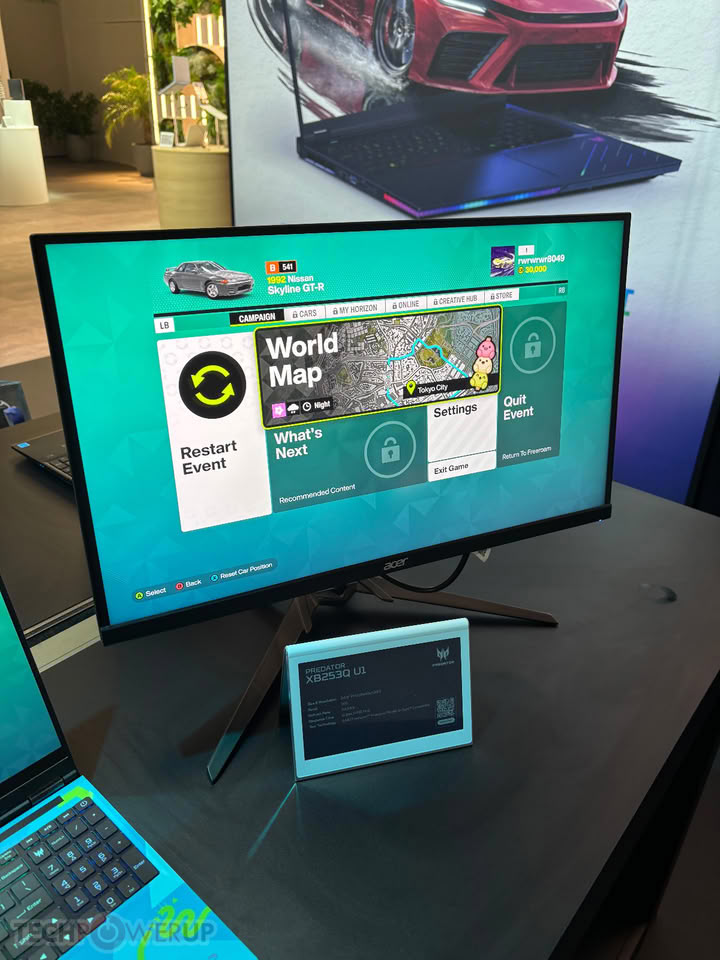
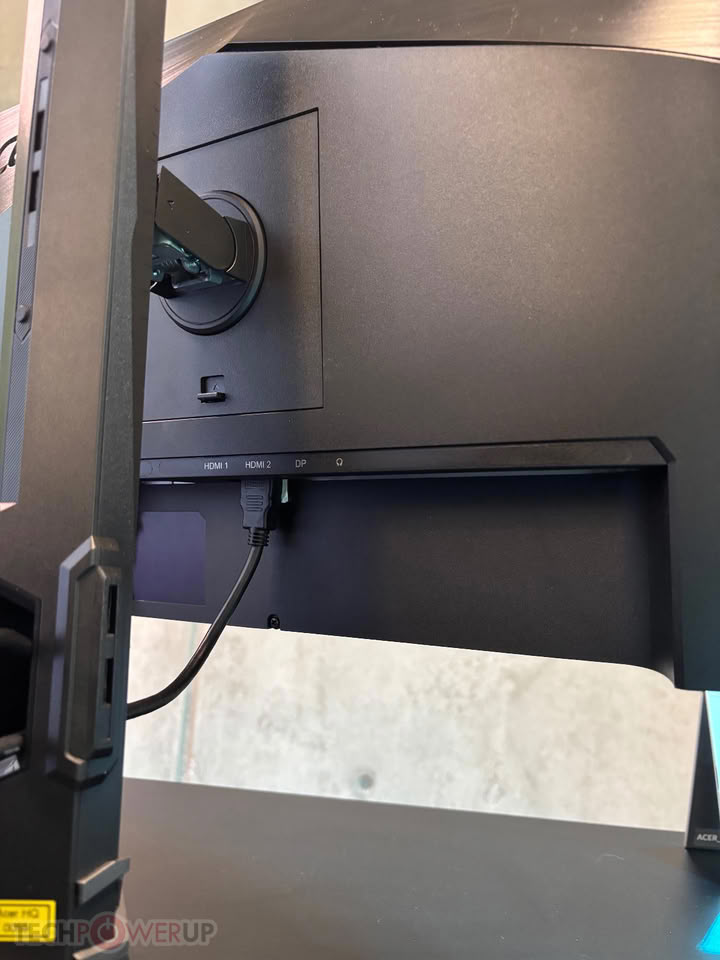
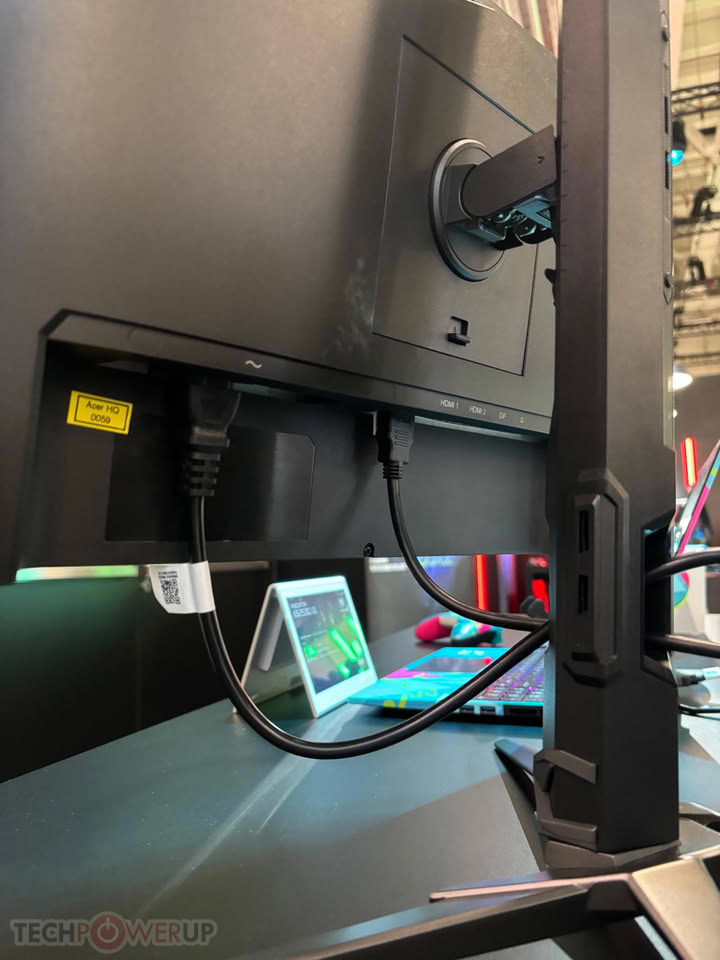
Hands-On with the Acer Predator XB253Q U1 1000 Hz Monitor at IFA 2026

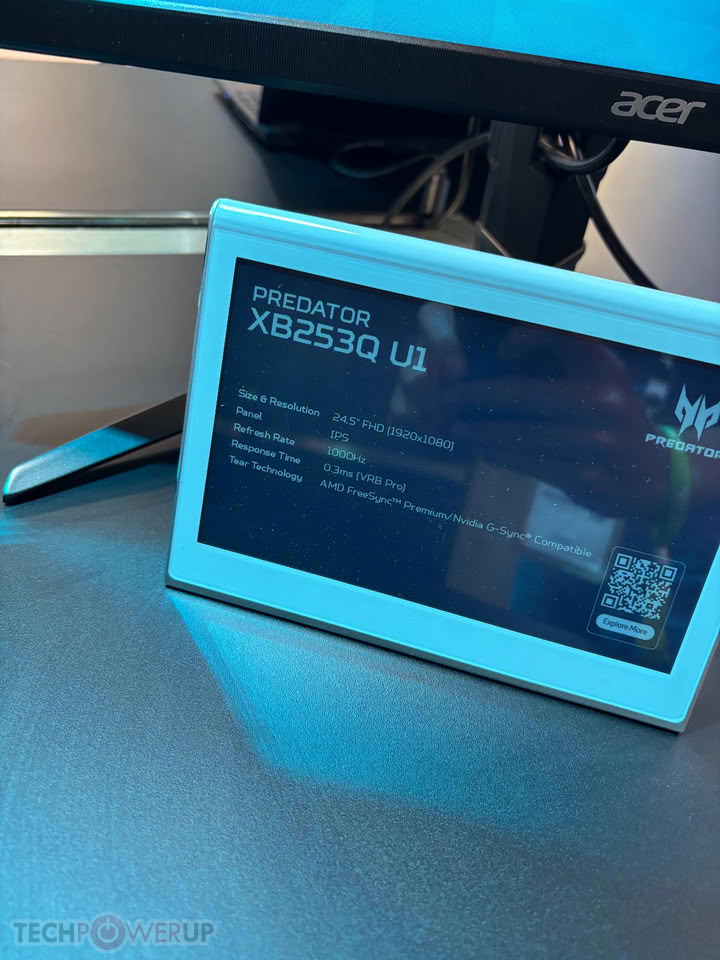
Acer used IFA Berlin to show off the Predator XB253Q U1, a 24.5-inch monitor that hits 1000 Hz at its native 1920x1080 resolution. That's notable because most "1000 Hz" monitors so far have needed a resolution cut to get there. Acer's own XB273U F6 from CES 2026, for example, only reaches 1000 Hz at 720p, dropping down from its native 1440p resolution. The XB253Q U1, on the other hand, uses an IPS panel and skips that compromise, offering full FHD at the full refresh rate. It also comes with Acer's VRB Pro backlight strobing tech to cut down motion blur, along with a circular polarizer layer aimed at reducing eye strain during long sessions. It's also VESA DisplayHDR 400 certified.

It's not the first monitor to pull this off. LG's UltraGear 25G590B got there first, also at 25 inches and 1000 Hz native FHD, and launched at $999.99. Acer's asking $1,099.99 for the XB253Q U1, a $100 premium over LG's price. In Europe it's priced at €1,099, and in China at RMB 7,999. Availability is set for Q1 2027 across North America, EMEA, and China, so this isn't a monitor you can buy just yet. We'll have to wait for independent testing to confirm whether the panel's 0.3 ms response times can actually keep up with 1000 Hz in real gameplay, rather than just on a spec sheet
Return to Keyword Browsing
Nov 11th, 2026 06:16 CST change timezone

New Forum Posts

Popular Reviews

TPU on YouTube

Controversial News Posts