Sunday, February 8th 2026

AMD on FSR 4 for RDNA 3 and Older GPUs: "No Updates to Share at This Time."
AMD's FidelityFX Super Resolution 4 technology, now known simply as FSR 4, is currently supported in many games, but not across all AMD RDNA GPU generations. In response to an inquiry from Hardware Unboxed, AMD mentioned that it is still uncertain whether official FSR 4 support will be extended to the Radeon RX 7000 series and older GPUs, as the company reportedly has "no updates to share at this time." AMD official product separation stems from its RDNA 4 architecture and the support for 8-bit floating point instructions. While the latest RDNA 4 hardware supports Wave Matrix Multiply Accumulate in FP8 format, older RDNA generations like RDNA 3 and RDNA 2 lack this hardware instruction support and can't process 8-bit floating point data in this format.
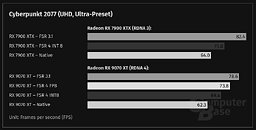
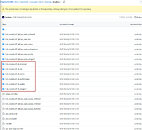
However, older Radeon GPUs can instead rely on the 8-bit integer (INT8) data formats, which Radeon RX 7000 series fully supports. AMD accidentally leaked FSR 4 INT8 on its AMD GPUOpen platform, showing that FSR 4 on older GPUs is a possibility, which is just kept hidden for now. Later on, ComputerBase tested this leaked library, finding that FSR 4 offers a balance between native image quality and FSR 3.1 performance on both RDNA 3 and RDNA 2 hardware. In tests with Cyberpunk 2077 in 4K on Ultra settings using the AMD Radeon RX 7900 XTX, FSR 4 delivered 11% faster performance than native, but was 16% slower than FSR 3.1. Interestingly, performance may be the reason why AMD is holding these INT8 FPR 4 libraries back, but another point could be product separation.
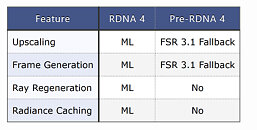 AMD already segregates its latest FSR "Redstone" suite of technologies, with features like Ray Regeneration and Radiance Caching exclusive to RDNA 4 hardware in the Radeon RX 9000 series of GPUs. Other basic technologies like upscaling and frame generation are supported on older RDNA 3/2/1 generations, but use an FSR 3.1 Fallback, with no FSR 4 support for now. However, since INT8-based FSR 4 exists, it may only be a matter of time before the company releases the capability to older GPUs, but the expected performance might not be there.
Source:
Hardware Unboxed
However, older Radeon GPUs can instead rely on the 8-bit integer (INT8) data formats, which Radeon RX 7000 series fully supports. AMD accidentally leaked FSR 4 INT8 on its AMD GPUOpen platform, showing that FSR 4 on older GPUs is a possibility, which is just kept hidden for now. Later on, ComputerBase tested this leaked library, finding that FSR 4 offers a balance between native image quality and FSR 3.1 performance on both RDNA 3 and RDNA 2 hardware. In tests with Cyberpunk 2077 in 4K on Ultra settings using the AMD Radeon RX 7900 XTX, FSR 4 delivered 11% faster performance than native, but was 16% slower than FSR 3.1. Interestingly, performance may be the reason why AMD is holding these INT8 FPR 4 libraries back, but another point could be product separation.


110 Comments on AMD on FSR 4 for RDNA 3 and Older GPUs: "No Updates to Share at This Time."
it just fosters these very unproductive conversations everytime a new "FSR4 on old hardware" Headline drops...
I've put people on ignore for less than that, so off you go. It’ll eventually become so quiet that I might even hear my bowel movements.
Keeping things ambiguous is better that just saying what everyone knows and putting their foot in their mouth.
Also let's fan theories flourish. I'm now hearing that they're not saying anything because contractual obligations to Sony and their PSSR upscalers which would essentially be FSR4 Int8 given PS hardware, so they have to keep mum until that's launched and patched up.
I've no idea why AMD is holding back the INT8 version from older cards though. We've seen performance is good enough on those cards. The bad will they've gained is not going to be worth it for them and it's just another baffling AMD choice that nets them nothing in return.The issue is that you are arbitrarily deciding what is and isn't top end. Such logic would be a get out of jail free card for Nvidia or AMD to exclude any software features they want. It's arguable that all these features are "top-end". DLSS, FG, Reflex, VRR. All could be considered "top-end" depending on the perspective of the speaker. After all discrete GPUs are inherently much much more powerful than what the majority of people have. Both Nvidia and AMD have even used this logic in the past to market some of their cards.
I don't see this as a valid argument, it's just a crux that fanboys will use to justify their big corpa crush screwing people over.
In addition, the post you are replying to was in turn replying to a comment stating Nvidia gives it's cards 7 years of feature support. I've seen you and so many people tout Nvidia's software support. Well, part of that being a big selling point of your cards is ensuring all the latest features get ported to cards at least 7 years old (if not more if the hardware is there). It doesn't mean "oh well only the features I care about" or "only non "high end" features". I expect significant effort to make these features available on older cards if it's even remotely workable. Every PC gamer should be demanding this because the extended software support is a big part of modern GPU pricing, particularly for Nvidia where you are paying 15-25% more just for the extra support over what AMD provides. You are paying a lot for it.
If Nvidia want to have tiered software support where "top-end" features are locked to higher SKUs, it needs to stipulate that when selling the video cards. Same goes for AMD. You can't run RT well on lower end cards but it will run.This is true but at least they have access to using the newer models. If it's a question of performance, they should push game devs to add a warning message in game about the performance hit on prior generations. I can understand that most people are not wired into the tech loop and may assume performance is bad for the tech.
It's always the same people over and over again riding in on a high horse, first to tell everyone how shit they think AMD is while passive aggressively mocking and attacking anyone with and AMD GPU. This same bullshit evangelism every time for a brand while being condescending to others only wants me to buy that brand less, and heck if AMD stops making dGPU's I'd rather find a new hobby, Nvidia users would love the full monopoly anyway.
Nobody cares who ignores who - don't post about it.
AMD, meanwhile, knows the INT8 version of FSR4 runs on rDNA3, yet refuses to backport any of it. Apples and oranges responses from the two. Nobody is complaining that rDNA3 doesnt have the new FG from redstone (because they dont have the hardware to support it), they are complaining that the INT8 version of FSR4 is being artificially blocked.What "top end feature" has nvidia artificially locked to a higher SKU? What can a 5090 do that a 5060 cannot?
The only time nVidia has ever done this was the GTX 1600 series, which were stripped of RT cores to make budget hardware. They were sold with full acknowledgement that they were stripped cores that couldnt do RT and they were lauded for giving the consumer choice.Selective criticism would imply that people ignore nvidia doing what AMD is also doing. This is untrue. That would require nVidia to not port DLSS 4 backwards to the RTX 2000/3000 series.
Whether these features work well on older cards is a completely different argument, the fact is nvidia allows users to do so, AMD does not.AMD is being criticised for their artificial gatekeeping, and rightfully so. If they want to be a premium brand with premium prices, they need to compete with the big boy. When the evil, greedy nGREEDia is out here giving users 8 years of feature support (so far) and 10 years of driver updates, while you put out 4-5 years of updates for some cards and only provide feature updates for the newest stuff, youre gonna get heat for it.
Theres an easy solution, one that AMD refuses to do: port FSR4 to rDNA 2/3. Others have already done the work. But AMD refuses, because at the end of the day AMD is just as greedy and wants you to upgrade every generation to get the new toys.
I think AMD should have just went ahead with an FSR4 lite or FSR4 beta to make everyone happy and to avoid the negative press, because tech sites will nitpick everything AMD does.
AMD has communicated things badly before, so them taking missteps here isn't a surprise, it's like Radeon engineers aren't talking to the marketing people, or the marketing people have more say on what goes on than the engineers do. It does sadden me that AMD missed the chance they could've taken to fully launch FSR4 in some form to cards at least back to RDNA2, now people would be less accepting of an FSR4 beta test or an open source driver. I have no use for upscaling but it would be interesting to try without the need for workarounds.
FSR4 was ported to rdna3 by one guy. ONE guy. So yeah, the multi billion dollar AMD is going to get nitpicked for not doing what both intel and nVidia can do, and what one hobbyist can do.
AMDs 18% margin gave them $4.335 billion in net profits. Think they can support hiring ONE guy to move this stuff?
Its not a money problem. AMD isnt some poor underdog. They have the staff to do it already, and redstone having INT8 code shows the had already developed it. Valve was doing it FOR FREE on linux and got shut down by AMD. It was a business decision, done to segregate the market. It wasnt done to save money or because they are suffering.
Theyre gonna get a lot of heat for using greed to drive their decision to abandon older users. If nVidia did this, they would be criticized too. If Intel did this, they would be criticized too (and they WERE, there was a lot of heat when intel straight up abandoned users with 1 year old hardware using Xe cores in their iGPUs).
Radeon 8060S is not brand new.
Jan 6th, 2025 - RDNA3.5 based iGPU in Ryzen AI Max+
Mar 6th, 2025 - RDNA4 based GPU 9070XT
Am I happy taht RDNA 3.5 has not got ML upscaling? No.
Do I care about ML upscaling on pre-RDNA4 dGPUs? No.
I just do not have any game slowed down by RT effects, so even 760M (iGPU from Ryzezn 8600G) is able to run them without upscaling.
In comparison, FSR 1 works with every GPU that is able to start the game, and FSR 2 through FSR 3.1 work with Polaris/Pascal and newer.
XeSS also works with RDNA 1/Pascal and newer GPUs.
The issue is, compared to the user base of non-RDNA 4 GPUs, there are only a miniscule amount of gamers using RDNA 4 GPUs.
To this, while FSR 3.1 is still often better than TAA, it is still worse than other options, such as DLSS and XeSS (which supports most GPUs).
As such, there is minimal incentive for devs to implement support for FSR 3.1 or FSR 4 in games.
The entire point of this thread is that INT8 support for FSR 4 has already been developed.
That it is not being officially implemented, in my opinion, is doing a disservice to both gamers, as well as AMD, as it would allow most GPUs to use it, and would make it an enticing feature for devs to add to their games.
It just happened that requirements of some parts of DLSS pack are low enough they are still able to run on them. Somehow.Did that help to get more marketshare?
Did that help to get higher revenue?
Did that pleased shareholders?
Then again I've seen people whine the Adrenalin menu is too hard to use. 🤣This. And I'm sure Nvidia drivers have been completely perfect too.Ignoring that MFG 6X requires a RTX 5000 series card is selective criticism as well.
And so is saying how well features work, if the features cause a significant performance impact those features are worthless,2000&3000 don't work well at all with DLSS4.AMD is hardly a premium brand with premium prices, remember what Nvidia tried with the 4080 12GB for $900? Or how a $800 x70ti tier is "midrange" now. That's thanks to Nvidia putting a premium on top of their premium, the more you buy the more you save.
But only AMD can be greedy for artificial gatekeeping, Nvidia is the knight in a shining leather jacket even though they gatekept DLSS for too long with some optical flow bullshit, older cards don't get MFG 6X even though it would most benefit the 8GB cards they keep selling.
And yes, FSR4 would benefit 8GB cards too, however official development with getting game companies to use their features costs money, not just a third party tool.One guy who made a workaround that requires a bunch of work to get it working, and then it always doesn't work or look nearly as good as FSR4 on RDNA4 hardware. And you have to run Optiscaler on Linux to get any real benefit from it, also while running the risk of getting banned in any multiplayer game for using unsupported code.
AMD has $4.4335 billion for their entire client and gaming side of the business, go compare that to how much Nvidia or Intel has in net profits.
It is a money problem to be keeping up with Nvidia and Intel, they are the tiny underdog fighting against two much larger corporations which are also collaborating together. It isn't as simple as taking the tool one guy made relabling it as FSR4 Lite and stuffing it into the Adrenalin panel.
They would've gotten heat regardless of launching it for all GPU's or not since Nvidia pulled MFG 6X out of their butts, people would've moved the goalposts and critcized AMD for not having the same level of AI fake frames. As I mentioned, Nvidia doesn't get nearly the same amount of criticism when they pull dumb stuff, neither does Intel, they got excused for Xe support getting dropped for 1 year old hardware because it only affected iGPU's.
Again, by definition "selective criticism" would mean people pointing out AMD doing something were ignoring nVidia doing the same thing. That is categorically untrue. nVidia is not doing what AMD is doing, and people will compete at the olympic level in mental gymnastics to justify AMDs actions.Did closing the software get them more marketshare? More revenue? Did it please shareholders?Im not going to address the "muh MFG" cope anymore. Asked and answered why you are wrong already.
AMD wants to be a premium brand, but isnt willing to put in the effort that the ACTUAL premium brand does in supporting their products. This is a self made problem that is well within AMDs capability to fix. They make enough money to hire someone to finish the INT8 code already made. The fact a hobbyist makes it work at all is a strong indication that an official employee with official code could do a much better job. AMD can sacrifice 0.001% of their annual profits to make that happen, if they choose.
If nVidia was doing this, they would be torched. But they are not. AMD is doing it, and people keep making excuses for it. Enjoy 6% marketshare, I guess? Id rather AMD not act like this, and provide support that mirrors the price of their hardware, and actually COMPETE with nvidia instead of lapping up scraps.
I don't argue the impact is considerably higher, I'm saying it's still worth it in certain situations and it's absolutely awesome that Nvidia implemented it officially that far back.I like that your points are so strong you need to wilfully misrepresent the points you don't like, essentially another strawman by phrasing them the way you do, which nobody who talks of the merits of those features does. Classic.And a straight up lie. It's not worthless at all on RTX2000 and 3000, ask me how I know. Please, stop spreading misinformation, it's not a good look.See it wouldn't even be a sacrifice though. A tiny, utterly miniscule portion of their revenue/profits would need to be allocated to it, but the benefits it brings would in turn bring in more revenue and profits. It's not doing it that's costing them money, and I'd wager it's going to cost them a boatload more through their mishandling of it than it would releasing it.