Wednesday, March 25th 2026

AMD Joins Intel in Raising PC CPU Prices by Up to 15%
Last week, we reported that Intel is preparing to increase CPU prices by 10% across its client PC sector. However, a new report from Nikkei Asia suggests that AMD is also joining this trend, with plans for a PC CPU price hike as well. Reportedly, AMD Ryzen CPUs could see prices rise by 15% compared to the same time last year, when prices were typically around the MSRP at retailers. Now, as CPU demand has depleted inventories and the focus remains on server and data center CPU production, capacity for the client segment has been significantly reduced, leading to little to no inventory for PC enthusiasts. Large OEMs like HP and Dell are among the first to feel the pressure from the dwindling supply chain and have reported a significant gap between demand and supply for their PC systems.
Nikkei also notes that both AMD and Intel have informed their clients that CPU price increases will take effect by the end of March and into April, which should start to manifest very soon. What used to be a one or two-week wait from order to CPU shipment has now stretched to a process lasting eight to twelve weeks. This means that a CPU batch ordered in April might not arrive until June. This period is expected to be the worst in terms of supply in the second quarter of this year. Even if OEMs are willing to pay extra to secure CPU supply, availability is lacking. The CPU shortage is worsening daily, coinciding with the ongoing memory and storage shortage we are already experiencing.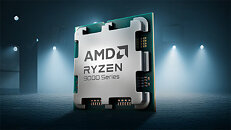 Yesterday, ASUS Joint Technology Systems Division General Manager Yi-Hsiang Liao announced a planned 30% price hike across the company's entire product line. He explained that the extremely high costs of DRAM and SSD storage, combined with a shortage of CPUs, are driving this increase. ASUS also claims that this issue is not limited to their company, as every Taiwanese PC maker will face similar challenges. As the CPU shortage worsens, we expect these price hikes to become more common, creating a very challenging situation for PC enthusiasts.
Source:
Nikkei Asia
Nikkei also notes that both AMD and Intel have informed their clients that CPU price increases will take effect by the end of March and into April, which should start to manifest very soon. What used to be a one or two-week wait from order to CPU shipment has now stretched to a process lasting eight to twelve weeks. This means that a CPU batch ordered in April might not arrive until June. This period is expected to be the worst in terms of supply in the second quarter of this year. Even if OEMs are willing to pay extra to secure CPU supply, availability is lacking. The CPU shortage is worsening daily, coinciding with the ongoing memory and storage shortage we are already experiencing.

43 Comments on AMD Joins Intel in Raising PC CPU Prices by Up to 15%
Economy of scale allows you to sell at lower profit margins(percentage) and get the same raw profit value.
Because consumers are now incredibly price sensitive... As we enter a new economic environment...
I expect they'll reverse the increase and cut prices within 6 months.
Not building a new PC until 32GB of ram is about $125 again.
"Ferret face" raises you two warehouses full of uncut wafers.
Anyway, is AMD just passing along increases originating at TSMC? Sure that isn't the only cause for price increases, but what other choice do they have have at this point? Hasn't Intel, who has their own fabs, used, or are using, TSMC as well?
Once they all eat each other, that's when the consumer can move in and start purchasing upgrades for themselves, until then, I'll wait and I would advise you should too. Unless of course people don't mind overpaying for computer components.Actually not nesessarily, he makes a valid point. Who is the dominant player? Nvidia. Nvidia commands an estimated 80% to 90% of the global AI chip market. Tech giants like Microsoft, Google, and Meta have been buying their chips in massive bulk to build data centers. And they've been pushing AI aggressively, especially when the majority don't need it and don't want it. They drive prices through the roof due to their market share dominance and influence.
This AI thingy is a new Industrial Revolution , since it is actively sanctioned by governments, not only mega Corps. This will continue way past 2030 , maybe even 2040, when market will start to stabilize, and the technical advancement will significantly start to sloe down due to process limitation.
Seems we will need another decade to go under 1nm process, so this , hopefully, will slow things down... However this AI market is overly unpredictable so anything can happen.You are literally blaming the guns, not the people, for when a murder occurs.Not sure if you can put the fault on only 1 company, as much as I hate nGreedia. What is stopping Intel, AMD, Apple, ARM, etc to design and produce completive AI processors and solutions? Their failure of capitalizing on the AI trend, is not necessarily nGreedia's fault. While they do have their proprietary tech, why didn't Intel, AMD, etc create an alternative to it?
Who stopped them, except sheer incompetence and acute lack of vision?
Not good times ahead, unless the market crashes to allow demand to fall below capacity.