News Posts matching #RTX

Return to Keyword Browsing

AMD Radeon Owners Can Now Run Nearly Every DLSS Feature Through Fan-Made Mod

Daniel Blanco's DLSS-NR on AMD project has grown well past its original scope. The mod first got NVIDIA's DLSS 5 Neural Rendering running on Radeon cards back in September, and later pulled off a 74% performance jump in a single day. The new Alpha 0.8.0 release, published on October 17, now brings almost the whole DLSS stack to AMD GPUs. That includes DLSS 4.5 Super Resolution (Models M and L), Ray Reconstruction (Model F), and Frame Generation with up to 4x multi-frame generation (MFG) in games that expose DLSS FG inputs. FSR 4.1.1 is also bundled, so it no longer depends on the driver, and a new NeuralHub mod manager handles game detection and installation.

According to the developer, this is a ground-up reimplementation of the DLSS runtimes using custom HIP kernels rather than a translation layer, and users have to supply their own NVIDIA DLLs. RDNA 4 and RDNA 3 cards get the full feature set, while RDNA 2 support is still experimental and limited to Neural Rendering. The developer says DLSS 5 Neural Rendering now runs at roughly 90 to 100 FPS at 1080p on an RX 9070 XT, and the goal is to match an RTX 5070 Ti. Early results with Ray Reconstruction are mixed, however. One Reddit user reported no performance loss in Cyberpunk 2077 with path tracing at 1440p on an RX 9070 XT, while others saw drops of up to 25%. The mod only works in DirectX 12 games on Windows 11, and anti-cheat software blocks it, so readers are advised to stick to single-player titles.



PS4 Exclusive Driveclub Now Runs Natively on PC Through New Recomp

Driveclub, Evolution Studios' 2014 PS4 racer, now runs natively on Windows through DriveClub Recomp, a fan project released on GitHub by OverkillLabs3. While PlayStation emulation has been progressing rapidly, this one doesn't use CPU emulation. The game's own x86-64 code runs directly on the PC's processor, while the PS4 system libraries are reimplemented and GPU commands are translated to Vulkan. The port supports resolutions from 720p to 8K, ultrawide displays, and an unlocked frame rate that doesn't speed up the game. It also replaces the original anti-aliasing with NVIDIA DLAA on RTX cards or AMD FSR 3.1 on any GPU, both at native resolution, and RTX owners can swap between the two in-game with F10.

The developer says the game holds about 60 FPS at 4K in its heaviest scenes on an RTX 5070 Ti paired with a Ryzen 7 5800X3D, and the v0.2.3 update pushed one 4K test race from roughly 62 to 71 FPS. It is still rough around the edges, however. Some reflections look too bright, shaders compile during the first few minutes, slower CPUs drop frames in busy scenes, and online features don't work. It has also only been tested on NVIDIA hardware so far. A second project, DCport by qnfn, takes a similar route with FSR 3.1 and FSR 4 support. Both need the player's own dump of version 1.28. It's in the same vein as how modders recently got Gran Turismo Sport running on PC. These recomps arrive a couple of months after a ShadPS4 patch let Driveclub run at up to 8K, quite the jump for a game that shipped at 1080p and 30 FPS.

New Tools Let Users Edit and Load Modified VBIOS on GeForce RTX GPUs Without Flashing

A developer who goes by Panchovix has released three tools that let NVIDIA GeForce RTX 50, RTX 40, and RTX 30-series owners run a modified VBIOS without writing anything to the card's flash chip. The first is a VBIOS editor for Windows and Linux that can change power limits, voltage ceilings, current (OCP) limits, fan channels, and the core and memory offset ranges. Edited images keep NVIDIA's original signature, which no longer matches, so they can't be flashed with nvflash. Patched tools did break NVIDIA's BIOS signature lock for crossflashing back in 2023, but this approach skips flashing altogether. On Windows, the loader stores the edited image in the GPU's driver registry key, where the driver picks it up as an override every time the device starts, and it only needs a quick GPU restart. The Linux loader instead patches NVIDIA's open kernel modules so the GSP firmware starts with the custom image, with Fedora 43 being the only distro tested on real hardware so far.

The screenshots show how this works in practice. On what appears to be an RTX 5090 Founders Edition ROM, the board power ceiling went from 600 W to 700 W and the NVVDD and MSVDD voltage ceilings from 1,110 mV to 1,150 mV. An RTX 4090 ROM had its power ceiling raised from 666 W to 750 W and its core offset range doubled to +2,000 MHz, and nvidia-smi later confirmed that card's power limit going from 550 W to 671 W. Apparently, an RTX 5090 reached 800 W, an RTX 5080 went from 360 W to 500 W, and an RTX 5060 Ti from 185 W to 300 W in the developer's own testing. Laptop RTX 40 GPUs can't be edited yet, and memory timings can't be changed since the card reads them directly from the flash chip.

NVIDIA Denies RTX 5090 Discontinuation Rumors, Admits Supply Is Tight

NVIDIA has finally responded to reports that the GeForce RTX 5090 is being discontinued. Jeff Fisher, senior vice president of NVIDIA's personal computing business, told Taiwanese media after the RTX Spark launch party in Taipei on October 16 that the rumors aren't true, as reported by 4Gamers and the Central News Agency (CNA). The whole thing kicked off last week when leakers claimed NVIDIA had stopped allocating GB202 silicon to the RTX 5090, and BenchLife later added that board partners were no longer receiving GB202 chips for the card. The RTX 5090 also seemingly vanished from NVIDIA's own marketplace and from Micro Center shelves, which only added fuel to the fire. Here's what Fisher said, translated from 4Gamers' Chinese report:
The supply chain (capacity) is indeed somewhat constrained, but NVIDIA is going all out to bring products to market. Although there are other variants of the RTX 5090 (chip), it has definitely not been discontinued. NVIDIA will continue to ship it, and this is very important.

Modder Fits RTX 5090 With Four 8-Pin Connectors, Halving Current per Wire

Reddit user DallasGrave, who recently soldered a dual 8-pin board to an RTX 5090's 16-pin header, is back with a more ambitious take on the same idea. The new "Quad 2x8 Header Conversion" mounts four 8-pin PCIe connectors right on the card, tapping the contact points of the 12V-2x6 header, so the 16-pin connector can either stay in use alongside it or be skipped entirely. Each 8-pin carries three 12 V conductors, which spreads the load over twelve wires instead of six.

According to the modder, current per conductor is "almost perfectly halved" compared to the native connector, landing at roughly 4.1 to 4.4 A per wire at 600 W, with wire temperatures dropping by around 20°C. The sense pins are set for 600 W, and the board has apparently been tested up to 800 W on a shunt-modded card, where the PCB itself reportedly sat at about 45°C. Videos covering installation, live current data, and a 24-hour sustained load test are apparently being shot now, and custom backplates are in the works to make the mod look more factory-made. Versions for nearly every card, Founders Edition included, are also going into production.

Modders Bring NVIDIA's Faster DLSS Frame Generation Preset C to RTX 30-Series GPUs

NVIDIA's new DLSS Frame Generation Preset C has only been out for a few days, and modders have already brought it to RTX 30 cards. The latest version of dashdogy's Universal MFG Unlocker (v1.5.0, formerly RTX 40 MFG Unlock) adds Preset C support on both RTX 40 and RTX 30 GPUs, including 3x to 6x multi-frame generation (MFG). Officially, Preset C is a beta "performance mode" for RTX 40, RTX 50, and RTX Spark systems, available through the NVIDIA app's experimental features. It swaps one of Frame Generation's two AI models, the one handling optical flow, for a lighter algorithm, and NVIDIA claims up to 35% higher performance in exchange for a small hit to image quality.

According to the release notes, RTX 30 support is now considered stable, with smoother frame pacing at 3x and above, though it only works in DirectX 12 games. However, the newest DLSS Frame Generation build that carries Preset C has only been validated offline on RTX 30, and the preset was confirmed in-game on an RTX 40 card in The Witcher 3. No RTX 30-series performance numbers have been shared yet, so the gains on Ampere are anyone's guess. The update also adds XeSS Multi Frame Generation from 2x to 6x on NVIDIA, AMD, and Intel GPUs through an OptiScaler plugin, and fixes a launch crash in Gears of War: E-Day. This effort follows recent mods that got DLSS Multi Frame Generation running on Ampere and also brought Smooth Motion to the same cards.

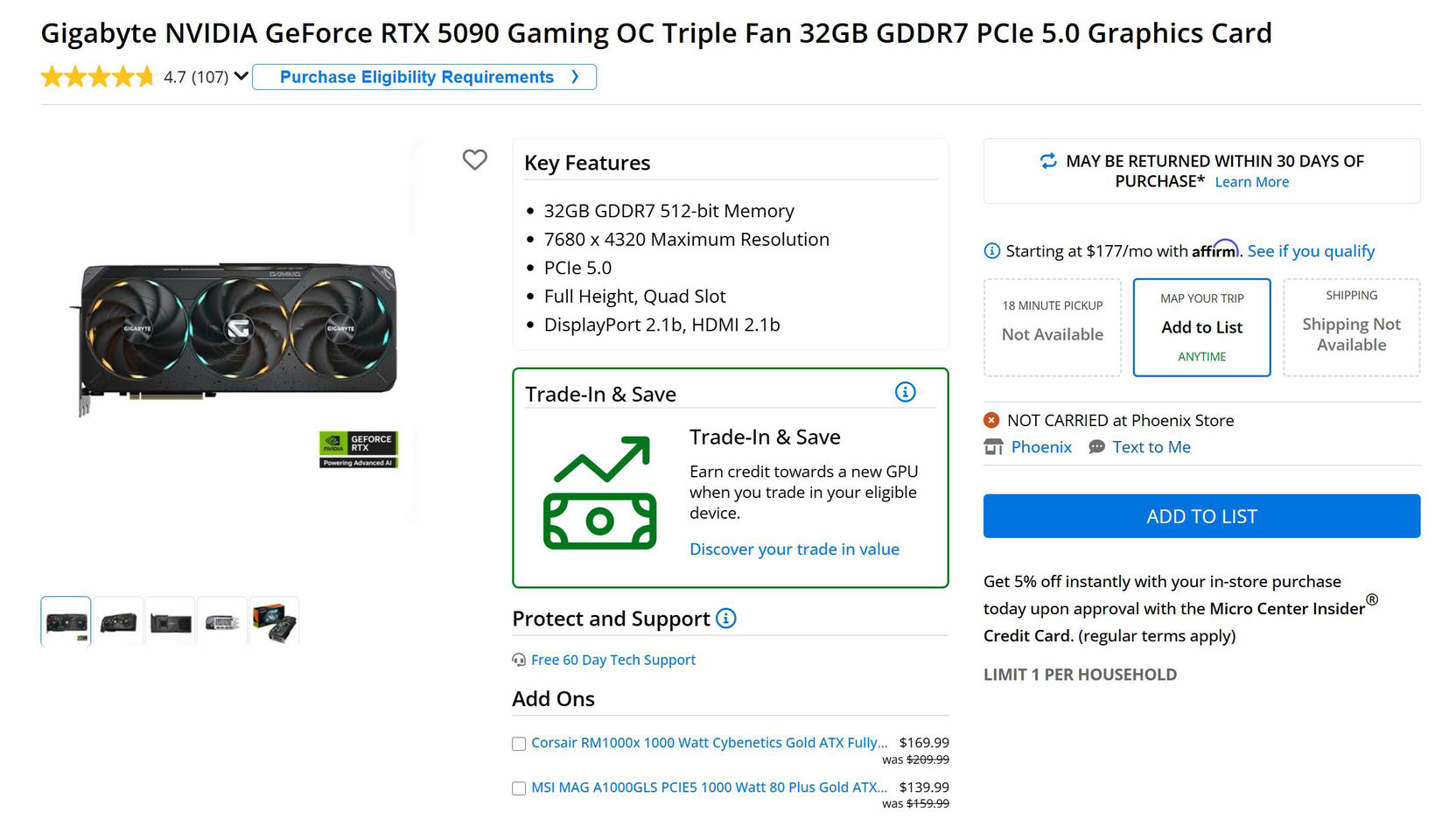
Micro Center Reportedly Drops the RTX 5090 From Its Catalog as End-of-Life Rumors Pile Up

Micro Center seems to have quietly stopped selling the GeForce RTX 5090. Several RTX 5090 listings on the retailer's US website now show as "Not Carried," and a post on r/gpu claims every single one of them does. That label usually means a product has been dropped from the active catalog and won't be restocked. Custom models from ASUS, MSI, and Gigabyte are still listed but out of stock at physical stores, and the only RTX 5090 reportedly still sitting on shelves at most locations is an ASUS ROG Astral sold inside a 20th Anniversary bundle for almost $11,000. Neither NVIDIA nor Micro Center has commented on the situation yet, and NVIDIA's own website still lists the RTX 5090 at the now-mythical price of $1,999.

Separately, Redditor johnnyphotog on r/Microcenter says staff were already pulling RTX 5090 cards from the shelves on October 9. Apparently, a manager told him the cards were being sent somewhere else, and while he did manage to buy one, an employee told him it was probably the last RTX 5090 the store would sell. That timing is interesting, since it came a day before leakers claimed NVIDIA stopped allocating GB202 silicon to the RTX 5090 and is saving it for far pricier workstation cards like the RTX PRO 5500. Of course, the MSRP of the RTX 5090 hasn't meant much for a while, with the card selling out at Walmart for $4,299 last month. If GB202 supply has really dried up, whatever partner stock is left will likely get even pricier, so readers set on buying one shouldn't expect prices to come down anytime soon.

NVIDIA RTX 5060 Ti 16 GB Price Hikes Put Entry-Level GPU Above $1,200 in Japan

On two separate occasions, in August and again in September, it was predicted that entry-level GPUs would see significant price increases in the second half of 2026, and it seems as though that prediction has come true, as showed in a recent Reddit post sharing updated retailer listing prices for NVIDIA GeForce RTX 50-series GPUs from Japan—one of the countries where PC hardware prices are often felt sooner than in international markets. According to the price list, the cheapest available RTX 5060 Ti 8 GB was ¥118,800 (~$750 converted), while RTX 5060 Ti 16 GB prices start at ¥139,800 (~$882 converted).

Meanwhile, the RTX 5070 12 GB starts at ¥145,800 (~$920 converted), 5070 Ti prices start at ¥230,800 (~$1,456 converted), and the RTX 5080 16 GB has climbed to a starting price of ¥295,801 (~$1,867 converted). Compared to MSRP, these new prices represent an increase of around 59% for the RTX 5060 Ti 8 GB, 66-144% for the 5060 Ti 16 GB, 32-82% for the 5070, and as much as 94% for the RTX 5080.

KINGPIN Says a Connector Dispute With NVIDIA Derailed EVGA's Last Flagship Card

Vince "KINGPIN" Lucido has blamed NVIDIA for the troubled launch of the EVGA GeForce RTX 3090 Ti KINGPIN, the last graphics card to carry his name. In the first video on his new Overclocking Kingpin YouTube channel, the overclocker said he wanted the card to have two 12VHPWR power connectors, while NVIDIA wanted it limited to just one. The disagreement, in his words, "really screwed up the production timeline", and he also holds it responsible for how few units were made afterward. The card did eventually ship with both 16-pin connectors when it went on sale for $2,500 with a bundled 1600 W power supply, about three months after the RTX 3090 Ti itself came out. This is only Lucido's side of the story, and it isn't clear why NVIDIA pushed for a single connector.

In September 2022, EVGA ended its partnership with NVIDIA and stopped making graphics cards, with CEO Andrew Han pointing to a souring relationship between the two companies. Every card in development was canceled, KINGPIN models included. Lucido is now working with ASUS, which sent over the hardware shown in the video, although no ASUS-made KINGPIN card has been confirmed. He did lay out one condition for such a card: the PCB and power delivery have to let the GPU reach its full potential under liquid nitrogen without the buyer modifying anything. An earlier plan with PNY never produced a card, and Lucido ended up skipping the RTX 50 generation entirely.

NVIDIA Reportedly Ending the RTX 5090, Reserves GB202 Silicon for Workstation GPUs

NVIDIA has reportedly stopped allocating GB202 silicon to the GeForce RTX 5090, according to leaker MEGAsizeGPU (@Zed__Wang) on X. "No more GB202 for 5090, confirmed," the leaker posted, adding in a follow-up that "all future GB202 supplies are RTX Pro exclusive." GB202 is the largest "Blackwell" graphics chip, and the RTX 5090 doesn't even max it out. The same chip powers the 96 GB RTX PRO 6000 with 24,064 CUDA cores, as well as the recently unveiled RTX PRO 5500, which pairs the RTX 5090's 21,760 CUDA cores with 84 GB of memory. Apparently, NVIDIA would rather put every GB202 it gets into those far pricier workstation cards. The company hasn't confirmed any of this as of the time of writing.

A second leaker, hongxing2020, posted "5090 EOL, 5080 24GB ready" alongside an apparent factory notice saying NVIDIA will no longer sell any RTX 5090 model, China-market D variants included. The same notice says an RTX 5080 24 GB will become the top GeForce card and the 16 GB version will be discontinued. That sounds a lot like the RTX 5080 SUPER, which was rumored with 24 GB of GDDR7 on the same GB203 chip, although it isn't clear if the two are the same card. SUPER cards reportedly reached board partners in July, only to be put on hold over GDDR7 pricing. As for the RTX 5090, I doubt NVIDIA would formally call this an end-of-life (EOL) move, since the chips are simply being redirected to a more profitable product line.

Leak Tips NVIDIA RTX Spark-Powered Microsoft Surface Laptop Specs

Following what appears to have been a series of unfortunate events that led to a roadside laptop find resulting in confirmation that Microsoft will be launching a 20-core NVIDIA RTX Spark Surface Laptop, we now appear to have confirmation that Microsoft will also be launching a Surface Laptop Ultra on the other end of the Spark spectrum. According to Windows Central, Microsoft will reveal the full RTX Spark Surface line-up on October 7 at a special event in San Francisco.

Alongside the 20-core variant, the Windows Central report claims that Microsoft will launch a Surface Laptop with NVIDIA's 18-core RTX Spark. It is also claimed that the 18-core SKU will start with 24 GB of unified memory, while the 24-core version will start with 32 GB of memory. There will reportedly be a performance demonstration that shows off how the new Arm SoC delivers the same level of performance on battery life as it does when plugged into the wall.

NVIDIA Releases GeForce 617.42 WHQL Game Ready Drivers

NVIDIA today introduced its GeForce 617.42 WHQL Game Ready driver, bringing support and optimizations for various new game releases. First, there is Game Ready support for two new titles: Call of Duty: Modern Warfare 4 and STAR WARS: Galactic Racer. These two AAA games are newly supported with this driver version, meaning the experience should be ready to go, but keep an eye out for any possible issues, as with every newly supported game. Next, we have optimizations for Dragon's Dogma 2: Dark Arisen and Valor Mortis, which have been fine-tuned to work better on NVIDIA GeForce RTX graphics cards, extracting more performance and reducing visual glitches. Support for updates like Microsoft Flight Simulator 2024 Sim Update 7 has also been included, ensuring the package covers modern game updates and releases.

The driver itself also fixes an issue with Assassin's Creed Shadows, which previously crashed to the desktop after extended gameplay with driver version 616.56. Gamers running this specific version should upgrade to the latest 617.42 WHQL edition, and the full changelog can be found below.

DOWNLOAD: NVIDIA GeForce 617.42 WHQL

German Utility Sells a "Gaming" Electricity Plan for Gamers and Power Users

German utility SWK Energie, the municipal power company of Krefeld, is selling an electricity plan aimed squarely at gamers. It's called meinGAMING, and the pitch is simple enough: a higher fixed monthly fee in exchange for a lower price per kilowatt-hour. SWK says the plan starts to make sense at around 2,500 kWh per year, which is where the calculator's "Casual Gamer" preset sits. The "Pro Gamer" and "Gaming Haushalt" presets default to 3,500 kWh and 5,000 kWh. Of course, the wall socket doesn't know what's plugged into it. The same plan works just as well for a household with a heat pump or an electric car, so the gaming part appears to be branding more than anything else.

Pricing depends on the postcode. One example for postcode 51381 listed 25.01 cents per kWh and a €23.67 monthly base fee, along with a €100 new customer bonus and a price guarantee of up to 24 months. Apparently, that per-kWh rate was raised after a rush of sign-ups. A gaming PC alone probably won't get most people to 2,500 kWh, though. An RTX 5090 at its full 575 W for 30 hours a week works out to roughly 900 kWh a year. SWK also says the power is 100% renewable, backed by certificates of origin from European hydroelectric plants. Readers in Germany are advised to compare the plan against regular tariffs for their own postcode before switching.

Modder Solders Dual 8-Pin Board to RTX 5090's 16-Pin Header, Wires Stay Below 40°C

Melting 16-pin connectors keep making headlines, and some RTX 5090 owners have started taking the protection of their expensive cards into their own hands. Reddit user DallasGrave has modified an MSI GeForce RTX 5090 with two extra 8-pin PCIe power inputs that work alongside the card's original 16-pin connector. According to their post on r/pcmasterrace, a small pickup PCB is soldered to the contacts of the 16-pin header, and that board feeds a second PCB carrying the two 8-pin sockets. The card then runs on three cables in total. DallasGrave says each conductor now carries roughly 3 A, and that the wires never crossed 40°C during a 48-hour run at 550 W, even at the joint. More test data is apparently on the way, so for now these are the modder's own numbers.

The 12V-2x6 revision was supposed to fix the melting power connector issues. In early 2025, NVIDIA said the 16-pin melting issues were over, pointing to the updated connector on the RTX 50-series. However, the first melted RTX 5090 Founders Edition was reported shortly after, in that case with a third-party cable. Since then, several RTX 5090 power connectors have reportedly melted, including one with an undervolt and a -100 W power limit. Moreover, last month Hardware Unboxed watched its RTX 5090 power cable reach 175°C with a single wire pulling around 22 A.

Kingpin Teases Upcoming ASUS Extreme OC Collaboration

After EVGA's abrupt exit from the GPU space, high-profile Vince Lucido, aka Kingpin, seemingly took a hiatus from the PC overclocking scene, aside from briefly working with PNY on a planned RTX 50-series launch before scrapping the project. Now, as per a recent video update on his YouTube channel, Lucido has found another hardware partner for his signature overclocking GPUs in ASUS.

In the update, Lucido confirms that he has "some really sick hardware from ASUS and Corsair to start with," and that he has had "numerous talks" with high-level management at ASUS, which are what ultimately persuaded him to get back into the overclocking industry. He has promised that whatever he has planned for PC overclocking will appear on the Overclock Kingpin YouTube channel, which has no published videos at the time of writing.

Steam Hardware Survey: 32 GB Overtakes 16 GB as the Most Common System RAM Configuration

Valve's September 2026 Steam Hardware & Software Survey shows that 32 GB of RAM is now the most common memory capacity among participating gamers. The 32 GB tier gained 4.77 points to reach 42.22%, while 16 GB fell 3.38 points to 37.82%. Last month, 16 GB still led with 41.20% against 37.45%, so that is a big swing for a single month. The idea had been around for a while, with 32 GB already being floated as the next standard back in August 2025. Steam only reports capacity, so the survey says nothing about speed or whether those kits are DDR4 or DDR5. It makes sense, though, with several recent games asking for 32 GB RAM in the recommended specs, with 16 GB now often listed in the minimum requirements.

Elsewhere, AMD gained 1.89 points on Windows to reach 47.41% CPU share, and the GeForce RTX 5070 is the most common GPU at 5.86%, up 2.30 points. 1440p primary displays climbed 5.18 points to 27.04%, and Windows 11 keeps growing at 71.34%. Of course, one month doesn't make a trend, so it's reasonable to wait for October's numbers to see whether 32 GB remains at the top. The survey is also voluntary, and the sample changed a lot this month. For example, Simplified Chinese jumped 7.42 points to 31.39% of surveyed systems. That change in sampled systems could explain part of the RAM swing, though it could also simply be 32 GB RAM gaining popularity.

Micro Center Reportedly Requires ID and a Signed No-Export Declaration for RTX 5090 Sales

Micro Center may have started asking some RTX 5090 buyers for ID and a signed declaration form. A Redditor on r/Microcenter says they bought a PowerSpec AI90 prebuilt with an RTX 5090 at the Tustin store, where a manager had them fill out a form and scan their driver's license. Apparently, staff called the process new, starting about two days earlier. The form looks to be an "Advanced Computing Product Purchaser Declaration" that asks for contact and ID details, and it reportedly says "No exports, No exceptions." The form requires buyers to certify that they will not export the hardware, nor will they resell to someone intending to take it outside the country. Micro Center hasn't officially commented on this incident or on the rule in general.

The standard RTX 5090 isn't meant to be sold officially in China under US export rules, and MSI previously said that any units showing up there came through unauthorized parallel imports. That may be why the retailer wants a paper trail, but that's unconfirmed for now. Pricing could also play a role. NVIDIA has hiked RTX 5090 prices multiple times over the past few months, and German listings recently passed €5,000, about 73% above January. AI firms are reportedly buying RTX 5090 cards in bulk, tightening supply for consumers. If other stores follow Micro Center's approach, buying a 5090 in person could come with some paperwork. Regardless, we don't yet know whether this is a new widespread policy or a one-off.

Microsoft's Advanced Shader Delivery Arrives to NVIDIA GeForce RTX GPUs Later This Month

Microsoft's Advanced Shader Delivery (ASD), which provides pre-compiled shaders with the game itself, is finally becoming available on a range of platforms. The company confirmed that this feature will expand to NVIDIA's GeForce RTX graphics cards and the RTX Spark platform later this month. This means that game developers will be able to ship pre-compiled shaders to speed up game loading times and reduce any shader-induced stuttering during gameplay. When Microsoft unveiled a public preview of ASD, it reportedly supported various AMD RDNA generations, but now more platforms are receiving support.

Currently, ASD is claimed to work on AMD RDNA 1, RDNA 2, RDNA 3, RDNA 3.5, and RDNA 4 GPU generations, as well as on Qualcomm Snapdragon X2 Series with Adreno integrated graphics. Later this month, Microsoft plans to extend ASD to Intel Arc B-Series, which includes B570, B580, Intel Core Ultra Series 2, and Intel Core Ultra Series 3. This update will coincide with support for all NVIDIA GeForce RTX GPUs and the RTX Spark platform, ensuring that every RTX-based GeForce system benefits from the speedup.

Gears of War: E-Day Available Today With DLSS 4.5, Ray Tracing & RTX Mega Geometry

Starting today via Premium Edition Early Access, and from October 6th for all other players, experience the horror and brutality of Emergence Day, fourteen years before the original Gears of War. Join Marcus Fenix and Dominic Santiago in a gripping origin-story campaign as the Locust Horde first erupt from below, igniting a desperate fight for survival. Then, rally your squad and fight on in multiplayer with a reimagination of Gears' iconic PvE mode, Horde Siege, or go head-to-head in Versus PvP.

On GeForce RTX PCs and laptops, and GeForce NOW, you can experience Gears of War: E-Day with the highest levels of image quality and performance thanks to DLSS 4.5, RTX Mega Geometry, and hardware-accelerated ray tracing, giving you the definitive PC experience.

[Editor's note: You can read our Gears of War: E-Day performance analysis and handheld performance review here]

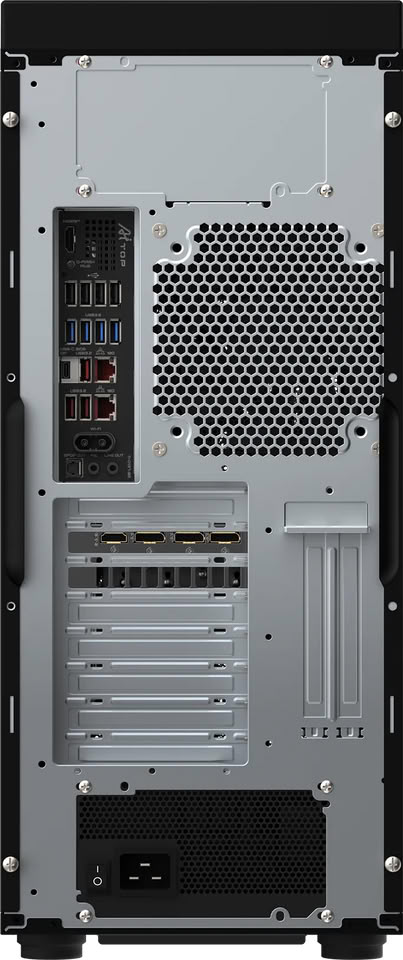
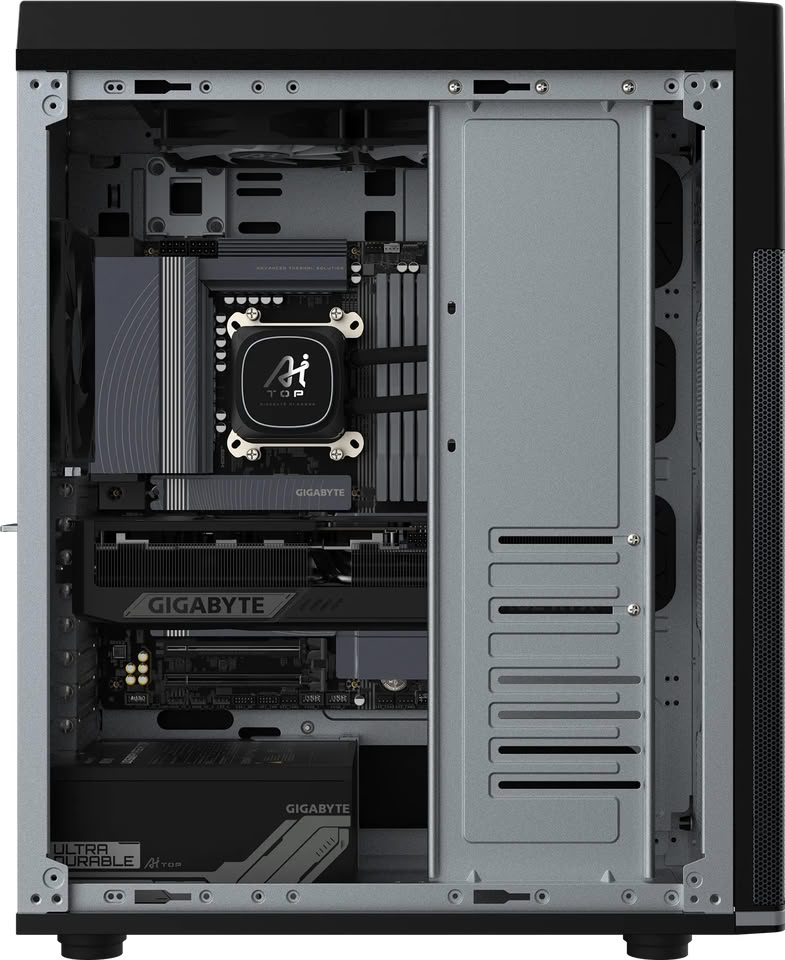
Gigabyte Accelerates Deskside AI Development with AI TOP 100 B850

Gigabyte, a global leader in computer hardware, today announced the Gigabyte AI TOP 100 B850, a high-performance desktop engineered to bring workstation-class AI compute directly to the deskside. Designed to reduce cloud dependence and lower the barriers to local deployment, the system enables businesses, developers, and researchers to run advanced AI workloads locally, giving them greater control over sensitive data and AI infrastructure while reducing reliance on cloud and token-based services.

Built for Next-Generation AI Development
At the heart of the Gigabyte AI TOP 100 B850 is the 16-core, 32-thread AMD Ryzen 9 9950X processor, delivering the performance required for modern AI workloads ranging from local LLM fine-tuning and generative AI to deep learning research and agentic AI. The system comes equipped with 128 GB of DDR5 memory and a 2 TB PCIe Gen 4 SSD, providing ample capacity and high-speed access for large datasets, local model storage, and complex development environments.

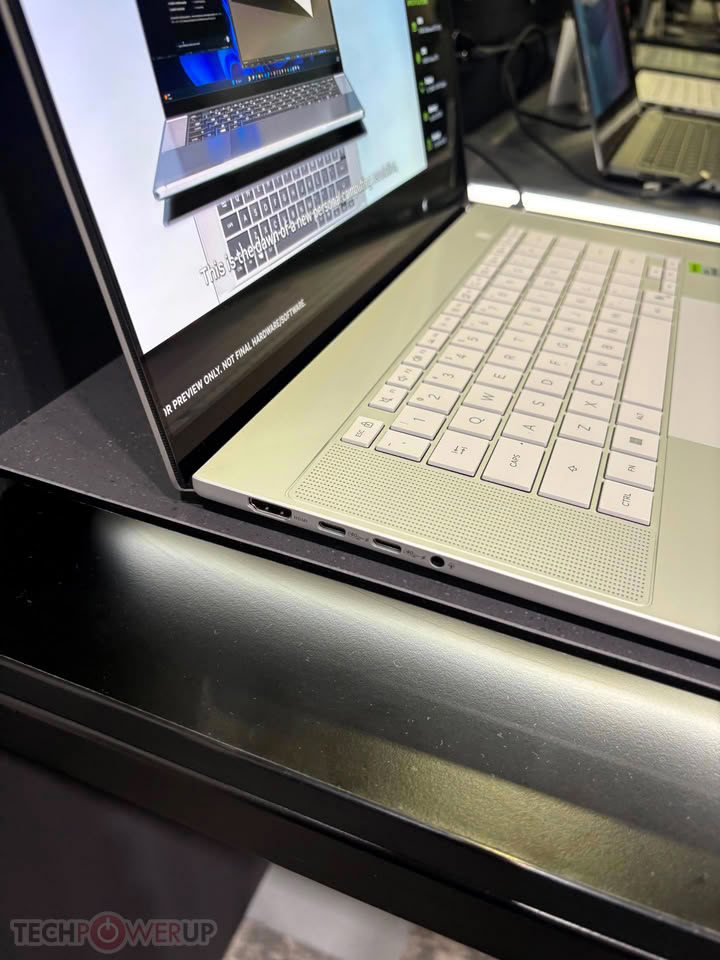
NVIDIA RTX Spark N1X-Powered ASUS ProArt 16 Laptop Slated for October Launch

ASUS has already shown off its upcoming ProArt 16 creator laptop powered by the NVIDIA RTX Spark N1X Arm SoC at IFA 2026, but there was no exact launch date attached to the new laptops when we published our hands-on coverage on the show floor. Now, thanks to a new Weibo post by the official ASUS account, it has been revealed that ASUS will launch the ProArt P16 H7607BA (or a similar variant) on October 8, 2026—at least in China. It's not clear if this will be a simultaneous international launch, but, even if it isn't, an international launch shouldn't be too far behind.
ASUS on Weibo (machine translation)Smooth local AI agent response, creative workflows no longer reliant on the cloud
World's first AI agent PC | ASUS ProArt 16
Equipped with NVIDIA RTX Spark N1X super chip
Reconstructing the boundaries of professional creation, local computing power accelerates the implementation of the entire workflow
Coming October 8th

Redditor Orders One MSI RTX 5070 Ti From Walmart for $1,099, Gets Four

Orders that get mixed up often tend to leave buyers with the short end of the stick. For instance, in 2025, a Micro Center customer found backpacks inside a Zotac GeForce RTX 5090 box, and another Best Buy customer reportedly got rocks instead of an ASUS TUF RTX 5080 and was initially denied a refund. This time, apparently, the order error went the other way. Reddit user deadmanwonderland_23 says they ordered a single MSI GeForce RTX 5070 Ti 16 GB from Walmart for $1,099 and received four identical cards. The card looks like MSI's Frieren Edition, which comes with a bundled blanket, and currently goes for $1,259 on MSI's website. It was already a relatively good deal at $1,099, but getting four cards really sounds too good to be true. At the price paid, the four cards add up to roughly $4,400, and there's no word on whether the buyer has told Walmart about the extras.

One plausible explanation is that someone in a Walmart warehouse mistook a carton of four cards for a single special edition package. That seems like a possibility, but the actual reason is not currently known. As of now, Walmart hasn't commented on this incident, and the only account comes from a Reddit post, so take it with a grain of salt. Retailers have often let customers keep extra units in the past, though that is usually decided case by case. Walmart has been generous with mistakes before, like when a customer managed to pick up an RTX 5070 for just $129 due to a labeling error. Either way, it's something we don't often see in a GPU market where prices just keep climbing.

Colorful Resorts to RTX 3050 and DDR4 for P15E Budget Gaming Laptop

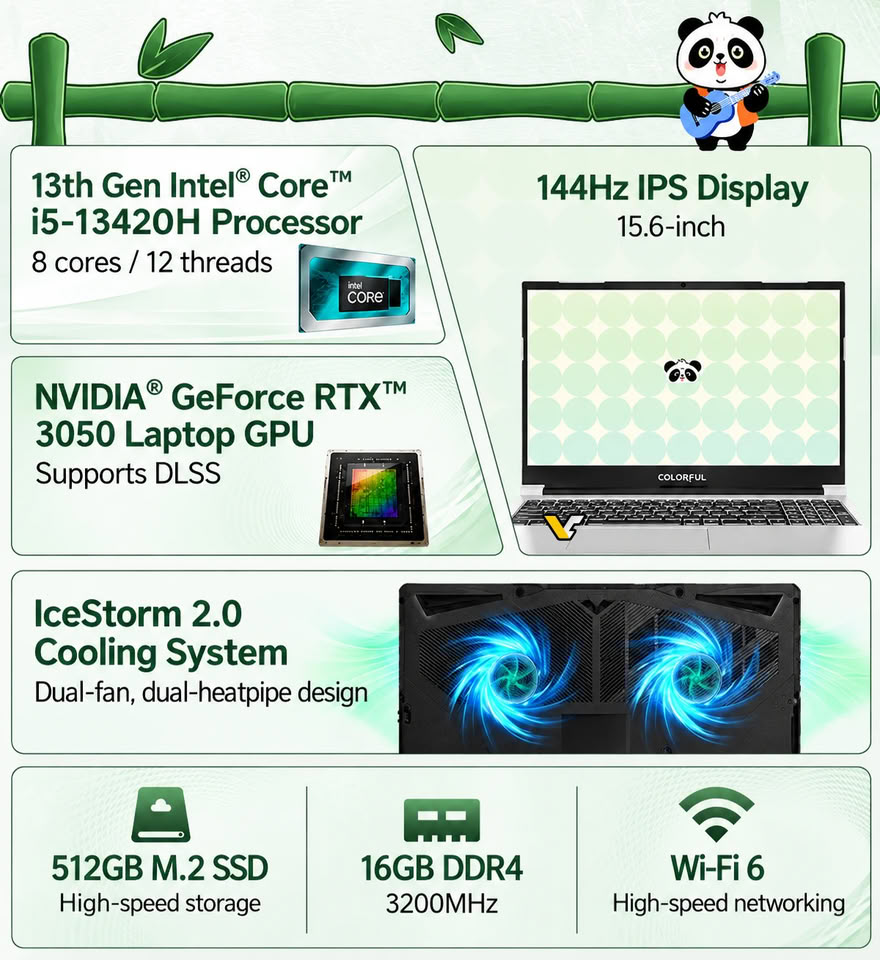
Seemingly in light of the recent PC hardware crisis, which has affected PC OEMs big and small alike, Colorful has just revived the NVIDIA GeForce RTX 3050 for its latest Panda laptop design. The latest revision of the Colorful Panda P15E features the typical 15-inch form factor and chassis from the RTX 5050 version the brand previously sold, but it carries a significant downgrade in internals.

The new CPU in the Panda P15E is the Intel Core i5-13420H, an 8-core, 12-thread part with 4 P-Cores and 4 E-Cores and an Intel Iris Xe 80EU iGPU, while the dGPU featured in the new laptop is the NVIDIA GeForce RTX 3050. As a result of the older platform, the laptop also resorts to 16 GB of DDR4-3200 memory and a 512 GB M.2 SSD. The display is a 144 Hz IPS unit that measures in at 15.6 inches. At the time of writing, it does not appear as though there is an international version of the RTX 3050 version of the laptop, but it is available on JD.com for RMB 6,299, which converts to roughly $938.70.

Modder Squeezes 74% More Performance Out of DLSS 5 on AMD Radeon in One Day

Modders working on bringing NVIDIA's DLSS 5 Neural Rendering to AMD Radeon GPUs just had their busiest day yet. The developer behind the DLSS-NR-on-AMD tool shipped two new versions within 24 hours, Alpha 0.3.3 and Alpha 0.4.0, together adding roughly 74% performance on Radeon hardware, according to the project's own GitHub release notes. YouTuber Ancient Gameplays tested the update in Cyberpunk 2077 at 3440x1440, and saw framerates climb from around 30 FPS on earlier builds to roughly 50 FPS on Alpha 0.4.0. That's a big jump for a workaround that started out barely playable. The original mod release had poor performance, but it looks like that's being addressed.

The tool works by feeding NVIDIA's own DLSS 5 DLL into Radeon RX 9000 GPUs, and reportedly RX 7000 cards too, intercepting the calls the DLL expects and routing the neural computation onto AMD hardware, since RDNA 4 supports the FP8 math DLSS 5 relies on. Alpha 0.3.3 also added a graphical installer with a built-in settings editor and overlay controls, so getting Neural Rendering running on Radeon apparently no longer means digging through file paths manually. Moreover, just today, the Alpha 0.4.1 update brought another 8% jump in overall performance, and a 9% performance increase under heavy gameplay loads.

Modder Brings Path Tracing And Frame Generation to Grand Theft Auto 2 via RTX Remix

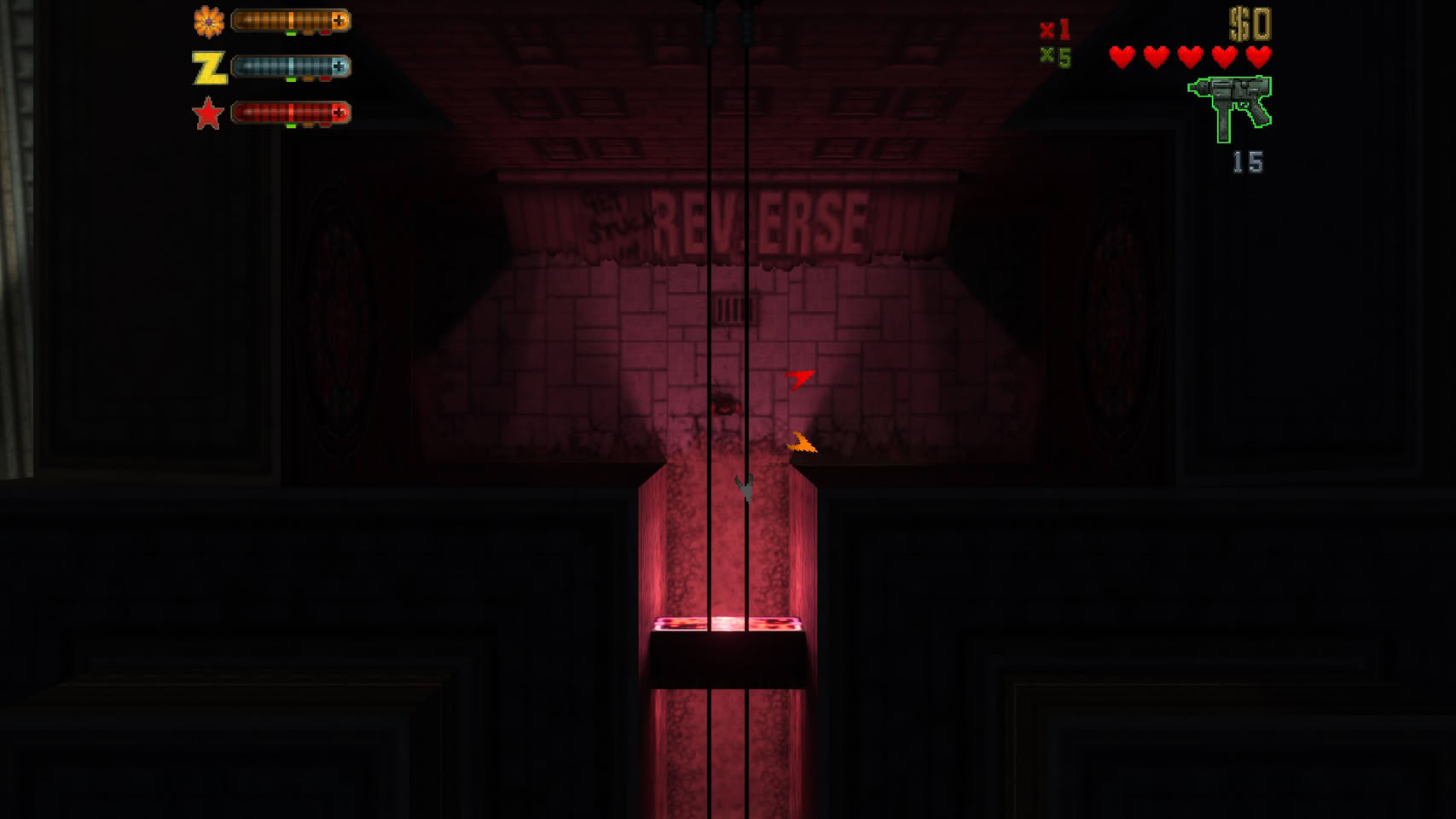
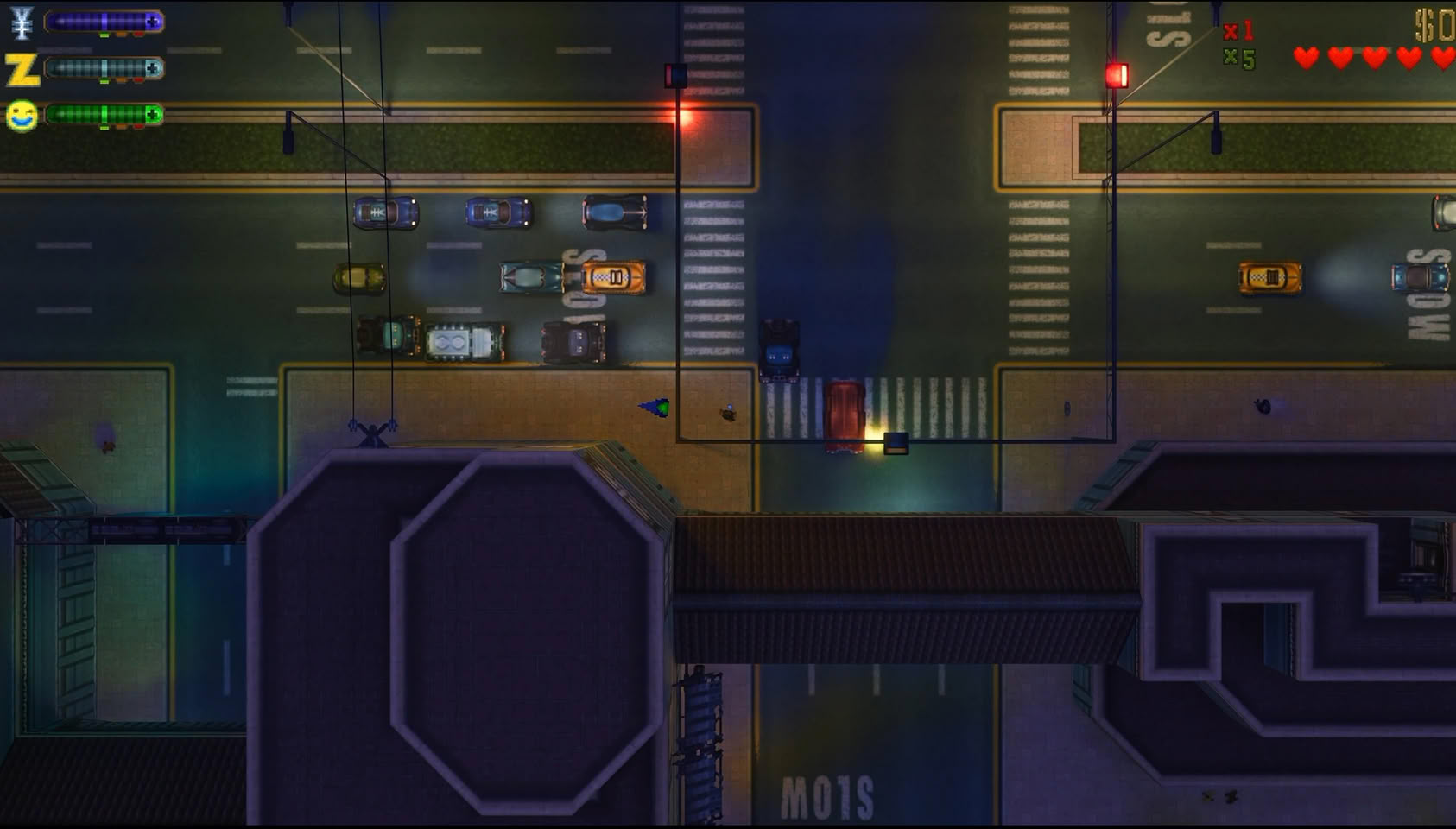
Modder gebdag has released GTA2 RTX Remix, a mod that brings full path tracing and dynamic time-of-day lighting to Grand Theft Auto 2, the 1999 top-down classic. NVIDIA's Jacob Freeman shared a clip of the mod on X, showing a day-night cycle that looks quite well-done. Apparently, the biggest hurdle in the process was technical, as GTA 2 ran on DirectDraw and an early version of Direct3D, neither of which RTX Remix supports natively. To get around this, the modder built a custom Direct3D 9 wrapper using two DLLs that translate the game's legacy rendering calls into something RTX Remix can actually read. The result reportedly adds real-time path-traced lighting, so explosions, car fires, and neon signs now cast their own glow, and the day-night cycle shifts lighting as it passes.

The mod also unlocks widescreen 16:9 support (the original was locked to 4:3) and adds frame generation for up to 60 FPS, well above what the original release could hit. GTA2 RTX Remix is open source on GitHub and was reportedly tested on version 9.6 of the game, the free release Rockstar distributed in 2004. It needs 64-bit Windows 10 or 11 alongside the RTX Remix runtime. It's certainly a niche release given how old the base game is, but it's another one in the chain of RTX Remix mods breathing new life into titles most people wrote off years ago. Similar projects already exist for Max Payne, Morrowind, and Need for Speed Carbon, and modders keep finding new ways to push the tool's limits.
Return to Keyword Browsing
Nov 12th, 2026 03:56 CST change timezone

New Forum Posts

Popular Reviews

TPU on YouTube

Controversial News Posts