Wednesday, July 23rd 2025

DDR6 Memory Arrives in 2027 with 8,800-17,600 MT/s Speeds

The semiconductor industry has officially accelerated its next-generation memory development, with DDR6 standard now coming soon. Although enthusiasts won't find these modules available until 2027, key players, Samsung, Micron, and SK Hynix, have already moved past prototype stages and embarked on rigorous validation cycles. In partnership with Intel, AMD, and NVIDIA, they're targeting an initial throughput of 8,800 MT/s, with plans to scale up to a staggering 17,600 MT/s, almost doubling the ceiling of today's DDR5. This increase is driven by DDR6's 4×24-bit sub-channel architecture, which requires entirely new approaches to signal integrity. Additionally, it also differs from DDR5's current 2x32-bit sub-channel structure. To overcome the physical limits that DIMM form factors faced at higher speeds, the industry is betting on CAMM2. Early indication is that server platforms will lead the change, with high-end notebooks following suit once manufacturing ramps up.

Behind the scenes, timelines are being mapped: platform validation is slated for 2026, server deployments in 2027, and broader consumer availability thereafter. This phased rollout mirrors the DDR5 journey; however, analysts predict that DDR6's architectural leap could accelerate adoption in AI and high-performance computing environments. Of course, cutting-edge technology comes with a premium: initial DDR6 modules are expected to carry price tags reminiscent of DDR5's 2021 debut, potentially limiting early adoption to hyperscale data centers and AI research labs. Yet with HPC and AI appetite for bandwidth, memory makers are targeting launch as soon as possible to satisfy the massive deployment of compute. By 2027, CAMM2-based modules running at DDR6 speeds may well define the new standard for high-performance systems.
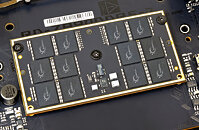
Source: CTEE
Add your own comment

196 Comments on DDR6 Memory Arrives in 2027 with 8,800-17,600 MT/s Speeds

#26
Macro Device
tommo1982I still have DDR4 motherboard
The world doesn't revolve around select individuals (unless they're the POTUS).

If DDR6 is faster than DDR5 and doesn't introduce new significant issues then what's wrong with releasing it when the average Joe is on DDR4?

It's also good news because iGPUs get more room for oomph.
Posted on Reply
#27
efikkan
r00tczAm I only one who finds this 24bit weird? The 32bit channel for DDR5 made a lot of sense... but here, no usual 2^n accesses are divisible by 24. For dual channel 4*24*2=192 bits per transaction, that's odd 3x 64bit words...
Could be something like PAM-3 encoding which will give you 24 bits of data across 16 pins.
Posted on Reply
#28
TheLostSwede
News Editor
TheDeeGee17000 MT memory with no heatsink jammed in between the motherboard and motherboard tray? I don't think that works.
Most cases have a rather big open space on the rear these days. Why not use the motherboard tray as the heatsink? Just slap a thermal pad on that CAMM2 and off you go. It's a known space, so it shouldn't be hard to do.
r00tczAm I only one who finds this 24bit weird? The 32bit channel for DDR5 made a lot of sense... but here, no usual 2^n accesses are divisible by 24. For dual channel 4*24*2=192 bits per transaction, that's odd 3x 64bit words...
Maybe this helps?

www.techpowerup.com/322754/lpddr6-lpcamm2-pictured-and-detailed-courtesy-of-jedec
Posted on Reply
#29
TheinsanegamerN
TheLostSwedeIt seems like we are moving to CAMM2, so...
Unless motherboards only supports single channel CAMM2 modules, the current design only allows for a single module.
I guess CPU memory controllers could change and support two modules, maybe one on each side of the motherboard?
Yeah I'll believe that when we actually start seeing CAMM2 outside of press releases.
tommo1982Too soon, too fast. I still have DDR4 motherboard, simply because DDR5 ones are expensive. Changing CPU, MB and RAM to AM5/DDR5 costs as much as 3/4 of my current setup. DDR6 is going to push the price range even further.
Cool? Technology progresses. DDR5 is already a bottleneck for APUs, AMD 12 CU iGPUs get a 30%+ boost running LPDDR5x, lets not get into how bad it is on the 16cu HX 370 chips.

When DDR4 came out people said the same thing about DDR3. And DDR2. And so on.
Posted on Reply
#30
OMDLocomotion
I shall be late to join the camm2 brigade, just so I can watch all you beta testers out there decrease the price for me. Thanks! :D
Posted on Reply
#31
TheinsanegamerN
efikkanYet another ridiculous idea; mounting stuff on the back side of the motherboard. And we need special cases to make it possible to service the memory etc.
And soon cases needs to be twice as large to have enough airflow on both sides…
Erm.....my PC cases have all had rear access to things like rear mounted SSDs for years now. IF (and thats a big IF) Camm2 becomes the form factor of choice, you'll see new cases with access panels in the normal position for them.
Posted on Reply
#32
Tigerfox
TheinsanegamerNDDR5 is already a bottleneck for APUs, AMD 12 CU iGPUs get a 30%+ boost running LPDDR5x, lets not get into how bad it is on the 16cu HX 370 chips.
On desktop, it will forever be nonsense to invest in fast memory to boost the weak iGPU instead of buying the cheapest dGPU that will be much faster (7500F with RX6400 is faster than 8700G, RX6500XT is much faster). In my opinion, for the same reason super compact mini pcs with soldered down mobile APUs or even mobile CPUs with mobile dGPUs are nonsense, too. You don't save much space compared to an ITX-system with a SFF dGPU.

For CPU-power, at least regarding AMD, memory speed is not important. The difference between DDR5-5600 CL28, DDR5-6400 CL30 (the highest you can achieve 1:1) or DDR5-8800 are single digits in framerates of ~200-400fps in 720p.

Even with regular laptops, I'm not sure it wouln't be easily possible to put a GeForce RTX 2050/3050/4050 into 14" and 16" systems to achieve vastly better performance than either Lunar Lake or Strix Point. Even more so with Strix Halo compared to a Fire Range CPU combined with a decent dGPU.

Even when such combinations would exceed the nominal TDP of an APU, since they consist of two seperate chip, there would be less heat to cool at one single point.

Only use case where such a combination isn't possible are really thin and compact ultrabooks and handhelds.

Hopefully, LPCAMM2 will make it's way into laptops atleast with LPDDR6, so we can have fast memory without it having to be soldered down.
Posted on Reply
#33
rv8000
TheLostSwedeJEDEC mentioned in early documentation that work on the mounting is needed to make it more consumer friendly, but so far nothing seems to have happened.
It's going to be hard to get the right pressure on the "shim" that goes between the motherboard and the CAMM2 module though and it might even require the right torque, as to not damage the pins on the shim.


As I said, single channel CAMM2 modules can be stacked. This will likely cause some issues though, unless it just means getting two "shims" at different heights, vs a single, wider shim for dual channel CAMM2 memory. Not sure how the mounting will work though, as the single channel setup looks like it would need additional supports.

Looks horrendous for cooling capability. Modules will require ridiculously loose timings for any sort of stability at the frequencies they’re aiming to hit; probably why their initial target is 8,800, 17000 is likely a fairytale.

I amazed people keep suggesting putting a socket behind the motherboard, a terrible idea to parrot. Between the cost of a (likely) thicker PCB, case change/modifications, and additional cooling required, that’s gonna be a hefty bill to foot for the consumer. And people complain about component prices now :roll:
Posted on Reply
#34
FoulOnWhite
it's ok guys, we can let the rich first adopters test it for us.
Posted on Reply
#35
Guwapo77
I'm always down for some advancement, but I just got on the DDR 5 bandwagon. At this rate, I might have to adopt my early 2000 cellphone upgrade path - every other generation.
Posted on Reply
#36
TheLostSwede
News Editor
rv8000Looks horrendous for cooling capability. Modules will require ridiculously loose timings for any sort of stability at the frequencies they’re aiming to hit; probably why their initial target is 8,800, 17000 is likely a fairytale.

I amazed people keep suggesting putting a socket behind the motherboard, a terrible idea to parrot. Between the cost of a (likely) thicker PCB, case change/modifications, and additional cooling required, that’s gonna be a hefty bill to foot for the consumer. And people complain about component prices now :roll:
So far, there hasn't been anything suggesting there will be double sided single channel CAMM2 modules, despite it being allowed per the spec, as the modules are quite large compared to most dual channel CAMM2s.


It really does seem like the stacked single channel CAMM2s are sharing the same motherboard area though, just with different "spacers" which is going to be interesting to see implemented.
As announced earlier this year, JESD318 CAMM2 supports stackable CAMM2s: dual-channel (DC) and single-channel (SC). By splitting the dual-channel CAMM2 connector lengthwise into two single-channel CAMM2 connectors, each connector half can elevate the CAMM2 to a different level. The first connector half supports one DDR5 memory channel at 2.85mm height while the second half supports a different DDR5 memory channel at 7.5mm height. Or, the entire CAMM2 connector can be used with a dual-channel CAMM2. This scalability from single-channel and dual-channel configurations to future multi-channel setups promises a significant boost in memory capacity.
www.jedec.org/news/pressreleases/jedec-publishes-new-camm2-memory-module-standard
Posted on Reply
#37
rv8000
TheLostSwedeSo far, there hasn't been anything suggesting there will be double sided single channel CAMM2 modules, despite it being allowed per the spec.

At least the engineers have some sense.
Posted on Reply
#38
TheLostSwede
News Editor
rv8000At least the engineers have some sense.
It might have to happen for the 256 GB modules, but that's not likely to be something most consumers would invest in.
Posted on Reply
#39
Macro Device
Guwapo77At this rate, I might have to adopt my early 2000 cellphone upgrade path - every other generation.
But why? I only upgrade when my system no longer can do what I need. DDR5 systems will run out of juice by late 2030s. Enjoy your puter.
Posted on Reply
#40
rv8000
TheLostSwedeIt might have to happen for the 256 GB modules, but that's not likely to be something most consumers would invest in.
Extreme capacity has always had caveats. I’d expect the majority of users wouldn’t exceed 64GB for several more years.
Posted on Reply
#41
Guwapo77
Macro DeviceBut why? I only upgrade when my system no longer can do what I need. DDR5 systems will run out of juice by late 2030s. Enjoy your puter.
I upgrade to the latest and then I upgrade my son's computer. For example, he has a 5600X3D with a 6900XT. Perfect for him, but he was running an AMD Fury X and it wouldn't run Marvel Rivals, so I upgraded.
Posted on Reply
#42
QUANTUMPHYSICS
The longer I wait to buy my new desktop, the more powerful and less expensive the purchase gets.
Posted on Reply
#43
igormp
This increase is driven by DDR6's 4×24-bit sub-channel architecture, which requires entirely new approaches to signal integrity.
Are all of those meant for data???
Are we finally getting a bus-width bump? 96-bit per channel would be amazing. 192-bit for our usual "dual-channel" consumer devices, at 8800MT/s that'd be 211GB/s of bandwidth, way more than our current systems provide, and nearing what a 256-bit 8000 setup (such as strix halo) can achieve.
At 17600MT/s that would be a boggling 422GB/s, nearing the bandwidth of an entry/mid level GPU.

I hope that it also comes with extra capacity. The biggest factor between my upgrades were due to capacity reasons. On current consumer DDR5 platforms we can go up to with 4x64GB UDIMMs (which took way too long to become a thing IMO). I'd hope that a DDR6 equivalent would allow for up to 512GB on consumer platforms.

For the folks talking about CAMM2, I agree that the area it requires is an issue. I believe SOCAMM has higher chances of ending up as a standard since it requires way less area.
ChaitanyaHopefully DDR6 fixes the one of the main problem with DDR5 which has been stability with all slots occupied.
That has been mostly an issue of the IMC of consumer platforms. HETD/Server platforms do not face such issues.
TumbleGeorgeMmm, sorry but no. There have offered is shops DDR5 9600 in stock. If doubling this will have 19200.
JEDEC's standards only has DDR5 up to 8800MT/s. Those 9600MHz are considering overclocking.
In the same manner, we should be seeing overclocked sets going past those announced 17600MT/s, but that won't be standard.
This is in the same vein as DDR4 only officially going up to 3200MHz by JEDEC's standards, but we have seen many kits faster than that.
Posted on Reply
#44
rv8000
igormpAre all of those meant for data???
Are we finally getting a bus-width bump? 96-bit per channel would be amazing. 192-bit for our usual "dual-channel" consumer devices, at 8800MT/s that'd be 211GB/s of bandwidth, way more than our current systems provide, and nearing what a 256-bit 8000 setup (such as strix halo) can achieve.
At 17600MT/s that would be a boggling 422GB/s, nearing the bandwidth of an entry/mid level GPU.

I hope that it also comes with extra capacity. The biggest factor between my upgrades were due to capacity reasons. On current consumer DDR5 platforms we can go up to with 4x64GB UDIMMs (which took way too long to become a thing IMO). I'd hope that a DDR6 equivalent would allow for up to 512GB on consumer platforms.

For the folks talking about CAMM2, I agree that the area it requires is an issue. I believe SOCAMM has higher chances of ending up as a standard since it requires way less area.


That has been mostly an issue of the IMC of consumer platforms. HETD/Server platforms do not face such issues.


JEDEC's standards only has DDR5 up to 8800MT/s. Those 9600MHz are considering overclocking.
In the same manner, we should be seeing overclocked sets going past those announced 17600MT/s, but that won't be standard.
This is in the same vein as DDR4 only officially going up to 3200MHz by JEDEC's standards, but we have seen many kits faster than that.
17,000+ won’t be available until several years after DDR6 is actually released for consumer availability, let alone with higher capacity. Additionally there will be the trade off of bandwidth vs latency where the majority of consumer platforms will benefit more from lower frequency parts which better timings. I’d expect 10000 to be the norm and higher 12000 “overclocked” modules within the first 2 years. This has happened EVERY time a new memory type has been introduced.
Posted on Reply
#45
Tomorrow
ChaitanyaHopefully DDR6 fixes the one of the main problem with DDR5 which has been stability with all slots occupied.
This has always been a problem. If anything DDR6 will make this issue worse.
TumbleGeorgeMmm, sorry but no. There have offered is shops DDR5 9600 in stock. If doubling this will have 19200.
Yeah those supposed speeds are very conservative.
efikkanI hope this CAMM2 standard doesn't get established for desktop and server. It's takes up far too much space with anything more than 2 channels.
Why would be a problem for server? Desktops are already limited to two channels.
tommo1982Too soon, too fast. I still have DDR4 motherboard, simply because DDR5 ones are expensive. Changing CPU, MB and RAM to AM5/DDR5 costs as much as 3/4 of my current setup. DDR6 is going to push the price range even further.
They are a little more expensive, but not by much. DDR5 is perfectly viable price wise. If changing your setup costs 3/4 the price of your current one id's say that perfectly acceptable considering that DDR5 doubles the capacity and speed. Not to mention speed gain from AM5 CPU you'll get.
efikkanThe big disadvantage of only one DIMM per channel is that if you want to upgrade memory, you basically have to replace all of it.
If there's anything to upgrade to. 1DPC motherboards now support 128GB total. Hard to imagine 128GB being too little for most people.
Most people never upgrade memory. By the time they need to upgrade they will likely buy a new platform.
QuicksNot too soon or too fast. I am on DDR4 for the exact same reasons. This might get prices down finally. Then again we can just as well wait for AM6 and DDR6.
What prices? DDR5 doubles capacity at DDR4 prices. It's weird to see price listed as a reason in 2025 for holding off on DDR5. In PCIe 5.0 SSD's it makes sense. On DDR5 it makes zero sense.
efikkanI know, I've had one. Practically disassembling the whole computer to change a SSD.
Just because the idea isn't new, doesn't change the fact that it's a terrible idea.
And the current idea of putting a hot SSD right below a chunky hot GPU or between a CPU and GPU is better?
Backside access with much less heat would be so much easier than current system where i have to remove the GPU and then "dive in".
rv800017,000+ won’t be available until several years after DDR6 is actually released for consumer availability, let alone with higher capacity. Additionally there will be the trade off of bandwidth vs latency where the majority of consumer platforms will benefit more from lower frequency parts which better timings. I’d expect 10000 to be the norm and higher 12000 “overclocked” modules within the first 2 years. This has happened EVERY time a new memory type has been introduced.
Exactly. First gen DDR6 will be slower and more expensive than even the average DDR5 we have today. Speed will be barely faster at ~9000 and timings will likely be double that of DDR5.

Personally i've always upgraded at the end of a DDR generation. That's when the prices have been best, speed the highest and compatibility the best.
I did it with DDR3-1866. DDR3 went to 2100 something and i skipped DDR2. DDR4 initial was 2133. And i did it with DDR4-3733 when DDR5 initial was 4800 and likely will do it again with DDR5 next year or whenever Zen 6 launches at hopefully around 8000 or so when DDR6 will likely launch at around 9000.

Then hold off and watch DDR6 evolve until there's talk of DDR7 and it's clear there's nothing more to be had from DDR6.
Posted on Reply
#46
TheLostSwede
News Editor
igormpFor the folks talking about CAMM2, I agree that the area it requires is an issue. I believe SOCAMM has higher chances of ending up as a standard since it requires way less area.
So you want large capacity, but you expect it in a tiny form factor at consumer prices? Yeah, dream on.
Besides, so far SOCAMMs are only for LPDDR memory, not regular DDR.
Posted on Reply
#47
ir_cow
ChaitanyaHopefully DDR6 fixes the one of the main problem with DDR5 which has been stability with all slots occupied.
Its not a memory problem, rather a CPU memory controller problem. Tell AMD and Intel to make it better :) . If anything all slot occupied max speed will get worse with DDR6.
Posted on Reply
#48
igormp
TheLostSwedeSo you want large capacity, but you expect it in a tiny form factor at consumer prices? Yeah, dream on.
Well, a man can dream :p
Is there any actual talk when it comes to DDR6 form factor? The increase in bus-size and frequencies would make regular DIMMs on a 2-channel platform still make sense (assuming 2DPC is still possible). The to-CAMM2-or-not only makes sense if the regular DIMM form factor is out of question.
Posted on Reply
#49
KLMR
I bet most consumer motherboards will come with only 1 camm slot forcing you to swap memory every time.
Of course this will spaciate ram price per capacity, making higher capacities uber expensive compared to what will be considered standard.
Of course the consumer standard capacity will be pirric compared to any server configuration, even if servers can now fit TB of ram easily.

The workstation segment will be the most affected. After the "platinum" "gold" "silver" fiasco of intel cpus. If nowadays you have to pay extreme prices for 128 or 192GB of ram, imagine with the camm factor.
Of course thats because workstation ram is registered and ecc, like we were at 2002 and we just left behind rambus.

In a place and time where 256GB could be the standard of any workstation, even consumer pc, we got stuck about 15 years ago around 32-64GB for the *affordable segment* (16-32 for the consumer market) and anything beyond that sounds *crazy* specially for uninformed bosses and managers.

Console ram ammounts doesn't help either (18?), if the current standard was between 64GB and 128GB...

Anyway now we *need* those amounts on GPUs where the situation is even worse. 8GB is enough, and GDDR of course.
Meanwhile in the enterprise sphere HBM and 96GB its more than usual.

Ah quad channel? octo channel? reserved for enterprise as well. Consumer market don't need to have even the option.

A new format looks to me an oportunity to let marketing department to tight even more the consumer market:
1 slot. Single channel 16-32GB for desktop standard
1 slot. Dual channel 16-32GB, 48GB-64GB for enthusiasts.
1 slot. Dual channel 96GB-128GB for ubergamers. Of course cooling those dual sided rams will be fun.

Maybe the uber expensive pro-art hawk EXTREME 1000-1200USD motherboards will come with 2 slots. For the freaking amout of 128GB to 256GB (price range between 500-1000USD), and we are in 2030.
Posted on Reply
#50
TheLostSwede
News Editor
igormpWell, a man can dream :p
Is there any actual talk when it comes to DDR6 form factor? The increase in bus-size and frequencies would make regular DIMMs on a 2-channel platform still make sense (assuming 2DPC is still possible). The to-CAMM2-or-not only makes sense if the regular DIMM form factor is out of question.
Not that I have seen, it seems to largely be pushed by Nvidia and Micron for now, although SK Hynix is potentially another memory producer that will offer them.
Looking at Amphenol that makes the connector/shim whatever thing, they only mention server and data centre applications.
www.amphenol-cs.com/product-series/ddr5-socamm.html?page=1

I don't think regular DIMMs, at least not the ones we have today, have enough pins for a wider bus.
KLMRI bet most consumer motherboards will come with only 1 camm slot forcing you to swap memory every time.
Of course this will spaciate ram price per capacity, making higher capacities uber expensive compared to what will be considered standard.
Of course the ammount will be pirric compared to any server configuration, servers can now fit TB of ram easily.

The workstation segment will be the most affected. After the "platinum" "gold" "silver" fiasco of intel cpus. If nowadays you have to pay extreme prices for 128 or 192GB of ram, imagine with the camm factor.
Of course thats because workstation ram is registered and ecc, like we were at 2002 and we just left behind rambus.

In a place and time where 256GB could be the standard of any workstation, even consumer pc, we got stuck about 15 years ago around 32-64GB for the *affordable segment* (16-32 for the consumer market) and anything beyond that sounds *crazy* specially for uninformed bosses and managers.

Console ram ammounts doesn't help either, if the current standard was between 64GB and 128GB...

Anyway now we need those ammounts on GPUs where the situation is even worse. 8GB is enough, and GDDR of course.
Meanwhile in the enterprise sphere HBM and 96GB its more than usual.

Ah quad channel? octo channel? reserved for enterprise as well. Consumer market don't need to have even the option.

A new format looks to me an oportunity to let marketing department to tight even more the consumer market.
I guess you didn't bother reading my comment about dual and single channel CAMM2s?
Going single channel would be like using two DIMMs today.
TheLostSwede in DDR6 Memory Arrives in 2027 with 8,800-17,600 MT/s SpeedsSo far, there hasn't been anything suggesting there will be double sided single channel CAMM2 modules, despite it being allowed per the spec, as the modules are quite large compared to most dual chann…
Posted on Reply
Add your own comment
Nov 21st, 2026 22:10 PST change timezone

New Forum Posts

Popular Reviews

TPU on YouTube

Controversial News Posts