Wednesday, July 23rd 2025
DDR6 Memory Arrives in 2027 with 8,800-17,600 MT/s Speeds
The semiconductor industry has officially accelerated its next-generation memory development, with DDR6 standard now coming soon. Although enthusiasts won't find these modules available until 2027, key players, Samsung, Micron, and SK Hynix, have already moved past prototype stages and embarked on rigorous validation cycles. In partnership with Intel, AMD, and NVIDIA, they're targeting an initial throughput of 8,800 MT/s, with plans to scale up to a staggering 17,600 MT/s, almost doubling the ceiling of today's DDR5. This increase is driven by DDR6's 4×24-bit sub-channel architecture, which requires entirely new approaches to signal integrity. Additionally, it also differs from DDR5's current 2x32-bit sub-channel structure. To overcome the physical limits that DIMM form factors faced at higher speeds, the industry is betting on CAMM2. Early indication is that server platforms will lead the change, with high-end notebooks following suit once manufacturing ramps up.
Behind the scenes, timelines are being mapped: platform validation is slated for 2026, server deployments in 2027, and broader consumer availability thereafter. This phased rollout mirrors the DDR5 journey; however, analysts predict that DDR6's architectural leap could accelerate adoption in AI and high-performance computing environments. Of course, cutting-edge technology comes with a premium: initial DDR6 modules are expected to carry price tags reminiscent of DDR5's 2021 debut, potentially limiting early adoption to hyperscale data centers and AI research labs. Yet with HPC and AI appetite for bandwidth, memory makers are targeting launch as soon as possible to satisfy the massive deployment of compute. By 2027, CAMM2-based modules running at DDR6 speeds may well define the new standard for high-performance systems.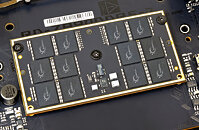
Source:
CTEE
Behind the scenes, timelines are being mapped: platform validation is slated for 2026, server deployments in 2027, and broader consumer availability thereafter. This phased rollout mirrors the DDR5 journey; however, analysts predict that DDR6's architectural leap could accelerate adoption in AI and high-performance computing environments. Of course, cutting-edge technology comes with a premium: initial DDR6 modules are expected to carry price tags reminiscent of DDR5's 2021 debut, potentially limiting early adoption to hyperscale data centers and AI research labs. Yet with HPC and AI appetite for bandwidth, memory makers are targeting launch as soon as possible to satisfy the massive deployment of compute. By 2027, CAMM2-based modules running at DDR6 speeds may well define the new standard for high-performance systems.

196 Comments on DDR6 Memory Arrives in 2027 with 8,800-17,600 MT/s Speeds
Or am I wrong?
A 1950x had a $999 msrp, roughly $1300 with inflation. A 9955 had a $1649 msrp. This is roughly a 25% increase. Not 11.7x or even a doubling of costs.
I was planing to sell my old system with DDR4 sticks, but I'm not going to. I'll stick them into HTPC and have 4x8GB :)
Arrow Lake improved this a lot when using CUDIMM sticks tho.
DDR5 consumer platforms were apparently just made with 1DPC in mind, performance goes away when going with 2DPC.
Ergo, the technology advanced, but the price increase is out of this world.
I am not comparing 16 core to 16 core. I am comparing flagship to flagship.
The math and logic is easy that AMD provides more for a lower cost, unsurprisingly some people here are trying to move goalposts.
Anyway, enough off-topic, wouldn't want to outstay our welcome - the original subject of this thread is DDR6 memory.
I mean I might be able to push DDR5-5200, but that'd be about my limit (and it'd take tweaking beyond auto for sure) and then I'd lose the latency bonus from syncing to FCLK. Gotta be a little honest there. I didn't try too hard, lol.
As it stands, I'm happy with DDR5-4000 and tightening the crap outta the timings.