Saturday, October 10th 2026

NVIDIA Reportedly Ending the RTX 5090, Reserves GB202 Silicon for Workstation GPUs
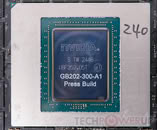
NVIDIA has reportedly stopped allocating GB202 silicon to the GeForce RTX 5090, according to leaker MEGAsizeGPU (@Zed__Wang) on X. "No more GB202 for 5090, confirmed," the leaker posted, adding in a follow-up that "all future GB202 supplies are RTX Pro exclusive." GB202 is the largest "Blackwell" graphics chip, and the RTX 5090 doesn't even max it out. The same chip powers the 96 GB RTX PRO 6000 with 24,064 CUDA cores, as well as the recently unveiled RTX PRO 5500, which pairs the RTX 5090's 21,760 CUDA cores with 84 GB of memory. Apparently, NVIDIA would rather put every GB202 it gets into those far pricier workstation cards. The company hasn't confirmed any of this as of the time of writing.
A second leaker, hongxing2020, posted "5090 EOL, 5080 24GB ready" alongside an apparent factory notice saying NVIDIA will no longer sell any RTX 5090 model, China-market D variants included. The same notice says an RTX 5080 24 GB will become the top GeForce card and the 16 GB version will be discontinued. That sounds a lot like the RTX 5080 SUPER, which was rumored with 24 GB of GDDR7 on the same GB203 chip, although it isn't clear if the two are the same card. SUPER cards reportedly reached board partners in July, only to be put on hold over GDDR7 pricing. As for the RTX 5090, I doubt NVIDIA would formally call this an end-of-life (EOL) move, since the chips are simply being redirected to a more profitable product line.
 RTX 5090 buyers were already having a rough time. The card launched in January 2025 at $1,999, and last month European listings went past €5,000 while Walmart sold out at $4,299. Cards built from GB202 chips that partners already have could keep trickling out for a while, though it's reasonable to expect prices to climb further once that stock dries up. Of course, the RTX 5090 was hardly a gaming card for most people by this point, with AI firms reportedly picking up stock in bulk before it ever reached gaming retail. With the RTX 60-series reportedly slipping to 2028, the RTX 5080 24 GB may stay the fastest GeForce card in production for a long time.
Sources:
MEGAsizeGPU on X, hongxing2020 on X, via Videocardz
A second leaker, hongxing2020, posted "5090 EOL, 5080 24GB ready" alongside an apparent factory notice saying NVIDIA will no longer sell any RTX 5090 model, China-market D variants included. The same notice says an RTX 5080 24 GB will become the top GeForce card and the 16 GB version will be discontinued. That sounds a lot like the RTX 5080 SUPER, which was rumored with 24 GB of GDDR7 on the same GB203 chip, although it isn't clear if the two are the same card. SUPER cards reportedly reached board partners in July, only to be put on hold over GDDR7 pricing. As for the RTX 5090, I doubt NVIDIA would formally call this an end-of-life (EOL) move, since the chips are simply being redirected to a more profitable product line.


228 Comments on NVIDIA Reportedly Ending the RTX 5090, Reserves GB202 Silicon for Workstation GPUs
The high rate is strictly with the DIY gaming crowd. Which shows you who's to blame. Let's face it building a PC takes no skill now compared to what it used to. There's no way around that. So there are a lot of people building gaming PCs now that have no business building them as they do not know what they are doing. Those who grew up with molex, IDE, floppy, SCSI, jumpers for all sorts of nonsense do not have these problems.
There's no need for nvidia to fix this because it's not happening where most of these get installed in abnormal numbers. It's not happening at the extremes people here claim if you buy a Dell gaming computer or even a custom one from say Digital Storm. It's sure as hell not happening with the Pro cards. Where it is going wild is a bunch of DIY gamers running into it and that firmly shows there are a lot gamers building computers who should not be. That's not on nvidia. This doesn't even rate in the long history of ways people have screwed up DIY builds it's a blip.
Since PC gaming is moving to the cloud or local APUs and nothing can change that there is no reason for nvidia to care about people botching something that had no business trying. The people installing this will all know what they are doing and the people who don't won't really be able to buy one. If you are worried about the power connector now simply don't build your computer yourself. Dude you're gettings a Dell! Part of the markup with premades is the lengthy testing and validation process along with skilled technichians. Most DIY gamers are not capable of doing this and wouldn't even know how. The card should have never been released to the DIY crowd at all. Hopefully nvidia learns their lesson going forward and removes the DIY market for their top options.
he probably had a bad experience with AMD 15 years ago and couldn't forget it.
Nvidia should go further. Get rid of everything above the 5050. Gamers dont deserve anything above that. Wouldn't want them melting any cables, now would we?
To be fair there is no voting with your wallet when your opponent is 10x richer. (gaming vs datacenter revenue). Right now they will gobble up everything and anything.
Only gb207 will remain :roll:And thankfully never will, the speed of light is the limit in many cases.
And frankly, AI is a very useful tool. It's not a human replacement, but its capabilities are very impressive for what it can do, which can be readily seen in content creation and the coding space. Just look at game recompilations that are getting churned out now VS the rare release of a few years ago.
It's not "insanity", it is economics 101. That money is not being collected like Smaug's gold, it is being burnt, at insane speeds, to push what is seen as the new tech revolution.
A place vacated by a 5090 could be filled with 24GB 5080, including the price. 5070 Ti now cost what 5080 used to cost anyway.
5060 8GB ... $299
5060 TI 12GB ... $379
5060 TI 16GB ... $429
5070 12GB ... $579
5070 TI 16GB ... $749
5080 16GB ... $999
Of course they don't include scarcity-driven markup.
Fast forward to today, and AI has taken a pure gaming card—packaged with gaming drivers and promoted across every Nvidia ad as a gaming GPU—and transformed it into a semi-pro AI card, except without dedicated AI-specific drivers. Its price went from sky-high to absurdly astronomical, which didn't stop people from buying it, since it wasn't just its own price going up, but the price of every Nvidia card across the board. The RTX 5090 would have never reached the price point it did if the prices of Pro models hadn't risen in tandem. Nvidia played the game brilliantly here, hiking prices without facing any real pushback from consumers. Instead, we sit around justifying situations that we'll end up paying for out of our own pockets tomorrow. Because Microsoft, Meta, and OpenAI are dumping insane money into GPUs, it's apparently considered reasonable to expect an average person earning 2–3 grand a month (or less) to fork over $1,000 tomorrow for an RTX 6070—if it even comes with a bare-minimum 16GB VRAM—and feel lucky on top of it if they later see that card's price climb past $1,500.
While I acknowledge that current market conditions make it unrealistic to expect better treatment from companies like Nvidia—especially when we actively defend their price hikes—I believe the absolute bare minimum we should do as consumers is to insist on treating the RTX 5090 in our discussions as a gaming card and nothing more. The moment we start telling each other "the RTX 5090 isn't just a gaming GPU," we hand Nvidia, AMD, or anyone else the green light to price their future mainstream models not as gaming hardware, but as semi-pro gear, despite shipping them exclusively with consumer gaming drivers.
As far as I'm concerned, the RTX 5090 remains an overpriced gaming card that didn't justify even its $2,000 MSRP. If you want to call it an AI card, you'd better start saving up—a lot—for your next upgrade right now.
nVidia will survive just fine.So we need to live in an active delusion in the blind hope that it will make 5090s reappear? Are we manifesting more DDR7 for nvidia to use to bring prices down?
The 5090 is not a pure gaming card. IT can do other things, as can the rest of the lineup. Denying that to live in a fantasy world only leads one to become completely unhinged from reality.
There are plenty of things for hardware enthusiasts to complain about in our current environment, many of them caused or exacerbated by Nvidia (along with a whole crowd of others, including AMD), but "oh no, this already unaffordable GPU that was effectively reserved for enterprise use cases will no longer be available to gamers" isn't exactly high on the list. What we're discussing is an insignificant symptom of a much larger trend.
The 5090 simply has too much VRAM NOT to be hoovered up for AI workloads. That's the world we live in. Maybe Nvidia will release a slightly weaker chip with less VRAM for the "gamers" at some point. Personally I don't think there are any triple-A games good enough to justify a halo-class GPU, these days, even given an infinite budget. YMMV.
Most of my "gaming" with it so far has been AI models.