Saturday, October 10th 2026

NVIDIA Reportedly Ending the RTX 5090, Reserves GB202 Silicon for Workstation GPUs
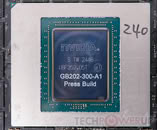
NVIDIA has reportedly stopped allocating GB202 silicon to the GeForce RTX 5090, according to leaker MEGAsizeGPU (@Zed__Wang) on X. "No more GB202 for 5090, confirmed," the leaker posted, adding in a follow-up that "all future GB202 supplies are RTX Pro exclusive." GB202 is the largest "Blackwell" graphics chip, and the RTX 5090 doesn't even max it out. The same chip powers the 96 GB RTX PRO 6000 with 24,064 CUDA cores, as well as the recently unveiled RTX PRO 5500, which pairs the RTX 5090's 21,760 CUDA cores with 84 GB of memory. Apparently, NVIDIA would rather put every GB202 it gets into those far pricier workstation cards. The company hasn't confirmed any of this as of the time of writing.
A second leaker, hongxing2020, posted "5090 EOL, 5080 24GB ready" alongside an apparent factory notice saying NVIDIA will no longer sell any RTX 5090 model, China-market D variants included. The same notice says an RTX 5080 24 GB will become the top GeForce card and the 16 GB version will be discontinued. That sounds a lot like the RTX 5080 SUPER, which was rumored with 24 GB of GDDR7 on the same GB203 chip, although it isn't clear if the two are the same card. SUPER cards reportedly reached board partners in July, only to be put on hold over GDDR7 pricing. As for the RTX 5090, I doubt NVIDIA would formally call this an end-of-life (EOL) move, since the chips are simply being redirected to a more profitable product line.
 RTX 5090 buyers were already having a rough time. The card launched in January 2025 at $1,999, and last month European listings went past €5,000 while Walmart sold out at $4,299. Cards built from GB202 chips that partners already have could keep trickling out for a while, though it's reasonable to expect prices to climb further once that stock dries up. Of course, the RTX 5090 was hardly a gaming card for most people by this point, with AI firms reportedly picking up stock in bulk before it ever reached gaming retail. With the RTX 60-series reportedly slipping to 2028, the RTX 5080 24 GB may stay the fastest GeForce card in production for a long time.
Sources:
MEGAsizeGPU on X, hongxing2020 on X, via Videocardz
A second leaker, hongxing2020, posted "5090 EOL, 5080 24GB ready" alongside an apparent factory notice saying NVIDIA will no longer sell any RTX 5090 model, China-market D variants included. The same notice says an RTX 5080 24 GB will become the top GeForce card and the 16 GB version will be discontinued. That sounds a lot like the RTX 5080 SUPER, which was rumored with 24 GB of GDDR7 on the same GB203 chip, although it isn't clear if the two are the same card. SUPER cards reportedly reached board partners in July, only to be put on hold over GDDR7 pricing. As for the RTX 5090, I doubt NVIDIA would formally call this an end-of-life (EOL) move, since the chips are simply being redirected to a more profitable product line.


228 Comments on NVIDIA Reportedly Ending the RTX 5090, Reserves GB202 Silicon for Workstation GPUs
All other people live on a planet of scarcity and 600W GPU is not what a planet can handle for most people.
That is precisely how we should approach gaming graphics cards. If my interest is gaming, I couldn't care less that a card happens to run fast in AI workloads. That must be our stance as gamers; otherwise, in a few years, we will be paying double the price simply because we'll be buying "AI cards" instead of gaming cards.
Cloud gaming is also prohibitively expensive to companies that have or are trying to push it, as can be seen with Microsoft hiking prices of gamepass, even putting play time limits on lower tiers.Well this is certainly...a take. Good for Nvidia shareholders, I suppose, but this is bad for the overall market especially with a company that has a near monopoly on PC gaming, and could do better with pricing and supply if they cared enough to. Nvidia is for the most part abandoning the market, and everywhere else pricing consumers out of buying a graphics card, they also played a major hand in causing memory and storage prices to skyrocket out of control.
Gamers only deserve a 5050 now, paying hard earned dollars for a GPU and expecting it to work without the cable melting was too much I guess. Then again I'm not sure why I'm even replying to what is clearly ragebait, or maybe you seriously are simping for a multi-trillion dollar mega corporation, but it's hard to tell on this forum sometimes.
But if the 5090 is gone and the 5080 becomes the new flagship, then that's only a 450W TDP, and some hypothetical 6080 can be a flagship with a 500W or more TDP and increase performance relative to the 5080. In that case it looks like the 6000 series will be akin to the 600 series where the xx4 chip was the flagship.
Also while cloud gaming has been a failure by many companies it will no stop the cronies to retry that strategy. Cloud gaming is also not a net zero cost for both the gamer/end user and cloud service.
Subscription costs are getting also significantly higher every year.
The service is becoming rationed off with monthly allowance caps.
Cloud compute is becoming more expensive to run/ upkeep for the service provider. Via hardware cost, security, networking etc.
That cloud compute power is also competing with ai token services besides gaming. If shark company a wants dedicated ai data centers for exclusivity then gamers will also have compete for cloud compute. Lastly while not necessarily cloud compute related, Steam's engineer came out with a new Pyrowave video codec that significantly improves latency.
Hopefully everyone is set for things to come and can weather out the storm. it's not like we didn't see this coming from miles away.
Now it seems NVidia has found a new segment to market to: "Workstation users" (or at least is hardening that segmentation). At least this market will mostly turn it over for themselves and in a lot if not most cases, the cards will pay for themselves - so NVidia is actually moving to a more ethical standing while us gamers are caught egg-faced with our pants down. This isn't even considering that it's not the position of any corporation to "care" about any market segment over another out of some philanthropic empathy. Their job as you've heard reported so many times, is to make money for their investors - and they're doing a hell of a job at it I'd say! We're just caught in the segment being left in the dust... and that's if you even consider a 5090 to be a gaming card and belonging to "our" segment.
I personally don't and never really have - the 3090 & 4090 either. IMO (most of the time anyway - when not in a dream), I considered those cards suitable for work... as in work-stations. It seems NVidia is coming around to a similar conclusion. The size and percentage of the entertainment (gamer) section of the market willing to spend that much on the last 4 generations of the 90 cards has continually shocked me at least. (And I do say four because you all know you fell for the April 1st 2090 and started counting your bank balances
*That's mean errates are below number and size and chip not needs of downgrade to lower class and locking of defective areas.
Normalizing insane prices during the C word days did not help.
But.. people flexed their credit cards anyway.. and now look at us.
Now.. imagine how many GPU's you can stuff into a building the size of 10 Walmart's..
We are no match for billion dollar budgets. Isn't capitalism grand?
Zero fan mode and overclocking are things of the past for me now lol..
All those who want to feel the now gone 5090RTX ePin power will be entitled to pay for it monthly, forever.
You will pay 50$\month and get comfort knowing you will get early access to new DLSSx features and 1k max fps.
And it will be the end of PC. No more Personal for you. Only SC.
Good bless fxxx capitalism.
Also the rtx pto 6000 is cut down already, that’s why I said close to 100% usable dies.
The 3nm yields are rumored to be almost as good as 5nm but 2nm according to tsmc, better that 3nm.
I wish they disclosed the real numbers, perhaps they will not resist the bragging at some point.
Even today with X3D processors, we look at FPS; we don't say, "Oh, they only have 6–8 cores, so they won't cut it, let's go for non-X3D options". We have always bought based on FPS. Unless someone needed a very specific feature, they didn't go out of their way to pay extra for a CPU that did something beyond delivering higher frame rates in games. And again, that was our exact mindset for CPUs—devices that are supposed to be general-purpose. Yet precisely because we always viewed them as general-purpose, and because the CPU market operates under a cross-licensing agreement between AMD and Intel that prevents structural imbalances, we never caught ourselves saying, "Oh, this one has feature X, so even if it's 10% slower and 20% more expensive, it's worth every penny".
With gaming GPUs—again, strictly for gaming—a completely different logic has dominated over the past 15–20 years:
- "Sure, it's more expensive, but it has this non-gaming feature. So it's worth paying extra".
- "Yeah, but I only want it for gaming; I don't care if it's good at transcoding or streaming. I have Netflix and I don't stream".
- "Well, you never know, you might start streaming tomorrow. So it's worth the extra cash!".
We have walked right into our own trap, which is why we end up reading arguments like, "Yes, GPUs are more expensive today compared to 15 years ago because TSMC raised its prices". Seriously? Why doesn't that same logic apply to CPUs? Today, you can buy a CPU with at least 6 cores using pocket change left over from delivery, yet we somehow justify a low-end GPU costing more than a mid-to-high-end GPU from a decade ago? Why? "Oh, right, because it supports AI". So what? What does that even mean? Does AI boost raw frame rates? Don't start with "DLSS 5". It's way too early. As proven with Ray Tracing, we'll be waiting 2 or 3 generations before DLSS 5 becomes a practical toggle in game settings.In general, we've shown immunity against the marketing of CPU manufacturers, but we swallow GPU marketing whole without chewing. That is why today €200 buys you a perfectly capable processor, whereas €200 won't even buy you the cheapest current-gen graphics card.
P.S. This text is general in nature and isn't directed at you specifically; I just used your point as a springboard to lay out my broader thoughts on the matter.
A GPU is a chip, substrate, small motherboard with all the power delivery circuitry, memory, cooler, fans, shroud and other structural hardware.
I am not sure how can you directly compare these two products. One is a single component and the second one is almost a whole finished computer.