Saturday, October 10th 2026

NVIDIA Reportedly Ending the RTX 5090, Reserves GB202 Silicon for Workstation GPUs
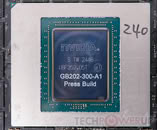
NVIDIA has reportedly stopped allocating GB202 silicon to the GeForce RTX 5090, according to leaker MEGAsizeGPU (@Zed__Wang) on X. "No more GB202 for 5090, confirmed," the leaker posted, adding in a follow-up that "all future GB202 supplies are RTX Pro exclusive." GB202 is the largest "Blackwell" graphics chip, and the RTX 5090 doesn't even max it out. The same chip powers the 96 GB RTX PRO 6000 with 24,064 CUDA cores, as well as the recently unveiled RTX PRO 5500, which pairs the RTX 5090's 21,760 CUDA cores with 84 GB of memory. Apparently, NVIDIA would rather put every GB202 it gets into those far pricier workstation cards. The company hasn't confirmed any of this as of the time of writing.
A second leaker, hongxing2020, posted "5090 EOL, 5080 24GB ready" alongside an apparent factory notice saying NVIDIA will no longer sell any RTX 5090 model, China-market D variants included. The same notice says an RTX 5080 24 GB will become the top GeForce card and the 16 GB version will be discontinued. That sounds a lot like the RTX 5080 SUPER, which was rumored with 24 GB of GDDR7 on the same GB203 chip, although it isn't clear if the two are the same card. SUPER cards reportedly reached board partners in July, only to be put on hold over GDDR7 pricing. As for the RTX 5090, I doubt NVIDIA would formally call this an end-of-life (EOL) move, since the chips are simply being redirected to a more profitable product line.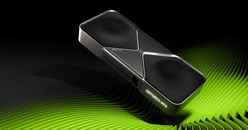
 RTX 5090 buyers were already having a rough time. The card launched in January 2025 at $1,999, and last month European listings went past €5,000 while Walmart sold out at $4,299. Cards built from GB202 chips that partners already have could keep trickling out for a while, though it's reasonable to expect prices to climb further once that stock dries up. Of course, the RTX 5090 was hardly a gaming card for most people by this point, with AI firms reportedly picking up stock in bulk before it ever reached gaming retail. With the RTX 60-series reportedly slipping to 2028, the RTX 5080 24 GB may stay the fastest GeForce card in production for a long time.
Sources:
MEGAsizeGPU on X, hongxing2020 on X, via Videocardz
A second leaker, hongxing2020, posted "5090 EOL, 5080 24GB ready" alongside an apparent factory notice saying NVIDIA will no longer sell any RTX 5090 model, China-market D variants included. The same notice says an RTX 5080 24 GB will become the top GeForce card and the 16 GB version will be discontinued. That sounds a lot like the RTX 5080 SUPER, which was rumored with 24 GB of GDDR7 on the same GB203 chip, although it isn't clear if the two are the same card. SUPER cards reportedly reached board partners in July, only to be put on hold over GDDR7 pricing. As for the RTX 5090, I doubt NVIDIA would formally call this an end-of-life (EOL) move, since the chips are simply being redirected to a more profitable product line.


228 Comments on NVIDIA Reportedly Ending the RTX 5090, Reserves GB202 Silicon for Workstation GPUs
As for it costing additional money in R&D, yes ofc - but considering that gaming does still bring in many billions each year in of itself, doing that so they could make products that gamers are actually excited for would be well worth it.
I think (and they said as much), that the Titan line (originally segmented toward the SOHO hybrid user who also makes money with their PCs) was merged into the gaming line simply to increase the dollar range within that segment. They took the Titan driver DL section and called it "Studio". By doing this they now had more room (range) to slide up the 80 and 70 cards toward that higher top end price - which they did indeed do. There were also some shenanigans that I don't fully understand tho: Using a range of excuses from floods and Earthquakes, scalping, mining, covid, memory shortages and so on they extended the top of that price range even higher - from the expected $1.5K ~ $2k up to the $4K and $5K atmosphere. At this point, they're just fishing and it looks like it's fished out so they're reestablishing that segmentation once again. I wouldn't be surprised if the 6000 series didn't have a 90 at all but instead, we saw a different naming convention emerge - though maybe not "Titan" again, I dunno.
I wonder if those cards will still be worth anything when the next generation finally drops
If you look at it objectively, the high prices on Volta somewhat made sense, GV100 is an 815mm² die with HBM2 memory, and an advanced digital VRM around it. Even in its cut down state as seen on the Titan V that could never be a cheap product, especially with 2017 manufacturing tech. Maybe not 3K but I doubt they could do below 2.If the RTX 4090 is any indication, yes. They are still consistently selling for $500-600+ above MSRP, even though they are four years old. The fact that it's faster than all other GPUs bar 5090 at gaming, and uses less power than the 5090 also helped its cred - it's quite sought after. It's widely considered the "new 1080 Ti".
This might trigger the ai bros! :cool:
Regarding the Titan, I had misremembered a few details; @Tesselator 's comment prompted me to look back into it. The original Titan was marketed interchangeably—sometimes as a semi-pro card, other times as the ultimate gaming GPU. That was no accident. It didn't feature standalone workstation drivers; the driver package simply read the product ID and unlocked certain compute capabilities. The RTX 5090 launched at $2,000, a price point Nvidia had already tested the waters with on the RTX 3090 Ti. It was—and remains—a gaming card. The RTX Pro series represents the actual non-gaming lineup. Even if the RTX 5090's price hits $100,000, I will personally still call it a gaming card. We simply view this through different lenses. You might be more in the right here while I'm just being stubborn, but under no circumstances do I want to establish a precedent where "gamers concede that a gaming card ceases to be considered a gaming card the moment we find a secondary utility for it, thereby legitimizing a massive price hike".
Nah, if a proper boycott were enacted, these companies would take pro-consumer steps regardless of their current balance sheets. You don't shoot your Plan B in the head—and returning to the consumer desktop space is their Plan B if demand for AI fab hardware suddenly collapses. Why do you think Nvidia hands out GPUs at MSRP at almost every public event they host?
nV markets it as a flagship consumer GPU designed for gaming, content creation and AI workloads.
AAT2250
$4999
Both my cousins got the same computer.
Warranty extensions...
We can ride out the crisis.
But the bigger point is that nvidia (and everyone else) is allocating all cutting edge node capacity towards ai now... if we were to just use a slightly worse node, we could still be getting good products, without having to fight ai products for wafer capacity.
Nvidia did after all do precisly this with the 3000 series.