Saturday, October 10th 2026

NVIDIA Reportedly Ending the RTX 5090, Reserves GB202 Silicon for Workstation GPUs
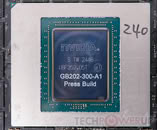
NVIDIA has reportedly stopped allocating GB202 silicon to the GeForce RTX 5090, according to leaker MEGAsizeGPU (@Zed__Wang) on X. "No more GB202 for 5090, confirmed," the leaker posted, adding in a follow-up that "all future GB202 supplies are RTX Pro exclusive." GB202 is the largest "Blackwell" graphics chip, and the RTX 5090 doesn't even max it out. The same chip powers the 96 GB RTX PRO 6000 with 24,064 CUDA cores, as well as the recently unveiled RTX PRO 5500, which pairs the RTX 5090's 21,760 CUDA cores with 84 GB of memory. Apparently, NVIDIA would rather put every GB202 it gets into those far pricier workstation cards. The company hasn't confirmed any of this as of the time of writing.
A second leaker, hongxing2020, posted "5090 EOL, 5080 24GB ready" alongside an apparent factory notice saying NVIDIA will no longer sell any RTX 5090 model, China-market D variants included. The same notice says an RTX 5080 24 GB will become the top GeForce card and the 16 GB version will be discontinued. That sounds a lot like the RTX 5080 SUPER, which was rumored with 24 GB of GDDR7 on the same GB203 chip, although it isn't clear if the two are the same card. SUPER cards reportedly reached board partners in July, only to be put on hold over GDDR7 pricing. As for the RTX 5090, I doubt NVIDIA would formally call this an end-of-life (EOL) move, since the chips are simply being redirected to a more profitable product line.
 RTX 5090 buyers were already having a rough time. The card launched in January 2025 at $1,999, and last month European listings went past €5,000 while Walmart sold out at $4,299. Cards built from GB202 chips that partners already have could keep trickling out for a while, though it's reasonable to expect prices to climb further once that stock dries up. Of course, the RTX 5090 was hardly a gaming card for most people by this point, with AI firms reportedly picking up stock in bulk before it ever reached gaming retail. With the RTX 60-series reportedly slipping to 2028, the RTX 5080 24 GB may stay the fastest GeForce card in production for a long time.
Sources:
MEGAsizeGPU on X, hongxing2020 on X, via Videocardz
A second leaker, hongxing2020, posted "5090 EOL, 5080 24GB ready" alongside an apparent factory notice saying NVIDIA will no longer sell any RTX 5090 model, China-market D variants included. The same notice says an RTX 5080 24 GB will become the top GeForce card and the 16 GB version will be discontinued. That sounds a lot like the RTX 5080 SUPER, which was rumored with 24 GB of GDDR7 on the same GB203 chip, although it isn't clear if the two are the same card. SUPER cards reportedly reached board partners in July, only to be put on hold over GDDR7 pricing. As for the RTX 5090, I doubt NVIDIA would formally call this an end-of-life (EOL) move, since the chips are simply being redirected to a more profitable product line.


228 Comments on NVIDIA Reportedly Ending the RTX 5090, Reserves GB202 Silicon for Workstation GPUs
Im forming this conclusion based on current industry data. Consumer Video cards are approaching sub 1% of their total sales based on current data. This is in part due to them reducing overall production of consumer chips and the Memory crisis.
If they do launch a 6000 series, it will be an afterthought that comes after what ever the new workstation or AI cards are.
Their plans moving forward are to have consumers buying cut down DGX spark like PCs so they can undercut the entire market.
Hopefully AMD kicks ass with the next Gen of Video cards, because They will most likely be the only consumer video card manufacturer.
But I don't think Nvidia/AMD will ditch the consumer market entirely. In a worst case scenario, they'll still throw us a few crumbs here and there. Even the afterthoughts need feeding. What is likely is longer product cycles, crappy performance improvements, tight supply and horribly inflated prices. The bit I agree, at the same time they'll be heavily pushing on these unified mini systems and cloud gaming.
And if they both ditch us it's not THAT hard to make a good GPU. The hardest part is getting games devs to support whatever it is. Already we're seeing "AI Accelerators" pop up from tiny startups which are as good or better price-proformant and more efficient than NVidia cards for local AI - and that's essentially the same thing (not far off). Nya, as long as there is a market for them there will be "GPUs".
It could happen I guess... I mean if everyone just accepted and moved to cloud streaming. Have you tried services like the XBox Cloud Gaming? They'er awesome if you have a decent connection. If gamers went cloud on mass that would sink us!
3080 FE at a £650 MSRP.
4080 FE Super which was cheaper than both standard 4080 and the 5080.
The new 5080 24gig will replace the existing one and will probably jump in price as the VRAM makes it usable for AI.
5070TI 16gig to become the mainstream top end card. Not priced great though as has no FE version.
- "There will be backlash."
- "It's manageable."
...rather than:The rtx pro 4500 doesn't use the full die like the 5080, they are different. So more gb203 will be allocated for the ai market.
In short, more gb203 to the ai market with a new "budget" option while pretending they care about gaming. Remember, the 16gb 5080 will not be available. Genius!
They did the same thing with LHR cards during the crypto boom in 2021.
So... is the rumor true? I hope it is, it will be very funny to see the reactions to a 3000-4000$ 5080.
I wouldn't call that a rumor but probably an educated guess and a very logical one.
So $1500 MSRP for the 24GB RTX 5080 Super that will last for a day or two and over $2000 after that. With the RTX 5090 out of the equation thanks to people playing Nvidia's game by accepting that the RTX 5090 under the current conditions is not a gaming card, we can expect the top card for the RTX 60 series to be an RTX 6080, not an RTX 6090, still with a
MSRPstarting price of $2000.They played us in the long run.
People's greed is enough to blind them...
You get cheaper freaking second-hand cars... Btw, the 5090 on the used market will go through the roof in price :D
For me it isn't that gaming GPUs will disappear... its the damage thats already done. Inflated prices, crappy generational performance gains and calculatively tight supply, which only drives prices even higher and gives scalpers a field day. If this was proper short term, a year or 2, we'd all be drawing different conclusions. But we're looking at years of disruption, enough to leave some serious gaps in the market that could take just as long to recover from.
By the time capacity catches up, we might be looking at a GPU market where paying silly money for mediocre upgrades becomes the new norm. Only recently I started looking into Geforce Now subscriptions for the 4K TV (not the dedicated gaming rig)... if this sort of thing catches up like a wild fire, it gets proper ugly for the DIY enthusiast. On top we can't blame gamers on a budget (the majority/mainstream) for going down that route when decent gaming hardware is becoming unaffordable. The irony is that the more gamers turn to cloud gaming and unified mini systems out of necessity, the less incentive Nvidia and AMD might have to prioritise the consumer GPU market. That would be one ugly vicious cycle.A bit of a convo side step... but I remember being pretty pissed at having to fork out £695 for a relatively midrange performing 5070 TI. But bloody hell, looking at todays prices, I'm starting to think I got away with a bargain.
Funniest bit is, I remember a few people on here having a pop at me for supposedly FOMO buying when I was banging on about potential price hikes and shortages before pulling the trigger. Can't remember who they were now... which is a shame, because I'd quite like to give them a friendly wave. HOO HAA! :D
The exact opposite holds true for AMD. AMD has adopted a completely different strategy—one that many people, to be frank, hate. They launch with a relatively high MSRP, which is then followed by gradual, usually unannounced price cuts. And I say high MSRP precisely because those subsequent price drops prove the pricing could have been lower right from the start. They probably do this for a variety of reasons I can only speculate on. My guess is that it helps avoid triggering an immediate response from Nvidia. Nvidia might not feel under threat, but imagine if the RX 9070 XT had launched at $500—that might have been enough to force Nvidia into cutting prices for the first time in years. Alternatively, AMD might want to start high so the initial price tag projects a sense of equivalent value compared to Nvidia's lineup, while the later price drops can be framed by retailers as bargain deals. I don't know—there are plenty of theories.
Right now, though, with the AI craze, any graphics card with more than 8GB of VRAM has suddenly turned into an investment. I paid €340 for my RX 9060 XT 16GB, and I could probably easily find someone today willing to buy it for €400 or even more. I have no intention of doing so, but it's one of those rare and unfortunate situations where everything is becoming more expensive, and sadly, the underlying drivers behind these price increases aren't temporary.
A bit after launch the 9070 XT Sapphire Pulse was discounted to £530, and a cheaper ASRock variant for around £540. Usually those cards held strong for around £560-£580. Nowadays the cheapest model is going for £730 (according to PCPP affiliated links).
But I agree prior to 9000-series, AMD propped up prices and then dialled back in small increments and Nvidia, as usual, chisels prices into granite with a cough it up or sod off policy. Maybe its down to their 90%+ market share confidence or they've got a solid non compromising user base for gaming, CC and other prosumer workloads.
I actually thought AMDs 7000/9000 series came in with a pretty big punch and would change the dynamic a good bit. Then along came the AI/DC gold rush and pretty much pissed all over that possibility. lol the possibility of Nvidia card prices coming down? They shot holes through the roof and are currently hovering over the moon.