Saturday, October 3rd 2026

Modder Solders Dual 8-Pin Board to RTX 5090's 16-Pin Header, Wires Stay Below 40°C
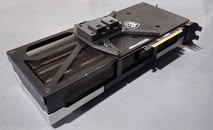
Melting 16-pin connectors keep making headlines, and some RTX 5090 owners have started taking the protection of their expensive cards into their own hands. Reddit user DallasGrave has modified an MSI GeForce RTX 5090 with two extra 8-pin PCIe power inputs that work alongside the card's original 16-pin connector. According to their post on r/pcmasterrace, a small pickup PCB is soldered to the contacts of the 16-pin header, and that board feeds a second PCB carrying the two 8-pin sockets. The card then runs on three cables in total. DallasGrave says each conductor now carries roughly 3 A, and that the wires never crossed 40°C during a 48-hour run at 550 W, even at the joint. More test data is apparently on the way, so for now these are the modder's own numbers.
The 12V-2x6 revision was supposed to fix the melting power connector issues. In early 2025, NVIDIA said the 16-pin melting issues were over, pointing to the updated connector on the RTX 50-series. However, the first melted RTX 5090 Founders Edition was reported shortly after, in that case with a third-party cable. Since then, several RTX 5090 power connectors have reportedly melted, including one with an undervolt and a -100 W power limit. Moreover, last month Hardware Unboxed watched its RTX 5090 power cable reach 175°C with a single wire pulling around 22 A.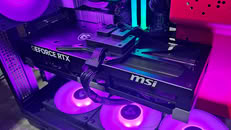
 Modders have had to jump in with fixes of their own, since off-the-shelf solutions have had a mixed record so far. ASUS introduced the ROG Equalizer cable to spread current more evenly, yet a photo of a burned one later surfaced online. ASRock's TempGuard also reportedly failed to stop a PSU-side meltdown on an RTX PRO 6000 rig. This new mod is clever, though soldering onto a card this expensive is probably best left to experienced hands. It's also a milder approach than what Brazilian channel TecLab did recently, first soldering power wires straight to the PCB and later running an RTX 5090 on three 8-pin connectors. Here, the 16-pin connector stays in use and simply carries less of the load.
Source:
Reddit
The 12V-2x6 revision was supposed to fix the melting power connector issues. In early 2025, NVIDIA said the 16-pin melting issues were over, pointing to the updated connector on the RTX 50-series. However, the first melted RTX 5090 Founders Edition was reported shortly after, in that case with a third-party cable. Since then, several RTX 5090 power connectors have reportedly melted, including one with an undervolt and a -100 W power limit. Moreover, last month Hardware Unboxed watched its RTX 5090 power cable reach 175°C with a single wire pulling around 22 A.


86 Comments on Modder Solders Dual 8-Pin Board to RTX 5090's 16-Pin Header, Wires Stay Below 40°C
If the connector affected at least more than 5% of the cards, it could warrant a mandatory recall, but it doesn't. These car engines didn't even warrant a recall after 10-15 years on the market and everyone know the damn thing can't be fixed, and you can only mitigate part of the issues (or sometimes not even that).
Although there is no defense for a multi-trillion dollar company to be cheaping out on the power design compared to how the specifications were with the 30 series.
And these connector issues affect even mid range cards, 5070Ti's and 9070XT's still melt, this connector isn't suitable for 300W cards either.
In any case the cables isn't the problem. And it's not "basically the same thing". HVAC and DC is worlds apart.
Even if they don't use the reference design, it still is going to cost them lots of $, so I wouldn't doubt that it would be $20+ extra for each card, not that, that means anything to those people who eventually buy them, but, it's a HUGE cost to the AIBs, so, it boils down to, less than 1% of the cards have melted connectors, which costs $X for replacement, which is lower than the redesign cost, so that is the route they are going
This is why all eyes are on the 6090 to see how they deal with this issue
But regardless of percent of melted cards, it shouldn't be an issue in the first place.
There was a rumor of the 6000 series having 2 12v2x6 connectors which I think would make this connector even more of a meme, it wouldn't save any space over using 8 pins, and it would still be less reliable.
Mass production is about optimising every little cost, unfortunately modern mass production forgot that optimising is not removing features, features that in this case are essential to the reliability of the device. They made a calculus, if RMA remain bellow whatever small % it costs less then spending the 150M$ to make every card more reliable. When boomers say "things used to be built better" this is what they are/should be talking about
any why did we go to this 16pin Garbage to begin with?
www.techpowerup.com/review/amd-r9-295-x2/22.html
That little monster consumed peak 640 watts over just 2x PCI-E 8 pins. And if done right, or having a proper PSU it's perfectly possible with zero issues.
Nvidia's design is faulty. Period. How can you rest or sleep with a card that could go any minute during any gaming session.
Then Nvidia pilot tested the design in 3000 series as proof of concept.
Then both PCI-E SIG and Intel accepted it as the next gen PCI-E and ATX power standard.
Then burnt out happened in 4000 series.
12V-2x6 as an Emergency fix has been introduced by PCI-E SIG.
Then burnt out kept happening in 5000 series. <--- we are here.
Just like USB-C with teeny tiny fragile connections and ungodly complex schemes for power negotiation that will eventually fail and die, the 12V HPWR connector is an exercise to see how close they can get to absolute max ratings as possible.
This is like engineering version of living on the edge.
We used to give huge headroom because safety margins have to be ultra conservative. The ONLY way Nvidia will wake up is with mass lawsuits, after someone dies from a house fire.Coming to every future PC near you with the replacement to ATX power connector, and this time by Intel(who also participated in the hugely flawed USB-C standard). Future 350W desktop CPUs are going to have fun with this.