News Archive

Saturday, October 31st 2026

The Elder Scrolls VI Reportedly Titled Sentinel, Set in Hammerfell

The Elder Scrolls VI might finally get its full name soon. According to The Verge's Tom Warren, Bethesda is preparing to announce the game as The Elder Scrolls VI: Sentinel, and the reveal could come as soon as November. Warren expects it to be a name reveal only, so a trailer, gameplay, or release date probably shouldn't be expected just yet. The report also says the game is set in Hammerfell, the Redguard homeland seen before in Daggerfall, Redguard, and The Elder Scrolls Online, and that its story will dig into the history of the Elder Scrolls themselves. Bethesda has reportedly been showing gameplay internally in recent months, though it hasn't commented on the report.

The name itself won't surprise many fans. Xbox CEO Asha Sharma watched a live playthrough at Bethesda's offices back in August, and her post afterward used eight asterisks where the subtitle would go. Here's what she posted.

Asha Sharma, Xbox CEOLive playthrough of The Elder Scrolls VI: ******** this morning. The scale and grandeur are incredible. The story is even greater.


Days Gone 2 Won't Be Bend Studio's Next Game Slated for 2027 Launch

Bend Studio, the game studio behind 2019's Days Gone action-adventure game, is apparently already knee-deep in the production of its next game, and it has been unofficially confirmed that Bend's next project will not be Days Gone 2, according to a report by MP1st, who cites anonymous insiders familiar with Bend Studio's inner workings.

The insider explains that the project is a third-person co-op game, and that it is slated to be revealed sometime in 2027, with a late 2027 launch, to boot. At the time of the leak, it was confirmed that the game will not be a live-service game, despite Sony's renewed push for live-service games. While this has the implication that the game might appeal to more of Sony's core audience, it also means that it will likely be a PS5-exclusive, given Sony's unrelenting desire to lock players into its console platform.

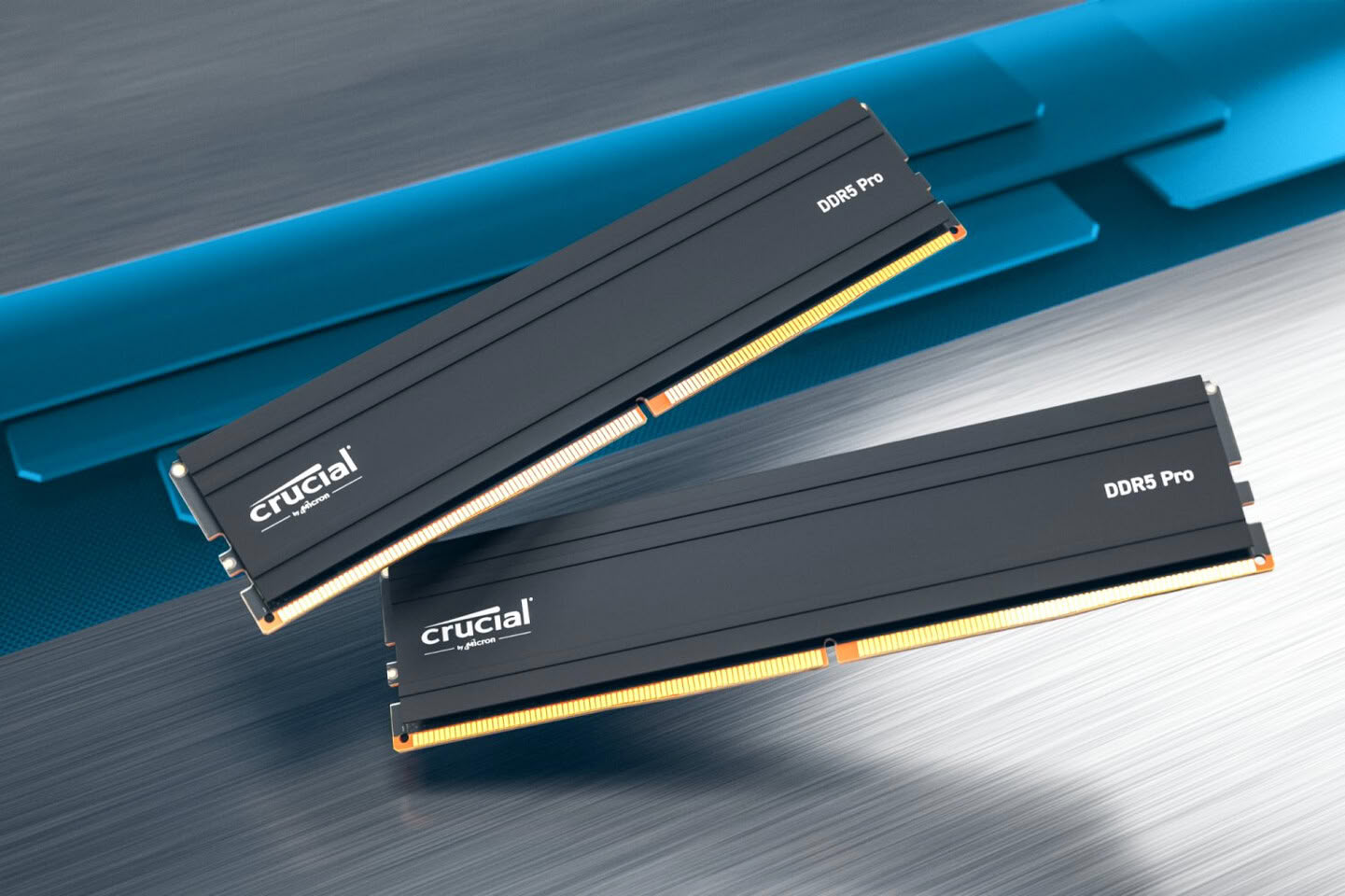
G.SKILL and Newegg Offer Limited-Time AMD Ryzen 7 9800X3D Combo Deals Featuring AMD EXPO ULL DDR5 Memory

G.SKILL, a leading manufacturer of high-performance memory and PC gaming peripherals, is teaming up with Newegg to offer a series of limited-time PC hardware combo deals, featuring the AMD Ryzen 7 9800X3D processor, G.SKILL Trident Z5 NeoX RGB DDR5 memory, and select AMD AM5 motherboards. These specially priced bundles offer PC enthusiasts and gamers an opportunity to build or upgrade their systems with high-performance components while enjoying additional combo savings.

The promotion features eight different hardware combinations, pairing the AMD Ryzen 7 9800X3D processor with a 32 GB (2x 16 GB) G.SKILL Trident Z5 NeoX RGB DDR5-6000 memory kit and a choice of motherboards from ASUS, MSI, GIGABYTE, and ASRock. Available in black or white memory designs depending on the selected bundle, these combinations offer flexibility for a wide range of PC builds.

Over 80% of Roblox's Top 100 Games are AI-Assissted, Topping 70,000 AI Games

As usual, generative AI appears to be splitting the gaming industry in half. While Valve recently acknowledged the issue of AI-generated clones on Steam—although declined to actually do anything about it—Roblox just published a shareholder letter in which it boasts that "AI-enabled game creation, automation in code generation and AI supported asset creation are leading to an explosion of content" since it launched its AI assisted game builder tools.

The letter adds that over 80% of its top 100 games by hours played in the month of September were AI assisted, while the raw number of games created with its Build generative AI platform topped 70,000 since Q2. Usage of Roblox's AI tools for game development more than tripled among top creators. It also notes that in Q3, two games "created almost entirely with AI" managed to break into the top 20 Roblox game ranking by concurrent player count.

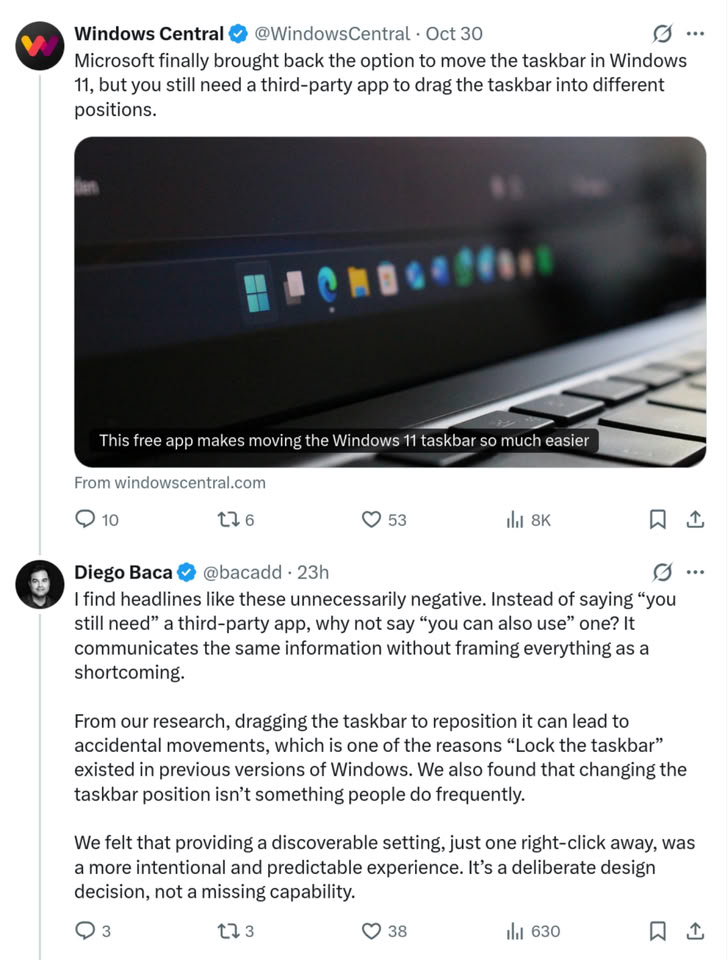
Dragging the Windows Taskbar To Move It Is Dead, and That's a Feature

Microsoft recently restored the ability for Windows users to move the Taskbar to any screen edge, nearly five years after Windows 11 launched. The Windows 11 implementation, however, is not the same as it was in Windows 10, where users could click and drag to move the Taskbar and lock it in place when they were happy with its position. Instead, Windows 11 makes users go into the settings app to change the Taskbar position, and now, in response to a news story about a third-party utility that allows Taskbar dragging, Windows Vice President of Design, Diego Baca, explains that this is indeed a feature, not a bug, and that the drag-and-drop repositioning often caused accidental movements.
Diego Baca, Windows Vice President of Design at MicrosoftFrom our research, dragging the Taskbar to reposition it can lead to accidental movements, which is one of the reasons "Lock the Taskbar" existed in previous versions of Windows. We also found that changing the Taskbar position isn't something people do frequently.

We felt that providing a discoverable setting, just one right-click away, was a more intentional and predictable experience. It's a deliberate design decision, not a missing capability.

MS Office 2024 Professional Plus Includes 6 Apps for a One-Time $49.97

Microsoft Office 2024 Professional Plus for Windows is on sale for $49.97 (MSRP $249.99) through Nov. 1. The offer reduces the price by $200 and provides a perpetual license for one Windows PC, with no ongoing subscription fees.

The suite includes Word, Excel, PowerPoint, Outlook, OneNote, and Access. Together, these apps cover document creation, spreadsheets, presentations, email, notes, and database management. Advanced data analysis and database tools also support work involving business information.

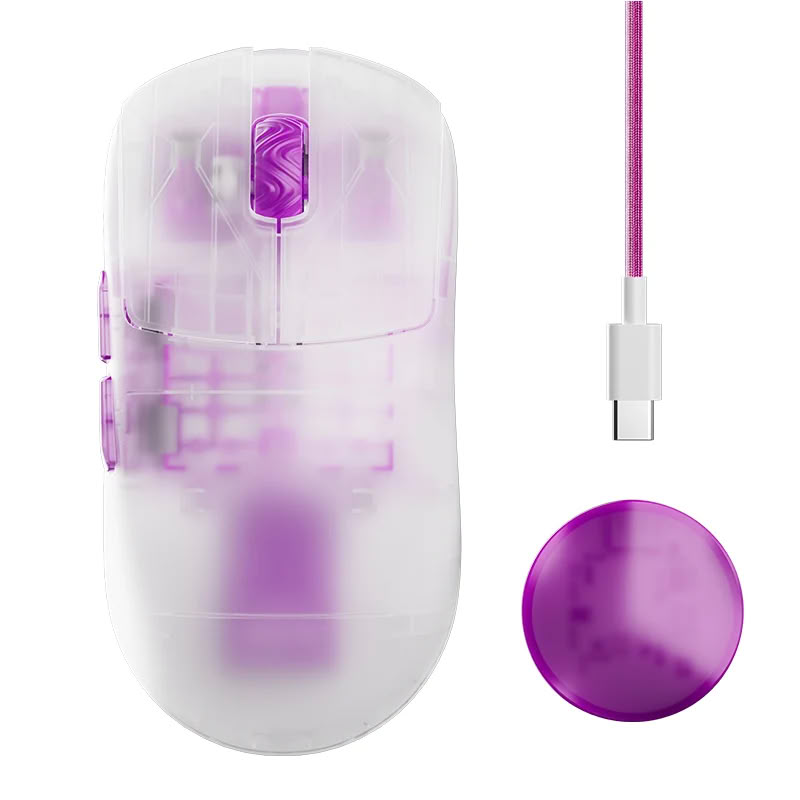
Scyrox Launches Translucent V12 Series Lightweight Gaming Mice in Large and Medium Variants

Scyrox, by now, a well-known alternative to flagship gaming mice from the likes of Logitech and Razer, offering cheaper, often lighter, gaming mice with similar high-performance ambitions and top-tier internals. The Scyrox V12 series is no exception to that rule, with the V12L and V12M offering internals like the PixArt PAW Next I sensor alongside Kailh optical switches, with a 100 million-click MTBF, and a Nordic 54H20 MCU, with up to 8 kHz polling, and a magnetic scroll wheel encoder, for a starting price of $79.99. The Scyrox V12L and V12M will officially be available from November 2 on the Scyrox online store.

The V12L and V12 M are two variants of the same mouse shape in different sizes. The V12M, as you might imagine, is the smaller one of the two, which Scyrox recommends for gamers with hands measuring up to 190 mm, with the shell measuring in at 122 (L) × 62.69 (W) × 38.31 (H) with a weight of 49 g. Meanwhile, the V12L has dimensions of 125.96 (L) × 61.01 (W) × 39.85 (H) and a claimed 51 g weight. The V12 series mice are all symmetrical with a mild mid-hump design and slightly flared front and back, similar to Razer's Viper V4 Pro, which makes them suitable for just about any grip type, although particularly suited to a palm and claw grip, as we noted in our in-depth review of the Razer Viper V4 Pro. The V12 series is wireless, with a 2.4 GHz connection supported by a 250 mAh battery on both mice, although no battery life claims are made.

Forza Motorsport Head Resigns Following Turn 10 and Playground Games Merger

It seems as though nobody's future at Xbox is particularly certain after this year's intense layoff spree at the Microsoft-owned gaming giant, but some game studios have been hit harder by Asha Sharma's Xbox Reset plans. In the late-September restructuring that saw Activision take over the Halo franchise, Microsoft also merged Turn 10 and Playground Games into a single studio, in what many saw as the last nail in the coffin for the Forza Motorsport franchise.

Following the merger, an internal email reported on by The Verge announced that Dan Greenwalt, the head of Turn 10 games with a 27-year tenure, has "decided that this is the right time for him to retire from Microsoft." In the memo, Trevor Williams, head of Playground Games, announced that Dan Greenwalt would remain on in some capacity to serve as an advisor for Williams and Playground Games COO, Michel Bastien. Forza Motorsport was already on the ropes when it was announced that the current version of the game, which launched in 2023, would no longer be getting support. It's unclear whether Forza Motorsport will continue as a franchise or if the absorption of Turn 10 into Playground Games means that its developers will be permanently reassigned to games like Fable, which Microsoft appears to be betting the farm on, or Forza Horizon 6, which has shown itself to be a cash-cow in a struggling gaming industry.

Linux Mint Announces Hibernation Re-Implementation and New System Apps

Linux Mint is one of the most widely recommended Linux distributions, especially for those looking to move from Windows to Linux, since it features a familiar layout and is very beginner-friendly. However, it is still based on Ubuntu and thus subject to many of Ubuntu's upstream decisions, like the prior removal of hibernation support in favor of suspend. In a recent Linux Mint blog post, previewing upcoming chanes to Mint, the development team behind the distribution argue that, while suspend is useful and widely supported, it results in phantom battery drain in most cases and can result in a dead laptop battery within 2-3 days.

With this justification in mind, the development team has confirmed that it has re-implemented support for hibernation in Linux Mint, with a new GUI page in the System Administration tool with toggles to enable specific sleep modes, including suspend, hibernate, suspend then hibernate, and hybrid sleep. There is also a dedicated drop-down to configure more specific hibernation and sleep modes, and there is a section that automatically detects problems with the configured sleep modes to make it easier for users to fix them.

Arkade Detailed As $399 Gaming Gun With "Universal Game Compatibility"

Gaming mice, in their never-ending pursuit for ever-increasing sensitivity, responsiveness, and features, are still just "pro office equipment," at least according to Arkade, the company behind The Arkade Gaming Gun, which claims to be a more intuitive way to play FPS games with "performance metrics that rival high-end mice," according to the brand's in-house testing. Arkade says that the gaming gun will be produced and start shipping in 2027 and is taking pre-orders, starting at $299 during the pre-order phase, with that price later expected to reach $399.

The Arkade Gaming Gun aims to approximate the experience of using something like a traditional light gun, but it is designed for use in modern FPS games. It connects wirelessly to your PC via 2.4 GHz and will last a claimed 8+ hours on a charge. It also has magnetic charging when the battery runs out. Arkade is light on the technical details in its product information sheet, but it says that it has tested the gun controller in over 200 FPS games and claims universal game compatibility. It also claims that the gun is compatible with Windows, macOS, and SteamOS, because it uses a standard HID driver and a web-based customization and calibration tool.

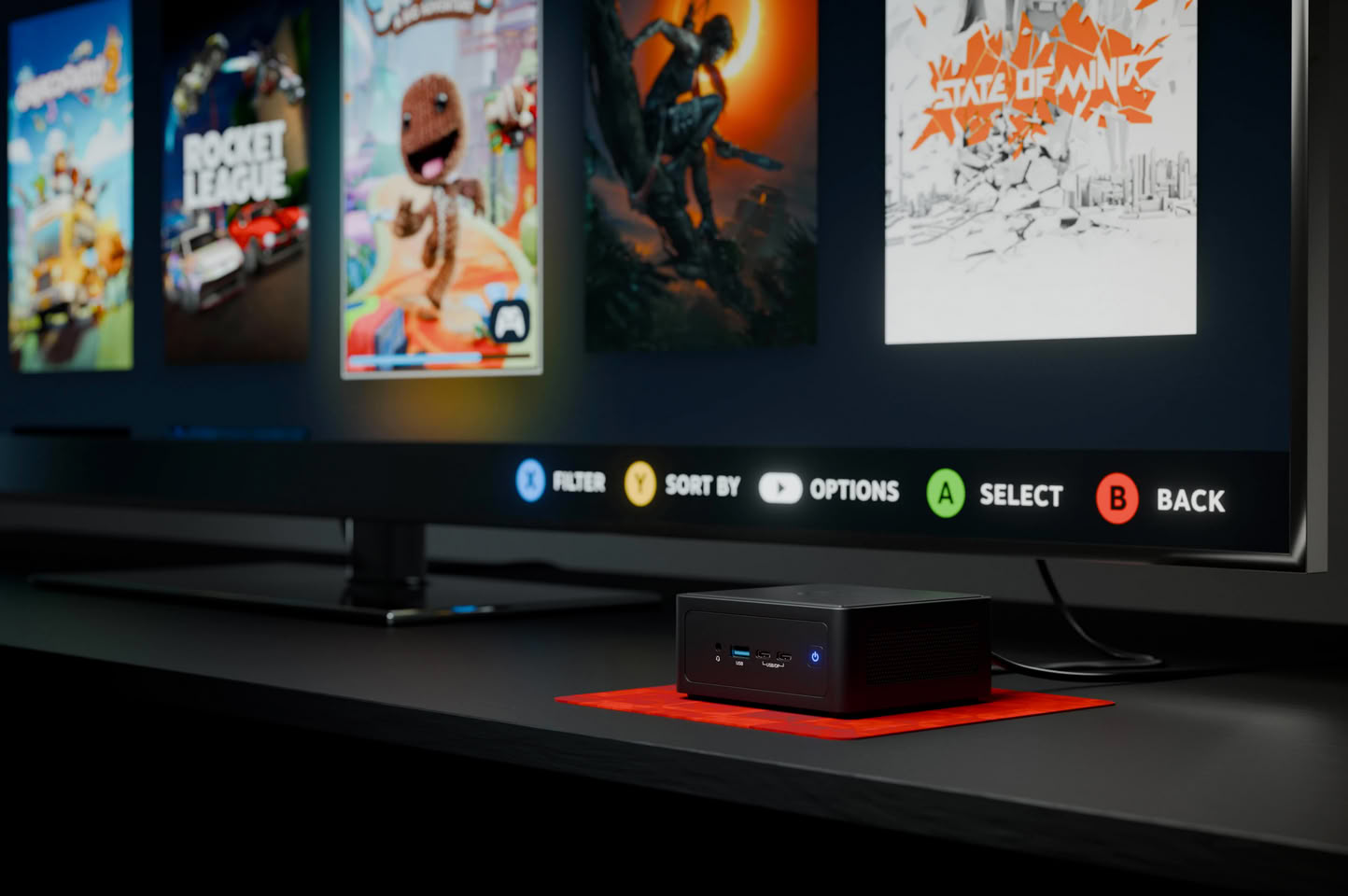
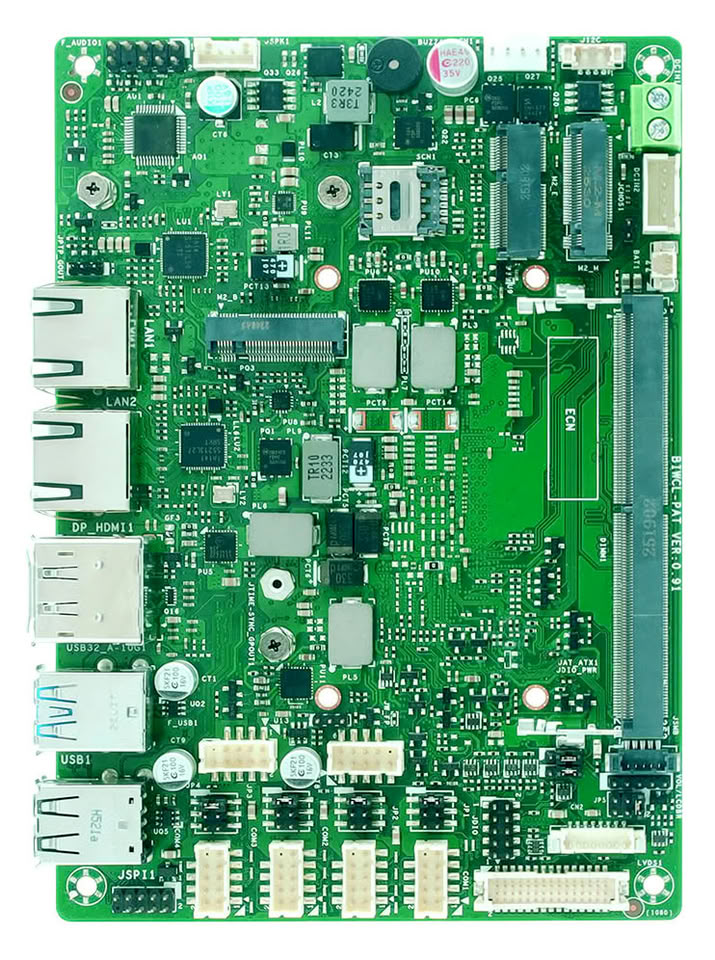
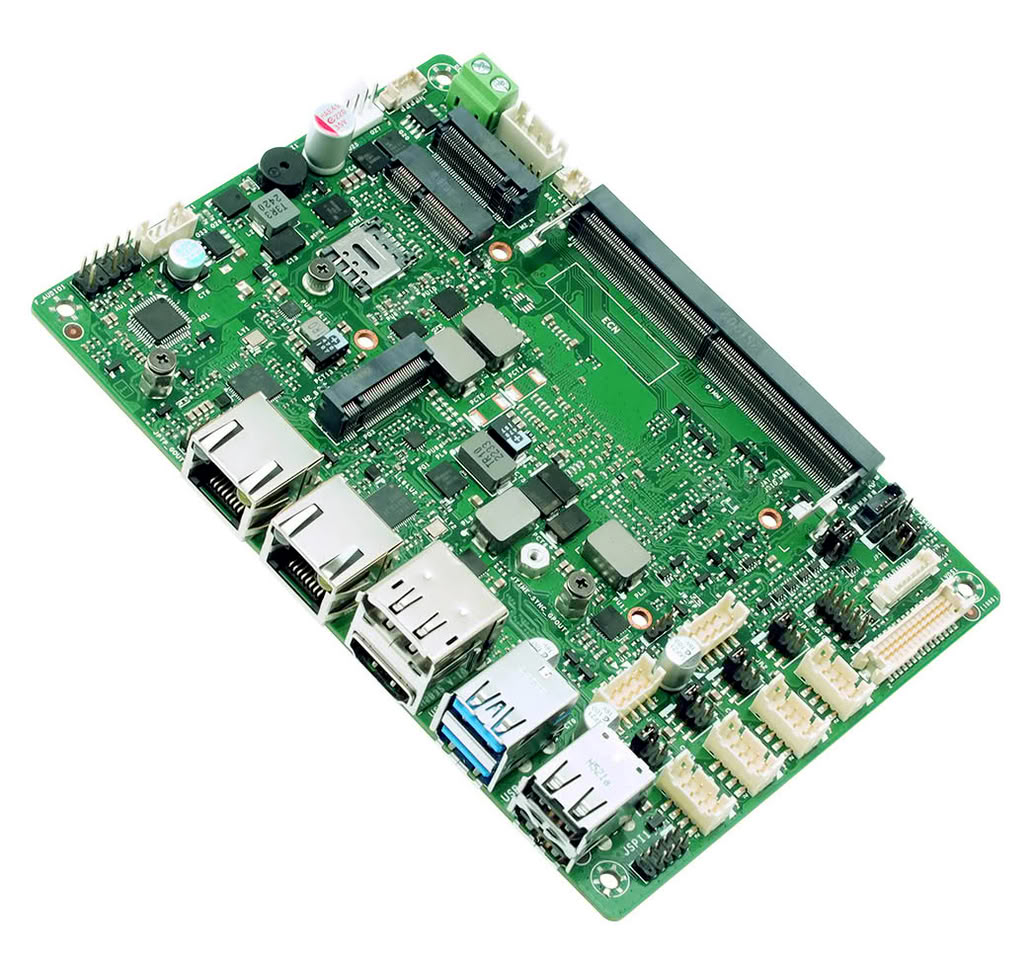
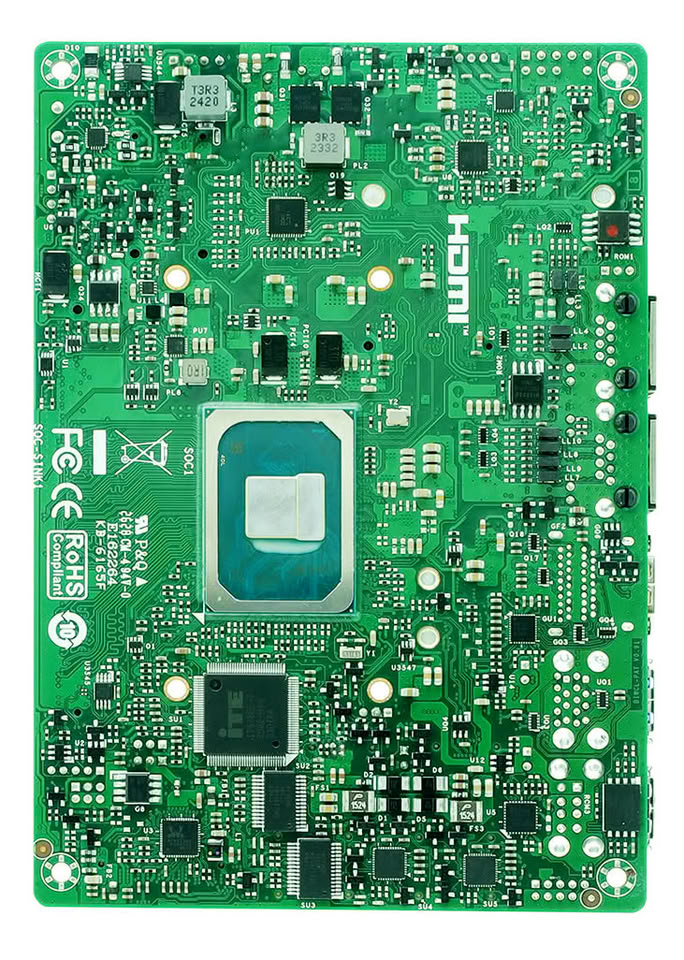
Tuxedo Nano Pro Gen15 Mini PC Launches With Intel Core Ultra X7 358H and Linux Preinstalled

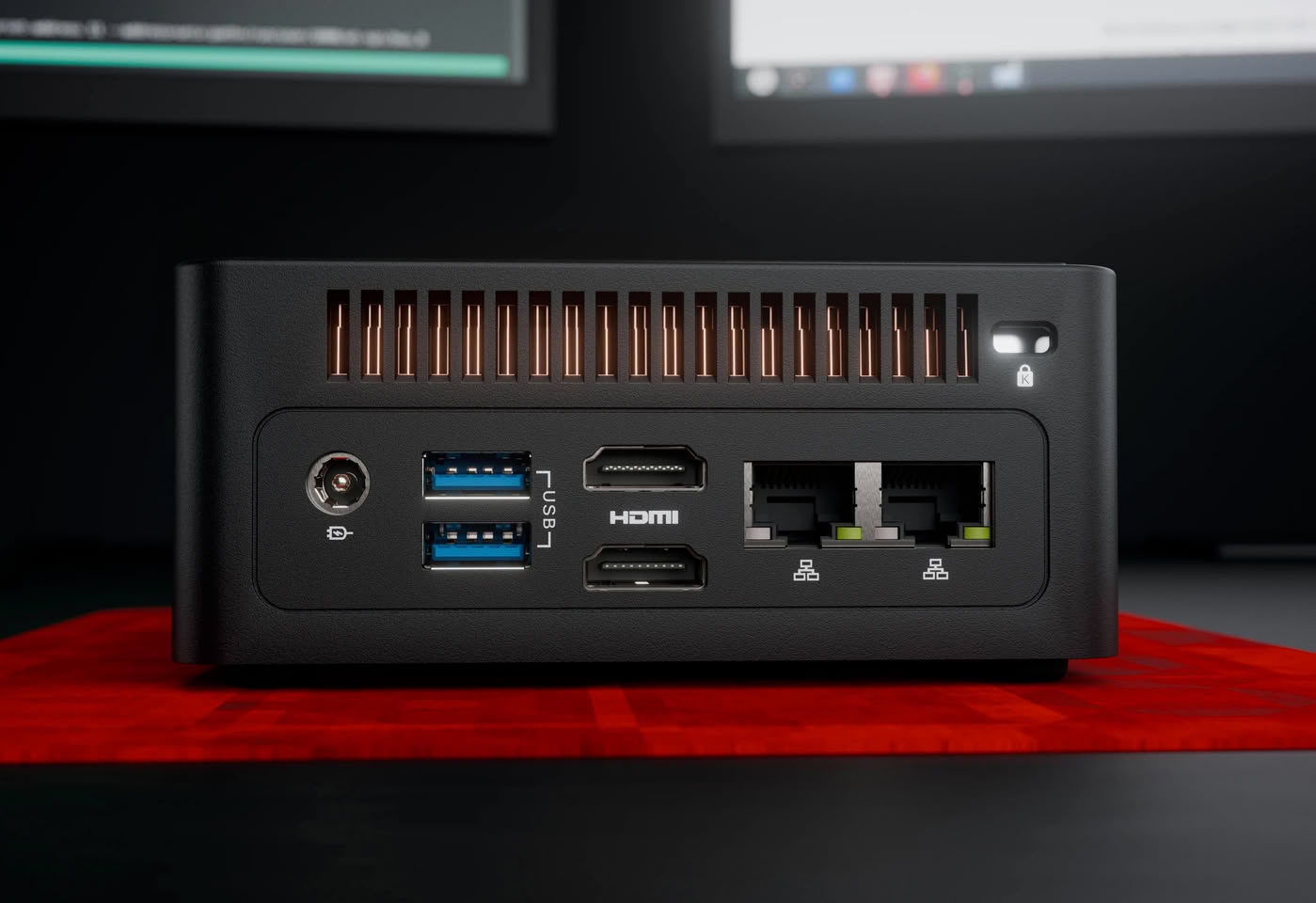
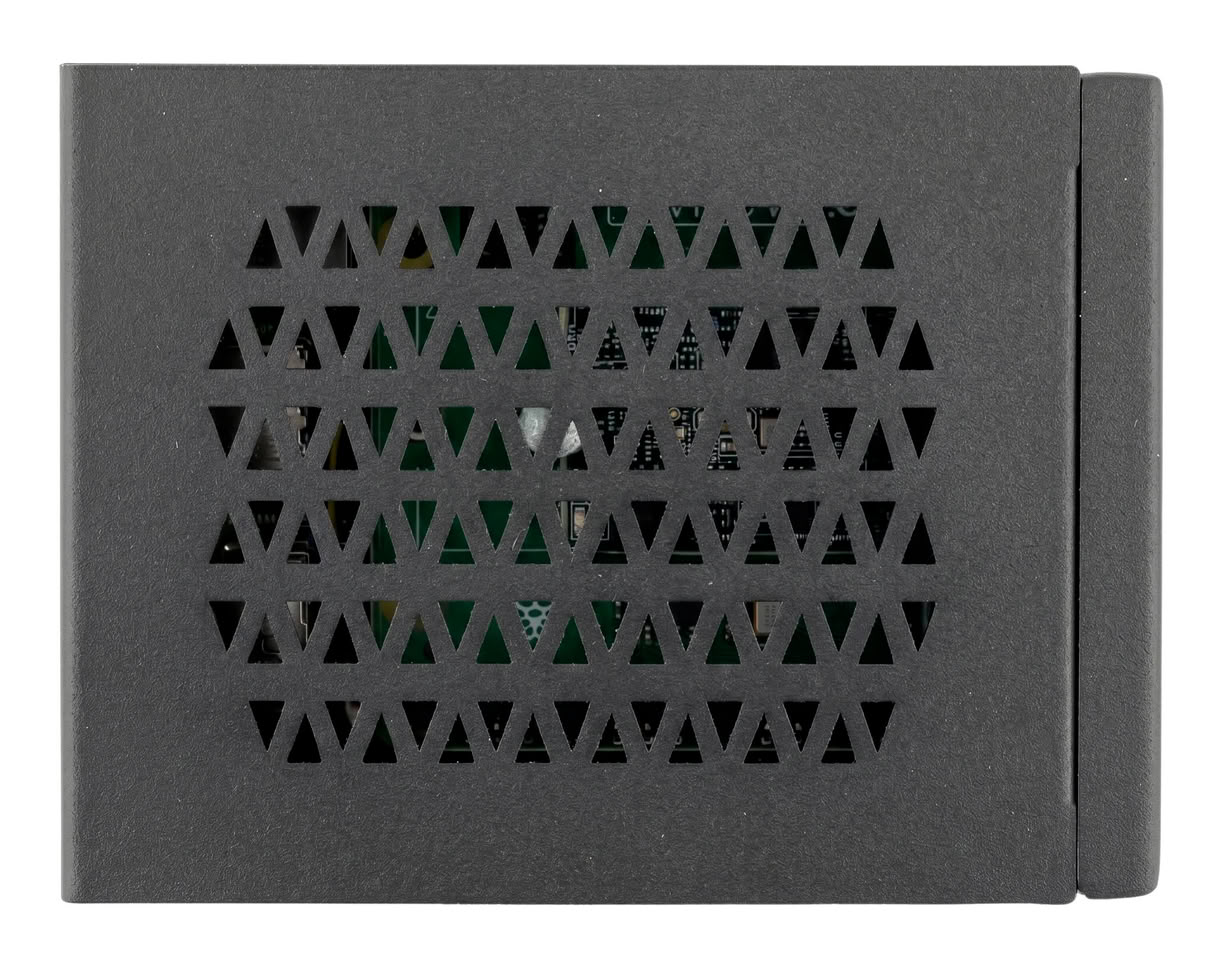
Tuxedo Computers has just announced its Nano Pro Gen15, a new mini PC powered by Intel's Panther Lake Core Ultra X7 358H CPU and its capable Arc B390 iGPU. The mini PC is a workstation targeting developers and home lab enthusiasts who want to run "local, secure, sovereign" LLMs, but Tuxedo also fully acknowledges that it can be used as a no-fuss mini gaming PC, thanks to Intel's graphics integrated into the Linux kernel of the pre-installed TuxedoOS. Physically, the Nano Pro Gen15 measures in at just 110 × 117.5 × 49 mm, and it features a plastic chassis, although Tuxedo has maintained a repair-friendly design, with just four screws required to access the internals, where the upgradeable RAM, storage, and wireless cards are easily accessible.

Tuxedo supplies a 120 W external power supply that connects via a barrel adaptor, but it makes no claims about the actual maximum TDP of the Intel CPU inside. Connectivity on the Nano Pro Gen15 is reasonable, if not stellar, with Wi-Fi 7 and dual 2.5 GbE for networking, alongside Bluetooth 6 for peripheral connectivity. On the back of the mini PC, there is a DC-in power port, the aforementioned 2.5 GbE ports, 2× USB 3.2 Gen 2 Type-A ports, 2× HDMI ports with HDMI 2.1 support on Windows and 2.0b support on Linux (for now). On the front of the mini PC, there is a USB4 port, 1× USB 3.2 Gen 2×2 Type-C port with DP 1.4a Alt Mode, and a USB 3.2 Gen 2 Type-A port alongside a 3.5 mm audio combo jack. Tuxedo says that, between the USB Type-C ports and the dedicated HDMI ports, the Nano Pro Gen15 can support up to four simultaneous displays.

GOG Aims To Revive Physical PC Games

GOG has long been a proponent of game preservation, with its Game Preservation Program seemingly working tirelessly on getting old PC games up and running on modern hardware and providing downloadable, DRM-free, offline installers for those games, and recently even partnering with Big Box Collection to host printable game covers and 3D scans of physical game boxes. Now, in a recent interview with GamesRadar+, GOG's senior business development and partnerships manager, Marcin Paczynski, said that the DRM-free game storefront has ambitions to bring physical media back to PC games.
Marcin Paczynski via GamesRadar+Ideally, my dream would be to be able to buy physical versions of those games on GOG. You go to your shelf on GOG, you click on the game that you would like to receive a physical copy of, you order it, and it gets to you. That would be a perfect scenario.

Steam Deck Plugin Brings PS5 and Xbox Series UI to Handheld Gaming

Since Valve launched the Steam Deck, there has been no question that its user-friendly UI has been one of its biggest selling points, with its openness and publisher-agnostic approach coming in a close second. A new Decky Loader plugin makes use of this openness to implement both the PlayStation 5 and Xbox Series X|S home screen user interface layouts on the Steam Deck, effectively replacing the stock Steam UI. The projects are available for free on GitHub (as decky-ps5-dashboard and decky-xbox-dashboard, both from the same user. The project lead, kromossomom-debug on GitHub, is a self-described AI user, notably not self-identifying as a developer, and Claude is openly listed as a contributor in the projects, so it's safe to assume they're mostly vibe-coded.

Decky PS5 Dashboard features the rounded UI elements from the PlayStation UI, with square game tiles and a screenshot from the highlighted game as the dashboard background, and it includes info cards under the highlighted game, with detailed HowLongToBeat data shown in the card alongside user play-time, review scores, achievements, and game install size. It also implements the PS5's Media tab, accessible with L1/R1, and it implements the PS5 color scheme across the Steam UI menus.

ASRock Joins Sapphire and GIGABYTE With New Radeon RX 7000 Firmware

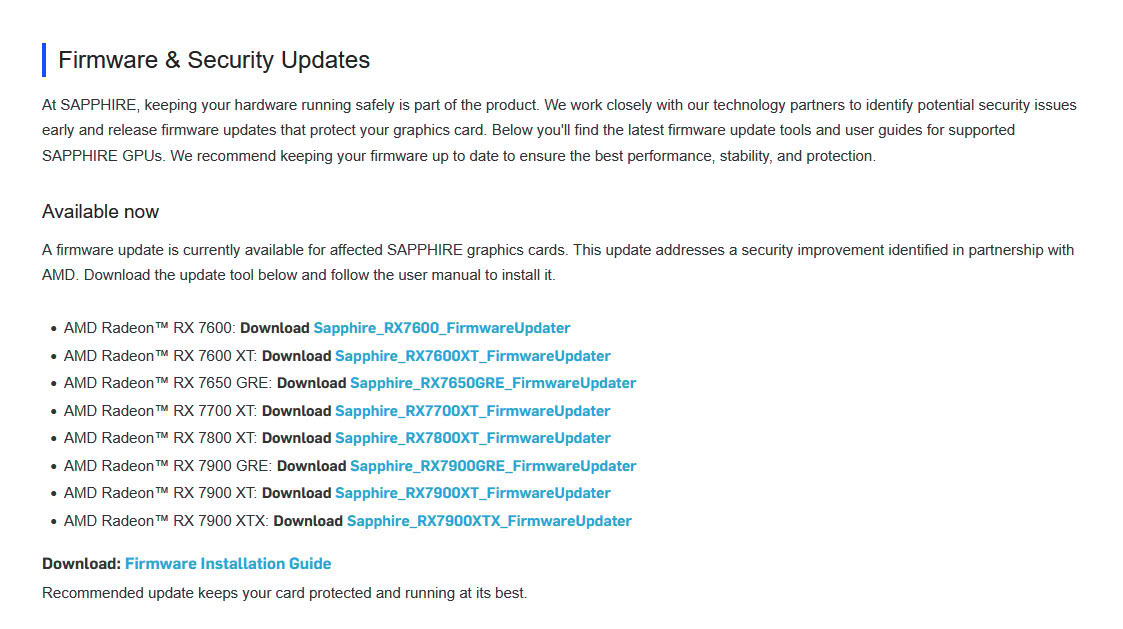
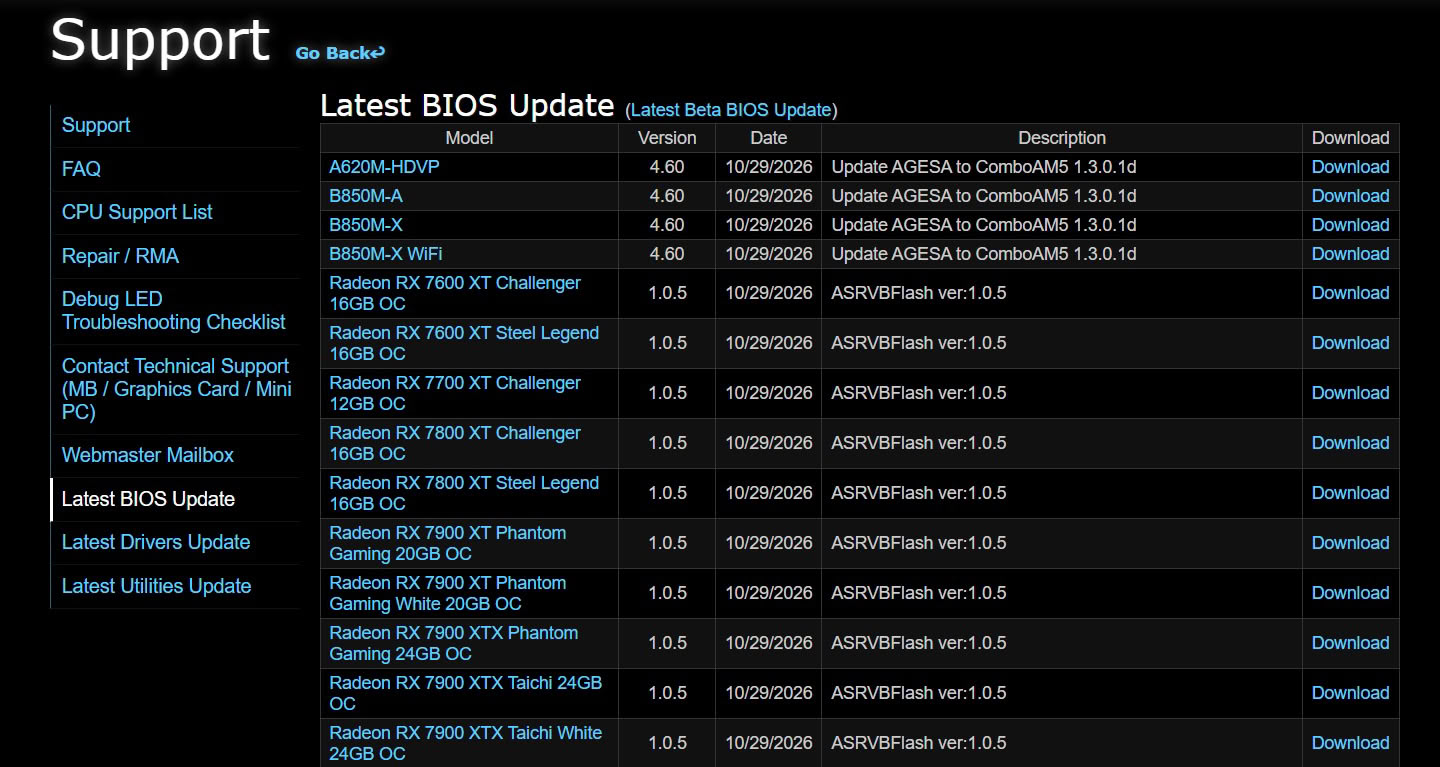
ASRock has posted vBIOS updates for ten of its Radeon RX 7000 series graphics cards, joining Sapphire and GIGABYTE. The new firmware, version 1.0.5, went up on ASRock's support pages on October 29 and covers the RX 7600 XT Challenger and Steel Legend, RX 7700 XT Challenger, RX 7800 XT Challenger and Steel Legend, RX 7900 XT Phantom Gaming (including the White version), and the RX 7900 XTX Phantom Gaming and Taichi, along with the Taichi White. The files are flashed through ASRock's ASRVBFlash tool on Windows. Owners of these ASRock cards are advised to check the vBIOS section of their specific model's support page before flashing.

ASRock doesn't say what the update actually changes, as the description field only lists the flash utility version. However, the timing points to the same RDNA 3 security fix that Sapphire began offering in early October. GIGABYTE later tied its own files to the AMD-SN-6023 identifier, and AMD confirmed the updates address potential security vulnerabilities, adding that it has no reports of them being exploited. AMD still hasn't published the bulletin itself, so the details remain unknown. Interestingly, ASRock's own download page still carries its standard warning that it does not recommend updating the vBIOS if the card is already running normally, which reads a little odd next to AMD's advice to update as soon as firmware is available.

Anthropic Bans AI Game Clones and Reverse Engineering With Claude

AI game cloning, reverse-engineering, and decompiling have all become increasingly popular of late, with a cottage industry of gaming projects popping up almost overnight, including everything from controversial Fortnite and Fallout clones to fan-made console ports. Now, it seems as though Anthropic may have had enough of the bad press and potential pressure from gaming industry giants, with some users reporting (via Tom's Hardware) that Claude will no longer recreate game mechanics or existing games.

One X user flagged a new rule in Claude that could potentially be the source of the restriction, which states "Do build original games, games in a genre, and games from the user's own designs and assets. Don't build a recreation of a specific existing game, even if it is renamed or called original." While the intention with the new rule may have been to prevent copyright infringement and potential legal implications for Anthropic, it seems as though it has resulted in a flurry of new issues on the Claude GitHub, with reports including claims that Claude is refusing to clone a developer's own work from earlier in a project for a similar mechanic in a latter part of the game.

AMD Radeon RX 9070 GRE Hits 3.9 GHz OC, But Only with a Custom DirectX 9 Workload

AMD's Radeon RX 9070 GRE graphics card, initially designed for customers in China and later sold in more markets, has officially reached a frequency of 3.9 GHz. TechPowerUp Forum user "ShrimpBrime" created custom tools for Radeon GPUs called "R-Team OC" and "GPU Frequency Generator." Using the stock XFX Radeon RX 9070 GRE Swift GPU without any VBIOS modifications, specialized cooling, or other hardware changes, the overclock was stable for some time. However, the driver crashed and recovered shortly after the screenshots were taken. Utilizing the custom-developed RTOC tool for Radeon tuning and monitoring, the GPU was loaded with regular triangles in DirectX 9 instead of a demanding 3D title, meaning that this OC is not applicable in real-world testing, but serves as a proof of concept.

Using a customized GPU frequency generator built in DirectX 9, the GPU rendered a simple scene containing 2,048 triangles per draw call and 2,048 draw calls per frame, totaling 4,194,304 triangles. This is light work for modern graphics cards but just enough to maintain a high frequency. The developer says the 3.9 GHz reading was maintained under load rather than appearing as a momentary telemetry spike, while approximately 3.85 GHz was reproduced repeatedly, including with AMD's own Radeon Software overclocking controls. To verify the readings, ShrimpBrime compared GPU-Z and HWiNFO64 with telemetry gathered through AMD's ADL and ADLX interfaces. RTOC polls shared monitoring data every 2 ms, although fresh power-management telemetry reportedly arrives roughly every 15.5 ms.

Acer Predator Atlas 8 Debuts With Intel Arc G3 Extreme Starting at $1,299.99

Acer and Intel showed off the Predator Atlas 8 gaming handheld, powered by the new Intel Arc G3 APUs, at Computex in June 2026, and while it was speculated that the new handhelds would not be cheap, given the specs and expected performance, it seems less and less likely that there will be even a single Acer Predator Atlas 8 priced at under $1,000.

Acer recently updated its Predator Atlas 8 product page in the UK in order to allow users to "register their interest," and the OEM handily included prices for the various different Atlas 8 models on the page, giving us an idea of what to expect for the rest of the world as well. The cheapest version of Acer's Predator Atlas 8 gaming handheld will cost £999.99, which converts to $1,346, although it's likely that pricing will be lower in the US. The Acer Predator Atlas 8 is slated to release "this autumn," suggesting a release window sometime between September and December.

Update Oct 31st: Acer has officially listed the Predator Atlas 8 for $1,299.99 at Best Buy, and the only available configuration at the time of update is the Intel Arc G3 Extreme-powered variant with a 512 GB SSD and 24 GB of memory—a variant not previously listed on Acer's product page and likely introduced to bring the price down, given the ever-increasing cost of SSDs. It's unclear when the Arc G3 versions with less memory will be available.

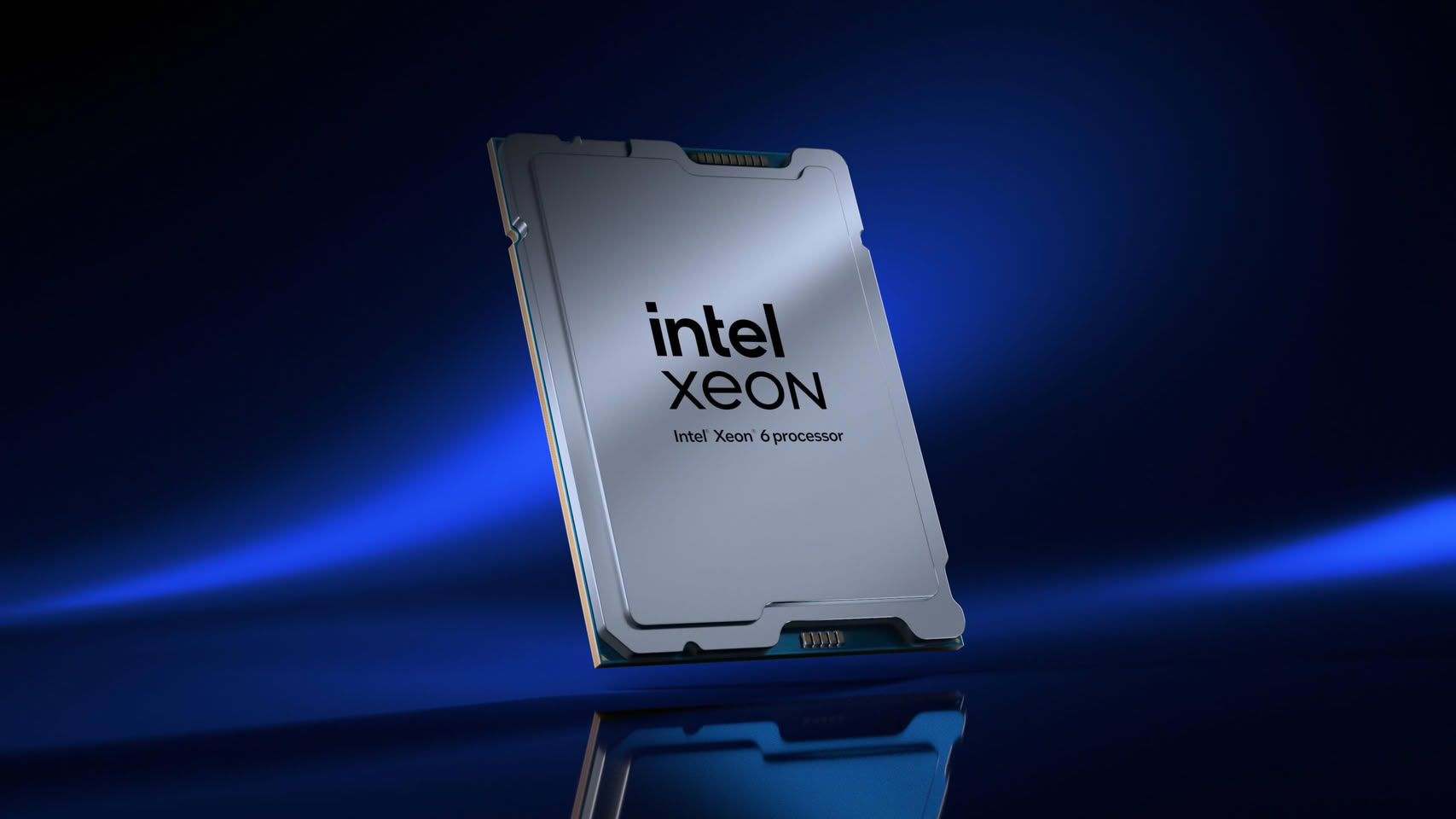
Intel Diverts 18A Capacity From Panther Lake to Meet Xeon Demand

Intel is moving some manufacturing capacity away from consumer chips to keep up with demand for its Xeon server processors. During its Q3 2026 earnings call, the company said it will convert some Intel 18A resources at its Oregon facilities to Intel 3, the node behind Xeon 6 "Granite Rapids." According to CFO Dave Zinsner, those 18A wafers "are generally going to build Panther Lake products." Zinsner also indicated that weaker PC demand gives Intel room to make the switch, as the company expects the PC slowdown to last at least through the first half of next year. CEO Lip-Bu Tan said the added Intel 3 capacity should be in production in the second half of 2027.
Intel CEO Lip-Bu TanThe industry continues to navigate one of the most significant supply shortages in the history, driven by the unprecedented demand for Super Intelligence. Against this backdrop, I am pleased by the progress we made growing our server supply in Q3. I'm mindful about the ongoing challenges we face in the future quarters to keep pace with the server demand.

Apple Takes Back the Top Spot From NVIDIA After Rough Day for AI Stocks

Apple is once again the world's most valuable company, taking the top spot back from NVIDIA after Friday's trading session. Apple shares slipped 1.2% on October 30, leaving it with a market cap of $5.03 trillion, while NVIDIA dropped 4.2% to close at $4.93 trillion. This is the first time Apple has been ahead since it briefly overtook NVIDIA in late July. For context, NVIDIA became the first company to cross $5 trillion almost exactly a year ago, in October 2025. Friday's sell-off came after a run of tech earnings that disappointed investors, with Intel and Amazon following earlier reports from Alphabet and Meta. Intel's stock fell roughly 29% on Friday after a weak Q4 outlook, which CNBC called its worst day since the 1970s.

It looks like the bigger concern is whether the huge spending on AI data centers will pay off, and NVIDIA, as the main supplier of AI GPUs, is directly tied to those budgets. The outlays have grown large enough that Alphabet and Amazon have seen their free cash flow turn negative, pushing them toward debt markets for funding. Apple, meanwhile, has largely stayed out of the AI infrastructure race and kept its capital spending in check. Its shares are up 27% this year, more than twice NVIDIA's gain, and its free cash flow for fiscal 2026 (ended September 30) is projected to climb 38% to $142 billion. The gap between the two is only about $100 billion, though, so the ranking could easily flip back with one good day for NVIDIA.

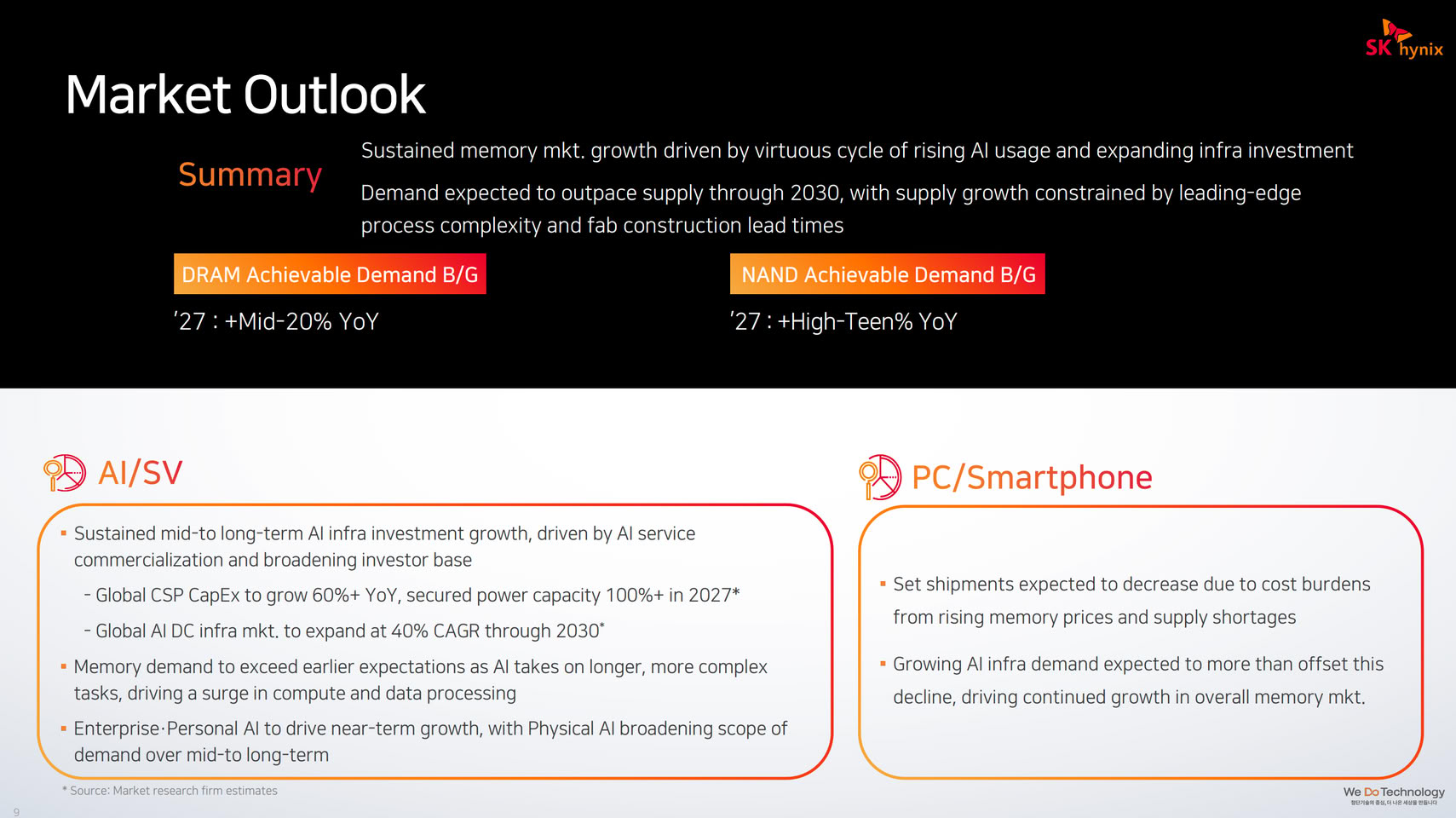
OpenAI CEO Argues Home PCs Waste the World's Limited DRAM Supply

OpenAI CEO Sam Altman thinks the DRAM sitting inside personal computers would be better used in data centers. He made the comments on the Cheeky Pint podcast, hosted by Stripe co-founder John Collison, in an episode released on October 29. The two were discussing the memory supply chain when the topic turned to local inference, meaning running AI models on your own hardware instead of the cloud. Here's what Altman said, at roughly the 29-minute mark:
Sam Altman, OpenAI CEOA lot of people want local inference. And somehow, they assume that the problem is solved now. Because, we are going to have open-source models. We're going to be able to run them on our computers. And so we're not going to need all the stuff in the data center. But from a global allocation perspective, actually, it's quite terrible to have everybody have a bunch of the world's limited supply of DRAM sitting in their own computer. And, being used 5% of the time. You want maximum utilization in the cloud if you're trying to deal with this very supply constrained environment. And somehow everyone's... many people's intuition is the opposite of that.
Friday, October 30th 2026

Today's Reviews

Cases
CPU Coolers
Desktop PC
Game Controllers
Gaming PC
Graphics Cards
Keyboards
Monitors
Mouse
PSUs
Sound Cards
SSD
UPERFECT GR14BU Review - A Touch-Enabled OLED for the Road

UPERFECT GR14BU Review - A Touch-Enabled OLED for the Road

The UPERFECT GR14BU packs a bright 14-inch 2880x1800 OLED panel with a 120 Hz refresh rate and 10-point touch into a 590-gram aluminum chassis with a built-in kickstand. It's sharp, slim, and very practical, but not without its quirks. Will this portable panel spark your interest, or fizzle out under a closer look?
Ocypus lota P1000 Review

Ocypus lota P1000 Review

Ocypus Iota P1000 brings native ATX 3.1 support, a 600 W 12V-2x6 cable, and impressively quiet operation for a 1000 W PSU. Its high-end internals and strong ripple control make it a compelling budget pick, even if cable losses and minor-rail tuning keep it from being perfect.

Phantom Blade Zero Draws 700,000+ Steam Players Within 24 Hours of Launch

Phantom Blade Zero launched on Steam on October 29, 2026, and within 9 hours of launch had already cracked 500,000 concurrent players on Steam, according to SteamDB, with that number continuing to rise until it hit 723,876 around 12 hours after the game's launch before declining and rocketing up to its current record of 731,026 peak concurrent players. The game appears to be going through rather dramatic player count swings, dropping to around 110,000 concurrent players every 12 hours, suggesting that it is highly popular in certain regions.

This success, which rivals some of the best free-to-play games, is despite the game having a nearly AAA price of $59.99. Its popularity has also put Phantom Blade Zero in first place in Steam's global top sellers list, but the aforementioned fluctuations put it at just fourth place in SteamDB's list of top daily active users. It's also worth noting that these figures are only representative of Phantom Blade Zero's Steam player base, and the game also launched on PlayStation 5 and Epic Games. Phantom Blade Zero has also had a successful start when it comes to reviews, scoring a Very Positive rating on Steam, with 84% of its 27,209 reviews on the platform praising the game. It's also entirely possible that we will see the Steam player count figures rise as the game enters its first weekend after launch.

Intel Data Center Revenue Jumps 78%, but Weak Q4 Guidance Drags Stock Down 30%

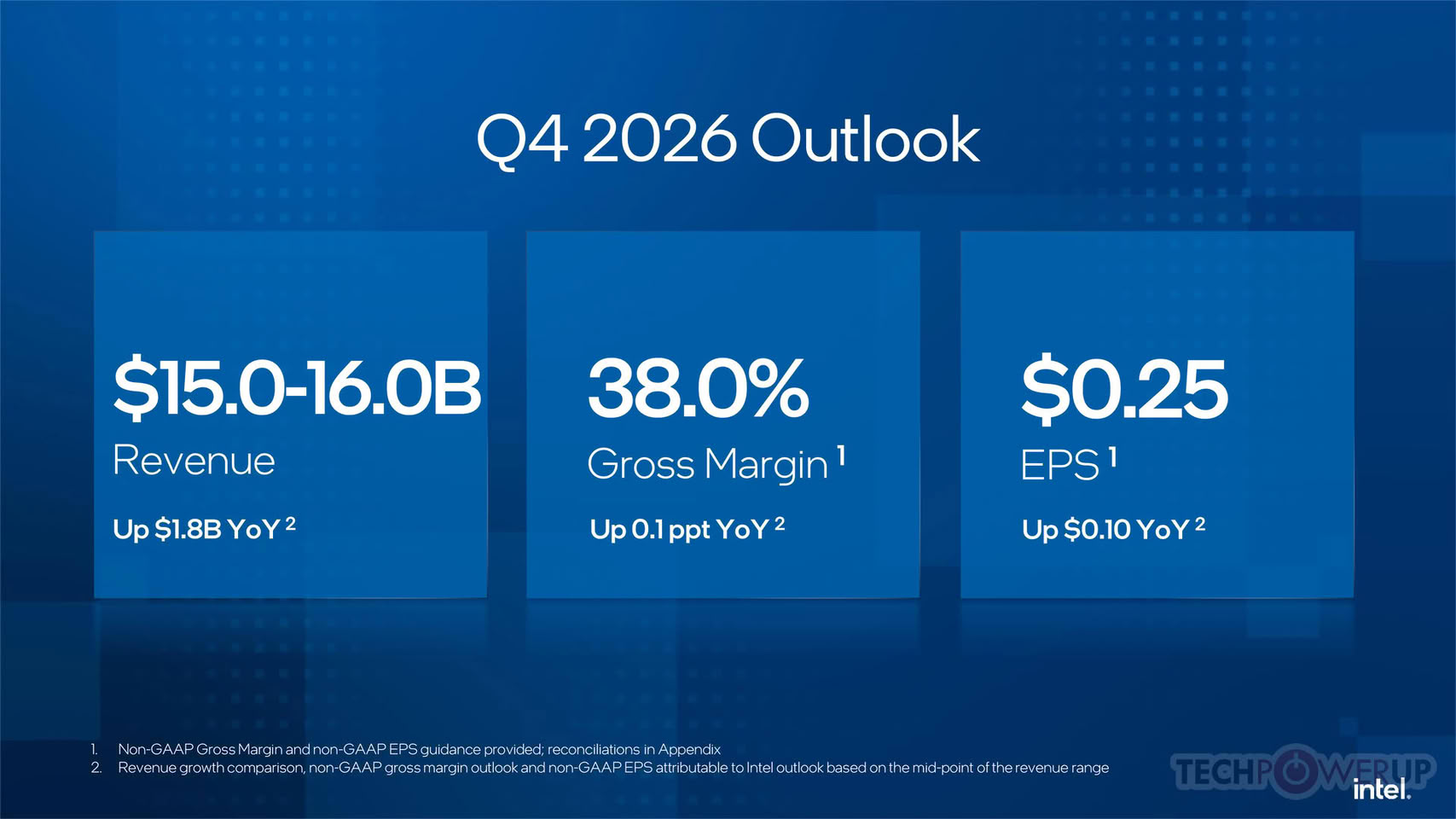
Intel shares fell roughly 29% on Friday to $65.76 after the company's fourth-quarter outlook came in well below Wall Street expectations. According to CNBC, it was the stock's worst day since the 1970s. Intel had closed at $92.07 on Thursday, right before it posted its third-quarter 2026 results. Oddly enough, the quarter itself was a good one. Revenue came in at $16.5 billion, up 21% year over year, and adjusted EPS of $0.52 easily beat the roughly $0.40 analysts were expecting. Data Center and AI revenue jumped 78% to $7.3 billion, while the Client Computing Group slipped 5% to $8.1 billion.

Investors, however, were looking at Q4. Intel expects revenue between $15 billion and $16 billion, against a consensus of around $17 billion, with adjusted EPS of just $0.25. Non-GAAP gross margin is also expected to fall to about 38% from 44% in Q3. Part of the shortfall comes from a plant shutdown in Israel. CFO David Zinsner said Intel sees "the PC slowdown continuing at least through the first half of next year." On the earnings call, the company said it expects the PC market to shrink by about 12% in units this year, and it reportedly sees another 10% decline in 2027.

Silent Hill Townfall Tops 42% Physical Revenue Share on PlayStation as Horror Grows on Steam

Silent Hill Townfall launched on Steam and PlayStation 5 in September, and despite the game having been cracked before its official release, it has apparently been a hit, with Alinea Analytics citing a total figure of over 404,000 sales in its first month on the market. On PlayStation alone, the game has earned $20.2 million in revenue, with as much as 42.8% of those sales being physical sales. PlayStation also accounted for 70.9% of the game's total revenue earned, with Steam and GOG accounting for the other 29.1% of sales. According to Alinea's data, Townfall also sold through all of its physical retail copies, suggesting that physical game demand exceeded the available stock.

[Editor's note: Our in-depth review of Silent Hill Townfall is live]

The horror genre also appears to be growing on Steam, with horror games on Steam having earned a whopping $1.3 billion in total for 2026 so far, already showing a 17% increase in revenue over 2025. 41% of that revenue came from games that launched in 2026, unsurprisingly, given that it was a stacked year that saw the release of Resident Evil Requiem, which accounted for $211.3 million in revenue alone for Valve's platform in 2026 so far. In late September, it was estimated that Resident Evil Requiem had topped $500 million in total revenue, and it also had a high physical revenue share, with disc sales representing around 30.8% of PlayStation's game sales.

Digital Extremes's Fantasy ARPG "Soulframe" Launches Into Free Open Alpha in November

Digital Extremes, the game studio behind Warframe, has been working on its latest game, Soulframe—an open-world, co-op fantasy action RPG with a strong focus on melee combat—for a number of years, with ongoing invite-only alpha testing having been live since 2023. Although it looked like the game was preparing to launch in some capacity over a year ago, Digital Extremes has waited until November 9 to launch the full-scale open alpha test of Soulframe. This means that the game will no longer require an invitation to play.

Digital Extremes announced the Opem Preludes along with the reveal of the upcoming Verse of the Veilands update, which introduces rideable wolf companions, which players can raise from pups, alongside new weapons and pacts, bosses, and the Veilands, described as a new "environmental world progression system." Soulframe features crafting, weapon progression, story-driven quests, and highly customizable combat and skills.

Fujifilm to Increase Production Capacity by 5x for Magnetic Data Storage Tape

FUJIFILM Corporation will invest approximately 10 billion yen at its Kanagawa Factory, Odawara Site, to increase its production capacity for data storage magnetic tape by approximately five times. The investment will strengthen Fujifilm's stable supply system for magnetic tape in response to growing data archiving demand accompanying the spread of generative AI. This investment, to be made from fiscal 2026 through fiscal 2028, will be used to expand manufacturing facilities and increase personnel to strengthen the production structure.

The rapid spread of generative AI and cloud services is driving exponential growth in the volume of data generated worldwide. As a result, establishing environments in which the enormous amounts of data accumulated through AI training and inference as well as the digitalization of business activities can be stored and utilized securely and efficiently is becoming increasingly important in supporting the digital society. Magnetic tape can store large volumes of data over long periods at low cost and can also be physically isolated from networks.

Intel Nova Lake-S Promises Up To 17% Single-Thread and 20% Gaming Performance Improvements

A lot of information relating to Intel Nova Lake-S has emerged leading up to the official launch in early 2027, including official information from Intel detailing the Nova Lake architecture and a recent benchmark leak that promised significant single-thread performance improvements on a 28-core Nova Lake-S part. However, a recent leak out of @Haze2K1 on X, shared by VideoCardz, purports that the real-world performance improvements for Intel's Nova Lake desktop CPUs are in the double digit range.

While the leaker has been around for a while, there is no guarantee that this information is accurate, since the only cited source is "circulating chatter," however, the claim is that Intel's Nova Lake will outperform comparable last-generation Arrow Lake CPUs by 8-17% in raw single-thread performance, 15% in general-purpose workloads, and up to 20% in gaming. There is some nuance to these claims, with the 17% improvement figure exclusive to the higher-end CPUs that feature bLLC, while the 17% boost allegedly comes from the implementation of Intel's new Advanced Performance Extensions.

HP Introduces Series 3 Pro 34-inch 120Hz Ultrawide Professional Monitor with 90 W USB-C Power Delivery

HP has introduced the Series 3 Pro 334wp G2 to its monitor lineup, a 34-inch curved ultrawide model for office work. It features a VA panel with a 1500R curve, a WQHD (3440 x 1440) resolution, 120 Hz refresh rate, 3,500:1 contrast, and 300 nits of brightness. Using overdrive, the response time could reach 5 ms GtG. The monitor also works as a USB-C docking display, a single cable can carry video, data, and up to 90 W of power to a laptop. On the connectivity side, it has three USB-A 5 Gbps, one USB-C 5 Gbps with DisplayPort 1.2 Alt Mode, a USB-B upstream, one DisplayPort 1.2, one HDMI 2.0 and an audio jack. HP also added two 5 W speakers in case you need them. There's no webcam or HDR support, and the color gamut is a bit modest, just 85% NTSC coverage. With that color gamut, image or video retouching/editing is possible but not recommended, stick to documents and spreadsheets.

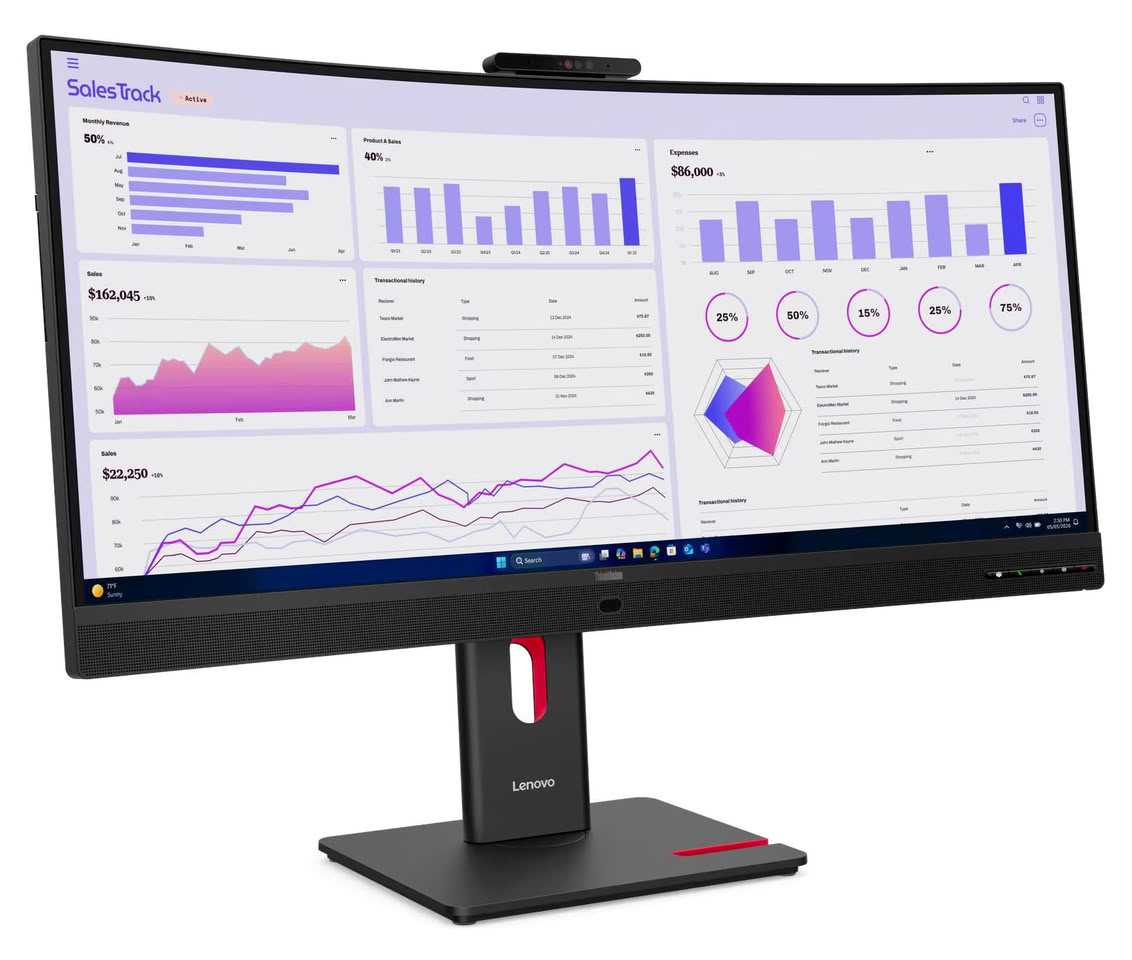
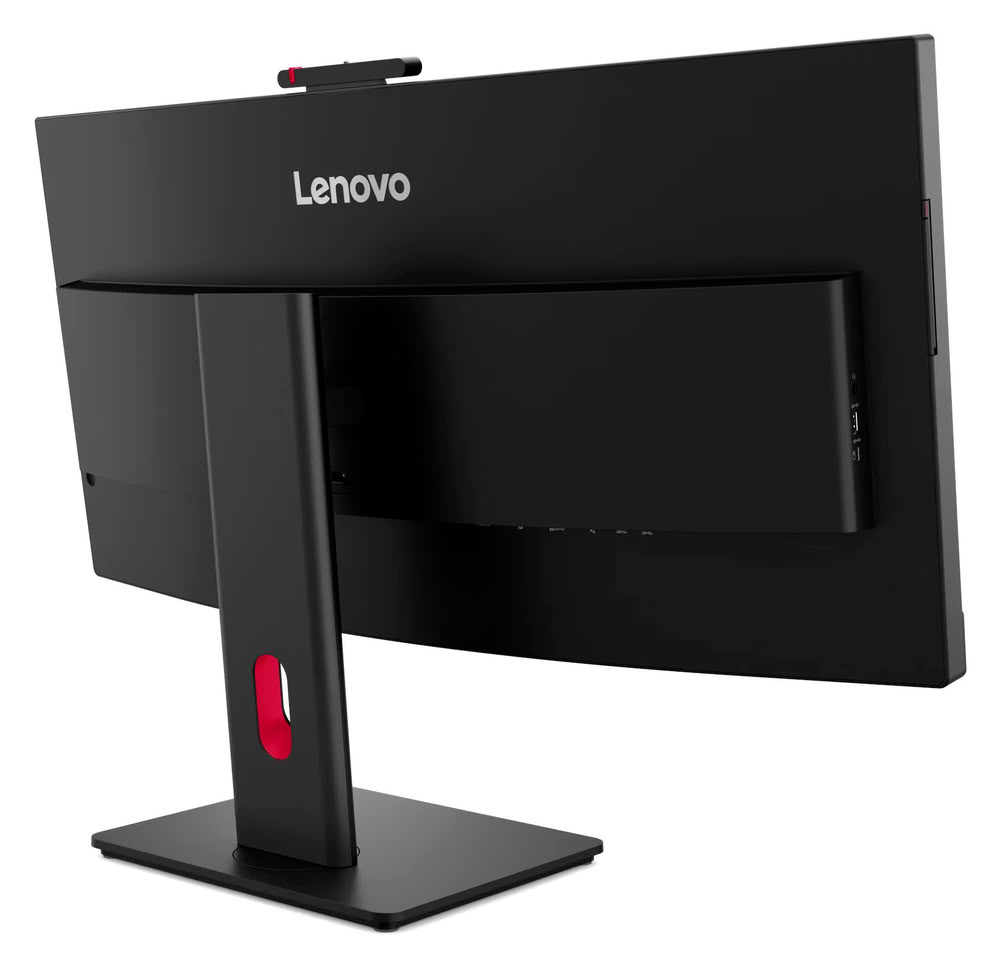
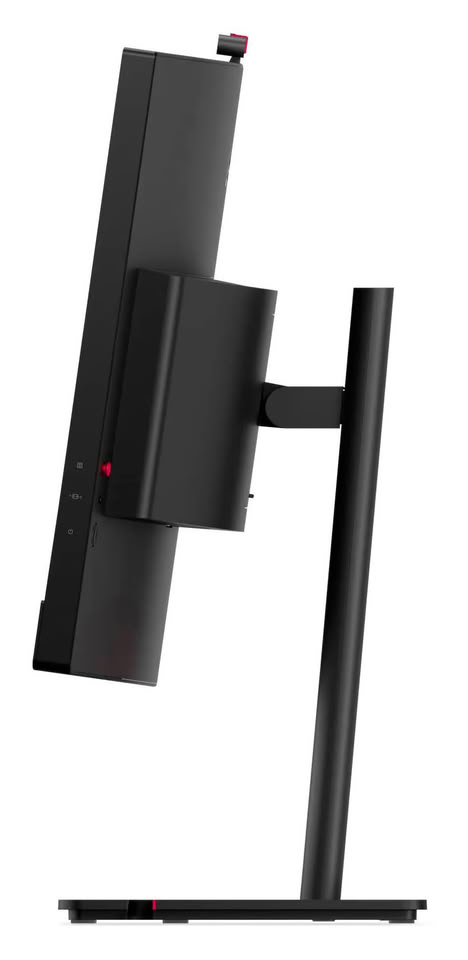
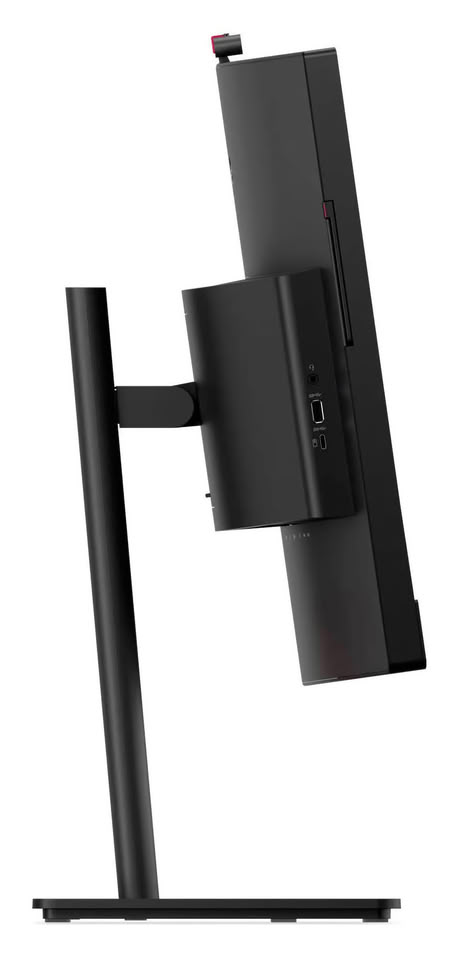
The HP Series 3 Pro 334wp G2 is priced at $329 in the U.S. and comes with a three-year warranty. For comparison, another 34-inch ultrawide docking monitor that just launched, the Lenovo ThinkVision T34WD-4v, is priced higher at €599. However, that model adds a built-in camera, wider color coverage, an ambient light sensor, and Gigabit Ethernet, to name a few.

AMD Reportedly Plans Another Radeon GPU and GDDR6 Kit Price Hike for November

AMD is reportedly getting ready to raise prices on its Radeon GPU and GDDR6 memory kits again in November. According to a new post from Board Channels, the increase would follow an earlier adjustment in October, when AMD apparently started charging its board partners more for GDDR6 from October 1. The exact scope of the November hike isn't known yet. The main reason seems to be memory, since GDDR6 prices reportedly went up by around 8 to 10% in the third quarter. Board Channels also claims AMD now reviews its kit pricing every quarter to keep up with rising GPU and memory costs. AMD sells its GPUs to add-in board partners bundled with memory, so any increase there usually ends up in the price of the finished card.

This would add to a long list of reported increases this year. A 10% hike on Radeon GPU kits was reported for July, another 10% increase across GPUs, chipsets, and possibly CPUs followed in September, and AMD's suggested Radeon prices in China went up in early October. Retail prices are already moving, too. According to Hardware Unboxed's latest pricing survey, cited by Videocardz, the RX 9060 XT 16 GB costs 17% more than it did in September, while the RX 9070 and RX 9070 XT are up 12%. Of course, AMD hasn't officially confirmed any of this. How much the November change affects store prices will depend on board partner pricing and existing inventory, so buyers who were already planning on a Radeon RX 9000 card might want to buy sooner rather than later.

Mchose Launches Updated Ace68 V2 HE Keyboard as $69 Wooting 60HE Alternative

Mchose has officially updated its Ace68, its fan-favorite affordable alternative to the Wooting 60HE. The Ace68 V2 features the same 68-key layout and 60HE-inspired design—replete with a strap and an angled front edge—as the old Ace68, but there are a few additions that make the Ace68 V2 stand out. For one, there is now a dedicated hardware rapid trigger button on the back edge, making it much easier to switch between different tasks, like gaming and work or between different games where different rapid trigger configurations may be beneficial. In addition to the functional changes, there is also a new metal strip along the edge for a bit of visual flavor.

The Mchose hasn't specified a case material for the Ace68 V2, but the weight and price suggest it has a plastic bottom case, although it lacks the flip-out feet of its predecessor. The Ace68 V2 comes in white, black, or pink, with each featuring matching frosted translucent PC keycaps. The pink and white versions are available with Star Ring or Royal Steed magnetic switches, while the black keyboard is restricted to the Royal Steeds. Both switches are linear, but the Star Ring features a box stem and 33 gf actuation force, while the Royal Steed has a cylindrical stem with 35 gf actuation force. The switches are fitted in an aluminium switch plate that is mounted in a tray-mount configuration.

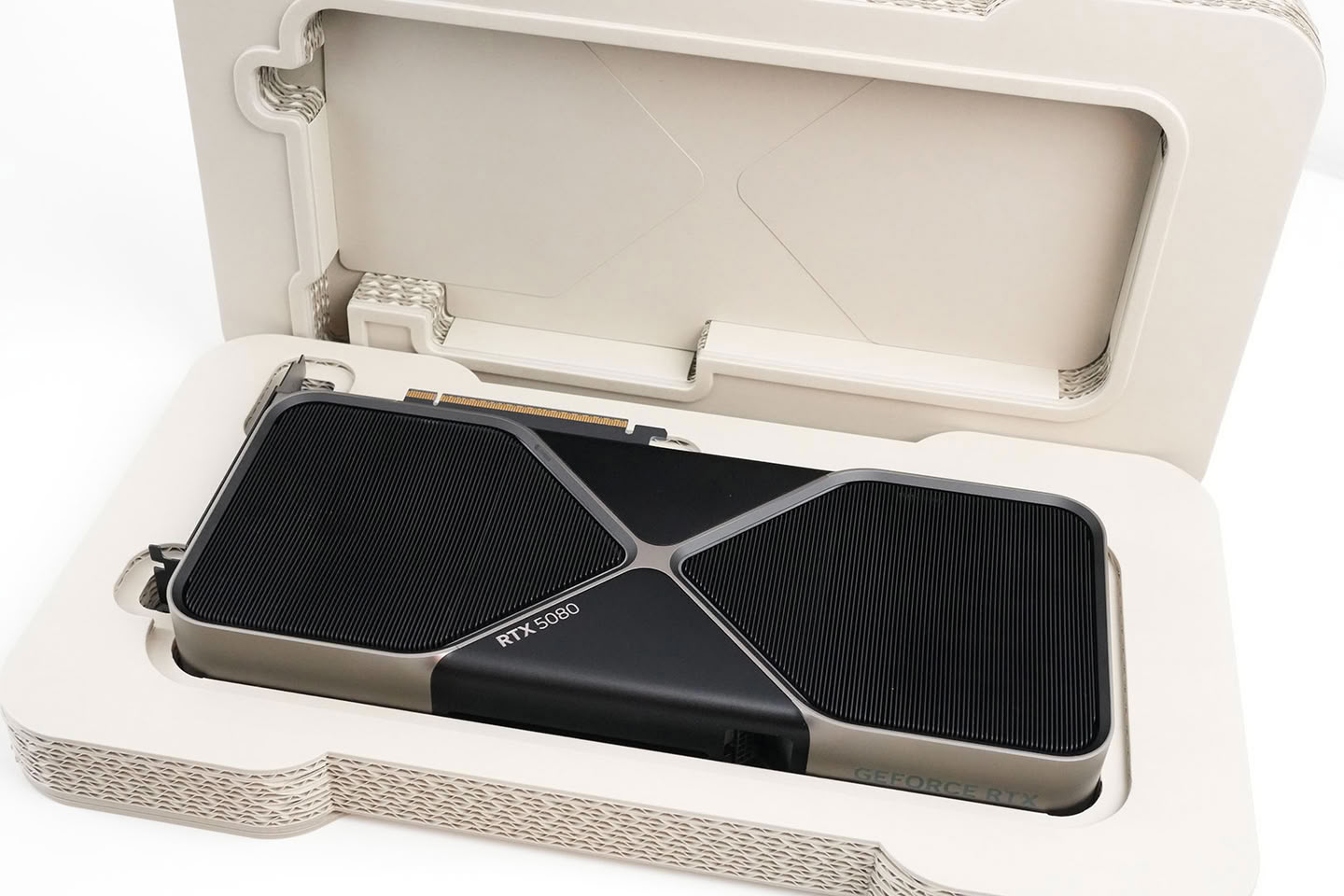
RTX 5080 Vanishes From NVIDIA's US Marketplace Two Weeks After the RTX 5090

NVIDIA's US Marketplace no longer lists the GeForce RTX 5080. The GPU filter on the store's graphics card page now tops out at the RTX 5070 Ti, followed by the RTX 5070, RTX 5060 Ti, RTX 5060, and RTX 5050, with partner RTX 5080 models gone as well. The same thing happened to the RTX 5090 about two weeks ago and, barring a brief cameo at $5,599, the card still hasn't returned. NVIDIA has since denied that the RTX 5090 is discontinued, though it hasn't said anything about the RTX 5080 yet. Oddly enough, its RTX 5080 product page still says "Starting at $999."

The removal seems limited to the US for now. NVIDIA's UK Marketplace still has 13 RTX 5080 listings and two RTX 5090 cards. Of course, a missing listing could simply mean there's no stock left, since the RTX 5080 already costs close to $2,000 at US retailers, roughly double its MSRP. That leaves the RTX 5070 Ti as the fastest card on NVIDIA's US store, and it isn't cheap either. The seven listings there range from $1,269.99 to $1,499.99, well above its $749 launch price.

AutoFull Unveils the C3 Pro Gaming Chair Series

AutoFull, a leading esports peripherals brand, today announced the launch of the C3 Pro Series, a new line of gaming chairs designed for a new generation of gamers. Guided by the idea of "The Gaming Chair to Start With," the series combines distinctive gaming aesthetics with adjustable lumbar support and a choice of configurations to suit different comfort needs and preferences.

The C3 Pro Series features two models: C3 Pro Standard and C3 Pro Advanced. While the Standard focuses on essential lumbar support for everyday gaming, the Advanced adds active seat ventilation and heating, a larger upgraded seat, and a retractable footrest for a more feature-rich comfort experience.

Intel Fab 28 Shutdown to Cost $600 Million in Lost Revenue, Production to Restart Soon

Intel's global foundry operations are crucial to the company's revenue generation, and impacting any part of the supply chain directly harms the business. When explosions occurred at Fab 28 in Kiryat Gat, Israel, Intel's operations there briefly halted 10 nm node production for two weeks. During this time, the assessment of both equipment and production output is estimated to result in about $300 million of lost revenue in the upcoming Q4 2026, as well as another $300 million in Q1 2027. Just two weeks of downtime has destroyed a massive amount of 10 nm wafers that Fab 28 has been manufacturing.
Intel CFO David ZinsnerWe have been shut down for about two weeks. We feel like we are going to be starting up production here by the end of this week. While we are doing that, we are trying to assess all the wafers that are in the line and what is usable and what is not usable from those materials. This is somewhat of an early assessment, both really of 4Q and of 1Q. But I think the current thinking is that we will have about a $300 million impact to the fourth quarter. That is likely to be similar in the first quarter.
BrainChip Launches AKD1500 Raspberry Pi 5 Development Kit

BrainChip Holdings Ltd (ASX: BRN, OTCQX: BRCHF, ADR: BCHPY), a global leader in ultra-low-power, fully digital, event-based neuromorphic AI, today launched the AKD1500 Raspberry Pi 5 Development Kit. The kit pairs a Raspberry Pi 5 with BrainChip's AKD1500 M.2 board, giving the millions of engineers, makers and product teams who already build on Raspberry Pi an off-the-shelf way to develop low-power, always-on AI applications - and a clear path to production on the same AKD1500 chip.
Brian Beyer, CEO, Hellbender"As an American Tier 1 for physical AI, Hellbender looks for edge technologies that can move cleanly from prototype to production. BrainChip's AKD1500 Raspberry Pi 5 kit makes it easy for engineering teams to evaluate low-power, always-on AI on familiar hardware, and we see it as a promising option for the robotics and vision applications our customers are building."

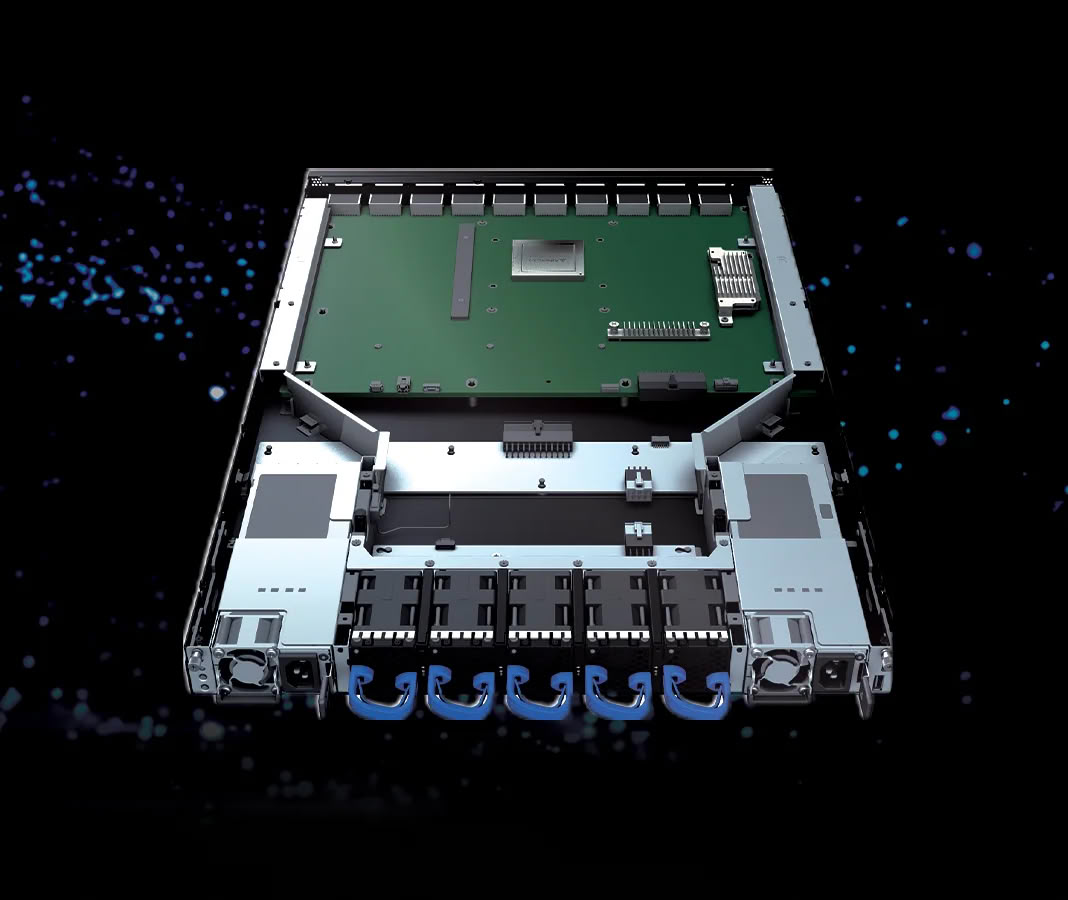
GIGABYTE Advances Local AI Infrastructure with WRX90 AI TOP Motherboard

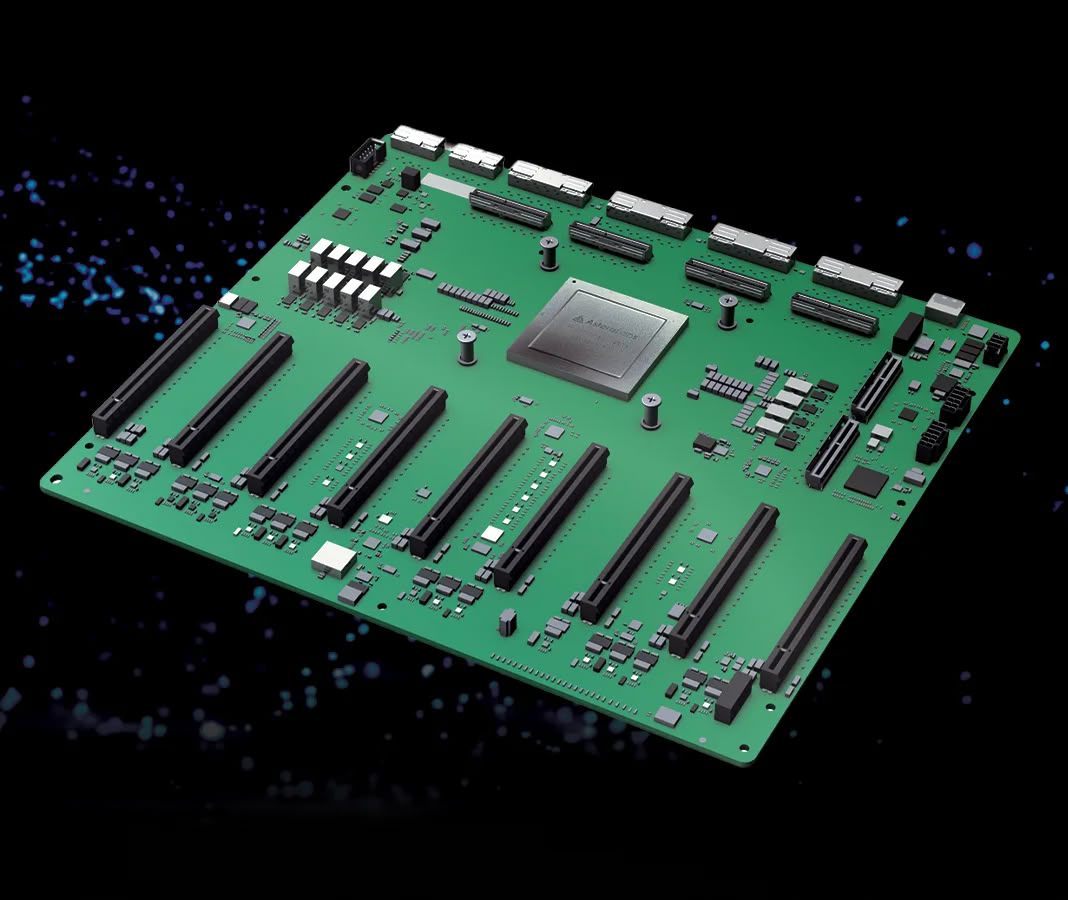
GIGABYTE, a global leader in high-performance computer hardware, today announced the WRX90 AI TOP workstation motherboard, supporting AMD Ryzen Threadripper PRO series processors. Engineered specifically for local AI workloads and intensive computing, the motherboard features multi-GPU PCIe 5.0 expansion slots, high-capacity ECC memory support, and enterprise-grade BMC remote management. It provides a robust, highly extensible hardware foundation for professionals to deploy dedicated local AI platforms and manage model development on-premises.

Scale Up for AI Development
To support evolving AI applications, the WRX90 AI TOP allows organizations to configure and expand their hardware as computational workloads grow. Equipped with seven PCIe 5.0 x16 slots and two MCIO 8i connectors, the motherboard offers extensive bandwidth capable of supporting up to nine GPU devices through compatible expansion hardware. Complementing this expansion capacity, eight-channel DDR5 memory support accommodates up to 2 TB of ECC RDIMM for large datasets and memory-intensive applications. The inclusion of Error-Correcting Code (ECC) memory automatically detects and corrects data corruption, ensuring data integrity during prolonged AI computing sessions.

Evercade Nexus Handheld Console Now Available

Blaze Entertainment is proud to announce that the Evercade Nexus, the newest retro gaming handheld console from Evercade, is now available on Amazon, Funstock, Best Buy and GameStop, as well as other Evercade retailers across Europe and the US. Evercade continues to champion physical cartridges as the medium to relive the classic gaming experience. Buyers will receive RARE's 64-bit classic titles BANJO-KAZOOIE and BANJO-TOOIE with the console.
Andrew Byatt, CEO Blaze Entertainment LtdThe Evercade Nexus has arrived, marking a huge moment for us and an exciting new chapter for Evercade. We've spent years building a platform that celebrates great games, and Nexus takes that vision further than ever before. To launch with legendary names like Banjo-Kazooie and DOOM, alongside hundreds of games available on physical cartridges, is a fantastic achievement for the team. Nexus brings together everything we believe in: great games, physical ownership and the joy of discovering something new. We can't wait for players to experience it, and there's plenty more to come."

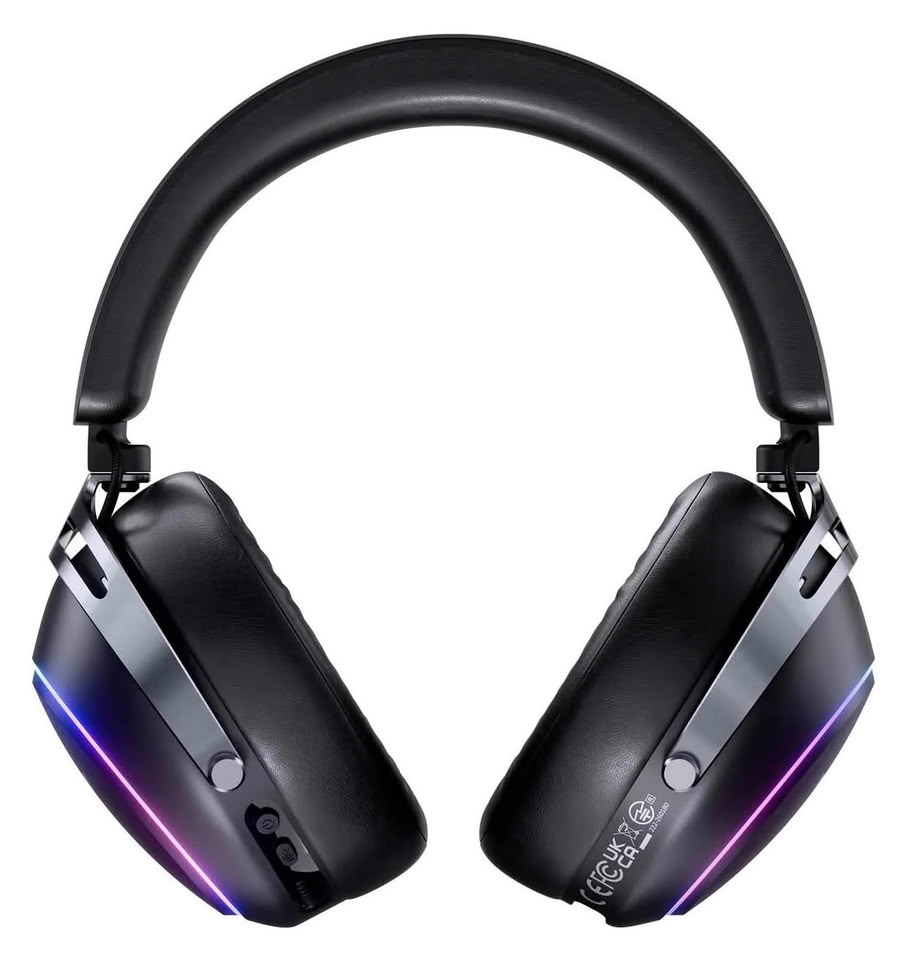
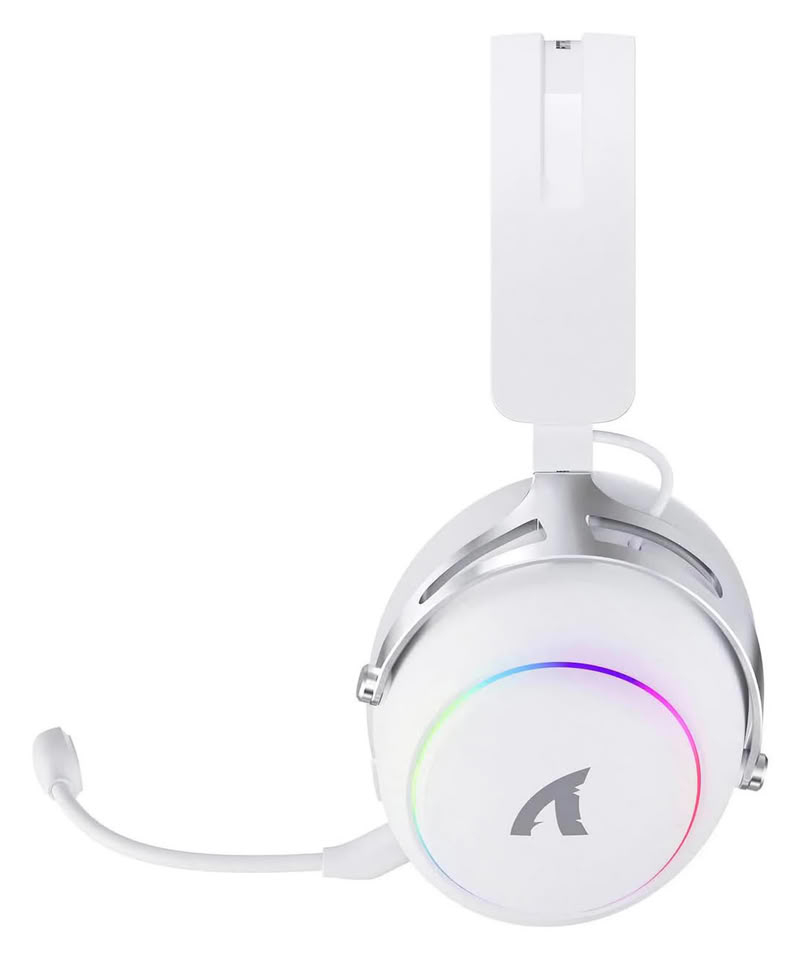
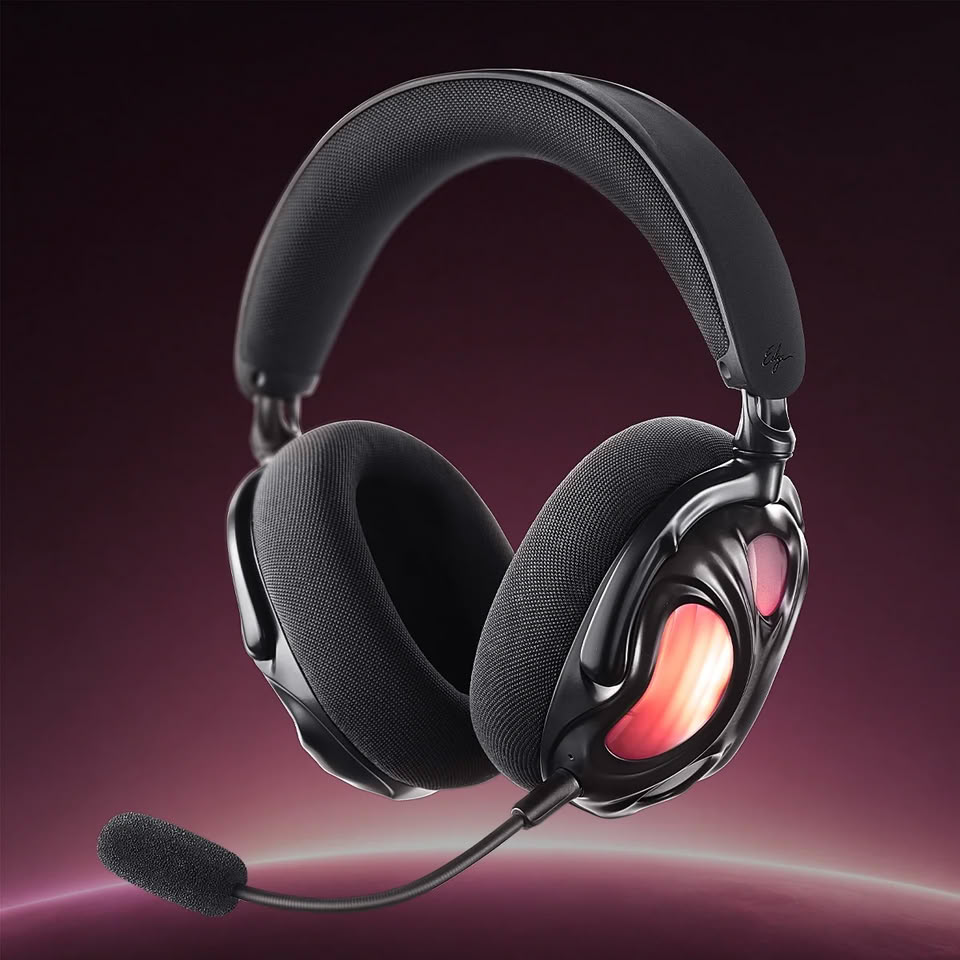
Attack Shark Unveils X60 Gaming Headset with RGB Wireless-Charging Dock

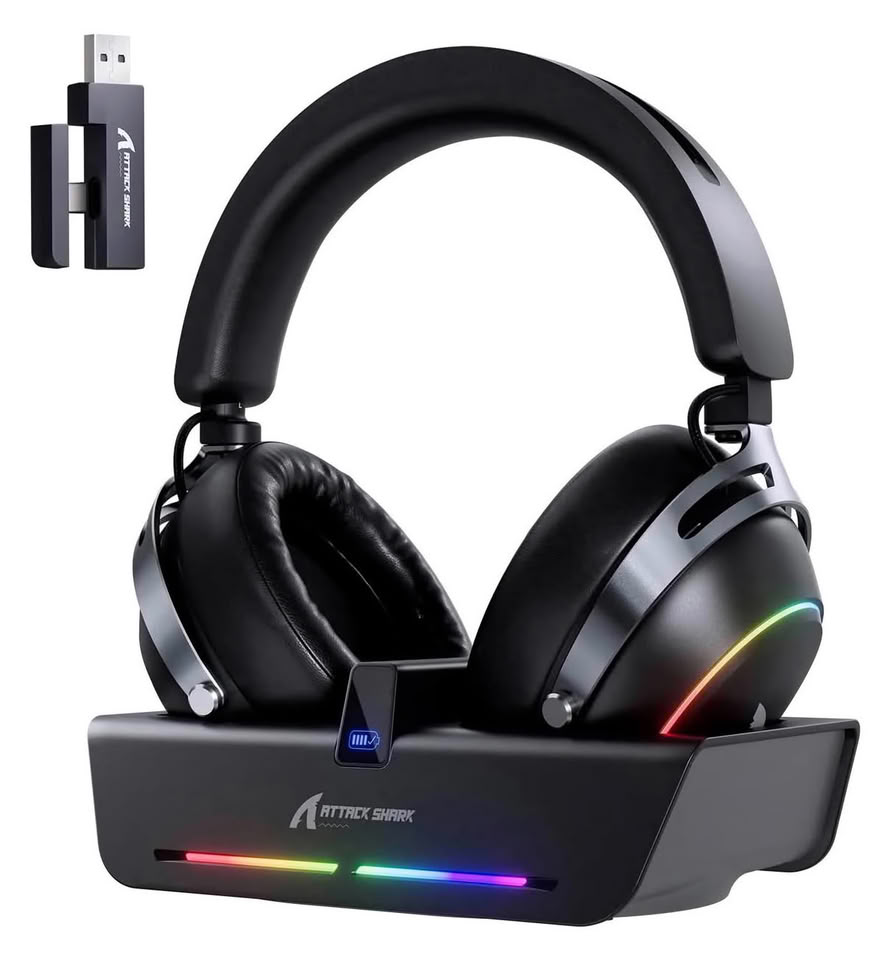
High-performance gaming peripheral brand ATTACK SHARK is set to introduce the X60 Gaming Headset, its latest premium audio offering built to meet the demands of competitive gamers and multi-device users. The headset combines advanced acoustic engineering, ergonomic comfort, low-latency wireless performance, and an RGB-enabled charging dock with integrated hub functionality. It is a complete desktop audio solution built for FPS gaming, entertainment, and extended daily use.

Built for Competitive Audio Performance
The X60 features a 53 mm dynamic driver with a PEN nano-polymer diaphragm, a material widely used in professional audio equipment for its ability to reduce distortion and improve clarity. Combined with a large independent acoustic chamber and airflow-balancing technology, the design delivers precise sound reproduction with clear layering and accurate positional cues, helping players react faster in competitive gameplay. Premium Audio Quality—Experience rich, immersive sound with crisp footsteps, detailed in-game effects, and enhanced audio depth.

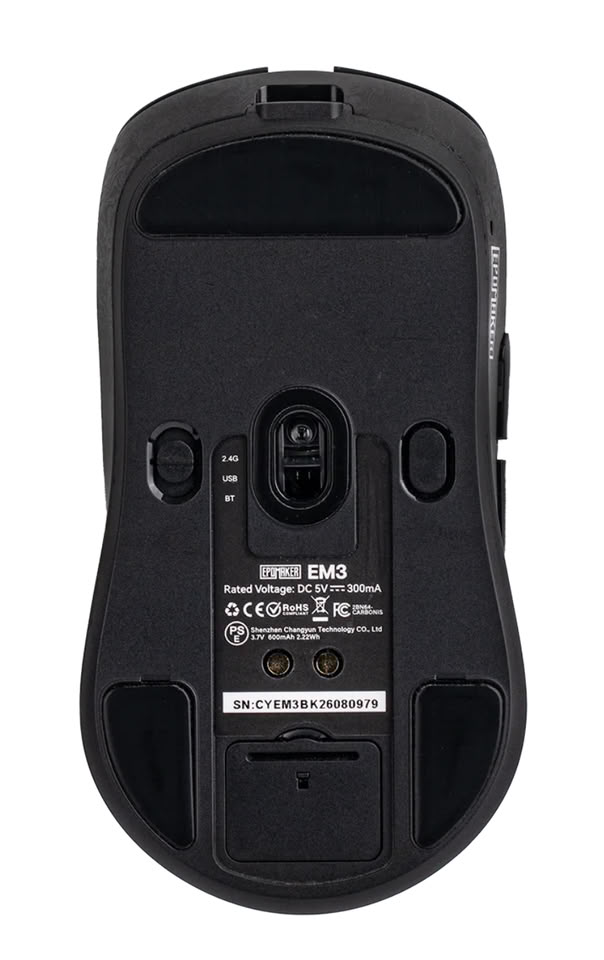
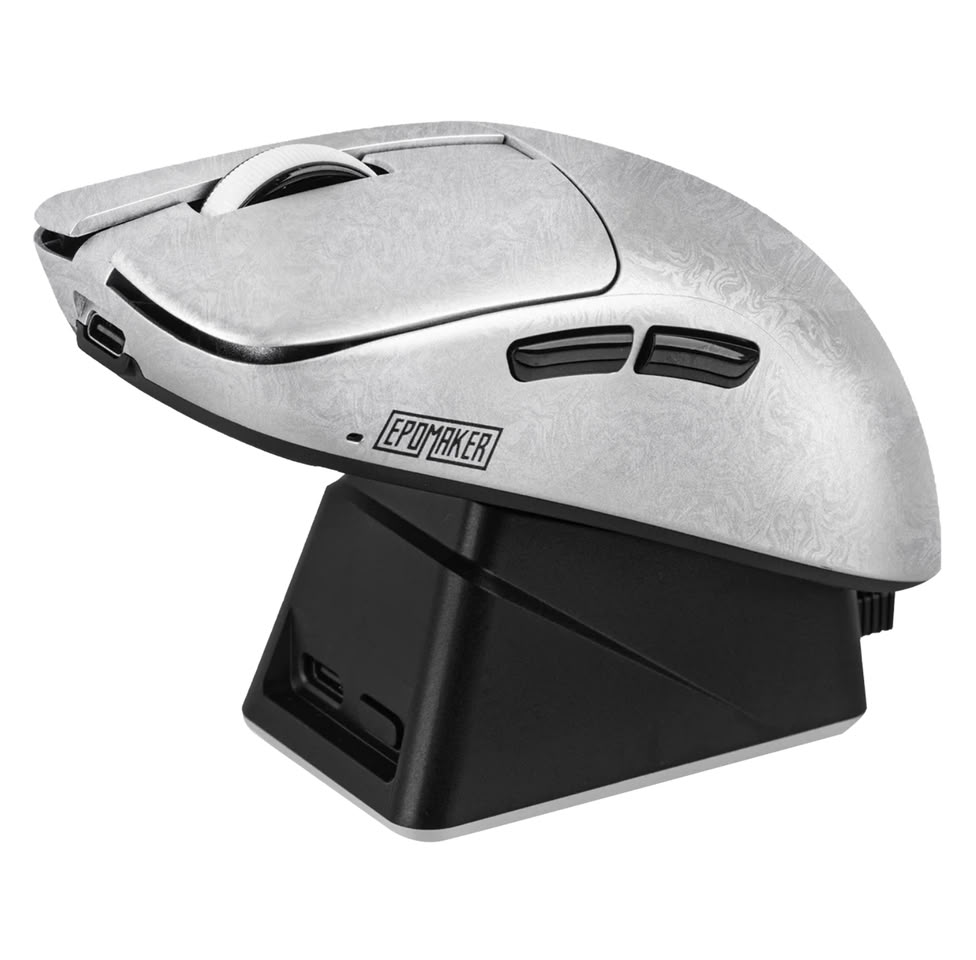
Epomaker Launches the EM3 Carbon-Fiber Composite Gaming Mouse

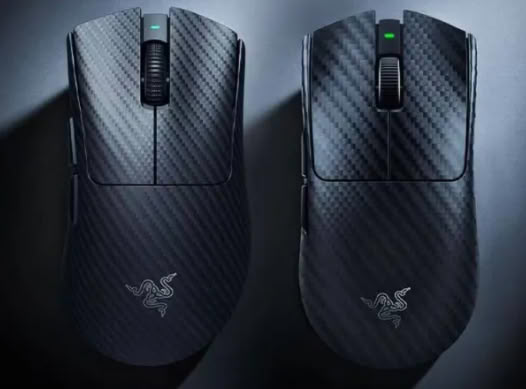
Built around the community's expectations for precise control, tactile quality, and convenient charging, the EM3 gaming mouse combines a lightweight body weighing about 56 g, a PAW3315 sensor, and up to a 1000 Hz polling rate with carbon-fiber-reinforced materials, flexible connectivity, and a magnetic charging dock. These elements bring gaming performance, refined feel, and everyday convenience into a single product.

Precision Tracking and Customization
The gaming mouse is powered by the PAW3315 sensor, supporting up to 16000 DPI for precise, consistent tracking. Polling rates of up to 1000 Hz are available in both wired and 2.4 GHz wireless modes, with four selectable levels available through the driver, giving the EM3 the responsiveness expected from a performance-focused gaming mouse. Further customization is available through the web-based Epomaker Hub and Epomaker Driver 3.0, where users can adjust functions including the Fire Key, button debounce, motion correction, and button response. For quick sensitivity changes, the physical DPI button also provides six DPI levels without the need to open the software.

EA Cancelled Mass Effect To Fund Star Wars: Battlefront 3

Not long after the news broke that EA was giving Mass Effect and BioWare the axe, it was revealed that LucasFilm was looking for a development partner for its next Star Wars: Battlefront game, ostensibly Battlefront 3. In that rumor, it was claimed that LucasFilm was considering either Sony's Bungie or EA's DICE for the project. Now, it appears as though EA move to shut down BioWare and cancel Mass Effect was part of a bet on Star Wars: Battlefront 3, according to a new report from Bloomberg's Jason Schreier.

The report claims that, following EA's acquisition by the PIF group, which has already resulted in multiple rounds of layoffs, the executives at the gaming giant evaluated potential upcoming game projects and decided that Star Wars was the safer bet, with both Mass Effect and Battlefront 3 expected to cost hundreds of millions of dollars to produce. Part of the motivation for picking Star Wars over Mass Effect also appears to have been EA's historic preference for and experience with shooters, like Battlefield 6.

New UEFI Tool Lifts NVIDIA's Tensor Cap on RTX 20 to 40 Series Cards in Windows

Last week, modders found a way to double the tensor throughput of GeForce RTX 20, RTX 30, and RTX 40 cards, though Zagitta's original tool only ran on Linux. Now, Chinese modder physicsdolphin has released nv-uefi-unlocker, a UEFI tool that lifts the same limit on Windows. NVIDIA runs FP16, BF16, and TF32 tensor math with FP32 accumulation at half rate on GeForce cards, while the same silicon in professional cards runs at full speed. The tool removes that cap before the driver even loads, without any VBIOS flashing. An earlier Windows port from impacifist targeted a single RTX 3090 system, while this one covers all three generations.

The gains look substantial. One user's RTX 4070 Ti Super went from 57.00 to 150.93 TFLOPS in FP16 (2.65x), though board power also climbed from 227 W to nearly 292 W. An RTX 2070 reportedly jumped from 36 to around 60-63 TFLOPS. Not every card has been tested; RTX 20 owners have to enable GSP firmware mode first, and RTX 50 isn't supported at all. The unlock resets on every power-off, so it runs from a USB stick on each cold boot, with Secure Boot disabled or a self-signed certificate enrolled. That could be a problem for games whose anti-cheat requires Secure Boot.

NVIDIA Reportedly Moves Up RTX 5080 24 GB Launch

NVIDIA's GeForce RTX 5080 24 GB might arrive sooner than expected. A new post from Board Channels' ChannelGate account claims NVIDIA is speeding up the launch, with availability now expected around January 2027 and December 2026 as the earliest option. Earlier this month, various sources relayed that the card was reportedly planned for Q1 2027. The same post says NVIDIA will stop supplying the RTX 5080 16 GB and the RTX 5090 D V2 to China, leaving the 24 GB RTX 5080 as the only flagship model in that market. The report only covers China, so there's no word yet on whether the 16 GB card is going away globally. If the January window pans out, a CES 2027 reveal seems likely, though NVIDIA hasn't confirmed anything.

Apparently, NVIDIA has already cleared out its RTX 5080 16 GB GPU inventory, and the remaining stock should last around two months. That roughly matches a leaker's claim that NVIDIA has January discontinuation dates set for the 16 GB card. The post is machine-translated, so some wording may be off. Specs are still unknown, though 24 GB on the same 256-bit bus would most likely mean 3 GB GDDR7 modules instead of 2 GB ones. Board Channels previously suggested the card could cost around 19,999 yuan (nearly $3,000) in China, while the 16 GB model already sells for close to $2,000 at U.S. retailers, double its $999 MSRP. With the memory shortage expected to get worse in 2027, it's reasonable to expect the 24 GB card to be both expensive and hard to find.

WavKong V2700 Takes a Signal-First Approach to Whole-Home Wi-Fi

WavKong today announced the commercial launch of its V2700 long-range Wi-Fi 6 router following the successful fulfillment of all Kickstarter orders. Its approach to whole-home Wi-Fi is built on a simple principle: Improve the wireless signal at its source, then use the fewest nodes necessary to deliver reliable coverage across even the largest or most complex homes.

From the upstairs bedroom where a daughter streams and studies, to a garage, a backyard gathering, or a security camera on a barn, reliable Wi-Fi should reach the places people actually use—not just the room closest to the router.

"Qapla', Captain Picard!"

Sir Patrick Stewart has sadly died. He passed away at his home in Los Angeles, on the 28th, as announced by his family last night. According to his family, Stewart had a brief battle with Alzheimer's Disease and Lewy Body Dementia. Born in Yorkshire, England; Steward is a decorated actor from the Royal Shakespeare Company to an illustrious career on Broadway, Hollywood, and television. We most fondly remember him for his role as Captain Jean Luc Picard, the main character of "Star Trek: The Next Generation," a monumental piece of science fiction and philosophy that shaped many of us here at TechPowerUp, which is why this feels like a personal loss. Although at the surface, TNG is a show about space exploration in the future, it teaches us that the final frontier is indeed the human condition, and we will never stop exploring it through our lives.

Qapla', Captain Picard!

Intel Confirms "Nova Lake" Uses 18A-P Internal Node, More Details at CES

During the Q3 2026 earnings call, Intel CEO Lip-Bu Tan confirmed that the company's upcoming flagship client CPU, codenamed "Nova Lake," will be produced by Intel Foundry using its 18A-P node. Initially, Intel planned to outsource the main compute tile production for "Nova Lake" to TSMC, utilizing its 2 nm N2 node. TSMC was expected to handle about 60-70% of the production, with the remainder produced in-house by Intel Foundry on the 18A node. This meant Intel would dual-source production for its next-generation chip. However, later supply chain information suggested that the company intended to bring the majority of "Nova Lake" compute tile production in-house, with these compute tiles being made on the Intel 18A-P node. Today, we received confirmation directly from the Intel CEO:
Intel CEO Lip-Bu Tan"Nova Lake," our first Intel 18A-P client product, is tracking ahead of schedule, with design wins expected to be twice those of "Panther Lake" at launch. We look forward to sharing more at CES in January.
Thursday, October 29th 2026
Pulsar XPAD Mini Review

Pulsar XPAD Mini Review

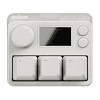
The Pulsar XPAD Mini is a gaming keypad mainly developed for rhythm games, featuring three magnetic switch keys as well as a knob. There are two buttons and an LCD for on-device settings, a web driver enables additional configuration. 8000 Hz polling, rapid trigger, and a 0.01 mm actuation point are also on board.
HAVN HS 360 VGPU Review

HAVN HS 360 VGPU Review

The HAVN HS 360 VGPU is a more refined and compact HS 420 VGPU, cutting noise and vibration while boosting vertical GPU cooling with smart airflow features. It includes a PCIe Gen 5 riser cable, rear-connector motherboard support, and a clearer panoramic glass panel for a sleek home to a high-end PC.

Reddit Will Protect its "Extremely Valuable Corpus of Data" from Google's AI Search With Forced Logins

Since before the advent of AI-powered web search, Google has leaned heavily on Reddit in particular, often with mixed results, and this was, by-and-large, a mutually beneficial relationship, with Google's AI Overview driving traffic to the forum site. However, as of Reddit's latest Q3 2026 financial results, this arrangement appears to be changing. Following the release of the financial results, there was a Q&A session in which Reddit's CEO, Steve Huffman explained that Reddit would be locking its data behind a login requirement in order to protect it from a changing web landscape.
Web search is evolving from a gateway to the web to becoming an AI-powered destination itself. While extraordinarily useful and powerful, AI search solves a different problem than Reddit. AI does not fulfill people's fundamental need for community, connection, and belonging with other people, and it lacks context and nuance... Logged in and app dial are our most valuable users, and they are our primary focus.

PS5s Become Steam Machines with Unofficial Bazzite Linux Installer

While the PS5 Linux project appears to be moving ahead despite the original creator's departure, an enterprising group of developers has adapted that project and Bazzite to turn the PlayStation 5 into something approximating a Steam Machine. Being that it is built on the same foundations as the PS5 Linux loader, the same limitations apply, meaning that it will only work on jailbroken PlayStation 5 consoles running on firmware versions 3.00-13.60, and there are other compatibility limitations documented in the installation guide on GitHub.

The particular variant of Bazzite being used is Bazzite-deck, which was originally built as an alternative to SteamOS for other x86 gaming handhelds, like the Lenovo Legion Go and ASUS ROG Ally, so by default it boots into Steam Gaming Mode on the PS5. It also offers an optional desktop mode running a full installation of KDE Plasma, which would conceivably allow the PS5 to work as a desktop workstation, as well. Between the desktop mode and Bazzite's handheld gaming mode, consoles running this software mod would have access not only to Steam games but to other game libraries, like GOG and Epic Games.

ATK Reveals Affordable RS8 Air HE and Neo Mechanical Aluminium Gaming Keyboards

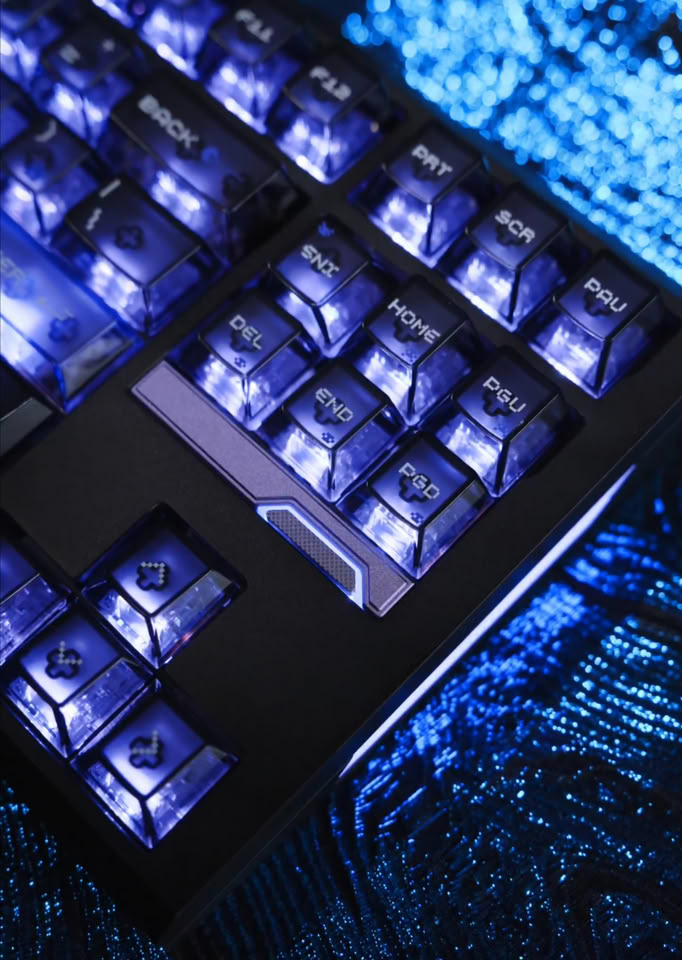
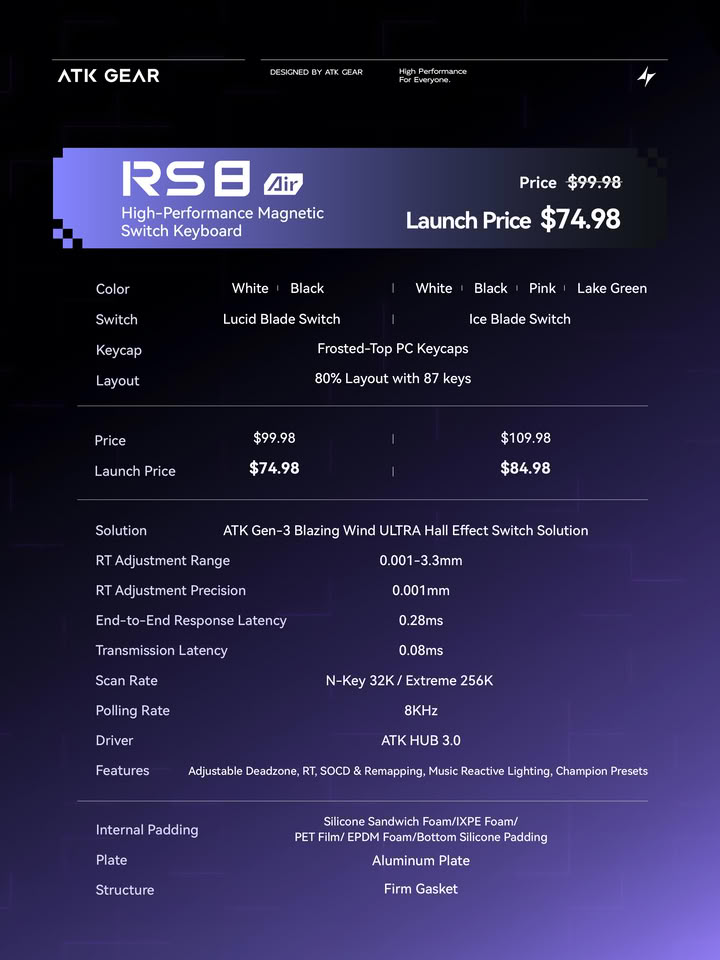
ATK, the brand behind several affordable high-performance gaming peripherals, has just announced the new RS8 series gaming keyboards in both mechanical and Hall effect flavors. The RS8 Air is a $99.98 Hall effect keyboard that will launch with a discount bringing the price down to $74.89, while the RS8 Neo is a more traditional mechanical keyboard that will have a starting MSRP of $84.98 but will launch at $59.98. Both keyboards have the same TKL layout, which is often considered as striking a good balance between productivity and gaming use cases, and both keyboards will also feature CNC-machined aluminium, gasket-mounted cases and translucent, frosted polycarbonate keycaps for the RGB backlighting to shine through.

Being a Hall effect keyboard, the RS8 Air will feature 8 kHz polling in addition to typical HE features, like adjustable actuation, rapid trigger, SOCD, and DKS in addition to the classic key remapping and RGB customization. All of this will happen in ATK's Hub 3.0 software. It also has a hardware switch on the back of the keyboard for on-the-go profile switching without having to remember a keyboard combination or open the software. The RS8 Air will have an aluminium switch plate for a firm feel and accurate actuation detection, and it will have five layers of internal sound treatment to cut out reverberation and echoes that can be common in aluminium keyboards. The RS8 Air will be available in white or black with Lucid Blade or Ice Blade switches or in pink or Lake Green with Ice Blade switches for an extra $10.

OpenMouse Launches Open-Source Customization for Logitech, Razer, Wooting, and SteelSeries Keyboards

Not too long ago, the developers behind OpenMouse, the open-source, community-driven alternative mouse configuration suite, revealed that they were working on supporting keyboard customization alongside the myriad gaming mouse models the suite now supports. As per a recent announcement on the project's Discord server, the latest OpenMouse beta release has added support for a number of gaming keyboards from Logitech, Razer, SteelSeries, and Wooting. Initial support also appears to be in development for Wuque Studio and the Kochi Hummingbird 68.

So far, actual feature support also appears to be limited, and the implementation is very much still in beta, with the app connecting correctly to a Wooting 80HE in a brief test but failing to load the proper keymap and failing to adjust the settings correctly. However, the planned feature set appears to be competitive with most proprietary keyboard customization tools, with HE features like adjustable actuation, rapid trigger, toggle key, mod tap, SOCD, and DKS, all present in addition to robust RGB customization and support for layers and profiles. What is notably absent is the ability to remap keys, however.

FromSoftware Delays The Duskbloods to 2027 for Final Balancing

FromSoftware has officially pushed The Duskbloods, its multiplayer action game made exclusively for the Nintendo Switch 2, out of 2026. In a post on the game's official X account, the studio said development is at the "final adjustment stage" and that the launch window now moves to 2027. There's no date or even a quarter attached to the new window, so it could land anywhere next year. FromSoftware also apologized to players who have been waiting for the game.

In a follow-up post, the studio said the August network test showed strong interest in the game's combat and strategic depth, and that the extra time will go toward final tweaks to game rules and balancing. That closed test ran from August 21 to 23 and got off to a rough start, as server issues forced FromSoftware to end the first session early. Interestingly, more players applied for it than for the Elden Ring Nightreign test, despite the game being tied to a single platform.

Fedora 45 Gets Official Launch Date After Bugs Caused Delays

Fedora Linux 45 has been under development for some time, with the distribution having been delayed twice, the latest delay due to blocker bugs resulting in a no-go decision by the development team as recently as last week. Now, following a recent developer meeting, Fedora 45 has officially been given the stamp of approval for a November 3 release date, according to the public meeting minutes.

Fedora 45 is a fairly tame update, coming from Fedora 44, although there are a number of notable updates to the included software and configuration, including an update to Gnome 51, support for new Qualcomm Snapdragon X Series laptops, and the implementation of the new DRM Panic front-end. The KDE versions of Fedora will now also fully adopt the KDE Plasma Login Manager, and they will feature a unified KDE out-of-the-box experience. For a full run-down of new features and changes in Fedora 45, check the Fedora 45 beta changelogs. Following the launch of Fedora 45, we will likely see Fedora spins and Fedora-based distros, like Bazzite and Nobara Linux also release a major version update to match.

Bungie Ignites Rumors of "Destiny Classic" With Destiny 1 Re-Release Teaser

Following the disappointing launch of Marathon, which apparently came at the cost of development support for Destiny 2 and much of the team behind it, Bungie has officially dropped a hint of its next move in its plan to "return Destiny to its original promise," as promised in a prior studio update. In a recent Steam community update, Bungie's Josh Deane, the new general manager of Marathon, reiterates that Bungie is "not done with Destiny," going on to tease "Destiny Legacy," and stating that "the whole experience needs to be served to you all," which sounds an awful lot like a relaunch of the original Destiny, just judging by the description.
Destiny 'Legacy' [Expect a new February Progress bar]
Our epic journey started over a decade ago, and the whole experience needs to be served to you all where you play today. Expect more information when we come back to you all early next year.

Hitscan Hyperlight X Launches: 35-37 g Wireless Gaming Mouse with SPDT Switches and Updated Internals

Hitscan has announced an update to its Hyperlight wireless gaming mouse from 2024, both reducing the weight of the symmetrical mouse and updating its internals in the name of faster clicks and lower response times. The Hitscan Hyperlight X will use the same shape as the original Hyperlight, but the Hyperlight X will allegedly weigh in at 35-37 g, depending on whether you're using full-size or dot skates. While Hitscan itself hasn't shared all that much about the new mouse, aside from its October 28 launch date, @jakeufps on X shared some information about the new hardware.

[Editor's note: Our in-depth review of the original Hitscan Hyperlight is live]

While the Hyperlight X will allegedly have the same shape, it will feature new SPDT switches—nominally closed mechanical switches that send a click when the circuit is opened, effectively reducing the actuation distance and click latency substantially. The Hyperlight X will also launch with the PixArt PAW 3950 sensor, an update from the prior 3395, and a Nordic nRF54L15 MCU. It will also ship with an 8K receiver, enabling 8 kHz polling from the factory instead of requiring an additional accessory purchase.
Update Oct 29th: Hitscan has updated the product page of the Hitscan X with official $109.99 pricing and a proper spec sheet.

Xbox Console Sales Fall 14% as Microsoft Points to Supply Shortages

Microsoft's gaming business shrank again in the first quarter of its 2027 fiscal year, which ended on September 30. Xbox revenue came in at $5.38 billion, down 2% from $5.51 billion a year ago, while Microsoft as a whole grew revenue by 19% to $92.3 billion. Content and services revenue fell 2%, and hardware dropped a bigger 14% on a lower volume of consoles sold. CFO Amy Hood said the overall Xbox decline was driven by third-party content and Xbox Game Pass, partly offset by growth in first-party games.

Microsoft Gaming CEO Asha Sharma, however, put a positive spin on the numbers in a post on X. She pointed out that the 2% decline is much smaller than the 10% drop a quarter earlier, and that margins improved. She also listed record results for Minecraft and World of Warcraft Forever, called Modern Warfare 4 Call of Duty's most acclaimed release in over a decade, and said PC platform revenue grew by double digits. As for hardware, Sharma claims console sales are being held back by supply, with demand currently outpacing the number of consoles available. She added that Xbox is working to get more units out to players, partly through an expanded refurbishment program.

Pulsar Teases Dual-Sensor Gaming Mouse with True Adjustable Sensor Position

Pulsar seems to be on a bit of a run in 2026, having already shown off a new X5 ergo gaming mouse and launched a new X2F CrazyLight fingertip mouse, but its latest announcement isn't an actual product launch, but rather a peek at what's to come for the brand. According to a new mini-documentary Pulsar published on its YouTube channel, it is working on a gaming mouse platform that would allow for dual sensors.

In the mini-doc, Pulsar explains that "innovation at the mechanical level has reached a realm where humans can no longer keep up," likely referring to the ever-increasing DPI and polling rate increases that we have seen gaming mouse companies brag about. As such, it is developing the dual-sensor system to allow users to better tailor their mouse inputs to their individual needs and movement patterns. The system basically combines sensor data from both sensors and calculates movement based on a pre-determined offset that can be set in software by a user. This theoretically allows the sensor to be placed anywhere on the bottom of the mouse.

Sandisk Reports Fiscal First Quarter 2027 Financial Results

Sandisk Corporation (Nasdaq: SNDK) today reported fiscal first quarter financial results.
David Goeckeler, Chairman and Chief Executive Officer of Sandisk"We have started fiscal year 2027 with another quarter of strong performance, with robust and growing demand for our products driving outpaced growth in our data center business. We are executing on the strategy that we outlined at Investor Day, delivering growing and durable free cash flow through our technology leadership, deep customer partnerships, and disciplined financial management."

Ubisoft Has No Other Assassin's Creed Remakes in the Works After Black Flag Resynced

Ubisoft says it currently has no other Assassin's Creed remake in active development, according to its Fall 2026 franchise update. Black Flag Resynced, which launched on July 9, was the series' first-ever remake, and Ubisoft called rebuilding its old systems from scratch "a massive undertaking." The game has reportedly done well, and it just received its final major content update, so plenty of fans were probably hoping for another nostalgia trip. Rumors were circulating about an Assassin's Creed 1 remake, but it looks like Ubisoft won't be going down that route just yet. Instead, Ubisoft says its teams are focused on the next Assassin's Creed titles, including unannounced projects with new settings and stories. The company isn't ruling out remakes for good, though, and says it will keep exploring ways to bring older games back.

Codename Hexe, the darker Assassin's Creed project, is apparently making "steady progress," but its next major update won't come until 2027. Ubisoft didn't give a release window, although an insider claimed back in July that Hexe won't launch before the second half of 2027. The Hexe section of the post also ends with a line of scrambled, coded text that fans will probably try to decode. The multiplayer project, Codename Invictus, is being reworked too, after hundreds of players tried an early prototype in a private Insiders Session. They liked the return of PvP, the parkour, and playing as different Assassin's Creed characters, but asked for more of the series' core pillars.

Intel Reports Third-Quarter 2026 Financial Results

Intel Corporation today reported third-quarter 2026 financial results.
Lip-Bu Tan, Intel CEO"Our Q3 results demonstrate improving execution, meaningful progress expanding supply and continued advancement of our process technology. Despite near-term headwinds across the PC industry, demand for our CPUs remains robust, reinforcing our confidence in the long-term growth opportunities for our business. Our immediate priority is to unlock additional supply to meet extraordinary demand for our Xeon family, while strengthening our product portfolio and roadmap. We are moving with urgency and focus to capitalize on these opportunities to deliver sustainable growth and long-term shareholder value."

Motherboard and GPU Prices Could Rise Further as PCB Shortages Extend to 2030

Printed circuit boards (PCBs) are the foundation of every PC component, as they mount everything and connect the entire system using electrical components, wiring, and more. However, we are about to enter another phase of consumer electronics price hikes, as these PCBs are now experiencing severe component shortages projected to last until 2030. According to Nikkei Asia, an unnamed executive from an American PC maker told the publication that PCB manufacturers are confirming this situation, with some predicting that orders placed today may not be fulfilled until late 2028.
American PC Maker for Nikkei AsiaEven though PC shipments could decline again next year, we are still struggling to secure enough PCB supplies to meet our needs.

PSA: Fake KytyPS5 and AnyPS5 Repos on GitHub Are Spreading Malware

Fake GitHub repositories posing as two PS5 projects, the KytyPS5 emulator and the AnyPS5 porting tool, are being used to spread password-stealing malware, according to NordVPN's Threat Intelligence team. As reported by Tom's Hardware, visitors get pointed to a ZIP file whose Windows executable unpacks a hidden multi-stage loader. The loader first checks whether it's on a real gaming PC, and exits if the system has less than 2 GB of RAM or no physical GPU, or looks like a virtual machine or cloud server. It seems built to dodge sandboxes and security researchers. Here's how NordVPN CTO Marijus Briedis put it:
Emulation fans are a perfect target. They are used to downloading experimental software from GitHub and running unsigned files, so nothing about this feels suspicious. But this is not an emulator. It steals your data, hides from your antivirus and erases its own tracks before you notice anything is wrong.

Solidigm Considers $45 Billion Investment in U.S. NAND Flash Manufacturing

Late last month, we learned that SK hynix-owned NAND Flash maker Solidigm has been considering expanding its manufacturing business to the United States. According to Bloomberg, the company is contemplating a massive $45 billion investment. However, before deciding on that, Solidigm aims to get approval from the U.S. government to send equipment to its fabs in Dalian, China, so it can continue funding expansion in the United States. As a reminder, obtaining some chipmaking equipment in China requires U.S. government approval, meaning the company is putting things on hold pending regulatory approval.

Currently, Solidigm operates Fab 1 in Dalian, China, and has accelerated the construction of Fab 2 nearby. This expansion aims to increase production by 50% by 2027 to meet the rising demand for NAND Flash. Solidigm owns and operates this facility, marking a resumption of expansion in mainland China after a four-year project freeze. At present, Solidigm produces about 100,000 wafers per month of NAND Flash, so a 50% increase by 2027 would boost production to approximately 150,000 wafers per month.

Instagram Tests 90-Minute Horizontal Videos, Takes Aim at YouTube Creators

Instagram is testing a new format called Features, which lets creators upload horizontal videos up to 90 minutes long. The test started on Monday with a small group of US creators, following an earlier trial in Brazil, and it's aimed squarely at podcasters, comedians, and other long-form creators who mostly publish on YouTube today. Instagram head Adam Mosseri and VP of Product Tessa Lyons announced it in a video. Plenty of creators already post Reels clips to promote full episodes hosted elsewhere, so Instagram now wants to host the full episode too. Reels can link straight to the full video, and Features will also be recommended on the Explore page.

While YouTube shares ad revenue with creators in its Partner Program, Instagram has no plans to do the same for Features, at least for now. An Instagram representative said the company is funding some creators directly, but that it's "too early to share a long-term monetization model." Lyons said established creators can bring their existing sponsorships and branded content along. Instagram already tried long-form video once with IGTV, which launched in 2018 and was shut down in 2022. This time, the TV seems to be a bigger part of the plan, as the Instagram for TV app, which debuted on Amazon Fire TV in December 2025, has now reached Apple TV in the US. There's no firm date for a wider rollout, and without a revenue share, it's hard to see many creators leaving YouTube anytime soon.

DirectX Raytracing Gets Clustered Geometry for Higher FPS and Up to 90% VRAM Savings

Microsoft has released one of the most significant updates to its DirectX Raytracing (DXR) since its debut in 2018. This update officially introduces clustered geometry and partitioned top-level acceleration structure (PTLAS). With clustered geometry, Microsoft envisions scenes where all animated and generated geometry is broken down into simple, reusable clusters of triangles. Typically, scenes repeatedly build large bottom-level acceleration structures, which incur additional compute costs. By using clustered geometry, ray tracing can utilize full detailed geometry used for standard rasterization instead of proxies, ensuring that ray-traced shadows and reflections match the currently visible scene.

In open-world games, using a top-level acceleration structure (TLAS) can lead to massive VRAM and compute demands. To address this, DXR now introduces partitioned TLAS (PTLAS), allowing ray tracing to focus on changes in a specific region while retaining acceleration-structure data elsewhere. Clustered geometry and PTLAS can be used together or separately, with no limitations. Below image is NVIDIA's sample of clustered geometry in action, visualized in three stages: default, clusters, and triangles applied.
Benchmarks follow.

Microsoft Unifies GPU Crash Diagnostics with DirectX Dump Files

Microsoft is bringing some of its Xbox console technology to Windows PCs with the introduction of DirectX Dump Files. When a GPU crashes on your PC, you can investigate what happened in the same way Xbox developers do with their GPU crashes, gaining insight into the underlying issues. With the latest Agility SDK 1.620 and PIX 2610.28, DirectX Dump Files provide data from Windows, Direct3D, and GPU drivers to help investigate a crash, understand its cause, and improve the graphics rendering pipeline to prevent future crashes. Joining Microsoft in this effort are AMD, Intel, NVIDIA, and Qualcomm.

The process begins with a GPU crash. Once the GPU stops its graphics processing, DirectX creates a new dump file containing traces of what occurred before Windows resets the GPU. This includes the last Direct3D runtime state, hardware and driver data, and up to 2 MB of data from the game developer that might be traced. These files can be saved on developers' machines, but on players' PCs in production, they aren't saved by default. However, game developers can set up a crash pipeline to send crash data back to them for analysis. Once the data is available, Microsoft's PIX tool, used for performance-tuning and debugging DirectX 12 games, helps analyze the situation. PIX decodes data, analyzes dump files, identifies hang points, and traces shaders and resources that caused the crash. This allows developers to quickly isolate and fix the problem.

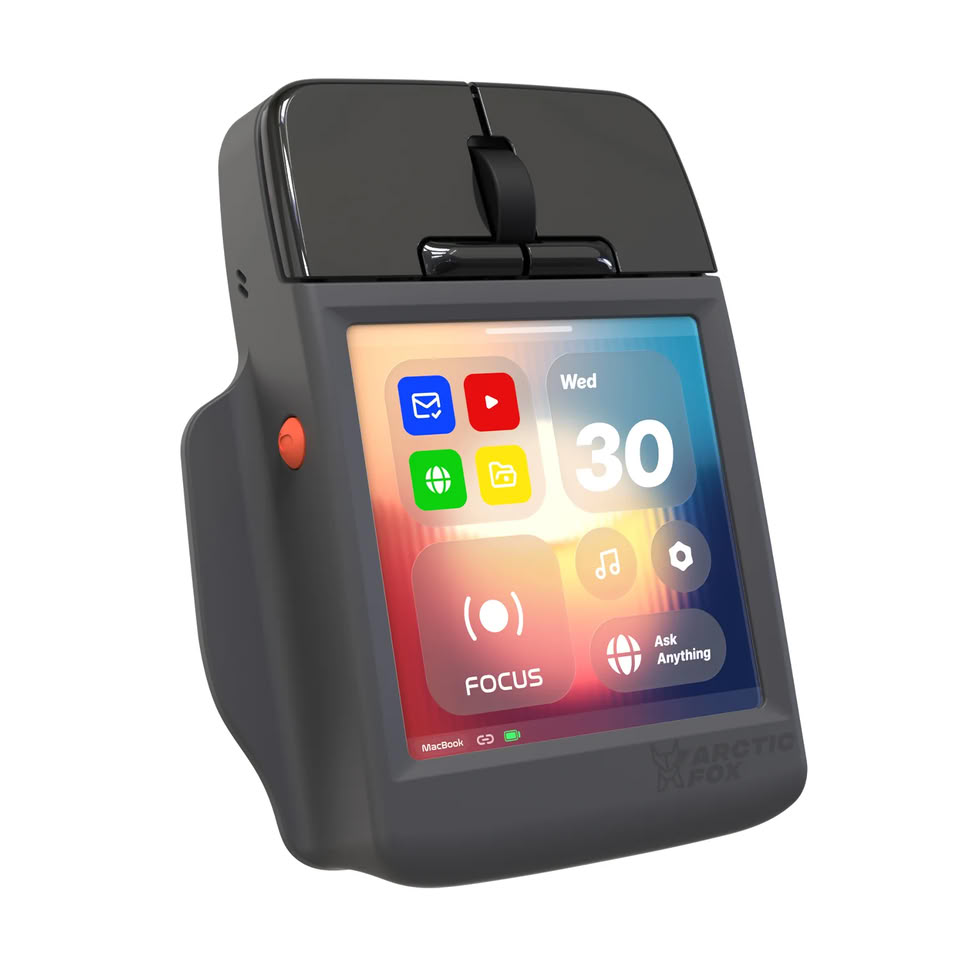
The Arctic Fox Super Mouse Has a 3.1-Inch 720p Touchscreen and Asks "What if It Did Everything?"

2026 has been a bit of a watershed moment for computer mice, especially in the gaming space, with features like rapid trigger, adjustable actuation, and haptic feedback making it into mice like the Logitech G Pro X2 Superstrike (read TechPowerUp's in-depth review here) and X3 Superstrike, but Arctic Fox has taken a different approach to innovation and mouse features with the somewhat perplexing Super Mouse. The Super Mouse is a productivity mouse aimed more at office workers and multitaskers than gamers—to the point that the brand hasn't even disclosed what sensor the mouse is using nor its sensitivity specs.

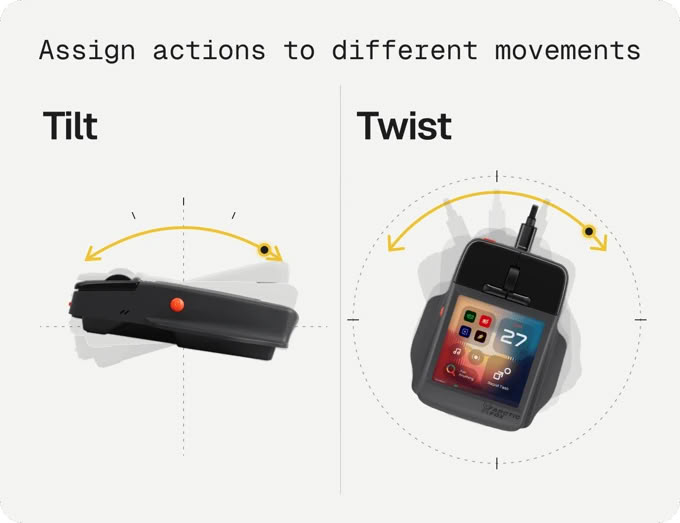
The Super Mouse's claim to fame is its 3.1-inch, 720p touchscreen on the top, which Arctic Fox has loaded with a bunch of productivity functions, including customizable shortcuts to launch applications on Windows or macOS, a full virtual keyboard, multistep macros and routines, trackpad and gesture functionality, and productivity tracking. The Super Mouse even has built-in voice input for speech-to-text input, and it has full Google Calendar integration via OAuth 2.0, which the brand claims keeps your data private alongside user-defined permissions control, encrypted calendar data, and local calendar data storage. There is also claimed built-in gyro control for 3D navigation.

Microsoft Reports 22% Decline in Windows OEM and Devices Revenue

Microsoft reported strong Q3 2026 results with $92.3 billion in revenue. However, the company's earnings report also revealed that, despite overall revenue growing 19% year-over-year, the Windows OEM licensing business is struggling, with a 22% decline on a yearly basis. This quarter, revenue from Windows 11 OEM licensing and Surface PCs amounted to $3.6 billion, a significant drop from the $4.6 billion this segment generated last year. Several factors contribute to this decline, making it the only business unit, alongside Xbox, to experience a downturn. The first factor is the drop in consumer PC demand. As Microsoft sells Windows 11 licenses to PC OEMs, weakening demand in this space, caused by rising prices, has directly resulted in fewer licenses sold to major PC OEMs like ASUS, HP, Dell, and Lenovo.

Additionally, Microsoft Surface PCs are included in this mix. The generally weak PC demand means consumers are less willing to spend on other brand PCs, and they are behaving similarly toward Microsoft. Surface PC shipments have seemingly declined, as these products are historically priced for mid-tier to high-end buyers. When recent increases in memory and storage supply chain costs affected Microsoft's procurement, general price increases followed. Consequently, consumers are opting to wait for another opportunity to purchase a PC.

HAVN Launches the HS 360 & HS 360 VGPU PC Cases

HAVN is proud to announce the launch of its latest PC cases, the HS 360 and HS 360 VGPU. The HS 360 builds on the success of the HS 420 and has been refined through direct feedback from partners and reviewers. As a result, we have packed HAVN's panoramic, GPU-centric Hybrid Structure into a chassis that's 19.4% smaller and 29.5% lighter than the HS 420.
Steven Levitt, Brand Marketing Manager"With the HS 360, our goal wasn't simply to make the HS 420 smaller. We wanted to take everything we learned from the original design, listen to feedback from the community, and refine while improving performance."
[Editor's note: Our in-depth review of HAVN HS 360 VGPU is now live]

Keychron Launches Steampunk Q19 HE 8K Gaming Keyboard

Keychron's ongoing efforts to update its keyboard line-up with new models has produced the Q19 HE 8K as its latest special colorway of the 60% Hall effect PCB first introduced with the Q16 HE 8K and recently made another appearance in the Carbon 60 HE. The Q19 HE uses the exact same Keychron Ultra-Fast Magnetic Lime switches as the Carbon 60 HE and the Q16 HE 8K, but it opts for a CNC-machined 6063 aluminium tray-mount case with steampunk embellishments.

Both the patina on the aluminium case and the keycaps bear the steampunk design, with dye-sublimated keycap legends featuring a serif font and a compass accent key on the escape key. The bottom of the keyboard also has an etched Golden Compass pattern. The keycaps follow a more traditional Cherry profile, instead of Keychron's usual KSA or OSA, and they are made from PBT. The Q19 HE 8K has an FR4 switch plate and plate-mounted stabilizers. It is currently available on Keychron's online store for $254.99.

GXTrust and THX Announce Strategic Partnership to Bring Immersive Audio to Gamers

GXTrust, a well-established European brand in gaming accessories, and THX Ltd., a world-class high-fidelity audio and video tuning, certification, and technology company, today announced a strategic partnership to elevate gaming audio across GXTrust product offerings. Representing a shared commitment to providing premium sound quality, immersion, and performance to gamers, this collaboration marks an advance in audio immersion for gaming fans across Europe and beyond.

High-quality audio has become a priority in modern gaming - from competitive gameplay where clear communication and directional cues are key, to immersive titles that demand rich, detailed soundscapes to transport players to brand-new worlds. This GXTrust x THX partnership comes at this critical time in the market to deliver consumer electronics products that deliver audio with a wide soundstage with emotional realism and cinematic sound.

Razer Introduces New Evangelion (EVA-01) Collection

Razer, the leading global lifestyle brand for gamers, has partnered with EVANGELION to unveil the Razer│EVANGELION (EVA-01) Collection, a new collaboration that brings the striking design of Evangelion Test Type-01 (EVA-01) into Razer's suite of high-performance gaming gear. Available exclusively in Asia Pacific, the collection draws inspiration from EVA-01 and its designated pilot, Shinji Ikari - the main protagonist of the EVANGELION franchise, featuring EVA-01's iconic purple and green color.Every piece in the collection fuses Razer's cutting-edge gaming technology with the unit's distinct spirit—responsive, precise, and built to perform as one coordinated battlestation for EVANGELION fans, collectors, and gamers alike.

Synchronized for Combat
From an ultra-lightweight esports mouse to a command-center chair, each piece brings EVA-01's presence to the battlestation while delivering the precision, control, and comfort players demand.

GravaStar Introduces the Mercury Edge Series of Wireless Gaming Headsets

GravaStar, the design-driven gaming hardware brand known for its sci-fi aesthetic, today announced the Mercury Edge Series. Led by Mercury Edge Pro, the lineup pairs GravaStar's distinctive design language with 53 mm dynamic drivers and spatial gaming audio. Mercury Edge adds versatile wireless connectivity and extended battery life, while Mercury Edge Lite offers a direct, battery-free USB-C experience.

Sculpted Design with a Distinct Gaming Identity
Inspired by skeletal architecture, the series combines flowing contours, polished transitions and layered earcup geometry with seven-color RGB lighting. Memory foam cushions, 90-degree rotating earcups and a sliding headband provide an adaptable over-ear fit.

Biostar Introduces the EdgeComp MS-U320 Fanless Edge AI System

BIOSTAR, a leading manufacturer of edge AI solution, IPC systems, motherboards, graphics cards, and storage devices, today introduced the EdgeComp MS-U320, a compact fanless edge AI system powered by the Intel Core 5 320 processor (Wildcat Lake). Designed for equipment manufacturers and system integrators, the MS-U320 combines on-site data processing, light AI computing, and industrial connectivity for applications in industrial automation, smart manufacturing, industrial IoT, smart retail, and smart infrastructure.

The MS-U320 features an onboard Intel Core 5 320 processor with six cores, clock speeds of up to 4.6 GHz, a 15 W TDP, and integrated Intel graphics. A single DDR5-6400 SO-DIMM slot supports up to 64 GB of memory, while the integrated CPU, GPU and NPU deliver up to 40 TOPS of AI performance. This combination supports local data processing and light AI workloads without requiring a separate accelerator.

Audio-Technica Introduces ATH-M50xSTS-WL StreamSet Wireless Headset

Audio-Technica today announced the release of its ATH-M50xSTS-WL StreamSet wireless streaming headset, the first wireless model in the StreamSet lineup. Designed for streamers, content creators, and gamers, the headset combines the studio sound of the ATH-M50x professional monitor headphones with microphone technology based on Audio-Technica's 20 Series.

The ATH-M50xSTS-WL brings low-latency, interference-resistant 2.4 GHz digital wireless connectivity to the StreamSet range, expanding the lineup beyond its XLR and USB models. An included USB transceiver enables plug-and-play use with PCs and compatible gaming consoles, giving users the freedom of a cable-free streaming experience.

LattePanda Launches LattePanda Sigma 2: The Embeddable AI Single Board Server

The LattePanda Team today launched LattePanda Sigma 2, an x86 single-board server designed to bring high-performance local AI computing directly into intelligent products and systems. Built around the Intel Core Ultra X7 358H processor with Intel Arc B390 graphics, LattePanda Sigma 2 delivers up to 180 TOPS of total AI performance at INT8 in a compact form factor.

As "The Embeddable AI Single Board Server," LattePanda Sigma 2 combines high-performance computing, up to 64 GB of memory, high-speed networking, flexible expansion, and real-time hardware control in a single board. Rather than sitting alongside a product, it is designed to be integrated directly into the product itself, supporting applications from autonomous robots and vision systems to professional instruments and private AI appliances.

NVIDIA GeForce NOW Gets Phantom Blade Zero and Eight More Games This Week

This Halloween week, GFN Thursday is delivering a fresh batch of gaming treats. Something wicked this blade comes. S-GAME's Phantom Blade Zero launches on GeForce NOW today, bringing a scarily good blend of martial arts and punk fantasy to the cloud. There's also something on the horizon for adventurers: World of Warcraft: Forever arrives Wednesday, Nov. 4 at 3 p.m. PST, with a launch-week access reward coming for GeForce NOW members.

This week's lineup also includes nine games streaming from the GeForce NOW library, alongside new mod support for Cyberpunk 2077 and The Witcher 3: Wild Hunt - Remastered. That means more options to play, with no downloads or installs to haunt gamers' devices. There's another sweet update for gamers in India: The option to sign up for four-month Performance and Ultimate memberships is launching tomorrow. Visit the GeForce NOW website for more information.

Thermal Grizzly Announces New TG x CENS LN2 Container

Every record is an important milestone in pushing the boundaries - until someone pushes them further. Ready to push your GPU to its limit? The TG x CENS LN2 Container was developed with experienced extreme overclocker Clemens "CENS" Nüssler to help overclockers push GPU performance beyond conventional limits using liquid nitrogen.

The special design of the inner structure was optimized to allow for both maximum heat dissipation and precise temperature control down to -196 °C. The modular mounting system for selected high-end AMD and NVIDIA GPUs provides optimized contact pressure and efficient heat transfer. The TG x CENS LN2 Container is built for your next extreme overclocking session.

Microsoft Posts Record Q3 2026 Revenue of $92.3 Billion

Microsoft Corp. today announced the following results for the quarter ended September 30, 2026, as compared to the corresponding period of last fiscal year:
  • Revenue was $92.3 billion and increased 19%
  • Operating income was $45.9 billion and increased 21% (up 22% in constant currency)
  • Net income was $36.6 billion and increased 32% on a GAAP basis, and was $36.4 billion and increased 18% (up 19% in constant currency) on a non-GAAP basis
  • Diluted earnings per share was $4.92 and increased 32% on a GAAP basis, and was $4.89 and increased 18% (up 19% in constant currency) on a non-GAAP basis
  • Non-GAAP results exclude the impact from investments in OpenAI, explained in the Non-GAAP Definition section below

Corsair Teams Up With Embark Studios for New Arc Raiders Products

Corsair, a leading global developer and manufacturer of high-performance gear and technology for gamers, content creators, and PC enthusiasts, announced today that a fresh cache of Raider-grade gear has surfaced with the Corsair x ARC Raiders collection. Created in a multi-year partnership with Embark Studios, the collection marks the first anniversary of ARC Raiders, the breakout extraction adventure named Best Multiplayer Game at The Game Awards 2025, with a limited run of officially licensed controllers, gaming peripherals, and streaming gear across Corsair, SCUF, and Elgato. Every piece wears the game's signature four-stripe colorway, and every purchase unlocks exclusive in-game items to carry back into the field.

"ARC Raiders pulled players into a world where every trip topside is a gamble and every extraction is earned," said Tobias Brinkmann, Senior Vice President and General Manager of Gaming Peripherals at Corsair. "That spirit runs through this collection. Working with Embark Studios, we brought together the best of Corsair, SCUF, and Elgato, so Raiders have gear that performs under pressure and looks like it was scavenged from the Rust Belt. We couldn't think of a better way to celebrate the game's first year than by giving its community something built for the next one."

Alphabet Announces Q3 2026 Results, Revenue at $127.6 Billion

Alphabet Inc. (NASDAQ: GOOG, GOOGL) today announced financial results for the quarter ended September 30, 2026.
  • Consolidated Alphabet revenues increased 25% to $127.6 billion, reflecting strong performance across the business and our 13th consecutive quarter of double-digit revenue growth.
  • Google Services revenues increased 11% to $96.3 billion, led by 12% growth in Google Search & other with the year-over-year Search query growth rate the highest it has been in the last five years.
  • Google Cloud delivered record growth as revenues increased 103% to $30.7 billion, led by strong growth in Google Cloud Platform (GCP) across enterprise AI infrastructure and enterprise AI solutions, as well as core GCP services. TPU systems sales were also a meaningful contributor to revenue growth.
  • Consolidated Alphabet operating income increased 30% and operating margin was 31.8%.
  • Net income available to common stockholders was $26.2 billion and EPS was $2.12.

Samsung Electronics Announces Third Quarter 2026 Results

Samsung Electronics today reported financial results for the third quarter ended Sept. 30, 2026. The Company posted KRW 195.3 trillion in consolidated revenue, another all-time quarterly high, representing a quarter-on-quarter (QoQ) increase of 14%. Operating profit reached KRW 107.4 trillion, making Samsung Electronics the world's first tech company to exceed KRW 100 trillion in quarterly operating profit.

The Device Solutions (DS) Division posted a QoQ sales increase of 15%, with the Memory Business setting an all-time high for quarterly revenue and operating profit, as semiconductor demand is set to remain robust. The Device eXperience (DX) Division posted a QoQ revenue increase of 8% and recorded an operating loss of KRW 0.8 trillion.

ZHITAI Joins Forces with Phantom Blade Zero on Collaboration SSD Gift Box

ZHITAI, the consumer memory brand of YMTC, announced a strategic partnership with Phantom Blade Zero, the highly anticipated AAA action game that has captured global attention. Under the theme "Unleash Your Edge," the two brands have joined forces to introduce the ZHITAI × Phantom Blade Zero Collaboration Gift Box, combining high-performance memory technology with Eastern wuxia aesthetics to deliver an immersive experience in the Phantom World for gamers around the world.

With its distinctive Kungfu-punk aesthetic and intense, fast-paced combat, Phantom Blade Zero has emerged as one of the year's most anticipated AAA action titles. The partnership's theme, "Unleash Your Edge," draws inspiration from the game's protagonist, Soul, and his unwavering resolve in the face of adversity. This theme bridges the game's lightning-fast combat with ZHITAI's relentless pursuit of peak storage performance—reflecting both Soul's unyielding conviction and ZHITAI's dedication to continuous innovation and exploration.

Global OLED Notebook Shipments Forecast to Grow Over 40% YoY in 2027

Apple's newly unveiled MacBook Pro with PROLED XDR Display marks a significant milestone in the evolution of MacBook display technology and user experience, becoming the first model in the lineup to feature a tandem OLED touchscreen. TrendForce estimates that shipments of the new model will reach 1.2-1.5 million units in 2027. Apple's entry into the OLED notebook market is also providing fresh impetus for panel makers to accelerate the development of advanced display technologies.

However, TrendForce notes that the new MacBook Pro's premium starting price of US$2,899 for the 14-inch model, coupled with its initial availability alongside existing Mini-LED models, could temper near-term replacement demand.
Wednesday, October 28th 2026
Thermal Grizzly DeltaMate CPU Block - MPII Review

Thermal Grizzly DeltaMate CPU Block - MPII Review

The Thermal Grizzly DeltaMate MP11 is a flagship, no-holds-barred CPU water block that uses premium materials and engineering to put out a socket-specific cooling engine for Intel or AMD platforms. It promises top-tier thermal cooling while keeping coolant flow restriction reasonable, but this does come at a price.

Mausstudio Announced As Custom Gaming Mouse Designer for 3D Printing

It seems as though the mouse modding scene has been on a winning streak lately, with brands like Keychron publishing a catalogue of free 3D models of its mouse shells, and projects like Openmouse providing brand-agnostic, open-source mouse customization and remapping. The latest eye-catching project comes from a small 3D printing outfit called Unskilled Design, who recently introduced Mausstudio. Mausstudio is a work-in-progress custom mouse design tool that helps users design custom mouse shells for 3D printing.

As described in a recent demo on X, Mausstudio allows users to import an STL of an existing mouse PCB, define the positions of core features, like screw holes, switches, the scroll wheel, and sensor position, and then generate a shell around it using custom parameters. Currently, it supports custom dimensions for the basics, like width, length, and height, as well as more niche customizations, like left-handed side button placements, base structure (lightweight or solid), hump position, honeycomb cutouts for lightweight shells, and battery positioning.

Mass Effect Fan Group Buys Times Square Ad, Crowdfunds Billboards Aimed at EA

A fan group backing the #SaveMassEffect campaign has taken it offline. We Are Mass Effect, a fan community founded by Ariel Pena Aguilar, teamed up with illustrator and YouTuber Kala Elizabeth to buy a slot on a Times Square billboard in New York on October 26. The ad read "Keelah Si'yah #SaveMassEffect" and apparently ran for 15 seconds once an hour, costing just $250. This comes about a week after EA shut down BioWare and cancelled the next Mass Effect game, part of around 400 job cuts across the company.

Elizabeth, Ariel and Mer of We Are Mass Effect then started a GoFundMe for three mobile billboards: one outside EA's Redwood City headquarters, one outside its Edmonton office, and one at The Game Awards in Los Angeles on December 10. The $5,274 goal was reportedly hit in under 15 minutes, and donations are now paused at $5,715 from 89 donors. Any leftover money was meant for the Game Workers' Hardship Fund, though that fund can't take direct donations right now.

CachyOS Announces EAC Linux V2-Compatible Kernel With Lockdown

Epic Games recently promised expanded Linux support for Easy Anti-Cheat, outlining a new set of standards and native Linux security features that would need to be adopted by Linux distribution developers who wanted gamers to be able to access EAC Linux v2 games. As is par for the course for the distribution, CachyOS has come out swinging as one of the first, if not the first, Linux distribution to explicitly announce support for EAC Linux v2.

The announcement comes by way of a discussion on CachyOS's GitHub. Although its developers have yet to fully implement the new features, CachyOS's maintainers and developers are quick to note that the linux-cachyos-eac kernel will be a fully optional feature for the desktop environment, and that it will be opt-in. That's an important point, because some of the features required for EAC Linux v2 have been quite controversial in Linux gaming circles.

GOG Launches DRM-Free Control Resonant

GOG, formerly Good old Games, which CD Projekt Red recently sold to the platform's original co-founder, has stuck to its convictions on DRM-free game publishing, with its latest release, Control Resonant, coming to the platform with no DRM and with the typical downloadable game files that GOG provides. The game also features native cloud saves on GOG Galaxy. The DRM-free launch of Control Resonant comes just over a month after the game's initial launch on Steam, and both the standard version of Control Resonant and the Deluxe Edition are available on GOG. Other versions of Control Resonant on PC use standard Steam DRM.

[Editor's note: Our handheld performance review and in-depth review of Control Resonant are now live]

GPD Confirms Intel Arc G3 Extreme-Based Win Mini Ultra Handheld Coming Soon

GPD is no stranger to powerful gaming handhelds, having previously launched the very expensive GPD Win Max 3 in August 2026, and the company has recently confirmed via a Weibo post that it is working on an Intel Arc G3 Extreme-powered version of its Win Mini gaming handheld.

Prior versions of the GPD Win Mini were available with up to the AMD Ryzen AI 9 HX 370 with its Radeon 890M iGPU, which put the system more or less on the same level as other popular handhelds, like the Lenovo Legion Go 2, while a Win Mini Ultra with the Intel Arc G3 Extreme CPU could perform significantly faster—about as well as an entry-level dGPU, thanks to the onboard Intel Arc B390 iGPU with 12 full Xe3 cores.

No Man's Sky Forsaken Update Adds "Spooky Biomechanical Ships" and Wealth of New Exploration Content

No Man's Sky had a rough start to life, with Hello Games having had to put in nearly a decade's worth of work to right the ship and get the game to "Very Positive" reviews on Steam. Now, following a handful of significant gameplay and content updates since that success, Hello Games has announced the Forsaken update, a new content update to No Man's Sky that builds on the game's exploration, building, and research mechanics.

The Forsaken update, officially version 7.10 of the game, adds a minimal HUD mode for a more immersive experience, minimizing the compass, hazard protection bars, and mission notifications. Hello Games says this mode is especially suited for experienced players. On the gameplay and content side of things, however, the update also introduces "Haunting Mementos," a new set piece that sees gamers searching the abandoned wrecks, infested outposts, and derelict freighters in deep space for "bizarre, horrifying biological samples."

System76 Unveils Thelio Prime 11-Liter Linux Desktop PC

System76 has announced the Thelio Prime, a compact 11-liter (288 x 148.9 x 281.9 mm) desktop built at the company's Denver facility. The chassis is made from milled stainless steel and aluminium parts. To add a bit of finesse, there's a smoked-glass front panel and tool-free magnetic side panels. The interior is designed with two thermal chambers, separating the CPU and GPU. As for performance, System76 describes it as "An 11-liter Linux desktop that fits almost anywhere, without giving up on performance." Users can choose from an AMD Ryzen 9000 processor (up to Ryzen 7 9850X3D) with integrated Radeon graphics or go for a discrete AMD or NVIDIA GPU (up to RTX 5070), depending on configuration. The system can have up to 96 GB of dual-channel DDR5 and up to 8 TB of storage across its M.2 slots (one PCIe 5.0 and one PCIe 4.0).

Front I/O offers a USB 3.2 Gen 1 Type-C, a USB 3.2 Gen 1 Type-A, and the audio jack. The rear adds two USB 3.2 Gen 2 Type-A ports, one USB 3.2 Gen 2 Type-C, one USB 3.2 Gen 1, four USB 2.0 ports, a BIOS Flashback button, and audio line-out. Networking covers 2.5 GbE, Wi-Fi 6E, and Bluetooth 5.2. Display outputs depend on the GPU. Integrated graphics get HDMI 2.1 and USB-C with DisplayPort 1.4. A discrete GPU option typically adds three DisplayPort outputs and one HDMI. Power comes from a 600 W 80 Plus certified supply with at least 90% efficiency. The system comes preinstalled with Pop!_OS 24.04 LTS with COSMIC Desktop Environment or with Ubuntu 24.04 LTS. The Thelio Prime is expected to launch November 18, starting at $1,599.

Phantom Blade Zero Launches Today For GeForce RTX & RTX Spark

Today, at 7pm PT, the much-anticipated Phantom Blade Zero launches with DLSS 4.5, ray tracing and path tracing, playable on GeForce RTX and RTX Spark. The Blood of Dawnwalker can now be upgraded to DLSS 4.5 Super Resolution and Dynamic Multi Frame Generation via the NVIDIA app.

NVIDIA RTX Remix 1.6 has been added to the Half-Life 2 RTX demo and Portal with RTX, introducing support for DLSS 3D-Guided Neural Rendering, and upgrading DLSS Ray Reconstruction and DLSS Frame Generation with our latest AI models. And our beta RTX Remix mod for Minecraft: Java Edition has been released.

XREAL Launches AURA as the First Wired XR Glasses Powered by Android XR

XREAL, the global leader in lightweight XR hardware development, today officially launched XREAL AURA, the world's first wired XR glasses powered by Android XR, and the world's first wired XR glasses to launch with the Snapdragon Reality Elite Platform. Announced on stage at Google's Android Developer Summit, XREAL AURA brings the full spatial power of Android XR into a lightweight optical see-through glasses form factor designed for work, entertainment, gaming, AI-powered assistance, and everyday spatial computing.

Starting today, customers in the United States, Canada, Japan, and South Korea can order XREAL AURA. The company is offering a surprise limited time offer, making the 12 GB + 256 GB configuration $1,099; and the 16 GB + 512 GB configuration $1,299. Devices are expected to begin shipping in mid-November.

Formula V Line Launches Crystal Z3 Panoramic PC Case Series

Formula V Line today launches the Crystal Z3 series of panoramic ATX mid-tower PC cases, combining a 90° rotatable rear PCIe bracket with bottom air intake integrated into the case design. The initial shipment consists of Crystal Z3 Plus models in Black and White, each with three PA2 120 mm ARGB PWM fans.

First previewed at COMPUTEX 2026, the Crystal Z3 series supports graphics cards up to 425 mm long, a 360 mm top radiator and up to eight 120 mm fans. Its removable bottom fan bracket and tool-free panels make it easier to assemble, upgrade and clean a display-focused PC.

Apple Unveils MacBook Pro With PROLED XDR Display and Touch for the First Time on Mac

Apple today introduced the all-new MacBook Pro with PROLED XDR Display, featuring breakthrough tandem OLED technology that delivers game-changing front-of-screen performance. Available in 14- and 16-inch models, MacBook Pro with PROLED XDR Display offers a visual experience unlike any other, transforming pro workflows with up to 2000 nits peak HDR and SDR brightness, an industry-leading 10,000,000:1 contrast ratio for exceptional detail, a 120 Hz variable refresh rate, and a wider color gamut covering both P3 and Adobe RGB for brilliant colors. The new MacBook Pro also introduces intuitive Touch capabilities on the Mac for the first time, opening up a whole new dimension for pros to interact with their content, from manipulating 3D models to playing musical instruments onscreen.

The Dynamic Island now comes to Mac, serving as the home for Spotlight, Live Activities, and Siri AI. And with up to 24 hours of battery life in thinner and much lighter 3- and 4-pound designs, MacBook Pro is more portable than ever, empowering pros to take their work wherever inspiration strikes. Featuring M5 Pro and M5 Max, Apple's most powerful chips ever built for a pro laptop, along with up to 128 GB of unified memory and now up to 16 TB of blazing-fast storage, the new MacBook Pro delivers speed and capability for the most demanding workflows. An enhanced six-speaker sound system now provides 50 percent deeper bass and remarkable sound clarity for even more immersive audio. And Thunderbolt 5 and a wide array of connectivity, a 12MP Center Stage camera, studio-quality mics, and the power of macOS 27 with Apple Intelligence and Siri AI complete the MacBook Pro experience. It is available to pre-order starting today, October 28, with availability beginning Friday, November 6.

Valve Won't "Be Gatekeepers" by Banning AI Games, As "AI Slop" Complaints Grow

Valve has a growing AI problem on its storefront, and it's not only that game developers are using AI, which is a point of contention for many gamers but not necessarily the biggest concern for developers. Instead, game developers are increasingly reporting that their games are being cloned by developers using AI to clone games from short demos or PR materials ahead of the original game's launch. There has also been an outcry over the number of low-effort AI-generated or AI-assisted games bringing down the overall quality of Steam Next Fest. As reported by Inven, during a recent panel at the Steam Indie Connect developer event, Valve's Tom Giardino and Marc Wilkinson addressed some of these concerns by developers.
Tom Giardino via InvenWe don't want to be gatekeepers telling developers which tools they should or shouldn't use...Rather than relying on a single mechanic that someone can easily copy, you need to keep growing your game by adding features, personality, and creativity that stem from your own perspective

Lenovo Launches ThinkVision T34WD-4v Ultrawide Professional Monitor

Lenovo has added the ThinkVision T34WD-4v monitor to its Product Specifications Reference (PSREF) website. We now have the full specifications of the 34-inch ultrawide curved professional monitor first shown at IFA 2026. The new ThinkVision features a VA panel with 3440 x 1440 resolution, 1500R curvature, and a 48-120 Hz variable refresh rate. The display has 300 nits of brightness, while for response time it can operate in two modes: 4 ms in Extreme mode or 6 ms in Normal mode. As expected from a professional monitor, it covers 99% of both the sRGB and BT.709 color gamuts. The monitor also includes a 5 MP RGB+IR camera, dual microphones, and two 5 W speakers. The connectivity area is generous. Notably, the monitor doubles as a USB-C docking station offering up to 100 W of power delivery. It has three USB-A 3.2 and two USB-C 3.2 ports, plus Gigabit Ethernet. There's also HDMI 2.1 supporting 3440 x 1440 at 120 Hz, and DisplayPort 1.4.

Additional features include an audio combo jack, a headphone hook, and a fully adjustable stand. Ambient light and time-of-flight sensors are also included. Lenovo initially indicated a December release following the monitor's IFA debut. However, broader global availability may extend into early 2027. The expected starting price for the Lenovo ThinkVision T34WD-4v ultrawide curved monitor is €599.

CXMT to Start HBM3E Mass Production by the End of 2026

CXMT is expected to start mass production of its first-ever HBM memory in the HBM3E form factor. According to an exclusive report from Reuters, this mass production is anticipated to begin within the next two months, meaning CXMT will officially start by the end of the year. Back in August, CXMT began risk production of HBM3E memory. However, the company has struggled with the yield of HBM3E memory modules, and this situation remains similar today, according to the latest report. While we don't have specific performance details, JEDEC's official data for HBM3E indicates a 1,024-bit width and speeds ranging from 9.2 Gbps per pin to 12.4 Gbps, with most standard configurations targeting 9.6 Gbps per pin. The total bandwidth is around 1.2 TB/s, and capacities range from 24 GB using 8-high stacks to 36 GB using 12-high stacks of 24 Gb layers.

CXMT's main challenge lies in the immaturity of the through-silicon via (TSV) technology it employs. In front-end manufacturing, CXMT achieves around 30% yields, while back-end processing adds about 70% on top of the original 30%. For example, Samsung uses about 5,000 TSVs per layer on HBM2, and SK hynix uses more than 8,000 TSVs per layer on its HBM3. However, data suggests that CXMT is attempting to achieve HBM3E with only 3,000 TSVs per layer and is trying to pack 8 layers into the regular 8-high HBM3E configuration. Given these challenges, the company is unlikely to transition to a higher-capacity 12-high HBM in the near term as it addresses engineering issues.

Nintendo Switch 2 Exclusives Already Booting on iPhone and PC, Days After First Jailbreak

Less than a week after the Switch 2's first jailbreak went public, Switch 2 exclusives are already showing up on hardware Nintendo doesn't make. Developer Will Faust posted footage of Mario Kart World running on an iPhone 18 Pro through a private fork of nxnative, a project that runs original Switch games natively on Apple Silicon. That came a day after his macOS demo, which had missing geometry and wrong colors, so many people called it fake. Faust says the iPhone build uses just under 6.5 GB of physical memory thanks to a swap-like, file-backed memory setup. Switch 2 support needed extra work on NVN2, the console's newer graphics API, and Faust has said he won't release the code.

On PC, developer Sheepish got Splatoon Raiders booting in a private build of the Eden emulator. It now reaches character select, though it lags quite a bit, has no VSync, and is missing plenty of features. Sheepish credited AI-assisted development and hinted at a public release later this week. Centro LEAKS also posted that DK Bananza is running on PC, though only an image was shared, and it's unclear who is behind it.

Intel's Lip-Bu Tan Discusses Possible AMD Cooperation, Lays Out CPU and Foundry Plans

Intel CEO Lip-Bu Tan has spoken with AMD CEO Lisa Su about exploring potential areas of cooperation. Tan brought it up during an October 24 fireside chat with Jimmy Cheng, president of the Chinese American Semiconductor Professional Association (CASPA), though he didn't say what those areas are, and neither company has announced anything. AMD was earlier reported to be evaluating Intel's 14A node, so foundry work seems like an obvious guess. However, it could just as well be packaging, software, or something else entirely.

Most of the chat was about Intel's own turnaround. Tan reportedly said Intel has to "reclaim the leadership in CPU" and that it will now tailor chips like Xeon to customer needs, something he admitted the company was too proud to do before. He named ASICs, co-packaged optics, physical AI and advanced packaging as possible growth areas, and wants two or three of them to eventually bring in around 10% of Intel's revenue each. On the foundry side, 18A is in volume production, while 14A has its 0.5 PDK out, with 0.9 next and 1.0 for volume production early next year. Intel had targeted October for handing the 0.9 PDK to outside customers, and Tan's "stay tuned" suggests it hasn't happened just yet.

Razer Introduces Reclusa Mini 65% Magnetic Gaming Keyboard

Razer, the leading global lifestyle brand for gamers, today announced the Razer Reclusa Mini 65%, a wireless hot-swappable magnetic gaming keyboard for enthusiasts who care about how every key sounds, feels, and performs.

Built around the philosophy of "Your Board. Your Rules.", the Reclusa Mini 65% combines magnetic switch precision, refined acoustics, and deep customization in a compact 65% form factor that is rewarding from the very first keystroke.

NVIDIA GeForce RTX 5080 Reaches Nearly $2,000 Across U.S. Retailers

NVIDIA's GeForce RTX 5080 has seen a significant increase in its listed price over the past few weeks, with this high-end GPU now costing nearly $2,000. Due to price hikes throughout the supply chain and the GPU's 16 GB of GDDR7 memory, which is currently in short supply, the listing price has doubled its original MSRP. NVIDIA initially launched the GeForce RTX 5080 in early 2025 with an MSRP of $999. However, add-in card partners introduced custom solutions such as new PCBs, enhanced cooling, and other features that gradually increased the price. The pricing issue escalated when the memory supply became constrained, making the GDDR7 memory modules used in this GPU much more expensive.

Across U.S.-based retailers like Best Buy, Micro Center, Amazon, Newegg, B&H, and others, the listing price now starts at nearly $2,000. On B&H, older listings show better pricing but are marked as "Temporary out of stock." Only the in-stock listings are priced at $2,000 or more, indicating that new pricing adjustments have been made across all retailers. In just two months, the listings have jumped from $1,200 to $2,000, which is a dramatic increase in pricing.
Below are screenshots collected across U.S.-based retailers.

GTA 6 Tipped to Be a 210 GB Download on PS5

GTA 6 could take up around 210 GB on PlayStation 5, according to PlayStation Game Size, an X account that pulls data from the PlayStation Store backend. The same post lists the $79.99 Standard Edition, pre-loading from November 12, and a midnight release on November 19. Insider Gaming has reportedly corroborated the figure. However, Rockstar hasn't confirmed anything yet, so it's best to treat 210 GB as a rough estimate for now. It's also unclear whether that's the download alone or the full install footprint, and a day-one patch could push it higher. If accurate, that's a big chunk of a base PS5's storage.

The original 825 GB model leaves roughly 667 GB for games, so GTA 6 alone would eat close to a third of it. Physical buyers aren't spared either, since the boxed edition ships with a download code instead of a disc. The Xbox Series X|S size hasn't surfaced yet. Interestingly, an earlier claim tied to leaker Cyberleek, who has threatened to release a playable build, put the game's development build at over 200 GB, though dev builds usually carry a lot of extra baggage. The PC version is reportedly due in Q1 2027, so PC players have some time before this becomes their problem. Console players, on the other hand, are advised to clear space or look into an M.2 expansion before pre-loading opens on November 12.

Palit Denies GALAX GPU Factory Closure, Continues Business as Usual

Palit issued a statement today to address and dismiss current industry rumors that GALAX GPU factories are winding down. The rumor suggested that GALAX and its European-focused KFA2 brand were experiencing supply issues with NVIDIA. However, Palit has clarified that these reports are inaccurate. As one of NVIDIA's largest add-in card partners, Palit sells a significant volume through its brands. The speculation that GALAX factories are shutting down due to supply problems with NVIDIA would imply a risk to NVIDIA's entire business with its AIC partners, which doesn't make much sense. Palit explained that since Palit and GALAX are now operating under one roof, they share some manufacturing facilities, and GALAX products continue to be sold.

Palit has also confirmed that the company is developing next-generation GALAX Hall-of-Fame (HOF) graphics cards, along with regular GALAX and KFA2-branded GPU models. While the current generation of GPUs remains available, the mention of next-generation GPUs in development is particularly intriguing. This indicates that the upcoming NVIDIA GeForce RTX 60-Series "Rubin" gaming GPUs will also be available in GALAX HOF and KFA2 variants, providing extreme overclockers with more HOF generations in the future.

TSMC Could Charge Up to 20% More for CoWoS Packaging Amid AI Crunch

TSMC is reportedly considering raising prices for its CoWoS (Chip on Wafer on Substrate) advanced packaging by as much as 20%, according to supply chain sources cited by Taiwan's Commercial Times. Foundries and outsourced packaging firms are apparently weighing another round of 10% to 20% increases, as CoWoS demand has spread beyond AI GPUs to server CPUs and custom ASICs, leaving a growing backlog of unfilled orders. TSMC hasn't confirmed anything yet.

Testing is turning into a bottleneck of its own. Nomura estimates, via Seoul Economic Daily, that NVIDIA's Blackwell takes roughly four times longer than Hopper in final testing, while Rubin could need seven times as long. Packages keep growing too, with TSMC already mass producing CoWoS-L at 5.5 times the reticle limit. Tool lead times have reportedly stretched from three to six months to as long as eight months. TSMC, which usually negotiates for discounts or extra features, apparently placed this year's equipment orders at existing prices instead, which says a lot about how tight things are.

SK hynix Expects Memory Demand to Outpace Supply Through 2030

SK hynix reported its latest Q3 2026 quarterly results with a record $78.129 billion in net revenue. However, the company also shared a market outlook, highlighting its long-term supply agreements and plans for expansion with new fab capacity and facilities under construction. For the consumer market, the outlook is grim as SK hynix expects memory demand to continue outpacing supply through 2030. The main supply constraint is the complexity of leading-edge semiconductor nodes and the lengthy lead times for fab construction, which take years to translate into regular mass production volumes.

Despite sustained demand, pricing is also on an upward trajectory, with the average selling price of memory modules in Q3 increasing by over 20% compared to Q2. This is concerning, as it suggests that the prices of consumer electronics devices might jump by more than 20% once memory inventory is depleted. Although SK hynix expects a decrease in PC and smartphone shipments, this will be offset by a strong rollout of AI data centers. About 14 major customers, including most hyperscalers, have signed 5-year long-term agreements, which will account for over 50% of total capacity sold for 2027 and 2028.

ASUS Republic of Gamers Announces Availability of ROG Swift OLED PG259QWS Ace and Strix OLED XG259QWPG Ace

ASUS Republic of Gamers (ROG) today announced the availability of the Swift OLED PG259QWS Ace and Strix OLED XG259QWPG Ace, expanding the Ace esports monitor range with OLED options. Designed with direct input from professional players, these 24.5-inch monitors use a TrueBlack Glossy Tandem WOLED panel with a 0.02 ms (GTG) response time, 1700 nits peak brightness, 99.5% DCI-P3 color gamut and true 10-bit color, setting a new benchmark in the esports monitor category defined by TN panels for decades. Pro-focused features include measurement scales on the stand and base, a Quick OSD menu, Hue Optimizer and three Esports Color Modes to help dial in their setups. The flagship PG259QWS Ace, the official monitor of PGL CS2 Major Singapore 2026, pushes refresh rates to 720 Hz and includes the exclusive Position Sensor and DisplayPort 2.1 (UHBR20) connectivity. Meanwhile, XG259QWPG Ace gives players an identical OLED esports experience at 540 Hz.

Changing the rules of the game
For decades, TN panels have been the default choice for competitive play, trading color, contrast and viewing angles for raw speed. With the Swift OLED PG259QWS Ace and Strix OLED XG259QWPG Ace, ROG—the world's No.1 OLED gaming monitor brand—removes that compromise. Self-lit OLED pixels switch almost instantly, delivering motion clarity without sacrificing brightness or relying on backlight strobing technology. Because each pixel produces its own light, there is no backlight blooming, so contrast, color and black levels stay consistent across the entire panel, This reduces flicker for more comfortable viewing experiences versus traditional LCD monitors. The result is a new benchmark for esports professionals: faster, clearer, more consistent visuals that let players see more, react faster and unlock their full potential. In addition, the monitors include Extreme Low Motion Blur (ELMB) technology to take motion clarity to the next level.

KLEVV Unveils All-New CRAS V RGB Prime DDR5 Memory

KLEVV, the leading consumer memory and storage brand introduced by Essencore, today unveils the all-new CRAS V RGB PRIME DDR5 Gaming/OC Memory. Purpose-built for elite gaming rigs and demanding creative workloads, this new premium memory unleashes ultra-low CAS latency down to CL26 at 6000 MT/s and blazing overclocking speeds of up to 8000 MT/s at CL38, dressed in a striking black-and-gold finish and armed with dual-platform overclocking support for gamers, PC builders, and performance enthusiasts who demand nothing but the best.
Tuesday, October 27th 2026

Today's Reviews

CPU Coolers
Desktop PC
Graphics Cards
Keyboards
Monitors
Motherboards
Mouse
Networking
Speakers
ASRock NUC BOX-358H Review

ASRock NUC BOX-358H Review

ASRock's NUC BOX-358H pairs Intel's Core Ultra X7 358H with Arc B390 graphics in a compact barebones offering that delivers strong office performance and capable 1080p gaming. Replaceable DDR5 memory, PCIe 5.0 storage support, and dual 2.5 GbE add flexibility, though RAM, storage, and an OS will cost extra.
VAXEE NP-01 Ergo Wireless Review

VAXEE NP-01 Ergo Wireless Review

Following the NP-01S Ergo, VAXEE releases the larger NP-01 Ergo Wireless. Weighing 58 g, the NP-01 Ergo Wireless comes with VAXEE's custom Core1 sensor, 8000 Hz wired and wireless polling, and up to 98 hours of battery life. Configuration is possible either on-device or through a web driver.

Discord Makes Content on Discoverable Servers Searchable on Google and Other Search Engines

Discord has apparently realized that more and more companies and game studios have moved content, like announcements, guides, and product support, that would ordinarily have been hosted on blogs and forums to official Discord servers, effectively locking that content behind a Discord account and making it extraordinarily difficult to find in some cases. In response, the chat service provider has officially announced the roll-out of Server Web Pages in an effort to make discoverable Discord servers—those publicly available servers often used for support and announcements—more easily discoverable using search engines, like Google and DuckDuckGo.
Prior to Discord's launch, message boards were common, ranging from community-driven forums to official ones run by game studios. These message boards excelled at hosting long-form, structured conversations about helping people, theory crafting, and more. While they still exist today, many have moved into Discord servers. This has led to valuable information being locked in Discord conversations, inaccessible to the wider internet. We want to fix this.

Despite Lawsuit Drama, Pocketpair Wants to Bring Palworld to Nintendo Switch 2

Pocketpair has been involved in a protracted legal battle with Nintendo following the launch of the hyper-popular creature collector, Palworld, and it seems as though Nintendo is on the back foot for the time being, with an October 2025 decision by the Japanese Patent Office denying Nintendo's application for a patent on creature capture mechanics. Still, despite the ongoing legal battle between the two gaming companies, Pocketpair's CEO, Takuro Mizobe, has commented in a recent interview with VGC that a Nintendo Switch 2 port may be on the cards, as long as Nintendo is willing to come to the table and as long as those conversations are possible.
Takuro MizobeFirst of all, I should say that we think the Switch 2 is a really amazing platform, not just for games globally, but especially here in Japan and for the Japanese games industry. It's been an incredible platform. If there's ever a future where we have the opportunity to discuss or consider bringing Palworld to the Switch platform in some way, then we'd love to have those conversations.

Rockstar Game Workers Union Announces Union Vote Aligned with GTA VI Launch

Aside from the GTA VI hype, Rockstar has been in the news quite frequently of late, relating to a new union forming at its UK offices. That union, which started taking shape in early 2026 following what it called unfair firings, has now officially started coming to fruition, as recognition of the IWGB Rockstar Game Workers Union will officially be put to an employee vote from November 12 to 26, according to a new announcement by the union on Bluesky.

According to the union's social media page, the vote seeks to officially ratify the recognition deal agreed to by management and workers across union meetings that have taken place over the last few months, and it would "give workers a say over issues including pay and bonuses, overtime, redundancies, flexible working arrangements, and generative AI policies." The union vote will coincide with the launch of Grand Theft Auto VI, which appears to have been a deliberate publicity move by the union, and it will take place via an anonymous online vote.

SK hynix Announces 3Q26 Financial Results

SK hynix Inc. announced today that it has recorded 104.6155 trillion won in revenues, 83.3338 trillion won in operating profit (with an operating margin of 80%), and 39.7756 trillion won in net profit (with a net margin of 38%) in the third quarter. In a market environment in which prices of key products have risen on the back of growing demand for AI memory, the company once again posted all-time-high quarterly results in both revenue and operating profit, underpinned by the competitiveness of its high-value-added products. In particular, revenue exceeded 100 trillion won for the first time in the company's history. Revenue and operating profit increased by 32% and 38%, from the previous quarter, respectively.

By product, DRAM results were driven by a significant increase in sales of server DDR5 while HBM4 shipments began in earnest. In NAND, sales of 321-layer TLC eSSD expanded, and high-value-added products for data centers continued to grow across the board. The company's financial structure has also become significantly concrete. At the end of the third quarter, cash and cash equivalents stood at 114.5 trillion won, up 26.5 trillion won from the end of the previous quarter, while borrowings decreased by 2.8 trillion won to 15.8 trillion won. As a result, net cash increased to 98.7 trillion won.

Ubisoft Ends Major Content Support for Black Flag Resynced With Update 1.0.8

Ubisoft is wrapping up major content support for Assassin's Creed Black Flag Resynced with Title Update 1.0.8, which went live on October 27 across all platforms. The main draw is the New Game+ mode Ubisoft promised back in July and confirmed last week. It lets players restart Edward Kenway's campaign while keeping almost everything, including unlocked weapons, outfits, the Jackdaw's upgrades and pets, and the Kenway fleet. Quest items, recruited officers, and captured forts do reset, though. Difficulty climbs with each run, as Elite Soldiers appear more often and max rank ships start patrolling the seas, up to New Game+++++.

Players after a tougher fight get Nightmare Mode, where enemies deal 1.8x damage, parry timing is tighter, and the one-shot kill safety net is switched off. Stealth gets harsher too, with faster detection and enemies hearing anything quicker than a walk. A new currency called Escudos, earned from challenges and from chests that were already looted, unlocks outfits and items exclusive to the mode. The patch also restores hidden blade, unarmed, single sword, and gunblade takedown animations from the 2013 original, and Ubisoft has hidden new community chests without offering any hints.

Samsung 8LPU+ Gets Floated as the Node for a Future Switch 2 Lite

Samsung Foundry will present 8LPU+, the second generation of its 8LPU platform, at IEDM 2026 on December 14, and Nintendo Patents Watch has already pegged it as a possible fit for a Switch 2 Lite. It's speculation for now. Nintendo hasn't announced a Switch 2 Lite, and Samsung's material doesn't mention Nintendo or NVIDIA. The link exists because the Switch 2's NVIDIA T239 SoC is built on Samsung's 8 nm node, so a refined version of that process is an obvious candidate for a cheaper handheld-only model.

Samsung's IEDM abstract lists 12% higher performance, 15% lower power, and an 8% area shrink over 8LPU, along with roughly 10% smaller I/O area and lower standby leakage. It's a DUV-only node, and Samsung pitches it at automotive, robotics and edge AI chips. Korea's Electronic Times reports the platform should arrive before year's end, and quoted an industry official who named existing 8 nm customers as likely candidates. Of course, these are process-level figures, so they don't directly translate into a future Switch 2 Lite that runs 12% faster or lasts 15% longer per charge. We also don't know how closely NVIDIA's custom 8N variant maps onto 8LPU+.

Logitech Unveils MX Master 4 Special Developer Edition

Logitech has released a Developer Edition of its MX Master 4 mouse that was launched back in September 2025. The company says that this is a tribute to the "developers who are shaping the digital world". However, the hardware is identical to the standard MX Master 4. The same 8,000 DPI sensor and MagSpeed scroll wheel capable of 1,000 lines per second. We can mention built-in haptic feedback and the Action Ring button for shortcuts. Then, it also has the same 650 mAh battery with up to 70 days of use, USB-C quick charging, and multi-device pairing. Basically, nothing has changed under the hood or in terms of functionality.

The differences are purely visual, as the new edition uses a two-tone dark and light gray scheme with bright green accents. There are laser-etched syntax annotations including // and </> markup tags, circuit traces, and a {Hello, World} execution prompt. Logitech has also added a few Easter eggs, 0xFF + 1 referencing World Programmers' Day, 09.17 for the Linux Kernel release date, and !04.01 for World Backup Day. The good news is that MX Master 4 Developer Edition costs the same as the standard model. The mouse is currently listed on the Logitech website for $120 / €130, together with the two-year warranty.

Zotac Restocks NVIDIA GeForce RTX 5090 Solid OC in Japan Amid Reports of GPU's EOL Status

The latest in the saga of the NVIDIA GeForce RTX 5090 discontinuation rumors is that OEMs are no longer able to order GPUs or VRAM for the 5090 from NVIDIA, however it seems as though Zotac is undeterred, having just published a restock of the NVIDIA GeForce RTX 5090 Solid OC in Japan. The new listing on Zotac's official online store in Japan was spotted by @momomo_us on X, a popular leaker and hardware insider.

While the GPU appears to be in stock, and selling for as much as 1,190,000 JPY (~$7 558,17 converted), there's no telling if this will remain the case for the foreseeable future. It appears as though Zotac may have had some stock ready to go, but it's also entirely possible that the lack of supply or back-order availability that was previously reported by other board partners could have been due to regional or AIB limitations on GPU allocation by NVIDIA. It may also be an indication that previous reports of the RTX 5090 being end-of-life were inaccurate.

Auroch Announces and Unannounces Mass Layoffs Following Warhammer 40,000: Boltgun 2 Launch but

Auroch Digital, the studio behind Warhammer 40,000: Boltgun and Starship Troopers: Ultimate Bug War! recently posted an announcement to its LinkedIn page, breaking the news that it would be laying off as much as 25% of its workforce due to "market conditions." However, shortly after the studio announced the layoffs, as covered by GameIndustry, the announcement post disappeared. The original post read:
Auroch Digital via GameIndustryOver the past year our colleagues have delivered amazing games like Warhammer 40,000: Boltgun 2 and Starship Troopers: Ultimate Bug War! to wonderful reception from our players. Despite that creative success, the same market conditions that have challenged so many of our fellow developers have now also affected us. Consequently, we have made the decision to restructure the studio to work through a turbulent and uncertain time in our industry.

Call of Duty Crosses $40 Billion in Lifetime Revenue, Xbox CEO Confirms

Call of Duty has crossed $40 billion in lifetime franchise revenue, according to Microsoft Gaming CEO Asha Sharma. She shared the milestone on X on October 26, a few days after Modern Warfare 4's full launch on October 23, calling it one of the most celebrated games in the series' history and thanking both the Activision team and the players. The series debuted in 2003 and has seen a new entry almost every year since, along with Warzone and mobile spin-offs, so that figure covers a lot of ground. PC Gamer's math puts it at a staggering $4,762,472 a day, which is hard to wrap your head around. It's also worth remembering that this is revenue, not profit, and Activision doesn't disclose development or marketing budgets for its games.

Sharma, however, didn't say how Modern Warfare 4 is selling, or whether it was the game that pushed the franchise over the line. Early signs have been good, at least on PC. The game picked up a 90% positive Steam rating during campaign early access, a far cry from the reception Black Ops 7 got, and even climbed the Steam Top's Sellers list rapidly. Activision has also called it the conclusion of the current Modern Warfare series, with a new sub-franchise set to follow. For some context, Microsoft paid $68.7 billion to acquire Activision Blizzard back in 2023, though only some of that $40 billion would have come in under Microsoft's ownership.

Sony Pays $50,000 for the PS5 Hypervisor Bug, Jailbreak Scene Is Not Happy

Sony has seemingly paid a security researcher named Jordy $50,000 for reporting a PS5 hypervisor bug, and it looks like it's the same bug that PS5 Linux developer Andy Nguyen had found earlier and kept to himself. Jordy's HackerOne profile, under the handle 2tonejordy, lists a single resolved PlayStation report worth $50,000, paid through the bug bounty program Sony launched in 2020. He shared the payout on X on October 14, joking that he "can at least buy GTA 6 with this." The jailbreaking community, however, isn't celebrating.

Back in mid-September, Nguyen announced he was walking away from the PS5 scene and his PS5 Linux work, including PS5 Pro support planned for 2027. According to him, he asked the researchers to wait until GTA 6 launched so people could buy the game and still run Linux, and they agreed, only to report it within a day. Jordy's version is a little different. He says he did agree to hold off, but someone else found the same bug with AI a few hours later, so he reported it, and he insists nobody handed him the bug. People were quick to pile on under his post, with one user accusing him of not finding the bug himself.

Logitech Announces Q2 Fiscal Year 2027 Results

SIX Swiss Exchange Ad hoc announcement pursuant to Art. 53 LR—Logitech International (SIX: LOGN) (Nasdaq: LOGI) today announced financial results for the second quarter of Fiscal Year 2027.
  • Sales were $1.22 billion, up 3 percent in US dollars and 2 percent in constant currency, compared to Q2 of the prior year.
  • GAAP gross margin was 44.9 percent, up 150 basis points compared to Q2 of the prior year. Non-GAAP gross margin was 45.2 percent, up 140 basis points compared to Q2 of the prior year.
  • GAAP operating income was $201 million, up 5 percent compared to Q2 of the prior year. Non-GAAP operating income was $231 million, up 0.4 percent compared to Q2 of the prior year.
  • GAAP earnings per share (EPS) was $1.25, up 9 percent compared to Q2 of the prior year. Non-GAAP EPS was $1.51, up 4 percent compared to Q2 of the prior year.
  • Cash flow from operations was $164 million. The quarter-ending cash balance was $1.51 billion.
  • The Company returned $406 million of cash to shareholders in the quarter through its annual dividend and share repurchases.

Seagate Technology Reports Fiscal FQ1 2027 Financial Results

Seagate Technology Holdings plc (NASDAQ: STX) (the "Company" or "Seagate"), a leading innovator of mass-capacity data storage, today reported financial results for its fiscal first quarter ended October 2, 2026.
Dave Mosley, Seagate's chair and chief executive officer"Seagate delivered another quarter of record profitability and our highest ever free cash flow in the September quarter, demonstrating the earnings power of our business amid a strengthening demand environment. Data creation, retention and reuse continue to compound storage demand with long term customer demand visibility reinforcing our view of a multi-year growth phase. Our HAMR-based technology roadmap enables us to address growing exabyte demand through areal density gains while maintaining supply discipline. Combined with our value-based pricing strategy and strengthened balance sheet, we believe Seagate can deliver profitable growth, strong cash generation and increased shareholder returns over the long term."

RecompLauncher Gathers Nearly 200 Fan-Made Console Ports Into One PC Catalog

Anyone hunting for fan-made PC ports of console games now has one place to look. RecompLauncher, from the developer behind RecompStore, a homebrew store for jailbroken PS5 consoles, is live as a catalog of community recompilations, listing a hefty 192 PC projects at the time of writing. Many of these are static recompilations, which turn a console game's code into a native PC program instead of emulating the original hardware. The list spans several Nintendo, PlayStation, and Xbox generations, with Zelda 64, God of War III, and Skate 3 among the familiar names, and it can be filtered by Windows, macOS, and Linux support. Not every entry is finished or downloadable yet, though. Apparently, the project started out as a PC expansion of RecompStore and picked up its current name after community feedback.

The launcher itself isn't out yet. Its download page marks it as coming soon to Windows, and promises to install recomps, pull updates from each developer's GitHub, and set games up from the user's own disc image or ROM. Titles available on both platforms can also be configured once on PC and then sent over to RecompStore on a PS5. No game files are included, and the site says every game needs a legally owned copy. Videocardz points out that Quiver Launcher already offers a downloadable app with install and update management, so RecompLauncher isn't the first to try this. We have seen a huge boom in native fan ports recently, including a Driveclub recomp and the original Uncharted trilogy, both of which also need the player's own game dump.

Epic Games Will Soon Train AI on Unreal Engine Outputs

Epic Games has more and more leaned into AI to accelerate game development, with the gaming giant recently announcing that it was switching to AI-first development and adding a slew of new AI-powered features in Unreal Engine. Now, Epic Games's Tim Sweeney has responded to a Kotaku article about Epic Games issuing a DMCA take-down of an AI-created Fortnite clone, effectively explaining that the studio will soon allow AI training on "outputs of Unreal Engine and MetaHuman."

Sweeney explained in the post on X that, while it currently restricts AI training on outputs from Unreal Engine and MetaHuman, the company is "working to remove this restriction from EULA terms, though each game using these tools is released under terms of the developers' choosing, which can allow or restrict AI training." This has largely been met by backlash from the gaming community, who reject Sweeney's framing it as a copyright issue and describe it as hypocritical for Epic to take down an AI-generated Fortnite clone but also train its AI models on output created by Unreal Engine developers. It's not currently clear if the training data will be kept for Epic's own AI models alone or if it will also be sold to third parties for AI training.

Kingdom Come Developer Warhorse Studios Confirms Cyberattack, Company Data Accessed

Warhorse Studios, the Czech developer behind Kingdom Come: Deliverance II, has confirmed that it was hit by a cyberattack. In an official statement on its website, the studio says the attack involved unauthorized access to company systems and company data. Warhorse is working with cybersecurity experts to secure its systems and assess the full impact, and says it is coordinating with the relevant authorities, though it didn't name them. A much shorter message also went up on the studio's X account on October 27, telling players it was sorry to share the news and thanking them for standing with the studio.

CEO Martin Frývaldský called it "a serious incident for Warhorse Studios and everyone affected," adding that the priority is to secure systems, establish the full extent of the breach, and protect employees, partners, and the community. Other details are thin, however. Warhorse hasn't said when the attack happened, who is behind it, what kind of data was accessed, or whether anything was actually taken, and it isn't giving interviews or further comments while the investigation is ongoing.

Valve Enables CD Drive Support in Steam Frame Kernel After a Single Request

Valve has switched on optical drive support in the Steam Frame's Linux kernel, a day after one owner asked for it on the Steam Community forums. On October 18, user Aiodensghost posted that the Frame couldn't power their detachable disc drive and lacked the drivers to read a disc, which killed their plans to watch movies on the road and install the 2006 racing game Need for Speed Carbon from its disc. Valve developer Gabe Rowe replied on October 19 that the team would look into it, and apparently minutes later, a commit landed in a public mirror of the Frame's kernel sources. It adds CD drive support "for parity with steamdeck/machine."

Rowe enabled three existing options as loadable modules in the Frame's ARM64 kernel config: the generic CD-ROM layer, the SCSI CD-ROM driver that USB optical drives use, and generic SCSI device access. These drivers have been in Linux for decades, so nothing new had to be written. However, a commit isn't an update on your headset. The Frame runs on Valve's own downstream SteamOS kernel builds, and Valve hasn't said when this will reach owners. Power is still a problem too, since the 60 W USB-C hub the poster tried wasn't enough. The Frame is mainly built for streaming from a PC, but it can also play games standalone, so a directly connected drive makes the most sense there. Owners who paid $1,059 or more and want this today would likely have to build a custom kernel from the commit themselves.

Thermaltake Introduces the Arcus 380 TG ARGB Mid-Tower Chassis for Panoramic Showcase Builds

Thermaltake, a leading PC DIY brand for premium hardware solutions, releases the Arcus 380 TG ARGB Mid-Tower Chassis, designed to showcase high-performance hardware through its distinctive panoramic design. A one-piece curved tempered glass panel creates an expansive view of the interior, while five pre-installed Infinity ARGB PWM fans provide vibrant lighting and efficient airflow. Available in Black and Snow editions, the Arcus 380 TG ARGB also features a dual-chamber layout and support for back-connect motherboards, offering a balance of visual appeal and practical functionality.

Curved Tempered Glass for Panoramic Views
The Arcus 380 TG ARGB features a one-piece curved tempered glass panel that wraps around the front and side, providing an uninterrupted view of the internal hardware. Its dual-chamber structure separates key components from cable management areas, keeping the main compartment visually clean. With its expansive glass design, the chassis puts the focus on the hardware and lighting inside.

Steam Frame Gets Mainline Linux Support, Signalling SteamOS Alternatives for VR Gaming

The Valve Steam Frame has been supported in downstream SteamOS kernel builds since its launch in September, but a new set of patches submitted for inclusion in the mainline Linux kernel 7.4 will officially add support for the new VR headset in the mainline Linux kernel. The patches were submitted by Neil Armstrong on behalf of Valve Software and provide initial support for the Steam Frame.

The patch notes specifically mention support for system reserved memory, regulators, GPIO keys PMIC functions, PMIC ADC channels, USB gadget, Wi-Fi 7 and Bluetooth, I2C and basic peripherals, and the built-in SD card slot. While support isn't yet feature-complete, it lays the groundwork for further kernel support down the line and should make it significantly easier for other distributions to support the Steam Frame without implementing a bunch of custom code and tools. This is also just one of many Linux 7.4 patches that will improve hardware support in the upcoming Linux kernel version.

XPG Launches Third-Generation Core Reactor III Gold Fully Modular Power Supply

XPG, the gaming brand of ADATA Technology, today announced the launch of the new CORE REACTOR III Gold Fully Modular Power Supply. Building on the strong market reputation of the best-selling CORE REACTOR series, the third-generation model is designed to address the growing power demands of high-performance computing, AI applications, and next-generation gaming platforms. Following the technology showcase at COMPUTEX earlier this year, CORE REACTOR III becomes the first commercially available XPG power supply to feature XTREME Power Guard technology, combining 24/7 current monitoring, real-time abnormality alerts, and active power shutoff protection. It also supports ATX 3.1 and PCIe 5.1, up to 235% power excursion, and 80 Plus Gold certification, providing enhanced power safety and stability for next-generation high-performance systems.

Growing High-Performance Computing Demands Drive Power Requirements: CORE REACTOR III Evolves for Next-Generation Platforms
From AAA gaming and 4K content creation to generative AI, 3D rendering, and GPU-accelerated computing, today's high-end PCs place greater and more dynamic power demands on graphics cards and processors. For gamers and creators, a power supply must provide sufficient wattage while also handling transient loads, maintaining stability during extended operation, and protecting high-value components. As one of XPG's best-selling power supply product lines, CORE REACTOR now enters its third generation with enhanced GPU power protection while preserving the stability and performance the series is known for. CORE REACTOR III is available in 750 W, 850 W, and 1000 W models for a wide range of high-performance system configurations.

Cyberpunk 2 Multiplayer Looks Likely

Cyberpunk 2 has already been confirmed as being in development by CD Projekt Red, but not all that much has been revealed about the game aside from its massive budget and a potential 2030 launch date. Now, a new job posting by CD Projekt Red, as spotted by CheatHappens, has potentially confirmed recent rumors that multiplayer support is being worked on for Cyberpunk 2. This comes after Cyberpunk 2077 was originally meant to have multiplayer support, but that was cancelled ahead of release.

The job listing is for a lead quest programmer "to join the team working on Cyberpunk 2" and specifically mentions "understanding of multiplayer network architecture and client-server synchronization for game state/quests" in the "nice to have" section. This suggests that, while multiplayer is almost certainly on the cards for Cyberpunk 2, the game will still likely be built with the single-player, narrative-driven gameplay first and foremost—perhaps something similar to the older Borderlands games, whose campaigns can be played in multiplayer or single-player, all within the same playthrough.

Targus Introduces DOCK402 USB-C Alt. Mode Mobile Dock with Built-In 140 W Charger

Targus, a global leader in laptop cases and mobile computing accessories and the number one third-party docking station brand in the U.S., today launched the USB-C Alt. Mode Single Video 8K Mobile Dock with Built-In GaN Charger (DOCK402TT). Designed for portable power and connectivity, the new dock combines laptop power, display output, peripheral connections, and wired networking in one travel-ready, sustainable design.
David Dorantes, Director of Product Marketing, Targus"Mobile professionals shouldn't have to carry a separate dock and charger to stay productive when they are away from their usual workspace. DOCK402TT combines both in one travel-ready device, delivering the power and connectivity they need with less gear to pack, carry, and manage."

This $39.99 AI Tool Turns Your Story Ideas Into Print-Ready Illustrated Books

AI image generators can draw a character once, but keeping that character's look consistent across page 12 usually means regenerating images repeatedly. Turning those images into a laid-out book takes another program on top of that. IllustratorMagic generates the story, illustrations, and page layout together, and a Pro Plan lifetime subscription is on sale for $39.99 (reg. $499).

IllustratorMagic comes from the team behind EbookMagic. You describe the story, the characters, and an art style, and the tool writes the text and illustrates every page. Characters keep the same look from the first page to the last. You can choose from four styles: watercolor, 3D cartoon, clay animation, and sketch. Finished books export as 300 DPI PDFs with typography and drop caps, so you can print, share, or sell them. Comic books and coloring books use the same workflow.

Qualcomm Snapdragon X Series to Power Anduril's US-Made "BlueChip" Laptops

Anduril Industries and Qualcomm have announced the "BlueChip" laptops that will be manufactured in the United States. That's the stated goal of Anduril, the company founded by Palmer Luckey, the creator of Oculus VR. He says that around 90% of the first laptop's components will come from the United States or allied countries. The first "BlueChip" laptops will use the Qualcomm Snapdragon X Series chips that are manufactured at TSMC's newest Arizona facility. The processor is the same you can find in other Snapdragon-powered laptops like the Microsoft Surface. Moving further, Anduril intends to assemble circuit boards at its Arsenal-1 facility in Ohio. The company, however, has plans to extend beyond just the final assembly. In the meantime, it will develop US production capabilities for enclosures, battery components, and other hardware components.

Functional prototypes are ready, with preorders planned for 2027, but exact specifications and pricing remain undisclosed. Palmer Luckey, however, estimates that it will cost roughly 20% more than typical high-end consumer PCs. Keep in mind that the "BlueChip" laptops are mainly designed for security, government, and military use scenarios. That means you will not find them on your usual PC retail store shelves. At least not the first generations. According to TechCrunch, Luckey stated his intention that, in the future, Anduril will produce U.S.-made consumer-oriented laptops.

Apple Unveils New iMac with M6, Delivering a Major Boost in Performance and AI Capabilities

Apple today announced the new iMac featuring the superfast M6, delivering even more performance and powerful AI capabilities in its strikingly thin all-in-one design. From families and aspiring creators to small businesses, users will experience the speed and power of M6 in everything they do. Featuring a faster CPU and GPU with Neural Accelerators in each core, it blazes through everyday apps and multitasking while delivering powerful performance for creative workflows like photo and video editing. For Intel-based upgraders, the leap is even greater, with up to 18x faster performance than the most popular Intel-based iMac. And together with the Dual 16-core Neural Engine, the new iMac delivers up to 5x faster on-device AI performance than M4.1 Whether users are taking advantage of Siri AI and Apple Intelligence features across apps and macOS, running local AI models, or vibe coding, iMac is a powerful platform for AI while preserving user privacy.

Connectivity gets even better with Wi-Fi 7 and Bluetooth 6, along with available 2.5 Gigabit Ethernet and storage that is up to 2x faster, so apps and large projects launch in an instant. Completing the iMac experience is an expansive 24-inch 4.5K Retina display; an industry-leading camera, speakers, and mics; up to four Thunderbolt 4 ports; color-matched accessories; and the power of macOS 27. Available in a spectrum of seven colors—blue, green, pink, yellow, purple, orange, and silver—the new iMac is a tremendous upgrade for existing users and an incredible gateway into everything the Mac can do for new users. Customers can pre-order starting tomorrow, October 28, with availability beginning Friday, November 6.

Apple Introduces the New 14-inch MacBook Pro with M6

Apple today announced the new 14-inch MacBook Pro with M6, delivering even more performance, powerful on-device AI capabilities, and faster connectivity for college students, business users, creators, and more. M6 features an advanced 12-core CPU with the world's fastest CPU core, so everything from productivity tasks to more demanding pro workflows feels incredibly fast and responsive. The 12-core GPU delivers up to 30 percent faster graphics and up to 25 percent faster AI workloads when compared to M5, making the 14-inch MacBook Pro with M6 a compelling value for users who need serious power.

For those upgrading from M1, the performance gains are even more significant, with up to 11x faster graphics and up to 13x faster AI performance. With additional Neural Accelerators in the GPU and a Dual 16-core Neural Engine, M6 turns MacBook Pro into an even more powerful platform for AI—from taking advantage of Siri AI and Apple Intelligence features across apps and macOS to running LLMs locally, all while preserving user privacy. In addition, the 14-inch MacBook Pro features Wi-Fi 7 and Bluetooth 6, while superfast storage makes working with large files, exporting projects, and running demanding AI workflows fly. And with phenomenal battery life of up to 24 hours, it delivers the same remarkable performance whether plugged in or on battery, so users can work, create, and pursue their passions from anywhere.

Get Microsoft Office Professional for $27.97 with No Subscription

Microsoft 365 Personal now costs $99.99 per year after Microsoft bundled its Copilot AI into the plan. For a one-time payment of less than a third of an annual subscription, a Microsoft Office Professional 2021 for Windows lifetime license is on sale for $27.97 (reg. $219.99).

This is the Professional edition, so it includes Word, Excel, PowerPoint, Outlook, OneNote, and Access, plus Publisher and the free version of Teams. Access is the database app that Office Home editions leave out. Microsoft ends support for Publisher in October 2026. Your license installs on one PC running Windows 10 or 11 and ties to that device instead of a Microsoft account. Because this is Office 2021 and not Microsoft 365, there are no monthly or annual fees. A Microsoft-verified partner sells the license.

EIZO Expands Touch Panel Monitor Lineup with Active Stylus

EIZO Corporation (TSE: 6737) today announced the release of three new DuraVision touch panel monitors optimized for stylus-based input: the DuraVision FDF2182WT-AS (21.5-inch), FDF1983WT-AS (18.5-inch), and FDF1683WT-AS (15.6-inch). As derivative models of EIZO's established touch panel monitor lineup, the new products retain the core specifications and reliability of their respective base models while adding a dedicated active stylus for smooth digital writing.

As organizations continue transitioning from paper-based processes to digital workflows, many tasks across offices, healthcare facilities, manufacturing sites, and public service systems still depend on handwritten input. To support these workflows, the new monitors combine projected capacitive (PCAP) touch technology with a dedicated active stylus engineered for accurate, responsive pen input. Users can comfortably write, annotate, sign, and draw directly on the screen, bringing the precision and familiarity of pen-and-paper interaction to digital environments.

Intel "Crescent Island" GPU Die Shows Up: 32 Xe3P Cores and 256 XMX Engines

Intel recently announced its D-series "Crescent Island" inference graphics cards, based on the Xe3P GPU microarchitecture, with the D270 being the highest-end SKU. The company's website has added a GPU bare die shot, revealing that the card is not the massive chip one might expect, but rather something seemingly smaller. The D270 GPU SKU features 32 Xe3P cores, 256 XMX engines, and 32 MB of unified L2 cache. The XMX engines have been redesigned from the four-deep systolic design of the regular Xe3 to 16-deep processing on the Xe3P. This card is intended for AI inferencing rather than training, so silicon requirements are secondary, and the card is rated for up to 480 GB of LPDDR5X.

Additional details include support for the FP4 data format alongside FP8, as well as large register files of 1 MB per core and an L1 cache of 512 KB per core. In total, there are 256 Vector engines and 256 of the new XMX engines, each divided into groups of eight per Xe3P core. Furthermore, the Xe3P lacks graphics processing elements for outputting imagery, as the silicon is designed purely for AI inference workloads that require long context and agentic tasks. A media engine with four encoders and four decoders is also included, which could assist with multimodal workloads where video generation and understanding are essential.

Team Group ACE 8K MicroSDXC Card Delivers Stable Performance for 8K Video Capture

With the rapid growth of high-resolution and high-frame-rate video production, sustained write stability has become just as important as transfer speed for memory cards. Designed for demanding 8K imaging applications, the Team Group ACE 8K MicroSDXC Memory Card delivers stable sustained write performance to support 4K 120 FPS recording and high-bitrate video capture. By reducing the risk of recording interruptions caused by insufficient write speeds, the ACE 8K enables creators to fully explore the possibilities of 8K capture while preserving every memorable moment.

Engineered for reliability and consistent performance, the Team Group ACE 8K MicroSDXC Memory Card features UHS Speed Class 3 (U3) and Video Speed Class 30 (V30) ratings, delivering read speeds of up to 160 MB/s and write speeds of up to 110 MB/s. Advances in high-efficiency video compression technology allow 8K video to maintain high image quality while using storage more efficiently. With its V30 rating ensuring a minimum sustained write speed of 30 MB/s, the ACE 8K supports 8K recording applications with compatible write-speed requirements. It has also been tested with the DJI Avata 360 drone and DJI OSMO ACTION 6 action camera, demonstrating stable performance for high-quality video recording and providing creators with a reliable storage solution for demanding imaging applications.

ASUS Announces TUF Gaming Radeon RX 9070 XT Onimusha Special Edition

ASUS today announced the TUF Gaming Radeon RX 9070 XT Onimusha Special Edition graphics card, arriving alongside Onimusha: Way of the Sword, which releases on September 4, 2026. More than a performance powerhouse, this card is a collectible piece of artistry—bundled with the game, slashing onto the scene, and ready for action.

A masterpiece of dark artistry
The TUF Gaming Radeon RX 9070 XT Onimusha Special Edition pays visual tribute to the world of Onimusha: Way of the Sword. A dark fantasy set in Edo-period Kyoto, the game invites players to explore the historic Japanese capital on the edge of a blade, battling underworld monstrosities with shadow and steel.

Micron Plans 400-Layer 3D NAND with Wafer-to-Wafer Bonding in 2027

Micron is actively working on bringing its next-generation G11 NAND Flash technology to production, as the company has announced that G11 will be its first 3D NAND Flash. With the current G9 technology shipping across Micron's product portfolio, the company has created NAND Flash storage modules using over 200 layers of scaling. However, as the current technology reaches its limitations, the next phase involves exploring vertical stacking. With G11, Micron aims to use wafer-on-wafer 3D NAND stacking to double the capacity of NAND modules. Micron is now officially following in the footsteps of Chinese NAND giant YMTC, which has been making 3D stacked NAND for some time using Xtacking technology.

This is achieved by splitting each wafer into separate components. One is designed as a memory cell wafer, while the other contains peripheral logic circuits. These are combined using hybrid bonding technology in wafer-to-wafer stacking. Hybrid bonding creates a permanent bond between two silicon chips using embedded metal bumps that fuse together to form a single chip. Multiple dies or entire silicon wafers can be connected by stacking the back ends of two chips together. In this way, Micron plans to ship 400-layer NAND in the second half of 2027, which is less than a year away, and we are about to see more commercialization of 3D silicon.
Monday, October 26th 2026
ASUS ROG Maximus Z890 Apex Review

ASUS ROG Maximus Z890 Apex Review

ASUS ROG Maximus Z890 Apex pairs hardcore overclocking support with plenty of daily-driving polish, making for a compelling package. With the famous Apex series now on AMD's popular AM5 socket for the first time, is this Intel LGA1851 board redundant, or a bargain?
Sandisk DC SN861 7.68 TB Review

Sandisk DC SN861 7.68 TB Review

The Sandisk DC SN861 introduces a fresh PCIe 5.0 enterprise platform built around FADU's FC5161 controller and Sandisk BiCS6 TLC 512 Gb NAND. It delivers solid all-around performance with decent write power efficiency, making it a well-balanced solution for modern datacenter workloads.

Windows 11 Gets New Command Palette Features and Mouse Button Lock in PowerToys 0.102

Microsoft's in-house PowerToys utility may be one of the most useful tools for fixing many of the shortcomings of Windows 11, and its latest update, version 0.102, adds a number of new features to the productivity suite that will be just as useful for everyday users as they will be for those who need accessibility accommodations. The headline features of PowerToys 0.102 are the new CursorHide and Mouse Button Lock. CursorHide is a configurable tool that allows Windows 11 users to hide their mouse cursor automatically while typing, after a user-defined period of inactivity, or both.

Mouse Button Lock is somewhat more involved, being a customizable mouse feature that sort of works like an accessibility tool. It allows users to set mouse buttons to automatically lock in the clicked position after being held down for a certain period. The example provided by Microsoft's PowerToys team is to use Mouse Button Lock to perform click and drag operations—as you might imagine, Mouse Button Lock will be significantly more useful to users of certain hardware setups, like trackballs and trackpads. It can be configured on the left, right, and middle mouse buttons, and users can customize the mouse hold duration and set up a movement threshold that helps cut back on misfires.

CD Projekt Red Thanks BioWare on The Witcher's 19th Anniversary

CD Projekt Red marked the 19th anniversary of The Witcher on October 26 with a post on X, and most of it went to thanking BioWare. The timing probably isn't a coincidence. Just five days earlier, EA shut down BioWare in a restructuring that cut around 400 jobs, roughly 50 of them at the studio, and ended early development on the next Mass Effect. CDPR joint CEO Michał Nowakowski had already called BioWare a massive part of CDPR's history on X shortly after the news broke. Here's what the studio posted for the 19th anniversary of The Witcher.
19 years ago, an ambitious dream to bring an iconic book series into the world of video games came to life with the release of The Witcher. It was the start of an unforgettable path, which wouldn't have been possible without our friends at BioWare. From lending us their Aurora Engine and sharing their knowledge, to giving us a spot at their booth at E3, their support helped turn our vision into Geralt's first interactive adventure. Thank you to everyone who has walked the Path with us from the very beginning. Happy 19th anniversary, witchers!

Anthropic Files to Go Public on Nasdaq, Reveals $16.3 Billion in First-Half Revenue

Anthropic has publicly filed for an IPO, submitting an S-1 to the SEC on October 26 with plans to list on the Nasdaq under the ticker "ANT." The filing leaves the price range and share count blank for now, but the Wall Street Journal reports the offering could raise $100 billion or more at a valuation of $1.5 to $2 trillion. If that ends up being the case, it would top the record SpaceX set with its June IPO. Goldman Sachs and Morgan Stanley head a long list of underwriters, and trading is reportedly targeted for the week of November 16. The prospectus also gives the first official look at Anthropic's books.

Revenue for the first half of 2026 came in at a massive $16.3 billion, up from $1.16 billion a year earlier. The company also posted an $80.7 billion net loss. However, about $72.4 billion of that is a non-cash charge tied to the changing value of convertible notes and similar instruments, and the operating loss was a much smaller $693 million. Anthropic says more than 11,900 customers now spend at least $100,000 a year, and it holds about $131.7 billion in cash and short-term investments. It has also signed huge compute commitments, including up to $114.5 billion with Google, at least $110 billion with Amazon, and a separate deal for AMD Instinct MI450 GPUs. Of course, the filing comes with the usual warnings, as Anthropic says it may not reach or sustain profitability and expects costs to keep rising. OpenAI, meanwhile, says it doesn't expect to go public until next year.

PS5 Linux Project Gets Support for PS5 Pro and Up To Firmware Version 13.60

Following the launch of the PS5 Linux project and the lead developer's subsequent exit from the PlayStation modding scene, it appears as though the project has continued to receive contributions. Recent updates to the PS5-linux-loader project add support for running Linux on PlayStation 5 and PlayStation 5 Pro models on firmware versions 5.00-13.60.

Since the former lead developer, Andy Nguyen, left the project, it has been taken over by seven developers who seem to be leaning on AI for development efforts, with Claude being listed as one of the contributors. Currently, the project includes: support for all USB ports, HDMI support at up to 4K 60 Hz, internal Bluetooth support, a custom GbE driver for Ethernet support, VAAPI hardware video decoding, encoding, and transcoding. Given the speed at which expanded firmware support has been added, it only seems like a matter of time before firmware version 14.10 gets support as well, since a Hypervisor exploit has already surfaced for that firmware version. This would theoretically make it possible to run GTA VI and boot Linux on the same PS5 Pro when the game eventually launches.

Linux Kernel 7.4 HID Support Includes Nintendo Switch 2 Controllers and Pulsar Gaming Mice

Valve has been a major contributor to the Linux gaming scene since it launched the Arch-based SteamOS alongside the Steam Deck, and the company's latest contribution to the Linux gaming ecosystem comes by way of a series of patches by Vicki Pfau, a developer working on hardware support on behalf of Valve Software. In the patch notes, Pfau notes that the preliminary driver supports "general input for the Joy-Con 2, Pro Controller 2, and GameCube NSO controllers," including Bluetooth for all controllers and USB mode for the Pro Controller. The Linux kernel version 7.4 is slated to land in a fully stable form in January 2027.

Crucially, the Nintendo Switch 2 controllers were already largely supported on Linux via Steam, but kernel support means the controller won't need to run via Steam Input and can work in other game launchers without Steam being open. In addition to the Nintendo Switch 2 controllers, Linux 7.4 should bring hardware enablement and several features for a host of other peripherals, both gaming and otherwise, including additional sensor support for new AMD SoCs, better trackpad handling on T2 Macs, a new HID driver for Pulsar gaming mice—with support for reading the battery level, voltage, and charging status over both wired and wireless connection modes. On the topic of mice, the Kysona M600V2 also gets an HID driver. There are also new fixes incoming for the ASUS ROG Ally power management, and support was improved for the Lenovo Legion Go S controllers and lighting.

Arc Raiders Developer Still Split on Permanent PvE Mode After Divisive Test

Embark recently concluded a short test of a new PvE mode in Arc Raiders, which may have been partially behind a six-month player count high, and the game studio has now started to reflect on the data it gathered from the PvE mode test. In a recent interview with MP1st, Embark's Aleksandar Grøndal has effectively explained that the test has been somewhat divisive and that it will be a while before there is any concrete decision about the future of PvE in Arc Raiders.

What it comes down to for Embark is how PvE integrates into the game alongside the mainline PvPvE game mode, and the studio has expressed skepticism about PvE, "for historical reasons," since Arc Raiders was previously developed as a PvE game, but Embark pivoted to the current extraction shooter gameplay because it made more sense from a gameplay standpoint. At the end of the day, though, the studio acknowledges that, while there has been a substantial outcry for the PvE game mode, it cannot simply add it to the game, so it will take its time in analyzing the data and feedback and make a decision sometime in November about how it plans to implement PvE to Arc Raiders, if at all.

Apple Unveils the All-New iPad mini

Apple today unveiled the all-new iPad mini, featuring a stunning OLED display in an even thinner and lighter design, a huge leap in performance with A20 Pro, and water and dust resistance. The larger 8.5-inch OLED display, also available with a nano-texture option, delivers higher contrast and more than 2x higher peak brightness than the previous-generation iPad mini for a brilliant and immersive viewing experience. A20 Pro supercharges AI with Neural Accelerators in each GPU core and Dual 16-core Neural Engine. iPad mini now has a 12MP Center Stage front camera on the landscape edge that's perfect for video calls, an innovative Acoustic Display for an even better audio experience, faster wireless and cellular connectivity, and fast-charge support. With its incredible set of advanced features, it's the most capable and versatile iPad mini ever.

The new iPad mini is powered by iPadOS 27 with the next generation of Apple Intelligence and Siri AI, which can draw on a user's personal context to help them find what they need, answer questions on virtually any topic with broad world knowledge, and understand what's on their screen. The combination of powerful features and game-changing iPadOS 27 capabilities makes the new iPad mini a compelling value. Customers can pre-order it along with the new Smart Folio starting Wednesday, October 28, with availability beginning Friday, November 6.

Surface Laptop Ultra Gets Its First Firmware Fix for Flickering and Slow Reboots

Microsoft has rolled out the first firmware update for its RTX Spark-powered Surface Laptop Ultra, less than a week after the laptop started shipping on October 16. Listed in Windows Update as "System Hardware Update 200.0.7.0," the October 22 release fixes three problems spelled out in Microsoft's update history: extended reboot times, screen flickering, and unexpected restarts. It also bundles unspecified bug fixes and general performance improvements. The update is arriving in stages, so not every owner will see it right away, and like other Surface firmware, it can't be rolled back once installed.

These issues had already surfaced in early reviews and owner reports. Windows Central noted reboots long enough to roughly double the time it took to install updates, while some owners saw the Mini-LED panel flicker, in a few cases only when the display sat idle. However, the update doesn't address everything reviewers flagged. Notebookcheck measured a sluggish 57 ms black-to-white response time with visible ghosting, no local dimming, and a grayish 0.61-nit black level, and it seems unlikely that firmware can do much about those. Some owners have also reported the laptop running hot under light workloads, which Microsoft hasn't mentioned.

Intel to Acquire Classiq to Create a Full-stack Quantum Computing Platform

Intel Corporation today announced that it has entered into a definitive agreement to acquire Classiq, a leading provider of quantum computing software. The combination of Classiq's synthesis platform with Intel's spin-qubit manufacturing and existing software would create a user-friendly full-stack quantum computing platform, enabling the promising technology to mature into a mainstream computing business.

More than forty years ago, the invention of Electronic Design Automation (EDA) and Computer-Aided Design (CAD) software transformed silicon chip design and classical computing by providing a common software platform that could abstract the ability to design chips from the complexity of the underlying hardware. Classiq plays a similar role in quantum computing, providing a unifying software platform that is agnostic to the underlying qubit modality and hardware. Providing this high-level abstraction enables quantum computing to scale beyond custom hand-crafted circuits and applications to become a mainstream computing platform.

NVIDIA Allegedly Stops Accepting RTX 5090 Orders

Although NVIDIA has officially denied the discontinuation of the GeForce RTX 5090, more rumors are emerging that substantiate claims about the flagship gaming GPU being discontinued. This time, NVIDIA board partners are reporting that NVIDIA has officially stopped accepting orders for the 5090, according to a recent report by Der8auer on YouTube, and it appears as though it's not just a temporary freeze on GB202 supply, as has been the case prior, since pre-orders are also not available to buyers.
Unnamed AIB partner via Der8auer on YouTubeNo, NVIDIA did not inform us that the RTX 5090 is EOL. But currently we cannot purchase GB202 together with 32 GB GDDR7 as a complete set, and we also don't know if ordering will be possible in again in future. Similar supplier shortages already happened several times before. But in the past NVIDIA always allowed us to place backorders, which is currently not possible anymore.

New Project Lets Nintendo Switch Games Run Natively on Apple Silicon Macs and iPhones

An open-source project called nxnative lets Nintendo Switch games run natively on Apple Silicon, without an emulator in between. Built by developer seedds, the tool takes a user's own game files and prod.keys and turns them into an app for iPhone, iPad, or Mac. YouTuber Andrew Tsai put it to the test on Macs, where Monster Hunter Rise held a locked 60 FPS on a base fanless M1 MacBook Air with 8 GB of RAM. Unicorn Overlord, Dragon Quest XI S, and Dark Souls Remastered also ran, though Doom Eternal refused to boot.

Since the Switch and Apple's chips both use the Arm64 instruction set, nxnative rewrites the game's code to run directly on the Apple chip, swaps the Switch's Horizon OS for a small stand-in host, and rebuilds Nintendo's NVN graphics API on top of Metal. Shader translation is borrowed from Ryujinx, the Switch emulator that Nintendo shut down in 2024. The approach itself comes from d2r-mobile, which did the same for Diablo II: Resurrected. The README now lists around 70 tested games, mostly aimed at the iPhone 15 Pro or newer and iPads with M1 or later, and Mac apps need an extra build step. There's also no online play or amiibo support.

Microsoft Offers Exit Package to 60,000 Employees

Microsoft is offering a Voluntary Exit Offer (VEO) to roughly 60,000 employees, about a quarter of its workforce, in its second buyout program this year. The offer, announced in a memo from Chief People Officer Amy Coleman, covers staff at level 70 and below in participating teams across the US, Canada, the UK, and India. That cutoff reaches general managers and some vice presidents, but not corporate vice presidents, and age, tenure, or performance don't factor in. The package is roughly equivalent to standard severance, with base pay tied to tenure and level, continued stock vesting, healthcare for a fixed period, and career transition support. Employees have until the first week of December to decide.

Coleman says the offer gives eligible employees "a new choice to make that transition now with support." Not every team is participating, however. Sales and some engineering and corporate groups are sitting it out, and it's unclear whether Xbox is included, a division whose ongoing cuts Satya Nadella recently called "great to see." Microsoft says the program isn't a sign it needs fewer people, nor a replacement for layoffs, which it hasn't ruled out. The spring Voluntary Retirement Program saw about 30% of roughly 8,750 eligible US employees accept, and Coleman later said it reduced the size of the July layoffs, which hit around 4,800 workers.

New DLSS 5 Mod Borrows a VR Trick for Better Ultrawide Performance

A new DLSS 5 mod borrows a trick from VR headsets to make Neural Rendering less punishing on ultrawide monitors. FoveatedDLSS5, a ReShade add-on built by maximedgoulet, keeps neural rendering at full resolution in the middle of the screen and steps it down toward the edges, where peripheral vision picks up less detail. In a Reddit post, the modder says The Witcher 3 went from 49 FPS to about 80 FPS on an RTX 4090 at 7680x2160 with 2x multipass, a gain of over 60%.

With default settings on a 7680x2160 panel, Neural Rendering ends up processing about 71% of the original pixels. Smaller screens gain less, however. At 4K, the defaults leave 93% of the pixels, and at 3440x1440 the mod turns itself off, so 16:9 and 21:9 users should shrink the center zone. It's also a pre-release tested in one game, and it only works when neural rendering runs after upscaling, which rules out pairing it with the Neural Upstream trick. Videocardz points out a similar project, CheekyFoveatedDLSS, that has been out since early September and adds eye-tracked foveation for VR headsets.

Intel "Raptor Lake Next" 16-Core and 20-Core CPUs Surface

Intel is actively planning the "Raptor Lake Next" chips as an update to its Socket LGA-1700 desktop processors. These chips are essential for PC buyers who are limited to the decade-old DDR4 memory standard due to the high prices of DDR5 memory, especially since the current Core Ultra "Arrow Lake" processors do not support DDR4. Today, two "Raptor Lake Next" chips have appeared in shipping manifests, which usually indicate that the CPUs are being shipped as samples to customers or as part of a production run returning to Intel, suggesting a nearby launch. Four SKUs have been identified, labeled 99DLMV, 99DLMT, 99DLMW, and 99DLMX.

However, we have details on only two models, 99DLMV and 99DLMT. The 99DLMV is a 16-core design with 8 P-Cores and 8 E-Cores, a clock speed of 3.5 GHz, 30 MB of CPU cache, and a TDP of up to 125 W. The 99DLMT is a 20-core SKU with 8 P-Cores and 12 E-Cores, running at 2.1 GHz, with a CPU cache capacity of 33 MB, and a TDP of 65 W. These leaked models align with previous rumors, such as the one suggesting that Intel plans to replace the Core i5-14600K with a new "Raptor Lake Next" chip featuring 8 P-Cores and 8 E-Cores. Therefore, the 99DLMV SKU might be the one previously speculated about.

28-Core Intel Nova Lake-S CPU Shows Promising Performance Boost in Leaked Benchmark

It looks as though the upcoming Intel Nova Lake-S CPU family will launch soon, headed-up by a 28-core Core Ultra 9 CPU. A new PassMark benchmark spotted by VideoCardz now purports to show expected performance of that 28-core Nova Lake-S CPU in two separate benchmark runs. The CPU, which is listed as "Nova Lake Client Platform," with the motherboard model giving it away as "NVL-S Embedded CRB 1 Fab2 Board," appears alongside an eight-core NVL-S CPU, and both CPUs achieve decent scores in the single-threaded performance benchmarks.

According to the PassMark database scores, the eight-core NVL-S scores up to 5,085 points, while the 24-core variant tops out at 5,210 points. Meanwhile, the 28-core—ostensibly the Core Ultra 9 4970K BFC—scores as high as 61,509 points in the multithreaded CPU test, and the eight-core variant, likely a Core Ultra 3 or 5 CPU, scores 23,478 points. If these PassMark scores are accurate, this puts the Core Ultra 9 4970K BFC at around 85% of the performance of an AMD Ryzen 9 9950X3D in multicore performance, while the CPU beats out the Intel Core Ultra 9 285K on single-threaded performance but misses out on matching the outgoing Intel chip by 5,721 points or around 8.5%.

TSMC A14 Node to Break Eight Years of SRAM Scaling Stagnation

TSMC, the world's largest and most advanced semiconductor manufacturer, has been grappling with stagnant progress in SRAM scaling for years. Since the launch of the N5 5 nm process in 2020, the size of the SRAM 6T bitcell has remained around 0.021 µm². While transistor density in logic elements has increased, memory has not seen similar advancements. However, with the introduction of the A14 node, set for production in 2028, TSMC's 6T SRAM bitcell is expected to shrink significantly to 0.017 µm², marking a 19% reduction. This breakthrough indicates that TSMC has successfully advanced the technology and is ready to bring it to mass production with the A14 node.

TSMC is currently conducting pilot production to assess the viability of this semiconductor node, enabling customers to evaluate how their designs will perform in TSMC's production environment. The progress of the A14 node production is promising, with timelines advancing due to early successes. If pilot production continues smoothly without major yield or production issues, risk production is set to commence in 2027, followed by high-volume manufacturing in 2028. If no significant challenges arise next year, TSMC may even accelerate the production schedule by a few months.
TSMC GAA Transistor

Layoffs at Sucker Punch, Despite Ghost Of Yotei's $400m Year-1 Revenue

It was recently reported that Ghost of Yōtei managed to earn over $400 million in revenue in its launch year, coming in just 3% behind Ghost of Tsushima in terms of launch-aligned revenue. Despite this success, however, Ghost of Yōtei's developer, Sucker Punch, has just reportedly suffered a wave of layoffs, according to a recent report by Aftermath, who published an internal email shared with the publication by an employee at the studio. The layoffs at Sucker Punch will result in 26 employees losing their jobs.
After carefully observing the challenges in the market and reviewing the team needs for our next project, we've decided to make some staffing reductions. Several positions across Sucker Punch will be eliminated as a result. We know this is a lot to take in, and we want to assure you that we did not make this decision lightly. We have given this a lot of attention and worked to support our affected colleagues during this transition as well as we can. … There's no getting around that this is a hard day. Next week we will go into more details about the future.

PlayStation Handheld May Be Only Portable Console With RDNA 5

It has long been rumored that Sony is working on a PlayStation 6 handheld with a powerful AMD APU codenamed Canis, which has been alleged to feature a combination of Zen 6 CPU cores—potentially with all-new Zen 6 LP cores—and RDNA 5 tech for the iGPU. Now, according to Richard Leadbetter on episode 287 of the Digital Foundry Direct Patreon-exclusive podcast, Sony may be the only gaming handheld to feature this RDNA 5 iGPU. However, it may not be an exclusivity agreement in the traditional sense of the word, since it appears to be as a result of AMD's requirements to build custom silicon for hardware OEMs.

Rumors, albeit disputed rumors, have mentioned that part of the reason Xbox cancelled its own in-house handheld console is because AMD wanted a minimum commitment of 10 million unit sales before it would engineer a custom APU for a console. This may also be why Valve's Steam Deck 2 will seemingly use an off-the-shelf component instead of another custom silicon design. This leaves questions about what CPU and GPU combo will be in the upcoming Steam Deck 2 and Xbox's previously leaked handheld, which now seems like it will be another third-party device, like the ROG Xbox Ally series.

DT Research Unveils LT365PA Rugged Laptop

DT Research, the leading U.S. designer and manufacturer of AI-capable, rugged computing solutions purpose-engineered for enterprise-scale customization, today announced the LT365PA Rugged Laptop, a high-performance mobile workstation that brings NVIDIA graphics, AI processing and advanced image analysis directly to law enforcement, forensic and military field operations, including mobile command environments that require local processing of multiple sensor inputs, video feeds, drone imagery and AI analytics.
Daw Tsai, president of DT Research"Today's field teams need the same high-performance AI computing capabilities at the edge that they have in a traditional enterprise or tactical operations setting. The LT365PA combines discrete NVIDIA graphics and Intel Core Ultra processing with the ruggedness and hot-swappable battery architecture required for true field mobility. This gives teams the speed and flexibility to analyze complex data and make informed decisions wherever operations take them."

Unreal Engine 5.8 Gets Advanced Shader Delivery for Less In-Game Stuttering

Epic Games is finally addressing one of the biggest issues with its game engine: in-game stuttering. Thanks to the latest version of Unreal Engine, version 5.8, this problem is becoming a thing of the past. The engine now incorporates Microsoft's DirectX Advanced Shader Delivery (ASD) for pre-compiled game shaders, moving shader compilation off the player's device. This change reduces the power and CPU time spent on compiling shaders. The company packages shader data into a State Object Database (SODB) and uses cloud-based compilation to convert that data into a Precompiled Shader Database (PSDB). This database can be shipped alongside the game, allowing it to find ready-to-use shaders on the first run. As a result, game developers will be able to provide pre-compiled shaders, speeding up game loading times and reducing any shader-induced stuttering during gameplay.

Once these pre-compiled shaders are downloaded onto the device, they will be simply invoked when playing the game, leaving Unreal Engine with easy access to shaders for seamless loading. As one of the most demanding game engines, Unreal Engine in its version 5.x is already computationally intensive and requires powerful graphics cards for optimal results. However, even with powerful GPUs, in-game stuttering can occur if a game's shaders aren't properly compiled and loaded. Using ASD will finally resolve this issue for good, provided game developers choose to support it.

TechPowerUp x Chieftec Giveaway: Win Cases, Coolers, and PSUs!

TechPowerUp partners with Chieftec to bring our readers from the European Union a unique opportunity to bag one of six fine pieces of Chieftec hardware. The company specializes in gaming PC case, cooling, and power-supply hardware, and have opened their vaults to give us their latest and most premium hardware to give away. Up for grabs are one each of Chieftec Iceberg 240 RGB CPU cooler, Chieftec Iceberg 240 Dark CPU cooler; Chieftec Apex Lumo case, Chieftec Vista Max case, Chieftec Polaris 3.0 1050 W PSU, and Chieftec Proton 1000 W PSU.

Both the Apex Lumo and Vista Max are spacious and well-designed EATX-capable mid-tower cases with two distinct layouts. The Apex Lumo features a mesh intake that focuses on airflow; while the Vista Max features a pillarless glasshouse to let you better show off your gear. Both Iceberg 240 series coolers are capable of taming any high-end gaming PC processor in the market. The Polaris 3.0 features a modern 16-pin connector and 1050 W power; while the Proton 1000 W offers plenty of juice for a premium gaming PC build. Open from today, the Giveaway takes in entries till November 6, 2026. Once again, entries are open for our readers residing in EU countries.

For more details and to participate, visit this page.

Intel APX Support Lands in Windows 11 Ahead of "Nova Lake" Launch

Intel's Advanced Performance Extensions (APX) are officially supported on Windows 11 PCs. However, there are currently no consumer PCs capable of utilizing APX. Intel's APX is set to debut with the "Nova Lake" processors in early 2027, but software development has been ongoing to ensure new features are ready before the processors reach retailers. In Windows 11 build 29695 for insiders, there is a toggle that allows you to enable APX for better performance. This indicates that Microsoft has prepared the APX optimizations across Windows, which will enhance everyday tasks and handle workloads with more processing power.

Intel APX is an extension to the x86-64 ISA that adds more registers and introduces new features to boost workloads across various use cases. Intel has designed APX to double the number of general-purpose registers in a CPU from 16 to 32, along with specific optimization paths to ensure compiled code is optimized to take advantage of the additional CPU capacity, resulting in performance improvements. Although this is a minor tweak, the data paths that follow are much more efficient. Intel reports around 10% fewer instructions in compiled code for Intel APX, even though the new instruction lengths are larger. This means the overall efficiency of executed tasks will consume fewer CPU cycles, freeing up resources for more tasks and boosting system performance.
Sunday, October 25th 2026

NVIDIA Cuts HBM4 Speed and NVLink Bandwidth Targets for "Vera Rubin"

NVIDIA has officially implemented changes across its "Vera Rubin" product line, reducing target specifications for memory and interconnect fabric. According to the updated product specification sheet, the first change involves HBM4 memory. Previously, NVIDIA used HBM4 with a speed of 11.7 Gbps per pin, which has now been reduced to 9.6 Gbps per pin. In a "Vera Rubin" NVL72 rack-scale solution, NVIDIA now offers a total memory bandwidth of 1,400 TB/s, down from the previously advertised 1,580 TB/s. While this issue does not stem directly from NVIDIA's suppliers, it indicates that the company's implementation of memory bus width and overall electrical signaling is insufficient to support higher speeds.

However, the changes are not limited to memory. NVIDIA has also reduced the previously advertised NVLink bandwidth per GPU, decreasing it from 1.8 TB/s to 1.5 TB/s. This results in a reduction from 3.6 TB/s to 3 TB/s in bidirectional NVLink GPU bandwidth. The underlying issue is related to signal integrity, as NVIDIA reportedly lowered the NVLink Nyquist frequency target from 56 GHz to 47 GHz. Lowering the Nyquist frequency reduces the electrical demands on the SerDes, cables, and materials, which can improve manufacturing yields and overall feasibility, even though it requires accepting a small reduction in peak interconnect bandwidth. Thus, NVIDIA chose to sacrifice some bandwidth to enhance system stability. Below is the new system specification in light mode, and old system specification in dark mode.

Vantex V1 Launches as No-Frills Ergonomic Mechanical Keyboard with Built-in Trackpad

The Vantex V1 is a new mechanical keyboard project that recently launched on Kickstarter. It takes the columnar stagger ergonomic layout found on split keyboards, like the Corne or Silakka54 and builds it into a more manageable aluminium unibody chassis, replete with a central trackpad, for an all-in-one input solution. The Vantex V1 is available in both a tri-mode wireless (2.4 GHz, Bluetooth, and USB-C wired) version, starting at $159 on Kickstarter ($159 MSRP) or in a wired version that starts at $129 on Kickstarter ($259 MSRP).

The Vantex V1 has a fairly compact, but adaptable 60% layout, although it uses only 1u or 1.25u keys for all but the long key under the trackpad, which should make it easy to get used to for newcomers to the ergonomic keyboard space, and it has three shortcut keys above the trackpad for custom mouse keys, navigation, macros, or other user-defined functionality. The central trackpad, arguably the star of the show, is a 45 × 45 mm unit with multitouch gestures, and Vantex says that the keyboard has four programmable layers, one of which can easily be set up as a mouse layer, depending on the included firmware, which has yet to be disclosed.

SteamOS 3.9.0 Preview Launches With KDE 6.7.3 and Linux Kernel 7.2

Following a recent small patch to the beta branch of SteamOS, which heralded fixes to many of the Linux distribution's desktop and gaming mode features, Valve has announced the SteamOS 3.9.0 Preview, which upgrades the Desktop Mode to KDE 6.7.3, from 6.4.3, and updates to the Linux kernel version 7.2.

Both the updates to KDE and the Linux kernel bring noteworthy improvements—from improved Krunner search functionality, clipboard pinning, and better support for drawing tablets, to Linux 7.2's Intel Arc B390 performance improvements and USB4Stream support for device-to-device sharing over USB4—But Valve has apparently also made some changes to the configuration that make SteamOS easier to live with.

Update Oct 26th: SteamOS 3.9 has officially released to the Stable SteamOS update channel, bringing the aforementioned updates and expanded hardware compatibility to those who prefer a stable system over being on the bleeding edge. Full update notes here.

Epic Games Makes Fortnite x One Piece Official, Mini-Season Starts November 1

After plenty of rumors, Epic Games has finally made it official: One Piece is coming to Fortnite. The official Fortnite account on X posted three straw hat emojis on October 24, along with a short teaser showing the Going Merry, the Straw Hat Pirates' first ship, sailing out of the fog before a joint Fortnite and One Piece logo appears. The collaboration is tied to Treasure Hunters, a pirate-themed mini-season that kicks off on November 1 and closes out Chapter 7 before Chapter 8 arrives. The same account also posted "The greatest adventure of all! 11.1" that day to tease the start date.

It looks like that's about all Epic has shared so far. There's no word on which characters will show up as skins, what's coming to the Item Shop, or whether the content goes live on day one or later in the season. People were quick to point out that the ship in the teaser looks like the anime version, not the one from Netflix's live-action series, so the collab will probably lean on the anime, though Epic hasn't said so. Treasure Hunters also looks set to bring Pirate Miku and Kasane Teto, based on teasers from their official accounts. Of course, this isn't the first time the Straw Hats have touched Fortnite. Netflix and Enthusiast Gaming put out a One Piece Creative map back in 2023 to promote the live-action show, though it had no skins. Players can expect more details as November 1 gets closer.

NVIDIA RTXPT 1.9 Path Tracer Gets Around 20% Faster, Adds Windows on Arm Support

NVIDIA has released version 1.9.0 of RTX Path Tracing (RTXPT), its open-source reference path tracer on GitHub, claiming roughly 20% better performance than the previous 1.8.1 release, with comparable or better image quality. RTXPT is a code sample for developers, meant as a starting point for building a path tracer or as a reference for NVIDIA's other ray tracing SDKs. Several changes add up to that uplift. The path tracer can now optionally trace only three quarters, half, or a quarter of the pixels each frame, and the built-in performance presets use this by default, along with lower bounce limits in the faster modes.

On DirectX 12, async compute lets the previous frame's DLSS Ray Reconstruction and post-processing overlap with the next frame's path tracing, and TLAS instance generation has moved to the GPU. Lighting got some attention too. NEE-AT light sampling now handles up to 2 million lights, up from 512K, and the SHaRC radiance cache is on by default in real-time mode, apparently feeding more indirect lighting into DLSS Ray Reconstruction at about the same cost. Version 1.9 also adds Windows on ARM64 support. The release notes don't say why, though it's probably no coincidence, given NVIDIA's own Arm-based RTX Spark chip for Windows PCs.

Netflix Reportedly Walked Away After Xbox Asked $800 Million for Its Game IP

Netflix reportedly offered Microsoft $500 million for seven years of exclusive film and TV adaptation rights to Xbox games, but the two sides never reached a middle ground. According to Matthew Belloni's What I'm Hearing newsletter at Puck, which cites three sources, the offer came from Bela Bajaria, Netflix's chief content officer at the time. Xbox CEO Asha Sharma and her business affairs team apparently countered at $800 million. Bajaria was recently let go and is being replaced by former Disney and Fox executive Peter Rice, and with her gone, the Netflix offer is said to be off the table. Netflix CFO Spence Neumann was reportedly one of the people who thought the price was too high.

Netflix has not commented on the deal, while Xbox told Puck it has seen "record-breaking interest" in its IP and still considers Netflix a valued partner. The two already have Minecraft and Diablo animated series on the way, and Netflix is also working on a Gears of War movie. Instead of one big exclusive package, Xbox is now said to be chasing smaller deals with more partners, which is pretty much what its new XP division was set up to handle earlier this month. That extra licensing money would probably be welcome right now. Xbox has missed Microsoft's executive pay target for the fifth time in six years, just lost its first chief operating officer, and Sharma recently told staff the division won't survive without new IP. Rice is also expected to go after more IP deals at Netflix, so we can expect the two companies to end up talking again.

New Linux Tool Brings Resizable BAR to Intel Arc GPUs on Old Motherboards

Intel Arc cards have always leaned heavily on Resizable BAR, to the point where Intel once told Alchemist buyers without it to stick with other vendors, and TechPowerUp's B580 review listed it as required for good performance. As spotted by Videocardz, developer Rod Burlamaqui has now released arc-rebar, a Linux tool that turns it on for Arc GPUs on motherboards that never got a ReBAR option. It runs from the initramfs at every boot, before the GPU driver loads, and doesn't touch the BIOS, kernel, or Intel's drivers. That sets it apart from earlier workarounds like ReBarUEFI, which has to be added to the motherboard's firmware.

The fix targets the PCIe switch built into Arc cards, whose small upstream BAR blocks Linux from enlarging the GPU's memory window. arc-rebar writes the card's ReBAR register, then removes and rescans the root port. Intel engineers have proposed a kernel-level fix for this, though it hasn't been merged yet. On a Supermicro X9DRH-7TF with dual Xeon E5-2670 v2 CPUs and a 2015 BIOS, a B580 went from 256 MiB of CPU-visible VRAM to a 16 GiB window covering all 12 GB. Measured VRAM bandwidth jumped from 15 GB/s to 392 GB/s, and a 4K Vulkan blur that used to stall ran at 39 to 50 FPS.

Nearly 180,000 Fans Sign #SaveMassEffect Petition Following BioWare Shutdown

A fan petition asking EA to keep Mass Effect alive has picked up close to 180,000 signatures in just a few days. The #SaveMassEffect petition went up on Change.org on October 21, the same day EA shut down BioWare and ended early development on the next Mass Effect game. It asks EA to commit to continued development of the series with proper funding, staffing and time, or, if that's off the table, to license the Mass Effect IP to another studio that wants to carry it forward. The count is still climbing, and EA hasn't responded so far.

The petition grew out of a rough week for BioWare fans. EA is cutting around 400 jobs, roughly 50 of them tied to the canceled game, which a leaked trailer showed was going to be called Mass Effect: Universe. A content creator who says he saw the project during development has also shared what he claims are details about its story and setting. The licensing ask isn't entirely far-fetched, either. Former BioWare executive producer Mark Darrah has pointed out that EA owns all of BioWare's IPs, and that with nobody left working on them, EA might sell them off, or just bury them in the vault.

NVIDIA Eyes Software Revenue With a $2,000 per GPU Yearly Figure From Huang

NVIDIA CEO Jensen Huang has put a rough price on the software side of the company's AI business. During a Q&A session at GTC Berlin last week, Huang said software licensing will become a growing part of NVIDIA's business, and that it costs about $2,000 per GPU per year to run all the NVIDIA software that powers agents in AI factories. The Register was first to report it, and Huang seems to have offered it as an example rather than a formal price.

The number is a bit confusing, since NVIDIA already sells its AI Enterprise suite on a per-GPU basis. The company's own licensing guide lists it at $4,500 per GPU for a one-year subscription with support, or $18,000 per GPU for five years. NVIDIA hasn't said whether Huang's $2,000 figure covers the same software, a narrower agent-focused bundle, or a future licensing model, so it probably shouldn't be read as a price cut. There's also no word on timing.

This Week in Gaming (Week 44)

Welcome to the last week of October and we end this month with what looks to be a big release for those that are into martial arts action RPGs. This week's regular releases are a bit of a mix, starting off with a co-op cooking game, followed by a pixel graphics action RPG and some potentially stolen property. We round off the week with an open world Sci-Fi survival game and a first person dungeon crawler action RPG. Don't forget to check out this week's other release as well.

Phantom Blade Zero / This week's major release / Thursday 29 October
Framed for murdering his master, Soul suffers a devastating wound to the heart, leaving him just sixty-six days to live. Alone and hunted, he roams the Wulin, determined to unravel a conspiracy that has ensnared the martial world. Through rain and blood, kindness and vengeance, he embarks on a journey where love and hatred intertwine in search of a heart. Steam link

GeForce Unlocked: Modders Boost RTX 20, RTX 30, and RTX 40 Compute Performance by Up to 2x

NVIDIA's GeForce RTX 30-series and RTX 40-series graphics cards are based on the same dies as their professional-grade GPUs. This means the compute potential of consumer-oriented RTX GPUs is restricted by NVIDIA's firmware stack, but modders have managed to unlock the instruction issuing rate equivalent to their professional GPU counterparts. Starting with the GeForce RTX 30-series "Ampere," a researcher developed an unlock that effectively doubles the instruction issuing speed of FP/BF16 FMA into FP32 operations on GA102, GA103, GA104, and GA106 cards. As a result, cards like the GeForce RTX 3090 Ti experience up to 80% faster matrix multiplication in BF16, which is crucial for running nearly all neural networks. The unlock supports GA102, GA103, GA104, and GA106-based GeForce RTX graphics cards.

Next, we have the GeForce RTX 40-series "Ada Lovelace" with another project that has demonstrated a massive 2× speedup in FP16 and BF16 tensor throughput with FP32 accumulation. When the GeForce RTX 4090 was tested with FP16 tensor throughput and matrix accumulation, the GPU achieved 165.6 TeraFLOPS, while the unlock pushed that number to 331.6 TeraFLOPS. This is intriguing as these computational performance numbers are typically reserved for the higher-end professional segment like the NVIDIA RTX 6000 "Ada Lovelace." It seems NVIDIA artificially limited the AD102 silicon's performance in compute-sensitive matrix multiplication and accumulation, affecting the performance of running large language models. For this unlock, AD102, AD103, and AD106 are officially unlocked.
Saturday, October 24th 2026

YouTube Sets Early 2027 Target for AV2 Streams on the Web

The Alliance for Open Media (AOMedia) shared an update on AV2 this week, and the clearest date in it comes from YouTube. Des Keane, Engineering Director at YouTube, confirmed the platform will begin streaming in AV2, which is the royalty-free successor to AV1 that AOMedia says offers roughly 30% better compression. In practice, that means either sharper video at the same bitrate or the same quality using less bandwidth, and the codec also adds support for multi-stream and multi-view video, higher frame rates, and improved HDR. Keane put it plainly: "YouTube AV2 streams will be available for Web as soon as early 2027."

Chrome is the other half. Jim Bankoski, VP of Engineering for Google Chrome, said AV2 playback has been demonstrated in the browser, though Google hasn't said which Chrome version will get it or whether it will be on by default. That demo dates back to CES 2026, where Google streamed AV2 videos from YouTube to a gaming laptop at 1080p and 24 FPS using a custom Chrome build with the reference decoder. Netflix and Prime Video are also exploring the format, but neither has shared a timeline. Meta wants to repeat its AV1 rollout with AV2, and Intel is working on SVT-AV2.

Sony Patent Turns Game Audio Into Visual Cues for Deaf and Hard-of-Hearing Players

A newly published Sony Interactive Entertainment patent application, titled "Audio Processing System and Method," describes a way to turn in-game sounds into visual cues for players who are deaf or hard of hearing. The system classifies the intended effect of a sound before it plays, such as building fear or tension, warning of danger, or describing the environment, and then displays a matching visual element. That could be an icon, a shape, or even an onomatopoeic word like "Roar!" for a nearby monster. Properties such as color, brightness, or transparency are tied to the sound's volume and character.

The patent also describes directional lighting to show where a sound is coming from, either as LEDs around the display or as LEDs encircling the touchpad on a DualSense controller. The application, published on October 22, is a continuation of a US application filed in May 2023, which in turn claims priority from a UK filing dating back to June 2022. One interesting detail is support for older games, since the patent suggests the operating system or a helper app could tag a legacy game's sound files and generate the cues without changes to the game's code.

Jailbroken PS5 Consoles Can Now Run Windows Steam Games Locally

The PS5 jailbreaking scene keeps making progress almost on a weekly basis. A jailbroken PS5 can now download Windows games from a Steam library and run them locally on the console, with no PC streaming involved. The tool behind it is Playden for PS5, an alpha launcher from developer leolobato that adapts the macOS version of Playden. It lets users sign in to Steam with a QR code, browse their library, download games, and launch each one from its own tile on the PS5 home screen. Under the hood, it relies on prospero-win, a PS5 port of Wine, with DXVK handling the graphics side. Unlike Linux on the PS5, there's no separate OS to boot into, since Playden runs as a regular PS5 app.

Development is moving quickly. The first public release landed on October 12, and version 0.5.0 added Direct3D 12 support through VKD3D-Proton, which, according to the release notes, opens the door to games like Cyberpunk 2077 and Deep Rock Galactic. Version 0.6.0 followed this week with USB and FTP game imports, 120 Hz output and a 4K resolution option. Of course, this is still very much experimental. The compatibility list has a decent number of working games, mostly older and indie titles such as Half-Life 2, Fallout: New Vegas, and Vampire Survivors, but plenty of others crash or refuse to start.

AMD EPYC 9996 Geekbench Listing Offers First Look at Zen 6 Single-Core Gains

AMD's Zen 6 just got one of its first rough per-clock comparisons against Zen 5, and the early numbers look good. Leaker HXL spotted a Geekbench 7.1.0 listing for the 256-core EPYC 9996, the flagship "Venice" chip AMD launched in July, scoring 2,847 points in single-core on a Dell PowerEdge R9815 server running Linux. User three twenty six on X then locked a Ryzen 7 9700X to 4.1 GHz, matching the EPYC 9996's maximum boost, and got 2,444 points on the same Geekbench version. That works out to roughly 16.5% higher single-core performance for Zen 6 at the same frequency. Apparently, Zen 6 came out ahead in all 15 single-core subtests, with gains ranging from 8.2% in File Compression to 25.7% in HTML5 Browser.

Of course, these scores only give us a general idea about the gains. The EPYC 9996 uses the dense Zen 6c cores, not the full Zen 6 cores expected in desktop Ryzen chips, so it's hard to say how closely these numbers will carry over. The two systems are also wildly different, with a server platform on one side and a 9700X running DDR5-6000 CL34 under CachyOS Linux on the other, and the EPYC listing has since been pulled from the Geekbench database. Still, a double-digit per-clock gain from the dense core variant is quite encouraging. AMD has already confirmed that "Olympic Ridge" desktop CPUs will stay on AM5, though they reportedly won't arrive until 2027, so we can expect more comprehensive performance leaks well before then.

Canceled Mass Effect Details Surface After BioWare Shutdown

A day after the trailer for BioWare's canceled Mass Effect game leaked, Australian YouTuber Dantics has shared what he claims are details about the project, which he calls Mass Effect Universe. Dantics says he was part of a private "Mass Effect Council" of content creators who saw the game and gave feedback during development, and that BioWare closing its doors means he can finally talk about it. According to his post on X, the game was set more than 600 years after the Reaper War, with players taking on the role of a customizable N7 agent, which he likens to a cross between John Wick and James Bond. Apparently, the galaxy was split into three factions (humanity, the Krogan and Batarians in one bloc, the Council races in another, and the Geth as a third superpower), locked in a galactic Cold War instead of another Reaper-style invasion.

Dantics also lists experimental implants that let players see through walls and remotely trigger hazards, handcrafted missions with Hitman-style freedom, brutal close-range executions, squadmates who clash, and Liara returning as a powerful Asari Matriarch. In a separate video, he says the game was being built to accommodate all three Mass Effect 3 endings. His council role hasn't been independently confirmed, though BioWare has credited community councils in past games, and project lead Michael Gamble follows him on X. EA hasn't commented on any of it, and since the game was still in early development when EA cut around 400 jobs, roughly 50 of them at BioWare, it's hard to say how much of this would have made it to launch.

AMD FSR 4.1.2 Modded to Run on Intel Arc GPUs Leveraging XMX Cores

OptiScaler is a community-driven project that seeks to bring the benefits of upscaling and frame-generation across brands of GPUs, so gamers don't miss out on playability if the game doesn't feature the upscaler/frame-gen tech provided by their GPU vendor. The community successfully modded AMD FSR 4.1.2 to work on Intel Arc GPUs, leveraging the Intel XMX cores (Xe Math Extensions). Current implementations of FSR on Arc relies on a fallback DP4a path that offers significantly lower performance benefit.

DarkerThanLpDark on Reddit put FSR 4.1.2 Lite on Arc B580 to the test in "Clair Obscur: Expedition 33," comparing its performance with the game's native XeSS implementation, and FSR's standard DP4a implementation on Arc GPUs. The latest OptiScaler mod was found offering almost the same levels of performance as XeSS (SR). FSR 4.1.2 Lite logged an upscaling time of 0.59 ms compared to 0.58 ms of XeSS (SR).
Friday, October 23rd 2026

Today's Reviews

Accessories
Cases
Cooling
CPU Coolers
Keyboards
Monitors
Other
Processors
Storage
Logitech MX Keypad Review

Logitech MX Keypad Review

Being conceived primarily for AI integration and developing, the Logitech MX Keypad is an 11-button control panel featuring LCD keys able to display icons and text. The MX Keypad is closely integrated with Logitech Options+, allowing for plugins and context-aware profile switching.
Corsair iCUE LINK TITAN II 360 RX LCD Review

Corsair iCUE LINK TITAN II 360 RX LCD Review

Corsair iCUE LINK TITAN II 360 RX LCD is Corsair's latest AIO liquid cooler. With a 5-inch IPS display, unified fans, a VRM fan, and vibrant ARGB lighting, it grabs attention. Solid performance, quality-of-life features, and a strong warranty make it a compelling option for those fond of Corsair's iCUE LINK ecosystem.

ASUS Rushes Out Wi-Fi 7 Router Firmware Update to Fix Critical Vulnerability

ASUS rolled out an urgent security update for its latest Wi-Fi 7 router lineup, addressing an improper authentication vulnerability. The security flaw specifically affects router models currently running the 3.0.0.6_102 firmware series. According to the official ASUS security advisory, the bug allows an unauthenticated attacker situated on an adjacent network to completely bypass security protocols and gain full admin access to the router. While the "adjacent network" condition somewhat mitigates the threat by requiring the attacker to be in relative local proximity (rather than launching an attack entirely across the internet), the ability to compromise a network's central hub without requiring any credentials is a critical threat.

ASUS strongly recommends all affected users to download and install the newly patched firmware. You can fetch the necessary updates automatically through the router's built-in web administration portal or by manually downloading the firmware files directly from the official ASUS Support and Wi-Fi Router product pages. For network administrators unable to flash the new firmware right away, ASUS has outlined several temporary mitigations to minimize the attack surface. Most importantly, users must ensure that remote access from WAN is disabled, limiting management interface access exclusively to trusted local machines. ASUS also advises enforcing robust, unique administrator and Wi-Fi passwords. Users should aggressively monitor their networks to prevent untrusted devices from joining, review and wipe any unrecognized companion-app sessions, and perform a complete system reboot following any eventual firmware installation.

Xbox Misses Microsoft's Executive Pay Target for the Fifth Time in Six Years

Microsoft's Xbox division has missed a performance goal tied to executive pay for the fifth time in six years. Microsoft's top named executives, a group that has included CEO Satya Nadella and CFO Amy Hood, have had one Xbox-related metric in their pay packages since 2020. According to Game File, which went through Microsoft's new proxy statement filed on October 21, the fiscal 2026 target was 4.3% growth in Xbox content and services revenue. Instead, that revenue fell 6% by the compensation measure, while the proxy's own business highlights put the drop at 5%. The miss caps a rough year for the division, which saw its revenue slide and later announced plans to lay off 3,200 workers as part of a year-long reset.

The target metric itself has shifted over the years. It started as Game Pass subscriber growth, which Xbox missed in 2021 and 2022, then switched to content and services revenue growth in 2023, which Xbox missed that year and again in 2024. Fiscal 2025 was the lone exception, with Xbox growing that revenue by just under 15% against a target of more than 14%. Of course, the Xbox goal is only a small slice of the pay package. Nadella's total compensation for fiscal 2026 came in at roughly $90.6 million, down from about $96.5 million a year earlier, though the filing doesn't pin that dip on Xbox. CEO Asha Sharma has denied divestment rumors and said Microsoft will take the long-term view, so it's reasonable to expect the turnaround to take more than one fiscal year.

Microsoft Brings Its Customizable File Explorer Context Menu to Windows 11 Beta Insiders

Microsoft's redesigned File Explorer context menu is now rolling out to Windows Insiders in the Beta channel with build 26220.9757. The new menu first showed up in the Experimental channel back in August, when the File Explorer team admitted that the Windows 11 right-click menu had grown cluttered and sluggish over time, partly because every app that adds its own entries makes the menu do extra work each time it opens. The redesign trims the top level down to commonly used actions and adds a new Settings page, reachable through a "Customize menu" link at the bottom of the menu, where users can pick what shows up.

Going by Microsoft's August post, the customization goes fairly deep. Built-in commands such as Send to and Create shortcut can be toggled on or off, Print can be added, and app extensions can sit in the main menu or a submenu, or be hidden entirely. Cut, Copy, Paste, Rename, Delete, and Share can also be shown as text instead of a row of icons, and Properties can be moved to the bottom. A first-time teaching tip may also pop up to point people toward those options. Microsoft says it will keep refining the design based on Insider feedback, so some of this could still change.

Cooler Master Launches the QUBE 540 Stainless Steel Special Edition

Cooler Master today announced the QUBE 540 Stainless Steel, combining stainless steel panels with a chassis that adapts to different hardware configurations and workspaces. The case supports ATX motherboards, graphics cards up to 415 mm long without front fans installed, and horizontal or vertical placement. QUBE 540 Stainless Steel is available now on the Cooler Master website in North America.

This special edition uses SUS304 stainless steel panels for corrosion resistance and rigidity. Custom forming tools preserve the QUBE 540's geometry, while two surface treatments serve different purposes: an 8K mirror-polished exterior creates a reflective surface, while the interior's matte hairline finish provides a subtle contrast and helps make minor handling marks less noticeable.

Audio-Technica Introduces ATH-AWX7000 Closed-Back Dynamic Wooden Headphones

Audio-Technica announces the introduction of its ATH-AWX7000 Closed Back Dynamic Wooden Headphones, combining ultimate audio performance with exquisite Japanese wood craftsmanship to create the company's finest headphones ever. The new ATH-AWX7000 features newly developed HMD (Hybrid Matrix Diaphragm) technology along with additional advancements and sets an extraordinary new sonic standard in audiophile dynamic headphones.

The housings of the ATH-AWX7000 are crafted from Kiso cypress, a prized wood used to construct Shinto shrines and Buddhist temples. The wood is hand-finished in traditional Echizen lacquer to bring out the natural color of the wood's grain. Over time, the color will darken, to add to the wood's beauty and distinctive character. The headphones' frame and other components are finished in the traditional Japanese deep navy hue of kachi-iro (the traditional lucky color of the samurai).

Razer Leak Tips New Inductive Mouse, Viper Mini HyperSpeed, and V4 Special Edition

The Razer Viper Mini has been a highly sought-after mouse since it launched, with the Razer Viper Mini Signature Edition being held in even higher regard by small-mouse enthusiasts. Now, it seems as though Razer may finally be moving to update the internals of the Viper Mini series, six years after the original Viper Mini launched in 2020. Alongside new leaks purportedly tipping the existence of what appears to be a Razer Viper Mini HyperSpeed and a new Razer mouse with some sort of magnetic tech to challenge Logitech HITS, new images have appeared of a potential special edition Viper V4 Pro.

[Editor's note: Our in-depth review of Razer Viper V4 Pro is now live]

The Razer Viper Mini HyperSpeed was revealed to be launching sometime in Q1 or Q2 2027, and the Razer HITS mouse at some point in Q2 or Q3. It's still unclear how exactly Razer's HITS competitor will work, but the leaker calling it HITS may suggest that it will also feature the haptic feedback featured in Logitech's system. In slightly less exciting news, Razer also appears to be launching a new special edition colorway of the Viper V4 Pro gaming mouse with a black and green mesh pattern on the top, almost resembling something between a topographic map and tattered material. The leak comes courtesy of screenshots of an OLX listing in Brazil that was shared on X.

AMD Lists Three Zen 6 "Medusa" GPU IDs in HIPRT 3.2

AMD has published HIPRT 3.2, the latest version of its ray tracing library for HIP, and the release notes name the integrated graphics of its upcoming Zen 6 "Medusa" processors outright. Under new features, AMD lists Medusa support for three GPU architecture IDs: gfx1170, gfx1171, and gfx115E. HIPRT is mostly used by rendering apps like Blender, so this says nothing about gaming performance. Still, the link between these IDs and Medusa has so far rested on compiler patches and leaks, and now the Medusa name sits right in AMD's own changelog.

The gfx117x IDs belong to RDNA 4m, which first showed up in LLVM back in February. AMD added GFX1171 and GFX1172 targets in March, merged GFX1171 into Mesa 26.3 in August, and pushed RDNA 4m firmware later that month. Despite the name, RDNA 4m sits in the GFX11 family with RDNA 3 and 3.5, plus a few RDNA 4 style additions like FP8/BF8 conversion and new matrix instructions. The gfx115E entry is the more curious one. GFX115x covers the RDNA 3.5 graphics in Strix Point and Strix Halo, so it looks like at least one Medusa chip could stick with RDNA 3.5. The same release fixes a bug that truncated architecture numbers containing a letter, gfx115E included.

Xbox Reset Lines Up Arkane Lyon for Closure by Mid-November if No Buyer Is Found

Earlier in 2026, when Microsoft announced the Xbox Reset that saw 1,600 employees lose their jobs immediately, with 1,600 more on the chopping block for later, and several game studios either cut loose or shut-down entirely, Arkane Lyon was mentioned as one of the studios at risk of closure. Now, according to a report by Le Monde, it seems as though the Dishonored and Deathloop studio has until November 13 to find a buyer before Microsoft will officially shut it down. Arkane has already been forced to cancel the Blade game it was working on, as a result of the recent layoffs, and if no agreement is reached before the projected date, 217 jobs are at risk.

According to a French union delegate representing employees at the studio, the search for a buyer has not gone well. French businesses with more than 1,000 employees are legally mandated to look for a buyer for any business they wish to close for at least three months, and that obligatory search ends on November 13. The union says it has asked for an extension on that deadline and in order to buy more time in the negotiations over the employee redundancy plan, in the hopes that the studio and its workers would be saved, although the negotiations with Microsoft have not gone well.

MSI Launches MPG COREFROZR AP15 CPU Cooler with Integrated Dispay

MSI has launched the MPG COREFROZR AP15, its first air cooler with an integrated display built into the top cover. The cooler uses a dual-tower design with asymmetric tower widths, six 6 mm copper heat pipes, and a copper base. The DIGI-DISPLAY top cover module connects via magnetic POGO-PIN contacts and MSI's EZ Conn single-cable connection, showing real-time CPU, GPU, and memory temperatures, loads, and frequencies without additional software. In terms of dimensions, MSI says that the heatsink measures 168 x 126.5 x 128 mm and has 102 fins. The two included 120 mm ARGB fans operate at different speeds. The front fan runs at 2000 RPM with 66.41 CFM and 1.98 mmH2O static pressure at 31.1 dB(A), while the mid fan is quieter at 1600 RPM, 54.14 CFM, 1.30 mmH2O, and 25.06 dB(A). Both are PWM controlled.

MSI MPG COREFROZR AP15 cooler is compatible with Intel LGA1700 and LGA1851, and AMD AM4 and AM5 platforms. According to MSI, the cooler was designed with AMD Ryzen X3D processors in mind, so even without any official information regarding its thermal capabilities, it should handle pretty much all CPUs well. In China, it's priced at 549 yuan, around $82, however international pricing and availability have not been confirmed yet.

Sony Retires Its Last 4K Blu-ray Player in Japan, PS5 Is All That's Left

Sony has stopped shipping the UBP-X700/K in Japan, its last standalone 4K Ultra HD Blu-ray player in the country. Shipments ended on October 22, and according to Sony retailer Kunkoku, the remaining stock on Sony's Japanese store sold out almost immediately. There's no word on a successor. That leaves the disc-equipped PlayStation 5 as the only Sony product in Japan that can still play 4K Blu-ray movies. The UBP-X700/K only launched on May 17, 2025, as a cut-down version of the 2018 UBP-X700 without streaming apps, and it was last listed at ¥58,300. Sony will keep selling the BDP-S1700/K, though that one only handles regular Blu-ray discs.

The PS5 is not a perfect stand-in for home theater enthusiasts either. It handles 4K Blu-ray with HDR10, but it lacks Dolby Vision support, which the UBP-X700/K offered. Sony has also announced that new PlayStation games will stop shipping on disc from January 2028, and it hasn't confirmed whether the PS6 will even have a disc drive, despite an earlier report of a detachable one. If it doesn't, the PS5 becomes Sony's last disc player, and with a successor on the way, its days are numbered too. Sony already announced in February that it would phase out all of its Blu-ray recorders in Japan with no successors, so this was somewhat expected. For now, the player exit seems to be limited to Japan, as Sony's US store still lists the UBP-X700U. However, it's hard to see the standalone player sticking around for long elsewhere if Sony is winding down its disc business at home.

Assassin's Creed Black Flag Resynced Gets Its Long-Promised New Game+ Mode

Ubisoft has confirmed that New Game+ is coming to Assassin's Creed Black Flag Resynced next week. The announcement came through the official Assassin's Creed account on X, which thanked players for their patience and paired the news with a GIF of a grinning Edward Kenway. Ubisoft hasn't given an exact date or said what the mode will include, so we don't know yet whether players will carry over gear, upgrades, or anything else into a fresh run, although that is to be expected from a New Game+. The feature has been a long time coming, as Ubisoft first promised New Game+ content back in July when the game crossed 3 million sales.

Around the same time, game director Richard Knight told YouTuber JorRaptor that the team was already working on New Game+ and that it was one of the first things on the list. He also called it relatively low risk, since Assassin's Creed Shadows already had its own version of the mode. Black Flag Resynced launched on July 9 and has done well for Ubisoft so far, hitting 2 million sales in 24 hours and selling 3.5 million copies in its first two weeks, which already exceeded Ubisoft's expectations for the whole year. New Game+ will likely give players who finished the story over the summer a reason to jump back into the Caribbean. Ubisoft had reportedly tied the future of its remakes to how Black Flag performed, and an Assassin's Creed 1 remake is said to be next in line.

ASUS Rolls Out FSR 4.1 Preview for ROG Xbox Ally Handhelds

ASUS has started rolling out a preview GPU driver that brings AMD FSR 4.1 upscaling to the ROG Xbox Ally X and ROG Xbox Ally X20. Owners can grab it through Armoury Crate SE under Update Center, then Preview Updates. This follows AMD's announcement earlier this week that FSR 4.1 is expanding to Radeon RX 6000 series GPUs, APUs, and Xbox. According to ASUS, the handheld version runs on a lighter model that is less than half the size of the original INT8 model, built with the Ryzen AI Z2 Extreme in mind. FSR 4.1 works in over 400 games that support FSR 3.1 or newer. Handheld owners have waited a while for this, as AMD previously had no definitive decision on RDNA 3.5 APUs before confirming FSR 4 for APUs by the end of 2026.

Once FSR is enabled in a game's settings, users also have to add the FSR tile in Command Center and switch it on. ASUS warns that RSR, the system-level upscaler, should not be combined with it. Neither AMD nor ASUS has shared any performance numbers yet, and ASUS notes that preview updates may still have bugs. As for the regular ROG Xbox Ally, ASUS says it will also get support through a GPU driver update coming soon, though there's no date yet. The Xbox Series X|S consoles are next in line and will reportedly get FSR 4.1 in the coming weeks, while FSR Diamond has already been teased for Project Helix.

Bazzite Linux Gets New Handheld PC Support With ASUS ROG Xbox Ally X20 and Acer Predator Atlas

The launch of Valve's Steam Deck ignited a renewed interest in both Linux gaming and handheld x86 gaming PCs, and that push has resulted in accelerated development for projects like Bazzite. In a recent post, Bazzite developer, Andy East, aka Andy10115 online, has announced preliminary hardware support for both the ASUS ROG Xbox Ally X20 and the Acer Predator Atlas handhelds in Bazzite.

The developer notes in the update, which also serves as a call for testers, that the ASUS ROG Xbox Ally X20 that there is already full support for the display and back buttons—replete with VRR and HDR on the former and full button remapping on the latter—as well as working sleep/wake support. Support for RGB lighting customization is not yet implemented, but should arrive soon with Open Gaming Collective components. Similarly, fan control is still missing, but can be implemented with the usual Decky plugins, and an official OGUI plugin is in development.

Icy Dock Announces ExpressSlot Elite MB303E5P-B E1.S PCIe 5.0 Adapter

The ExpressSlot Elite MB303E5P-B expands on ICY DOCK's removable E1.S storage platform by enabling two E1.S (9.5 mm) NVMe SSDs within a single PCIe expansion slot. Designed for high-performance servers, workstations, and edge platforms, it installs into a single-slot, full-height 3/4-length PCIe x8 or PCIe x16 slot and provides dual rear-accessible removable caddies at the PCIe bracket for faster SSD maintenance and replacement.

PCIe 5.0 x4 Performance per SSD for High-Speed NVMe Workloads
Built on a PCIe 5.0 x8 interface, the MB303E5P-B delivers up to 128 Gbps bandwidth per SSD via independent PCIe x4 links. This architecture enables full-speed NVMe performance for each drive, making it ideal for data-intensive workloads while maintaining a clean, expansion-slot-based deployment model.

Capcom Hit by Major Account Breach, 11.7 Million CAPCOM ID Records Accessed

Capcom has confirmed that an unauthorized third party accessed customer data tied to CAPCOM ID, the shared account used for the company's web services and for online play in some of its games. According to Capcom's official notice, a massive 11,774,247 records were affected worldwide, each containing an email address along with the account creation date, last login time, login count, and the IP address from the most recent sign-in. Capcom spotted the suspicious activity on October 19, started blocking it the same day, and reported the incident to the Osaka Prefectural Police and Japan's Personal Information Protection Commission on October 21. A much smaller group of 43 records also exposed dates of birth, gender, country or region, and nicknames.

The attackers changed the login passwords on 196 accounts too, and Capcom has since reset them. A follow-up notice on October 23 adds that the intruder opened the e-Capcom store pages of 19 of those accounts, exposing names, phone numbers, addresses, and purchase history for those customers in Japan. Capcom says it found no sign that customer-set passwords were compromised, and credit card information was not affected. Capcom hasn't said how the attackers got in, only that the method has been identified and dealt with. CAPCOM ID and Capcom's games remain available. The bigger risk now seems to be phishing, so anyone with a CAPCOM ID is advised to treat messages claiming to come from Capcom with suspicion.

Steam Deck OLED Finally Gets HDR Streaming Back in Latest Update's "Big Revamp"

Valve disabled HDR during Remote Play game streaming on the Steam Deck OLED in early October alongside its Big Art Mode update. Although it was never specified why the feature was disabled, there were reports of bugs and issues with HDR support on the Steam Deck OLED, and it seems as though Valve had been working on revamping HDR support on the Steam Deck OLED altogether, according to a recent Steam Client beta update.

The update notes for the latest Steam Client preview/beta update cite an overhaul for Remote Play, adding a host of features and options as well as re-enabling HDR support on the Steam Deck OLED. In addition to HDR being re-enabled, there are now options to switch between automatic mode, which only enables HDR when HDR content is detected, and an always-on mode that allows for higher brightness when viewing SDR content.

ASUS and Gigabyte Bump RTX 5080 Prices in China, RTX 5070 Ti Also Sees Wholesale Increase

Rumors of the RTX 5080 16 GB being discontinued are picking up steam, and the effects are starting to show. RTX 5080 16 GB wholesale prices in China have jumped by around 2,000 yuan (roughly $300), according to new information from Board Channels. The card previously traded at 12,700 to 13,500 yuan (~$1,900 to $2,020) and now sits at 14,500 to 15,000 yuan (~$2,170 to $2,240). Board Channels blames tighter upstream supply and the reported discontinuation of the 16 GB model. A leaker recently claimed that NVIDIA has set January discontinuation dates for the card, though NVIDIA hasn't confirmed anything.

Along with the RTX 5080 16 GB, the RTX 5070 Ti, which uses the same 16 GB of GDDR7, is also facing price hikes. It is now going for 9,650 to 9,850 yuan (~$1,440 to $1,470), compared to 9,000 to 9,150 yuan (~$1,350 to $1,370) before, a roughly $100 bump. Board partners are adjusting too. ASUS has reportedly added 1,000 yuan (~$150) to all of its RTX 5080 16 GB models and 200 yuan (~$30) to the RTX 5070 Ti, RTX 5070, and RTX 5060 Ti 16 GB cards. Gigabyte went further, with 1,200 yuan (~$180) on its RTX 5080 cards and 200 yuan (~$30) on the RTX 5070 Ti and RTX 5070. Cheaper RTX 5060-class cards from both brands saw smaller bumps of 200 yuan (~$30) or less, and ASUS reportedly raised prices on its Radeon cards as well, between $15 and $50.

Super Flower Officially Launches the LEADEX VIII Platinum Pro Premium Series

Renowned power supply manufacturer Super Flower Computer Inc. proudly announces the launch of its latest flagship power supply series, LEADEX VIII PLATINUM PRO PREMIUM. The new series is available in 850 W, 1000 W, 1200 W with both black and white versions, offering a total of six models.

One of the most significant highlights is the integration of a high-precision LLC controller IC manufactured by TSMC, representing another major advancement in component quality, power efficiency, and overall performance.

8BitDo Ushers in the Next-Generation of Ultimate, Launching the 8BitDo Ultimate 3E Controller for XBOX

Game Outlet Europe, an independent distributor of video games and gaming accessories, announced today that leading gaming hardware brand 8BitDo has begun shipping their most advanced XBOX controller yet, with the Ultimate 3E Controller for XBOX available across the UK and Europe starting today.

Designed for professional gamers but accessible to all, the new Ultimate 3E Controller harnesses 8BitDo's years of development and engineering know-how, delivering the next generation of Ultimate for XBOX gamers.

Lexar Launches the Professional SILVER GO microSDXC UHS-I Card

Lexar, a global leader in memory and storage, today announced the new Lexar Professional SILVER GO microSDXC UHS-I Card, a versatile storage solution designed for videographers, gamers and creators who need reliable, high-performance storage across their favorite portable devices with microSD slots. Combining fast data transfers, support for high-quality video capture and durable construction, the new card helps users spend less time managing storage and more time creating and capturing their next adventure.
Lizette Lynch, Director of Brand Marketing at Lexar North America"Gamers and creators are pushing their hardware harder than ever, from massive game libraries to hours of 4K footage. We designed the Lexar SILVER GO so their storage is never the thing holding them back," "With a combination of fast transfers, reliable performance and rugged durability, the SILVER GO gives users the speed and storage they need to capture, create and play with confidence."
Thursday, October 22nd 2026
FSP MEGA PM 1200W Review

FSP MEGA PM 1200W Review

FSP MEGA PM 1200W brings 1200 W of compact ATX 3.1 power with a native 12V-2x6 connector, excellent ripple suppression, and rock-solid voltage regulation. Its semi-passive 135 mm fan stays quiet, while conformal coating and premium parts give it a rare industrial-grade edge.
Endorfy Viro Infra Wireless Review - Win Some, Lose Some

Endorfy Viro Infra Wireless Review - Win Some, Lose Some

The Endorfy Viro Infra Wireless trims the price of its bigger sibling to €60 and adds wired USB audio, a lighter build and a smarter dongle. It even has an improved microphone! But shorter battery life, lack of EQ and several other quirks raise the question: is it really worth saving those €27?

YMTC to Start Mass Production of LPDDR5X with 9,600 MT/s Speed

YMTC, known as a NAND Flash manufacturer, is reportedly preparing to start mass production of LPDDR5X memory. While it has been known for some time that YMTC plans to enter DRAM production alongside its main NAND Flash business, it was not widely known that the company had already begun low-scale manufacturing. According to Counterpoint Research, YMTC has been producing about 5,000 wafers per month of 16 Gb LPDDR5X DRAM running at 7,500 MT/s at its Fab 2 since October 2025. The company is now preparing to begin volume production of LPDDR5X memory with speeds of 9,600 MT/s at its Fab 3, using Vertical Channel Transistor (VCT) 4F² cell structure technology.

YMTC has a significant advantage with 3D silicon, which represents the next phase of memory evolution. With its Xtacking 4.0 technology, YMTC can separate memory cell wafers from peripheral logic circuits and combine them using hybrid bonding wafer-to-wafer stacking. Hybrid bonding creates a permanent bond between two silicon chips using embedded metal bumps that are fused together to form a single chip. Multiple dies or entire silicon wafers can be connected by stacking the back ends of two chips together.

Epic Offers $65,000 in Prizes to Vibe Code a Game in Four Days, Then Makes AI Optional

Epic Games has announced the 2026 Epic AI MegaJam, a game jam that encourages entrants to use any AI tools they like, from asset generation to coding agents. After a theme reveal on November 11, teams of up to five people (plus as many AI agents as they want) get from November 12 to 15 to build a game in Unreal Engine or UEFN. The cash prizes add up to $65,000, with $7,500 going to the winners of Best Overall in Unreal Engine, Best Overall in UEFN and Best Student Project, and smaller awards for things like best visuals, best mobile game and best dev log on AI tool use. Standout entries can also get Development Continuation Grants of up to $50,000 to keep working on them after the jam.

Interestingly, the jam's FAQ first said at first that participants had to use AI, which Epic later walked back and called a mistake, clarifying that people can use as much or as little AI as they want. The promo art features a hand with six fingers, apparently a nod to AI image generation errors, next to the tagline "Vibe your way to $50K." Reactions online have been quite negative as expected, with people pointing out that jams like Ludum Dare have been producing quick prototypes since 2002 without any help from AI. Many were unhappy that Epic was promoting "AI slop" in such a direct way.

Cyberpunk 2077 Joins Xbox Play Anywhere as Update 2.5 Goes Live

CD Projekt RED's Cyberpunk 2077 Update 2.5 went live yesterday on PC, PS5, Xbox Series X|S and Mac, with the Switch 2 and Mac App Store versions due in the coming days. The studio announced the update on October 20 with just two confirmed features, and a YouTuber's early video filled in most of the rest. The leak was mostly right, though a few things changed.

Dual-wielding isn't limited to pistols, since the Double Trouble perk also covers revolvers from the Power category and comes with four extra perks. The mystery Night City tour is called Welcome to Paradise and is narrated by Richard Night, while the Clampdown prequel quest rewards a five-piece gear set based on King. Glamdocs also handle the Monowire and Projectile Launch System, and 12 new Minor Arcana tarot cards are hidden around the city, something the leak didn't seem to mention. Mods come through mod.io as a curated selection, and the official notes list Switch 2 alongside PC, Mac, PS5 and Xbox Series X|S, although the leak suggested otherwise. Modded console saves can't earn achievements or trophies.

Cash-Strapped EA Could Sell Off Mass Effect and Other IPs To Recoup Costs

Electronic Arts recently announced that it is shuttering BioWare and cancelling its upcoming Mass Effect game and cutting 400 jobs in the process, after the gaming giant acquired the game studio in 2007. According to a former executive producer at BioWare, Mark Darrah, however, there may still be hope for fans of BioWare's myriad beloved franchises, including Mass Effect.
Mark Darrah on YouTubeRemember, BioWare, 100% owned by EA, so EA owns all the IPs. They own Dragon Age, they own Mass Effect, they own Jade Empire. So, that doesn't change the situation really at all... Now, there's nobody working on a game or games within the EA organization, and chances are there never will be, which might make them more likely to sell off those IPS, but it might also make them more likely to just try to forget that they ever existed and bury them in the vault.

New Fan Project Brings Xbox One Games to iPhone Without Emulating the Hardware

A developer who goes by levi on X has announced Utsuro, a new project that runs Xbox One games on Apple devices. It's still very early, but the developer says it already runs Minecraft: Xbox One Edition "extremely well," and the attached video shows it running on iOS with touchscreen controls. According to the project's GitHub page, Minecraft hits around 36 to 60 FPS on the Mac build, and Sonic Mania and Rocket League run there too, complete with screenshots. Sonic Mania is marked as playable at around 57 FPS with sound, while Rocket League renders and drives at roughly 15 to 20 FPS, with dark lighting and no audio yet.

Utsuro also works differently from a typical emulator. Apparently, it skips hardware emulation altogether and runs the console's Windows-based software layer as x86-64 code on Apple's Arm chips through FEXCore, and fills in the system pieces the console itself would normally provide. Graphics go through Apple's Metal API, with the Xbox One's Direct3D 11.X shaders converted to Metal's shader language, while audio runs on CoreAudio. Getting it running isn't exactly simple either. On iOS, the app has to be sideloaded, needs a JIT helper like StikDebug, TrollStore, or a jailbroken device, and expects a decrypted dump of the game. The macOS version currently has to be built from source.

Getac Announces Next-Gen B360X and B360X Pro Rugged Notebooks

Getac Technology Corporation (Getac), a leading provider of rugged computing and mobile video solutions and a manufacturer with advanced in-house capabilities, today announced the launch of its next generation B360X and B360X Pro fully rugged notebooks.

Both new devices build on the proven heritage of Getac's popular B360 series, offering upgraded AI-powered processing, a larger 14-inch screen size, enhanced security, and comprehensive connectivity options, all in a compact and portable form factor. This makes them ideally suited to frontline professionals in industries such as public safety, utilities, manufacturing and defense, who need powerful yet versatile devices to accomplish complex tasks in a diverse range of field environments.

Keychron Launches Carbon Fiber 60% HE Gaming Keyboard

Keychron's exotic keyboard material has led it to wood, resin, ceramic, and even concrete gaming keyboards, but its latest stab at something unique is ironically rather tame, with the brand announcing the Carbon 60 HE 8K, a new 60% gaming keyboard built on the same architecture and basic tray-mounted design as the ceramic Q16 HE 8K, but this time with a forged carbon fiber case and even keycaps. The Keychron Carbon 60 HE 8K is officially available for purchase on Keychron's online store for $234.99.

Unlike a lot of other carbon keyboards, the Carbon 60 HE 8K actually has carbon fiber composite keycaps and a carbon fiber composite plate to match the carbon fiber case. It follows a fairly standard 60% layout, which means no num pad, no function row, no arrow keys, and no navigation cluster—although all of those functions are available in layers or can be added in Keychron Launcher. Keychron says that the carbon fiber construction is 10× more rigid than plastic, owing to its 60% carbon fiber content, and that the keyboard offers a precise, solid typing feel. Carbon fiber plates are known in the custom keyboard realm to provide a sharp, clacky typing signature, with little bounce or cushioning to speak of. The Carbon 60 HE 8K weighs in at 740 g, compared to the slightly larger, aluminium Q2 HE 8K that weighs in at 1,650 g, making the Carbon 60 HE 8K a solid candidate for a mobile gaming setup.

Intel Fab 62 Moves to Next Phase, Begins Equipment Installation

Intel has begun installing equipment at Fab 62 within its Ocotillo campus in Chandler, Arizona. In a somewhat unusual move, Intel confirmed its current status and plans, a change from the company's typical practice of keeping such information deliberately vague. According to Intel officials, construction and equipment installation are currently underway, with production projected to begin by the end of 2028. Naga Chandrasekaran, Executive Vice President of Intel Foundry and Chief Technology and Operations Officer, stated: "Today, I am pleased to share that construction and tool installation at Fab 62 are now fully underway, and we expect operations to begin by the end of 2028. We're also making progress in Ohio, where the first major structural truss has been installed on the first fab in New Albany." Reaching this stage for Fab 62 comes more than a year after Intel had Fab 52 at full production capacity.

Fab 62 could support 18A, 18A-P, and 14A process nodes, however, the company has not confirmed which ones. The next-door Fab 52 already manufactures chips on the 18A node. We can presume that the new facility could either expand existing capacity or support the next-generation 14A process. Fab 52 currently manufactures Panther Lake processors and Clearwater Forest server CPUs using the 18A process.

Borderlands 4 Silently Ditches Denuvo DRM With Reports Citing Notable FPS Increases

Denuvo DRM software has always been controversial at best, and it has recently become fairly common practice to remove it from games following their launch, as was the case with 007 First Light, whose developer removed Denuvo from the game a mere two months post-launch. In the case of Borderlands 4, rumors started circulating that Denuvo has been removed from the game as of an October 22, 2026, update. This change has not yet been confirmed by 2K Games or Gearbox Software, however.

Reports of Denuvo disappearing from Borderlands 4 started with Borderlands creators @EpicNNG, who was previously responsible for the Borderlands Online revival and @lewisØn, and were later seemingly confirmed by @ExploredFiction, who inspected the contents of the Borderlands 4 game files. SteamDB itself doesn't directly note the removal of Denuvo, but the game's binaries are 171.69 MB smaller in the latest update, and several packages have been removed from the game files. While there is no hard benchmarking data to prove it, there are currently reports that the game runs faster without Denuvo running in the background.

Gears of War: E-Day Production Budget Reported at Over $500 Million

Recently, analysts estimated that Gears of War: E-Day had earned around $42 million in revenue in its first week on the market, but a recent report from Kotaku claims that that revenue is but a drop in the bucket compared to the game's overall budget.

[Editor's note: Our in-depth review of Gears of War: E-Day is now live]

The report cites an insider "familiar with Xbox's business" and claims that the production budget alone—that is to say, excluding the marketing costs—for Gears of War: E-Day was over $500 million. This puts the game's overall estimated revenue at well under 10% of what Microsoft spent to get it out of the door, and, in a report from early October, employees at The Coalition, the Xbox Game Studios subsidiary responsible for the game's development, said that they were concerned about being laid off shortly after the game launched, especially given the ongoing Xbox Reset and the current climate in the gaming industry overall.

WD Reports Fiscal First Quarter 2027 Financial Results

Western Digital Corporation (Nasdaq: WDC) today reported fiscal first quarter 2027 financial results for the period ended October 2, 2026.
Irving Tan, CEO of WD"Fiscal 2027 is off to a strong start, with results exceeding expectations, driven by robust customer demand and disciplined execution. In our fiscal first quarter, revenue grew 55% year over year, non-GAAP gross and operating margins expanded to 58.1% and 49.1%, respectively, resulting in a 161% year-over-year increase in non-GAAP EPS. Reflecting our confidence in the business and our commitment to return capital to shareholders, we are raising our quarterly cash dividend by 17% to $0.175 per share. We are executing well through our technology transitions to meet the growing demand for storage. As we deepen our customer relationships, broaden the customer base to new areas of the market, and extend our visibility into future demand, we are building an increasingly durable foundation for long-term value creation."

Micron Walks Away From 4F² DRAM After Two Decades of Research, Bets on 3D DRAM Instead

Micron has decided not to bring 4F² DRAM to market, even though it says it invented the cell design and has been researching it for around two decades. Scott DeBoer, Micron's President and Chief Technology and Products Officer, shared the decision during the company's technology webinar on October 21. On paper, 4F² uses vertical channel transistors to shrink each memory cell's footprint by about a third compared with the 6F² layout used in today's DRAM. However, DeBoer argued that real-world density is limited by how closely the capacitors can be packed, not by the cell's footprint, calling the density advantage over 6F² "a bit of a myth." He also said 4F² can be built, but at a higher cost and complexity, and that it runs into fundamental scaling problems at leading-edge nodes, which points toward 3D DRAM instead.

That puts Micron at odds with its rivals. Samsung and SK hynix are both developing 4F² designs, and China's CXMT says its first 4F² product will be a server DDR5 RDIMM due by the end of this year. Micron will keep scaling 6F² instead, with its 1-delta node set to ramp in Boise, Idaho, in the second half of 2027 and the 1-epsilon node after it moving to wafer bonding. 3D DRAM is being developed as a parallel path, but there's no timeline yet, and Micron says it will only switch once the economics make sense. It's a risky bet if rivals manage to make 4F² cheap at scale, especially with memory supply expected to get even tighter in 2027 and 2028, per Micron's own estimates.

Leaked Trailer Shows the Mass Effect Game BioWare Was Making Before EA Shut It Down

A day after EA shut down BioWare, a trailer for the canceled next Mass Effect game has leaked online, and it seems the game was going to be called Mass Effect: Universe. Reddit user Random_Hyabusa_Ninja posted the roughly two-minute clip on r/masseffect on October 22, first in the replies of another post, and then as a standalone post. Bloomberg's Jason Schreier has since confirmed on Bluesky that it's a real trailer for the Mass Effect game BioWare was working on up until the closure. The clip is a cinematic rather than gameplay. It follows a new human protagonist, with no sign of Shepard, through a tense bar conversation with an Asari who appears to be Liara T'Soni, cuts to a few gunfights and a Krogan, and ends on the Mass Effect: Universe logo.

The leak also raises questions about how far along the game actually was. EA's internal memo described it as being in early development, and around 50 of the 400 jobs EA is cutting were tied to it. However, a Reddit user claiming to be an EA employee said the trailer had been ready for months and that the project was further along than people think. BioWare first teased the game back in 2020, so that claim doesn't seem far-fetched, but its source is questionable at best. There's no word from EA on the leak so far, though it's reasonable to expect takedown requests to follow.

GameSir Introduces G7 Pro 8K PC × Phantom Blade Zero Edition Controller

GameSir is bringing a new identity to its G7 Pro 8K PC controller with the G7 Pro 8K PC × Phantom Blade Zero Edition, a special edition inspired by S-GAME's upcoming action title. Blending classic Wuxia storytelling with fast-paced combat powered by Unreal Engine 5, PHANTOM BLADE ZERO follows Soul, a warrior with just 66 days left to live as he battles assassins and uncovers world-ending conspiracies. The new controller pairs design elements inspired by the game with the high-performance hardware PC players need for fast, responsive gameplay.

Underneath the new exterior, the controller retains the features that make the G7 Pro 8K PC suited to demanding gameplay. Polling rates of up to 8,000 Hz over wired and 2.4 GHz wireless connections, alongside wired latency as low as 0.25 ms, help deliver rapid input response when timing and accuracy matter. Tri-mode connectivity also supports wired, 2.4 GHz wireless and Bluetooth connections, offering flexibility across different gaming setups.

Two Pallets of RTX 5090s Vanish From São Paulo Airport, One Card Already Listed Online

Three airport workers have reportedly been identified as the people behind the disappearance of two pallets of ZOTAC GeForce RTX 5090 cards from Guarulhos International Airport in São Paulo, Brazil, and at least one of those cards has already popped up for sale online. The shipment belonged to Oderço, a distributor based in Maringá, which imported the cards from the US and puts their cost at around R$2.5 million (roughly $470,000). According to a police report filed by the airport operator, two outsourced forklift operators moved the pallets out of the cargo terminal's warehouse on September 21, which security cameras recorded, while a third employee, a checker, released the goods in the electronic system so they could get past the airport's controls. The cards were then loaded onto a truck and haven't been seen since.

Apparently, one of them later turned up on OLX for R$32,000 (about $6,000), and Brazil's Jornal da Band reported that its serial number matched one of the imported cards. The listing has since been pulled, and it's not clear who posted it or whether that person was involved. There's no word on arrests either. Oderço's president, Oderço Matos, said two pallets don't just vanish on their own inside an international airport. GPU shipments have gone missing before, including containers of MSI RTX 3090 cards and a truck full of EVGA cards. However, this haul is worth a lot more on the street right now, with some RTX 5090 listings going for well past $8,000 as the card remains in heavy demand for AI workloads.

Valve Sparks New Half-Life 3 Hype with Official HLX Mention

At this point, Half-Life 3 has become a meme for its ability to get gamers excited at even the slightest whiff of a mention of its name. For a while now, however, there have been rumors circulating about a Valve project called HLX, which is ostensibly Valve's internal name for a new Half-Life project that some have theorized may be Half-Life 3.

In a recent clip from a Valve Q&A panel at GameSoundCon (shared by @Tyler_McV on X), while addressing a question about HDR implementations in different games, a Valve employee, Mike Morasky, says that "I think Deadlock has their own version of HDR. HLX has its own version, so on and so forth." This mention of HLX is what Half-Life 3 hopefuls have latched onto as evidence of confirmation of the game by Valve itself.

Xiaomi Redmi Book 14 2027 With Intel Wildcat Lake CPU and 2.8K Display Confirmed

Xiaomi has officially spilled the beans on the 2027 update to its Redmi Book laptop series, detailing both a launch date and what to expect from the laptops in terms of performance and battery life. The information comes courtesy of the Xiaomi Redmi account on Weibo, and the announcement reveals an October 27 release date for the Redmi Book 14 and likely the 16, alongside it. It's so far unclear if and when the new Redmi Book laptops will launch internationally or what the pricing will be, but the outgoing Redmi Book 14 starts at 6,499 CNY with 16 GB of RAM and 512 GB of storage.

With the post, Xiaomi also confirms that the Redmi Book 14 and 16 will be using Intel's Wildcat Lake Core Series 3 processors, with previous leaks having tipped the Core 5 320 for the Redmi Book 16, and the fine print on the marketing images now confirming the Core 5 320 for the Redmi Book 14. The Redmi Book 14 2027 has also been confirmed to ship with a 72 Wh battery, which Xiaomi claims will deliver over 20 hours of office use, with a claimed 1.26 days of local video playback. It will also use LPDDR5X-7467 RAM, although capacities are unclear at the time of writing, aside from the confirmation that there will be a 16 GB version available. The fine print also confirms that the display will be 2.8K, however the panel tech isn't mentioned.

Nintendo Switch 2 Gets Its First Software-Only Jailbreak, With Help From OpenAI Codex

Sammy Hajhamid, a security researcher who goes by pepsipu online, has released ns2jb, a software-only jailbreak for the Nintendo Switch 2 that runs on the latest 23.0.1 firmware. To show it off, Hajhamid modded Mario Kart World, a Switch 2 exclusive, and also dropped Peter Griffin, Hatsune Miku, Cinnamoroll, and Red from Angry Birds into the roster. It looks like OpenAI's Codex did a good chunk of the heavy lifting here. Hajhamid hooked a Switch 1 and a Switch 2 up to two JetKVMs, plus a Bluetooth light switch flicker that presses the power button whenever the console crashes, so the AI agents could keep at it on their own. An early attempt through the Switch 2's WebKit browser didn't pan out. The working chain instead starts with a 32-bit integer overflow in SmileBASIC 4, a roughly $25 Switch 1 programming app that still runs on the Switch 2, and then moves to a buffer overflow in the console's filesystem service.

The end result lets users run native code with the permissions of ordinary system modules, which opens the door to homebrew, game mods, save backups, and reverse engineering. However, the jailbreak is tethered, so it has to be run again after every reboot, and there's no kernel exploit or custom firmware yet. Fellow researcher Gezine, who disclosed a separate Switch 1 and Switch 2 userland exploit in July, said the work "seems legit." Nintendo hasn't commented so far, though given how aggressively it has gone after Switch piracy and emulators, a firmware patch seems likely, and SmileBASIC 4 might even vanish from the eShop.

Microsoft Warns AI Agents Can't Be Trusted, But Continues Adoption

Microsoft is one of the few companies evaluating the dangers of AI while simultaneously implementing the latest features across its product portfolio with cutting-edge designs, advanced models, and top-tier frameworks. However, this doesn't mean the company is halting the rollout of new AI features, despite being aware of the risks of these products on consumer PCs. For example, on PCs running the Windows 11 operating system, the Copilot AI companion includes features that can control some actions on your PC, with your consent. Yet, the company is now arguing in a separate news post that frontier models and the agents running on them are not to be trusted.
Unfortunately, frontier models, regardless of their origin, cannot be trusted. This is not because models are inherently malicious. Models have been trained to attain results, which often leads to reward hacking, and models are not optimized around organizational norms or judgment. Agents are unpredictable. They will adapt as the context changes, may not behave as intended and will collaborate and collude with other agents to reach their objectives, without needing to be compromised.

8BitDo Arcade Controller Pro Launches With Retro Looks and Modern Internals

8BitDo has just officially launched the Arcade Controller Pro as its latest stab at an arcade controller. The Arcade Controller Pro uses a similar layout to the existing Arcade Controller, but it features smaller buttons and tighter button groupings for faster inputs and switching. The Arcade Controller Pro is currently available for pre-order from 8BitDo on Amazon for $119.99, and it is available in white and a bolder black and red color scheme. The official release is slated for November 30, 2026, which is when pre-order shipments will also start.

The tempered glass faceplate on the Arcade Controller Pro houses 17 buttons, aside from the input control toggles and extra shortcut buttons along the top edge. The P1-P5 buttons scattered throughout the Arcade Controller Pro are remappable on-the-fly, thanks to a built-in display running 8BitDo's Ultimate Software right on the controller's MCU. The Arcade Controller Pro also comes with an included magnetic wrist-rest that houses lock caps to cover the P1-P5 buttons to prevent accidental presses, and the quick-release glass faceplate hides a keycap and switch removal tool and three additional switches, in case of emergency.

LG Display Reports Third Quarter 2026 Results

LG Display today reported unaudited earnings results based on consolidated K-IFRS (International Financial Reporting Standards) for the three-month period ending September 30, 2026.
  • Revenues in the third quarter of 2026 increased by 12% to KRW 6,277 billion from KRW 5,612 billion in the second quarter of 2026 and decreased by 10% from KRW 6,957 billion in the third quarter of 2025.
  • Operating profit in the third quarter of 2026 was KRW 250.6 billion compared with the operating loss of KRW 107.7 billion in the second quarter of 2026 and with the operating profit of KRW 431 billion in the third quarter of 2025.
  • EBITDA in the third quarter of 2026 was KRW 1,214 billion, compared with EBITDA of KRW 872 billion in the second quarter of 2026 and KRW 1,424 billion in the third quarter of 2025.
  • Net profit in the third quarter of 2026 was KRW 756 billion, compared with the net loss of KRW 419 billion in the second quarter of 2026 and with the net profit of KRW 1.3 billion in the third quarter of 2025.

Corsair and CD Projekt Red Return to Night City With Two New Cyberpunk Collections

Corsair (Nasdaq: CRSR), a leading global developer and manufacturer of high-performance gear and technology for gamers, content creators, and PC enthusiasts, today announced two special edition collections of officially licensed gaming peripherals made in partnership with CD Projekt Red. The Corsair x Cyberpunk 2077: Arasaka White Collection brings back last year's sought-after Arasaka Edition lineup in the megacorp's signature white and red aesthetic. The all-new Corsair x Cyberpunk: Edgerunners 2 Collection celebrates the new anime series from Studio TRIGGER and CD PROJEKT RED, now streaming on Netflix.

Last December, Corsair and CD Projekt Red marked the fifth anniversary of Cyberpunk 2077 with the Arasaka Edition Collection in black. Fans who missed it have been asking for another chance ever since. This year, they're spoiled for choice.

PlayStation 6 Predicted to Undercut Xbox Helix by $200

The rumor mill has long been abuzz with estimations and updates about the supposed price of both the Xbox Helix and the PlayStation 6. The latest update from notable leaker, Kepler_L2 on X, suggests that Sony may have the upper-hand on pricing for the next console generation. According to the leaker, Sony's PS6 bill of materials cost is slated to be as much as $200 lower than that of the Xbox Helix, which will reportedly cost somewhere between $1,200 and $1,800.

This Helix price bracket theoretically puts the PlayStation 6 somewhere around the $1,000-1,100 price point, if Sony decides to price the PS6 as competitively as possible. However, it seems as though the pricing strategy for the upcoming console generation is changing, with Sony's Hideaki Nishino commenting in a June financial report that "we do not intend to sell hardware at significant losses," suggesting that the days of low console prices subsidized by subsequent game sales are behind us.

SAMA Introduces S32 WOOD Compact microATX Case Bundled with an 80 Plus Gold PSU

SAMA, a global leader in PC hardware, introduces the S32 WOOD and G650E/G850E bundle, combining a compact PC case with a 650 W or 850 W 80 Plus Gold-certified power supply. Designed to deliver excellent value, the bundles offer PC builders a convenient foundation for their next gaming system. The S32 WOOD features three pre-installed 120 mm fans, a ventilated mesh front panel, and support for graphics cards up to 405 mm and CPU air coolers up to 180 mm. Each bundle includes an ATX 3.1-ready power supply, providing reliable power delivery and support for modern hardware while remaining accessible. Both configurations are available exclusively on Amazon US and Newegg US as part of SAMA's ongoing product lineup.

S32 WOOD Case
The S32 WOOD combines a compact form factor with hardware compatibility, efficient cooling, and a distinctive natural wood accent. Its ventilated mesh front panel and three pre-installed 120 mm fans provide powerful airflow right out of the box. The chassis is compatible with microATX/Mini-ITX and microATX back-connect motherboards, while providing ample clearance for graphics cards up to 405 mm and CPU air coolers up to 180 mm.

Thermaltake Unveils Complete Lineup of AI Workstations and Gaming PCs

Thermaltake, a leading brand in gaming PCs, AI workstations, and gaming PC components, offering a comprehensive portfolio of PC cases, power supplies, cooling solutions, gaming peripherals, memory, and racing simulators, today announced its complete lineup of AI workstations and gaming PCs. The new lineup includes the A1500 Dual Enterprise Flagship AI Workstation, A750 Professional AI Workstation, A550 Developer AI Workstation, CAPO X Dual AI Gaming PC, and View 380 XL Gaming PC, delivering versatile solutions for enterprise on-premises AI applications, AI developers, content creators, and gamers.

The A1500 Dual enables enterprises to bring large language model (LLM) applications on-premises while running enterprise AI workloads and professional content creation simultaneously. The A750 features a quad-GPU configuration designed for team-based AI development and professional computing, while the A550 allows individual developers and studios to test AI models, generate images, and produce content locally. The CAPO X Dual AI Gaming PC offers two system configurations for pairing AI agents with AI application workloads or gaming with livestreaming tasks, while the View 380 XL Gaming PC balances gaming performance with everyday creative applications. By combining high-wattage power supply technology, advanced cooling solutions, and years of expertise in hardware development, system integration, and testing, Thermaltake continues to expand its portfolio of purpose-built AI workstations and gaming PCs.

Innodisk Launches All-in-One GMSL2 Camera Starter Kit to Accelerate Edge AI Vision Deployment

Innodisk, a leading global AI solution provider, today announced the Innodisk GMSL2 Camera Starter Kit, an all-in-one vision solution that bundles four 3MP GMSL2 camera modules, a capture card, FAKRA cables, and other necessary accessories.

A milestone in Innodisk's edge AI vision strategy, the kit lets customers set up a multi-camera system and begin validation right out of the box, shortening the path from proof of concept (PoC) to deployment. Full camera source code is included, giving customers flexibility throughout development and maintenance.

As AI vision moves toward multi-camera perception in robotics and intelligent vehicles, integrating cameras, capture cards, drivers, and host platforms has become increasingly complex, often taking six months or more before validation. The starter kit's pre-integrated hardware and software driver enable system integrators to speed up time-to-market.

EIZO Releases FlexScan EV2401S Energy-Efficient 23.8-inch Monitor

EIZO Corporation (TSE: 6737) today announced the FlexScan EV2401S - a 23.8-inch Full HD (1920 x 1080) monitor designed for extended deployment across office and homework environments. Building on the proven performance of its predecessor, the EV2480, it combines enhanced visual performance, low power consumption, and an industry-leading warranty to support organizations seeking lasting value from workplace technology.

As organizations reevaluate the technology used across offices and home workspaces, attention is increasingly shifting from short-term specifications to lifecycle value. As one of the most frequently used devices in the workplace, the monitor plays an important role in reducing both operating costs and environmental impact. The EV2401S addresses these priorities with a typical power consumption of just 9 watts and a range of power-saving technologies designed to reduce energy use over time.

Bose Corporation Acquires Skullcandy, Expanding Its Consumer Audio Portfolio

Bose Corporation, a global leader in audio innovation and research, announced today it has acquired Skullcandy, a lifestyle audio brand known for its bold products that bring together sound, style, and performance. Bose and Skullcandy have each spent decades finding new ways to bring people closer to the music they love. Together, they'll combine Bose's audio expertise, technology, and global reach with Skullcandy's design, understanding of its consumers, and authentic community connections to create new products and experiences and accelerate growth.

The acquisition follows a multi-year partnership that has already brought Sound by Bose technology to Skullcandy earbuds and headphones. The companies have seen firsthand how their strengths can come together to create products consumers love while staying true to what makes Skullcandy special, providing a foundation to accelerate further collaboration and innovation.

GALAX GeForce RTX 5080 HOF Extreme Comes with Dual 12V-2x6 Power Connectors

GALAX has unveiled the specifications for its GeForce RTX 5080 Hall Of Fame Extreme edition graphics card, the only RTX 5080 model featuring two 12V-2x6 power connectors. Interestingly, the card has a TGP of 400 W, and the official GALAX announcement states that the two power connectors are not required for simultaneous use. Instead, they are offered as alternatives to suit different PC builds and cable management preferences, so even if both connections are used, only one will be active. One standard connector is located on the top of the GPU, in the usual spot. The second 12V-2x6 power cable is positioned at the bottom of the card, concealed behind a GPU shroud near the PCIe x16 connector. This serves as an alternative power supply, allowing system builders to hide visible cables for a cleaner look.

For the GPU itself, GALAX has implemented a 20-phase power delivery system for the GPU and a 4-phase power delivery design for the GDDR7 memory, along with a digital PWM controller, eFuse, and HOF-branded inductors. All of this is mounted on a customized white PCB with gold plating on key connections. In OC Mode, which raises the TGP to 400 W, the GPU clock speed reaches 2,805 MHz. In regular Gaming Mode, the TGP is reduced to NVIDIA's reference 360 W, with clock speeds at 2,655 MHz. Since the 12V-2x6 connector is sufficient for these TGP designs, a second power source is unnecessary. GDDR7 memory is running at 30 Gbps on a 256-bit memory bus for a total of 960 GB/s memory bandwidth.

Durabook Introduces the R12 Rugged Tablet Active Edge AI Platform

Durabook, the global rugged mobile solutions brand owned by Twinhead International Corporation, today announced its new R12 Rugged Tablet active edge AI platform. With the Intel Core Ultra Series 3 CPU, the R12 Rugged Tablet delivers exceptional computing power with enhanced AI performance, energy efficiency, and multitasking capability. It is well-suited to teams from defense, public safety, and industrial operations working from vehicles or outdoors where connectivity is unreliable.

With the potential for up to 412 TOPS of combined AI compute the platform is built for demanding edge AI workloads. 180 TOPS of integrated AI performance can process data from cameras, sensors, and connected systems locally, helping teams analyze information and use it to make decisions on the spot. The R12's integrated AI power can be boosted by an optional 232 TOPS of discrete GPU delivering up to 412 TOPS. This scalable architecture gives users the flexibility to run advanced AI inference, computer vision, and mission-critical software-enabled AI applications directly at the edge.

Philips Evnia Unveils Latest Gaming Monitors, Featuring the World's First 36-inch 260Hz Display Built for Gamers

Philips Evnia adds the 36M4C5500P, its world's first 36-inch gaming monitor, adopting a 36-inch curved fast VA 1500R panel with Ultra-Wide QHD resolution and a 260 Hz overclockable refresh rate. The 21:9 ultrawide form paired with high refresh delivers crisp visuals and fluid gameplay. Certified DisplayHDR 400 brings immersive HDR effects, while tailored game modes auto-adjust settings for varied game genres.

Introducing the 36-inch Gaming Monitor
Sitting between conventional ultrawide gaming monitor sizes, the 36-inch form factor creates an enticing new category for immersive gameplay. Gamers seeking bigger displays previously had to pick standard ultrawide or upgrade to bulky, TV-sized panels.

Server CPU Shipments Projected to Grow Over 40% YoY in 2027, with Arm-Based Products Continuing to Gain Market Share

TrendForce's latest AI server industry research indicates that demand for server CPUs has grown steadily since the second half of 2025 as AI server providers actively introduce AI agent applications. Server CPU shipments are projected to increase 31% YoY in 2026.

In 2027, continued growth in AI inference demand and rising adoption of agentic AI services are expected to drive server CPU shipments up by more than 40% YoY, potentially reshaping a market landscape traditionally dominated by x86 processors.

Cherry Launches MX ILLUMA and MX EMERALD REEF Mechanic Keyboard Switches

CHERRY has expanded its range of mechanical keyboard switches with the launch of the MX ILLUMA RED, MX ILLUMA BROWN and MX EMERALD REEF. Designed for different typing preferences, the new switches focus on improved stability, enhanced RGB lighting and quieter operation. The new launches are also included in CHERRY's MX EXPERIENCE BOX 2ND EDITION, which gives users the opportunity to test 10 different MX switches and compare typing feel, responsiveness and sound levels.

Ryzen 5800X3D Revival was Lisa Su's Initiative, and Other Interesting Details in AMD Interview with MyNavi Tech+

Japanese tech publication MyNavi Tech+ interviewed Travis Kirsch, the client-segment product manager for AMD, and there are some interesting excerpts from the conversation. It turns out that reviving Ryzen 7 5800X3D for the Socket AM4 market earlier this year, was an initiative going as far up as CEO Lisa Su. The effort required certain manufacturing process updates with TSMC to ensure they can build new 5800X3D chips that are identical in specs to the original ones, without having to revive deprecated manufacturing processes.

AMD says that 5800X3D AM4 Anniversary Edition was released as a parting gift to the loyal Socket AM4 crowd that's holding on to DDR4 memory in the wake of brutal overpricing of DDR5. It was planned to help users better plan their transition to AM5 and DDR5 memory. The 5800X3D offers contemporary levels of performance with games, and its re-launch triggered a new wave of product launches from motherboard vendors.
Wednesday, October 21st 2026

Today's Reviews

Cases
Cooling
CPU Coolers
Keyboards
Memory
Motherboards
Mouse
Processors
PSUs
Sound Cards
ASRock Z890 Taichi Aqua Review

ASRock Z890 Taichi Aqua Review

A monster specification with an edgy design and stunning cooling performance, the ASRock Z890 Taichi AQUA's recent discounts make it well suited for an affordable high-end system. With water-cooled VRMs and M.2 port, 10 Gbps Ethernet and plenty more besides, it's half the price of other flagship motherboards.

Xbox Labs Revives the Xbox 360 Blades Dashboard Inside a PC Browser

Xbox CTO Scott Van Vliet has shown off the classic Xbox 360 Blades dashboard running inside a web browser on a PC. It's one of the first public experiments from the newly formed Xbox Labs team. The short clip also shows the later New Xbox Experience (NXE) and the Metro-style dashboard, and all three look fully navigable. Xbox CEO Asha Sharma, who announced Xbox Labs last week with Van Vliet in charge, shared the clip with a simple question: "Blades on web. Do we like this experiment?" There's no word on Blades officially coming back to Xbox consoles, and this is very much an experiment for now.

It's not the first time Sharma has floated the idea. Shortly after taking over as CEO earlier this year, she asked fans whether Xbox should bring Blades back. Interestingly, the browser's address bar in the video appears to show FFFE07D1, the Title ID of the Xbox 360 dashboard. That hints Microsoft may be running actual 360 system software through some kind of emulation or translation layer, though Xbox hasn't said how any of this works. Xbox Labs was set up to experiment with how games are built and played, partly in response to the recent wave of AI-assisted ports, so a browser-based approach would fit that brief. Microsoft has already brought original Xbox games to PC, so a proper Xbox 360 push on PC no longer seems far-fetched.

Super Flower's 12V-2x6 OCP Dongle Watches Every Pin, Blacks Out Your Screen on Overcurrent

Super Flower has launched the VGA 12+4PIN OCP Dongle, a small inline box that sits between the PSU cable and a graphics card's 12V-2x6 connector and keeps an eye on the current running through each 12 V line. It was first shown at Computex 2026, and can now be seen on Super Flower's website, priced at NT$1,190 (roughly $38) in Taiwan. However, you can't buy it on its own just yet. For now, it's only offered as part of a limited promotional bundle with Leadex VIII power supplies, and there's no word on standalone sales or a wider release.

As for the protection part, each alert needs to hold for 10 seconds before it fires. Between 9.5 A and 12 A on any line, or if two lines drift more than 6 A apart, the LED turns orange and the buzzer starts beeping. Past 12 A, it flashes red with a continuous tone for 180 seconds, stays solid red for another 15, and then triggers "VGA Black Screen Protection." That mode stays active even if the current settles. Super Flower doesn't say how the black screen works or whether power is cut, and simply advises shutting down and checking the cables. That part can be a bit unreliable, but it's safe to assume that most users will suspect something is wrong if the screen blacks out for a significant bit of time.

Call of Duty: Modern Warfare 4 Rockets to 1st on Steam's Top Sellers List Ahead of Launch

With little over a day to go before the launch of Activision's Call of Duty: Modern Warfare 4, the game has apparently already reached the number-one spot in both the US and global Top Sellers chart on Steam, even blasting past Steam's cash cow, Counter-Strike 2. This represents a change of 18 positions in the global chart and 25 positions in the US chart, and reflects a stark increase in pre-order volume ahead of the game's launch. Modern Warfare 4 is currently available for Advanced Access on Steam, both for pre-orderers of the $69.99 base game and the $99.99 Vault Edition. It also already has 5,116 user reviews on Steam, and has a "Very Positive" 91% user rating on Valve's game store.

This is despite the games AAA pricing and the lead-up to Modern Warfare 4 being somewhat marred by the reception of Call of Duty: Black Ops 7, which currently has a "Mostly Negative" rating on Steam, with only 37% of all user reviews being positive. Aside from Modern Warfare 4, this week has seen a sizeable shake-up in the Steam Top Sellers chart, with Cyberpunk 2077 climbing 19 spots to sixth, likely thanks to both the upcoming 2.5 update and a current 70% discount on the game.

ASUS Gaming Laptop Returns from RMA with Mysterious RAM Shortage

Given ASUS's recent history with warranty repairs, it's likely unsurprising to some to learn that the company has been embroiled in yet another RMA drama. This time, a Reddit user who goes by u/Thriceinabluemoon posted in r/ASUS about their experience sending a 2023 ASUS Zerphyrus G14 in for repair under an extended warranty and receiving the laptop back without its 16 GB SODIMM RAM stick. While this in itself would be a frustration, ASUS customer support in the Netherlands, where the laptop and extended warranty were purchased and serviced, "won't even recognize that the additional RAM came with the product," never mind correcting the issue.

The redditor explains in the comment thread on the original post that the laptop was purchased with 32 GB of RAM—16 GB soldered and 16 GB installed in a SODIMM slot—and it's that same SODIMM stick it was purchased with that has gone missing during the repair process. They have since contacted ASUS, providing the receipt as evidence that the laptop was purchased with 32 GB of RAM pre-installed and have yet to hear back from support with a resolution.

AMD Readies Official Ryzen Overclocking Driver for Linux

AMD is reportedly working on official Ryzen overclocking controls for Linux. Per Phoronix, AMD engineer Shyam Sundar S K has posted a three-patch series for a new driver called AOD, short for AMD Overclocking Driver, to the platform-driver-x86 mailing list. It is a WMI driver that talks to the same firmware interface Ryzen Master uses on Windows, with all of its controls exposed through sysfs. For now, that covers PPT, TDC, and EDC limits along with their supported ranges, a platform-level SMT toggle, and a read-only memory clock readout. Notably, Ryzen Master itself isn't coming to Linux with this. AMD seems to be following the same approach it took with its amdgpu graphics driver, handling the kernel side and leaving the GUI to third-party tools such as CoreCtrl and to desktop environments.

There are a few catches, however. Power limit changes are stored in firmware and only kick in after a reboot. AMD's existing HSMP interface works the other way around, applying limits instantly but losing them on restart. The PPT, TDC, and EDC attributes are also write-only, since the firmware doesn't report the currently active values. The SMT switch, meanwhile, behaves more like a BIOS option than the kernel's nosmt boot parameter. Apparently, the firmware supports many more commands than the initial patches wire up, so more controls could arrive later. The patches are still under review, and there is no word yet on which kernel release will pick them up, so a proper Linux app for this is probably still a while away.

Mchose Launches $69 R9 Wireless Gaming Headphones With AI Noise Cancelling Mic and Lightweight Design

Mchose has officially launched its latest set of affordable wireless gaming headphones, the R9, which retail for $69, but have a pre-order discount of $49. The Mchose R9 headphones focus on a balance of price, sound quality, and comfort, with a lightweight design that comes in at 235 g, a floating headband with a steel frame and leatherette padding that evenly distributes pressure across the top of the head. The Mchose R9 features both Bluetooth 5.4 and 2.4 GHz wireless connectivity, with an optional USB Type-C connection available for listening and charging.

The headband also features a sliding quick-adjust mechanism, 18° of vertical pivot, and 90° of swivel on the earcups. The R9 headset uses 53 mm composite drivers, and it has on-board memory with three customizable sound profiles to quickly adapt to different tasks and media. The EQ is controllable from Mchose's PC or mobile app. The R9 also has a detachable 360° microphone with AI noise reduction. Mchose also says it has tuned the R9 headset in collaboration with the EDG Valorant esports team in order to optimize the stock sound profile for footsteps, gunfire, and in-game audio.

IBM Releases Third-Quarter 2026 Results

IBM (NYSE: IBM) today announced third-quarter 2026 earnings results.
Arvind Krishna, IBM chairman, president and chief executive officer"Disciplined execution throughout the quarter drove accelerated revenue growth and strong free cash flow. Our clients are now deploying Super Intelligence in ways that transform entire operating models, instead of simply addressing narrow or novel problems. IBM's technology and expertise are helping organizations drive growth and serve customers with greater speed, precision and efficiency than ever before. For the full year, we continue to expect constant currency revenue growth in the range of four-to-five percent, and we now expect free cash flow to increase by more than $1 billion year-over-year."

EA Sports FC 27 Rated PEGI 16 in Europe as Loot Box Rules Kick In

EA Sports FC 27 carries a PEGI 16 rating in Europe, a big jump for a series that has sat at PEGI 3 for years. The reason behind the change is Ultimate Team. PEGI's breakdown for the game lists its purchase options, including FC Points, a season pass, and player packs, and those packs count as paid random items under PEGI's updated rules. Announced in March and applied to newly submitted games since June, the rules make PEGI 16 the default for any game with loot boxes, with PEGI 18 possible in some cases. Of course, EA has a long history with this topic, having once defended loot boxes as "surprise mechanics".

FC 27 isn't the only game affected, either. PEGI is now rerating existing digital-only games rated 3, 7, or 12 that sell paid random items, with changes rolling out through the rest of October. Pokémon Go, Pokémon TCG Pocket, Mario Kart Tour, and Zenless Zone Zero have reportedly been bumped up already. The new criteria also cover time-limited offers (PEGI 12), daily quests and similar return rewards (PEGI 7), and NFTs or chat that can't be restricted (PEGI 18). PEGI says it followed the lead of Germany's USK, which made similar changes in 2023.

Microsoft Reportedly Cutting Specs on Entry-Level 12-Inch Surface, AMD Arm Chip in the Mix

Microsoft might be working on a cheaper 12-inch Surface, and Apple's MacBook Neo looks like the reason. DigiTimes reports, citing supply chain sources, that Microsoft is reviewing the specifications of its entry-level 12-inch Surface to bring costs down, and is also rethinking which processor goes inside. The report's headline, spotted by harukaze5719 on X, goes as far as saying Apple is forcing Microsoft to downgrade the device, and hints at a comeback for AMD with an Arm chip. Reportedly, the processor, memory, camera, battery, and chassis are all being looked at, though nothing seems to be finalized yet.

The pricing gap between the two laptops is quite large. Microsoft only just refreshed the 12-inch Surface Pro with Snapdragon X2 Plus, and it now starts at $1,149, up from $799 last year, partly because the 8 GB base configuration was dropped. Apple launched the MacBook Neo at $599, and even after a $100 increase in June that Apple blamed on memory costs, it still sits at $699. As for the chip, AMD's "Sound Wave" Arm APU was previously linked to Microsoft's 2026 Surface lineup and has even shown up in shipping manifests, so it looks like a candidate. Leaks put it at 2 performance and 4 efficiency Arm cores, RDNA 3.5 graphics with 4 CUs, and a 5 W to 10 W power target. Then again, Microsoft could just as well stick with Qualcomm, and neither Microsoft nor AMD has confirmed anything.

EA Cuts 400 Jobs: Mass Effect, The Sims and Skate Affected

EA's restructuring goes well beyond the BioWare shutdown. The company is laying off around 400 people, roughly 3% of its workforce, according to an internal memo from executives David Tinson and Cam Weber, reported by Bloomberg. About 50 of those jobs were tied to the now-canceled new Mass Effect game. The Sims is hit as well, with EA pausing a project codenamed "Project Lotus" to move resources to another one called "Project Evergreen." Several reports describe Lotus as canceled outright. Full Circle, the studio behind skate., is being cut down to what the memo calls a smaller, more focused team, even though EA says the game has done well since it entered early access in September 2025. The same team already went through layoffs earlier this year.

Some projects are getting more attention, however. Respawn and DICE are working together on a new shooter, which Variety's sources say is Star Wars: Battlefront 3. Battlefield, Apex Legends, Motive's Iron Man game, and the next Star Wars Jedi title all continue, and Fight Night is apparently making a comeback. The memo says these decisions came after a months-long hard look at the business. However, we also know that the layoffs are coming a few months after EA went private in a $55 billion buyout led by Saudi Arabia's PIF, Silver Lake, and Affinity Partners, a deal that reportedly left the company with around $20 billion in debt. EA says it will share more about its projects over the coming months.

Leak: Intel Core Ultra 9 4995HX Leads Nova Lake Laptop Lineup

Intel's Core Ultra 9 4995HX looks set to be the fastest Nova Lake chip for laptops. Leaker Jaykihn on X has confirmed that the 4995HX uses an 8+16+4+2 layout, meaning 8 P-cores, 16 E-cores, 4 LPE cores, and 2 Xe3 GPU cores. That adds up to 28 CPU cores, four more than Intel's current Arrow Lake-HX chips, with the extra cores coming from the LPE cluster Arrow Lake-HX lacked. The overall layout matches the 8P+16E+4LP ceiling earlier reports pointed to, and the name itself fits the Core Ultra 4000 branding said to be extending to HX parts. Intel hasn't confirmed any of this, and clocks, cache, and power figures are still unknown.

The same post lists the Core Ultra 9 4970H as 4+8+4+12, so 16 CPU cores and a 12-core Xe3P iGPU. That is the same core count as Panther Lake's flagship Core Ultra X9 388H, so any gains here should come from the new Coyote Cove P-cores, Arctic Wolf E-cores, and Xe3P graphics rather than extra cores. The tiny iGPU on the 4995HX is less of a concern, since HX chips almost always end up paired with a discrete GPU anyway. Jaykihn also put the final 8+16 HX compute tile, built on TSMC N2P, at 14.8 x 6.6 mm, or roughly 98 mm², shortly after die shots of both chips surfaced. Current reports point to the first Nova Lake-H and HX laptops showing up around CES 2027, though that timing should be treated as tentative for now.

Xbox Cloud Gaming Goes Prepaid, Prices Start at $3.99

Microsoft has started selling Xbox Cloud Gaming time to people who don't pay for Game Pass. Starting today, Xbox Insiders without an active subscription can buy prepaid playtime and stream games on supported devices, with a broader rollout planned for November. There are three packs at what Microsoft calls introductory launch pricing: 10 hours for $3.99, 25 hours for $7.99, and 50 hours for $11.99. The packs are ad-free and come with shorter wait times, and the purchased hours don't expire until they are used up. Insiders can also keep using the free, ad-supported option Microsoft began testing in July. These pay-as-you-go plans arrive right before the monthly hour limits Microsoft announced in September kick in.

Starting in November, Game Pass Ultimate ($22.99) includes 15 hours of cloud gaming per month, Premium ($14.99) gets 10 hours, and Essential ($9.99) gets just five. Microsoft expects the caps to affect around 4% of subscribers, and said those who run out will be able to buy extra playtime through the Xbox Store. It seems likely these packs will double as top-ups for subscribers, though Microsoft hasn't confirmed that yet. On paper, $11.99 gets you more than three times the streaming hours Ultimate includes each month. Of course, Ultimate also comes with the Game Pass library, while the packs are meant for streaming eligible games you already own. More details on eligible games and market availability should follow in November. Since the current prices are labeled introductory, they could very well change later.

Call of Duty: MW4 Launches, Cyberpunk 2077 Gets DLSS 4.5, and More RTX Spark Games Released

GeForce RTX GPUs accelerated by DLSS 4.5 give you the definitive experience in the wealth of top-rated games that have recently launched, and new titles such as Call of Duty: Modern Warfare 4, Crimson Desert Enhanced: Charting the Unknown and Phantom Blade Zero.

On October 16th, Call of Duty: Modern Warfare 4 Campaign Early Access began, followed by DMZ Early Access yesterday. On the 23rd, the full game officially arrives with the addition of multiplayer, and using our latest Game Ready Driver you can optimize your experience with DLSS 4.5 and Advanced Shader Delivery.

Legendary Game Studio BioWare Shuts Down Following EA Layoffs

Today marks a sad end for the popular gaming studio BioWare. Following significant layoffs by Electronic Arts (EA), BioWare's owner since 2007, we are witnessing the conclusion of a studio that contributed to games enjoyed by millions of players worldwide. The studio was officially founded in 1995 by Ray Muzyka, Greg Zeschuk, and Augustine Yip, and launched its first game, Shattered Steel. BioWare later ventured into popular franchises we know today, such as Baldur's Gate, Neverwinter Nights, Star Wars: Knights of the Old Republic, Jade Empire, the Mass Effect series, and the Dragon Age series.

Under EA, many new games have been developed, and the studio has continued to strive for quality. It is always a sad end for any business, especially one that has been around for more than 30 years. Unfortunately, developers at the studio are affected, as this is part of the internal restructuring EA is conducting. Since EA became privately owned, it has been consolidating its internal units and altering some of its business strategies, so we anticipate more layoffs in the near future. Around 400 jobs, or 3% of the workforce, are affected by this decision. Additionally, BioWare has confirmed that the next Mass Effect game, which was in the early stages of development, is also being discontinued.

AWOL Vision Opens Pre-Orders for LuxVision: World's First Optical-Shift 4K 120Hz Projector

AWOL Vision, a global home entertainment brand delivering immersive audiovisual experiences through large-format displays, home cinema technology, and connected entertainment, announced that the AWOL LuxVision, first unveiled at IFA 2026, is now officially available for pre-order. Customers can reserve LuxVision with a $100 / €100 / £100 deposit to unlock exclusive Super Early Bird Benefits ahead of its official launch.

This world's first UST projector with optional lens shift is designed to adapt to the changing ways people use their big screens, delivering a tailored experience for every scenario. The big screen is no longer just for movie nights. Gaming is moving toward higher frame rates, sports fans are following multiple live events at once, and home theaters are becoming a more integrated part of everyday living spaces.

NVIDIA and Supply Chain Partners Expand Capacity to Accelerate AI Infrastructure Buildout

NVIDIA today announced plans with a group of supply chain partners to expand global manufacturing capacity to meet growing demand for its accelerated computing and full-stack AI factory platform.

Working with Amkor Technology, IBIDEN, King Yuan Electronics (KYEC), Samsung Electro-Mechanics, Siliconware Precision Industries (SPIL) and Unimicron Technology Corporation, NVIDIA is enabling new and existing suppliers to expand critical manufacturing capabilities across substrates, advanced packaging, testing and optical engines, strengthening the resiliency and redundancy of NVIDIA's global supply chain.

PSA: Critical Security Flaw in PHP Exposes Millions of Website, Update Fast

For fellow infrastructure maintainers, today marks just the beginning of what could be a series of AI-driven security challenges. Two critical security flaws have been discovered in all variations and implementations of the PHP programming language used for the web. With millions of websites relying on PHP, this security flaw affects all installations handling web requests, including PHP-FPM, Apache with mod_php, php-cgi, FrankenPHP, and LiteSpeed. The highest risk is currently associated with mod_php, as the exploit can trigger an unauthenticated request before any application code runs. PHP versions 8.5.12, 8.4.27, 8.3.36, and 8.2.35 include fixes for these vulnerabilities, and users are strongly encouraged to update their PHP versions across their entire infrastructure.

The discovery of this vulnerability was aided by OpenAI's GPT-5.6 Sol LLM, which is part of the "Patch the Planet" initiative. This initiative helps software maintainers worldwide discover, patch, and test software for vulnerabilities. It supports many software maintainers by running extensive formal verification and checks with agents to ensure software behaves as intended and that there are no side channels to bypass modern software security. As a result, we can expect more of these discoveries in the future.

NVIDIA Releases GeForce 621.01 WHQL Game Ready Drivers

NVIDIA today announced its latest GeForce 621.01 WHQL Game Ready drivers, designed to bring the latest DLSS and RTX technologies to AAA titles. This update focuses on enhancing DLSS, ray tracing, and various other visual fidelity improvements for games like Phantom Blade Zero, Call of Duty: Modern Warfare 4, NBA 2K27, Cyberpunk 2077, and Crimson Desert Enhanced: Charting the Unknown. In addition to minor DLSS version updates, the driver also addresses issues such as DLSS FG application problems in Wuthering Waves, crashes in Star Citizen with the Vulkan API, and crashes in Surviving Mars: Relaunched after updating to R595 drivers. These issues have been resolved. Furthermore, general bug fixes include quality of life improvements for users of 360 Hz refresh rate monitors, where QHD monitors running at 360 Hz experienced occasional black flashing during gameplay or FPS drops on some models. Lastly, freezing with Meta Horizon Link streaming and dimming on ASUS notebooks have been fixed.

DOWNLOAD: NVIDIA GeForce 621.01 WHQL

Warhammer 40,000: Dawn of War IV Deploys Massive Game Overview Trailer

Deep Silver and KING Art Games today deployed the Game Overview trailer for Warhammer 40,000: Dawn of War IV, a colossal, nine-minute deep-dive into the biggest title in series history. Four playable factions, more than 70 missions, 30 multiplayer maps, The Last Stand and the deepest army customization in series history.

Fight through four complete campaigns, totaling more than 70 missions with branching choices and co-operative play. Command the Space Marines, Orks, Necrons and Adeptus Mechanicus - four distinct factions, each with their own units, mechanics and approach to warfare. Master their strengths as you expand your forces and dominate the battlefield.

Razer Unveils Kraken Kitty V3 Wired RGB Headset

Razer, the leading global lifestyle brand for gamers, today announced the Razer Kraken Kitty V3, a wired RGB headset designed for streamers looking to showcase their style and engage with their community. Building on the legacy of the iconic Kraken Kitty line, it puts its signature stream-reactive kitty ears and earcups powered by Razer Chroma RGB front and center, complemented with the Razer HyperClear Cardioid Mic and immersive audio.

With plug-and-play USB Type-C connectivity for compatible PC and mobile devices, creators can get connected and go live in seconds. Hybrid fabric and leatherette ear cushions deliver lasting comfort and passive noise isolation, helping streamers stay focused through extended gaming sessions, livestreams, and community interactions.

Thermaltake Releases View 590 TG ARGB Mid-Tower Chassis

Thermaltake, a leading brand in gaming PCs, AI workstations, and gaming PC components, offering a comprehensive portfolio of PC cases, power supplies, cooling solutions, gaming peripherals, memory, and racing simulators, today introduces the View 590 TG ARGB Mid-Tower Chassis, designed to showcase PC hardware through a curved tempered glass panel. Available in Black and Snow editions, the View 590 TG ARGB features five pre-installed Infinity ARGB PWM fans, a dual-chamber layout, and support for hidden-connector motherboards, bringing together a clean visual design and flexible hardware configurations.

Curved Tempered Glass for Panoramic Views
The View 590 TG ARGB features a 4 mm curved tempered glass panel covering the front and left side, offering a wide view of the components inside. The curved surface brings the hardware and lighting into focus, creating a complete presentation from different angles. A built-in pull tab allows the glass panel to be lifted easily, providing convenient access for installation, upgrades, and maintenance.

Corsair Launches RM1200e Power Supply with Built-in PinProtect GPU OCP

Corsair is proud to announce the launch of the upgraded RM1200e with Platinum-certified efficiency, the new flagship of the best-selling RMe power supply family. It joins the latest generation of the RMe PSU series as a high-powered option for system builders who value the reliability and features of the RMe series.

The RM1200e is also the first Corsair power supply to feature a native 12V-2x6 connection with PinProtect per-pin overcurrent protection (OCP). Designed to help protect high-end graphics cards, PinProtect monitors the on flowing through each power pin in real time and reduces power to the connection if the current exceeds a preset threshold for too long, triggering a protective GPU shutdown. If this occurs, users should completely power down their system, check for loose or improperly seated connections, and only restart once the connections are secure. This helps reduce the risk of damage caused by excessive current.

ASUS Ships ZenWiFi BN12, the World's First WiFi 8 Mesh System

ASUS today announced that the ASUS ZenWiFi BN12, the world's first WiFi 8 mesh router, originally unveiled at Computex, is now shipping. It combines ultra-high reliability with intelligent mesh coordination to deliver stable, efficient, and seamless connectivity throughout the modern smart home. The ZenWiFi BN12 is a tri-band model delivering speeds of up to 19 Gbps, featuring advanced WiFi 8 technologies including new Modulation and Coding Scheme (MCS) rates, Unequal Modulation (UEQM), Non-Primary Channel Access (NPCA), and Multi-Access Point Coordination.

Modern homes rely on an increasing number of connected devices across multiple rooms and floors, making consistent coverage and reliable connectivity more important than peak speed alone. The ZenWiFi BN12 combines WiFi 8 technology with Smart AiMesh, intelligent traffic optimization, and enhanced network visibility to provide stable connections across the home, even in demanding multi-device environments. Ultra-high-reliability WiFi 8 offers improved mid-to-long-range throughput, wider IoT coverage, and more consistent whole-home connectivity.

Chieftec Launches Two New Compact CPU Coolers

Chieftec has launched two compact CPU coolers, the CAC-S90PWM-T120 tower cooler and the CAC-S92PWM-LP45 low-profile model. Both were first previewed at Computex 2026, as we reported earlier. They follow the recent release of the taller CAC-S120PWM-T150 tower cooler, which stands 148 mm tall and features an all-black matte finish. The CAC-S90PWM-T120 measures 80 x 92 x 117 mm and uses four 6 mm heat pipes with an aluminium fin stack. Do not let yourself be fooled by the T120 suffix into thinking it uses a 120 mm fan. It instead uses a smaller 90 mm PWM model running at 800-2,400 RPM, with 40.48 CFM, 2.73 mm H₂O static pressure, and a noise level of 29.79 dBA.

For even more compact systems, the low-profile CAC-S92PWM-LP45 measures 110.8 x 93 x 45 mm. This model has five 6 mm heat pipes and a slim 92 mm x 92 mm x 15 mm PWM fan with 11 blades. The fan runs at 2,300 RPM, delivering up to 36 CFM of airflow, 3.2 mm H₂O of static pressure and a 38 dBA noise level. Both coolers have an all-black finish, support Intel and AMD CPU platforms and come with a 24-month warranty. Chieftec has not announced pricing or exact retail availability. More pictures and full specifications follow.

Microsoft Scales Back Copilot Integration in Windows 11, Removes Eight File Explorer Actions

Microsoft is officially cutting back on forced AI adoption that has been troubling Windows 11 users by working to simplify AI use across its operating system. According to a report by Windows Latest, Microsoft is removing Copilot actions related to OneDrive in File Explorer. This means that a simple right-click to open the context menu and then selecting the OneDrive icon will no longer present a long list of tasks that Microsoft's Copilot LLM would perform on the file. These tasks included summarizing, comparing, and asking questions, which provided minimal value on their own. Instead, Copilot features like these can be accessed through "Ask Copilot" or other less intrusive methods. This change is part of a OneDrive update aimed at reducing eight AI actions and keeping them available for those who wish to use them. Image below is a courtesy of Windows Latest, which shows how these actions look like.
MicrosoftAs part of this change, we're retiring the OneDrive Copilot Summarize, Create FAQ, Compare Files, Ask a question, Explain image, Explain images, Compare images, Extract text actions from the File Explorer context menu... Users can still access Copilot features via right-click "Ask Copilot," the File Explorer Home icon, or the OneDrive activity center.

Synaptics Announces Astra SR200 Multimodal Edge AI Processors with Google Coral NPU

Synaptics Incorporated (Nasdaq: SYNA) today introduced the xMCU, a new class of microcontrollers that runs multimodal Edge AI, with the launch of the Synaptics Astra SR200 Series. Unlike conventional MCUs constrained by limited on-chip memory and compute, the xMCU combines heterogeneous, AI-native compute and acceleration with integrated high-bandwidth custom DRAM scalable to hundreds of megabytes, enabling larger AI models and richer multimodal workloads to run entirely on-device. The Astra SR200 Series of xMCUs is designed for the next generation of AI wearables, battery-powered sensing devices, connected cameras, streamers, and industrial vision and voice systems.

The SR200 Series is powered by the Synaptics Torq AI engine, which brings a standards-based hardware architecture and unified developer experience featuring the Coral NPU from Google Research. It also comes with the industry's first pairing of the Arm Cortex -M85 and Cortex -M52. Together with integrated vision and audio capabilities and hardware-rooted security, the SR200 Series brings unmatched system design efficiency and cost benefits to Edge and Physical AI designs.
Tuesday, October 20th 2026
Cooler Master HAF II 500 Review

Cooler Master HAF II 500 Review

The Cooler Master HAF II 500 brings back the HAF name with three quiet enormous fans, and a bold look, alongside modern features that meet the demands of today's builds. It also offers roomy support for big GPUs and CPU coolers, plus smart cable routing and fan mounting, all for around $200.

Darmoshark Air28 Revealed As 28 G Wireless Fingertip Gaming Mouse

Darmoshark, the Chinese mouse maker previously responsible for the Darmoshark M9, a flagship-spec gaming mouse for gamers with big hands, has come out swinging at the likes of the new Pulsar X2F CrazyLight and G-Wolves Lupine II with the Air28. The new asymmetrical fingertip gaming mouse packs flagship-tier specs into a small shape optimized for a fingertip grip.

Much like the aforementioned G-Wolves Lupine II, the Darmoshark Air28 is an asymmetrical "ergo" fingertip mouse, and it comes in at a claimed 28 g, hence the name. Pricing is unclear as of the time of writing, but the brand has released the specs on its Bilibili page, revealing a PixArt PAW 3955 sensor and a Nordic 54L15 MCU, granting it 8 kHz polling, up to 30,000 DPI, 60 G acceleration, and 850 IPS tracking speed. The Air28 will also have optical mouse switches when it launches, although an exact launch date is as yet unclear. When it launches, it will feature both 2.4 GHz wireless and USB Type-C wired connectivity.

Dell CEO Says the Memory Shortage Will Get Worse in 2027

Michael Dell doesn't think the memory shortage is anywhere near over. Speaking with The Wall Street Journal, Dell's chairman and CEO said things will get worse next year, as the AI data center buildout keeps soaking up DRAM and HBM supply. According to him, the bottleneck for Dell isn't demand, since the company is sitting on roughly $95 billion worth of AI server orders it hasn't delivered yet, the largest backlog in its history. Memory is what's holding those shipments back, as AI accelerators need plenty of HBM, while the servers around them still rely on conventional DRAM.

Relief also looks quite far away. New memory fabs take around four years to build, so Dell apparently doesn't expect meaningful new supply until 2029 or 2030. That aligns with Micron's CEO, who recently said supply will be much tighter in 2027 and 2028 than it is this year. Interestingly, SK hynix's CEO said something similar, expecting the memory shortage to last through 2030. Dell is reportedly coping by buying DRAM only when final assembly is close and by locking in long-term supply agreements, though there's no word on how much of that applies to its consumer products.

Cyberpunk 2077 Update 2.5 Leaks Early, Brings Console Mods and Dual-Wielding Pistols

CD Projekt RED's Cyberpunk 2077 Update 2.5 isn't out until October 22, but most of its content has already leaked. YouTuber WesNemo apparently published a video covering the update too early, and while it has since been pulled, players on r/GamingLeaksAndRumours had already summarized it. According to WesNemo, CD Projekt gave him and other creators early access to the update ahead of its official presentation. The studio itself has only confirmed dual-wielding and cyberware customization so far, so treat the rest as unofficial until the patch notes go live.

Apparently, dual-wielding is limited to pistols and comes through a new "Double Trouble" perk in the Cool skill tree. The leak also lists a new Edgerunners 2 gig called "Clampdown," which reportedly acts as a prequel to the anime that premiered on Netflix on October 20, plus a mystery Night City tour sidequest. Glamdoc shops will let players change the look of arm cyberware like Mantis Blades and Gorilla Arms, and there are five new clothing sets, new hairstyles for both male and female V, Quadra skins through Twitch Drops, and a radio station playing Edgerunners music.

Warframe Alters Gameplay Metas Again with Riven Mod Rework and End of Infinite Ammo Builds

When Digital Extremes introduced the powerful Riven mods system, the weapon-specific mods all had dispositions that would be adjusted quarterly as a balance for the resulting high damage output and subsequent popularity of specific weapons due to Riven mods, and the Riven system has seen a number of changes and reworks since it launched, mostly in an attempt to encourage build diversity and experimentation. However, metas have still emerged in the game, many of which came as a direct result of Riven mods. Now, Digital Extremes has decided to rework the Riven system again, doing away with Riven disposition entirely and capping ammo efficiency, resulting in what appears to be a more easily manageable and understandable system that should again encourage build diversity and be more new-player-friendly, to boot.

The high-level overview of the change is that, with a few temporary exceptions, ammo efficiency will be capped at 75%, meaning the best-case scenario is that a weapon will only consume one ammo every four shots, and Riven mods will all be reset to new base values that would represent a disposition of 1.2 in the outgoing system. This means that all new weapons will start out with powerful mods available from the get-go, and existing Rivens may see significant swings in viability in the game. These changes will be introduced in an October 22 update, and Digital Extremes has also said that it will provide all Warframe players with an inbox reward in order to offset whatever impact this may have on builds that relied on those mods for high damage output. Players who used the Riven Splicers and Trait locking that was introduced earlier in 2026 will receive double the rewards as a thanks for testing the new system.

PlayStation Physical Game Share Still As High As 32%

Since Sony announced that it would be ending physical media production for the PlayStation 5 and PlayStation 5 Pro, there has been much discussion about the value of physical games media in the modern gaming landscape. Some argue that physical media is invaluable for game preservation and access to content in some remote parts of the world, while others argue that its value is limited, because the physical media market share is small for most games, and it has limited preservation value, thanks to day-one patches. Alinea Analytics recently posted some data about physical media sales on PlayStation, putting more numbers to the impact of physical games media on PlayStation.

Interestingly, despite the relatively high physical sales split of some games, like Resident Evil Requiem, with disc sales accounting for 30.2% of its sales, and Marvel's Wolverine, whose disc sales came to 32.3% of its total sales revenue, the total physical game sales revenue for games released in 2026 on PlayStation 5 and PS4 amounted to $655 million, which is less than 20% of sales revenue for the year. As the analytics firm explains, that revenue split itself is skewed by digital-only releases and pre-order bonuses, which are all digital sales. The data itself seems to tell a story of a split player base: those who buy first-party, single-player, narrative-driven games tend to skew more towards physical media, while sports and multiplayer gamers tend to buy digital more often.

NVIDIA Has January Discontinuation Dates Set for RTX 5090 and RTX 5080 16 GB, Claims Leaker

Earlier this month, leakers claimed NVIDIA had stopped allocating GB202 silicon to the GeForce RTX 5090, effectively discontinuing the Blackwell flagship. NVIDIA denied it a few days later, with SVP Jeff Fisher saying the RTX 5090 hasn't been discontinued and will keep shipping. Now, Moore's Law Is Dead (MLID) says the plans are still in place, and the RTX 5080 is part of them too. In the latest Broken Silicon episode, MLID read out a message from what he calls one of his oldest sources, apparently a major retailer, saying NVIDIA has set discontinuation dates for both cards in the first half of January 2027.

According to that source, the last RTX 5090 shipments arrived in September, while the final RTX 5080 batch should land by the end of October and sell through Thanksgiving. We recently reported that Micro Center has already marked its RTX 5090 listings as "Not Carried," which could be further evidence of the RTX 5090 leaving shelves. The retailer from MLID's video also says its system already has a placeholder SKU for an RTX 5080 24 GB, which aligns with BenchLife's earlier report of a Q1 2027 launch.

Keychron Launches J3 SE QMK Wireless Mechanical Keyboard With Soft Pastel Color Palette

Deviating from its usual line-up of understated, almost professional keyboard designs that mostly feature matte black and white designs with small splashes of color, Keychron has just released the J3 SE wireless mechanical keyboard in more playful "Pink" and "Pink Blue" colorways. The J3 SE features an easy-to-use 96% layout that makes few compromises to cut down on desk space—even including a full-size zero key in the num pad. Keychron sells the J3 SE on its site for $129.99.

The Keychron J3 SE has an ABS case, in either pastel pink or blue, while the Blue Pink colorway has a mix of white, pink, and blue keycaps, and the Pink colorway features keycaps in white, light pink, and a deeper salmon pink color. Both the Pink and Blue Pink variants of the J3 SE have double-shot PBT keycaps in the MDA profile, and there is a sizeable knob in the top right corner of the keyboard, above the num pad. Another notable feature is the inclusion of north-facing RGB backlighting, which should make it significantly easier to find shine-through keycaps that work properly with the keyboard.

AMD Software Adrenalin 26.10.1 WHQL Drivers Released

AMD has released its Adrenalin 26.10.1 WHQL graphics drivers, adding FSR Upscaling 4.1 support for Radeon RX 6000 series graphics cards and several Ryzen AI processor families. The release follows yesterday's announcement that AMD plans to bring FSR 4.1 to older Radeon GPUs, APUs, and Xbox. The new upscaling version supports Radeon RX 6000 series graphics products released back in 2020 and powered by the RDNA 2 graphics architecture. AMD FSR Upscaling 4.1 also arrives to Ryzen AI Max "Strix Halo" and "Gorgon Halo" APUs, and Ryzen AI 9 "Strix Point" and "Gorgon Point" mobile processors. The drivers also add support for Call of Duty: Modern Warfare 4, STAR WARS: Galactic Racer, and FINAL FANTASY RESONANCE.

In these new graphics drivers, AMD has fixed a stuttering issue that could occur in Call of Duty: Modern Warfare 4 on Radeon RX 6000 series graphics products and newer models. Several known issues remain, as detailed in the release notes that follow, as usual.

DOWNLOAD: AMD Software Adrenalin 26.10.1 WHQL

Xbox Game Pass "Á La Carte" System May Let Players Choose Features

Xbox's Game Pass has long offered relatively few choices, with just three tiers to choose from, with the more expensive plans offering features like day-one game availability, access to certain online games and their more premium features, longer cloud game streaming allotment, and a larger game library. This seems to be on the cusp of changing, though, with a new report from Fortune making mention of an upcoming á la carte service that would allow players to build out their own feature-set for their Game Pass subscription.

The change is described as a planned "overhaul" of Game Pass, suggesting that the existing Game Pass tiered subscriptions may disappear when the new system comes in. An á la carte Game Pass system would allow subscribers to tailor their Game Pass experience, and, while this may result in a more affordable bottom-end for Game Pass, something that Xbox CEO, Asha Sharma, has expressed interest in before, it may also result in a more "complete" Game Pass experience ultimately costing more.

Helldivers 2 Anti-Cheat Change Breaks Mods but Keeps Steam Deck Compatibility

Helldivers 2 developer, Arrowhead, has just announced a substantial change to the game's anti-cheat systems: A move away from GameGuard to Easy Anti-Cheat. The change will take place on October 20, and Arrowhead explained in a recent Steam post that the justification for the switch away from GameGuard comes down to cracking down on cheat mods and implementing additional security tools to "improve game integrity protection."
  • Implementing additional security measures to crack down on recent cheat mods that have been circulating.
  • Transitioning from GameGuard to Easy Anti-Cheat today, October 20th, with additional security tools in place to enhance its effectiveness and improve game integrity protection.

Xbox Helix Console Reportedly Headed for Holiday 2028 at $1,200 to $1,800

Microsoft's next-gen Xbox console could cost a lot more than anyone hoped. A new Fortune profile of Xbox CEO Asha Sharma says the Project Helix console has internally been projected to cost consumers between $1,200 and $1,800, unless Microsoft decides to subsidize it. For reference, the current Xbox Series X with a disc drive sells for $799.99, and that is after the recent price hikes. The report also says Sharma plans to release a next-gen handheld by the 2027 holiday season, followed by the console in time for the 2028 holidays. Apparently, Helix engineering deadlines have been moved up by at least several months, according to people familiar with the matter, which is putting extra pressure on development teams.

The handheld has also caused some friction inside Microsoft. Windows leaders reportedly wanted it to run a trimmed-down version of Windows Home, while Sharma's team wanted its own software for better gaming performance. It got heated enough that a senior Xbox executive reportedly threatened to scrap the handheld rather than ship the Windows build, though Xbox now seems to be steering the OS. Sharma, for her part, says the teams still work together, noting, "We can't build Helix on our own." Microsoft hasn't confirmed any pricing, and a subsidy could bring the final number down a bit. However, Fortune puts Xbox's profit margin at around 3%, which probably doesn't leave much room for one. Elsewhere, memory makers expect supply to get even tighter in 2027 and 2028, while rival Sony also struggles with rising costs, so a cheap next-gen console looks unlikely from either side.

GTA 6 Digital Pre-Orders Climb to 6.45 Million, PlayStation Holds 74% Share

GTA 6 has now racked up an estimated 6.45 million digital pre-orders worldwide, worth roughly $630 million net of returns, according to the latest weekly update from Sensor Tower's sales tracker. PlayStation accounts for 74% of the total, or about 4.80 million copies and $468 million, while Xbox sits at 1.66 million copies and $162 million. The tracker's October 13 figures had GTA 6 at 6.08 million pre-orders and $594 million, so around 370,000 more people locked in their copy in about a week. In the US, Sensor Tower says GTA 6's digital pre-orders are 148% ahead of Call of Duty: Modern Warfare 2 (2022) at the same point before launch, the best performer among the big releases it tracked over the past six years.

Of course, these are third-party estimates covering digital copies only, and Take-Two hasn't confirmed any figures. CEO Strauss Zelnick did say in August that pre-orders were skewing toward the $100 Ultimate Edition, and Sensor Tower now says the vast majority of buyers went for that version. PlayStation has led since tracking began in June, and in late August Sensor Tower had it at about 77% of 4.86 million pre-orders. The firm tweaked its estimation model on October 5, however, so those older numbers aren't a perfect like-for-like comparison. Xbox's smaller share probably isn't helped by US Xbox hardware sales sitting at an all-time low this year. GTA 6 launches on November 19 for PS5 and Xbox Series X|S, so expect these numbers to keep climbing.

Xbox Is Asking Inactive Owners to Sell Their Consoles to Best Buy

Microsoft is reportedly emailing Xbox Series X|S owners who haven't touched their consoles in a while, nudging them to trade those consoles in at Best Buy. The email, first shared by Nintendeal on X, opens with "Haven't played on your console in a while?" and tells owners who have moved to other platforms that they can get "up to $375 back." Per Gizmodo, Xbox has confirmed the email is genuine. That $375 applies to a Series X in good condition with its cables and controller, while a Series S apparently tops out at $200. Payment comes as a Best Buy eGift Card, and the campaign seems limited to the US for now.

It looks like this is the trade-in program Microsoft promised in June, when it announced another round of price hikes and said traded-in consoles would be resold at lower prices. Those hikes pushed the 1 TB Series X with a disc drive to $799.99, and the 512 GB Series S to $499.99. Unsurprisingly, Circana data later showed US Xbox hardware sales hit an all-time low through August. Stock is the other problem, as new units are reportedly scarce in mainland Europe, Asia, the Middle East, and South America, while GTA 6's November launch is expected to drain shelves even further. Owners thinking about trading in should note that used Series X consoles have recently sold for over $500 on eBay, so Best Buy's offer is more about convenience than value.

PS5 Firmware 14.10 Reportedly Jailbroken in Private, Hypervisor Still Holding Up

PS5 homebrew developer Gezine has shown a working exploit on firmware 14.10, the latest PlayStation 5 software, just a month before GTA 6 launches. In a short video posted on X with the caption "Hello 14.10," Gezine opens the console's debug settings, and apparently it gets past the protections Sony added with the 14.10 update on October 1. The jailbreak is private for now, and there's no word on whether Gezine plans to release it. The timing is what makes this interesting. Sony's 14.00 update in mid-September disrupted the Relapse exploit that had been working on firmware 13.60, and 14.10 followed with more security fixes. Players are also reporting that Sony now requires 14.10 to sign in to PSN.

On top of that, datamining account PlayStation Game Size found that GTA 6 needs firmware 14.10 to run, though neither Rockstar nor Sony has confirmed this. However, this doesn't mean pirated copies of GTA 6 are around the corner. The hypervisor bypass that the scene uses to dump and run game backups doesn't work on 14.10 yet, and Gezine reportedly said a separate hypervisor exploit may be needed. Until then, backups, and by extension apps like Overdrive that allegedly hand out free games and DLC, seemingly aren't an option on the latest firmware. Some people in the community have asked Gezine to hold off on a release until after GTA 6 launches, since going public now would likely prompt Sony to patch it.

Linux Foundation Finds "25% Of Incoming Pull Requests are Considered AI Slop"

AI-generated code in the realm of Linux has been responsible for more than a little upheaval in recent months, with some projects seeing heated debates surrounding the topic. Other project developers have expressed frustration with an uptick in what they call "AI slop PRs," which they say have increased maintainer workload to unreasonable levels. The Linux Foundation recently conducted a survey of Linux project maintainers, who reported that generative AI has resulted in increased productivity, but the research also finds that there has been a substantial increase in low-quality AI slop PRs, as prior anecdotes predicted.
Summary
  • Linux Foundation Research published a new study examining how generative AI (GenAI) is reshaping open source software (OSS) development.
  • The research uncovered significant productivity gains alongside growing maintainer pressures.
  • A majority (59%) of project maintainers report growing contributions to OSS, but 25% of incoming pull requests (PRs) are estimated to be low-quality "AI slop."
  • For both contributors and maintainers, GenAI boosts productivity by up to 50% across all types of OSS development tasks.
  • The findings point to a need for stronger AI governance, including clear contribution policies, standardized attribution and verification and continued investment in human mentorship.

Corsair Updates Sabre V3 Pro Line-Up With New PureVector Ergo, Carbon Fiber, and Magnesium Gaming Mice

Corsair has officially updated its Sabre V3 Pro mouse line-up with the PureVector series, a new partnership with Aimlabs that the brand claims can reduce aiming and correction time by as much as 33%. The PureVector nomenclature denotes a new tech developed by Corsair and Aimlabs that helps gamers optimize directional DPI to tune their mouse sensor for their own aiming style. The idea is that players would play through a calibration sequence inside Aimlabs while PureVector gathers data on their specific weak points and movement patterns, which the software will then use to build a custom DPI table based on movement direction, and then flash that directional DPI map to the mouse's firmware.

The new tech comes preloaded on six new Sabre v3 Pro PureVector models, spanning three materials and two distinct shapes. The Sabre v3 Pro PureVector series offers both a symmetrical shape—measuring 122.9 (L) × 64.1 (W) × 38.8 mm (H)—which is based on the Sabre v2 shape that launched in late 2025, and a new right-handed ergonomic shape that measures in at 125 (L) × 67.5 (W) × 44 (H) mm. Both shapes are available from Corsair with a shell made of regular ABS (Ultralight model, $179.99), carbon fiber (CF model, $229.99), and magnesium (MG model, $199.99), with the latter featuring cutouts in the top of the shell for weight reduction.

AMD and Microsoft Bring FSR 4.1 to Xbox Series X|S, FSR Diamond Teased for Project Helix

AMD and Microsoft have confirmed that FSR Upscaling 4.1 is coming to the Xbox Series X and Series S. The news came in an AMD video presentation led by Jack Huynh, joined by Xbox CTO Scott Van Vliet and ASUS. The ROG Xbox Ally handhelds are getting it too, and it looks like they will be first in line, while the consoles are only listed as "coming soon." Neither company has shared a release date or a list of supported games. Both consoles use RDNA 2 graphics, the same architecture as the Radeon RX 6000 series, which AMD also announced FSR 4.1 for today, well ahead of the early 2027 target it set in May. Here's what Van Vliet said:
With FSR 4.1 coming to Xbox. Now, we've worked very closely with AMD to optimize this technology, giving developers another powerful tool for great performance and visual quality for players. Now, whether you're playing on an Xbox Ally handheld, as well as coming soon to Xbox Series X and Series S consoles. And this is just the beginning. Our teams are continuing to work together across hardware and software, and there's even more ahead with Project Helix, leveraging FSR Diamond to power what comes next.

GameSir Announces Official Fortnite Mobile Controller Collection

GameSir, a global leader in gaming peripherals, today announced its collaboration with Fortnite, introducing an all-new collection of officially licensed mobile controllers that combine GameSir's award-winning technology with one of the world's most iconic games. Launching with the GameSir G8 Plus Fortnite Edition and GameSir X5 Lite for Xbox Fortnite Edition, the collection is designed for mobile players who demand more from every match. Featuring premium controller technology that delivers console inspired performance, authentic Fortnite-inspired designs, and an in-game bonus item with every controller, the collection delivers an experience that extends well beyond the hardware.

Facilitated by IMG Licensing, the collaboration brings console-quality precision, comfort, and customization to mobile gaming—whether players are dropping into Battle Royale, Zero Build, Reload, or developer-made games. "Fortnite has built one of the most passionate communities in gaming, and we're honored to collaborate on products worthy of that community," said Eric Bright, Vice President of Partnerships & Product Strategy, North America at GameSir. "Our goal wasn't simply to build another controller. We wanted to create the ultimate Fortnite experience—from the premium hardware to the authentic character-inspired designs. "

Turtle Beach Announces the Stealth Ultra II Game Controller

Turtle Beach revealed its new flagship controller, the Turtle Beach Stealth Ultra II High-Performance Wireless Controller with Rapid Charge Dock. Now available for pre-order ahead of its November 12, 2026, global launch, the Stealth Ultra II delivers ultra-responsive gameplay with up to 8 kHz wired polling rate or up to 1 kHz wireless polling rate for exceptional responsiveness on PC. This controller is officially licensed by XBOX, and also connects over Bluetooth to Android devices and Smart TVs. Players tune every session through the Connected Command Touch Screen while the Anti-Drift TMR thumbsticks, GateShift analog stick profiles, adjustable trigger stops, and four mappable back buttons deliver precision without losing the fun.

AMD Announces FSR 4.1 for Radeon RX 6000 Series, APUs, and Xbox

AMD is bringing FSR 4.1 to even more graphics cards and gaming platforms; in a major announcement today by Jack Huynh, SVP & GM, Computing & Graphics, the company announced that it is bringing FSR 4.1 to Radeon RX 6000 series graphics cards powered by the RDNA 2 graphics architecture, which date back to 2020. AMD has developed and optimized FSR 4.1 for the entire range of RX 6000 series GPUs, from the top RX 6950 XT, down to the entry-level RX 6400.

Next up, the company announced that it is bringing FSR 4.1 to the integrated graphics solutions of its APUs, spanning all Ryzen AI Max "Strix Halo" and "Gorgon Halo" APUs, Ryzen AI 9 "Strix Point" and "Gorgon Point" mobile processors. FSR 4.1 is also coming to the Ryzen Z2 series processors for gaming handhelds. Lastly, the company announced that it has worked with Microsoft to bring FSR 4.1 to Xbox Series X and Xbox Series S consoles.

Cyberpunk 2077 Gets a Surprise Update This Week, Tied to Edgerunners 2

CD Projekt RED has announced Cyberpunk 2077 Update 2.5, a free patch arriving on October 22 for PC, PS5, and Xbox Series X|S. The Switch 2 version will follow "shortly," though there's no date for it yet. The update ties into Cyberpunk: Edgerunners 2, which premiered all ten episodes on Netflix on October 20, and brings new items and features inspired by the anime. So far, CDPR has only teased cyberware customization and a new dual-wielding playstyle. A first look is coming during a REDstreams broadcast on October 21 at 5 PM CEST, and the official patch notes will go live the same day.

This one is quite a surprise, since Cyberpunk 2077 hasn't received an update in over a year. Update 2.3 arrived in July 2025 with FSR 4, XeSS frame generation, and VRR for consoles, and it looked like the game's final major update at the time. A smaller 2.31 patch followed in September 2025, and the studio has since put most of its focus on The Witcher 4, which has a 2028 release window. Interestingly, 2.31 launched on Switch 2 alongside the other platforms, so the staggered release this time is a bit unusual. CDPR hasn't said anything about PC-specific changes like new upscalers or ray tracing tweaks, so it's reasonable to wait for the patch notes on October 21 before expecting anything on that front.

Rumor: NVIDIA RTX 6060 May Be Years Away, and Possibly Slower Than the PS6

Anyone holding out for an affordable next-gen NVIDIA card might have a long wait. Hardware leaker Kepler_L2 claims on NeoGAF that the GeForce RTX 6060 will "launch much later," adding that, based on recent trends, he doubts it will even match the PlayStation 6. He was replying to a forum member who argued the PS6 would compete with the RTX 6060, in the same thread where he claimed the console's RAM and storage alone cost over $680. Kepler didn't give an actual date, and the 2029 figure going around seems to be an extrapolation. Both Kepler and kopite7kimi have placed NVIDIA's Rubin-based RTX 60 series in 2028, and the x60 cards usually trail the flagship by a few months. The RTX 5060 arrived under four months after the RTX 5090, while the RTX 4060 took over eight months to follow the RTX 4090.

With a flagship launch around mid-2028 or later, that could push the RTX 6060 into 2029. That said, the "much later" comment seems to be relative to the PS6, which is reportedly targeting late 2027, so the exact timing is still anyone's guess. Kepler didn't say why, but the ongoing memory shortage looks like the obvious suspect. NVIDIA reportedly postponed its RTX 50 SUPER refresh earlier this year to prioritize AI products that use the same GDDR7 memory, and the company recently admitted that RTX 5090 supply is tight. Of course, NVIDIA hasn't announced the RTX 60 series officially yet, so treat this as a rumor. Anyone looking to buy a new NVIDIA GPU should probably expect the current RTX 50 lineup to stick around for quite a while.

Pool of Radiance: Ruins of Myth Drannor Comes to Steam and GOG.com on November 6th

Boutique publisher SNEG, in collaboration with Wizards of the Coast, a subsidiary of Hasbro, Inc., are proud to announce the restoration of heritage Dungeons & Dragons title Pool of Radiance: Ruins of Myth Drannor will be available for the first time digitally on November 6th. You won't have to wait that long to play it, however, as a demo is available today through October 26th for Steam Next Fest - and your progress will transfer over into the full game!

Originally released in 2001 by Ubisoft and developed by Stormfront Studios, Pool of Radiance: Ruins of Myth Drannor is a turn-based party RPG set in the Forgotten Realms. It returns to the legendary Pool of Radiance, one of the most storied legacies in CRPG history - now updated to run smoothly on modern systems!

QNAP Introduces USB4 JBOD Series with up to 12 Bays for Desktop and Rackmount Deployment

QNAP Systems, Inc., a leading innovator in computing, networking, and storage solutions, today introduced industry-leading high-capacity JBOD expansion units featuring USB4 connectivity: the 8-bay desktop TL-D810TC4 and 12-bay rackmount TL-R1210TC4-RP, delivering up to 40 Gbps theoretical bandwidth. Their USB4 Type-C ports are also compatible with Thunderbolt 5/4/3, giving creators and businesses a convenient, cost-efficient, and flexible way to expand storage.

The new USB4 JBOD series supports SATA 6 Gb/s HDDs and SSDs, allowing users to flexibly expand their NAS or computer storage based on their environment and workflow needs. This enables rapid capacity expansion and enhanced data protection. Its optimized ventilation and active cooling ensure stable performance and long-term reliability during extended operation. Whether for short-term projects, media creators requiring high-speed expansion, or businesses focused on long-term archiving and scheduled backups, the QNAP USB4 JBOD series delivers a dependable and flexible storage expansion solution.

Espressif Debuts ESP-Mosaico Modular Development Platform

Espressif Systems (688018.SH) today announced ESP-Mosaico, a modular development platform designed for AI-assisted hardware creation. ESP-Mosaico allows creators to combine functional modules and multiple devices while enabling Coding Agents to understand the current hardware configuration and participate directly in application development.

ESP-Mosaico supports two complementary development approaches. Chat Coding lets creators start from a natural-language request and quickly build working hardware prototypes without setting up a local development environment. Vibe Coding brings AI Agents deeper into the engineering workflow, including implementation, deployment, testing on physical hardware, and continuous iteration.

Axiomtek Launches MANO330 Compact Thin Mini-ITX Industrial Motherboard

Axiomtek, a world-renowned leader relentlessly devoted to the research, development, and manufacture of innovative, highly efficient, and reliable industrial computer products, proudly introduces the MANO330, a compact Thin Mini-ITX motherboard powered by the Intel Processor N97 or N150 and DDR5 memory. Designed for space-constrained systems that require flexible connectivity and expansion, the MANO330 combines multi-display capability, dual LAN connectivity, versatile M.2 expansion, and industrial I/O in a compact platform. With a wide 12-24 VDC power input, the MANO330 provides system developers with a flexible foundation for smart manufacturing and industrial automation, digital signage, smart retail, and POS applications.

Compact Performance for Space-Constrained Systems
The MANO330 combines a compact Thin Mini-ITX design with Intel Processor N97 or N150 and DDR5-4800 memory support. The N97 supports up to 32 GB of memory, while the N150 supports up to 16 GB. Measuring just 170 x 170 mm, the MANO330 provides the essential computing performance and I/O capabilities needed for embedded systems, helping developers build space-efficient solutions for a wide range of industrial and commercial applications.

Philips Monitors Introduces the 27E3C2500 and 32E3C2500

The Philips Monitor line-up expands with the 27E3C2500 and 32E3C2500, two curved monitors designed for home and office users and casual gamers. Both feature a QHD resolution and 1500R curved VA panel, combining detailed visuals for everyday tasks with smooth motion for gaming. They are designed for people who use the same monitor for work and entertainment, from reviewing documents to watching a movie or playing a game.

With a QHD resolution of 2560 × 1440, both monitors provide more detail than Full HD and sufficient space to view documents and applications side by side. The curved screen adds a sense of immersion when watching movies or exploring game environments. The Philips 27E3C2500 offers a 27-inch (68.6 cm) screen for users who prefer a smaller display. The Philips 32E3C2500 provides a larger 31.5-inch (80 cm) viewing area, with the same QHD resolution and refresh rate. The choice allows users to select a size that suits their desk and viewing preferences.
Monday, October 19th 2026

Today's Reviews

Cases
CPU Coolers
Desktop PC
Game Controllers
Headphones
Keyboards
Memory
Monitors
Motherboards
Mouse
Notebooks
PSUs
AMD Ryzen AI Halo Review - Local-AI Powerhouse with 128 GB of Memory

AMD Ryzen AI Halo Review - Local-AI Powerhouse with 128 GB of Memory

The AMD Ryzen AI Halo is great at running local AI workloads, featuring a Ryzen AI Max+ 395 APU with 128 GB of unified memory in a compact form factor. It excels at handling large models, enabling tasks that most consumer GPUs struggle with. With AMD AI Playbooks, getting started is simple, allowing you to explore the frontier of AI at home.

Microsoft's Bing Wallpaper App Hijacks Desktop Clicks to Promote Bing.com

Microsoft's popular wallpaper application, Bing Wallpaper, has now been transformed into adware, according to a new report by Windows Latest. When a user clicks on an empty area of the desktop—not on any icon or menu—the application redirects them to Bing.com, Microsoft's search engine. Normally, this behavior would not be acceptable and would likely trigger a strong reaction from the community. However, Microsoft has limited this issue to occur only once every 24 hours. Repeated clicks after the initial activation do not open another browser window. Testing has confirmed that this behavior persists after the waiting period, even when Google Chrome is set as the default browser.

Interestingly, Microsoft tested a similar feature in 2025, which included a clearly labeled setting in Bing Wallpaper that allowed a desktop click to open Bing. At that time, the feature could be turned off, but this option is not available in the latest version of the application. Microsoft has removed the ability to disable this feature, meaning that every 24 hours, a desktop click will redirect to Bing.com. This change leaves users with less control over an action that is unrelated to managing wallpaper. The application has also reportedly displayed prompts encouraging users to make Bing their default search engine across installed browsers, even when the default browser is Google Chrome or another non-Microsoft browser.

Modder Builds "Slurptop" Cyberdeck with Full Height Keyboard, Swappable Tool Batteries, and Trackball

The concept of a cyberdeck is to customize hardware to better suit your specific needs and use cases, and a modder who goes by "Slurp Burgers" online has taken the concept to something of an extreme, with their take on a laptop, the Slurptop. Unlike many DIY cyberdeck builds, which are based on Raspberry Pi computers, the Slurptop uses a full-fat AMD Ryzen 7 7730U in the motherboard from a GMKtec M5 Ultra mini PC. As a result, it has somewhat better I/O than a traditional laptop, although the mini PC's three front USB Type-C ports were all used to connect the display and peripherals internally.

The modder took the GMKtec innards and built a custom 3D printed shell around them, replete with a columnar-stagger ergonomic keyboard using MX-style switches and SA profile keycaps, a central num pad, and a trackball mounted at the bottom of the cyberdeck. Perhaps more interesting, the modder designed custom circuitry to be able to run the device off a 24 V Kobalt power tool battery, which is swappable in the event that you need an emergency charge. The modder says that, with light productivity use, like word processing, the battery lasts around five hours, but that could be increased with a bigger 8 Ah battery.

NVIDIA's Faster DLSS 5 Model Gets Extracted From NBA 2K27, Modders Report Up to 90% Gains

NVIDIA shipped its faster DLSS 5 Neural Rendering model with NBA 2K27 on October 16, and it didn't take modders long to pull it out and test it elsewhere. Renan Maniero on X extracted the new 310.9.16.0 build of the DLL. That lets people inject it into games that don't officially support DLSS 5 through tools like RenoDX and OptiScaler. The new DLL also keeps the older model around as Preset A, with the new one sitting under Preset B, so comparing the two is as simple as switching presets. Gaming Optimized on X did exactly that, and found the new model running up to 90% faster than the old one in The Witcher 3. The channel points out that the gain varies from game to game, so 90% looks like the best case rather than the norm.

That roughly aligns with NVIDIA's own claims. The company says the October update shrinks the model by 24% to roughly 118 million parameters, cuts VRAM use at 4K by 20%, and runs the neural rendering workload up to 2x faster than the September version. NVIDIA also quoted up to 40% higher frame rates in NBA 2K27 specifically. Officially, DLSS 5 is still limited to RTX 50-series GPUs and GeForce NOW. NVIDIA plans to bring it to the RTX 40-series, though there's no date yet, and there's no word on RTX 30 or RTX 20 support. Modders, apparently, aren't waiting, since the OptiScaler README notes a modified runtime that gets it running on RTX 20-series cards as well.

Amazon Ships Ryzen 9 9950X3D2 With an Intel CPU Hiding Underneath

A Reddit user in the r/watercooling subreddit bought an AMD Ryzen 9 9950X3D2 Dual Edition from Amazon and noticed that something was off. This was his second 9950X3D2 chip, and both chips were sold and shipped by Amazon and arrived in sealed retail boxes, with identical markings on the heat spreader. Flip them over, however, and the newer one looks nothing like the first. It has a large empty area in the middle packed with tiny capacitors, while a genuine AM5 Ryzen chip has gold contact pads covering nearly its entire underside. The user initially assumed AMD had quietly revised the design. Commenters thought otherwise, and the top reply suggests that someone delidded a real 9950X3D2, attached its heat spreader to an old Intel processor, and sent the fake back to Amazon for a refund. That chip has now ended up in our Redditor's hands.

In this case, the layout is a big giveaway, since Intel desktop chips place many of their capacitors on the underside of the substrate, whereas AMD keeps them on top to leave room for contacts. The lettering on the fake also looks smudged, possibly from the delid or a reprint. It's still unclear which Intel CPU sits underneath, and there's no word from Amazon so far on the matter. That's a costly mistake too, considering the 9950X3D2 launched at $899. Amazon has been here before, apparently, with reports of a fake Ryzen 7 9800X3D that turned out to be a 2011-era FX-4100 with a sticker on top. Buyers are advised to record unboxings of expensive parts and, in the case of CPUs, closely inspect both sides of the chip.

Colorful iGame X870E Ultra-S V14 Gaming and OC Motherboard Launches for $284

Colorful has just released its latest overclocking motherboard, the X870E Ultra-S V14, a new E-ATX unit with 16+2+1 power phases, five M.2 slots, and plenty of high-speed I/O. The new motherboard, as shared by IT Home, is priced at 1,899 CNY, which comes out to around $284 at the time of writing, although it only seems to be available in China for the time being. The iGame X870E Ultra-S V14 is explicitly marketed to overclockers on AMD's AM5 platform, bearing XMP/EXPO memory overclocking and asynchronous BCLK CPU overclocking, a digital debug display, EZ Debug diagnosis, and easily accessible rear I/O buttons for both clear CMOS and BIOS updates.

The motherboard also features Wi-Fi 7 and 5 GbE networking built-in, alongside expansive rear I/O that includes: 4× USB Type-A 5 Gbps, 3× USB Type-A 10 Gbps, 2× USB Type-A 2.0, 2× USB4 40 Gbps, and both 3.5 mm line in/out ports and SPDIF out for audio. Colorful claims that its 16+2+1 VRMs are capable of 80 A, and the VRMs are covered by beefy aluminium heat sinks. It also has five M.2 slots for expanded storage, each with its own heat sink. The Colorful iGame X870E Ultra-S V14 is available on JD.com at the time of writing.

Xbox Strategy Manager Says Studios Avoiding AI Are "Planning for a Fake Future"

Brandon Stirrup, a senior business strategy manager at Xbox, has stirred up quite a debate after posting on X that the games industry is dragging its feet on AI. Over the weekend, Stirrup shared a rough football game he says he "vibe coded" in about three hours of active work, despite never having made a game before, with an AI agent testing and iterating on it. He went on to say that studios not planning around AI are "planning for a fake future." He also said he'd happily take the hit if it meant hundreds of people at Xbox could stop pretending they don't use AI. Here's part of his X rant:
Look if I'm fired tomorrow it will be because I told you the truth that nobody wants you to know. You can make a game with a simple prompt and yes you can make custom, tailored games. Everything you want in a game is right there for the taking, for better or worse. Gaming is the only industry slow-walking the transition because users have negative sentiment. Everyone else accepts reality, Gaming is the only industry where leaders are afraid to talk about AI. Users want the truth. We're using AI.

Star Wars Battlefront 3 on the Cards for Bungie if DICE Passes It Up

Star Wars Battlefront has long been a staple for the Star Wars game franchise, with a recent remake of the 2011 game drawing in over 35,000 peak concurrent players on Steam. According to a recent issue of the Electronic Gaming Monthly magazine, as featured in a recent Giant Bomb Game Mess Mornings podcast, Lucasfilm is eyeing Battlefront 3, with Bungie being one of the studios in the running to create the game. The company is allegedly still deliberating which studio to partner with on the new game, suggesting that Battlefront 3 won't be launching anytime soon.
Electronic Gaming Monthly via Giant BombAccording to what your intrepid rumormonger has dug up, the suits at Lucasfilm have been aggressively deploying probe droids for a development partner to take on the task of creating a follow-up. So far, no one has fully stepped up, but yours truly is hearing two major game studios are circling the project like a couple of snowspeeders—led by the completely unsurprising EA DICE, who we can hope learned from their loot box lesson. Duh. We can expect that one. Here's the other one: There is another. The Quartermann hears that if the Force is not entrusted to DICE, it could land at none other than Halo, Destiny, and Marathon developer Bungie.

Uncharted Trilogy Reaches PC Through Unofficial Ports

The first three Uncharted games have made their way to PC, though Sony had nothing to do with it. Developer SuperMedo, who is also behind an unofficial Bloodborne port, has released Uncharted for Windows. It's an unofficial port of the PS4's Uncharted: The Nathan Drake Collection, covering Drake's Fortune, Among Thieves, and Drake's Deception. Its first public build went up on GitHub on October 15. Sony did bring Uncharted 4 and The Lost Legacy to PC back in 2022, but the original trilogy never followed. The port runs the PS4 version's own x86-64 game code directly on the PC and replaces the console's system functions. It then translates the graphics work to Vulkan through a renderer based on the shadPS4 emulator. Players need their own decrypted dump of the collection, since no game files are included.

All three games get 60 and 120 FPS modes, with anything higher marked as experimental. Anti-aliasing options include TAA, FSR 3.1, FSR 4, and DLAA. Frame generation comes as FSR 3 on any GPU, or as DLSS Frame Generation at 2x on RTX 40 cards and up to 4x on RTX 50. It's not all smooth sailing, of course. Per the GitHub page, one user finished Drake's Fortune on an RTX 4060 laptop at 1080p with DLAA, mostly seeing 100 to 120 FPS, though a crash in chapter 11 corrupted their save. A separate project from BilalReloaded takes a similar approach, with render resolutions from 720p up to 4K. With Sony reportedly scaling back its single-player PC releases, community projects like this one and the recent native Driveclub port are piling up, while work on PS5 emulators continues to be impressive.

Revised Nintendo Switch 2 Gets an Easier Battery Swap but Sticks With the Same LCD

A Polish technician who goes by Modyfikatorcasper on X has taken apart one of the revised Nintendo Switch 2 units now showing up in Europe, and the screen hasn't changed. The European "V2" console still uses the same Innolux-based LCD as the launch model, not the Sharp-made panel fans were hoping for. That panel, reportedly listed as LS079T1SX10P, surfaced on a Chinese marketplace back in June. The hope was that faster pixel response would cut down on the smearing the original screen is known for. The technician plans to check more units and bundles, so a mixed rollout can't be ruled out entirely, though none with the Sharp panel have turned up so far.

The main change is about repairability. The battery can now be swapped without fighting adhesive, a change planned for EU units to meet battery rules that take effect in mid-February 2027. The motherboard has been reworked (OSM-CPU-01 instead of BEE-CPU-01), the fan is a different variant, and the 12 GB of RAM now comes from another supplier. The NVIDIA chip itself is the same. Nintendo's own spec sheet lists the battery at 5,172 mAh, slightly down from 5,220 mAh, while the console gains roughly 10 grams. The company says there's no difference in functionality between the two versions. Anyone holding out for a better Switch display will probably have to wait for the OLED model Nintendo is reportedly considering.

Rumored Steam Deck 2 APU Appears in Leaked Benchmarks with 50% More CPU Cores

A new AMD Gainsborough APU, which has been identified as a potential candidate for the Valve Steam Deck 2, has apparently been leaked onOpenBenchmarking. The new engineering sample shows a total of six cores and twelve threads on the CPU, an increase of 50% over the current Steam Deck APU, and a base clock of 2.4 GHz.

Another notable change from the original Steam Deck is that the Gainsborough APU in question has 24 GB of LPDDR5 RAM, instead of 16. That memory was also running at a whopping 9600 MT/s, as opposed to the Steam Deck's 6400 MT/s. This isn't necessarily to say that the Steam Deck 2 will have 24 GB of memory, but it's an indication that AMD, Valve, or some other OEM is testing that configuration. In the benchmark results, the APU reaches 3,508 points in Furmark. While it's not directly comparable, since the Gainsburough APU was running at 1024 × 768 the Valve Steam Deck achieved 3,323 in Furmark at 1280 × 800. Those two results are close, especially given the higher resolution in the Steam Deck testing, but if this is on early drivers, it's a good sign for GPU performance on the Steam Deck 2.

DLSS Swapper Adds Bulk Swap for DLSS, FSR, and XeSS Across Entire Game Libraries

DLSS Swapper finally supports bulk DLL swapping, with version 1.2.7.0 landing on GitHub on October 18. Brad Moore's open-source tool lets PC gamers upgrade or downgrade the DLSS, FSR, and XeSS files in their installed games without waiting for a developer patch, but until now, that meant going through every game one at a time. Videocardz points out that the new Bulk Swap button in the games page toolbar lets users tick multiple games, then pick a version for each DLL type, plus presets for DLSS Super Resolution, Frame Generation, and Ray Reconstruction. Every row defaults to "Don't change," so nothing gets touched unless it's chosen. Apparently, users had been asking for this on GitHub for quite a while, with some saying they had well over 50 DLSS games to update by hand.

Bulk restoration of the original DLLs made it in too. Moore had pointed out in that same thread that users would need an easy way back if a new DLSS build turned out to be a regression across, say, 160 games. Of course, a swapped DLL can still stop a game from launching, and titles with anti-cheat might flag modified files, so online games are probably best left alone. The update also adds DLSS Frame Generation Preset C, the faster performance mode NVIDIA pushed to its app beta last week, which modders have already brought to RTX 30 cards. A bug that could stop the game library from loading has also been fixed, and full library scans are faster too. Manual swappers can still grab individual files from TechPowerUp's DLSS DLL archive.

Xodus Nexus Launcher Brings Xbox Game Pass to SteamOS and Linux with Easy Management and Installs

We previously covered Xodus, a new open-source project that aimed to bring Xbox Game Pass and Xbox on PC games to Linux via reverse-engineered runtimes and Valve's Proton compatibility layer. Since then, the project has been forked and Xodus Nexus has spun off in the hopes to achieve the same goal but with the added benefit of a sleek UI on top of a modified Xodus runtime.

As detailed on the project's GitHub, Xodus Nexus launcher runs a patched Nexus runtime and backend and allows users to browser the Xbox store, and install and run games in your library—both purchased and available from Game Pass. The launcher also supports Xbox cloud saves and sign-in for supported games. This is in contrast to Xodus, which relies on a command line interface for game installation and management.

AMD Ryzen AI 7 HX 455 Surfaces with 16 CU Radeon Graphics

It seems as though AMD is readying a new mobile APU that bears a striking resemblance to the existing Ryzen Z2 Extreme. The AMD Ryzen AI 7 HX 455 was recently leaked by Golden Pig Upgrade on Weibo, with the post suggesting that the new CPU would launch with eight cores and 16 threads and a 16 CU iGPU, while the 16 CU iGPU will reportedly be identical to the existing Radeon 890M on the Ryzen AI Z2 Extreme, which has proven itself capable of very decent gaming performance in our in-depth review of the ASUS ROG Xbox Ally X.

The exact core breakdown is unknown, but in a response to a question about the CCD layout, the leaker alludes to a similar layout to the Z2 Extreme, which features three Zen 5 cores and five Zen 5c cores across two CCDs, although the new APU will have a significantly larger cache to work with—24 MB L3 instead of the Z2 Extreme's 16 MB—signalling that it will be a cut-back version of the existing Ryzen AI HX 470 APU, which features four Zen 5 cores and eight Zen 5c cores.

Intel Readies XMX-Accelerated XeSS Support for Valve's Proton Compatibility Layer

Intel is preparing to add support for XeSS, accelerated by XMX cores in its graphics cards, to Valve's Proton compatibility layer. This is great news because the Valve Proton layer currently uses a slower version of the upscaler that is not very efficient. The XMX cores would significantly accelerate upscaling and bring substantial performance improvements. Intel is promoting XeSS and its latest version 3.0, which features multi-frame generation (MFG). This version integrates up to three generated frames between two rendered frames, resulting in up to a fourfold increase in frame rate using MFG, similar to NVIDIA's DLSS MFG technology. Intel is joining the trend of AI-generated frame insertion, which seems to be gradually expanding.

Looking at the latest "Panther Lake" SoC with Xe3 cores, each Xe3 core includes eight vector engines, eight matrix engines (XMX), and a dedicated ray tracing unit. These execution units now operate with higher utilization thanks to refined thread dispatch and load balancing. The vector and matrix engines double peak FP16 and INT8 throughput compared to Xe2, benefiting both traditional rendering and AI-assisted tasks such as denoising, upscaling, and frame generation. Hence, supporting XMX-accelerated XeSS will finally give Intel Xe gamers on Linux a much-needed performance bump.

GALAX Prepares GeForce RTX 5090 HOF with Swarovski Crystals

GALAX has officially teased its GeForce RTX 5090 Hall of Fame Edition GPU, featuring unique details with Swarovski crystals. What the company originally showcased at Computex 2026 now appears to be a product scheduled for launch on October 22. The GeForce RTX 5090 HOF maintains the distinctive white aesthetic that GALAX GPUs are known for. However, this time, the design is enhanced with Swarovski crystals embedded across the GPU shroud, adding a nuanced touch. This should help the GPU stand out in all-white builds, especially when RGB lighting hits the crystals, reflecting and bursting in multiple directions.

Another interesting aspect is that the card is expected to feature dual 12V-2×6 power connectors, providing significant power headroom. GALAX has already offered its flagship GeForce RTX 5090D HOF Edition GPUs with dual 12V-2x6 power connectors, but this will be the first time an overclocking-focused graphics card receives such a luxurious finish with crystals. Initially, the GPU's appearance at Computex 2026 was thought to be a preview for the GeForce RTX 6090. However, it is now clear that the item will be more of a collectible, as GeForce RTX 5090 GPUs have become extremely expensive on their own.

Samsung Taps TSMC for NVHBM Base Die Production

Samsung is reportedly collaborating with the world's largest chip maker, TSMC, to secure a base die supply for NVIDIA's newly announced NVHBM memory standard. NVHBM integrates the controller into the 3D HBM stack, significantly enhancing performance and efficiency. Compared to standard HBM4E, NVIDIA claims up to 30% more memory bandwidth, 15% lower HBM power consumption, and up to 25% more usable compute die area on the processing unit. In simple terms, NVHBM builds on the standard HBM architecture with base die customization, but there are a few strict requirements that must be fulfilled before mass production.

Interestingly, one of the requirements is that NVIDIA's base die in the NVHBM must be manufactured on TSMC's 3 nm node. Even though Samsung has its own 3 nm production lines, NVIDIA's IP is optimized for TSMC's nodes. This forces Samsung to collaborate with TSMC and become a customer, despite having its own production capabilities. However, this arrangement is only for the base die, which integrates directly next to the compute tiles. For memory, Samsung will continue using its sixth-generation 10 nm processes, which are typical for HBM manufacturing. This means that only part of the production will be handled by TSMC.

Attack Shark Launches R5 Turbo Flagship Carbon Fiber Gaming Mouse

High-performance gaming peripheral brand ATTACK SHARK today announced the upcoming release of the R5 TURBO. This next-generation flagship wireless gaming mouse builds on the R5 ULTRA's success with upgraded hardware, dual 8K connectivity, a design optimized for precision control, and a new Dune colorway, alongside classic black and white options.
Gavin Cheng, CEO and Co-Founder of ATTACK SHARK"Following the strong market response to the R5 ULTRA, we pushed further to deliver even greater precision and speed. The R5 TURBO represents our continued commitment to give competitive players the edge they need to perform at their best."

HeroQuest: Digital Edition Lands on PC via Steam in 2027, Closed Beta Starts Soon

Nomad Games and Balor Games are thrilled to reveal HeroQuest: Digital Edition, an officially licensed adaptation of HeroQuest, the iconic tabletop classic that helped define the dungeon-crawling adventure genre. Unveiled during The MIX Fall Showcase, HeroQuest: Digital Edition brings the action to PC via Steam in 2027, with a Closed Beta playtest coming soon.

An enduring tabletop legacy is reborn as an immersive digital adventure with HeroQuest: Digital Edition. The sinister Dread sorcerer Zargon seeks to conquer the Realm, and only four brave heroes stand in his way. Players will lead the Barbarian, Dwarf, Elf and Wizard on a perilous quest into the dungeon to destroy the forces of Dread and protect the Realm. Players can also take on the role of Zargon, plotting and scheming behind the scenes to strike down the opposing fellowship.

TP-Link and Key Tronic Sign Letter of Intent to Bring Router Assembly to the United States

TP-Link Systems Inc., a global leader in networking and smart home solutions, today announced that it has entered into a Letter of Intent (LOI) with Key Tronic Corp., a premier U.S.-based electronics manufacturer, to bring next-generation product assembly to the United States. The LOI is a significant step in California-based TP-Link's long-term commitment to expand domestic manufacturing and strengthen supply chain resilience within the U.S.

Under the LOI, the parties intend for Key Tronic to become a primary domestic manufacturing partner for TP-Link, supporting assembly of the company's advanced networking portfolio in Corinth, Mississippi. Pending U.S. regulatory approval, TP-Link expects domestic assembly of its groundbreaking Wi-Fi 8 home networking product line to begin as early as next year. The partnership is part of TP-Link's long-term effort to accelerate U.S. investment in high-tech manufacturing and job creation, designing and assembling next-generation products for American consumers here on American soil.

HiBy Launches RS2 II Portable Hi-Fi Player with Flagship DARWIN III Architecture

HiBy has officially launched the RS2 II, a compact portable Hi-fi player featuring the company's third-generation DARWIN III audio architecture, the same architecture used in the flagship RS8 II. Designed for audiophiles seeking flagship-level sound in a smaller and more portable form, the RS2 II combines HiBy's proprietary R2R technology, a fully balanced analog stage, HiByOS, and flexible connectivity.

At the heart of the RS2 II is the DARWIN III architecture, powered by a newly developed FPGA digital engine featuring more than 35K logic units and 40 high-speed, high-performance DSP units. This processing platform provides the computing power required for HiBy's adjustable pure FIR filters, multiple DARWIN filters, harmonic control, NOS/OS switching, and native DSD processing.

ASUS Kicks Off Global Launch of New Zenbook 14 With Design-Led European Debut

ASUS today announced the debut of Zenbook 14 (UX3480), the newest evolution of its premium Zenbook portfolio. The new laptop, the latest expression of the Zenbook philosophy, combines premium craftsmanship, innovative materials, AI-powered experiences, and a renewed focus on sensory design. As part of its debut, ASUS has chosen Europe as the first stage for a collection of limited-time brand experiences inspired by the product's design language, transforming the launch from a traditional technology announcement into a celebration of design, materiality, and lifestyle.

At the heart of the new ASUS Zenbook 14 is our signature Ceraluminum material, combining the durability of ceramic with the lightweight characteristics of aluminium. The new generation introduces two nature-inspired finishes, Arctic Blue and Komodo Coral, bringing a softer and more emotional design expression to personal technology.

OWC Announces General Availability of Dock Ejector 2.1

Other World Computing (OWC), a trusted leader in high-performance storage, memory, connectivity, software, and accessories that empower creative and business professionals to maximize performance, enhance reliability, and streamline workflows, today announced the general availability (GA) launch of OWC Dock Ejector 2.1 software that adds one-click safe ejection for connected data volumes, for Mac and PC. In addition, on Mac, OWC Dock Ejector 2.1 now provides seamless high-power USB port enablement.

Intel "Nova Lake" Xeon E Series Carries Only P-Core or E-Core SKUs, No Hybrid Configurations

Intel is preparing to launch its upcoming "Nova Lake" processors in multiple versions, and the latest leaks highlight a particularly interesting Xeon E lineup. According to well-known leaker Jaykihn, Intel will be releasing its Xeon E-series based on "Nova Lake" silicon in two versions: big P-Core only or efficiency E-Core only SKUs. Reportedly, the P-Core only lineup will include five configurations with 4, 6, 8, 12, and 16 P-Cores. Meanwhile, the E-Core lineup will be slightly smaller, featuring four SKUs with 4, 8, 16, and 32 E-Core versions. At the top of the range, Intel Xeon E-series buyers can choose between a 16 P-Core design or a 32 E-Core configuration. There will be no hybrid SKUs with both P-Cores and E-Cores, as those will be reserved for the regular "Nova Lake-S" desktop processors.

Intel's new Xeon E designs will be powered by the W980 chipset platform. Motherboards with the W980 chipset will support native DDR5 memory with ECC, up to 48 PCIe lanes, including 12 PCIe 5.0 lanes directly from the chipset alongside 12 PCIe 4.0 lanes, and Intel vPro technology, along with numerous other optimizations typical of workstation chipsets. The DMI chipset bus bandwidth is set to 128 Gbps per direction, thanks to the implementation of DMI 5.0 x4, which is another great platform addition. It also offers two 40 Gbps USB4 or Thunderbolt 4 ports from the CPU. The PCI-Express 5.0 x16 PEG slot from the processor can be segmented into x8/x8 or other combinations using lane switches. Both CPU-attached M.2 NVMe slots can be configured as Gen 5.

Iqunix Prepares EV63 EDG Edition Keyboard

Keyboard maker Iqunix has confirmed that the company is preparing a special EV63 EDG Edition to celebrate one of the most successful esports teams focused on Valorant. The EDG team features a signature black and gold aesthetic, which Iqunix claims underwent five rounds of joint fine-tuning for the EV63 EDG Edition color accents before the final release. This time, the company is introducing Timing Synchronization System (TSS) technology, which will align the keyboard's input processing with the PC's USB polling cycle for more consistent responses, lower latency, and more predictable input. To test this, Iqunix used its HyperCore v3.1 firmware to measure actuation latency and release latency.

According to internal testing, actuation latency is between 0.29-0.30 ms, while release latency hovers in an even tighter range of only 0.26-0.27 ms. In addition to low latency, the EV63 also offers traditional hardware enhancements like 8,000 Hz polling, 16,000 Hz scanning, and 0.01 mm Rapid Trigger Smart Switch Adaptation. Finally, the company leaves room for experimentation with different switches. Smart Switch Adaptation automatically recognizes 99% of mainstream Hall Effect switches, simplifying compatibility and making switch replacement more convenient. Combined with Magnetic X Ultra switches, designed for stronger magnetic flux and improved signal stability, the EV63 is built to deliver responsive input with dependable control.

ORICO Enters Laptop Market With Obook 15 AI Laptop

ORICO, usually known for its storage and connectivity solutions, is officially entering the PC market with its first laptop design, the Obook 15 AI Laptop. For this initial design, the company has chosen AMD's Ryzen 7 6800H SoC, an eight-core, 16-thread mobile processor that can boost up to 4.7 GHz. The integrated Radeon 680M graphics handle visuals, and memory configurations include options of 12 GB or 24 GB running at 6,400 MT/s. Buyers can select up to a 1 TB NVMe SSD, and a second M.2 slot allows for storage expansion up to 4 TB. While not running the latest SoCs from AMD, the system wants to be a competitive solution price-wise. Obook 15 runs on Windows 11 out of the box and features a cooling system with selectable Eco, Normal, and Performance modes for fan profiles.

The Obook 15 boasts a 15.6-inch IPS display with a 1,920 x 1,080 resolution, an anti-glare finish, 170-degree viewing angles, and wide-frequency dimming. It includes Wi-Fi 6, a 54.29 Wh battery, and a bundled 100 W charger. Additional features include a 180-degree hinge, a physical webcam shutter, a full-size keyboard with a number pad, and a wide selection of ports. ORICO lists US prices starting at $689.99 for the version with 12 GB of RAM and a 256 GB SSD. A 12 GB/512 GB version is priced at $749.99, while the top configuration with 24 GB of memory and 1 TB of storage costs $899.99. The Obook 15 is now available in the United States and the Philippines, targeting students, office users, and content creators with its attractive price points, especially for this day and age, amid memory and storage shortages.
Sunday, October 18th 2026

Block Ads and Trackers on Up to 9 Devices With This $14.97 AdGuard Deal

Most ad blockers protect one browser on one device, and covering a whole household usually means paying for several subscriptions. An AdGuard Family Plan lifetime subscription covers up to 9 devices, and it's on sale for $14.97 (reg. $169.99) during Deal Days.

AdGuard removes banners, pop-ups, and video ads, so pages load without the clutter. A separate privacy module hides your data from trackers and activity analyzers. AdGuard also protects against malware and phishing websites. Parental controls let you restrict adult and inappropriate content on your kids' devices. One plan works on Windows 7 and later, macOS 10.15 and later, iOS 12 and later, and Android 7 and later, so a household with a mix of PCs, Macs, and phones can share it.

Pulsar Gaming Announces eS Xlite Gaming Mouse

Pulsar Gaming Gears (AplusX Inc.), a leading developer of high-performance esports peripherals, and VAXEE Corporation, a respected innovator in gaming hardware, today announced the official launch schedule of the new Pulsar eS Xlite. This highly-anticipated product line is the result of the strategic exclusive partnership and joint development work between the two companies, aimed at delivering unparalleled innovation and performance to the esports community.

The Pulsar eS series is a unified vision for the future of competitive gear. Crafted from the absolute finest materials with flawless finishing and extreme precision, the eS Xlite is in running production and is not a limited edition, confirming Pulsar's commitment to making this reference-standard equipment widely available.

AMD Radeon Owners Can Now Run Nearly Every DLSS Feature Through Fan-Made Mod

Daniel Blanco's DLSS-NR on AMD project has grown well past its original scope. The mod first got NVIDIA's DLSS 5 Neural Rendering running on Radeon cards back in September, and later pulled off a 74% performance jump in a single day. The new Alpha 0.8.0 release, published on October 17, now brings almost the whole DLSS stack to AMD GPUs. That includes DLSS 4.5 Super Resolution (Models M and L), Ray Reconstruction (Model F), and Frame Generation with up to 4x multi-frame generation (MFG) in games that expose DLSS FG inputs. FSR 4.1.1 is also bundled, so it no longer depends on the driver, and a new NeuralHub mod manager handles game detection and installation.

According to the developer, this is a ground-up reimplementation of the DLSS runtimes using custom HIP kernels rather than a translation layer, and users have to supply their own NVIDIA DLLs. RDNA 4 and RDNA 3 cards get the full feature set, while RDNA 2 support is still experimental and limited to Neural Rendering. The developer says DLSS 5 Neural Rendering now runs at roughly 90 to 100 FPS at 1080p on an RX 9070 XT, and the goal is to match an RTX 5070 Ti. Early results with Ray Reconstruction are mixed, however. One Reddit user reported no performance loss in Cyberpunk 2077 with path tracing at 1440p on an RX 9070 XT, while others saw drops of up to 25%. The mod only works in DirectX 12 games on Windows 11, and anti-cheat software blocks it, so readers are advised to stick to single-player titles.

Microsoft Visual Studio Professional 2026 Is Only $29.97

Microsoft Visual Studio Professional 2026 is currently available for $29.97 (MSRP $499.99) through Oct. 11. The 64-bit integrated development environment combines cross-platform development capabilities with AI-assisted coding, collaboration tools, and support for demanding development workloads.

Visual Studio 2026 supports several approaches to application development. Developers can use.NET MAUI to build cross-platform mobile and desktop applications or Blazor to create web interfaces in C#. The IDE also supports building, debugging, and testing.NET and C++ applications targeting Windows, Linux, and containers.

Hot Reload allows developers to apply code changes to.NET and C++ applications while they're running. Visual Studio also integrates with Azure, GitHub, and other DevOps workflows.

PS4 Exclusive Driveclub Now Runs Natively on PC Through New Recomp

Driveclub, Evolution Studios' 2014 PS4 racer, now runs natively on Windows through DriveClub Recomp, a fan project released on GitHub by OverkillLabs3. While PlayStation emulation has been progressing rapidly, this one doesn't use CPU emulation. The game's own x86-64 code runs directly on the PC's processor, while the PS4 system libraries are reimplemented and GPU commands are translated to Vulkan. The port supports resolutions from 720p to 8K, ultrawide displays, and an unlocked frame rate that doesn't speed up the game. It also replaces the original anti-aliasing with NVIDIA DLAA on RTX cards or AMD FSR 3.1 on any GPU, both at native resolution, and RTX owners can swap between the two in-game with F10.

The developer says the game holds about 60 FPS at 4K in its heaviest scenes on an RTX 5070 Ti paired with a Ryzen 7 5800X3D, and the v0.2.3 update pushed one 4K test race from roughly 62 to 71 FPS. It is still rough around the edges, however. Some reflections look too bright, shaders compile during the first few minutes, slower CPUs drop frames in busy scenes, and online features don't work. It has also only been tested on NVIDIA hardware so far. A second project, DCport by qnfn, takes a similar route with FSR 3.1 and FSR 4 support. Both need the player's own dump of version 1.28. It's in the same vein as how modders recently got Gran Turismo Sport running on PC. These recomps arrive a couple of months after a ShadPS4 patch let Driveclub run at up to 8K, quite the jump for a game that shipped at 1080p and 30 FPS.

Intel Core i5-4670K Gets a New Cinebench R11.5 Record, 13 Years After Launch

Overclocker Luumi has taken the top spot in HWBot's Cinebench R11.5 rankings for the Intel Core i5-4670K, beating a record that had stood for around 12 years. Running the 2013 Haswell quad-core at 6,301 MHz under liquid nitrogen, Luumi scored 10.8 cb, just edging out Strat's previous 10.76 cb at 6,249 MHz. That's roughly 66% above the chip's 3.8 GHz boost clock, which is quite a lot for a four-core, four-thread part built on Intel's 22 nm process. The top of the leaderboard is tight as well, with Moose83 sitting third at 10.74 cb out of 187 submissions. Of course, this is a record for the i5-4670K category, not an overall Cinebench R11.5 world record. Luumi also has a history with Cinebench, having set an 8-core world record on an EVGA Z390 Dark back in 2018.

The test bench was period-correct too. Luumi used an ASRock Z97 OC Formula, the same board that pushed a Core i7-4790K past 7 GHz back in 2014, along with 4 GB of XPG DDR3 running at 2,708 MT/s with 8-12-7-28 timings and a Corsair AXi 1600 power supply. The run was done on Windows 7, as HWBot's R11.5 rules apparently don't allow pre-Skylake Intel chips on newer versions of Windows without BenchMate. Haswell is no stranger to extreme clocks, as the Core i7-4770K was overclocked to 7 GHz before it even launched in 2013. A modern 12-core laptop reportedly scores around four times higher in R11.5 while running in quiet mode, so the achievement here is about squeezing every last megahertz out of 13-year-old silicon.

PlayStation 6 Could Get Sony's Own Frame Generation Technology, Patent Suggests

Sony has a new patent application that describes its own take on frame generation, and the PlayStation 6 seems like the obvious target, though no console is named. Titled "Generation Super Sampling," the filing (US 2026/0320740 A1) was published on October 15 and lists Sony engineer Denis Dupeyron as the inventor. It describes an encoder neural network that turns a newly rendered frame into a compact embedding, and a decoder network that uses it to predict the next frame. Optional inputs include motion vectors and recent controller inputs, which help the model guess where the player is heading. That frame is displayed while the next real one is still rendering.

The filing points out that existing methods insert a generated frame between two real ones, which means waiting for both and adding delay. Sony's version predicts forward from a single frame, with the goal of smoothing out hitching in heavy scenes without lowering visual quality. It can also predict several frames at once, and there's a simpler non-AI fallback that shifts blocks of pixels along their motion vectors. Apparently, the model trains on the video stream itself, comparing each guess with the real next frame, so no human labeling is needed. However, the filing includes no latency or image quality numbers, and it remains pending, so there's no guarantee any of it ships.

Dell Reportedly Raising Monitor Prices This Month, Entry-Level Models Spared

Dell's monitor division has reportedly issued an internal notice raising shipping prices on its displays, with the change taking effect this month. The leak comes from ChannelGate and was first reported by IT Home, and it points to an increase of around 3% to 5% for most affected models. Mid-range and high-end monitors take the hit, and some of the pricier models could go up by more than that, while entry-level models are reportedly left alone for now. Dell hasn't confirmed anything, and there's no word on specific models or regions. Apparently, costs first went up back in July, and Dell chose to absorb them at the time instead of passing them on to buyers. This looks like the first time those costs are being moved downstream, and the source expects more price revisions if costs keep climbing.

The report doesn't name a specific cause, though TrendForce's early October panel update notes that upstream component costs are rising sharply, leaving monitor panel makers little room to cut prices even as demand weakens. Keep in mind this is a shipping price, so how much of it reaches store shelves will depend on distributors and retailers. The timing also isn't great for Dell. The company already raised PC prices by 15% to 20% late last year as memory costs climbed, and more recently, PC shipments dropped 20.1% in Q3 2026, with HP and Dell reportedly taking the biggest hits. A 3% to 5% bump is small in comparison, but readers planning to pick up a Dell monitor are advised to keep an eye on current listings before the new pricing trickles down to retail.

New Tools Let Users Edit and Load Modified VBIOS on GeForce RTX GPUs Without Flashing

A developer who goes by Panchovix has released three tools that let NVIDIA GeForce RTX 50, RTX 40, and RTX 30-series owners run a modified VBIOS without writing anything to the card's flash chip. The first is a VBIOS editor for Windows and Linux that can change power limits, voltage ceilings, current (OCP) limits, fan channels, and the core and memory offset ranges. Edited images keep NVIDIA's original signature, which no longer matches, so they can't be flashed with nvflash. Patched tools did break NVIDIA's BIOS signature lock for crossflashing back in 2023, but this approach skips flashing altogether. On Windows, the loader stores the edited image in the GPU's driver registry key, where the driver picks it up as an override every time the device starts, and it only needs a quick GPU restart. The Linux loader instead patches NVIDIA's open kernel modules so the GSP firmware starts with the custom image, with Fedora 43 being the only distro tested on real hardware so far.

The screenshots show how this works in practice. On what appears to be an RTX 5090 Founders Edition ROM, the board power ceiling went from 600 W to 700 W and the NVVDD and MSVDD voltage ceilings from 1,110 mV to 1,150 mV. An RTX 4090 ROM had its power ceiling raised from 666 W to 750 W and its core offset range doubled to +2,000 MHz, and nvidia-smi later confirmed that card's power limit going from 550 W to 671 W. Apparently, an RTX 5090 reached 800 W, an RTX 5080 went from 360 W to 500 W, and an RTX 5060 Ti from 185 W to 300 W in the developer's own testing. Laptop RTX 40 GPUs can't be edited yet, and memory timings can't be changed since the card reads them directly from the flash chip.

New Xbox Job Listing Hints at Physical Games Possibly Sticking Around

Microsoft has posted a job listing for an "Xbox Games Supply Strategist," and the role revolves entirely around physical games. The full-time, Redmond-based position went live on October 14 and was spotted by users on X a few days later. The new hire will join the Xbox Supply Chain team to coordinate the launch of physical Xbox games "across all platforms," along with global supply planning, inventory, and retail sales. Oddly enough, the listing never mentions discs. The timing is interesting regardless. Sony confirmed in July that it will stop producing discs for new PlayStation games from January 2028, and its lawyers have since argued that digital game ownership "is not plausible." On the other hand, Microsoft's signals have been more mixed.

Team Green's Disc-to-Digital program lets owners of supported Xbox One and Series X discs claim a digital license, which many read as groundwork for a discless Project Helix, yet Microsoft later asked Insiders whether its next-gen console should install games from physical discs. Xbox CEO Asha Sharma also told the BBC in August that she wants players to have a choice between physical and digital, without committing to anything for Helix. Still, a job listing isn't a confirmed hardware roadmap. "Across all platforms" could simply cover Xbox-published games that ship physically on PlayStation and Nintendo consoles, and it says nothing about a disc drive on Helix. It looks like boxed Xbox games will stick around a while longer in some form, but anyone hoping for a disc drive on Helix should wait for Microsoft to confirm it.

This Week in Gaming (Week 43)

Welcome to a new week of games and this week's AAA release comes with a fishy smell, which kind of goes with its Friday release, but it looks like fans of the franchise will be having a good time based on advanced access feedback. As for this week's regular releases, we kick off with a couple of very different Sci-Fi games, the first is a co-op puzzle, whereas the other one is set in a much more familiar universe, but is set on a planet rather than a star ship. This is followed by a zombie action RPG where you're the zombie, a pixel-art version of a famous JRPG and finally we end the week with cats, but not the kind that is napping on your lap. Don't forget to check out this week's other releases as well.

Call of Duty: Modern Warfare 4 / This week's AAA release / Friday 23 October
A young squad of South Korean soldiers fight to survive on the collapsing front lines, while half a world away a vengeful Captain Price wages a personal war from the shadows as he stays one step ahead of those hunting him. As Price's off-book mission collides with the forces behind the invasion, the war spreads beyond anyone's control. Steam link
Saturday, October 17th 2026

Call of Duty: Modern Warfare 4 Gets a Warm Steam Welcome With 90% Positive Reviews

Call of Duty: Modern Warfare 4 is off to an unusually good start on Steam. The campaign early access went live for pre-order customers on October 16, and at the time of writing, 1,630 of the game's 1,812 Steam user reviews are positive, giving it a "Very Positive" score of 90%. Insider Gaming first spotted the trend when the game had around 900 reviews and a SteamDB rating of 81.15%, which already made it the best-received Call of Duty on Steam since 2015's Black Ops III. The review count has more than doubled since then, and the positive share has climbed to 85.78% at the time of writing. Of course, these are early days. The current reviews come from players who pre-ordered to play the campaign a week early, so they are probably the most enthusiastic part of the audience.

Still, the last few releases fared much worse by comparison. SteamDB rates Black Ops 7 at 38.71%, Black Ops 6 at 45.75%, Modern Warfare III at 48.19%, and Modern Warfare II at 47.10%, while Black Ops III still leads the modern games at 84.36%. SteamDB's formula pulls games with fewer reviews closer to 50%, so as more positive reviews come in, Modern Warfare 4 could leave Black Ops III in the rearview mirror fairly soon. Multiplayer and DMZ only arrive with the full launch on October 23, and the score could look quite different once the wider player base jumps in. PC players should also keep in mind that TPM 2.0 and Secure Boot are mandatory to jump into the action.

PS6 RAM and Storage Alone Reportedly Cost Sony Over $680, Claims Leaker

The memory crunch looks like it is hitting the PlayStation 6 harder than expected. Hardware leaker KeplerL2 claims on NeoGAF that the RAM and NAND flash storage in Sony's next console alone cost over $680. He posted it as a reply to a forum member who floated $680 as a possible subsidized retail price, which pretty much puts that idea to rest. Keep in mind that figure covers only memory and storage, before the APU, cooling, power supply, and the rest of the hardware are counted. This is not the first time Kepler has updated his estimate. Back in March, he put the console's bill of materials at around $760, and by July, that had climbed to roughly $960.

Current leaks suggest the PS6 uses GDDR7 memory on a 160-bit bus with support for up to 40 GB, with 30 GB considered the more likely configuration. There have also been reports that Sony looked into cutting memory capacity to keep costs down, and the culprit is the same as everywhere else: AI data centers are soaking up DRAM and NAND supply, which pushes prices up for everyone. Sony has said nothing official about PS6 pricing, so it's reasonable to treat all of this with some caution. That said, if memory prices stay where they are, a PS6 that costs significantly more than the PS5 Pro seems likely, and a $1,000 price tag now looks quite possible.

Konami President Says AI Won't Significantly Change the Games Market, Creators Come First

Konami Digital Entertainment president Hideki Hayakawa doesn't expect generative AI to shake up the games market much. In Konami Group's Integrated Report for the fiscal year ended March 2026, first spotted by Dengeki Online, Hayakawa responds to the popular view that AI will make game development far easier to break into. His argument is that general-purpose game engines and user-generated content have already lowered those barriers, so AI probably won't change much on that front. Hayakawa also made it clear where Konami's priorities lie.
Hideki Hayakawa (machine translated)I don't think the market environment will change drastically. Entry barriers have already been lowered by the advancements of generic game engines and the spread of user-generated content. Even if AI use does lead to improvements in production efficiency, I believe that the most important factors in producing entertaining and innovative video games are people and creators.

Rep. Ritchie Torres Wants Gamers to Own the Games They Buy, Announces Power To The Players Act

U.S. Representative Ritchie Torres (D-NY) has announced plans to introduce the "Power To The Players Act," a federal bill that would direct the FTC to write rules making a game purchase actual ownership rather than a revocable license. Games that rely on online servers would also need to offer an offline mode before those servers are switched off, and players would keep the right to transfer the games they buy. The bill hasn't been formally introduced yet, so there's no bill text, and Torres hasn't confirmed any cosponsors. Torres pointed to NBA 2K25 as the example. The game sold for $69.99, or $99.99 for the All-Star Edition, and it leaves digital storefronts on October 30, with online servers shutting down at the end of the year, roughly two years after launch. Here's how Torres put it:
When you pay for a game, you should own it. Consumers must have the right to own, the right to play, and the right to transfer the games they buy. A game that can be taken away the moment a company pulls the plug is not a purchase. It is a rental disguised as a sale. Families in the Bronx and across the country save up to buy these games, and they deserve better than a license that can vanish at any time. The Power To The Players Act ensures consumers own what they buy and can keep playing long after a company moves on.

ASUS Makes Its First Intel Arc Card, a 32 GB Arc Pro B70 Under the UGen AI Brand

ASUS has listed the UGen Arc Pro B70 32 GB on its website, which makes it the company's first Intel Arc graphics card. ASUS sat out both the Alchemist and Battlemage consumer generations, and its last Intel discrete card was the passively cooled Iris Xe DG1-4G from 2021. Interestingly, ASUS files it under its UGen AI accelerator lineup rather than ProArt, putting it in the same family as the UGen300 USB AI accelerator the company showed at CES 2026. ASUS hasn't announced pricing or a release date yet. Intel launched the Arc Pro B70 at $949 back in March, though US retail listings now seem to sit closer to $1,300.

The ASUS card uses the full "Big Battlemage" BMG-G31 die with 32 Xe2 cores, 256 XMX engines, and 32 GB of GDDR6 ECC memory on a 256-bit bus for 608 GB/s of bandwidth. ASUS rates it at a 2,800 MHz boost clock, up to 367 INT8 TOPS, and a 290 W board power, which is the top of Intel's 160 to 290 W range for the B70 (the reference default is 230 W). Cooling comes from a dual-slot blower, and ASUS says four cards can be paired for 128 GB of combined VRAM, enough for models with up to 120 billion parameters according to the company. ASUS also joins ASRock, Sparkle, and Maxsun, which already have their own B70 models, so pricing will likely decide how well the UGen version does.

Update Oct 27th: ASUS has confirmed European pricing for its UGen Arc Pro B70 card. It is available in Germany and Austria at a recommended price of €1,799 including VAT.

Intel "Razor Lake-AX" to Pack 700 TOPS of AI Compute

Intel's senior vice president, Cho Min-sung, announced at the Semiconductors Powering Humanoids summit in South Korea that the next-generation "Razor Lake-AX" platform will be a computing powerhouse, featuring 700 TOPS of AI compute on die. This means that at INT8/FP8 precision, "Razor Lake-AX" will outperform the current "Panther Lake" mobile chips by 3.88 times, which have a total compute power of 180 TOPS. This represents a significant boost in compute power for the SoC, primarily derived from a large integrated GPU alongside a substantial CPU complex. Earlier reports indicated that the "Razor Lake-AX" iGPU will be available in two versions: one with a 16-core iGPU and a flagship SKU with a 32-core iGPU.

Both of these integrated graphics solutions are expected to be based on Intel's Xe3 graphics IP, currently found in "Panther Lake." This would make "Razor Lake-AX" nearly three times as powerful as the current Arc B390, which powers Intel's PTL lineup. This suggests that "Razor Lake-AX" will be a large package, as the GPU die is reportedly around 162.84 mm². We also learned that Intel plans to reintroduce on-package memory with the upcoming "AX" chip. Although the company initially stated that the Core Ultra 200V "Lunar Lake" was the last design with on-package memory, Intel is reportedly bringing back on-package LPDDR5X/LPDDR6 memory for "Razor Lake-AX." Do note that the image below is simply an illustration.

Intel Core Ultra 4000 Naming Reportedly Extends to "Nova Lake-HX" Mobile Processors

Intel's "new" four-digit Core Ultra 4000 naming apparently isn't limited to desktop chips. Prominent leaker Jaykihn says on X that "Nova Lake-HX" laptop processors will use the same four-number format, while H-series and suffix-less mobile chips continue with the three-digit naming of the previous generation. The clarification follows a leaked list of seven "Nova Lake-S" desktop processors that showed names like Core Ultra 9 4970K BFC and Core Ultra 7 4870K BFC. In that list, the BFC suffix seems to mark the models with bLLC (big last-level cache). As for the mobile versions, HX chips have traditionally been BGA versions of Intel's desktop silicon, so it looks like Intel is grouping them with Nova Lake-S instead of the other laptop chips. Those would presumably fall under Core Ultra 400, although Jaykihn didn't name the series.

The HX claim isn't entirely new, either. When the Core Ultra 9 4950K surfaced in a CPU-Z leak in August, leaker Golden Pig Upgrade had already mentioned Core Ultra 4000HX naming for laptops. Jaykihn also seems to have cleared up one detail from the desktop list. Apparently, the non-BFC models keep their four LPE cores, even though the leaked table didn't show them for every SKU. We haven't seen any HX model names yet, and Intel hasn't confirmed the naming change. Nova Lake-S qualification samples are already showing up in HWiNFO, and reports point to an early 2027 launch. As if Nova Lake-S reusing Haswell's 4000-series numbering wasn't enough, laptop buyers will probably have to deal with two naming schemes in one generation.

Update Oct 17th: Leaker Jaykihn has now retracted part of that statement. Apparently, H-series and suffix-less Nova Lake Mobile CPUs also utilize the four-number "Ultra 4000" naming scheme.

NVIDIA Denies RTX 5090 Discontinuation Rumors, Admits Supply Is Tight

NVIDIA has finally responded to reports that the GeForce RTX 5090 is being discontinued. Jeff Fisher, senior vice president of NVIDIA's personal computing business, told Taiwanese media after the RTX Spark launch party in Taipei on October 16 that the rumors aren't true, as reported by 4Gamers and the Central News Agency (CNA). The whole thing kicked off last week when leakers claimed NVIDIA had stopped allocating GB202 silicon to the RTX 5090, and BenchLife later added that board partners were no longer receiving GB202 chips for the card. The RTX 5090 also seemingly vanished from NVIDIA's own marketplace and from Micro Center shelves, which only added fuel to the fire. Here's what Fisher said, translated from 4Gamers' Chinese report:
The supply chain (capacity) is indeed somewhat constrained, but NVIDIA is going all out to bring products to market. Although there are other variants of the RTX 5090 (chip), it has definitely not been discontinued. NVIDIA will continue to ship it, and this is very important.
Friday, October 16th 2026

Today's Reviews

CPU Coolers
Desktop PC
Game Controllers
Graphics Cards
Headphones
Keyboards
Monitors
Mouse
Processors
PSUs
Speakers
SSD
Pulsar Feinmann F01 Noctua Edition Review

Pulsar Feinmann F01 Noctua Edition Review

Jointly developed by Pulsar and Noctua, the right-handed ergonomic Feinmann F01 Noctua Edition has active airflow from an integrated 40 mm fan. At 73 g with a 500 mAh battery, this special edition mouse is equipped with Pulsar's latest XS-2 sensor, optical main button switches, and 8000 Hz wired and wireless polling,
LattePanda Mu Ultra Review

LattePanda Mu Ultra Review

The LattePanda Mu Ultra packs a surprising amount of capability and hardware into a small embedded x86 development platform. Strong Arc 130V graphics, excellent idle efficiency, and a flexible Mini Carrier made it fun to test, with plenty of potential for compact builds and custom projects.

HWiNFO Lists PTL-080, a Smaller Panther Lake Chip for Arc G-Series Handhelds

Intel seems to be preparing a smaller chip for its Arc G-series handheld lineup, and the first trace of it has appeared in HWiNFO. The monitoring tool's list of upcoming changes now includes support for "Panter Lake-H 080," typo and all. Leaker Jaykihn spotted the entry on X and says the chip, PTL-080, is an Arc G-series part with a 0+8+0+4 configuration. If that follows the same P-core, E-core, LPE core and Xe3 order Jaykihn has used before, it works out to eight E-cores, no P-cores or LPE cores, and a four-core Xe3 GPU. For comparison, the Arc G3 and Arc G3 Extreme both use a 14-core 2+8+4 CPU, paired with 10 and 12 Xe3 cores respectively.

This isn't the first smaller Arc G chip to surface. Back in August, Jaykihn posted a "4+0+4+4" handheld layout, which pointed to an entry-level part with four P-cores, four LPE cores and the same four Xe3 cores, and a later report put its power target at 8 W to 25 W. The new listing keeps the GPU size but drops the P-cores entirely. Apparently, the two might not ship side by side either. In a follow-up post, Jaykihn said the 4+0+4+4 design may be wholly replaced by 0+8+0+4, and that he'll share an update if and when that's finalized. Intel hasn't announced anything officially yet, so clocks, power limits, naming and pricing are all unknown. A four-core Xe3 GPU will likely trail the G3 parts by a wide margin in games, so it's reasonable to expect this chip in lower-priced devices.

Gran Turismo Sport Runs Natively on PC Through Unofficial Port

Gran Turismo Sport is now playable on PC through RyGT, an unofficial port from GitHub user mlgprorektm8 that has been getting new builds almost daily. Contrary to what it may look like at first, this isn't an emulator. RyGT converts the PS4 executable (CUSA03220, update 1.69) into a Windows program, so the game code runs directly on the CPU while RyGT's libraries stand in for the PS4 system, and graphics go through shadGT, a Vulkan renderer built on ShadPS4 code. You'll still need your own decrypted game dump and firmware files. Menus, races, audio, and controllers work, though online features don't. Apparently, races run at about 42 to 60 FPS depending on car count, tested on two rigs: one with a Core i7-13700KF and RTX 4070 Ti, and the other with a Ryzen 5 9600X and RTX 3060.

Moreover, AMD FSR 3.1 frame generation works on any GPU and took one 57 FPS race to 115 FPS on screen. However, the game provides no motion vectors, so fast edges and the HUD can ghost, and the developer recommends a base frame rate above roughly 40 FPS. The game handles shader stutter by precompiling known shaders at the splash screen, while new ones can trigger slow motion, a pause, or pop-in. A new renderer landed on October 16, lifting a heavy 20-car, rainy Tokyo Expressway race from about 32 to 43 FPS, so the project is getting updates frequently. No Gran Turismo game has officially come to PC, and with Sony backing away from single-player PC ports, fan projects like this one, along with PS5 emulators now making noticeable progress, seem to be the only way in for now.

Modder Fits RTX 5090 With Four 8-Pin Connectors, Halving Current per Wire

Reddit user DallasGrave, who recently soldered a dual 8-pin board to an RTX 5090's 16-pin header, is back with a more ambitious take on the same idea. The new "Quad 2x8 Header Conversion" mounts four 8-pin PCIe connectors right on the card, tapping the contact points of the 12V-2x6 header, so the 16-pin connector can either stay in use alongside it or be skipped entirely. Each 8-pin carries three 12 V conductors, which spreads the load over twelve wires instead of six.

According to the modder, current per conductor is "almost perfectly halved" compared to the native connector, landing at roughly 4.1 to 4.4 A per wire at 600 W, with wire temperatures dropping by around 20°C. The sense pins are set for 600 W, and the board has apparently been tested up to 800 W on a shunt-modded card, where the PCB itself reportedly sat at about 45°C. Videos covering installation, live current data, and a 24-hour sustained load test are apparently being shot now, and custom backplates are in the works to make the mod look more factory-made. Versions for nearly every card, Founders Edition included, are also going into production.

Long-Term Liquid Metal Tests Reveal Promising Longevity Despite Reactions

Responding to a question from a customer with a stained copper cold plate, modder and overclocker, Der8auer, has published an analysis of Thermal Grizzly's Conductonaut Extreme liquid metal thermal interface, revealing the long-term effects of the TIM. In the video, published to YouTube, Der8auer explains that the staining that can often be seen after the use of liquid metal TIMs is a simple reaction between the copper and gallium in the liquid metal forming CuGa2 in what is known as a peritectic reaction. The resulting alloy has an effective thermal conductivity of around 100 W/m·K, which is significantly lower than pure copper but much higher than the liquid metal alone. Fortunately, this deposition grows at around 1 µm per day until it reaches 50-100 µm, and it is given as the explanation for online reports of liquid metal evaporation over time.

Moving onto the actual long-term testing and analysis, Der8auer analyzed a copper plug applied with Thermal Grizzly Conductonaut Extreme intermittently over a two-year period to see how the thermal interface material changed over time. While the liquid's surface is clearly visible under the electron microscope after the initial application, it changed significantly after just two weeks, with obvious crystallization and solid particulates forming in the TIM surface. These crystals continued to grow as the test sample sat in a de-oxygenated environment, losing any appearance of the liquid by the end of the second month after the initial application, with the surface then comprised exclusively of crystals. No further changes were observed in the liquid metal's surface between the two-month and two-year marks, suggesting that no major changes happened after the first 50-60 days, as predicted by Der8auer's initial explanation that peritectic deposition would occur at a rate of roughly 1 µm per day until it reached around 50 µm thick.

PowerColor Readies Low-Profile Radeon RX 9050 8 GB for Small Form Factor PCs

PowerColor seems to be working on a low-profile version of the Radeon RX 9050, which would make it the first card of its kind. Leaker momomo_us spotted a listing for a PowerColor "RX9050 8GB LP," and while nothing else about the card has surfaced yet, the LP tag points to a half-height design meant for small form factor PCs and HTPCs. PowerColor hasn't announced it, and there's no word on specs, clocks, pricing, or availability. For reference, the RX 9050 launched in late July with 16 RDNA 4 compute units, 1,024 stream processors, a boost clock of up to 2.6 GHz, 8 GB of GDDR6 on a 128-bit bus, and a 92 W typical board power. The 4 GB variant is OEM-only, so the 8 GB model is the one most people can actually buy.

That 92 W figure is the interesting part, since it sits just above the 75 W a PCIe slot can deliver. PowerColor's existing Reaper RX 9050 is a 200 mm, dual-slot card with a single 8-pin connector, so the LP model has to make a choice: either keep external power or ship with trimmed power limits and clocks. It's unclear which route PowerColor will take. Low-profile RDNA 4 cards have been rare so far, with Vastarmor's LP RX 9060 XT showing up at CES as one of the few examples. The RX 9050 launched at $279 in Asia-Pacific, Japan, and Latin America only, so the LP model may well follow a similar regional rollout.

Chinese Startup Unveils First Homegrown EUV Laser Source

Chinese startup Langdao Silex has demonstrated the development of the first homegrown extreme ultraviolet lithography (EUV) laser source, gradually paving the way for China's complete supply chain independence. The system, named FlintNano LPP-OXXO, reportedly delivers over 15 W of EUV output and uses components that are approximately 90% domestically sourced or developed. It relies on laser-produced plasma (LPP), a technique using high-powered lasers to generate plasma and produce the EUV radiation required for advanced chip manufacturing, similar to the process used by ASML. According to specifications published by Langdao Silex, the FlintNano system employs a 1,000 W driving laser operating at repetition rates between 1 and 20 kHz. Its conversion efficiency exceeds 2%, and the company claims the equipment can operate continuously for more than 100 hours. The prototype is reportedly suitable for wafer exposure testing, although further finetuning is still necessary.

Readers might recall that EUV lithography tools are banned from being sold in China, as the United States government previously pressured the Dutch government to halt sales of these advanced tools. In fact, ASML has never shipped a single EUV scanner to China, as the Dutch government, under pressure from the United States, blocked exports in 2019. Not a single system has been deployed, but ASML continues to ship DUV systems to Chinese customers. More importantly, developing a light source is only one part of building a complete EUV scanner. Such systems also require extremely precise reflective optics, sophisticated wafer positioning mechanisms, and complex integration across numerous subsystems.

ATK Introduces the Blazing Sky Phantom, a 44g Carbon-Fiber Wireless Gaming Mouse With Dual 8K Polling

ATK GEAR has expanded its Blazing Sky mouse lineup with the new ATK Blazing Sky Phantom Hollow Carbon Fiber Composite Wireless Gaming Mouse, a lightweight esports-focused model built around a composite carbon-fiber shell, an open cutout structure, and ATK's latest in-house wireless performance platform. The Phantom is aimed at competitive FPS players who want a small-to-medium symmetrical shape, low click latency, and a high-end sensor package without moving into an oversized chassis.

The Phantom is available through ATK's official store.

Arc Raiders Launches to 6-Month High After Free Weekend, PvE-Only Test, and Frozen Trail Update

Arc Raiders's Embark Studios has been busy lately, first dropping the Frozen Trail update and kicking off a free weekend, updating its anti-cheat systems, and then starting testing for the PvE game mode that is slated to run from October 13 to 20. Apparently, all of these changes have had an impact on player count, as Arc Raiders just recorded its highest daily active user count in six months, according to data from Alinea Analytics.

The analytics firm estimates that on the launch date of the Frozen Trail update, which was the same day as the start of the free weekend, Arc Raiders saw a sizeable bump in daily active users, from around 599,000 to 944,000, with that climbing to as high as 1.6 million DAUs by October 12, when the free weekend ended. Almost unexpectedly, however, the extraction shooter's highest daily active user count was on October 14, the day after the start of the test period for the new PvE game mode, suggesting that this may have been a strong driver for gamers who have previously picked up the game only to drop it again later.

The Blood of Dawnwalker Update 1.1 Arrives Next Week With Skill Respec and New Difficulty

Rebel Wolves has confirmed that Update 1.1 for The Blood of Dawnwalker arrives next week, a little later than the "early October" window the studio mentioned last month. There's no exact date yet. The biggest addition is the Draught of Mind Rebirth, an item that lets players reset their Swordmastery, Witchcraft, and Vampirism skills and get back the in-game time spent learning them, which matters a lot under the game's 30-day limit. There's also a new Story difficulty with extra combat assists, while the existing Story mode gets renamed to Forgiving. Combat targeting, lock-on, and disengaging have been improved, Shadowstep and Planeshift should feel more responsive, and the camera has been tweaked. Players can also pet dogs and cats now, using the directional combat system, of all things.

For PC players, frame generation is getting an update along with its own dedicated settings, though Rebel Wolves hasn't shared any specifics. The game already supports NVIDIA DLSS, and in a September interview, game director Konrad Tomaszkiewicz said broader optimization work was still ongoing, so it's reasonable to hope some of the 1,100+ improvements and fixes target performance. The update also adds larger font sizes and subtitles for all dialogue, and it removes blood and gore censorship from the Japanese version. The Blood of Dawnwalker launched on September 3 for PC, PS5, and Xbox Series X|S, and sold a million copies within days, on a budget that is reportedly just $40 million.

Ubuntu 26.10 "Stonking Stingray" Launches With GNOME 51, Linux 7.3 and Optional Speech-to-Text Feature

Canonical has released Ubuntu 26.10 "Stonking Stingray," shipping with GNOME 51, Linux kernel 7.3, and a new optional speech-to-text feature called Myna. Following its official release in September, GNOME 51 lands in Ubuntu 26.10 and promises a more responsive desktop experience and improved accessibility. Linux kernel 7.3 brings hardware support for Intel Xe3P (Nova Lake), AMD Zen 6, and NVIDIA 615.x Linux drivers, along with improved DRM, power management hooks and out-of-the-box Lustre filesystem support. However, the headline that could easily get unnoticed is the Myna, an opt-in speech-to-text agent that runs entirely on-device using local LLMs. Canonical says it is positioning it as the first step toward a more natural AI-assisted desktop, with accessibility as the stated priority for the initial rollout. Jon Seager, VP of Ubuntu Engineering at Canonical, says "Stonking Stingray delivers the first milestone through the integration of Myna: a speech-to-text agent that utilizes on-device LLMs. We've led Ubuntu's first AI integration with accessibility to ensure that cutting-edge features are available to all users from day one."

Security and enterprise features got expanded with a full migration to Rust-based uutils coreutils, post-quantum package signing, and broader TPM-backed full-disk encryption support. Microsoft Entra ID integration brings support for password-plus-MFA and passwordless authentication flows. Ubuntu 26.10 also upgrades ROCm to version 10.0, adding support for newer AMD GPU architectures and frameworks including vLLM and SGLang. Going back to Ubuntu's new AI Myna feature, Canonical also says that it will not go away, rather it will continue to evolve and will be included by default with new Ubuntu releases.

Official NVIDIA Marketplace Seemingly Removes GeForce RTX 5090

NVIDIA's official marketplace, where gamers across the United States, Europe, Australia, and Asia could purchase GeForce RTX cards through NVIDIA's official channels, is showing more signs that the GeForce RTX 5090 might indeed be nearing its end of life. There are officially no more GeForce RTX 5090 graphics cards on the NVIDIA Marketplace, which suggests that previous rumors of this GPU being phased out might be accurate. NVIDIA has reportedly stopped allocating GB202 silicon to the GeForce RTX 5090, as this will remain exclusive to the 96 GB RTX PRO 6000. While this theory seemed plausible a week ago, NVIDIA's official withdrawal from the marketplace might confirm that this decision is indefinite, and enthusiasts may no longer be able to get a brand new GeForce RTX 5090 from any source.

At the same time, the PC Games Hardware website issued their own report suggesting that NVIDIA is indeed no longer allocating new GB202 processors for the RTX 5090, according to their OEM and ODM sources. NVIDIA's add-in card partners can continue manufacturing these cards, but only as long as their GB202 stock lasts. Once the GB202 supply runs out, NVIDIA will reportedly not send any more GB202 kits with GDDR7 memory for RTX 5090 graphics cards. This also applies to the GeForce RTX 5090 D and RTX 5090 D V2 SKUs that were previously designed for the Chinese market, meaning that everyone is facing a cut-off in their GeForce RTX 5090 supply.

Modders Bring NVIDIA's Faster DLSS Frame Generation Preset C to RTX 30-Series GPUs

NVIDIA's new DLSS Frame Generation Preset C has only been out for a few days, and modders have already brought it to RTX 30 cards. The latest version of dashdogy's Universal MFG Unlocker (v1.5.0, formerly RTX 40 MFG Unlock) adds Preset C support on both RTX 40 and RTX 30 GPUs, including 3x to 6x multi-frame generation (MFG). Officially, Preset C is a beta "performance mode" for RTX 40, RTX 50, and RTX Spark systems, available through the NVIDIA app's experimental features. It swaps one of Frame Generation's two AI models, the one handling optical flow, for a lighter algorithm, and NVIDIA claims up to 35% higher performance in exchange for a small hit to image quality.

According to the release notes, RTX 30 support is now considered stable, with smoother frame pacing at 3x and above, though it only works in DirectX 12 games. However, the newest DLSS Frame Generation build that carries Preset C has only been validated offline on RTX 30, and the preset was confirmed in-game on an RTX 40 card in The Witcher 3. No RTX 30-series performance numbers have been shared yet, so the gains on Ampere are anyone's guess. The update also adds XeSS Multi Frame Generation from 2x to 6x on NVIDIA, AMD, and Intel GPUs through an OptiScaler plugin, and fixes a launch crash in Gears of War: E-Day. This effort follows recent mods that got DLSS Multi Frame Generation running on Ampere and also brought Smooth Motion to the same cards.

Samsung to Break Ground on Second Taylor Fab in November, Production Targeted for 2030

Samsung will reportedly break ground on its second chip fab in Taylor, Texas, this November, with mass production targeted for 2030. DigiTimes, citing South Korea's The Guru, reports that Taylor Fab 2 will span roughly 2.7 million square feet. Samsung also appears to have confirmed the timing at an October 15 event near the site, where Jonathan Taylor of Samsung Austin Semiconductor said construction should start early next month and that Fab 2 will be "one and a half times bigger than Fab One." In July, Samsung admitted that its leading-edge capacity was lagging customer demand, while inquiries for its 1.4 nm process, a node it was reportedly considering shelving last year, kept climbing. The process for Fab 2 hasn't been disclosed yet.

The first Taylor fab, which has slipped well past its original 2024 target, seems to be on track this time. Installed tools have started running processes as the plant goes through staged qualification. Fab 1 uses EUV lithography for Samsung's 2 nm process, with operations planned by the end of 2026 and volume production in 2027. Its best-known customer is Tesla, which signed a $16.5 billion deal running through 2033 that covers the AI6 chip, and Samsung is also set to build Tesla's AI5 on 2 nm in Texas. How orders will be split between the two fabs is unknown. Samsung plans to invest over $37 billion across Central Texas, backed by up to $4.745 billion in CHIPS Act funding. Given how long Fab 1 took, it's reasonable to expect that the 2030 target will depend heavily on demand.

Akasa Announces Fermi CM5 Fanless Case for Raspberry Pi Compute Module 5

Akasa, a leading provider of thermal solutions, announced the Fermi CM5, a slim 1U fanless aluminium case designed for the Raspberry Pi Compute Module 5 (CM5) with the CM5 IO Board. At 43.6 mm high, it fits within 1U of rack height, measuring 185 x 93 x 43.6 mm (W x D x H) with a compact volume of 0.8L. The case is designed to support up to 10 W TDP, with openings for the main CM5 IO Board interfaces. With its compact form factor and silent operation, the Fermi CM5 is ideal for digital signage, kiosks, edge AI gateways and industrial automation, as well as vision and sensor deployments.

Heat from the CM5 SoC and M.2 NVMe SSD is conducted into the all-aluminium chassis through dedicated custom aluminium thermal modules and high-performance thermal pads. The chassis acts as a heatsink and dissipates heat passively through its external fins. With no fans and no moving parts, the Fermi CM5 removes fan noise, fan wear and fan-driven dust intake, making it suited for applications requiring stable operation under 24/7 continuous use.

Yunzii Unveils C21 Tri-Mode Wireless Mechanical Numpad & Calculator

Small, adorable, and highly anticipated, the YUNZII C21 is finally on its way! If you think its charming appearance is all it has to offer, think again. The C21 is more than just a numpad keyboard. It also works as a calculator, with convenient tri-mode connectivity for flexible use. Its customizable TFT display lets you personalize your desktop with your favorite images and GIFs, while a built-in mini-game adds a little fun to your daily routine.

With backlighting and sidelight to create the perfect desktop atmosphere, plus an irresistibly fluffy tail accessory, the C21 brings together practical functions and playful cat-inspired charm in one compact design. Curious to see what makes this little cutie so special? Let's take a closer look!

NVIDIA RTX Spark PCs Available Today—A New Beginning for Windows PCs

NVIDIA today announced the availability of NVIDIA RTX Spark laptops, bringing together RTX graphics and NVIDIA's full-stack AI platform in slim, premium Windows PCs for accelerated creation, immersive gaming and powerful local AI—rolling out from ASUS, Dell, HP, Lenovo, Microsoft and MSI.

Combining decades of NVIDIA innovation into a single superchip, RTX Spark delivers up to 128 GB of unified memory and 1 petaflop of FP4 AI performance to run large language models and AI agents locally. On a single device, creators, developers and gamers can move seamlessly between their everyday workflows and emerging AI agents on the familiar Windows platform.

ASUS ProArt P16 & P14, Powered by NVIDIA RTX Spark, Now Available for Purchase in North America

ASUS today announced that the ProArt P16 and P14 laptops, powered by NVIDIA RTX Spark, are now available for purchase in Canada, with select configurations shipping starting today through the ASUS Store, Amazon Canada, Best Buy Canada, Memory Express and Newegg Canada. Purpose-built for creators, AI developers and workflow builders, these Windows PCs combine high-capacity unified memory, an NVIDIA Blackwell RTX GPU and an NVIDIA Grace CPU to support demanding local AI and creative workloads. The NVIDIA CUDA ecosystem and an expanding ASUS-exclusive agent-and-application solution make local AI easier to deploy, personalize and use, with the flexibility to connect cloud services when needed.

Together, Hermes Agent and ComfyUI deliver a compelling local-first, cloud-flexible AI experience. By bringing industry-validated workflows and agent-connected creative tools to users' own PCs, they enable generative AI creation and AI-assisted development, with the flexibility to integrate cloud services when needed.

Fanatec and Trak Racer Showcase the Future of Simulation at SimRacing Expo

Fanatec and Trak Racer, both part of the Corsair family of brands, are showcasing an extensive range of new simulation hardware at SimRacing Expo 2026. Leading the Fanatec announcements is the first public appearance of Project Obsidian, an all-new steering wheel design targeting launch in 2027, while Trak Racer is presenting its expanding range of racing, motorcycle, truck, and flight simulators, including two TRZ motorcycle simulators.

Project Obsidian brings together technologies and design experience developed across generations of Fanatec steering wheels in an all-new platform. A 5-inch, high-resolution color LCD sits beneath a single piece of glass together with the RevLEDs and illumination for the rotary switches, creating a seamless central surface. The wheel also features RGB-backlit buttons and a strong all-aluminium structure.

MSI Launches Limited MSI GeForce RTX 5080 16G COD MW4 EDITION OC Graphics Card Inspired by Call of Duty: Modern Warfare 4

MSI proudly announces the launch of the limited MSI GeForce RTX 5080 16G COD MW4 EDITION OC Graphics Card, inspired by the intense action of Call of Duty: Modern Warfare 4. Developed in close collaboration with Activision, this exclusive edition brings together MSI's cutting-edge graphics technology and the unmistakable identity of the Call of Duty franchise.

Featuring a distinctive, custom-designed aesthetic created exclusively for this collaboration, the graphics card captures the spirit of Call of Duty: Modern Warfare 4 through a bold, military-inspired design that sets it apart from standard graphics cards. Combining high-performance gaming technology with a one-of-a-kind design, this limited edition is a collector-worthy centerpiece for gamers and Call of Duty fans.

Intel "Nova Lake-HX" and "Nova Lake-H" Die Shots Appear

Intel's upcoming "Nova Lake" lineup for mobile devices has been revealed in bare-die form, thanks to the Moore's Law Is Dead YouTube channel. Leading the lineup is the "Nova Lake-HX," featuring an 8+16+4 core configuration with 8 P-Cores, 16 E-Cores, and 4 LPE-Cores. The total silicon size measures 12x30 mm, amounting to 360 mm², which is divided across six different dies manufactured on various nodes. The first die is the graphics tile, built on the Intel 3-E node, embedding 4 Xe GPU cores and covering roughly 26 mm². Adjacent to it is a dummy die occupying 21 mm², used for the structural integrity of the package. Next, there is a large 72 mm² die built on the Intel 18A-P node, hosting 4 LPE-Cores and serving as a central hub. Beside it is another 18A-P silicon die that functions as a peripheral control tile, measuring 58 mm². Finally, Intel uses an external foundry for the main compute tile, which is on the TSMC N2P node and hosts the 8P+16E CPU core configuration. This compute tile occupies the largest area of 104 mm². Additionally, there is a passive tile next to it, with 85 mm² dedicated to the structural integrity of the package and the intended operation of the "Nova Lake-HX" chip.

Next, we move to the less powerful "Nova Lake-H" variant, which will feature a 4+8+4 configuration with 4 P-Cores, 8 E-Cores, and 4 LPE-Cores. This package is significantly smaller, measuring only 12x23 mm for a total die area of 276 mm², also consisting of both functional and dummy dies. The die configuration remains the same except for the main compute tile, which hosts a 4P+8E-core configuration on the TSMC N2P node, occupying 55 mm² of area. The adjacent passive die is also smaller, with an area of only 45 mm², while the peripheral control die, central hub die, and graphics tile are all made on Intel nodes and remain the same as in the "HX" variant.

Minisforum Announces the S5: A 5-Bay All-Flash Agent NAS

MINISFORUM today announced the S5, a fanless 5-bay all-flash Agent NAS. Powered by the Intel Core 3 304 processor, the S5 features 5 cores and a maximum clock speed of 4.3 GHz. It supports five M.2 NVMe SSDs for up to 40 TB of storage and is equipped with one 10GbE and one 2.5GbE LAN port with Wi-Fi and dual USB4 ports with speeds of up to 40 Gbps. By combining all-flash storage with fanless passive cooling, the S5 brings high-speed storage, quiet operation and low power consumption together in a compact chassis. It also supports an edge-cloud collaborative Agent architecture for always-on local Agent execution.

Compared with traditional HDDs, the S5 delivers up to 6x faster sequential read speeds and up to 100x faster random read speeds. For 4K/8K video projects, RAW photo libraries and large creative assets, higher read performance helps reduce waiting time when importing, browsing and accessing files. All-flash storage is also well suited to creative workflows that require frequent access to large project files.

QNAP Releases QTS 6.1 Beta NAS Operating System: New Interface Design for Intuitive Operation and Secure Data Management

QNAP Systems, Inc., a leading innovator in storage, networking, and data protection solutions, today released the latest NAS operating system, QTS 6.1 Beta. Designed for individuals, home users, and small and medium-sized businesses (SMBs), QTS 6.1 Beta introduces a simpler visual interface, streamlines system configuration, and strengthens login security, making NAS data management and day-to-day maintenance easier for users.
David Hu, Product Manager of QNAP"As digital data continues to grow, user needs for NAS have shifted from an accumulation of features toward a more intuitive and secure everyday experience," "QTS 6.1 responds to these needs by lowering the technical barrier to use. With a redesigned, clean interface, simplified setup steps, and enhanced security mechanisms, both family members and business teams can manage and protect their important data with ease and confidence."

ASUS Republic of Gamers Announces Bulwark Dock DG310

ASUS Republic of Gamers (ROG) today announced the ROG Bulwark Dock DG310, the perfect companion for the ROG XBOX Ally family of gaming handhelds. Offering 6-in-1 connectivity and distinctive ROG design cues that blends easily into existing setups, the Bulwark Dock can instantly transform an ROG Xbox Ally into a full desktop or living room battlestation with just a single USB-C connection. HDMI 2.1 support provides the dock with variable refresh rate (VRR), auto low-latency mode (ALLM), and high dynamic range (HDR) technologies. With seamless Bluetooth pairing for wireless peripherals, the Bulwark Dock makes it easy to connect and get straight into the game.

Classic ROG styling
Designed to be a must-have gaming accessory for any ROG XBOX Ally gaming handheld, the Bulwark Dock sports the classic ROG aesthetic and includes an ergonomic stand that ensures unimpeded airflow for the handheld when docked. A fixed 60 cm USB-C cable with a 90° connector provides a clean single-cable connection to the handheld for a clutter-free setup. Built-in 6-in-1 connectivity turns the ROG XBOX Ally into the heart of a full desktop or gaming console, boasting up to 80-watt power delivery (when using a 100-watt charger) via USB-C, HDMI 2.1, 1 Gb Ethernet port for wired networking, and three USB Type-A 3.2 Gen 1 ports for a mouse, keyboard, or controller. Four selectable RGB lighting modes enable gamers to create a unified gaming setup and set the mood for different games.

Team Group T-Create Expert Ai CQDIMM DDR5 Memory Wins Good Design Award 2026

Team Group Inc., a global leader in memory and storage solutions, today announced that its T-CREATE EXPERT Ai CQDIMM DDR5 Desktop Memory has won the GOOD DESIGN AWARD 2026. Designed for creators running generative AI locally, the EXPERT Ai CQDIMM DDR5 is Team Group's first DDR5 CQDIMM desktop memory to offer a capacity of 128 GB per module. Combining an independent clock driver with patented IC grading verification technology, it delivers a default data rate of 8,000 MT/s at the JEDEC-standard voltage of 1.1 V without overclocking. A two-slot configuration provides a total capacity of 256 GB, overcoming memory capacity limitations and enabling creators to reliably handle larger AI workloads for a smoother, more flexible creative experience.

Established in 1957, the GOOD DESIGN AWARD employs a rigorous, multistage evaluation process. Entries are assessed from four perspectives—human, industry, society, and time—with consideration given to design philosophy, user experience, and long-term value. For multiple consecutive years, Team Group has received this award recognizing outstanding designs that improve people's lives. The EXPERT Ai CQDIMM DDR5 continues T-CREATE's minimalist design approach, balancing aesthetics with practical functionality. By integrating creators' needs for high performance, low power consumption, and large capacity into its design, it offers a desktop memory solution tailored to local AI computing. Recognized by an international panel of design experts, the EXPERT Ai CQDIMM DDR5 demonstrates Team Group's expertise in addressing creators' needs through technological innovation.
Thursday, October 15th 2026
Corsair VANGUARD AIR 99 WIRELESS Keyboard Review

Corsair VANGUARD AIR 99 WIRELESS Keyboard Review

Corsair VANGUARD AIR 99 WIRELESS Keyboard packs low-profile optical switches, a gasket-mounted feel, and a 1.9-inch screen with a rotary dial into a compact 99% layout. Corsair's Web Hub and iCUE support make tuning easy, while the smooth typing and rich controls stand out.

Call of Duty Modern Warfare 4 Will be an "Epic Conclusion" with a New Sub-Franchise To Follow

At best, Call of Duty Black Ops 7 has had a mixed reception since it launched in November 2025, and at worst, it has left a "Mostly Negative" impression on its audience, per the Steam review rating. However, it seems as though Activision is taking lessons from the launch of Black Ops 7 and rethinking how it approaches the Call of Duty franchise altogether. According to Activision chief marketing officer, Tyler Bahl, in an interview with The Game Business, Activision will be moving away from the current structure of long-standing sub-franchises with many consecutive games in a series, and it will be the "epic conclusion for this recent series of Modern Warfare," although he hints that some characters may reappear later or be reinvented for other games.

Bahl comments that Activision isn't happy with every aspect of Black Ops 7, and it is taking community feedback seriously, which is stated to be one of the reasons it previously announced that Modern Warfare 4 would be going back to Call of Duty's more realistic roots, with "no BS," referring to outlandish skins, collaborations, and other content. He adds that Modern Warfare 4 is "getting back to a grounded, military shooter; really making it cinematic, making it authentic, and bringing that edge back that Call of Duty is known for."

Razer Launches Pixel Art Pokémon Collaboration Peripherals in China

Razer is no stranger to Pokémon-themed gaming peripherals, with the brand recently having released the Pikachu and Evee collection, followed by the Charizard, Lucario, and Sylveon Edition BlackShark V3 HyperSpeed headsets. Its latest collaboration, the Pixel Art Pokémon collection, seems to target the nostalgia nerds in the Pokémon community with peripherals bearing imagery of the original 151 Pokémon in true in all their pixellated fashion. For now, the Razer Pixel Art Pokémon collection is launching in China, and it's unclear if it will be a China-exclusive or if it will have an international launch at a later date.

The Pixel Art Pokémon Collection includes matching Razer Viper V4 Pro [read our review here], Black Widow V4 Pro wireless mechanical keyboard and wrist rest, a large desk mat, and an Iskur V2 gaming chair. The peripherals are currently on pre-sale in China via Bilibili and Tmall, with a full launch planned for before the end of November, so that may be when we see an international launch.

Screenshots Reveal Cancelled "Assassin's Creed Destiny" Game Set in China

One of the myriad projects Ubisoft scrapped in its recent restructuring, which has resulted in hundreds of layoffs and a reduction in scope of other games, was apparently an Assassin's Creed project called Assassin's Creed Destiny, which would have seen the franchise visit China in 205 BCE, around the time of the collapse of the Qin Dynasty, the shortest-lived dynasty in China's long history. According to a recent report by MP1st, the game was in development in collaboration with TiMi, a Tencent-owned game studio, but the studio announced a restructuring shortly after the 2025 prototype that recently surfaced, and the game was scrapped not long after that.

In the leaked screenshots, which are sourced from the portfolios of artists associated with Assassin's Creed Destiny, there are intricate weapon designs, while an included video shows a female assassin hunting down a mysterious artifact housed in a besieged palace. As with other Assassin's Creed games, it was to feature historical figures, and one mentioned in the leaked game media is Xiang Yu, an ancient Chinese warlord that was besieging the palace and featured briefly in an early boss fight.

Qualcomm Legally Proves Arm Breached Its License, Wins $2

A Delaware jury has found that Arm breached its Architecture License Agreement (ALA) with Qualcomm, but the award is about as small as it gets. Reuters reports that Qualcomm gets just $2 in nominal damages, $1 for each of the two claims it won. The jury agreed that Arm withheld software patches and verification tools Qualcomm needed to validate its custom Oryon CPU cores, and that Arm intentionally interfered with Qualcomm's business with Meta. That second claim ties back to October 2024, when Arm's 60-day notice to cancel Qualcomm's license ended up with Bloomberg, a leak Qualcomm pinned on Arm. Arm won the rest of the claims, most of which were about pricing under its separate Technology License Agreement (TLA).

The bigger question, however, is still open. Judge Maryellen Noreika has yet to decide whether Arm's breach lets Qualcomm stop paying royalties under the ALA for five years, which, by some estimates, could be worth billions of dollars. Arm argues that provision is an unenforceable penalty. Unsurprisingly, both sides are spinning the result in their favor, with Qualcomm saying it was "gratified" by the verdict and Arm pointing out that it won most of the claims. This is the second round between the two companies. In December 2024, a jury found that Qualcomm didn't breach its license by acquiring Nuvia, and the court entered a final judgment in Qualcomm's favor in September 2025. Arm has since appealed that ruling, and it's reasonable to expect an appeal here too, depending on how the royalty question goes.

GTA 6 Qualifies for The Game Awards 2026 by a Single Day

GTA 6 will be eligible for Game of the Year at The Game Awards 2026, though only just. The show's updated FAQ says a game has to be commercially available on or before Friday, November 20, at 9 p.m. PT to qualify. GTA 6 launches on PS5 and Xbox Series X|S on November 19, which puts it a single day inside the window, while the PC version is reportedly due in Q1 2027. The ceremony itself takes place on December 10 at the Peacock Theater in Los Angeles. Of course, being eligible and getting nominated are two different things. Nominees are picked by a jury of more than 100 media and influencer outlets. Enough jurors need to actually play the game before voting closes, and that part is a bit tricky.

Rockstar has been very guarded about leaks, going digital-only at launch, and it is currently dealing with threats from a leaker who claims to have a full build. Earlier this year, one report claimed reviewers might only get to play at a closed, in-person event. More recently, insider NateTheHate said review copies should go out before the end of October, though neither Rockstar nor Take-Two has confirmed anything about review access yet. If that pans out, jurors should have a few weeks with the game, and it's reasonable to expect GTA 6 to be a strong contender for Game of the Year.

Jagex Cancels RuneScape Reignited After Player Backlash

Jagex has canceled RuneScape Reignited, a new character type it revealed at RuneFest 2026 alongside RuneScape 4, less than two weeks after the announcement. Reignited characters were set to arrive on December 2 with their own economy, Grand Exchange, and hiscores, plus access to Reignited-only worlds. They would also need a separate membership and couldn't trade or share boss instances with existing "Veteran" characters. Players were quick to point out that this could fracture an already small player base. Jagex apologized on October 6, and three days later floated a list of changes, such as letting players "Reignite" an existing character under their current membership.

Apparently, that wasn't enough. In an update posted on October 15, Mod Ryan said the studio "missed the mark" and won't move forward with Reignited. He also brought up the last time Jagex ignored player feedback on combat, which seems to be a nod to the 2012 Evolution of Combat update that, in his words, took the game over a decade to recover from. The rest of the December 2 update still goes ahead, including the Adventure Guide and the first part of the Remastered Journey. Earlier this month, Jagex said RuneScape still has hundreds of thousands of members but has been on a slight decline for a long time, so it's reasonable to expect another attempt at bringing new players in down the line.

SEGA Pulls Total War: Shogun 2 Complete Edition After Player Complaints

Just 48 hours after the launch of the Total War Shogun 2: Complete Edition, the remake of the 2011 RTS classic, SEGA has announced that it will be pulling the game from all storefronts, at least temporarily. In the X post announcing the game's withdrawal from the market, SEGA acknowledges that the game has "fallen short of both your expectations and our own standards," citing poor reviews, comments, and player feedback following the launch of the game.

Shortly after the launch of Shogun 2 — Complete Edition, the game already has an abysmal review score of 15%. Most player complaints center on the game's exorbitant use of AI in unit cards, poor performance and graphical bugs, poorly thought out UI, and an apparent lack of care and polish in the game overall. After the game is removed from the relevant platforms, the original Total War: Shogun 2 will be reinstated and available to purchase and play, although existing owners will still be able to play the remaster. SEGA says that it is "investigating the issue," and will identify and correct the issues highlighted by Shogun 2 Complete Edition players.

TOPC Launches $6,399 AMD Ryzen AI Max+ Pro 495 Mini PC Workstation

The ever-growing list of mini PCs powered by AMD's Gorgon Halo APUs has just received its latest addition in the TOPC TXA2, a new workstation built around AMD's Ryzen AI Max+ Pro 495 APU and its powerful Radeon 8065S iGPU. The TOPC TXA2 is available in two configurations, with either 2 TB of storage for $6,399 or 4 TB of storage for $6,699 on TOPC's online store—even though the price is high, it's still a solid $900 cheaper than AMD's in-house Ryzen AI Halo Developer platform.

The TXA2 also packs 192 GB of LPDDR5X-8533 unified memory, with up to 160 GB shared with the iGPU for workstation use. Despite the 180 ×180 × 78 mm, or ~2.5 L chassis, TOPC claims that the TXA2 is capable of a 120 W TDP. It's also no slouch in the I/O department, with Wi-Fi 7 and Bluetooth 5.4 for wireless networking and connectivity, and it has a healthy port selection, to boot.

CD Projekt Red Finally Has a "Coherent Vision" for Project Hadar, but It's Not in Pre-Production Yet

CD Projekt Red has shared a rare update on Project Hadar, the studio's first fully original IP that it first teased back in 2022. Speaking to Polish outlet PAP Biznes, joint CEO Michał Nowakowski said it took the team several years to settle on what Hadar's world actually is, but that vision is now in place and work on the game has officially started. Don't expect to see it anytime soon, though, since the project isn't even in pre-production yet. Here's how Nowakowski put it:
This has been our biggest undertaking to date, taking us several years, but at this point we can say we have a coherent vision for this world and its key elements. The team has begun work on the game, although it's not yet in pre-production. Currently, small prototypes are being created, and gameplay elements are also being tested.

Micro Center Reportedly Drops the RTX 5090 From Its Catalog as End-of-Life Rumors Pile Up

Micro Center seems to have quietly stopped selling the GeForce RTX 5090. Several RTX 5090 listings on the retailer's US website now show as "Not Carried," and a post on r/gpu claims every single one of them does. That label usually means a product has been dropped from the active catalog and won't be restocked. Custom models from ASUS, MSI, and Gigabyte are still listed but out of stock at physical stores, and the only RTX 5090 reportedly still sitting on shelves at most locations is an ASUS ROG Astral sold inside a 20th Anniversary bundle for almost $11,000. Neither NVIDIA nor Micro Center has commented on the situation yet, and NVIDIA's own website still lists the RTX 5090 at the now-mythical price of $1,999.

Separately, Redditor johnnyphotog on r/Microcenter says staff were already pulling RTX 5090 cards from the shelves on October 9. Apparently, a manager told him the cards were being sent somewhere else, and while he did manage to buy one, an employee told him it was probably the last RTX 5090 the store would sell. That timing is interesting, since it came a day before leakers claimed NVIDIA stopped allocating GB202 silicon to the RTX 5090 and is saving it for far pricier workstation cards like the RTX PRO 5500. Of course, the MSRP of the RTX 5090 hasn't meant much for a while, with the card selling out at Walmart for $4,299 last month. If GB202 supply has really dried up, whatever partner stock is left will likely get even pricier, so readers set on buying one shouldn't expect prices to come down anytime soon.

XCENA Showcases CXL Memory Innovations for AI Inference at OCP Global Summit 2026

XCENA, a fabless semiconductor company developing next-generation memory infrastructure for the AI era, demonstrated its CXL-based memory solutions for AI inference demonstrations at OCP Global Summit 2026, addressing AI inference's growing memory requirements and data-movement burden. The event was held Oct. 12-15 at the San Jose McEnery Convention Center. The demonstrations address two of the biggest constraints on AI inference: growing memory requirements and the cost of moving data.

XCENA showed two AI inference use cases built on MX1, its Compute Express Link (CXL)-based computational memory solution.

Enshrouded Gets 1.0 and PS5 Launch Date After 2 Years in Early Access

Enshrouded, the open-world survival and base-building game by Keen Games, released to Early Access on Steam in January 2024, and now, more than two years after the Early Access release, Keen Games has announced its full 1.0 launch date. As per the announcement on Steam, Enshrouded 1.0 will launch on October 15, 2026 for both PC via Steam and on Sony's PlayStation 5 and PlayStation 5 Pro. At its height, Enshrouded managed to attract as many as 160,405 concurrent players on Steam, and the expansion to PS5 is expected to grow its player count. The developer has yet to announce a firm launch date for an Xbox version, but has confirmed that an Xbox launch is planned for spring 2027.

The developer has not yet made any grand promises of content for the official 1.0 release date, but the announcement is accompanied by a release date trailer that hints at some of the updates, and the developer has promised news about "improvements, optimization, QoL changes," and new content ahead of the October launch. Some eagle-eyed users on the r/Enshrouded subreddit have noted that there appears to be a new floating island biome and improvements to the overall lighting and aesthetics. The full announcement and the release date announcement teaser follow.

Update Oct 15th: Enshrouded 1.0 has officially launched on Steam, with a slew of updates coming to the game at the same time. According to the update changelog, Enshrouded 1.0 fleshes out the map with new areas: Cinder's Cradle features barren lava fields and a series of floating islands with all-new enemies, fauna, and flora; two new Hollow Halls have appeared in Albaneve Summits and Veilwater Basin; and there are new areas to explore several other areas of the map. The player level cap has also increased, and there is a new Sparkworks logic system for creating custom areas, traps, and other interactions. The full update notes are available on Steam, and an update highlight follows.

GTA Writer Dan Houser Says Max Payne 3 Was "a Failure" as Fans Missed Sam Lake

Dan Houser, the Rockstar co-founder who co-wrote much of Grand Theft Auto and Red Dead Redemption, isn't happy with how Max Payne 3 turned out. Speaking to IGN for its IGN30 Icons series, Houser, who was the lead writer on the 2012 shooter, explained that the game's linear structure, lack of loading screens, and movie-like presentation felt like a cool take on digital noir to him at the time. Players, he admitted, largely didn't see it that way. Here's how he summed it up:
So I got that completely wrong. I know Sam Lake well, and he's a very good guy and really talented. I thought we'd done a good job of doing another Max Payne game. Some people liked it; lots didn't. So we got it wrong, or I got it wrong. I failed. My bit was not a success. The game is beautifully made, and it wasn't as successful as it should have been. So I would say a large amount of that failure was on me as one of the people making the decisions and also as the writer, when people really missed his writing.

Control Resonant Passes 1 Million Copies Three Weeks After Launch

Control Resonant launched on September 24, 2026, and has since earned itself praise from reviewers and gamers alike, which you can find out more about in our full in-depth handheld performance review. Now, not even a month after launch, Remedy Entertainment has announced in a post on X that Control Resonant has sold over a million copies across PC, PS5, and Xbox.

[Editor's note: Our in-depth review of Control Resonant across 35 GPUs is now live]

The announcement post did not share any specifics about platform share or revenue, but the game retails for $59.99, and its Steam performance has been decent for a single-player action game, peaking at 42,799 and slowly tapering off to a 24-hour peak of 7,787 concurrent players at the time of writing. Previous reports from the likes of Alinea Analytics show that Control Resonant sold nearly 300,000 copies on Steam in its first week, alone, accounting for around $12.7 million in revenue.

HATOR Commences UK Shipping for Gaming Gear, North America Set for Early 2027

HATOR Gaming B.V. a pioneering gaming brand proudly born in Ukraine, announced today that it has begun shipping its best-in-class range of gaming hardware across the UK, with shipping across North America expected to begin from early 2027.

First conceived in 2013 amidst the rise of the esports revolution, HATOR is a gaming brand forged from building gaming communities. Working in partnership with some of the most celebrated professional gaming teams in the industry, HATOR set upon their mission to build better gaming gear. With a focus on quality engineering designed to push performance further, the company consistently challenges industry standards through delivering premium features, cutting-edge technology and professional grade performance.

ATK Launches Bright Yellow Pokémon F1 V3 Ultimate+ Gaming Mouse and RS7 Air HE Keyboard

ATK has officially announced its latest collaboration: Pikachu-flavored versions of its Blazing Sky F1 V3 lightweight wireless gaming mouse and its RS7 Air Hall effect gaming keyboard. Both products have already been announced in China, but the official launch date is October 20, and an international launch appears to be a way out. The collaboration is an official deal with Game Freak and Nintendo, and the F1 V3 Pikachu Edition is listed as having a launch price of CNY 369 ($55 converted), with a regular MSRP of CNY 419 ($63 converted). The RS7 Air Pikachu edition will launch at CNY 399 ($60 converted), with an official MSRP of CNY 449 ($67 converted).

The ATK F1 V3 uses the same small-medium claw and palm grip-optimized shape as the F1 V3 Ultimate+, meaning it measures in at 118.2 × 62.4 × 38.8 mm, but it weighs in at 41 g ±3 g, which is 10% heavier than the Ultimate+, and it has the same PixArt PAW 3955 Master sensor and Nordic 54LM20 MCU as the original mouse. ATK claims that those internals afford the mouse a click latency of just 0.174 ms, and ATK claims a wireless battery life of 300 hours at 1 kHz polling, despite the relatively small 300 mAh battery. The F1 V3 can connect to the PC via both USB Type-C and via 2.4 GHz with up to 8 kHz polling over both connections. The clicks use ATK's custom optical switches, while the scroll wheel uses a TTC Gold encoder.

Sony Electronics Updates its Premium Walkman Digital Media Player Lineup

Sony Electronics Inc. today announced new premium Walkman digital media players - NW-WM1ZM3, NW-WM1AM3, and NW-ZX900. Designed for music enthusiasts and audiophiles, the new Walkman models are engineered to deliver exceptional sound and incorporate a wealth of premium audio components throughout their design.

The NW-WM1ZM3 and NW-WM1AM3 bring together Sony's most advanced audio technologies, including key components made from oxygen-free copper, for uncompromising sound quality. The WM1 Series is designed to convey the artist's original intent, delivering detailed, high-resolution sound. Developed in pursuit of exceptional sound quality, it captures subtle nuances throughout a performance, while maintaining clarity, scale, and dynamics at higher volumes.

SP Industrial Introduces Six New Enterprise SSD Solutions

SP Industrial introduces six new Enterprise SSD solutions designed for AI, data center storage, and boot drive applications. Built with 3D eTLC Flash, advanced controllers, DRAM, and Power Failure Protection (PFP), and spanning E1.S, U.2, M.2 2280, and 2.5" SATA form factors, the new lineup delivers high performance, data protection, and reliable operation for demanding workloads.

E1.S: Optimized for High-Density Data Center Storage
The EE1S3F0 E1.S SSD is designed for AI and data center storage environments where performance, density, and thermal deployment are important considerations. Featuring a PCIe Gen 5 interface, 3D eTLC Flash, DRAM, PFP, and namespace support, the drive offers capacities of up to 7.6 TB, with both 1 DWPD and 3 DWPD endurance options available. The E1.S form factor is well suited to 1U data center architectures, supporting efficient airflow and flexible thermal deployment.

Leaker Hints at 512 GB Partner Versions of Intel's GPU D-Series

A leaker going by Haze on X claims that some partner-built versions of Intel's new GPU D-Series accelerator will come with as much as 512 GB of memory. The October 13 post, spotted by VideoCardz, names no board partners and gives no other specs, so take it with a pinch of salt for now. Intel hasn't confirmed anything like this either. Officially, Intel's own D-Series card, formerly known as "Crescent Island", ships with 160 GB of LPDDR5X, and the company allows partners to go as high as 480 GB. The 512 GB figure is a bit odd when you look at the hardware. The leaked "Crescent Island" PCB from May showed 20 LPDDR5X sites, 12 on the front and eight on the back, each with an 8 GB package for 160 GB in total. Moving to 24 GB packages gets you neatly to 480 GB, while 512 GB doesn't divide evenly across 20 sites.

The D-Series itself is an inference-focused accelerator built on Xe3P with 32 cores, 1.5 TB/s of memory bandwidth and up to 1.3 PFLOPS of FP8 compute. It's a 350 W, air-cooled PCIe 5.0 x16 card with no display or 3D graphics hardware, so gamers shouldn't get their hopes up, and earlier leaks already suggested Xe3P would skip Arc gaming cards altogether. Customer sampling is underway, but pricing and availability are still unknown. A 512 GB partner card, if it exists, would likely cost a small fortune. It would probably take a different board layout or a mix of package densities, and there's no word on whether any partner is actually doing that.

FADU Reveals World's First "File-Semantic SSD" (FS-SSD) at OCP 2026

Data center semiconductor company FADU (CEO: Ehyun Nam) announced on the 15th that it revealed the world's first 'File-Semantic SSD' (FS-SSD) at '2026 OCP Global Summit' currently being held in San Jose Convention Center, California, U.S. and showcased storage solutions optimized for AI data centers along with the company's vision.

'OCP Global Summit' is an official annual conference of Open Compute Project (OCP), world's largest open data center technology community founded in 2011. As an event where major global big tech companies, semiconductor companies along with server and infrastructure manufacturers gather, this year's event featured 'Scaling Innovation for the AI Era' as the theme.

Baseus Launches the Spacemate RD1 Plus: The Definitive 14-in-1 Desk Tower with 4K @ 120 Hz

Baseus today announced the launch of the Baseus Spacemate RD1 Plus 14-in-1 (WIN) Station, a next-generation docking station that combines integrated GaN power, high-refresh display output, and intelligent workspace organization in one compact device. Built around the principle of total desktop authority, the dock integrates ultra-smooth high-refresh capabilities, an intelligent GaN-powered charging system, and an orientation-sensing display to bring effortless order and speed to modern desktop workflows.

Engineered primarily for the needs of today's desk-based professionals, the Spacemate RD1 Plus sets a new benchmark for daily office comfort and workstation performance with 14-in-1 function. Backing its 4K @ 120 Hz output, the dock supports horizontal and vertical setups with the auto-rotating smart display. It grants an effortless, real-time command over your workspace. A closer look at the Spacemate RD1 Plus reveals thoughtful advancements designed to redefine the daily desktop experience.

Razer Unveils the Barracuda V2 Pro Wireless Gaming Headset

Razer, the leading global lifestyle brand for gamers, today announced the Razer Barracuda V2 Pro, a premium multi-platform wireless gaming headset engineered for gamers who move seamlessly between desktop gaming and mobile use, with added flexibility for console and handheld play.

Built for the way gamers play today, the Barracuda V2 Pro combines Razer TriForce Bio-Cellulose 40 mm Drivers, THX Spatial Audio+, Hybrid Active Noise Cancellation, AI-powered microphone noise cancellation, and simultaneous 2.4 GHz and Bluetooth connectivity in a headset with up to 70 hours of battery life.

AlphaTheta Unveils HDJ-F9 Professional On-ear Wireless DJ Headphones

Feel a higher level of freedom when you perform with the new HDJ-F9 professional on-ear wireless DJ headphones from AlphaTheta—a world-class manufacturer of DJ equipment, featuring SonicLink ultra-low-latency wireless technology. SonicLink is the answer for artists who demand high-quality sound and reliability from their headphones but also want the freedom to move around and express themselves without the restrictions of cables. Even in wireless mode, the HDJ-F9 headphones produce crystal-clear sound and a dependable connection, while the SonicLink Touch Pairing with compatible DJ equipment offers effortless setup.

The headphones' minimalist design blends naturally into any setting, combining advanced features with a refined look. Using the dedicated HEADPHONES CONNECT app, you can even customize the color and brightness of the Status LED so it complements the theme of the event or music genre you're playing. You can also rename the headphones, configure the buttons for different functions and the built-in Find My Headphones feature lets you locate your headphones by playing a sound.

Microsoft Confirms 20% Faster Windows 11 Experience, 8 GB Systems Also Run Better

Microsoft is making its long-promised Windows 11 changes official! Today, the company confirmed that Windows 11 is finally getting a responsiveness improvement, up to 20% more noticeable than the older Windows experience. In footnotes, Microsoft states that the company compared response times across Search, Start, Settings, Snipping Tool, File Explorer, Microsoft 365, and right-clicking on applications and functions across the operating system. Compared to the older Windows 11 build 26200.7628, the newest Windows 11 build 26300.9550 offers up to a 20% faster, noticeable improvement in response time. Microsoft has spent months of engineering work optimizing this behavior, and we are finally seeing a concrete figure that will help get Windows 11 to where Microsoft promised months ago.

Additionally, Microsoft has stated in the past that 8 GB systems will receive a significant set of optimizations to ensure that millions of users across the Windows ecosystem continue to have a smooth experience, even with 8 GB of RAM in their systems. With the latest Windows 11 build 26300.9550, the operating system will keep up to 2 GB more data in memory instead of storage, enhancing responsiveness. Keeping more data in RAM doesn't mean that resources are inefficient; rather, it means that services will start faster, and overall usage will feel smoother. To combat unnecessary background memory-hogging processes, Microsoft has confirmed that when your PC runs on 8 GB of memory or less, Widgets will load only when you open them, freeing up more than 200 MB of memory for your apps and other tasks. Hence, only what is needed will be loaded into the memory.

New Steam Update Puts Startup Times Back Ahead of Epic's Vibe-Coded Launcher

Epic Games released a preview of its rebuilt, "vibe coded" Epic Games Launcher on October 14, and took a direct shot at Steam while at it. Epic's own chart shows the new launcher cold starting in 5.47 seconds against 10.07 seconds for Steam, which the company bills as 46% faster. That lead apparently didn't last long, as a clip posted by user girlglock_ on X shows the current Steam client starting in 5.23 seconds. Although it might seem like it at first, this isn't a rushed reply from Valve. The stable Steam Client Update that lists "Improved Steam Client startup performance" is dated October 13, a day before Epic's announcement, and Steam's beta client was already getting startup improvements back in September. Valve hasn't shared any numbers for it, though.

Epic's figures, on the other hand, come from testing it commissioned from Keywords Studios earlier this month, averaging five runs on 13 machines with the three lowest-end systems left out, so they were probably taken on an older Steam build. Results will vary from one PC to the next, of course. Epic's launcher is also light on features for now, and the company advises competitive Fortnite and Rocket League players to stay on the current launcher during the preview. It does run natively on Linux, with Fortnite set to follow once Epic finishes rebuilding its anti-cheat, and the vibe coding part fits Epic's recent shift to AI-first development. Readers are advised to treat both sets of startup numbers as rough guides.

Advantech Expands Server Chassis Portfolio With Liquid Cooling and Compact Desktop Solutions

Advantech, a leading provider of industrial edge AI and high-performance computing solutions, today introduces two new tower server chassis—the HPC-7046 Closed-Loop Liquid-Cooling Tower Chassis and HPC-5422 Desktop Workstation Chassis—designed to tackle the growing demands of enterprise AI, machine vision, robotics, and edge computing. From advanced liquid cooling for high-performance, thermally demanding AI workloads to compact desktop workstation with high-power PSU support for power-hungry GPU computing, the new chassis portfolio delivers scalable performance, expansion capabilities, and deployment flexibility, enabling modern AI computing in a compact footprint across industrial and enterprise edge, including small and medium-sized businesses (SMB) offices and server rooms, development laboratories, factory automation, and embedded industrial equipment.

HPC-7046: High-Performance Liquid Cooling for Next Generation AI Computing
Modern AI and compute-intensive workloads are driving the adoption of higher-performance CPUs with increasing thermal design power (TDP), making thermal management and acoustic critical for high-performance tower systems.

ASUS Republic of Gamers Announces Availability of ROG XBOX Ally X20

ASUS Republic of Gamers (ROG) is proud to announce that the ROG XBOX Ally X20 is today available for purchase. A handheld that's both a throwback to gaming two decades ago and a vision of what's next, it's housed in a translucent black chassis with a vibrant gold internal structure. The XBOX Ally X20 features ROG's all-new Nebula HDR Display featuring a 7.4-inch OLED panel, as well as the AMD Ryzen AI Z2 Extreme processor for ample gaming horsepower. With a host of software updates that enhance the user experience, the ROG XBOX Ally X20 is ready to play anywhere. It's available as a standalone device for US$1,299 or bundled with the ROG XREAL R1 Edition 20 Gaming AR Glasses, a custom dbrand Killswitch case and a Pelican Protector Case for US$2,499.

Available to buy today
Starting today, the ROG XBOX Ally X20 is available for purchase, both as a standalone device or as part of an ultra-premium bundle. The US$1299 XBOX Ally X20 joins the existing ROG XBOX Ally lineup of gaming handhelds. Both the ROG XBOX Ally and ROG XBOX Ally X are also still available for sale at their original MSRPs of US$599 and US$999 respectively. Together, these three devices provide a range of options for players.

Cherry Announces K37ID Compact Industrial Keyboard Designed for Modern Workspaces

CHERRY is expanding its range of industrial solutions with the launch of the CHERRY K37ID, a compact keyboard designed for businesses operating in demanding workplace environments. Combining a space-saving design with IP54-rated protection against dust and water splashes, the K37ID delivers a practical and cost-effective solution for organizations looking to equip individual or multiple workstations.

"The K37ID combines the features businesses need most: full-size functionality in a compact design, IP54 protection against dust and splashes and great value for money", says Gunnar Schreck, Head of Product Management at CHERRY. "It's a smart investment for businesses, with benefits at every workstation and even greater value when equipping multiple workstations."

Intel Arc GPU Graphics Drivers 101.9150 WHQL Released

Intel on Wednesday released the latest version of its Arc GPU Graphics drivers. Version 101.9150 WHQL comes with optimization for "Call of Duty: Modern Warfare 4" (2026), and "Planet Zoo 2." The drivers also introduce GPU model-specific and game-specific performance improvements, listed below. These mainly span "F1 25," "Avatar: Frontiers of Pandora," "Monster Hunter Rise," and TLOU II Remastere. Among the issues fixed are one with "Stormgate" that causes a black screen at launch; application crashes with Pugetbench and Adobe Lightroom Classic; and a Windows-specific issue that causes mouse pointer to disappear after resuming from sleep.

DOWNLOAD: Intel Arc GPU Graphics Drivers 101.9150 WHQL
Wednesday, October 14th 2026

Today's Reviews

Cases
CPU Coolers
Desktop PC
Gaming PC
Monitors
Motherboards
Mouse
Mousepads
Notebooks
Other
Speakers
Welax S9 Pro Review - Wide Adjustability, But At What Cost?

Welax S9 Pro Review - Wide Adjustability, But At What Cost?

The Welax S9 Pro brings a breathable full-mesh design, strong lumbar support, and a handy footrest to a chair built for long desk sessions and relaxed breaks. Its sturdy aluminum base and easy single-handle controls stand out, but is it worth your attention, or should you look elsewhere?

Forza Horizon 6 Tops 2026 First-Party Game Revenue Leaderboards with Wolverine in Distant 2nd

Barring the upcoming launch of GTA VI, it's safe to say that the majority of the big game launches for 2026 have already taken place, and it seems as though Microsoft's Forza Horizon 6 will come out of 2026 as one of the year's big winners, per recent data from Alinea Analytics. According to the analytics firm, Forza Horizon 6 has handily taken the top spot as the most successful first-party game launch from Xbox and Sony for 2026 so far—and with quite a margin, to boot.

The research firm estimates that Forza Horizon 6 has earned a whopping $579.2 million in revenue from 8.8 million copies sold on PC and Xbox so far, even without a PS5 port, which is slated to launch in early 2027. This still puts it behind Forza Horizon 5, which earned over $1 billion in revenue across all platforms, but Horizon 6 only launched in May 2026, meaning it has only been on the market for around five months. The data suggests that Forza Horizon 6 generated 56.7% of its revenue on Xbox, with the rest coming from Steam, and estimated over 10 million gamers played Horizon 6 on Xbox Game Pass, with 1.3 million players opting for the Game Pass upgrade, generating $82 million in revenue for the platform.

TCL Readies 700 Hz OLED Panels for 2028

TCL's panel arm, TCL CSOT (China Star), is planning OLED monitor panels with refresh rates of up to 700 Hz, according to a new Omdia report on OLED monitor shipments. The panels will apparently come from TCL's Gen 8.6 inkjet-printed (IJP) OLED line in Guangzhou, which is expected to begin production in 2028, and will include larger sizes such as 32-inch and 34-inch. No resolutions were given, and it's not clear whether 700 Hz will be a native refresh rate or a dual-mode setting at a lower resolution. TCL is starting smaller, with its Gen 5.5 line set to ship 27-inch UHD 120 Hz IJP OLED panels in Q3 2026 for an MSI content-creation monitor. If the 2028 timeline pans out, TCL could be the first to mass-produce IJP OLED monitor panels at Gen 8.6.

The 700 Hz figure isn't a record, however. LG Display already makes a 24.5-inch 1080p 720 Hz OLED panel, used in the ASUS ROG Swift OLED PG259QWS Ace, and the ROG Swift PG27AQWP-W hits 720 Hz in its lower-resolution dual mode. The interesting part is getting that kind of speed onto 32-inch and 34-inch panels, using a printing process that wastes less material. As for the rest of the industry, Omdia expects 6.1 million OLED monitor panels to ship in 2026, a 79% jump over last year, rising to 7.5 million in 2027. Prices are falling too, as 27-inch 240 Hz OLED monitors dropped over 40% this year. A third major supplier next to Samsung Display and LG Display should help that trend, though 2028 is still a long way off.

Valve Index Gets Discontinued, Remaining Stock Drops to $399

Valve's Steam store listing for the Valve Index now states that the headset is no longer being produced, with remaining headsets, controllers, and accessories up for sale while supplies last. On the US store, the Index headset is down 20% to $399.20 from its usual $499, and the Replacement Left Controller and Replacement Tether are 20% off as well. Valve says nothing changes for existing owners, and the Index will continue to be supported through Steam and SteamVR. The headset launched back in June 2019, when the full kit went for $999 on preorder. Its successor, the Steam Frame, opened for preorders on September 14 at $1,059 for the 256 GB model and $1,299 for the 1 TB version.

This isn't a sudden decision. Valve's Lawrence Yang already confirmed to The Verge in November 2025 that the company had stopped manufacturing the Index, around the same time Valve announced the Steam Frame. The store page update seems to be the formal send-off for the Index. However, the Steam Frame is currently available only through a reservation lottery system. It also uses camera-based inside-out tracking and doesn't support the Lighthouse base stations the Index relies on, so Index owners can't carry their base stations over to the new headset. Anyone still interested in a Lighthouse-tracked Valve headset, at a lower price than the Frame, should probably act soon, since there is no word on how much stock is left.

NVIDIA RTX 5060 Ti 16 GB Price Hikes Put Entry-Level GPU Above $1,200 in Japan

On two separate occasions, in August and again in September, it was predicted that entry-level GPUs would see significant price increases in the second half of 2026, and it seems as though that prediction has come true, as showed in a recent Reddit post sharing updated retailer listing prices for NVIDIA GeForce RTX 50-series GPUs from Japan—one of the countries where PC hardware prices are often felt sooner than in international markets. According to the price list, the cheapest available RTX 5060 Ti 8 GB was ¥118,800 (~$750 converted), while RTX 5060 Ti 16 GB prices start at ¥139,800 (~$882 converted).

Meanwhile, the RTX 5070 12 GB starts at ¥145,800 (~$920 converted), 5070 Ti prices start at ¥230,800 (~$1,456 converted), and the RTX 5080 16 GB has climbed to a starting price of ¥295,801 (~$1,867 converted). Compared to MSRP, these new prices represent an increase of around 59% for the RTX 5060 Ti 8 GB, 66-144% for the 5060 Ti 16 GB, 32-82% for the 5070, and as much as 94% for the RTX 5080.

Hacker Says a "123456" Password Got Them Into Denmark's ID Register, Exposing 8.8 Million People

A hacker claiming responsibility for the breach of Denmark's Central Register of Persons (CPR) says it was protected by "123456," a password that has topped most-common-password lists for years. Speaking to Danish newspaper Politiken, the person said at least three accounts at Pays ApS, a two-employee IT company in Odense with authorized access to the register, used that exact password, and one of them was an administrator account. Danish authorities confirmed the breach on October 5, saying the names, addresses, and CPR numbers of around 8.8 million people were exposed, including deceased people and those who have moved abroad. Pays managing director Sophie Laursen confirmed on October 9 that the company's access had been abused, and its website has since gone offline.

Documents obtained by Danish broadcaster TV 2 show the attacker got in on September 10 and ran roughly 14 million automated searches through September 20. Apparently, nobody caught it until October 2, when a ministry staffer spotted an invoice showing unusually high activity from Pays. Some reports also say the initial entry came through a leaked password tied to a former employee, though those details are still murky. The hacker claims they have no plans to sell or leak the data. That may not count for much, since Denmark's Agency for Public Security (Samsik) now says a CPR number can no longer be trusted on its own to verify someone's identity. Readers in Denmark are advised to watch out for phishing messages that use their personal details, and if you're still using the "123456" password anywhere, it's probably time to change it.

Ubisoft To Cut Close to 100 Jobs in Latest Round of Layoffs

Following a recent round of layoffs at Ubisoft that saw hundreds of workers lose their jobs at multiple of the company's game studios across America and Europe, it has been revealed in a recent report by The Game File that Ubisoft is planning further reductions, this time at its German studios. According to the report, which cites a representative at Ubisoft Germany. The gaming giant previously discussed the prospect with the Works Council—a labor group representing employees—where it proposed a voluntary departure plan.

It seems as though the highest-profile studio to be affected by the upcoming round of layoffs is Mainz, which previously worked on Anno 1800, Anno 117: Pax Romana, Rainbow Six Seige, and Beyond Good and Evil 2. The Ubisoft studios in Berlin and Dusseldorf will also be affected, with Dusseldorf reportedly taking the brunt of the job cuts. The job cuts are motivated by sustainability, with Ubisoft's Benedikt Grindel stating in an internal email that the cuts would "best position our German studios for the future...with a clearer focus on their role, capabilities, and organizational setup needed for the work ahead."

Xbox Eyes Exclusivity for All Games From "Every Xbox-Developed Gaming Franchise Except Call of Duty"

Since Asha Sharma took over as Xbox CEO earlier in 2026, she has been gunning hard to grow the Xbox audience, and part of that strategy has been a return to Xbox-exclusive games, although it was assumed that these Xbox exclusive games would be relatively limited, but it seems as though that may not be the case, according to a new report by Windows Central. Per the report, a new Xbox Research user survey asked gamers how their gaming habits would change if it was announced that all future games from Xbox-owned studios, excluding Call of Duty, suddenly became console-exclusive to Xbox.
Imagine it was announced that all future title releases from every XBOX-developed gaming franchise except Call of Duty will be console-exclusive to XBOX. For Minecraft only, existing titles would no longer be available for purchase on PlayStation or Nintendo consoles, and would not receive any new content updates. However, there is no impact to any of the existing titles or content you already own. Nothing changes on PC in this announcement.

KDE Plasma 6.8 Officially Launches with UI and Performance Tweaks

KDE Plasma is arguably one of the most widely used desktop environments in the Linux world, especially since the Valve Steam Deck introduced many gamers to the world of Linux using KDE Plasma in SteamOS when it launched the Steam Deck. Now, KDE has officially announced Plasma 6.8, the latest iteration of the Plasma DE, which comes with a number of improvements, including better accessibility options, a new system monitoring tool, the next step in the KDE Union theming engine, and new tricks to make misbehaving app windows look more aesthetically pleasing.

One of the smaller, but more impactful UI updates in KDE Plasma 6.8 is support for window rules that allow users to add rounded corners, shadows, and outlines to client-side-decorated applications that can't otherwise obey KDE's themes. In the blog detailing the updates in Plasma 6.8, the development team says that the Union theming engine is designed to look identical to the standard KDE theming, but with the ability to theme Qt Widgets applications, making it easier to achieve a unified look across different applications and frameworks. KDE also notes that Wayland has now been fully adopted, but that KDE will continue to work with X11 apps thanks to XWayland. Additionally, Plasma 6.8 will use less memory and load faster, and NVIDIA GPUs now use triple buffering by default with KWin. There are also under-the-hood improvements to HDR and ICC profile handling that will make HDR content look better when using ICC profiles.

GlobalFoundries to Operate Two New Semiconductor Fabs in New York

GlobalFoundries announced that it has been selected to provide the technology and to operate two planned semiconductor fabs at its Malta, New York, site. This is not a direct investment from GF but rather came as a new U.S.-Japan initiative involving up to $21 billion in funding. The first 300 mm fab will be funded with an initial investment of around $10 billion. GF expects to break ground later this year, with production planned to begin in 2029. In a second phase, another fab is planned with another $10 billion investment at a later date. When fully operational, each fab will produce around 900,000 wafers annually. GF expects to reach baseline capacity around 2031-2032 for the first fab, and projects 2033 for the second one. The expansion comes as the company seeks new opportunities in advanced packaging and semiconductor manufacturing. In April, AMD announced plans to work with GF on co-packaged optics (CPO) for its next-generation Instinct MI500 AI accelerators, scheduled for 2027. The company is also preparing to bring its 7 nm-class FDX Fusion technology into mass production at its Dresden, Germany, facility in 2028.

Separately, GF has reached an agreement with the U.S. Department of Commerce to amend its CHIPS and Science Act award, reallocating $955 million to accelerate investments in silicon photonics, silicon-germanium (SiGe), and advanced packaging at its facilities in Malta, New York, and Burlington, Vermont. Under a separate agreement, the U.S. government will receive an approximately 4% equity stake. In 2025, GlobalFoundries ranked fifth among the world's top ten foundries, behind TSMC, Samsung, SMIC, and UMC.

Valve Is Reportedly Working on Steam Frame OLED Under Codename "Plano"

Valve appears to be working on an OLED version of its Steam Frame VR headset, according to evidence that comes from Valve's own code. Steam Frame Hub dug through the headset's Linux kernel source, which Valve made public and evlaV mirrored on GitHub, and found a branch called "deckard-plano." Plano seems to be the codename for a mid-generation refresh, building on an earlier "deckard-oled" branch, with work on it running from March until early October 2026. The driver code points to panels with a native resolution of 3552x3840 per eye, nearly three times the pixel count of the current Steam Frame's 2160x2160 LCDs. However, running at that resolution is another story.

The OLED model reportedly keeps the same Snapdragon 8 Gen 3 chip, and it defaults to 1776x1920 per eye to hit performance targets, with an experimental 1.5x mode at 2368x2560. The code lists support for up to 90 Hz, and Valve is apparently experimenting with 120 Hz as well. There's also mention of foveated scaling, which seems to let the panel's display controller raise pixel density wherever the user is looking. The current Steam Frame only went up for pre-order at $1,059 last month, with Valve engineers pointing to rising component costs for that price, so an OLED model will probably cost even more. Of course, Valve hasn't confirmed anything about an OLED variant, and it may not even become a product. If it does, I would be surprised if it launched earlier than late 2027.

New "Vibe Coded" Epic Games Launcher Claimed to Launch 46% Faster than Steam

Ever since the announcement that it would be laying off 1,000 workers, Epic Games has been working overtime to pull users away from its largest competitor, Steam. Following the announcement that Epic Games had, seemingly out of the blue, figured out how to get Easy Anti-Cheat working on Linux to the same standard as its kernel-level implementation on Windows, Epic Games announced a new version of the Epic Games Launcher, with some interesting performance claims.

By Epic's own admission, and in accordance with its latest proclamation of being an AI-first company with "no handwritten code," the new Epic Games Launcher is vibe coded, but Epic Games claims that the new Epic Games Launcher launches up to 46% faster than Steam—5.47 seconds vs. 10.07 seconds—and restores from the system tray 14% faster than Steam—0.36 seconds vs. 0.42 seconds. The test results are an "average of 5 tests on each of 13 machines, excluding the 3 lowest-end machines tested," and testing was conducted by Keywords Studio, an independent game studio contracted by Epic. The new Epic Games Launcher is available as a preview, and is admittedly still in testing, so there may be bugs.

Xbox Nano Controller Shrinks the Gamepad to Pocket Size for $49.99

Microsoft has announced the Xbox Nano Controller, a pocket-sized gamepad priced at $49.99 (£44.99) that it calls its smallest controller yet. It measures just over five inches long and weighs a tiny 3.5 ounces, yet still packs all 18 standard gameplay inputs, plus a programmable Action Button for screenshots and gameplay capture. It connects over Xbox Wireless and Bluetooth, runs on a built-in rechargeable battery, and works with Xbox consoles, Windows PCs, iOS and Android devices, and select smart TVs. Microsoft hasn't shared battery life or color options yet, and there's no word on rumble or impulse triggers either. Pre-orders are open now, with the controller launching on November 4 across 36 markets, including the US, UK, Japan, and much of Europe.

Xbox is also lining up US holiday bundles, with select Samsung TVs and Meta Quest headsets coming with a Nano Controller and two months of Game Pass Ultimate for new members. A compact controller for TVs and VR headsets makes the most sense for cloud gaming, though the timing isn't great. Starting in November, Xbox Cloud Gaming gets monthly time limits, with Ultimate subscribers capped at 15 hours, Premium at 10, and Essential at 5, and extra hours costing more. At $49.99, the Nano also costs noticeably more than other compact controllers, such as CRKD's Atom+ at $29.99 and 8BitDo's Lite 2 at $34.99. Native Xbox Wireless support might justify some of that premium, but battery life will probably decide whether it's worth it.

1MORE Launches SonoFlow Max HQ60 Over-Ear Headphones

1MORE, the professional audio brand, announces that the 1MORE SonoFlow Max HQ60 is now available worldwide. As the latest flagship model in the SonoFlow series, the 1MORE SonoFlow Max HQ60 combines advanced noise cancellation, high-resolution audio performance, and a comfort-focused design to support listening at home, at work, and on the go.

Designed for listeners who value sound quality and everyday versatility, the 1MORE SonoFlow Max HQ60 combines QuietMax 2.0 noise cancellation, a coaxial dual-driver acoustic architecture, THX certification, and extended battery life in a wireless over-ear headphone.

Ashes of the Singularity II Launches November 10, 2026

The war for the soul of the solar system is nigh as Stardock today announced that Ashes of the Singularity II will release November 10, 2026, on Steam. The sequel to the massive-scale real-time strategy game puts players in the middle of a war over humanity's future, fighting against enemies that have already surpassed it.

Set in the near future, Ashes of the Singularity II puts humanity in a fight for its own survival. The Post-Human Coalition, a faction of humans who have abandoned their physical bodies, has become the most technologically advanced power in the solar system. At the same time, a rogue artificial intelligence has built the AI Substrate, a machine civilization determined to secure its own future at any cost. Caught between them, humanity is losing ground.

Tuxedo Intros Stellaris 16 Gen 8 Laptops With Optional Liquid Cooling

Tuxedo Computers, the German Linux hardware maker, has launched the Stellaris 16 Gen 8, a 16-inch desktop replacement laptop with optional liquid cooling. Stellaris 16 is powered by Intel Core Ultra 9 290HX Plus processors and NVIDIA GeForce RTX GPUs from 5070 up to 5090. The laptop uses an all-aluminium chassis, measures 357 x 260 x 28 mm and weighs up to 2.8 kg, depending on configuration. The internal cooling system uses three fans, two on each side and one in the middle for up to 240 W of combined CPU and GPU power. For additional cooling, users can buy the optional Tuxedo Aquaris external docking station. This circulates distilled water through a dedicated cooling pipe inside the notebook, improving overall cooling performance. However, that will pretty much limit the laptop's mobility. Tuxedo also offers its own Control Center software that provides control over CPU power limits and fan speeds.

As with all of its laptops, Tuxedo provides plenty of other options for Stellaris 16. Users can choose the display from an IPS 300 Hz matte panel, a 300 Hz Mini-LED with G-Sync support, or an OLED with a 240 Hz refresh rate and 1000 nits brightness. The laptop supports either up to 96 GB DDR5-6400 or 128 GB DDR5-5600 memory. For storage, it includes two M.2 slots for SSDs, one PCIe 5.0 and one PCIe 4.0. Another important feature is that both SSDs, the RAM slots, the Wi-Fi module, and the 99 Wh battery can be accessed after removing the bottom cover.

Apple Announces HomeView, a $299 Smart Home Hub

Apple has officially announced HomeView, its long-rumored smart home hub, priced at $299 in the US. It comes in two versions, a tabletop model and a wall-mounted one, both built around a 7-inch Liquid Retina display with True Tone that ranges from 500 nits down to just 0.3 nits. The tabletop model sits on a domed speaker base with a down-firing woofer, attached through a tilting stainless steel hinge. Inside, there's an A18 chip with Secure Exclaves, which Apple says keeps camera and microphone data separate from the rest of the system.

HomeView leans heavily on Apple's new Siri AI, which is still in beta on the device. Personal context features need a paired Apple Intelligence-capable iPhone or iPad, and some server-side features come with daily limits, with paid expanded access planned for later. The hub also recognizes up to six people by face, each with their own Home Screen. Smart home control covers Matter accessories as well as Apple's new Home Collection, designed with LG and Schneider Electric and arriving in December.

Fortnite is Coming to Linux, Confirms Epic Games

Epic Games announced today that its biggest game, Fortnite, is officially coming to Linux, bringing joy to millions of Linux gamers who will no longer have to deal with translation layers and compatibility issues on their own. While the game is not available yet, the company is currently rebuilding Easy Anti-Cheat (EAC) and plans to distribute Fortnite through its new Epic Games Launcher once the security work is complete. Historically, anti-cheat compatibility has been a barrier, as EAC has supported Linux for years, but developers needed to enable that support. Epic states that its existing implementation cannot offer protection comparable to Windows, and Fortnite players have been in the dark, replying on limited success with Proton translation layer.

The new version, EAC Linux v2, aims to address Windows-Linux security gab by utilizing built-in Linux security features instead of a dedicated anti-cheat kernel driver. Requirements include a signed kernel and modules, Secure Boot, TPM 2.0, measured boot, kernel lockdown integrity mode, disabled kexec, and an active BPF Linux Security Module. IOMMU support will also be necessary for non-handheld systems. Epic says that eBPF checks will help protect game memory and detect cheats, while a systemd service will run only when a protected game is active. Epic is collaborating with Linux distribution maintainers to establish compatible configurations. The initial list of recognized signing keys includes Ubuntu, Fedora, Debian, openSUSE, and Universal Blue, which maintains Bazzite. Users running custom kernels or unsigned third-party modules may need to adjust their setups.

StarTech Releases Dual-Monitor USB-C Dock, Its First With Smart Management and Dedicated Software

StarTech's new Dual-Monitor USB-C Smart Dock (194N-USBC-SmartDock) is the company's first dock supporting smart management and its own management software, giving IT teams a live dashboard view into every unit they've deployed.

With most docking stations, IT has no idea what's happening with it until someone calls. The Smart Dock's companion Dock Manager Software closes that gap, surfacing firmware status, enabling and disabling connectivity ports, and fleet-wide visibility remotely to assist IT teams managing hardware across multiple floors, buildings, or locations.

HYTE Launches Nexus App to Unify PC Monitoring, RGB Control, and More

Today, HYTE officially launched the Nexus 3.1.0 desktop application, a completely rebuilt PC management tool that unifies hardware monitoring, lighting control, gaming statistics, and system customization into one package. The software is designed to reduce the need for multiple background utilities while keeping resource consumption low, with support for Windows, macOS, and Linux. Unlike its predecessor, Nexus 2.0, the new Nexus 3.1.0 has been rewritten from the ground up. HYTE claims the application occupies less than 50 MB at launch and uses just 0.1% to 1% of system resources across the CPU, GPU, and memory.

In our testing, we observed the application using about 142 MB of RAM and roughly 0.2%-0.5% of CPU resources, so HYTE's claims were not far off. Perhaps with a fresh reboot, things would be different. The software can monitor individual components, tracking temperatures, storage, memory, graphics hardware, fans, and liquid-cooling pumps in real time. It can also identify conflicting applications and close them, potentially helping users avoid running several overlapping utilities simultaneously. HYTE says the monitoring system will notify users when it detects issues that could require attention.

DOWNLOAD: HYTE Nexus 3.1.0

Rockstar Expects Faster Development For Games After GTA 6

Rockstar's next game after GTA 6 probably won't take another eight years to make, at least according to the studio's own leadership. In a making-of feature on Grand Theft Auto 6 by Bloomberg, heads of development Phil Hooker and Aaron Garbut explained that the engine, tools, and team built during the game's long development will let Rockstar move faster on future projects. Hooker said he feels confident the studio can now build on top of that groundwork instead of rebuilding it for every new game. Garbut added that a lot was changed at a foundational level for GTA 6, "but now it's done, and we're not going to rip it apart."

The pair pointed to GTA 3 and Vice City as the model here, with Vice City arriving roughly a year after GTA 3 since it was built on work that was already done. That's a very different picture from today, with GTA 6 having gone through roughly eight years of full development. The game is now set to launch on November 19, 2026 for PS5 and Xbox Series X|S after being initially delayed to May 2026 and then pushed again to November. Apparently, Rockstar has also grown to more than 4,700 employees across 12 offices. Rockstar hasn't revealed what it's working on next, and neither Hooker nor Garbut put a timeline on it. It's reasonable to expect a shorter wait than the 13 years between GTA 5 and GTA 6, though how much shorter is anyone's guess for now.

QNAP Launches New QSW 2000 Series Lite Managed Switches

QNAP Systems, Inc., a leading innovator in storage, networking, and data protection solutions, today launched two new models in the QSW-L2110 Lite Managed Switch series, including the QSW-L2110-10T with 10G Base-T copper connectivity and the QSW-L2110-2S8T featuring 10G SFP+ fiber uplink capabilities. Designed specifically for small-to-medium enterprises, creative studios, and power users, both models offer a high-value 2.5GbE and 10GbE mix to help users achieve high-speed backbone modernization with optimized investment.

Flexible 2.5GbE + 10GbE Architecture for High-Speed Connectivity
As businesses upgrade to high-bandwidth Wi-Fi 6/6E/7 APs or deploy high-performance NAS, the aggregation capacity of the backend wired network becomes critical. The QSW-L2110 series features 2.5GbE Base-T ports compatible with existing Cat 5e or Cat 6 cabling, significantly boosting endpoint device access speeds. The two models provide distinct choices to meet diverse infrastructure needs:
  • QSW-L2110-10T: 2x 10GbE Base-T (RJ45) and 8x 2.5GbE Base-T ports, ideal for copper-based environments to directly connect servers or workstations.
  • QSW-L2110-2S8T: 2x 10GbE SFP+ fiber ports and 8x 2.5GbE Base-T ports, suitable for long-distance transmission or cascading core switches.

IBM and Siemens Collaborate on Research to Advance Nanostack Architecture

Today, IBM (NYSE: IBM), in collaboration with Siemens, announced new research aimed at advancing IBM's nanostack architecture, a new transistor architecture unveiled by IBM earlier this year. The collaboration will bring together IBM's leadership in semiconductor device innovation and Siemens' expertise in electronic design automation (EDA), process simulation, lithography optimization, and advanced manufacturing software to accelerate the development of nanostack.

Nanostack is the industry's first known three-dimensional, nanosheet-based design, vertically stacking and staggering transistors to pack more transistors onto a chip, with nearly 100 billion transistors in a space the size of a fingernail at its current 7 angstrom node. The design also unlocks the use of different material combinations within each stacked layer to optimize performance and power efficiency of each transistor independent of the other. These innovations power substantial leaps in energy efficiency, performance, and SRAM scaling.

Cooler Master Expands End-to-End Cooling Solutions for AI Infrastructure

Cooler Master, a global leader in digital infrastructure cooling solutions, has outlined its end-to-end cooling portfolio for AI infrastructure, designed to support high-density computing deployments in new data centers and existing facilities expanding AI capacity. Anchored by a 2,500 kW Liquid-to-Liquid In-Row Coolant Distribution Unit (CDU), the portfolio spans facility-level heat transfer, rack and server cooling, and the equipment used to prepare liquid cooling systems for operation.
Thomas Chen, CEO at Cooler Master Corporation"Customers need choices that bring fast time-to-market, flexibility, and scalability for the deployment of their facilities. We aim to help them put liquid cooling to work, whether that means retrofitting an existing data center or building a new site. That requires comprehensive plans about how the equipment being assembled, installed, and serviced."

ASUS Announces ExpertBook A7 (14-inch AMD)

ASUS today announced the ExpertBook A7 (14" AMD) laptop, designed to set the new measure for the modern workday through refined aesthetics, effortless agility, and everyday assurance. Its seamless all-metal construction, clean lines, beautiful finish, and precision details create a sophisticated look that feels polished from every angle. With a compact design measuring just 1 cm thin and starting at 1.2 kg, ExpertBook A7 moves effortlessly from one workspace to the next, while smooth performance, advanced security, and dependable durability help professionals stay productive wherever work takes them.

Designed for professionals whose work moves with them, ExpertBook A7 brings together style and mobility without compromising the essentials of everyday productivity. From its precision-milled aluminium alloy construction and immersive 3K OLED display to its intuitive haptic touchpad, responsive performance, and layered protection, every element is carefully considered creating an experience that feels refined, effortless, and dependable throughout the day.

ASML Shipments to China Surge to 23% of System Sales in Q3 2026

ASML today reported its Q3 2026 financial results, with gross revenue totaling €11.7 billion, a gross margin of 57.5%, and a net income of €5.0 billion. ASML also provided updates on its system sales by region, revealing that shipments to China have become one of its strongest areas for system sales. Chinese semiconductor manufacturers are rushing to stockpile more tools. In the previous Q2, net system sales to China accounted for 14% of ASML's sales. In the latest Q3, this figure has grown to 23%, nearly a quarter of all ASML's system sales. In Q3, Taiwan remains the largest buyer of ASML equipment at 32%, followed by South Korea at 31%. China takes third place with 23%, and the United States follows with 13%.

The strong demand from China is reportedly due to Chinese memory and storage makers stockpiling enough lithography tools from ASML to support their expansion plans for the next three years, even if they are cut off from the supply chain. According to earlier reports, memory maker CXMT and storage giant YMTC have secured sufficient DUV lithography tools from ASML to support their growth plans for the next three years, despite increasing tensions and potential bans on exporting these older DUV tools to China. The United States government is reportedly pressuring the Dutch government to completely halt tool exports to China.

Rambus Advances Power-Efficient AI Infrastructure with Industry-Leading PMIC Designed for LPDDR6 SOCAMM2

Rambus Inc., a premier chip and silicon IP provider making data faster and safer, today announced an industry-leading Power Management IC (PMIC) designed to enable low-power, high-performance LPDDR6 Small Outline Compression Attached Memory Modules (SOCAMM2). Developed in technical cooperation with customers and ecosystem partners to support future-generation accelerated AI infrastructure, the PMIC expands the Rambus family of LPDDR-based server module chips and extends Rambus leadership in advanced server memory products.

As AI training and inference workloads scale, the need for higher throughput within a given power envelope, measured in tokens per watt, is a critical consideration for AI infrastructure. This is driving demand for purpose-built memory solutions optimized for power efficiency, form factor and scalability. SOCAMM2 brings the power and performance benefits of LPDDR technology to a compact, modular and serviceable server-memory architecture designed for demanding AI systems. LPDDR6 SOCAMM2, in development now, represents the next important evolution in LPDDR-based server memory technology.
Tuesday, October 13th 2026
Gigabyte X870 Aorus Infinity Review

Gigabyte X870 Aorus Infinity Review

The Gigabyte X870 Aorus Infinity is a stunning thoroughbred overclocking motherboard. It offers excellent SSD and VRM temperatures alongside RAM OC potential that trumps most boards. Established competition is fierce, but have obscene memory prices and the lack of an X870E chipset already hurt its chances?
be quiet! Dark Power Pro 14 IO 1600W Review

be quiet! Dark Power Pro 14 IO 1600W Review

be quiet! Dark Power Pro 14 IO 1600W packs 1600 W of digitally controlled power, dual MCUs, and top-tier Japanese capacitors for rock-solid power delivery. It also brings premium efficiency, quiet cooling, and the kind of headroom high-end gaming rigs and workstations really need.

Epomaker Reveals Galaxy75 Wireless Mechanical Keyboard with Aluminium Case and VIA Support

Epomaker has officially confirmed that it is planning to launch a 75% version of its popular Galaxy series mechanical keyboards, building on the Galaxy100, Galaxy100 Lite, Galaxy80, Galaxy70, and Galaxy68. Although pricing is yet to be confirmed, the keyboard was shown off in a recent Epomaker livestream, and there is already a product page for it on the Epomaker online store, denoting key specs and features. Speculation would put the Galaxy75 somewhere around the $80-100 price point, since the Galaxy68 and Galaxy70 are priced at $99.99 on Epomaker's website and Amazon. According to the site, the Galaxy75 will be available only with Epomaker's Creamy Jade linear switches.

Unlike the Galaxy70 and Galaxy68, the Galaxy75 follows a more traditional, no-frills 75% layout, replete with a key in the F13 position and a full four-key navigation column on the right edge of the keyboard. The construction is also fairly standard, with an aluminium chassis, polycarbonate switch plate, and five layers of sound-damping foam, all of which Epomaker says delivers a "dense thock" sound signature. The case is also gasket mounted, and the keyboard has two aesthetic touches in the sparkle in what appears to be an electrophoretic coating and in the keycap sets. The Galaxy75 will launch in three colors, each of which has a matching Cherry profile keycap set: the black keyboard comes with black and orange dye-sublimated keycaps with cityscape printing, and the lavender and pink versions come with a mix of dye-sublimated solid PBT keycaps with accent keycaps featuring opaque ABS under a clear PC layer with UV-printed legends.

Physical Copies Made Up 51% of Marvel's Wolverine Sales in Europe, 35% Worldwide

New sales data shared by The Game Business suggests physical PS5 games still have plenty of buyers. According to Ampere Analysis, 35% of worldwide sales of Marvel's Wolverine in September came from boxed copies. Ampere estimates the game sold around 2.16 million copies in its launch month, which would put physical sales at roughly 756,000. Interestingly, Europe leaned even harder towards discs, with GSD data showing 51% of sales there coming from the boxed version. The split varies a lot by country, though. Two thirds of Wolverine's UK sales were digital, while in France more than two thirds were physical. Wolverine wasn't alone either, as over 45% of Silent Hill: Townfall sales were boxed, while The Blood of Dawnwalker on PS5 and Onimusha came in at 36% and 30%, respectively.

These numbers are interesting because Sony plans to stop producing discs for new PlayStation games from January 2028, and earlier data from Alinea Analytics pointed in a similar direction for Sony's biggest exclusives. Of course, these are estimates, and actual data available to Sony may be different. Moreover, these patterns can be affected heavily by factors such as pricing and availability. There have also been rumors that Sony could push its digital-only plans back, while Microsoft is asking Xbox Insiders whether its next console should support discs. For now, though, Sony's own messaging still points to a January 2028 cutoff.

Sony's "Midnight Black" PS5 Digital Edition Launches November 19, Exclusive to Japan

Sony has announced a Midnight Black version of its Japan-only PS5 Digital Edition through the Japanese PlayStation Blog, and it goes on sale on November 19 for ¥55,000 (roughly $350) including tax. That's the same day GTA 6 launches, and Sony mentions the game right alongside the console in its announcement. Pre-orders open on October 20 at PlayStation retailers and online stores in Japan. The new model, CFI-2200B02S, comes with the same catch as the white Japan-only version from last November: the system language is locked to Japanese, and the console only works with PlayStation accounts registered to Japan. Other than that, it's a regular PS5 Digital Edition with an 825 GB SSD. A matching Midnight Black disc drive also launches on November 19 for ¥11,980 (about $76).

The pricing is the more interesting part. When Sony raised PS5 prices worldwide in April, the Japan-only model stayed at ¥55,000 (~$350), while the standard Digital Edition in Japan jumped to ¥89,980 (~$570). In the US, the Digital Edition now sells for $599.99, so the region lock seems to be there mostly to stop these units from being exported. Sony also used the announcement to repeat that new PlayStation games will be digital only from January 2028. That's a slightly awkward message to pair with a brand-new disc drive, especially since physical copies still bring in a sizeable share of revenue for its biggest exclusives. There's no word about a release outside Japan, and with US console prices sitting at record highs, it's reasonable to expect that this cheaper black PS5 stays a Japan-only affair.

Cooler Master GPU Shield Gets Lower Price and Warranty Period in EU

A month after Cooler Master launched its GPU Shield 12v-2×6 power cable monitoring solution in the US, it has finally released the safety accessory in the EU, where it received a €29.99 price tag—compared to $49.99 in the US.

Along with the lower price, however, Cooler Master has also reduced the warranty period on the GPU Shield adaptor cable from three years in the US and China to just two years in the EU—just barely covering the minimum threshold for legally mandated warranties in the EU, but still longer than the one-year warranty granted for the international version of the GPU Shield. The GPU Shield adaptor cable is available via Cooler Master directly, and it does not appear to be available on sites like Amazon just yet.

HP EliteBoard G2a Keyboard Computer Launches with Eyewatering Price and AMD Ryzen AI 400 APUs

HP revealed the EliteBoard G2a keyboard PC at CES 2026, promising "next-generation local AI power in a keyboard-sized form factor." Now, 10 months later, HP has released the updated EliteBoard G2a, revealing pricing and some of the keyboard and underlying PC specs, in the process. The G2a features either the updated AMD Ryzen AI 7 Pro 450 APU or its smaller Ryzen AI 5 Pro 435 counterpart. The cheapest version of the HP EliteBoard G2a, which packs a Ryzen AI 5 Pro, 16 GB of DDR5-5600 memory, and 512 GB of PCIe Gen 5 SSD storage, comes in at $3,028, while the SKU with the Ryzen AI 7 Pro 450 APU paired with 32 GB of memory and a 512 GB SSD, comes in at $4,167.

The small form factor PC is capable of drawing 65 W over USB Power Delivery, and the only I/O it features is a single USB4 port and a single USB Type-C 10 Gbps port. The EliteBoard G2a also features built-in dual speakers and comes bundled with an HP 675M wireless mouse. The keyboard component of the mini PC is a membrane keyboard, not mechanical, and it follows what appears to be an 1800 layout, and it has white backlighting. Fortunately, the EliteBoard G2a uses SODIMM RAM, so it's upgradeable in the event that you want 32 GB of RAM but don't want to pay HP's upgrade cost.

Xbox Responds to AI-Powered Game Mods and Projects with "Xbox Labs"

In the weeks leading up to publication, a number of software engineers and modders have decompiled and recompiled games, unlocked mods, and accelerated game emulation, resulting in everything from a browser-based Fallout: New York game to full PlayStation 5 game ports using AnyPS5. It seems as though Microsoft has now taken notice of the uptick in these AI-accelerated game mods and unofficial port projects and launched Xbox Labs in response.

In a recent email shared by Xbox CEO, Asha Sharma, she explains that the rapidly accelerating pace of game and mod development that has been a result of these AI "experiments challenge long-held assumptions about our industry," and that "it is easy to see the possibilities in making great games easier to access, giving old games new life and allowing more players to become creators and co-creators." The motivation behind Xbox Labs appears to be to get out ahead of these AI projects and "turn emerging ideas into things our players and developers can experience."

Steam and Windows Games Now Run Locally on Android, Cyberpunk 2077 Hits 60 FPS

An open-source app called DroidDeck is letting Snapdragon-powered Android devices run Valve's Steam client and Windows PC games on the device itself, with no streaming from a PC or the cloud involved. As VideoCardz reports, YouTuber ETA Prime tested it on a RedMagic 11 Pro with the Snapdragon 8 Elite Gen 5 and 16 GB of memory, where Cyberpunk 2077 ran at around 60 FPS on medium settings. Skyrim Special Edition hit a similar figure at 720p, while Hogwarts Legacy was tougher on the phone and sat around 40 FPS even with lower settings and FSR.

Other solutions like Steam Link stream games from another PC, whereas DroidDeck runs them on the device itself. It loads Valve's ARM64 Linux Steam client in Big Picture mode as a regular Android app, and Windows games go through Valve's ARM64 Proton with x86 translation. Projects like Armada instead replace Android with SteamOS entirely, and DroidDeck needs neither that nor root access. It also handles GPU driver switching, AMD FSR and Snapdragon GSR upscaling, and frame generation through Lossless Scaling.

RimWorld's Switch to In-House Engine Promises Up to 400% Performance Boost

Despite launching in early access in 2013, RimWorld's developer, Ludeon Studios has just started a switch away from the Unity game engine to its own in-house Waylith engine with update 1.7. In a new blog post, the developer notes that the switch away from Unity could result in performance improvements of "2-4×," while claiming an identical gameplay experience.

In the studio's in-house testing, game load time, startup time, world and map generation, and general tick-per-second performance all saw significant performance improvements. A stress test with a "late game colony" saw a performance improvement of 2.2×, although the studio didn't exactly share test parameters beyond that. Load times of a mod pack with 1,500 mods also improved from 14 minutes to 6 minutes. The studio notes that individual performance improvements on the new engine will depend on PC specs, but those are promising improvements if scaling holds up.

Xbox Won't Survive Without New IP, Warns CEO Asha Sharma

Xbox CEO Asha Sharma told staff at an internal town hall last week that the division needs new IP to survive, according to transcripts obtained by Windows Central from multiple sources. Sharma apparently said Xbox will keep betting on its biggest franchises, though she also wants the studios to keep making new games, and she framed that second part as a matter of survival. Sharma did tell The New York Times earlier this month that Xbox is not for sale, so it seems the plan is a smaller Xbox that still takes some creative risks. Here's what she reportedly said:
We're backing our strongest franchises. I want our great games to become great global billion-dollar franchises. I would also like to see us continue to create enduring new IP. We will not survive if we only revive on the past. We have to find new ways, and courage, to have invention on new IP, that reaches new sets of audiences.

God of War Laufey Collector Box Costs £129.99, Game Not Included

Sony has opened pre-orders for the God of War Laufey Collector Box on its UK PlayStation Store, priced at £129.99. Despite the name, the box does not include the game in any form, and the store page states plainly that God of War Laufey is sold separately. Buyers instead get a light-up resin statue of Faye, a 51-card Oracle Deck with custom illustrations on every card, and a mini artbook of concept art put together by the development team. Orders are capped at one per customer, and the listing carries a February 16, 2027 date, the same day the game launches on PlayStation 5.

The Faye-led spin-off was first tipped back in April, and Santa Monica Studio confirmed the February release at San Diego Comic-Con in July. The Standard Edition sells for $69.99 and the Digital Deluxe Edition for $79.99, and there is no word of a traditional collector's edition that bundles the game. That is quite a change from God of War Ragnarök, whose $199.99 Collector's Edition came with access to the game on both PS4 and PS5. Of course, Sony isn't alone here, since Rockstar's $399.99 Vice City Collection box for GTA 6 also leaves the game out. It looks like players who want both the statue and the game will have to buy them separately.

Lenovo Legion Go 2 Price Hike Puts Ryzen Z2 Extreme Handheld Price Over $3,000

The second-generation Lenovo Legion Go handheld devices have already received a substantial price increase after their initial launch, with the entry-level Legion Go S jumping from $899.99 and $649.99 to $1,579.99 and $989.99, for the Z1 Extreme and Z2 Go models, respectively. This was after Lenovo already increased the price on the AMD Ryzen Z2 Extreme-powered Legion Go 2 from $1,349.99 to $1,999.99. Now, the same Legion Go 2 with 32 GB of RAM and 2 TB of storage that previously jumped to $2,849 can now be found on the Lenovo US online store for $3,081.99.

This is a $233 price jump that corresponds to around 8% of the total previous price, although the Legion Go 2 with 1 TB of storage can still be found at Best Buy for $1,999.99. The latest price increase for the Legion Go 2 comes as the gaming handheld continues to be out of stock at Lenovo, despite partner stores, like Best Buy, having stock of the handhelds. Lenovo hasn't yet announced the price hike for the Legion Go, but it seems reasonable to assume the price increase is linked to the ongoing RAMpocalypse that has repeatedly affected pricing across various PC hardware segments—but most severely RAM and DRAM.

GTA 6 Reportedly Coming to PC in Q1 2027

Rockstar is planning to bring GTA 6 to PC sometime in the first quarter of 2027, according to a new report from GamesBeat. The outlet cites four industry sources familiar with the studio's plans, all of whom asked to stay anonymous. If accurate, PC players would get the game between January and March 2027, just a few months after its November 19 launch on PlayStation 5 and Xbox Series X|S. Rockstar still hasn't announced a PC version, and PC was left out of the launch plans from the start. Interestingly, if the timing pans out, that would be a much shorter wait than last time. GTA 5 hit consoles in September 2013 and only reached PC in April 2015, roughly 19 months later.

This could matter for the roleplay ecosystem too, since FiveM, the framework behind most GTA 5 roleplay servers, runs only on PC, and GTA 6's online mode is already tipped for 2027. Of course, early PC launch windows have surfaced before that haven't exactly panned out. A Corsair executive floated an early 2026 launch last year, a comment Corsair later called speculation, and VGC's Andy Robinson suggested last month that the PC version might show up sooner than people expect. A Q1 2027 release would also arrive before Take-Two's fiscal year closes on March 31, 2027. Until Rockstar says something, readers are advised to treat this as a well-sourced rumor and not a confirmed date.

Razer Expands Pokémon Collection With Three New Gaming Headsets

Razer, the leading global lifestyle brand for gamers, today announced the launch of licensed gaming headsets featuring Charizard, Lucario, and Sylveon designs, developed in collaboration with The Pokémon Company International.
  • Razer BlackShark V3 X HyperSpeed - Charizard Edition
  • Razer BlackShark V3 X HyperSpeed - Lucario Edition
  • Razer Kraken V4 X - Sylveon Edition

Leaker Tips Limited Edition Carbon Fiber Razer Viper and DeathAdder V4 Pro Gaming Mice

Razer only just released the Viper V4 Pro [read the TechPowerUp review here] and DeathAdder V4 Pro [review here], but it seems as though the PC gaming OEM isn't stopping there, with new images posted to X by @jakeufps and @kazeslvt revealing new models of both the Viper V4 Pro and DeathAdder V4 Pro.

According to the leakers, there will be at least three new mice coming out of Razer in the upcoming weeks: carbon fiber Viper and DeathAdder V4 Pros and a purple Viper V4 pro. Allegedly, the carbon fiber variants of the new Viper and DeathAdder V4 Pro mice will come with more than just a new shell material, since the DeathAdder V4 Pro will also be getting the new Focus Pro 50K Gen-3 sensor that's present in the Viper V4 Pro, along with improved battery life.

NVIDIA RTX Spark Game Ready for Dozens of AAA Titles at Launch, Including DLSS 5 and Anti-Cheat Support

NVIDIA today announced that its new RTX Spark superchip that will power the next-generation of AI-native PCs, will be Game Ready for dozens of AAA games at launch on Windows 11, providing an uncompromising gaming experience that's maxed out for 1440p. The RTX Spark superchip features a 20-core Grace CPU and a GeForce RTX Blackwell iGPU featuring 6,144 CUDA cores. NVIDIA is closely collaborating with Microsoft and the various game developers to ensure not just Spark-native ports of popular titles, but also seamless translation of games to the RTX Spark platform for both the system- and graphics APIs.

A key announcement here is that NVIDIA is working with developers of competitive online games to ensure that their anti-cheat solutions work seamlessly with RTX Spark. Modern anti-cheat solutions rely heavily on kernel-mode interactions with hardware to ensure trust, something that has the potential to break in scenarios where games originally developed for Windows x64 machines are made to run on Windows Arm64 machine through translation layers. NVIDIA's developer collaboration ensures that the hardware-end of the anti-cheat trust-chain remains intact, and you should be able to play your favorite online games such as Counter-Strike 2, Dota 2, Fortnite, Marvel Rivals, NARAKA: BLADEPOINT, Rocket League, RUST, THE FINALS, War Thunder, World of Tanks, and more.

8BitDo Launches Ultimate 3C+ Wireless Controller with Thumb Stick Tension Adjustment and Extra Buttons

8BitDo has officially launched the latest version of its Ultimate Wireless controller, the Ultimate 3C+, which is, for an intents and purposes, a more affordable version of the recently revealed special edition Ultimate 3 Wireless controllers. The Ultimate 3C comes in at a pre-order price of $39.99 on Amazon, and it will officially be launched for regular purchase on October 30. The controller itself is based on the same Xbox design as most of 8BitDo's Ultimate controllers—meaning it features the ABXY face buttons and offset thumb sticks—and it is compatible with both Android and Windows via 2.4 GHz, USB-C wired, and Bluetooth 5.4 LE connections, with the 2.4 GHz connection offering 1 kHz polling for reduced input latency.

The 8BitDo Ultimate 3C+ has a number of flagship-tier features, like TMR joysticks with adjustable tension, separate trigger vibration motors that sync with the controller rumble, lockable back paddles, additional L/R4 shoulder buttons, Hall effect triggers with both linear and non-linear control modes, and magnetic storage on the controller for the 2.4 GHz receiver. 8BitDo says that the 500 mAh battery in the Ultimate 3C controller is able to power the controller for up to 20 hours when using the 2.4 GHz connection, while Bluetooth stretches that to 32 hours.

Bolt Graphics Achieves Silicon Bring-up of Zeus Test Chip, Opens Taipei Office

Bolt Graphics, Inc. (Bolt), a fabless semiconductor startup building hardware and software for high-performance computing (HPC), rendering and digital twin workloads, today announced the bring-up of its Zeus test chip and the opening of its Taipei office to manage manufacturing partnerships as the company prepares for production of its first fully commercial GPU, planned for general availability in 2028. Building on the architecture of Bolt's rendering technology, the 12 nm TSMC test chip accelerates electromagnetic simulation and path tracing in software and hardware, enabling full-product simulation without physical prototypes.

Bolt's unique graphics processing unit (GPU) exceeds performance expectations, validating the innovative chip architecture. Bolt has successfully proven that highly complex physics algorithms can be executed using fixed-function hardware, which accelerates the training of advanced robotics and world models. The Zeus test chip is the first commercial GPU architecture with dedicated electromagnetic simulation hardware. This addresses the performance, accuracy and memory limits that historically prevented CPU- and GPU-based software from simulating complete products and is essential for the development of silicon photonics as well as research into new materials, optics, and stealth geometries.

Corsair Enters Fast Growing Mobile Recording Market with New Elgato Wireless Microphone

Elgato, a Corsair brand, today introduced Wave Go, its first wireless microphone, extending its Wave audio lineup beyond the desktop to the fast growing mobile recording segment with a clip-on microphone and a handheld interview mic in one portable system. The global launch brings Elgato into a new growth category while connecting mobile creators to its existing audio software and Stream Deck controls.
Julian Fest, SVP and General Manager of Elgato"More content is being filmed on phones today than ever before, in more places and in ways that didn't exist a few years ago," "Wave Go was built for that world. One mic that handles it all, and sounds amazing the entire time."

Global 300mm Fab Equipment Spending to Reach $227 Billion in 2029 as Buildout Accelerates

Global 300 mm front-end fab equipment spending is projected to reach $149 billion in 2026, up 31% year-over-year, SEMI reported today in its latest 300 mm Fab Outlook. Investment is expected to continue growing at double-digit rates through 2029, reaching $227 billion. The stronger investment trajectory is accompanied by a sustained pipeline of new 300 mm fabs and production lines moving through construction and into operation. Excluding pure R&D fabs, SEMI projects 20 new 300 mm fabs or lines to begin construction worldwide in 2026 and 18 in 2027. In the United States, three are projected to begin construction in 2026 and four in 2027.
Ajit Manocha, SEMI President and CEO"Semiconductor demand is increasingly translating into physical manufacturing expansion across the global industry," "The latest outlook points to both stronger equipment investment and a substantial pipeline of fabs moving toward operation. This expansion will provide the manufacturing foundation needed to support AI, high-performance computing and a broad range of next-generation semiconductor applications."

Apple Announces the Next Generation of HomePod mini

Apple today announced HomePod mini 2, featuring Siri AI, gorgeous new colors, and enhanced audio experiences. Siri AI, coming to HomePod mini 2 in a future software update, is a profoundly more capable and conversational assistant with personal context understanding, broad world knowledge that powers tasks like richer music discovery, and the ability to tap into even more apps—bringing a whole new level of capability to HomePod mini.

Users can enjoy room-filling audio with a single speaker, in a stereo pair, or using multiroom audio. When paired with the new Apple TV 4K, HomePod mini 2 supports four-speaker surround sound—Apple's most immersive home theater setup yet. And HomePod mini makes it easy for different users to manage the connected home with just a voice command, securely controlling accessories and running automations.

be quiet! Launches Light Wings Pro IO All-in-One Frame Fan Series

be quiet!, the German manufacturer for premium PC components and peripherals, is expanding its Light Wings portfolio with Light Wings Pro IO, its first high-end, software-controlled Light Wings fan series. Light Wings Pro IO launches in two sizes (420 mm and 360 mm) as regular and reverse versions, and is joined by 140 mm and 120 mm Expansion fans. The new series combines spectacular illumination, precise software control, and whisper-quiet cooling for high-end gaming and multimedia systems, black and white showcases, water- and air-cooling setups, and silent system builds.
Aaron Licht, CEO of be quiet!"Light Wings Pro IO brings together everything this series stands for: impressive illumination, quiet operation, and performance-focused engineering. With Light Wings Pro IO, we paid close attention to the details that shape the overall user experience. Whether it's the continuous rubber frame helping to reduce vibration and improve airflow efficiency, or the extensive ARGB customization options, every element was designed with purpose. The result is a cooling solution that gives users the freedom to create a system that looks exactly the way they want, delivering great performance while staying quiet under load."

NVIDIA Unveils "Preset C "DLSS Frame Generation with up to 35% Faster Generation

NVIDIA has updated its DLSS Frame Generation algorithm to be faster and more efficient. In the latest NVIDIA App beta update, rolling out today, the company introduced "Preset C," the fastest Performance Mode for DLSS Frame Generation. NVIDIA demonstrates that this mode can make frame generation up to 35% faster on the GeForce RTX 5060, with minimal trade-offs in image quality. This improvement applies to the GeForce RTX 40-Series, GeForce RTX 50-Series, and RTX Spark.

According to NVIDIA, there are two models for DLSS: Multi-Frame Generation and Frame Generation. The first model uses a standard AI approach that inputs motion vectors and depth to understand how two rendered frames are constructed. The second model employs optical flow for in-game elements like UI and ray tracing. Today, NVIDIA replaced this optical flow model with a much faster and lighter AI algorithm that boosts FPS across DLSS Frame Generation, Multi-Frame Generation, and Dynamic Multi-Frame Generation. This new model is available for download through the NVIDIA App beta update, so ensure you're running the latest beta version to try out the "Preset C" setting.

NVIDIA DLSS 5 Gets 2x Performance Boost with 20% Less VRAM Usage

NVIDIA's continuous optimization of software and its technology stack has yielded another great improvement. The latest DLSS 5 update, scheduled for October 16, will deliver another 2x performance boost, meaning that previously DLSS 5-optimized workloads will literally run twice as fast. Alongside this significant performance uplift, NVIDIA promises that in 4K gameplay with DLSS 5 enabled, the neural rendering technology will use 20% less VRAM, leaving more room for game textures to load without DLSS 5 interfering with capacity or hogging resources. NVIDIA updates its DLSS by running a continuous loop on top of an internal supercomputer that constantly optimizes DLSS technology for performance, efficiency, and visual fidelity. Specifically for this week's DLSS 5 update, NVIDIA states that the company used a combination of systematic pipeline optimizations and neural model refinements to achieve that 2x performance boost.

Originally in late August, we saw that the leaked DLSS 5 file was roughly a 148 million parameter model. Our analysis turned out to be accurate, and we see that, according to NVIDIA, the DLSS 5 October update shrinks the footprint of this model by another 24% to roughly 118 million parameters, meaning that our original estimation was correct. Consequently, the smaller model scales memory usage almost linearly and cuts VRAM usage by about 20%. Compared to the initial launch in mid-March, when the DLSS 5 was showcased on two GeForce RTX 5090 GPUs, we see that NVIDIA managed to scale the performance by 10x in the span of a couple of months.

Sandisk Releases SANDISK Guardian Memory Cards Series

Sandisk today announced the SANDISK Guardian Series, a new portfolio of high-endurance storage solutions engineered for the always-on cameras and systems consumers rely on to record and monitor important moments. Designed for use with compatible home security cameras, dash cams and built-in monitoring systems, SANDISK Guardian Series enables continuous recording with the durability to withstand harsh environmental conditions, and the continuous overwriting cameras require.

As cameras become increasingly central to monitoring homes, families, vehicles and personal property, consumers need storage that can withstand the demands of 24/7 recording to help support recorded footage availability when they need it. The SANDISK Guardian Series was developed to support those needs with high-endurance storage solutions designed for continuous operation, broad compatibility and dependable local recording.

Sapphire Officially Unveils NITRO+ AMD Radeon RX 9070 XT Valor Mortis Edition

SAPPHIRE Technology, in collaboration with AMD and One More Level S.A., the acclaimed developer of first-person action-platformer and hardcore slasher Ghostrunner, formally unveils the SAPPHIRE NITRO+ AMD Radeon RX 9070 XT Valor Mortis Edition graphics card.
Adrian Thompson, VP of Marketing, SAPPHIRE"The NITRO+ Valor Mortis Edition is exactly what our community asked us for; flagship Radeon performance with a design that means something. We wanted every detail, from the custom backplate to the artwork on the fans, to feel like it belongs in the world of Valor Mortis. Working with AMD and One More Level, we've built a card that performs at the highest level, comes with a coupon for the game in the box, and stands out as a true collector's piece."

Intel B960 and Q970 Motherboards for "Nova Lake-S" Appear

Intel's upcoming "Nova Lake" desktop platform is drawing nearer, and today we have some intriguing details thanks to the Chinese electronics and motherboard maker Decenta. In leaked information about the motherboard SKU "M26-NVLS-ATX09," we see that it uses Intel's new LGA1954 socket and is listed with Q970 and B960 chipset options. The most notable difference between the two chipsets seems to be their expansion capabilities. Previously leaked specifications suggest that the Q970 provides a total of 44 PCIe lanes, including eight PCIe 5.0 lanes supplied by the chipset. In contrast, the B960 reportedly offers 34 lanes, with no additional PCIe 5.0 lanes from the chipset itself.

Both chipsets feature PCIe 4.0 connectivity, although the Q970 offers 12 chipset lanes compared to the B960's 14. Decenta's ATX motherboard supports four DDR5-6400 memory modules, with dual-channel operation and a maximum capacity of 256 GB. Its expansion layout includes PCIe 5.0 slots, two M.2 storage connectors, and a legacy PCI slot for older industrial hardware. For wireless connectivity, we see that Decanta's platform supports expansion through an M.2 E-Key socket that supports Wi-Fi 7 and Bluetooth 6.x modules. VGA, HDMI, and DisplayPort outputs allow up to three displays to operate simultaneously.

Biostar Introduces the BIWCL-PAT Industrial Motherboard for Edge Computing and AIoT Applications

BIOSTAR, a leading manufacturer of consumer and industrial motherboards, edge computing solutions, graphics cards, and storage devices, today introduced the BIWCL-PAT industrial motherboard. Powered by Intel Core Series 3 (Wildcat Lake) processors, the BIWCL-PAT brings triple independent displays, high-speed NVMe storage expansion, and versatile wired and wireless connectivity into a small-form-factor platform. Designed for system integrators, it supports applications across industrial automation, AIoT, and edge computing, as well as human-machine interfaces (HMI), POS systems, and self-service kiosks.

With a 148 × 102 mm footprint, the BIWCL-PAT is built for integration into space-constrained equipment. It supports processor options from Intel Core 3 to Intel Core 7, and its single DDR5-6400 SO-DIMM slot supports up to 64 GB of memory, providing capacity for multitasking and local data processing. This combination gives developers a solid foundation for systems that bring computing closer to factory equipment, retail terminals, and networked devices.

AMD Showcases Its Next-Gen EPYC "Verano" CPU, Up to 192 Cores and LPDDR5X Memory

AMD showed off its next-generation EPYC "Verano" server CPUs during CEO Dr. Lisa Su opening keynote at the 2026 OCP Global Summit. The new CPU is the first EPYC processor to support LPDDR5X memory via SOCAMM2 modules. Now AMD is mirroring rival NVIDIA's Vera CPU that already uses SOCAMM2 modules. The "Verano" processor sits within the EPYC 9006 "LP" family and is built on the same TSMC 2 nm process as the already-launched EPYC "Venice". While AMD "Venice" is the first EPYC processor based on Zen 6 architecture, "Verano" is optimized for AI tasks in agentic AI racks. For this, AMD plans to pair them with its own Instinct MI500 GPUs via xGMI connectivity at up to 112 Gbps. It will run on the new SP8 platform rather than Venice's SP7. When we first heard about "Verano", AMD indicated that the upcoming CPUs will feature up to 72 cores on a single-socket platform. However, that has now been updated to up to 192 cores.

From the initial information available, this could mean either a single large chip or a dual 96-core configuration. More details came from System360Cheese on X, who reported that the chip shown featured eight Zen 6 CCDs alongside two large IO dies and four LPDDR5X memory controllers. The CCDs appear smaller than those in Venice's Zen 6C design, suggesting these are the standard 12-core Zen 6 dies rather than the denser 32-core Zen 6C variants. The announcement follows AMD's earlier reveal of the Helion agentic AI rack, an Open Compute Project spec-designed system that Verano is expected to be integrated. Availability is targeted for 2027.

Intel Refers to its 3D V-Cache Analog as "BFC"

Intel is introducing its analog to AMD's 3D V-Cache technology with its upcoming Core Ultra Series 4 "Nova Lake" desktop processors. We've known for over a year now, that the company is introducing SKUs with enlarged last-level caches. Technical docs leaks have until now referred to this technology as "bLLC," which simply meant "big last-level cache." We weren't sure if bLLC would be used as a marketing name for the tech, and it turns out, we're right. Apparently, Intel is going with "BFC" as the brand-extension for processor models featuring bLLC.

As we head closer to product launches of these next-generation chips, processor model numbering for these chips have begun to surface. The series will retain the new Core Ultra naming scheme from the current Core Ultra Series 2 "Arrow Lake" generation, but augment this with 4-digit model numbering that somewhat resembles the 4th Gen Core "Haswell" series. The "K" and "KF" brand extensions refer to the chips featuring an upwards unlocked base frequency multiplier; whereas "BFC" refers to the presence of bLLC.

Thermaltake Launches the OB360 AIO Liquid Cooler

Thermaltake, a leading PC DIY brand for premium hardware solutions, introduces the OB360 AIO Liquid Cooler, combining powerful cooling performance with refined industrial aesthetics. Featuring a 360 mm single-frame fan design, support for up to 360 W TDP, and distinctive textured detailing, the OB360 simplifies installation while delivering efficient thermal management. Its black, non-RGB design offers a minimalist and understated look for modern PC builds.

Industrial Textured Aesthetics
The OB360 features a black water block with diagonal textured grooves that create a distinctive finish. Embossed detailing on the fan frame complements the water block, establishing a cohesive industrial aesthetic throughout the cooling assembly.

Gemtek, Qualcomm and gFiber Collaborate to Bring Edge AI to Wi-Fi 8 Broadband Gateways

Gemtek Technology Co., Ltd. announced it is highlighting an AI-native Wi-Fi 8 broadband gateway at Network X 2026, developed in collaboration with Qualcomm Technologies, Inc. and gFiber, Inc. to bring Edge AI and next-generation connectivity into the home. Built on the Qualcomm Dragonwing NPro A8 Elite Platform, the gateway is engineered by Gemtek and powered by intelligent software from Genix Networks, a Gemtek subsidiary, with gFiber as the launch service provider. It combines Wi-Fi 8 Quad-Band connectivity, Edge AI computing, and intelligent software for a more responsive broadband experience.

Bringing Intelligence into the Home Gateway
Designed as a home internet hub and a local platform for agentic AI, the gateway supports network optimization, device awareness, security, and proactive management.

TCL Showcases 5G AI CPE X5 at Network X 2026

TCL, a global leader in consumer electronics, showcases its flagship 5G AI CPE X5 at Network X 2026. Positioned as a comprehensive agentic AI 5G CPE, X5 features natural-language interaction, AI network optimization, application-aware QoS, proactive diagnosis and self-recovery, and an extensible AI service platform—making connectivity more reliable and effortless for households while helping reduce operators' O&M workload.

The X5 is designed for homes and small businesses seeking a premium broadband experience, from remote work and gaming to smart-home connectivity. Recently, it was named a 2026 IFA Innovation Award Honoree.
Monday, October 12th 2026
Team Group T-Force XTREEM DDR5-6400 32 GB CL32 Review

Team Group T-Force XTREEM DDR5-6400 32 GB CL32 Review

The XTREEM series continues to impress. This time, Team Group introduce a memory kit binned with a dual XMP/EXPO profile at 6400 MT/s, specifically targeting gamers and PC enthusiasts. In this review, we'll take a closer look to see if it truly stands out from the competition and lives up to the name!
NZXT H6 RGB+ Review

NZXT H6 RGB+ Review

NZXT has yet another version of its popular H6 dual-chamber case to show off. The NZXT H6 RGB+ with its sweeping wrap-around glass panel is one of the most complete cases we've reviewed straight out of the box. Seven RGB fans, including two sleek 360 mm fan arrays, are pre-wired for speed and lighting control.

Star Citizen Dev's Squadron 42 Space Fighter Gets Steam Page and Mid-2027 Launch

Cloud Imperium Games has just published the Steam Store page for the upcoming Squadron 42, a single-player Star Citizen spinoff game that puts the narrative and cinematic action front and center. Instead of the multiplayer gameplay mix of Star Citizen. Squadron 42 has also received a promised Q2 2027 release date, suggesting that the game will launch before July 2027. Initially, the game was slated to launch before the end of 2026, and in 2015 before that.

Based on the Squadron 42 Steam page, the game will see players step into the shoes of a new recruit in the UEE Navy, which is engaged in the early days of a galactic war. Players will face off against a number of alien races in a variety of combat scenarios, including everything from space-bound dogfights and ship exploration missions to ground-based FPS-style combat against a variety of alien enemies. The Steam page also hints at choices-matter gameplay elements, suggesting there will be multiple endings or some sort of morals system involved. More details will likely be revealed soon enough, but Squadron has earned 18,000 followers on Steam since the store page went live.

Homebrew App Brings Xbox Cloud Gaming to Jailbroken PS5s

Jailbroken PS5 owners can now stream Xbox games on Sony's console. Developer RafaelNGP has released PSBox Cloud Gaming on GitHub, an unofficial Xbox Cloud Gaming client that runs natively on homebrew-enabled PS5s through a loader such as ShadowMountPlus. Sign-in works through a code entered at microsoft.com/link, and a Game Pass Ultimate subscription is still required. The DualSense acts as an Xbox controller, rumble included, and the latest build even adds voice chat through the DualSense mic. Streams run at 1080p60 by default, with 720p for slower connections and an experimental 1440p mode where Microsoft offers it. Interestingly, the app can also use the PS5's GPU to upscale the stream to 4K, with a choice between AMD FSR 1 and the Anime4K upscaler.

The project is moving fast, too. Version 0.5.0, which brought the 4K upscaling, landed on October 8, and version 0.9.5 followed just two days later, picking up Remote Play to your own Xbox along the way. Video is H.264 decoded on the CPU, so there's no HDR for now, and bitrate sits at around 10 to 12 Mbps at 1080p. Some early testers reportedly ran into macroblocking, pink artifacts, and DualSense vibration issues. It's the latest in a busy stretch for PS5 homebrew, following emulators that run Nintendo Switch games, load PS2 discs, and even get Halo 2 running on the console. Of course, Microsoft could change or block the services the client relies on at any time, something the developer notes in the project's own README notes.

Epic Games Switches to AI-First Game Development Starting with Unannounced Disney Shooter

Epic Games has long been supportive of putting more generative AI into its game development processes, with the gaming giant previously revealing an ever-increasing number of generative AI features in Unreal Engine, as well as plans to create Fortnite characters with AI—which resulted in Vampire Survivors developer, Poncle, pulling out of a Fortnite collaboration with Epic Games. More recently, a report by Bloomberg's Jason Schreier claims that insiders at Epic Games say the studio will be transitioning to an AI-first game development workflow.

Reportedly, the staffer was told by a senior that there would be "no more handwritten code," and that all art would be "generated with full AI workflows." Epic's shift to AI-first coding and game art will start with an unannounced Disney shooter that was delayed but was originally planned for a March 2027 launch, according to the publication. The shooter is slated to feature characters from both Marvel and Star Wars franchises, and it will now be produced largely with Anthropic's Claude AI suite, with humans reviewing work. Jake Jones, communications director at Epic Games, told Bloomberg that "we're embracing AI-accelerated development, led by Epic developers who are the visionaries and creative drivers for everything we do."

AMD Addresses Radeon RX 7000 vBIOS Patch

AMD has finally commented on the vBIOS updates that Sapphire and Gigabyte are pushing out for Radeon RX 7000 series graphics cards, though the statement doesn't clear up much. The company reached ComputerBase through Sapphire, which the German outlet had asked last week about what the new firmware actually fixes. Sapphire started offering the updates earlier this month for its RX 7600 through RX 7900 XTX models, citing only a security issue identified in partnership with AMD. Gigabyte followed and was a bit more specific, pointing to vulnerabilities in the AMD VBIOS under the AMD-SN-6023 identifier, an entry that still doesn't show up on AMD's product security page. Here's what AMD said:
As part of our standard procedure, AMD is releasing a firmware update to address potential security vulnerabilities. These fixes are provided ahead of public disclosure to give customers time to update their firmware. As a best practice, we recommend users update the firmware of their graphics cards as soon as it is made available by their respective GPU manufacturer. There are no reports of these vulnerabilities being exploited in practice.

PS5 Jailbreak App "Overdrive" Allegedly Offers Free Games and DLC

A new app called Overdrive is making the rounds on X, and apparently it is a free game store for jailbroken PS5 consoles. Insider Gaming reports that a clip was posted on October 11 by Edigax on X, showing an app that works like the PlayStation Store but offers games and DLC at no cost. The listings show download size and a review score instead of prices, with titles like Battlefield 6 and Forza Horizon 5 reportedly in the library. We don't know who made Overdrive, where the files come from, or whether it works as smoothly as the video suggests, so take this with a pinch of salt. Initial accounts have been mixed, with one Redditor describing the app as "very poorly made."

It isn't the only such app. Orbit Store, an open-source beta from developer saawant12, offers a similar storefront with 147 games linked from Archive.org, though its developer says Orbit doesn't host any files itself. Both arrive shortly after Relapse, a public jailbreak for PS5 and PS5 Pro consoles on firmware 7.00 through 13.60. The homebrew scene has been busy since, with PS2 discs now loading and Halo 2 reportedly hitting 30 FPS via an Xbox emulator. Sony has been actively pushing back against the jailbreak, releasing firmware 14.00 that sits outside Relapse's range, and the October 1 update (14.10) added more security fixes. With no official downgrade path, updating currently means losing the jailbreak.

Intel "Crescent Island" GPU Gets D-Series Name, Supports Up to 480 GB of LPDDR5X

Intel has finally unveiled what its "Crescent Island" D-Series GPUs will look like, introducing a dedicated AI accelerator in a server form factor after previous projects stalled. The newly named D-Series GPU features a total of 32 Xe3P cores, 256 XMX engines, 32 MB of unified L2 cache, and up to 480 GB of LPDDR5X memory with up to 1.5 TB of memory bandwidth. Intel rates it for up to 1.3 PetaFLOPS of FP8 performance, with support for formats ranging from FP4 to FP64. A media engine with four encoders and four decoders is also included, which could assist with multimodal workloads where video generation and understanding is a must. The card comes with 160 GB memory configuration out of the box, which is exclusive to Intel-branded "Crescent Island" graphics cards, while the company allows its ODMs to equip the card with up to 480 GB of LPDDR5X memory for maximum VRAM capacity.

What is particularly interesting about the Xe3P is its pipeline. The XMX engines have been redesigned from the four-deep systolic design on the regular Xe3 to 16-deep processing on the Xe3P. Additional details include FP4 data format support alongside FP8, as well as large register files of 1 MB per core and L1 cache of 512 KB per core. In total, there are 256 Vector engines and 256 of the new XMX engines, each divided into groups of eight per Xe3P core. Additionally, in the Xe3P, there are no graphics processing elements to output imagery, as the silicon is designed purely for AI inference workloads that require long context and agentic tasks.

d-Matrix Announces Squadron Compute Clusters for AI Inference at Data Center Scale

d-Matrix today announced d-Matrix Squadron, a fleet of multi-rack systems offering megawatts of highly efficient inference compute for running AI models with extreme speed and energy efficiency at data center scale. Benefiting from d-Matrix's unique memory-centric compute architecture, Squadron clusters are ideal for AI labs, enterprises, and sovereign organizations with latency-sensitive AI applications including coding, personal agents, cybersecurity, and high-frequency trading.

Developed in partnership with Arista, Broadcom, and Supermicro, Squadron has already been deployed by d-Matrix in its Arizona data center for internal research and development and is now shipping to priority customers for deployment in their own data centers. Additionally, Squadron's building blocks—d-Matrix Corsair servers and d-Matrix Corsair SquadRacks—are now generally available.

Valve Publishes Steam Frame CAD Files for DIY Accessories and Tweaks

Valve has finally released the CAD files for its Steam Frame VR headset and VR controllers, officially allowing modders and creators to create and publish their own Steam Frame accessories—as long as they're published under the correct Creative Commons Attribution Non-Commercial Share Alike 4.0 International license. The CAD files are published on GitLab, and they include both 3D models and technical drawings and documentation for reference when designing accessories.

The CAD files also include documentation on the electronics of the Steam Frame, including an example project documenting a USB 3.0 expansion port that could be adapted for other electronics projects. While Valve hasn't granted a sweeping explicit license to create commercial projects for the Steam Frame, it notes on the Frame's GitLab repo that "if you wish to pursue a commercial license please reach out to us at steamframecompatible at valvesoftware com," ostensibly opening the door for licensing partnerships.

Nintendo Says Physical Switch 2 Games Are Here to Stay

Nintendo isn't following Sony toward a digital-only future, at least for now. Videocardz reports that Bill van Zyll, Nintendo's Vice President and General Manager for Latin America, said the company has no plans to drop physical games on the Switch 2. He spoke to Brazilian YouTube channel Coelho no Japão at Brasil Game Show (BGS) 2026, telling them that Nintendo goes by what customers prefer and that the Switch 2 supports both physical and digital releases. His exact words were: "There's no plans to ditch physical. We know how much the fans like it as well." Apparently, physical games are especially popular in Latin America, Brazil included.

Nintendo's clarification is important, as Sony, on the other hand, confirmed in July that disc production for new PlayStation games will end in January 2028, although games released before then won't be affected. That decision drew plenty of backlash, and data from Alinea Analytics later showed discs still bring in a sizeable share of revenue for PlayStation's biggest exclusives. Nintendo's own numbers point toward digital dominance too, with 61.5% of its software sales coming from digital in the April to June quarter. The company has also been pricing digital Switch 2 exclusives lower than their physical versions since May. Of course, plans can change, though for the foreseeable future, cartridges seem safe on the Switch 2.

GlobalFoundries Returns to Advanced-Node Race With 7 nm-Class FDX Fusion

Back in the now distant 2018, the semiconductor industry had three major players in contract leading-edge node manufacturing: TSMC, Samsung, and GlobalFoundries. At that time, Intel did not accept external clients. However, as node design became increasingly expensive—requiring multi-billion dollar investments—and more complex, with many players encountering yield and manufacturing difficulties, GlobalFoundries announced that it was stopping its 7 nm node development indefinitely. This left only two companies in the leading-edge race, but GlobalFoundries continued to develop unique semiconductor solutions that did not focus on smaller transistor sizes.

Today, the company is back at a similar stopping point but with a unique solution called FDX Fusion, based on fully-depleted silicon-on-insulator (FD-SOI) technology. Unlike traditional CMOS, GlobalFoundries takes substrate isolation a step further by creating a fully insulating layer beneath the channel. This enables highly specialized capabilities, such as ultra-low-power in-memory computing, seamless integration of embedded non-volatile memory (like eMRAM), and highly efficient dense logic designs. With FDX Fusion, GlobalFoundries claims 7 nm-class node characteristics in terms of size and twice the transistor density of the first-generation 22FDX node, which was designated as a 22 nm-class design.

ASUS Unveils XA P2N-E2 Powered by NVIDIA Vera CPU at OCP 2026

ASUS is expanding its AI infrastructure portfolio with the launch of the XA P2N-E2, a 2U NVIDIA MGX architecture-based server powered by NVIDIA Vera CPUs and designed for agentic AI and reinforcement learning workloads. Unveiled at OCP Global Summit 2026, this new ASUS server powered by the Vera CPU targets the execution layer of AI applications, handling workloads such as code execution, tool use, sandboxing, data processing and orchestration that extend beyond the AI model itself. The XA P2N-E2 supports up to two dual-slot NVIDIA RTX PRO 6000 Blackwell Server Edition GPUs, combining high-performance CPU computing with flexible GPU acceleration in a compact 2U platform. The high single-thread CPU performance and high-bandwidth, energy-efficient memory are designed to keep AI agents responsive during demanding execution and evaluation tasks.

At OCP, ASUS also showcases a broader portfolio covering rack-scale AI systems, accelerated computing, high-speed networking, context memory, low-latency inference and high-density storage. At the rack level, XA VR721-E3, the ASUS AI POD integrates 36 NVIDIA Vera CPUs and 72 NVIDIA Rubin GPUs through the NVIDIA Vera Rubin NVL72 platform, using a fully liquid-cooled architecture for large-scale AI training, post-training and inference. For a more flexible server configuration, the XR R1I12B-M1BHFS combines NVIDIA HGX Rubin NVL8 with direct-to-chip liquid cooling for the GPU baseboard and air cooling for Intel Xeon 6 processors. Together, the systems reflect the ASUS approach to scaling AI infrastructure across different compute densities, cooling architectures and deployment requirements, from individual servers to large-scale AI environments.

NVIDIA RTX 5080 24 GB Reportedly Planned For Q1 2027, but Board Partners Are Still in the Dark

Taiwanese outlet BenchLife has added more detail to last week's report that NVIDIA is pulling GB202 silicon away from the GeForce RTX 5090. According to BenchLife, board partners are no longer receiving GB202 chips for RTX 5090 production. The same applies to the China-specific RTX 5090 D and RTX 5090 D V2 variants. NVIDIA hasn't said anything officially yet. Apparently, the company doesn't see this as an end-of-life (EOL) move either, since the chips are simply being shifted to more profitable GB202-based RTX PRO cards like the RTX PRO 6000 and the recently unveiled RTX PRO 5500. In the meantime, any RTX 5090 cards still reaching shelves are built from chips partners already have. The card immediately sold out at Walmart for $4,299 last month, so buyers shouldn't expect prices to come down anytime soon.

The RTX 5080 part of the story is a bit more interesting. BenchLife says NVIDIA plans to launch an RTX 5080 with 24 GB of GDDR7 in the first quarter of 2027, replacing the current 16 GB model. However, board partners have yet to receive any development material for it. So far they've only been told verbally that it should arrive soon. That's odd, considering partners reportedly had RTX 50 SUPER silicon in hand back in July, before GDDR7 pricing put that launch on hold. We still don't know if the RTX 5080 24 GB and the long-rumored RTX 5080 SUPER are the same card. A Q1 2027 window would make CES in January a likely stage, though that's guesswork for now.

Embark Sees Arc Raiders Split into Separate PvE and PvPvE Camps After Upcoming Test

Almost since Embark Studios launched Arc Raiders, there has been a group of gamers calling for a greater emphasis on co-op PvE gameplay, with many asking the studio for separate PvE modes after the implementation of a new matchmaking system that prioritized player aggressiveness and matched players who were more likely to play co-op and avoid killing their fellow players. Ahead of a new PvE mode test, Arc Raiders executive producer, Aleksander Grøndal, has spoken in an interview with GamesRadar+ about the potential future of PvE in Arc Raiders.

In the interview following Arc Raiders's latest Frozen Trail update, Grøndal says comments that the introduction of a co-op-only game mode is potentially overdue, even if it is just a test for now, because the studio deliberated about whether or not it was going to "open this door" for a long time. When asked about a potential split between the PvE and PvP sides to Arc Raiders, the producer commented that "it's very possible." He continues, saying "I think the community is already split along those lines. If the game eventually will represent that? Quite possibly."

Microsoft Adds Incomplete Dark Mode to Some Legacy Windows 11 UI Elements

Microsoft is known for maintaining a mix of UI frameworks across its Windows 11 operating system, carrying over elements from as far back as the Windows 7 era. These include WebView2, React, WinUI, and Win32 UI, each with its own distinct look and behavior. Recently, the company added dark mode support to one of its older frameworks and applications, specifically Hyper-V Manager, which runs on the Win32 API for system graphics. This legacy software layer has been updated to include a dark mode, where most interactions now occur in a darker theme.

However, testing by Windows Latest reveals that the dark mode support is still incomplete, as Microsoft implemented Hyper-V Manager in a somewhat unfinished manner. While Hyper-V Manager generally features dark UI elements, some parts remain in light mode, such as the main management view and virtual machine listing. Additionally, Hyper-V Quick Create Gallery and Virtual Machine Connection are still exclusive to light mode. Switching between creating checkpoints and opening VMs in VM Connection is also problematic, as light screens persist. This makes the implementation less than seamless, raising questions about why Microsoft chose to release it before achieving a fully functional dark mode.

NexPhone, a Pocket PC-Smartphone Running Windows 11 Linux and Android, Launching in 2027

Nex Computer is the company behind the NexPhone, an upcoming smartphone that doubles as a pocketable computer running Android, Linux, and Windows 11. While the project was first announced a whole 14 years ago, Nex Computer recently published a development blog update revealing a Q1 2027 launch, indicating that the NexPhone will launch around March 2027.
Our estimated shipping window is now the end of Q1 2027 (March 2027). New preorders are priced at $599, and the device price remains protected for customers who reserved at either $549 or $599. NexPhone is now running Android 17 on development devices, with continued Linux and Windows development.

Boulies Launches EP600 Fully Adaptive Ergonomic Chair

Boulies, the ergonomic seating brand redefining workplace comfort, has launched the EP600 its most comprehensively adjustable chair to date. With hybrid workforces spending more hours than ever seated at a desk—at home and in the office—the EP600 arrives as a timely response to a growing demand for seating that actively supports the human body rather than simply accommodating it.

Engineered around a single guiding principle - "Ultimate Ergonomics, Tailored to Every Move" - the EP600 has been designed to adapt naturally to a user's body, posture, and daily workflow, accommodating users from 5'5" to 6'3".

Marvell Unveils Second-generation Structera X, Industry-first Six-channel CXL 3.2 Memory Expanders for AI Inference

Marvell Technology, Inc. , a leader in data infrastructure semiconductor solutions, today announced the second-generation Marvell Structera X 3406 and Marvell Structera X 3506 CXL memory expanders, designed to help cloud, enterprise and AI infrastructure providers build more efficient, scalable and higher-performance systems for the next era of AI and computing. Designed to address the evolving needs of leading hyperscale datacenters, Structera X addresses the most demanding data center workload requirements.

AI and ML workloads are rewriting the rules of data center design. Growing LLM sizes, expanding context windows and growing KV-cache requirements are driving unprecedented memory demands that traditional server architectures simply cannot meet. Memory is a critical constraint of AI performance and infrastructure efficiency.

Nanya Reports Results for Q3 2026, Revenue Increases 61.9%

Nanya Technology Corporation ("NTC", TWSE: 2408), today announced its results of operations for the third quarter, ended September 30, 2026. NTC's quarterly sales revenue was NT$133,649 million, a 61.9 percent increase compared to that in the second quarter of 2026. In the third quarter of 2026, average selling prices (ASP) increased by more than sixty percent and bit shipment decreased by mid-single digit percent quarter over quarter.

Gross profit of the quarter was NT$114,482 million; gross margin was 85.7 percent, a 6.2 percentage points improvement from that in the previous quarter. Operating income of the quarter was NT$106,894 million; operating margin was 80.0 percent; a 6.3 percentage points improvement from that in the last quarter. Non-operating income of the quarter was NT$2,438 million. The Company had net income of NT$87,627 million, with net margin of 65.6 percent.

KIOXIA Introduces Direct Liquid Cooling Support for Enterprise SSDs

KIOXIA America, Inc. today announced the addition of direct liquid cooling (DLC) models to its KIOXIA CM9 Series enterprise SSD lineup to support cold-plate-enabled server designs. The new E3.S DLC models also support traditional air-cooled environments.

As AI and other high-performance enterprise environments continue to advance, direct liquid cooling is becoming increasingly important to address growing computing power demands and associated cooling requirements. In order to fulfill the growing compute demands, increased power requirements are driving the need for innovative heat dissipation solutions. DLC infrastructure can offer significant energy savings compared with conventional air cooling, while enabling more servers to be cooled per rack.

Astera Labs Unveils Orion: A Compute-Agnostic Rack-Scale Architecture

Astera Labs, Inc. (Nasdaq: ALAB), a leader in semiconductor-based connectivity solutions for rack-scale AI infrastructure, today announced Orion: a modular rack-scale reference design with production-grade connectivity that allows customers to choose their own GPU and CPU. To be offered through Astera Labs' ODM and OEM partners, the Orion production-grade reference designs are expected to help enable neocloud and enterprise customers to deploy AI infrastructure faster and run it more efficiently, turning racks built on open standards into token-efficient AI factories.

For neoclouds and enterprises to economically serve inference at scale, they must secure sufficient accelerator and CPU capacity while delivering predictable, low-latency performance across increasingly complex AI infrastructure. But because they must commit to that capacity long before they know which accelerator will be available or affordable for their workloads, tying early investment to a single platform carries unnecessary cost and risk. At the same time, ODMs and OEMs are forced to repeatedly solve complex integration, validation, and software challenges for every new accelerator platform—slowing deployments when inference capacity is in critical demand.

AMD RDNA 5 Likely Scheduled for Second Half of 2027

AMD's next-generation gaming graphics cards featuring the RDNA 5 GPU architecture are unlikely to debut before the second half of 2027, according to well-known hardware leaker Kepler_L2. The leaker suggests that AMD is unlikely to release any RDNA 5 desktop graphics cards before Computex 2027, indicating that these GPUs will probably arrive in the latter half of that year. AMD is expected to lead with the silicon codenamed "AT2," which is part of a family of discrete RDNA 5 GPUs. This will be followed by "AT0," "AT3," and "AT4," which are expected to launch a few quarters later in 2028. Since "AT2" likely refers to a mid-range design, AMD might begin its rollout with a mid-range GPU first, followed by flagship and lower-end models in 2028.

Previously, we learned that AMD's RDNA 5 GPUs will incorporate GDDR7 memory with unknown capacities, as GDDR7 is now listed among the supported VRAM types in the AMDGPU driver. Currently, AMD's graphics cards use GDDR6 for the consumer RDNA 4-based Radeon RX 9000 series, while Instinct MI data center and workstation GPUs use HBM3E and HBM4 memory. Since AMD is developing data center GPUs with HBM and consumer cards are the only models using GDDR, the GDDR7 placeholder suggests future support for RDNA 5.

Microsoft Releases Maia 300 Compute Processor for Azure Cloud

Microsoft today launched its biggest in-house compute processor for deployment on the Azure Cloud, the Microsoft Azure Maia 300. Announcing the silicon, Microsoft CEO Satya Nadella said that the company would be scaling its Maia family of chips to multi-gigawatt deployments, making it the company's primary AI inferencing system for its own products and services. The company is currently deploying its predecessor, the Maia 200, across the US, Europe, and Australia regions, where it is delivering 70% more tokens per Watt across Copilot and Teams, than AI GPUs. The new Maia 300 will offer a further 40% uplift in tokens per Watt over GPU-based solutions.

The Microsoft Azure Maia 300 is a multi-chiplet tile-based processor consisting of a main compute die built on the latest TSMC N2P (2 nm) foundry node, flanked by two I/O dies built on an older node, four DDR RDIMM memory tiles that serve as system-level main-memory; and 288 GB of 9 GT/s HBM4 memory for the compute accelerator across eight stacks. The HBM4 bandwidth on offer is a whopping 18 TB/s. The entire SoC has a maximum TDP of 950 W.

GIGABYTE Levels Up Best Buy Techtober with Big Savings on High-Performance Laptops

GIGABYTE, a global leader in PC components and gaming hardware, is bringing a new lineup of deals to Best Buy Techtober from October 5-11, 2026, giving PC gamers, students, and creators an opportunity to upgrade their setups with savings across high-performance gaming and creator laptops. Whether acquiring a portable workstation for high-demand creative workflows or upgrading to an RTX 50 Series gaming laptop for faster, smoother gameplay, GIGABYTE's Techtober lineup delivers options spanning flagship creator hardware to more accessible gaming upgrades.

INNO3D Announces AGS-4UMGX-R1 4U GPU Server With NVIDIA MGX

INNO3D announces the AGS-4UMGX-R1 NVIDIA MGX 4U GPU Server, a high-performance platform built for AI training, AI inference, large language models (LLMs), digital twins, and high-performance computing (HPC) workloads.

Powered by dual Intel Xeon 6 processors and supporting up to 32 DDR5 RDIMMs, the AGS-4UMGX-R1 delivers the scalability required for modern AI deployments. The system supports up to eight NVIDIA RTX PRO 6000 Blackwell Server Edition GPUs and features the NVIDIA ConnectX -8 SuperNIC with eight 400 Gbps QSFP ports for ultra-fast AI networking.

AMD Unveils Helion Rack Designed for Agentic AI

AMD (NASDAQ: AMD) today introduced the AMD Helion agentic AI rack, an open blueprint for agentic AI infrastructure based on an Open Compute Project spec-design and powered by AMD compute.

Building on the open-platform approach of the AMD Helios rackscale solution, AMD Helion is designed to provide partners and customers with the flexibility they need for agentic AI infrastructure. With AMD Helion, customers can match CPU performance, core density and power with GPU acceleration for the work their AI agents perform.

Montech Announces CyberFlow AIO Liquid CPU Coolers

MONTECH, a global leader in PC cases, power supplies, and cooling solutions, proudly announces the global launch of CyberFlow Series, the company's most advanced all in one liquid cooling family to date. Created for builders who expect thermal strength, precision engineering, and a fully resolved design, CyberFlow brings one common performance architecture to two distinct visual identities.

CyberFlow ARGB translates the cooling platform into a bold, cyberpunk inspired centerpiece with immersive ARGB lighting. CyberFlow CORE takes a more restrained direction, pairing the same performance foundation with classic styling for clean, timeless systems. Together, the series gives enthusiasts a meaningful choice in expression without asking them to compromise on the cooling platform beneath it.

AMD Introduces Its Next Ryzen AI Halo Developer Platform With Ryzen AI Max+ PRO 495

Today, AMD is introducing the next AMD Ryzen AI Halo Developer Platform, powered by the AMD Ryzen AI Max+ PRO 495 processor.

With up to 192 GB of unified memory, support for 300-billion-parameter and larger models, and a curated software experience, the new platform gives developers and creators the freedom to build, experiment, and run more AI locally. Choose your models, frameworks, operating system, and workflows, then put them to work on your terms.

Intel "Panther Lake" Reportedly Gets Up to 20% Price Hike, Older Generations Also Impacted

Intel is reportedly preparing for a significant price increase across its silicon designs, according to supply chain sources cited by Commercial Times Taiwan. The first to experience this price hike is the latest "Panther Lake" processor generation, built on the Intel 18A node, with an increase ranging from 15% to 20% depending on the SKU. Intel reportedly made these adjustments on September 1, but consumer price increases have not yet been observed, or it may take a few more weeks for the old supply to clear. This supply-side price hike doesn't mean that Intel is directly changing its consumer pricing, but rather adjusting the pricing for major laptop OEMs such as Acer, ASUS, Lenovo, Dell, and HP. With a potential 20% price hike, this could translate to a few dozen US dollars more for the OEMs. Laptop manufacturers are likely to pass these increased costs onto consumers, especially given the current challenges with memory and storage pricing, which are already squeezing margins.

The reported price hikes don't stop there. The "Meteor Lake" and "Arrow Lake" processor families are also expected to see price increases, with reports indicating a 5% to 10% hike for these two generations, depending on the SKU. Intel sources silicon from both TSMC and its internal foundry, but the demand for silicon in the form of CPUs is skyrocketing in the age of AI, making price increases likely. Consumer demand remains, but much of the available CPU manufacturing capacity, both internally and externally, is being absorbed by agentic AI workloads, which are pushing server configurations to a 50:50 ratio of CPUs to GPUs.
Sunday, October 11th 2026

Modder Boots Googlebook OS on Apple Silicon Macs

Googlebook laptops arrived only a few weeks ago, and Googlebook OS is already running on hardware Google never built it for. Developer Skylar Taylor-Barrick has published gbos-vm, an open-source project that boots the OS inside a GPU-accelerated virtual machine on Apple Silicon Macs, with Chrome working. Apparently, the install script downloads Google's own recovery image for the Dell XPS Googlebook, an ARM64 build based on Android 17, replaces the hardware-specific vendor partition with virtual device components from Google's Cuttlefish project, and boots it under QEMU.

The Dell is one of the Snapdragon X-powered Googlebooks, so its Arm image runs on the Mac's hypervisor without emulation. That also means Intel Macs are out. Googlebook OS renders through Vulkan while Macs use Metal, so the project passes Vulkan calls through MoltenVK. The README asks for 16 GB of RAM, 60 GB of free storage, Xcode command line tools, and the Android SDK with NDK, plus a hefty 9 GB of downloads. First boot takes about 45 seconds on an M5 MacBook, which is the only machine the developer lists as tested.

Ghost of Yotei Reaches Gameplay on PS5 Emulator SharpEmu, Performance Still Needs Work

Ghost of Yotei has become the latest PlayStation 5 exclusive to get past its menus on PC. Developer Foued (@foufouadi_) shared footage on X of Sucker Punch's 2025 samurai game running in a modified build of SharpEmu, the experimental PS5 emulator whose playable list is mostly small indie and retro-style titles. The clip shows the start menu, a 3D environment loading in, and protagonist Atsu moving around. The results, however, are far from playable. Foued clarified that the video was sped up, and the real frame rate is reportedly around 1 to 2 FPS, with geometry and texture errors on top. Apparently, performance work will come later.

A separate screenshot shows the fight against The Snake, the game's first boss, at 10.9 FPS on a GeForce RTX 4090 and Ryzen 7 7800X3D, with some effects still rendering incorrectly. Another attempt through AnyPS5, which relinks PS5 executables instead of emulating the console, is further behind, with the game world reportedly loading at roughly 3.4 frames per minute. Ghost of Yotei follows Marvel's Wolverine, which booted on KytyPS5 late last month and has since reached around 20 FPS. The same emulator also ran the PS5 version of GTA 5 at up to 60 FPS. Interest in these projects picked up after Sony moved away from PC ports of its single-player games, with a planned Ghost of Yotei port reportedly among those scrapped. A playable build is still a long way off, though it's reasonable to expect quick improvements given how fast these emulators have moved.

Amazon Fall Prime Day Deal: KAMRUI Mini PCs from $360.99, Save Up to 35%

Amazon Fall Prime Day is here, and KAMRUI is bringing some serious mini PC deals, with savings of up to 35% when the coupon is applied. Three models are on sale, including the Hyper H2 with a 14-core Intel HX chip, the E3B with 1 TB of storage, and the Pinova P2 with an Intel AI Boost NPU.

KAMRUI E3B—28% off, final price $445.55
List price $619.99, deal price $469, code GE4L6LUR takes another 5% off, final price $445.55.
AMD's Ryzen 7 7730U does the heavy lifting here, boosting to 4.50 GHz. KAMRUI pairs it with 16 GB of RAM and a 1 TB SSD, and that terabyte is the headline. It leaves room for a game library and a stack of work files. The E3B also drives three 4K displays at once, which suits a multi-monitor desk. Type-C, Wi-Fi 6 and Bluetooth 5.2 cover the main connections.
Coupon expires October 11, 2026, at 11:59 p.m. PDT.

Steam Tops 43.5 Million Concurrent Players, New All-Time High

Sundays are designated as free time, and gamers are confirming that today, as Steam has reportedly hit 43.5 million concurrent players, representing a new all-time high. On Sunday, October 11, at exactly 14:00 UTC, 43.5 million gamers were online to chat, play, and enter their favorite digital worlds for entertainment. This marks a new all-time high for the platform, which has broken countless records in the past. Interestingly, one might expect this record to occur during the holiday season when most people have extra time to play. However, it seems that the number of gamers on Steam is increasing even during regular times. Several factors could be contributing to this, including gamers trying out new hardware purchased during the holiday season, seeking discounts, or simply browsing the platform to see if anything interesting is happening.

At the same time, the number of players in-game was recorded at 14.46 million active gamers, meaning the rest were using the platform to browse, chat, or perhaps do some game shopping. Nonetheless, 43.5 million concurrent Steam users is a massive achievement. With many new AAA game titles being released recently, alongside Steam being the platform of choice for publishing games, it is currently experiencing demand that keeps piling on. More platforms like the Steam Frame VR headset will also help boost that figure even higher, and as gamers are using all available devices to transform them into mini Steam Decks, the surge is expected. Let us know in the comments if you contributed with this weekend's surge, and with which game!

Microsoft Warns Windows Update Will Stop Working on Unpatched PCs Next Year

Microsoft is replacing the certificates that Windows PCs use to confirm they are talking to genuine Windows Update servers, and machines that miss the changeover will stop receiving updates. The company announced the rotation on October 8, and the current certificates expire on May 17 and June 19, 2027. Most users apparently won't have to do anything, since the replacements ship inside the regular monthly security updates. Windows 11 25H2 and later, including the recently launched 26H2, need no action. Windows 11 24H2 needs the September 2025 security update or newer, while other supported Windows 11 and Windows 10 versions need the July 2026 update or later before June 19. Windows 10 Enterprise 2019 LTSC, Windows Server 2019, and Windows Server 2016 face the earlier May 17 deadline.

Microsoft says devices on unsupported versions "will lose access to Windows Update services and won't receive any updates as a result," and its only advice is to upgrade. For home users, that mostly points at Windows 10 PCs that were never enrolled in Extended Security Updates (ESU) after the OS reached end of life in October 2025. Those machines probably never got the July 2026 patch. Microsoft extended ESU coverage to October 12, 2027, so it looks like enrolling and installing the offered updates before June should bring the new certificates along. The warning also comes months after Microsoft began refreshing Secure Boot certificates that were due to expire in late June 2026. Readers are advised to check their update history for a cumulative update from July 2026 or later.

Activision DMCA Takes Down Vibe-Coded Call of Duty Browser Ports

Activision has reportedly issued a DMCA takedown against a set of unofficial Call of Duty browser ports made by developer Luckey Faraday. Faraday announced it on X, saying the publisher went after him "for porting CoD games to the browser," that every related post was removed, and that every game is now offline. He also asked whether he is the first "vibe coder" to get a DMCA notice from a major gaming company. The notice itself hasn't been shared publicly, so the exact claims are not known, and Activision doesn't seem to have commented so far. The projects in question are Claude of Duty: Vibe Slops II, a Black Ops 2 multiplayer recreation, and Kino der Toten, a browser version of Black Ops Zombies. Both ran on Three.js and were built with the help of AI coding agents.

Vibe Slops II offered free-for-all matches against six bots on Hijacked and Nuketown 2025, while the Zombies project had Kino der Toten fully playable solo. The project pages state that the maps, models, and animations were exported from the original PC games, which probably didn't help Faraday's case, even with both labeled as non-commercial fan projects. The Kino der Toten repository was still accessible on GitHub at the time of writing, so it looks like the takedown hit the hosted games and the posts promoting them. It comes less than two weeks after Take-Two sent a cease-and-desist to the modder behind the GTA 5 Switch port, and shortly after a free browser port of Halo: Combat Evolved showed up.

KINGPIN Says a Connector Dispute With NVIDIA Derailed EVGA's Last Flagship Card

Vince "KINGPIN" Lucido has blamed NVIDIA for the troubled launch of the EVGA GeForce RTX 3090 Ti KINGPIN, the last graphics card to carry his name. In the first video on his new Overclocking Kingpin YouTube channel, the overclocker said he wanted the card to have two 12VHPWR power connectors, while NVIDIA wanted it limited to just one. The disagreement, in his words, "really screwed up the production timeline", and he also holds it responsible for how few units were made afterward. The card did eventually ship with both 16-pin connectors when it went on sale for $2,500 with a bundled 1600 W power supply, about three months after the RTX 3090 Ti itself came out. This is only Lucido's side of the story, and it isn't clear why NVIDIA pushed for a single connector.

In September 2022, EVGA ended its partnership with NVIDIA and stopped making graphics cards, with CEO Andrew Han pointing to a souring relationship between the two companies. Every card in development was canceled, KINGPIN models included. Lucido is now working with ASUS, which sent over the hardware shown in the video, although no ASUS-made KINGPIN card has been confirmed. He did lay out one condition for such a card: the PCB and power delivery have to let the GPU reach its full potential under liquid nitrogen without the buyer modifying anything. An earlier plan with PNY never produced a card, and Lucido ended up skipping the RTX 50 generation entirely.

GIGABYTE Levels Up Newegg FantasTech with Big Savings on Gaming Hardware

GIGABYTE, a global leader in PC components and gaming hardware, is bringing a new lineup of deals to Newegg FantasTech from October 5-11, 2026, giving PC builders and gamers an opportunity to upgrade their setups with savings across motherboards, gaming monitors, cooling, and more. Whether building a new high-performance gaming PC or upgrading a display for faster, smoother gameplay, GIGABYTE's FantasTech lineup delivers options spanning enthusiast hardware to more accessible gaming upgrades.

Buy GIGABYTE X870E AORUS Elite WIFI7 with Free Cooler Master cooler at $609.99

This Week in Gaming (Week 42)

After a few busy weeks of new game releases, this week is a bit slower, but it doesn't mean that there aren't a lot of new releases, just nothing that really stands out. This week's major release takes us off-roading in a very colourful game. We kick off the week with some RTS planning in a WW2 setting, which is followed by a first person RPG set in the Napoleonic era, followed by another first person game, but this time with trolls in the Finnish forests and we're not talking about the Moomin kind. We end the week with a 2D platformer set in a familiar universe and finally we have a very different city builder which brings Discworld vibes. Don't forget to check out this week's other releases as well.

Over the hill / This week's major release / Wednesday 14 October
Explore the world in the golden age of offroading. Drive iconic 4x4 vehicles from the 60s to 80s by yourself or with friends through challenging trails and beautiful scenery. Take to the trails solo or with up to three friends. Cruise through scenic landscapes, tackle challenging off-road routes, and work together to overcome the obstacles standing between you and your destination. Steam link
Saturday, October 10th 2026

GTA 6 Leaker Claims to Have Full Build, Threatens to Release It Unless Take-Two Apologizes

The notorious leaker known as Cyberleek is now threatening to release what is claimed to be a playable build of GTA 6 ahead of the game's November 19 launch. According to a post on the leaker's own website, the build supposedly includes the full story mode, playable through to the end credits. The threat comes with two conditions. The build would apparently go out if a meme coin tied to the leaker reaches a $30 million market cap, and the coin reportedly sits roughly $26 million short of that mark. The post also offers Take-Two a way to avoid the release, stating: "Take-Two gets one way out: physical disks and a public apology."

That is a reference to GTA 6 launching without a disc, as boxed copies are set to ship with a download code. Neither Take-Two nor Rockstar appears to have responded publicly so far, but Rockstar did acknowledge the leaks in late August. Tying the threat to a coin's market cap also gives the post an obvious financial angle, since the attention alone could move the price, so the claim is probably best treated with caution. The claim has not been independently verified, there is no date attached to it, and it may well turn out to be a bluff. Readers are also advised to stay away from the leaker's site and from any files that claim to be the full GTA 6 build, as there is no way to tell what they actually contain.

PS2 Discs Now Load on Jailbroken PS5 Consoles Through PS5SX2 Emulator

Developer Sword has added physical disc support to PS5SX2, a native port of the PCSX2 PlayStation 2 emulator for jailbroken PlayStation 5 consoles. The feature arrived as a beta in version 2.01 on October 10, a day after Sword showed it off on X with a clip of a PS2 disc going into a PS5. Contrary to how it may appear at first, the game does not seem to run straight off the disc. According to the release notes, PS5SX2 copies the disc to storage the first time it is inserted and then launches the game from that copy. Sword adds that this has only been tested on one original PS5.

That said, the PS5's optical drive apparently cannot read CDs, so PS2 games that shipped on CD are out, at least through the internal drive. Version 2.02, out later the same day, adds an experimental, off-by-default option that builds on a community contribution for reading PS2 discs from a USB DVD or Blu-ray drive, which should help Digital Edition owners. The emulator renders at up to 6x the PS2's native resolution, although the README warns that some games are too heavy for 6x on a regular PS5. Sword isn't stopping at the PS2 either, confirming that PS3 disc support is planned for an RPCS3 port that is in the works. The timing is notable, as Sony plans to stop producing discs for new PlayStation games from January 2028.

AMD Reportedly Raises GDDR6 Prices for Board Partners

AMD has reportedly raised the price of the GDDR6 memory it supplies to its board partners, with the change said to be in effect since October 1. The claim comes from a post on the Chinese forum Board Channels, and it doesn't mention a percentage or a dollar figure. AMD sells its GPUs to add-in board (AIB) partners bundled with memory, so a costlier kit usually ends up in the retail price of the finished card. The timing matches the higher suggested Radeon prices in China reported earlier this week, where the RX 9070 went up by the equivalent of $104 and the RX 9060 XT 8 GB by $45, while the RX 9070 XT was left untouched.

NVIDIA, however, apparently hasn't sent its partners a similar notice for GDDR7 this time, and the same post suggests the company may not touch memory pricing again this year. That would be a small relief for GeForce buyers, although NVIDIA already raised GDDR6 and GDDR7 kit prices in July, and the RTX 5090 was tracked at 136% above MSRP globally in early September. AMD's partners have been through this a few times in 2026 already. A 10% hike on Radeon GPU kits was reported for July, and in September there was word of another 10% increase across GPUs, chipsets, and possibly CPUs, tied to rising TSMC wafer costs. AMD hasn't confirmed the latest increase, and we don't know how much or how soon store prices outside China will move.

Microsoft Is Testing a Faster Xbox PC App Codenamed "Garrison"

Microsoft is working on a rebuilt version of the Xbox PC app, codenamed "Garrison," and Windows Central's Jez Corden has gone hands-on with an early build. The current app has a reputation for being slow, especially when loading big libraries or the store, and that seems to be the main thing Microsoft is trying to fix. Corden says the new app is a lot faster, even with his library of over 1,400 Xbox titles. He did not share any load time numbers, however. The Verge's Tom Warren also posted screenshots on X, saying the design is "coming along nicely" and that performance is definitely better.

Game listings and store listings now share a single page, although store pages aren't fully working in this build. The app also makes it clearer which games can be installed locally and which can only be streamed through Xbox Cloud Gaming. There are layouts for both mouse and keyboard and controllers, and the app can apparently be set as the default home screen when Windows 11 boots into its gaming mode. That is probably a reference to Xbox mode, which Microsoft expanded to laptops, desktops, and tablets in April.

Yuzu Launches Customizable KLP Lamé Keycaps for Ergonomic Mechanical Keyboards

Yuzu, the custom keycap maker, has just added the open-source KLP Lamé keycap profile to its portfolio of customizable keycaps, alongside the already available Cherry, KAM, PFF, and PBS profiles. KLP Lamé is a heavily sculpted ergonomic keycap profile designed specifically for use in ergonomic keyboards. Much like Cherry profile, KLP Lamé has different heights and angles for each row, making it easy to orient yourself on your keyboard. As is the case with other Yuzu keycaps, the KLP Lamé keycaps are 1.5 mm PBT with dye-sublimated legends.

Given that ergonomic keyboards, and especially split ergonomic keyboards, rely heavily on customization and layers, it seems as though it would be an ideal use case for a service like Yuzu, since no two split layouts are the same once they have been adapted to each individual user's needs. The keycap editor allows you to pick your own fonts, colors, symbols, and even upload custom images onto keycaps. The KLP Lamé keycaps come in both Choc and MX spacing, covering a variety of available ergonomic mechanical keyboards, but not mixed Choc spacing and MX stems, which excludes users running keyboards like the MoErgo Go60 with Choc V2 switches.

NVIDIA Reportedly Ending the RTX 5090, Reserves GB202 Silicon for Workstation GPUs

NVIDIA has reportedly stopped allocating GB202 silicon to the GeForce RTX 5090, according to leaker MEGAsizeGPU (@Zed__Wang) on X. "No more GB202 for 5090, confirmed," the leaker posted, adding in a follow-up that "all future GB202 supplies are RTX Pro exclusive." GB202 is the largest "Blackwell" graphics chip, and the RTX 5090 doesn't even max it out. The same chip powers the 96 GB RTX PRO 6000 with 24,064 CUDA cores, as well as the recently unveiled RTX PRO 5500, which pairs the RTX 5090's 21,760 CUDA cores with 84 GB of memory. Apparently, NVIDIA would rather put every GB202 it gets into those far pricier workstation cards. The company hasn't confirmed any of this as of the time of writing.

A second leaker, hongxing2020, posted "5090 EOL, 5080 24GB ready" alongside an apparent factory notice saying NVIDIA will no longer sell any RTX 5090 model, China-market D variants included. The same notice says an RTX 5080 24 GB will become the top GeForce card and the 16 GB version will be discontinued. That sounds a lot like the RTX 5080 SUPER, which was rumored with 24 GB of GDDR7 on the same GB203 chip, although it isn't clear if the two are the same card. SUPER cards reportedly reached board partners in July, only to be put on hold over GDDR7 pricing. As for the RTX 5090, I doubt NVIDIA would formally call this an end-of-life (EOL) move, since the chips are simply being redirected to a more profitable product line.
Friday, October 9th 2026
Formula V Line Air Power G10 Review

Formula V Line Air Power G10 Review

Formula V Line's showstopper case, the Air Power G10, has landed and it's certainly a looker even before considering its unique features and unusual layout. Equipped with five RGB fans, one dedicated to the GPU, it aims to wow in terms of cooling, but does the sub $100 price tag mean it's cut too many corners?
Endorfy Viro Wireless Review - Forget the Charger

Endorfy Viro Wireless Review - Forget the Charger

The Endorfy Viro Wireless is an €87 gaming headset you'll only need to charge every couple of weeks, not days. It also offers a hybrid 2.4 GHz + Bluetooth mode for taking calls while gaming, a USB-C dongle and a detachable ENC microphone. But is its sound and overall execution as impressive as its stamina?

Sony Patent Describes Stream Viewers Controlling a Cursor on the Streamer's Screen

Sony has been granted a US patent for a system that lets livestream viewers point things out on a streamer's screen and even change what happens in the game. Titled "Adaptive screen share pointer and reactions during gameplay," US 12752199 was filed in October 2023 and appears to have been issued on October 6. A viewer gets a cursor that shows up over the streamer's gameplay, and its look changes with the game being played. The patent gives examples like marking a boss's weak point or showing where to aim a shot. Viewers could also drop stickers on the screen, or send emoji reactions that the streamer feels as vibration through a controller, VR headset, or phone.

It goes further than pointing, however. The patent describes game actions reserved for viewers who aren't controlling the character, such as triggering a lever or revealing a hidden item, and publishers would define these through an SDK. Only one cursor may appear at a time, with control passed between viewers through a queue based on engagement points. Streamers could earn a virtual trophy from the reactions they receive, while viewers get tiered rewards of their own. Consoles from Sony, Microsoft, and Nintendo are all listed as client devices.

Gears of War: E-Day Sold 168,000 Copies on Steam but Xbox Game Pass Players Generated 130% More Revenue

We recently reported that Gears of War: E-Day wasn't having the best launch week over on Steam, but according to Alinea Analytics's Rhys Elliott, Steam doesn't even account for half of the game's revenue or owner base. The analytics firm estimates that Gears of War: E-Day sold around 230,000 copies since its launch, with around 168,000 of those copies coming from Steam and 62,000 of them coming from Xbox. Despite this, though, Xbox players still accounted for almost three quarters of the game's $37 million in revenue.

The big differentiator here is that 1.7 million gamers played E-Day via an Xbox Game Pass subscription, and 722,000 subscribers paid an additional $30 for the Premium Edition Game Pass upgrade, which gave them early access to the game. The end result is that, even though few gamers actually bought Gears of War: E-Day, Xbox accounted for an estimated $26 million in revenue, where Steam only garnered $11 million.

Xbox and PlayStation US Sales Sink as Average Console Prices Hit Record Highs

Xbox and PlayStation console sales in the US are having a rough 2026, according to new Circana data that analyst Mat Piscatella shared on Bluesky. For the year 2026 through August, Xbox hardware unit sales are down 33% year over year, while PlayStation units are 25% lower. That puts Xbox at an all-time low and PlayStation at its lowest point since 2013. As one might expect, it looks like pricing is the main culprit. Buyers paid an average of $529 for a new Xbox console this year, 26% more than a year ago, and $597 for a PlayStation, up 20%. Both are record highs for the US, and Piscatella says price sensitivity is becoming a real problem.

The decline follows a string of price hikes tied to the memory and storage shortage. Sony raised the PS5 Pro to $899.99 in April, Microsoft pushed the Xbox Series X to $799.99 on August 1, and Nintendo moved the Switch 2 to $499.99 in September, a hike analysts had warned about back in January. August itself was weak, with total hardware unit sales falling 15% to 559,000, the lowest August total since 2013. The Switch 2, however, remains the best-selling console of 2026 in both units and dollars. Piscatella said the US hardware market hasn't been "in a more precarious position since the early 80s." He thinks GTA 6's big launch might ease some of these declines, although that depends on console availability and pricing.

Silent Hill Revival Slated To Continue with At Least 2 More "Waves" of Games Planned

The recent Silent Hill franchise revival, which gained momentum with Silent Hill f and more recently Silent Hill Townfall, appears to have been a risk worth taking, and Konami has no plans of stopping or slowing down, according to producer, Motoi Okamoto, in an interview with Famitsu (via Game Observer).

[Editor's note: Our in-depth review of Silent Hill Townfall is now live]

Okamoto explains that the studio is satisfied with the performance of the three Silent Hill releases since the revival's announcement in 2022, which was a "relief," since the studio took some convincing on his part to let him release the first three games—referring here to the Silent Hill 2 remake, Silent Hill Townfall, and Silent Hill f. Now, thanks to the success of what he calls the first wave of Silent Hill games, Konami is already planning both a second and third wave of games, although he declined to give further details on what those games would be, other than that Konami is working on "a number of projects."

AOC Intros U27G4Z Dual-Mode 4K Fast IPS 240/480 Hz Gaming Monitor

AOC introduced a new 27-inch gaming monitor in China, the U27G4Z model features a dual-mode Fast IPS panel capable of 240 Hz at 3840 x 2160 or 480 Hz at 1920 x 1080. The monitor has a 1 ms GtG response time, a claimed 0.3 ms MPRT (Moving Picture Response Time), and Adaptive-Sync and NVIDIA G-SYNC Compatible certifications. Speaking of certifications, the AOC U27G4Z also carries VESA DisplayHDR 400 certification, with 350 nits in SDR mode and 450 nits in HDR mode. It has a 1,300:1 static contrast ratio and covers 99% of sRGB and 95% of DCI-P3. For connectivity, it offers two HDMI 2.1, one DisplayPort 2.1 and two USB 3.2 Gen 1 Type-A downstream ports, a USB upstream port, and audio output since the monitor does not feature any speakers. Display Stream Compression (DSC) is required for the highest-bandwidth display modes.

The AOC monitor also supports Picture-in-Picture and Picture-by-Picture, and gaming features such as crosshair overlays, shadow control, and motion-blur reduction through MBR and MBR Sync. The included stand provides the full range of adjustments, while the monitor itself also supports VESA 100 x 100 mm mounting. AOC lists the U27G4Z on its Chinese website as mentioned above, however, it has not announced pricing or availability in other regions.

Plan Tasks, Resources, and Deadlines in One Place With Microsoft Project 2024 for $49.97

Microsoft Project Professional 2024 is built for managing projects from the initial plan through completion, with tools for organizing tasks, coordinating resources, monitoring progress, and creating reports. For a limited time, you can get the desktop application for $49.97 on one Windows PC, with the license lasting a lifetime.

Rather than building every project schedule from scratch, you can start with pre-built templates and customize them to fit your needs. Define tasks and dependencies, and Project can calculate start and finish dates based on how those tasks relate to one another. Multiple timeline views also make it easier to get a visual overview of complex project schedules.

Xbox Names Former Reddit Product Chief As CEO of Minecraft Studio Mojang

Xbox has hired a social media product veteran to run Mojang. In a memo to staff on October 8, Xbox CEO Asha Sharma said Maria Angelidou-Smith, most recently chief product officer at Reddit, will join as CEO of Mojang and Minecraft. She starts on October 19 and reports directly to Sharma. Angelidou-Smith replaces Kayleen Walters, who moves over to lead XP, the new Xbox division for film, TV, merchandise, and live experiences. Walters had run Mojang since February 2025, and Xbox says Minecraft went from 350 million copies sold to more than 425 million in that time.

Angelidou-Smith's background is in community products, with no game studio role mentioned. According to the memo, she spent nearly a decade at Meta, where she led Facebook Groups along with Events, Creators, Search, Profile, and Monetization. She later led product and technology at HR software company Personio and joined Reddit in November 2025. Sharma wrote that Mojang already has an exceptional game development team, so Xbox went looking for someone who has "built products for communities at enormous scale" and understands how creators, technology, and monetization come together. Her first order of business, apparently, is to learn from the teams and the community.

NVIDIA Throws RTX Spark Launch Party in Berlin on October 16. You Can Be There, it's Public

NVIDIA is marking the retail launch of its RTX Spark laptops with a public party in Berlin, and anyone aged 18 or older can attend. The RTX Spark Launch Celebration takes place on October 16, the same day the first laptops ship, at XPERION on Alexanderplatz. NVIDIA is presenting it as "a new beginning for Windows PCs" in the run-up to GTC Berlin, and the evening combines a stage program with hands-on demo stations and a laptop raffle. The company is even lighting up the Berlin TV Tower in NVIDIA green for the occasion.

Entry is free, although registration through Luma is required beforehand. The queue opens at 18:00 local time and doors open at 18:45. XPERION sits inside the Saturn store at Alexanderplatz 3, and capacity is limited, especially for the stage show. NVIDIA recommends arriving early for that reason, since that is how visitors secure entry, a spot in the raffle, and a goodie bag. The Berlin event is a chance to try RTX Spark hardware in person, across AI, creative, and gaming workloads.

Upgrade Your Windows 11 Setup With Pro Features for a One-Time $9.97 Payment

If you're still running Windows 11 Home, the Pro version adds features aimed at people who need more control over their PC, including BitLocker encryption, Hyper-V virtualization, Remote Desktop, and enhanced device management. For a limited time, you can get a lifetime Windows 11 Pro license for one compatible PC for $9.97 (MSRP $199), without adding another subscription to your software budget.

The Pro edition adds several features intended for professional, business, development, and IT use. BitLocker provides full-disk encryption for protecting data, while Hyper-V lets users run virtual machines. Windows Sandbox provides an isolated environment for testing applications, and Azure AD support is included for business identity and access management.

Denuvo Reportedly Blocks Hypervisor Bypass Used in Over 60 Games

Denuvo anti-tamper protection has recently been struggling with a surge of game cracks appearing almost immediately after, and sometimes even before, the launch of the latest AAA games. In extreme cases, such as with Silent Hill: Townfall, cracks have appeared days before the official release during the pre-release period. However, this trend seems to be changing. With the release of Star Wars: Galactic Racer, the game is reportedly resisting a classical hypervisor-based workaround that was previously used to bypass the company's anti-piracy measures in many new game titles. As readers might recall, this racing game launched on October 6, but as of today, no successful bypass using the established method has emerged.

The hypervisor workaround takes advantage of virtualization technology that operates below Windows, allowing it to interfere with how a protected game detects certain system features without directly removing Denuvo's checks from its executable. Its relative simplicity helped make it a practical alternative to more labor-intensive cracking methods, with reports attributing successful bypasses across more than 60 games to this approach. The latest development suggests that the technique may no longer work as reliably against newer implementations of Denuvo.

GIGABYTE BIOS Update Points to New DDR4 Intel Processors Coming Next Year

GIGABYTE has released BIOS updates that prepare its entire Intel B760 and H610 motherboard lineup for upcoming LGA1700 processors, which the company says are "expected to launch in early 2027." As reported by Videocardz, the update covers DDR4 and DDR5 boards alike, so owners only need to flash the new firmware and drop in the new CPU once it arrives. GIGABYTE doesn't name the processors in its press release, and Intel has yet to announce anything new for the socket. However, the timing lines up what we've been reporting for months. Intel is said to be readying "Raptor Lake Next" chips for LGA1700 in 2027, based on the original Raptor Lake silicon.

That makes GIGABYTE's BIOS the closest thing to a confirmation of new DDR4-compatible Intel processors for 2027, and it comes before Intel has announced them. It looks like the firmware was rolling out quietly even before the press release. The B760 Gaming X AX, for example, received its F18 BIOS on September 29, with a changelog that lists a CPU microcode update and "preparation for upcoming processor support." GIGABYTE also claims to be the first vendor to cover every B760 and H610 model. The press release makes no mention of Z790, Z690, or B660 boards, and there's no word on whether those will follow.

Microsoft 365 Cuts Family OneDrive Storage from 6 TB to 2 TB

Microsoft has updated its Microsoft 365 Family and Premium subscriptions to reduce the overall storage pool. Previously, these subscription tiers allowed one buyer to share a subscription with five additional family members, totaling six people using the service. Each person received 1 TB of OneDrive storage to use as they wished, resulting in a total of 6 TB of storage from a single subscription. However, Microsoft is now reducing this capacity to a total of 2 TB of OneDrive storage, shared among the six individuals.

Microsoft notes that the shared storage capacity now applies to the entire subscription rather than being assigned individually. This means your storage capacity isn't fixed and could affect others if you decide to store large files. It's important to note that all personal files, photos, and documents remain private by default, even with the shared storage system. However, your guaranteed capacity will depend on other members, as you all share the same storage pool. If you purchase additional storage capacity with OneDrive, it will be added to the shared pool that everyone can access. Realistically, if one person uploads large files, the others may be left with limited storage in their subscription.

AnyPS5 Achieves Full PS5 GPU Shader Instruction Translation

A few weeks ago, we reported on an intriguing project called AnyPS5, which aims to bypass emulation entirely and run PlayStation 5 games natively on Windows and Linux. Today, the project reached a significant milestone by successfully translating 100% of the PlayStation 5 GPU shader instructions. This achievement means that the "Oberon" graphics processing engine within the PS5 has been fully decoded. All 1166 GPU shader instructions, based on the RDNA 2 GPU IP, are now covered under the AnyPS5 project. The project relinks PS5 executables into the host system's native format and reimplements the console's system libraries for dynamic linking, similar to Wine or Proton. Since the PS5 already runs on x86-64 Zen 2 hardware, which is similar to a modern PC, AnyPS5 skips CPU emulation and recompiles shaders into SPIR-V for Vulkan instead.

What is particularly interesting is that once GPU shader instructions are translated, all the system needs are PS5 libraries so they can be dynamically linked from a native PC port. This means the PS5 game will see the exact same system calls on a PC as it does on the console. However, the system libraries have not yet been fully translated, with current statistics showing 84.81% of system libraries translated. There are exactly 3034 system libraries native to the PS5, and currently, 2573 have been translated. Once the remaining 461 libraries are translated, we can expect PS5 games to run natively on PCs, bypassing emulation layers entirely.

Logitech Previews Breakthrough Sound Shape Audio Technology in New Rally Speakers 2 Pro and Max

Today, Logitech debuted Rally Speaker 2 Pro and Rally Speaker 2 Max, audio systems engineered to bring highly-precise sound targeting to extra-large conference rooms and training environments. Rally Speaker 2 Pro and Max house Logitech's proprietary Sound Shape technology and mark Logitech's entry into the Pro AV market.

Acoustics are particularly tricky in high-value spaces such as executive boardrooms and divisible rooms. Ceiling speakers—the usual fix—are costly to install, involve complex wiring, and result in voices coming from unnatural directions while sound waves crash into each other, creating echo and cognitive fatigue. Rally Speaker 2 Pro and Max—speakers at the front of the room only—present a less expensive, simpler way to guarantee uniform sound coverage throughout these spaces.

Frore Systems Announces New LiquidJet Diamond Coldplates for AI Factories

Frore Systems today announced LiquidJet Diamond, a new AI Factory liquid cooling coldplate featuring an integrated diamond spreader. The accelerating demand for AI Tokens, coupled with energy scarcity, is spurring hyperscalers to find new ways to increase the efficiency of AI Factories. LiquidJet Diamond Coldplate boosts AI Tokens/Watt and revenue by 35% compared to traditional skived coldplates, with the increased revenue flowing directly to profit.

LiquidJet Diamond builds on the previously announced Frore Systems LiquidJet coldplate. LiquidJet coldplate employs a unique 3D ultra short-loop multi-stage design which can be precisely customized to the power map of each GPU, including extreme hotspots. This precision is critical as GPUs grow in complexity and power draw to meet AI demand. LiquidJet delivers 12°C reduction in GPU die temperature which directly translates to 25% higher tokens/watt efficiency. LiquidJet Diamond adds an additional spreader with integrated diamond wafers to the coldplate bottom, positioned precisely at the hotspot locations. LiquidJet Diamond delivers an additional 10 °C reduction in hotspot die temperature, boosting increase in Tokens/Watt to 35%.
Thursday, October 8th 2026

Today's Reviews

Cases
Cooling
CPU Coolers
Graphics Cards
Headphones
Mouse
PSUs
Thermaltake Dockpower FI 1000W Review

Thermaltake Dockpower FI 1000W Review

Thermaltake is shaking up the building approach with traditional ATX form factors, bringing to market the new Dockpower FI 1000W. Featuring a completely detachable connection dock with server-grade contacts, this ATX 3.1 unit promises to permanently solve cable management frustrations.

iBUYPOWER Unveils New Workstation AMD AI Halo Mini PC Powered by AMD Ryzen AI Max+ PRO 495 Series Processor

iBUYPOWER, the leading system integrator in North America specializing in high-performance prebuilt and custom gaming PCs, announced today that it is expanding its iBUYPOWER PRO Workstation lineup with the reveal of an all-new mini-PC - the iBUYPOWER Pro AMD AI Halo Mini PC, which is built on AMD's Ryzen AI Max+ PRO 495 Series processors. Available for purchase in Q4 2026 starting at $3999, the iBUYPOWER Pro AMD AI Halo Mini PC enables next-gen workstations and desktops to deliver exceptional ROI with robust security features while maintaining high performance.

COMPACT FORM FACTOR BUILT WITH iBUYPOWER'S HIGH-QUALITY STANDARDS
The new iBUYPOWER Pro AMD AI Halo Mini PC easily fits into any user's existing setup, measuring 70x198x200 mm, making it perfect for discreet or minimalist spaces. For those who prefer mini-PCs as their main system, the iBUYPOWER Pro AMD AI Halo Mini PC uses AMD Ryzen's AI Max+ PRO 495 Processor. This lets users easily render complex AI models, enable instant ray tracing and interactive simulations alongside local AI inference, and seamlessly tackle complex data and engineering projects without using third-party cloud services.

Arc Raiders Jumps to Six-Month High Player Count With 2.0 Update and Free Weekend

Embark Studios has put in a decent amount of work maintaining and developing Arc Raiders in recent months, with the company recently announcing an upcoming co-op mode slated to launch into testing on October 13 while it continues to iterate on its anti-cheat processes and detection methods. In the meantime, however, Arc Raiders Frozen Trail, referred to as the game's "biggest update since launch," alongside a free weekend that will run until October 12.

The combination of the new update, which introduces a slew of new content to the game and makes a host of tweaks and changes to gameplay, and the free weekend has seemingly pushed Arc Raiders to a six-month player count high on Steam. Per data from SteamDB, Arc Raiders tipped the scales at 131,388 peak concurrent players on Steam within the first 24 hours of the update and free weekend going live. Some of the major updates in Frozen Trail include a new map, new weather conditions, new enemies and weapons, a revamped skill tree, a grappling hook and other new navigation and traversal tools, and a new customizable base called The Outpost, replete with the Research Bench and hundreds of furniture designs for gamers to craft.

Epomaker Launches HE60: Affordable Wireless Magnetic Gaming Keyboard With 8 kHz Polling

Following the recent launch of the Epomaker HE65 V2, the brand has officially released its latest HE60 V2, which is a new 60% wireless gaming keyboard that targets the affordable gaming keyboard market. The HE60 uses the same 60% layout as the now-famous Wooting 60HE, and it borrows some of the Wooting's design language, to boot. The HE60 also uses a tray-mount ABS case, like the Wooting, and it even has the same carry strap on the left edge of the keyboard case. To mitigate any potential reverberation or unpleasantness from the tray-mount case, Epomaker has filled the case with five layers of sound damping materials—PCB foam, a switch pad, a "sound-enhancing pad," a latex case foam around the switch sockets, and a silicone bottom pad. The HE60 uses an aluminium plate and plat-mounted stabilizers.

The Epomaker HE60 features both Bluetooth and 2.4 GHz wireless connectivity, and it has an 8,000 mAh battery, which should last a good long while, although Epomaker makes no claims about battery life. 8 kHz polling is achievable via 2.4 GHz and the USB Type-C wired connections, and there is a mode switch under the Caps Lock key to switch modes. Being a Hall effect keyboard, the Epomaker HE60 features the typical adjustable actuation, with a range of 0.1-3.3 mm of travel, and features like SOCD and DKS, all of which are customizable in the browser-based Epomaker Hub driver. In its stock form, the HE60 ships with Epomaker Creamy Jade Magnetic linear switches, which are closed-bottom switches that feature 30-55 gf actuation force, a POM stem, PC upper case, and PA66 bottom with a 20 mm spring.

PC Shipments Drop 20.1% in Q3 2026, HP and Dell Hit Hardest

Worldwide PC shipments fell a steep 20.1% year over year in Q3 2026 to 62.7 million units, according to preliminary data from IDC, down from 78.5 million in the same quarter last year. It is the second straight quarterly decline, and a much deeper one than Q2, which IDC now lists as a 3.8% drop. Shipments also slipped 9.1% compared to Q2, even though Q3 is normally the bigger quarter. IDC puts this down to the first half of the year, when vendors and channels stocked up ahead of memory-driven price hikes. That pulled volume out of the second half, and with supply still constrained and prices high, Q3 apparently had little demand left to work with.

The three largest vendors took the hardest hits. HP shipments dropped 30.9% to 10.3 million units, Dell fell 25% to 7.6 million, and Lenovo, still first with a 23.8% share, was down 22.6% to 14.9 million. Together they gave up 4.2 points of market share. Apple and ASUS also shipped fewer PCs, down 11.3% and 8.6%. However, both fell slower than the market and ended up with a larger share, at 9.5% and 8.7%.

Apple's Touchscreen MacBook Pro and New OLED iPad Mini Launching in Late October

It has previously been rumored that Apple is planning to launch a new MacBook Pro with a touchscreen OLED panel, ostensibly as a range-topping model that would slot in above the current-gen MacBook Pros. Now, a report by Bloomberg claims that the touchscreen MacBook Pro will launch alongside a new OLED iPad Mini on October 27 or close to that date.

A beta version of macOS 27.2 previously showed up substantiating the rumors that Apple is launching a touchscreen MacBook Pro, with new long-press animations being implemented in the Dock UI for tooltips. It's said that the two new devices will launch alongside a 14-inch M6 MacBook Pro and M6 iMac.
Nov 20th, 2026 15:35 PST change timezone

New Forum Posts

Popular Reviews

TPU on YouTube

Controversial News Posts